Kathmandu
Monday, July 27, 2026





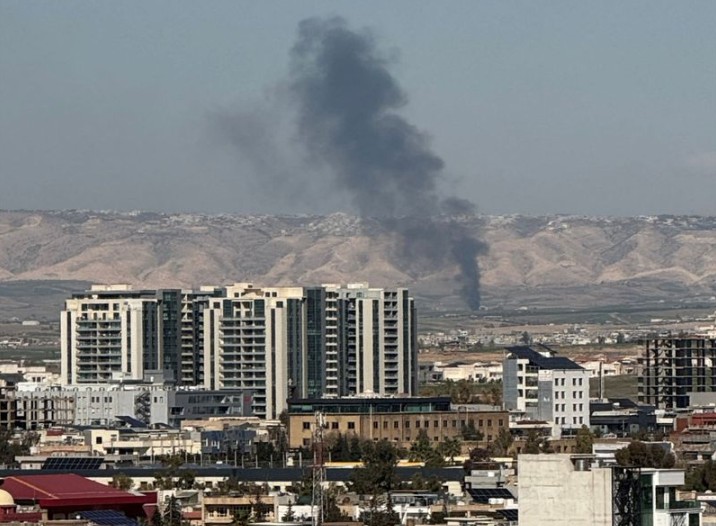
KATHMANDU: Following six weeks of high-intensity conflict triggered by the February 28, 2026, strike that killed Iran’s Supreme Leader, the world sits at a precarious crossroads. The war has claimed thousands of lives, crippled the global economy via the closure of the Strait of Hormuz, and pushed energy prices toward $170 per barrel.
After a week of frantic shuttle diplomacy by Pakistan, both Washington and Tehran agreed to a fragile two-week ceasefire.
This weekend, the focus shifts to Islamabad’s “Red Zone,” where senior officials will attempt to turn a temporary lull in fighting into a permanent regional settlement.
When and where are the talks being held?
The formal negotiations are set to begin on Saturday morning, April 11, 2026, in Islamabad, Pakistan. The primary venue is the Serena Hotel, located in the city’s high-security “Red Zone” adjacent to the Foreign Ministry.
The Pakistani government has implemented unprecedented measures to secure the site, declaring April 9 and 10 public holidays to clear the streets of traffic and requisitioning the hotel entirely for the delegations.
While the White House confirmed the Saturday start, Iranian officials have indicated their delegation is prepared to stay for up to 15 days, suggesting the possibility of an extended diplomatic marathon.
Who are the key participants representing the United States?
The American delegation is led by Vice President JD Vance, a move that signals the Trump administration’s intent to reach a high-level, definitive deal.
Joining him are President Trump’s top envoy Steve Witkoff and his son-in-law Jared Kushner, who has been instrumental in previous backchannel negotiations in Muscat and Geneva.
Vance’s presence is particularly strategic; he has positioned himself as a skeptic of prolonged military involvement in the Middle East.
Iranian officials view him as more open to a sustainable exit strategy than traditional hawks, making his involvement a potential catalyst for a breakthrough during the sessions.
Iran is represented by Parliament Speaker Mohammad Bagher Ghalibaf and Foreign Minister Abbas Araghchi.
Ghalibaf’s presence is especially significant because he is a former commander of the Islamic Revolutionary Guard Corps (IRGC).
Given the power vacuum left by the death of the Supreme Leader, Ghalibaf bridges the gap between Tehran’s diplomatic wing and the military forces currently managing the conflict.
His authority is essential for ensuring that any deal reached in Islamabad is actually honored by the IRGC units on the ground.
Iran’s Ambassador to Pakistan, Reza Amiri Moghadam, has emphasized that the delegation arrives seeking “serious talks.”
What is Pakistan’s role as the host and mediator?
Pakistan is facilitating what diplomats call “proximity talks.” Because the US and Iran lack direct diplomatic relations and harbor deep-seated mutual suspicion, the two teams will occupy separate rooms at the Serena Hotel. Pakistani officials, led by Foreign Minister Ishaq Dar, will act as intermediaries, carrying messages, drafts, and concessions back and forth.
Pakistani Prime Minister Shehbaz Sharif will oversee the process, having spent weeks in “shuttle diplomacy” to secure the initial ceasefire. Pakistan’s unique position—sharing a border with Iran while remaining a Major Non-NATO Ally of the US—makes it the only credible bridge available.
Why was Islamabad chosen over other neutral venues?
Islamabad emerged as the preferred venue because it offers a rare combination of geographic and political advantages.
Unlike traditional hubs like Doha or Muscat, Pakistan shares a 900km border with Iran and hosts the world’s second-largest Shia population, giving it significant cultural leverage in Tehran.
Simultaneously, Pakistan’s long-standing military-to-military relationship with the Pentagon provides Washington with the security assurances it requires.
Crucially, Pakistan does not host US military bases, a factor that helped overcome Iranian concerns about sovereignty and surveillance.
The city’s “Red Zone” provides a fortress-like environment suitable for such high-stakes, sensitive discussions.
What are the core demands of Iran’s “10-Point Plan”?
Iran’s proposal is a maximalist blueprint for regional restructuring. Key demands include Iranian oversight of the Strait of Hormuz, a total withdrawal of US combat forces from the Middle East, and the immediate lifting of all economic sanctions.
The plan also calls for a halt to military operations against Iran’s regional allies. Iranian officials argue that peace is impossible as long as a “foreign military presence” remains on their doorstep.
For Tehran, the 10 points represent a restoration of national dignity and regional autonomy following the strike on their Supreme Leader, viewing these terms as non-negotiable for a permanent settlement.
What is the US counter-proposal and its primary focus?
The United States is focusing heavily on the total dismantling of Iran’s nuclear infrastructure. A “non-negotiable” demand from the White House is the verifiable removal of all enriched uranium from Iranian soil and the decommissioning of advanced centrifuges.
Furthermore, Washington is pushing for a permanent ban on Iran’s long-range ballistic missile program.
White House spokesperson Karoline Leavitt has indicated that while the US is willing to discuss economic relief, it will only do so if Iran provides “irreversible guarantees” that it will never achieve nuclear breakout capability.
This clash of “security vs. sovereignty” remains the central conflict of the summit.
How is the “Lebanon Factor” threatening the talks?
Lebanon has become the most volatile “spoiler” in the peace process. While the ceasefire was intended to pause all regional hostilities, Israel has intensified its bombing campaign against Hezbollah, citing the need to secure its northern border.
Iran views these strikes as a blatant violation of the truce mediated by Pakistan. Foreign Minister Araghchi has warned that Tehran may abandon the Islamabad talks if the US does not restrain Israel.
Conversely, Vice President Vance has stated that the ceasefire terms do not legally cover Lebanon, creating a dangerous interpretive gap that could lead to a total collapse of the summit.
What is the current status of the global oil market?
The global economy is currently in a state of “energy shock.” With the Strait of Hormuz effectively blocked to most traffic, roughly 20% of the world’s oil and gas supply is trapped.
Brent crude has surged past $120 per barrel, with projections suggesting it could hit $170 if the Islamabad talks fail.
This has led to record-high inflation in the West and severe energy rationing in East Asian nations like Japan and South Korea.
The financial world is watching the Serena Hotel intently, as any sign of a deal to reopen the passage would likely trigger a massive, immediate drop in global fuel prices.
Is China involved in these peace efforts?
While China is not a formal participant in the Islamabad sessions, it is acting as a “quiet guarantor” in the background.
As the primary buyer of Iranian oil, Beijing has immense economic leverage over Tehran and has used it to push for the ceasefire.
President Trump has acknowledged China’s role, and many analysts believe that any final agreement on Iran’s nuclear program will require Chinese monitoring to be acceptable to the Iranian leadership.
Beijing’s goal is to stabilize the energy market and protect its “Belt and Road” investments, making them a silent but powerful stakeholder in the outcome of the weekend.
What has been the human cost of the war so far?
The six-week conflict has been devastating. Beyond the high-profile assassination of the Supreme Leader, coordinated strikes have targeted military and infrastructure sites across Iran, resulting in thousands of casualties.
In Lebanon, the humanitarian crisis has reached a breaking point, with over 200 people killed in just the last 48 hours and hundreds of thousands displaced. The war has also disrupted critical trade routes, leading to food and medicine shortages across the Middle East.
The Islamabad summit represents not just a political negotiation, but a desperate attempt to halt a humanitarian catastrophe that is threatening to destabilize the entire Mediterranean region.
How has the death of the Supreme Leader affected Iran’s stance?
The death of Ayatollah Ali Khamenei on February 28 sent shockwaves through the Iranian establishment, creating a temporary power vacuum.
While this initially led to a more aggressive military response from the IRGC, it has also allowed more pragmatic figures like Ghalibaf to take a leading role in negotiations.
The Iranian leadership is currently balancing the need to “save face” and project strength with the cold reality of a collapsing economy and a military that has taken significant hits.
Their stance in Islamabad is expected to be a mix of fierce rhetoric and a desperate underlying need for a reprieve from the conflict.
What is the “Strait of Hormuz Protocol”?
One of the most critical items on the agenda is a proposed interim agreement to reopen the Strait of Hormuz.
Under this “Protocol,” Iran would allow the free passage of commercial tankers in exchange for a partial lifting of the naval blockade and a dedicated “safe zone” for shipping.
Reopening this artery is the top priority for the global community. If the delegations can agree on this single point, it would provide an immediate “win” for both President Trump, who wants to lower gas prices before the 2028 election cycle, and the Iranian government, which needs to resume oil exports to stay solvent.
What are the security arrangements in Islamabad?
Islamabad has been transformed into a fortress. The “Red Zone” is completely sealed off with shipping containers and paramilitary checkpoints. A 30-member US security team arrived days ago to coordinate with the Pakistani military and the elite Special Service Group (SSG).
Drone flights are banned, and signal jammers have been deployed around the Serena Hotel to prevent remote attacks. The government has even suspended mobile phone services in certain areas to prevent coordination among potential protesters.
These extreme measures reflect the terrifying reality that a single security breach could not only end the talks but trigger an even larger global conflict.
What is the most likely outcome of this weekend?
Most analysts are “cautiously optimistic” about a ceasefire extension rather than a final peace treaty.
Given the deep mistrust and the complexity of the nuclear and regional issues, a comprehensive deal in just two days is unlikely. However, a successful weekend would involve both sides agreeing to a “roadmap for peace” and a formal extension of the 14-day ceasefire.
If the US can convince Israel to pause strikes in Lebanon and Iran agrees to keep the Strait of Hormuz open to neutral shipping, it will be hailed as a triumph of Pakistani diplomacy and a significant de-escalation of the world’s most dangerous crisis.