Kathmandu
Saturday, June 13, 2026





A decades-long scheme of undervalued leases and political protection turned Bal Mandir’s prime Naxal land into a private cash source—now, a long-delayed fraud case seeks accountability for losses exceeding Rs 603 million
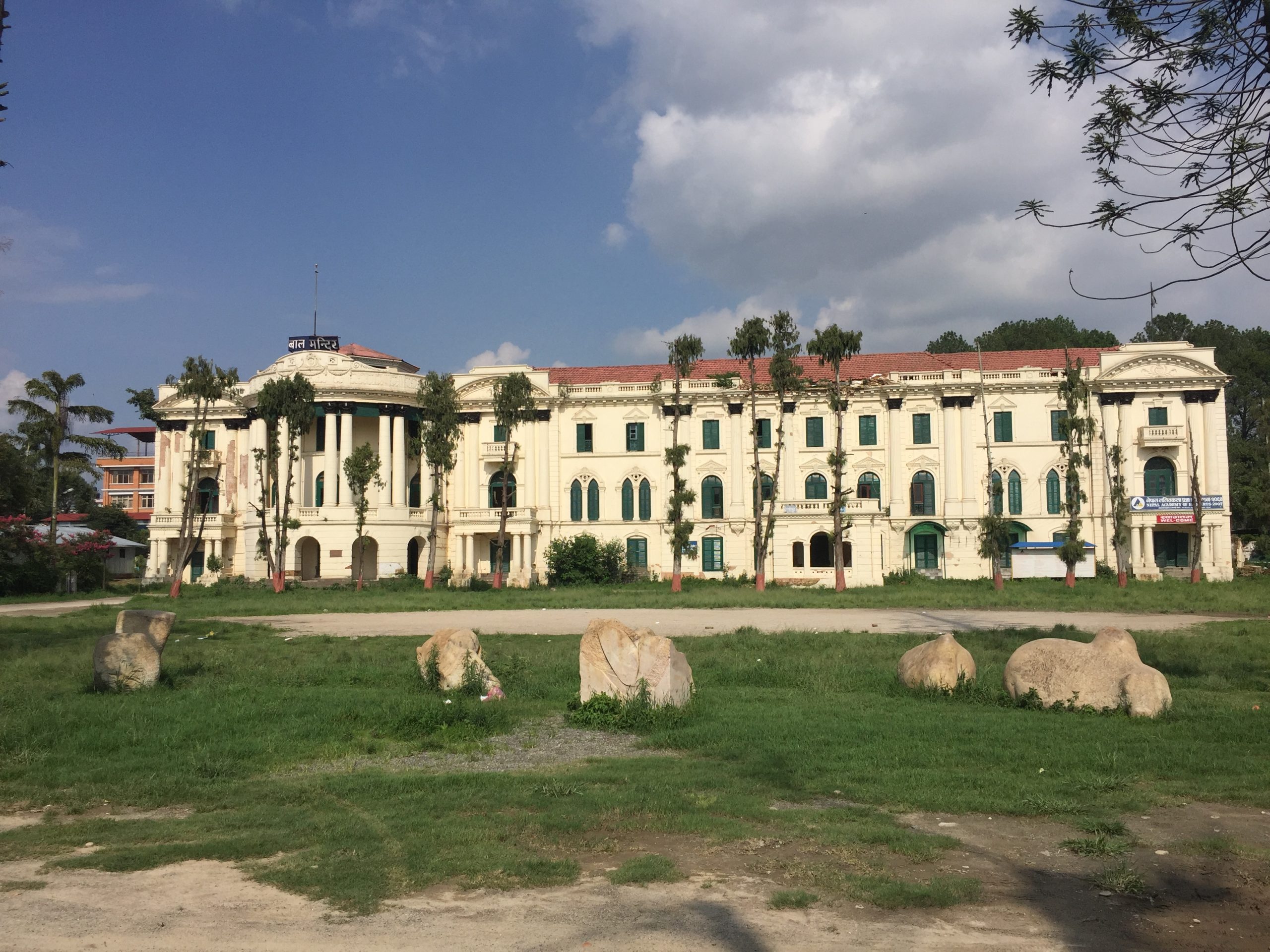
KATHMANDU: Nepal Children’s Organization, popularly known as Bal Mandir, was established in 1964 to shelter orphaned and abandoned children. The government handed over prime land in Naxal, Kathmandu, for this noble cause.
Decades later, that same land became the site of one of Nepal’s most brazen institutional frauds — a web of sweetheart lease deals, political patronage, and deliberate negligence that drained hundreds of millions from a charity meant to protect the most vulnerable children.
What exactly is the Bal Mandir land case, and why does it matter?
The Bal Mandir land case refers to the systematic misuse of prime government-granted property belonging to the Nepal Children’s Organization (NCO), a state-backed charity founded in 1964 to care for orphaned and destitute children.
The government had transferred a large tract of land in Naxal, Kathmandu — one of the most valuable real estate zones in the country — to NCO for its mission.
Over the following decades, a series of officials turned this charitable asset into a personal cash machine by leasing portions of the land to a private school called Brihaspati Vidya Sadan at rates far below market value, under murky and legally questionable agreements that were repeatedly renewed and extended without public tender or competitive bidding.
The total financial loss to the organization has been estimated at approximately Rs 603 million. The case matters not just because of the scale of the fraud, but because it reveals how political connections can shield wrongdoers for decades, and how an institution meant to serve Nepal’s most vulnerable children was instead exploited by those entrusted with its protection.
Who founded Nepal Children’s Organization and how did it get the Naxal land?
The Nepal Children’s Organization was formally established in 1964 under Nepal’s National Guidance Act of 1962. Queen Ratna Rajya Laxmi Devi Shah, inspired by her visit to the United Kingdom in 1963, was the driving force behind its creation.
During the Panchayat era, the organization enjoyed royal patronage, and the institution was known globally as Bal Mandir, meaning “Children’s Temple.” The government provided the organization with a substantial plot of land in Naxal, Kathmandu, measuring a total of 119 ropanis, 12 aanas, and 3 paisas, after acquiring the property known as “Sita Bhawan,” which had previously belonged to the family of Rana Prime Minister Bhim Shamsher.
The idea was to give the charity a permanent, self-sustaining home in the heart of the capital. The land was prime real estate even then and has since become extraordinarily valuable. It was meant to generate resources for children’s welfare — not to serve the financial interests of private schools and their politically connected backers.
Who was Rita Singh Vaidya, and what role did she play?
Rita Singh Vaidya was the central figure in the Bal Mandir land scandal. She was the daughter of Ganeshman Singh, one of Nepal’s most revered democratic figures, and the elder sister of Prakash Man Singh, a senior Nepali Congress leader who served as deputy prime minister in the Congress–UML coalition government during 2024–25.
Appointed as president of the Nepal Children’s Organization in 1992 (2049 BS) by the then-government of Prime Minister Girija Prasad Koirala, Vaidya held the post for nearly 27 years, stepping down only in 2019.
Her family’s towering political legacy appears to have provided a protective shield that enabled years of institutional abuse to go unchecked. Almost immediately after taking charge, she had the organization’s statutes amended to allow the leasing and sale of the charity’s land.
She then oversaw a series of sweetheart deals with Brihaspati Vidya Sadan, a private school. A high-level inquiry commission found her administration had leased land without competitive bidding, at below-market rates, and with terms that were extraordinarily favorable to the private lessee.
She was listed among the accused when charges were filed in 2025, but she passed away in December 2024, several months before the formal charge sheet was registered at Kathmandu District Court.
How did the leasing of Bal Mandir land to Brihaspati Vidya Sadan actually work?
The land transfers happened gradually, making each step look incremental and less alarming than the full picture. In February 1992, just months after Vaidya took charge, the organization first leased nine ropanis of land and associated structures to Brihaspati Vidya Sadan, a private boarding school in Naxal.
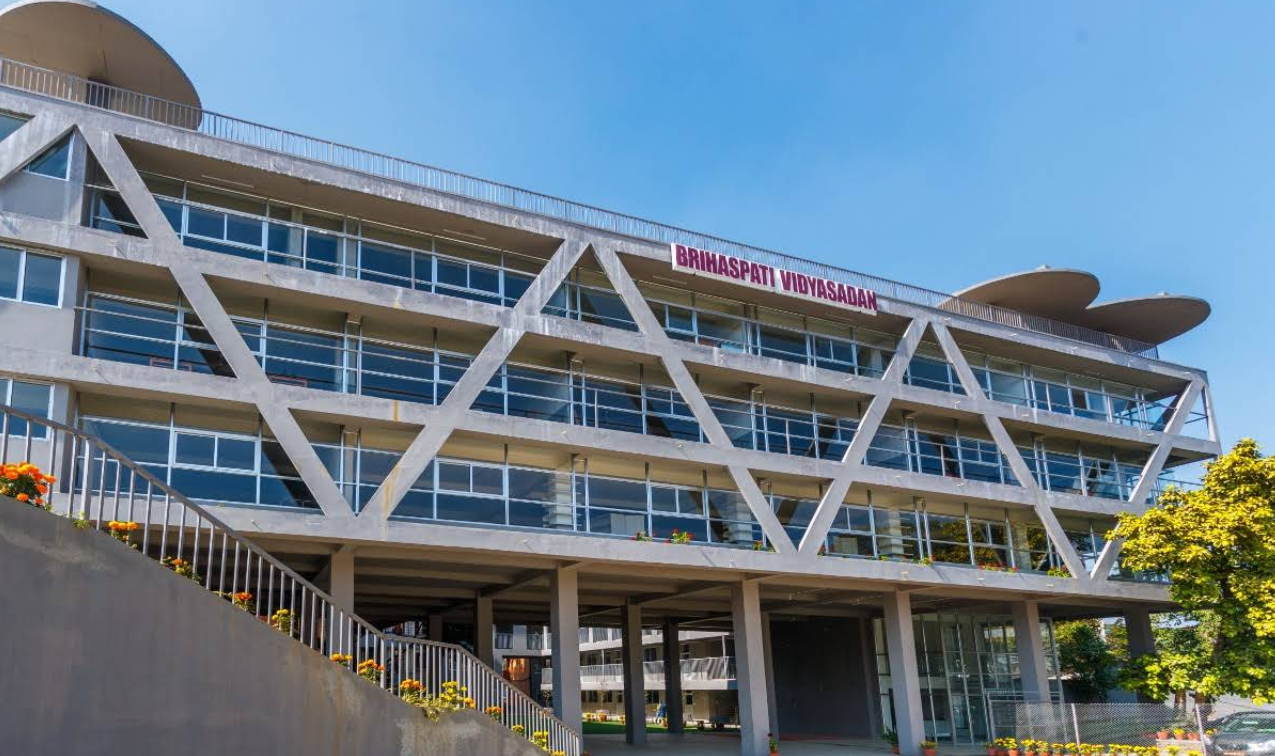
Brihaspati Vidyasadan. File photo
Subsequent agreements in 2001 added more land, and another in 2002 added further parcels, eventually bringing the total leased land to approximately 28 ropanis and five aanas.
None of these agreements were concluded through open competitive bidding or public notice, as required for transparent management of public assets. Each agreement came with unusually tenant-friendly terms, including rent holiday periods at the start and end of the lease, a clause permitting sub-leasing, and minimal rent escalation provisions.
Investigators later found that Brihaspati was itself charging Rs 6 million annually from a sub-tenant, the Indian-board-affiliated Rai School, for just five ropanis of the land it held — while paying the children’s organization only Rs 9 million annually for the entire 28-plus ropani holding.
What was the supplementary agreement of 2015, and why is it so controversial?
The supplementary agreement signed on June 21, 2015 is widely considered the most egregious act in this entire saga. At the time, the existing lease agreement between the NCO and Brihaspati Vidya Sadan still had 17 years remaining before expiry, which was scheduled for 2032.
Despite this, then-NCO president Rita Singh Vaidya signed a new agreement that not only confirmed the existing arrangement but tacked on an additional 43 years beyond the 2032 expiry date, effectively extending the total lease period to 2053.
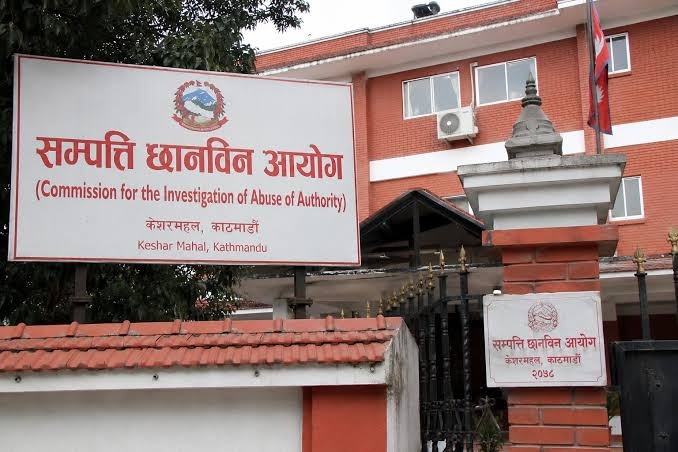
The land was leased at a rate of approximately six rupees per square foot per year, a figure that investigators and market experts described as laughably below prevailing market rates in one of Kathmandu’s most sought-after neighborhoods. The Commission for the Investigation of Abuse of Authority (CIAA) had earlier in 2009 ordered the organization to cancel a previous agreement, but both parties went back to court and reached a settlement through which Brihaspati regained the land via the supplementary deal.
Investigators concluded this maneuver was a deliberate workaround to circumvent the regulator’s directive.
Was there any regulatory oversight during all these years?
Yes, there was oversight — but it was repeatedly bypassed, ignored, or overridden. As far back as 2009, the Commission for the Investigation of Abuse of Authority stepped in after receiving complaints about the below-market lease. The CIAA issued a directive ordering the NCO to cancel the most recent lease agreement with Brihaspati.
The NCO did formally pass a resolution to cancel that specific agreement. However, the two parties then jointly filed a case in the Supreme Court. Instead of a verdict, they reached a mutual settlement inside the court in 2015, through which Brihaspati not only got back the land but secured a dramatically extended lease with even more favorable terms.
This misuse of judicial reconciliation processes effectively nullified the CIAA’s directive. Separately, Nepal Bank records reportedly showed that some 52 ropanis of Bal Mandir land had been mortgaged to the bank, though records about how much money was borrowed, for what purpose, and how it was spent were reportedly untraceable.
The Public Accounts Committee of parliament had raised concerns as early as 2011, yet no substantive action followed for years.
What triggered the formal police investigation?
The formal investigation was set in motion through a combination of media exposure and internal complaints. In early 2021, media published a detailed investigative report exposing the land misuse, igniting public outrage and bringing the issue into national focus. The current leadership of the NCO, under president Bidya Neupane, then filed an official complaint with the Central Investigation Bureau (CIB) of Nepal Police.
CIB office. File photo
The CIB launched a probe in May 2024 after receiving multiple complaints alleging systemic misuse of the organization’s fixed assets. On April 27, 2024, the NCO’s current board officially cancelled the lease agreement with Brihaspati, declaring it legally void.
Simultaneously, the CIB sought and obtained arrest warrants from Kathmandu District Court against 20 individuals in May 2024.
The investigation process, including recording statements and building the case file, continued through the rest of 2024, culminating in the formal filing of fraud charges against 17 individuals at Kathmandu District Court on May 7, 2025.
Who are the 17 people charged in this case?
The fraud charge sheet, filed by the District Government Attorney’s Office at Kathmandu District Court in May 2025, names 17 individuals from both the NCO side and the Brihaspati Vidya Sadan side.
From the NCO, the accused include: Rita Singh Vaidya (deceased), former president; Tulsi Narayan Shrestha, former vice-president; Yogendra Bahadur Shahi, former vice-president; Ganesh Bhakta Shrestha, former general secretary; Shyam Kumar Ale, Subash Kumar Pokharel, Prachanda Raj Pradhan, and Ram Kaji Gurung Kone, all former general secretaries; and Krishna Shankar Sah, former member.
From the Brihaspati Vidya Sadan side, those charged include Purushottam Raj Joshi, Prabin Raj Joshi, Murari Nidhi Tiwari, Shraddha Sanghai, Abhinav Singhaniya, Siddharth Kedia, and Kirti Prasad Pandey.
Three of the original 20 individuals against whom arrest warrants were issued were excluded from the charge sheet because they had died: Chiranjeevi Tiwari, former chairman of Brihaspati; Manohar Gopal Shrestha, former NCO treasurer; and Suman Shakya, former NCO deputy general secretary.
Notably, three of the accused — Singhaniya, Kedia, and Pandey — are Indian nationals.
What charges have been filed and what is the potential punishment?
The case has been filed under Section 249 of the Nepal Penal Code 2017, which deals with fraud. The total financial damages claimed in the charge sheet amount to Rs 603,977,231 — roughly 603 million and 97 thousand rupees.
Under the relevant provision of the penal code, those convicted of fraud at this scale can face up to seven years of imprisonment along with a fine.
The charge sheet characterizes the actions of the accused as a coordinated scheme to defraud the Nepal Children’s Organization, causing massive financial losses to a public charitable institution by leasing its land at well below market rates, without competitive bidding, and by later extending that lease arrangement for an extraordinarily long duration under terms that benefited the private school at the expense of the organization’s mission.
The Attorney General’s Office, which initially received the investigation file after the district attorney recommended against prosecution, overruled that recommendation and directed that the case proceed to trial.
What happened to Rita Singh Vaidya before and after the case was filed?
Rita Singh Vaidya died in December 2024, months before the formal fraud case was filed in May 2025. Her death means she will not stand trial, and the charges against her in the case effectively lapse.
However, her name remains part of the legal record and the public historical account of the scandal. During her lifetime, the CIB had sought an arrest warrant against her along with 19 others in May 2024.
Authorities had decided not to arrest her or another accused, Yogendra Bahadur Shahi, at the time of investigation, citing their advanced age and deteriorating health conditions.
Yet both were listed as fugitives in the investigation file at the time the charge sheet was prepared. Before the case was formally registered, she had given a statement to the inquiry commission in which she reportedly admitted to receiving money from the lease arrangements, which she claimed was used to cover the organization’s operating expenses — though investigators found no corresponding deposits in the organization’s accounts.
What was the Haribabu Bhattarai Inquiry Commission, and what did it find?
The high-level inquiry commission chaired by former appellate court Chief Justice Haribabu Bhattarai was formed by the cabinet in December 2019 under the government of then-Prime Minister KP Sharma Oli.
The five-member panel also included child welfare expert Milan Dharel, Bimala Gyawali, and senior officials from the Home Ministry and the Ministry of Women, Children and Senior Citizens. The commission completed its investigation over four months and submitted its report to the Ministry of Women, Children and Senior Citizens in May 2020.
The commission concluded that, since 1992, officials, employees, and working committee members of the NCO had colluded to hand over the organization’s assets to private interests.
It found the lease agreements with Brihaspati to be legally improper, procedurally defective, and financially harmful to the charity. It recommended action against those who participated in the illegal decision-making processes.
The report gathered dust for seven years without implementation. It was only in April 2026 that Prime Minister Balen Shah’s government forwarded the report to the Home Ministry and then to Nepal Police for action — with the Prime Minister’s Office reportedly seeking progress updates every few days.
What is the role of Brihaspati Vidya Sadan and the Indian connection?
Brihaspati Vidya Sadan is a private boarding school that operated within the Bal Mandir complex at Naxal, Kathmandu. It was the direct beneficiary of the undervalued lease agreements. Beyond simply occupying the land, Brihaspati sub-leased five ropanis to Rai School, an institution affiliated with the Central Board of Secondary Education of India, collecting Rs 6 million per year from this sub-tenant alone — while paying only Rs 9 million annually to the NCO for the far larger holding.
Three of the accused in the fraud case are Indian nationals: Abhinav Singhaniya, whose permanent address is listed as Delhi; Siddharth Kedia, from Jaipur in Rajasthan; and Kirti Prasad Pandey, from Bengaluru in Karnataka.
These three individuals have been residing in Kathmandu for business purposes and are listed as directors or operators of Brihaspati Vidya Sadan.
Their inclusion in a Nepali fraud case raises jurisdictional questions that legal authorities will need to navigate, including the process of serving legal notices and enforcing court orders against foreign nationals residing in Nepal.
How much land does Bal Mandir have in total, and who else is using it?
The total land holding of the Nepal Children’s Organization in Naxal is 119 ropanis, 12 aanas, and 3 paisas — a substantial swath of prime urban real estate. The leasing of approximately 28 ropanis and five aanas to Brihaspati was only one dimension of the land use problem.
Other portions of the land have been occupied or used by various government entities and organizations over the years. The Nepal Metropolitan Police Circle of Kamalpokhari reportedly expanded its pool complex onto about five ropanis of Bal Mandir land.
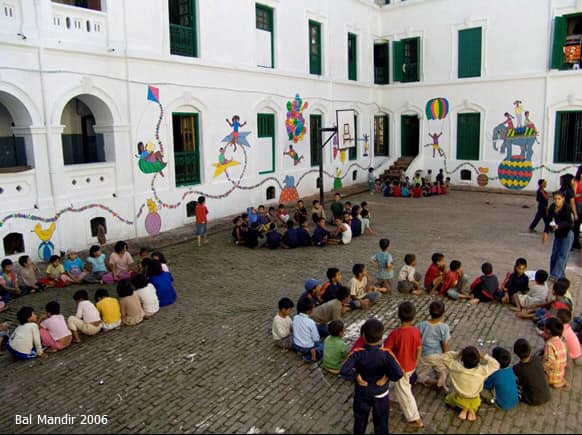
Kid’s playground inside the Nepal Children’s Organization, popularly known as Bal Mandir. File photo
More than 50 ropanis is reportedly under the usufruct — meaning use without ownership — of the Nepal Lalitkala Pragya Pratisthan, whose offices are located within the compound. The Ministry of Education’s nutrition program has reportedly used about four ropanis and two aanas free of charge.
These examples suggest the land problem at Bal Mandir extends well beyond Brihaspati and reflects a broader pattern of institutional land encroachment that has not been fully addressed in the current investigation.
What has the Balen Shah government done about this case?
Prime Minister Balendra Shah, who came to power in March 2026 following the Rastriya Swatantra Party’s landslide election victory, made anti-corruption accountability a central theme of his government.
His administration forwarded the long-dormant Bhattarai Commission report to the Home Ministry for implementation. The Home Ministry then sent it the same day to Nepal Police’s Central Office in Naxal.
According to officials, the Prime Minister’s secretariat sought progress reports from the Home Ministry three times within the first 11 days of the report being forwarded — signaling an unusual degree of executive attention to the case.
Nepal Police is studying the commission report in conjunction with the ongoing fraud case. The police spokesperson confirmed that since the court case is ongoing, the investigation and prosecution process will continue to move forward.
The Balen government’s broader anti-corruption agenda, which includes a sweeping asset investigation of public officials since 2006, has created a political environment in which this case is being treated as a litmus test for whether high-profile institutional corruption can actually result in accountability.
What is the current status of the case and what happens next?
As of April 2026, the fraud case against 17 individuals is registered at Kathmandu District Court and is proceeding. The court process in Nepal for major fraud cases typically involves examination of the charge sheet, responses from the accused, evidence hearings, and eventually a verdict.
Given that Rita Singh Vaidya has died, the case against her is effectively closed. Tulsi Narayan Shrestha was briefly arrested in May 2024 and released after giving a statement; Ganesh Bhakta Shrestha was arrested in June 2024 and released on bail of Rs 500,000 by court order.
The three Indian nationals among the accused present a logistical complication. The lease between NCO and Brihaspati has already been formally cancelled by the current NCO leadership.
The Brihaspati school structures within the Bal Mandir compound are scheduled to be removed. The Nepal Police’s CIB continues investigation.
The question of whether all accused will actually appear in court, whether the Indian nationals can be subjected to Nepal’s legal process, and whether the political pressures that shielded this case for decades have truly dissipated — these are the central uncertainties as the case moves toward what Nepal’s public hopes will be genuine accountability.