Kathmandu
Wednesday, June 10, 2026





KATHMANDU: Prabin Rai finished his schooling at Durbar High school in Jamal, the oldest school in Nepal, in 2023. The 21-year-old, who had enrolled at the school in Class 1, is currently employed by the same school as a staff member. “I’m happy to be working at the school where I studied,” Rai says. “The school didn’t have the same level of technology when I was here. I would have come a long way by now if I could have learned with technology.
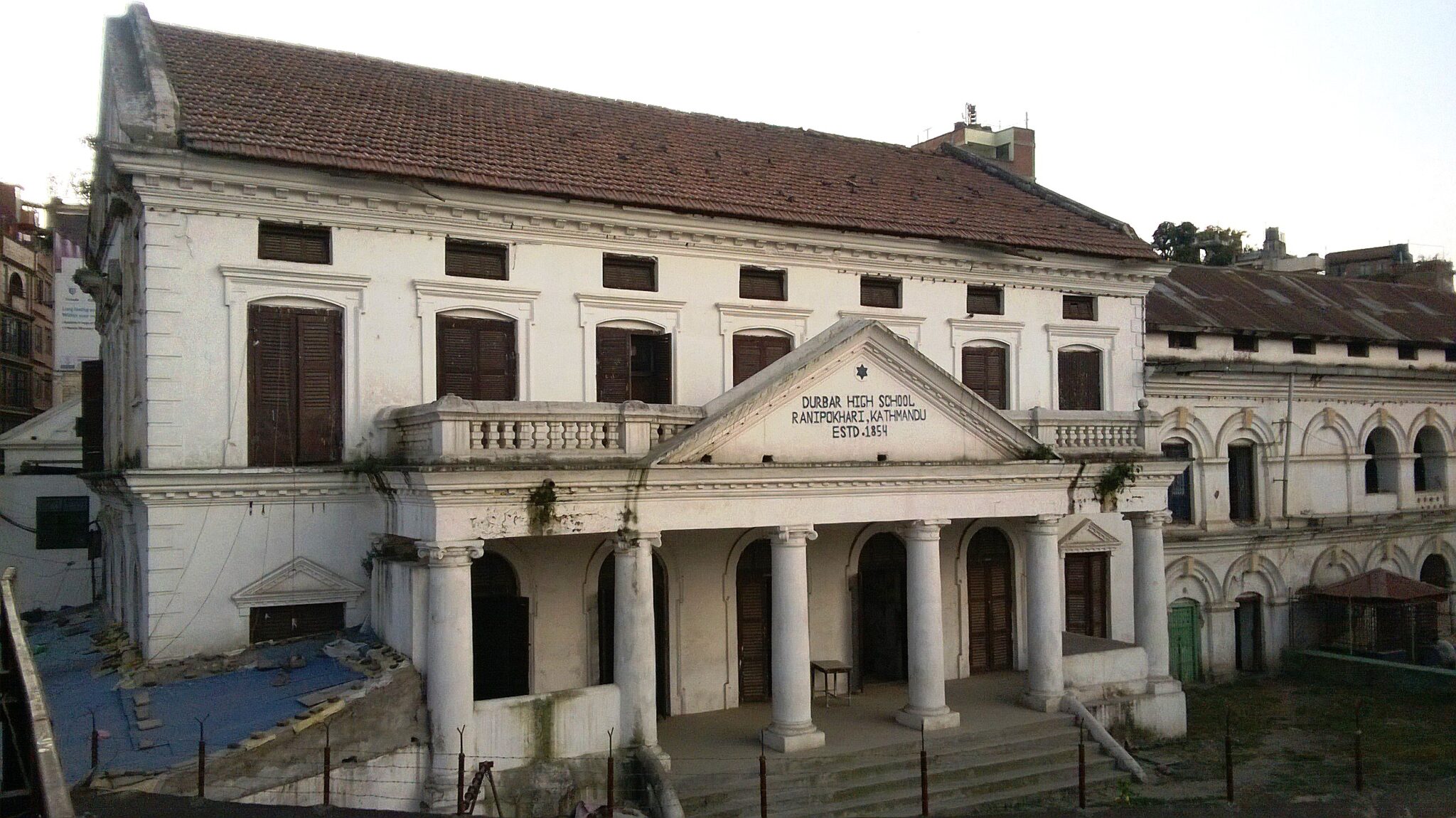
Durbar High School before 2015 earthquake. Photo: Krish Dulal
Under the direction of a female principal, the school has achieved notable advancements in technology and infrastructure. Rai said he plans to enroll his own kids here in the future.
The school currently offers innovative early childhood programs, such as Playgroup (Adventurous Ants), Nursery (Busy Bees), LKG (Creative Caterpillars), and UKG (Dancing Dragonflies), according to Principal Sharda Kumari Paudel. According to Paudel, who has been principal since 2014, “A Sustainable Development curriculum has been incorporated along with the Montessori teaching method in every class.” She continues, “The school has also launched a robotics class for technical education, and there will be an even greater focus on extracurricular activities going forward.”
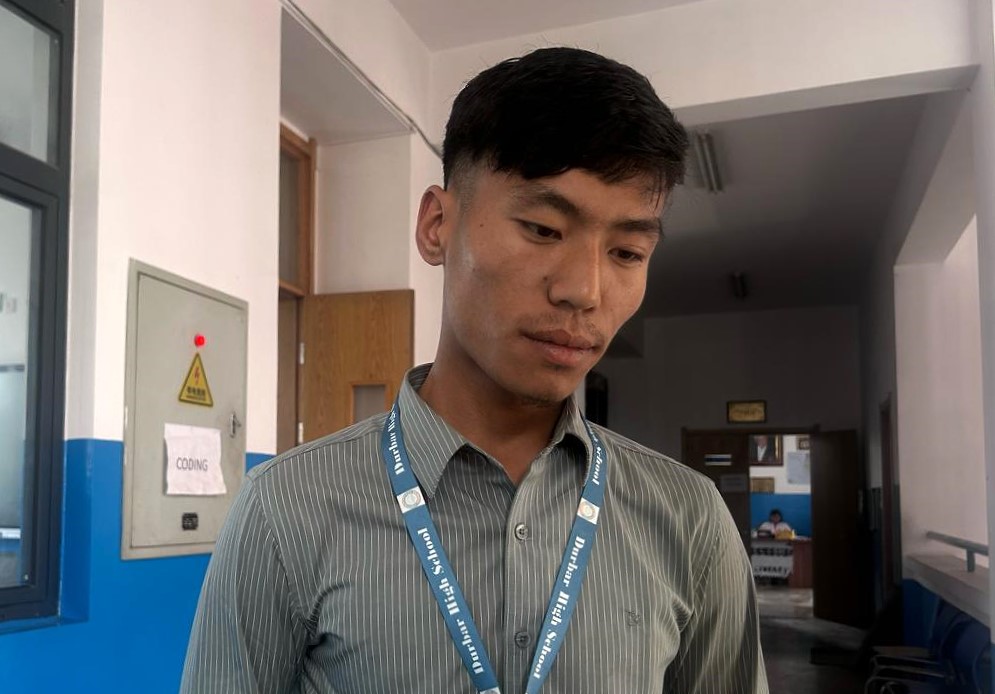
Prabin Rai. Photo: Ankita Khanal
According to Rai, the school only had 74 students in 2015. The number grew to 300 by 2020, and nearly 1,100 pupils were enrolled by 2025.
According to Paudel, the school put a lot of effort into recovering after the terrible 2015 earthquake and the COVID-19 outbreak that followed. “After the movements in 1990 and 2006, the number of students started to decline. Durbar High School was directly impacted by political unrest and the growth of private education. She says. “Now we have more students than the school can comfortably handle.”
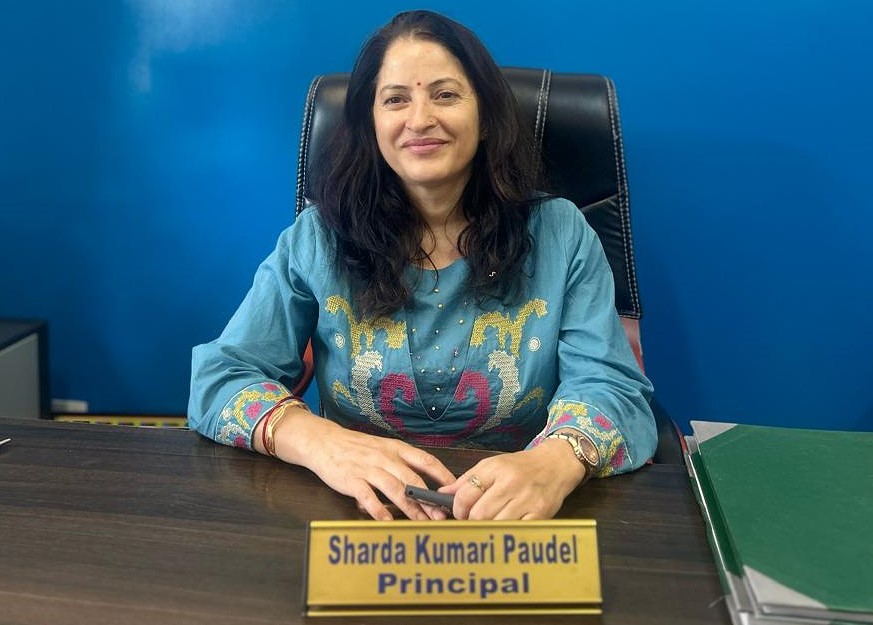
Principal Sharda Kumari Paudel. Photo: Sushila Adhikari
Paudel said, “With enrollment increasing, the school has set the limit for 150 students on each classroom, yet around 2,000 applications are received for each class admission every year
Paudel also gives credit to the Kathmandu Metropolitan City for helping to improve both the quantity of students and the quality of their education. Each and every classroom has a projector,
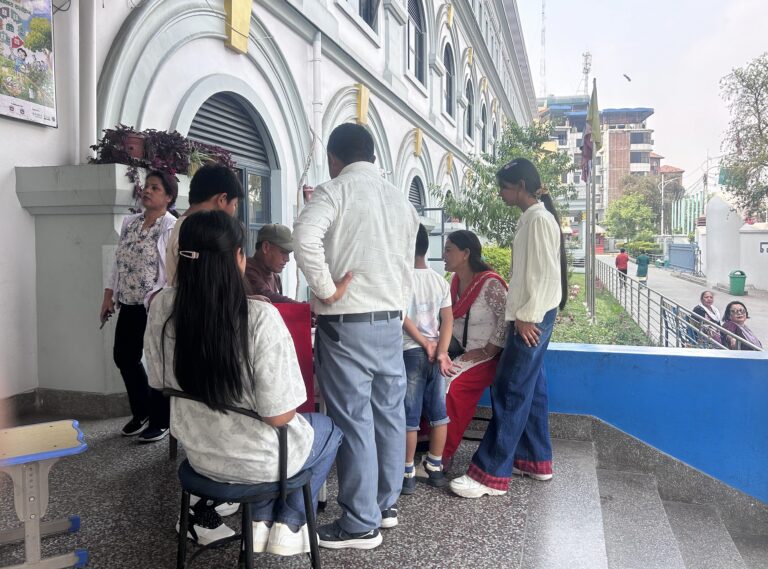
Students and parents at the school to apply as new admissions open. Photo: Sushila Adhikari
and all students receive training of some sort. “After the COVID-19 pandemic, the entire administration was restructured, and that was when we introduced a new vision and began ICT-based teaching and learning practices,” she states.
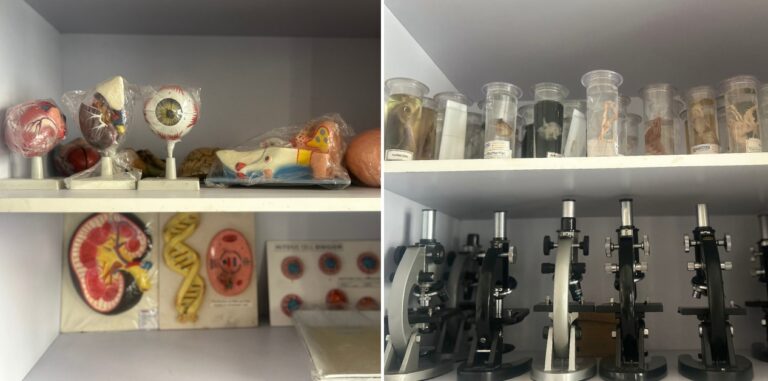
Equipment and other materials at the Science lab. Photo: Sushila Adhikari
According to science teacher Bijay Kumar Yadav, the primary cause of the enrollment restriction is classroom capacity. Since 1999, when the school had about 500 pupils, Yadav has been a teacher there. “After that, student numbers started declining because the trend shifted toward English-medium education,” he states. “Even parents in the neighborhood lost confidence in this school simply because it was government-run.”
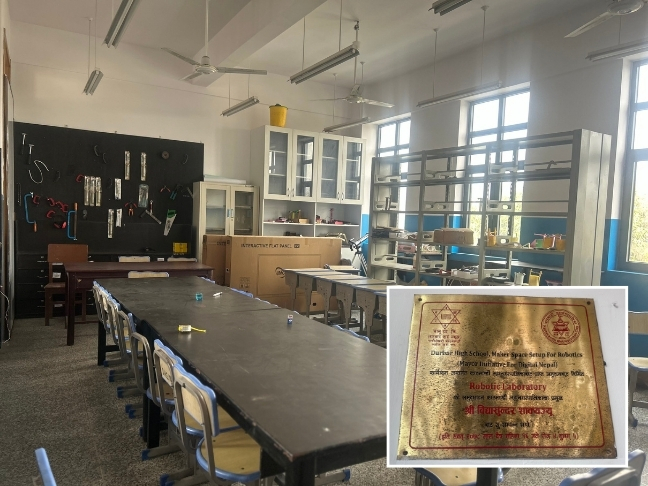
The school’s robotic lab. Photo: Sushila Adhikari
Two schools are currently accommodated in the building: a Sanskrit Secondary School and Durbar High School. Yadav thinks a lot more students could be admitted if the Sanskrit school had its own building. “The science lab is not that large. One lesson ends up taking a very long time when students use it alternately. One class is currently split up into up to three sessions, he explains. “Another problem is that there isn’t enough space here for any cultural programs or parent gatherings.”
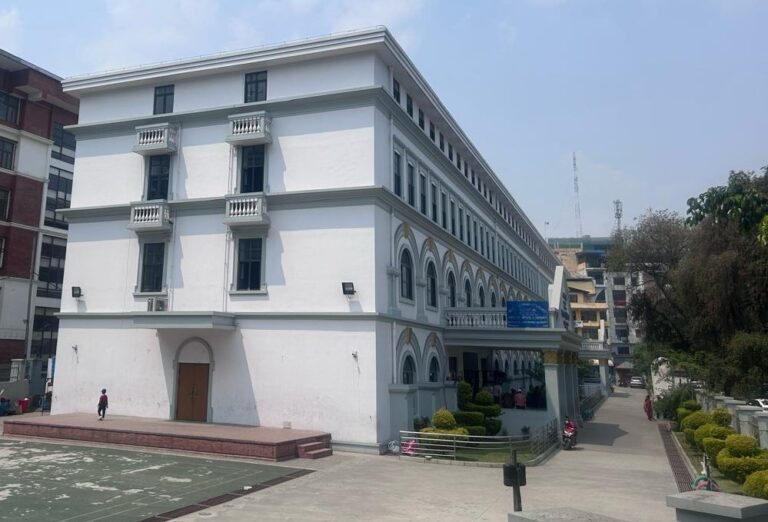
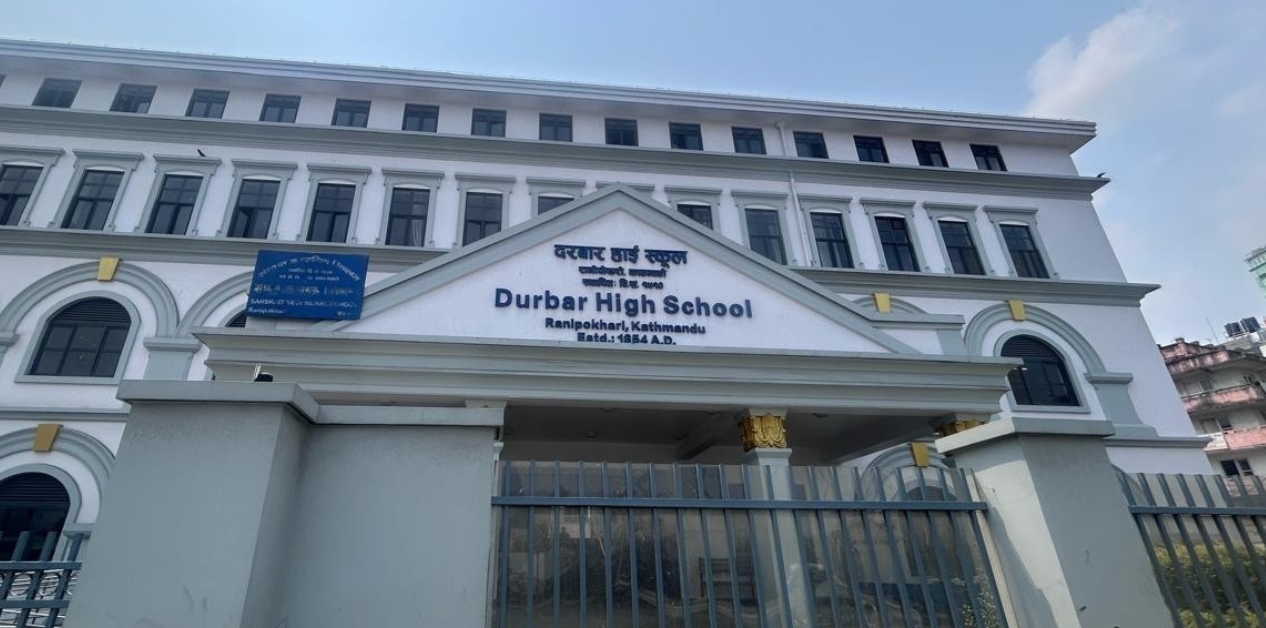
Durbar High School. Photo: Sushila Adhikari
Established in 1853, it was the first regular school in Nepal and the first to provide English language teaching. It was initially only accessible to the children of the ruling family and was housed in a palace on what is now the Nepal Rastra Bank property in Thapathali. In 1885, the school opened to the public. After Bir Shumsher built a structure next to Rani Pokhari in 1891, the school relocated to its own special location. With assistance from the Chinese government, the structure was rebuilt in 2019 after suffering significant damage from the strong earthquake that struck Nepal on April 25, 2015.
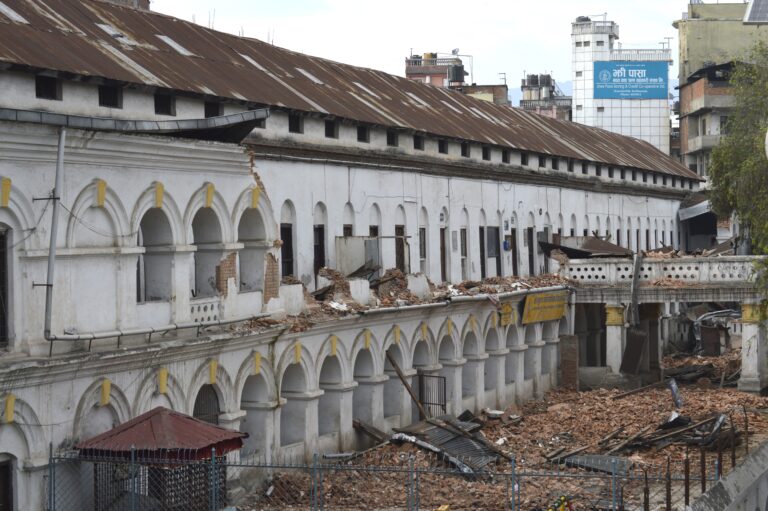
Durbar High School damaged in the 2015 earthquake. Photo courtesy: Janak Bhatta
In 2014, Paudel started teaching at the school, and in 2019, she was named Assistant Principal. She was tasked with overseeing the school as principal during the COVID-19 pandemic in 2021. She is the first female principal in the institution’s 173-year history. The school has entered a new phase with the use of contemporary teaching techniques and post-earthquake reconstruction. “A separate building will need to be constructed for the Sanskrit school students,” adds Paudel, the principal. “I can’t do this on my own. This plan could be realised if the local administration helped.”
(Both Khanal and Adhikari are trainee journalists)