Kathmandu
Thursday, June 18, 2026





As preparations are being made to remove encroachments from the Biratnagar Jute Mill area, more than 600 households are on the verge of displacement.
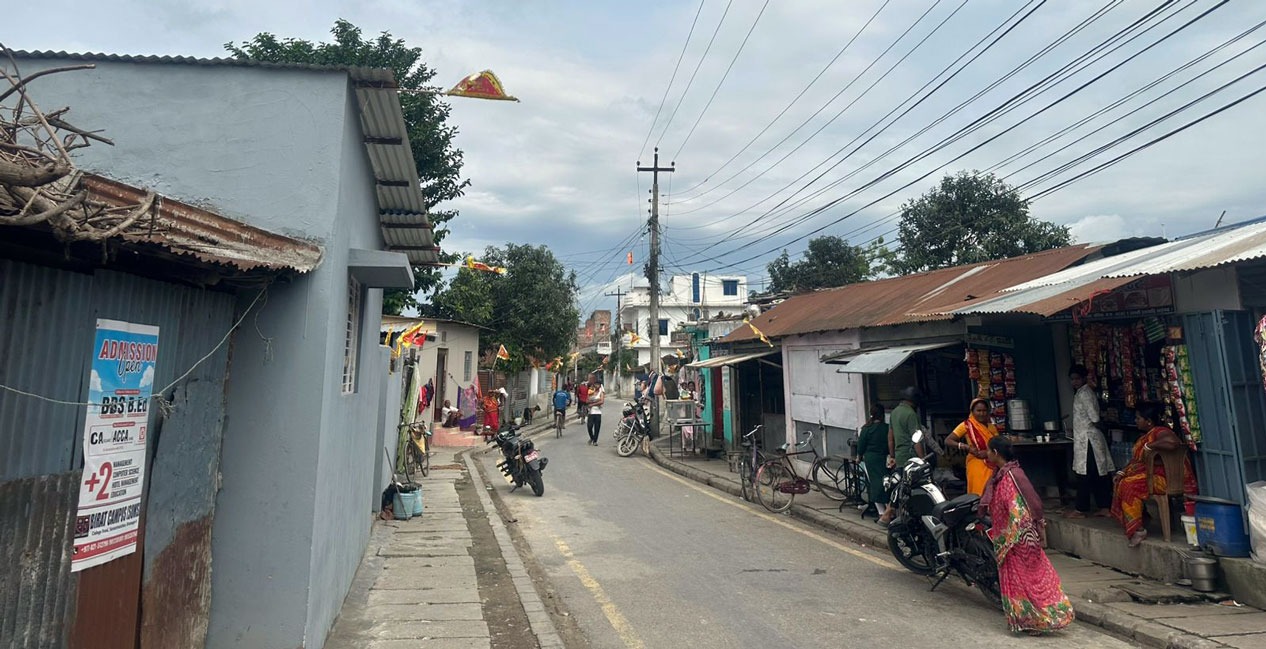
BIRATNAGAR: About four kilometers south of Biratnagar’s Roadshesh Chowk lies ‘Hadtaali Haat.’ Here, rows of houses built within the structures of the country’s oldest industry, ‘Biratnagar Jute Mill,’ can be found.
In the middle of Hadtaali Haat stands an old Pipal tree. It has been relieving the fatigue of laborers here for decades. However, today, the faces of those sitting in the shade of this tree do not reflect coolness, but a kind of turmoil and fear.
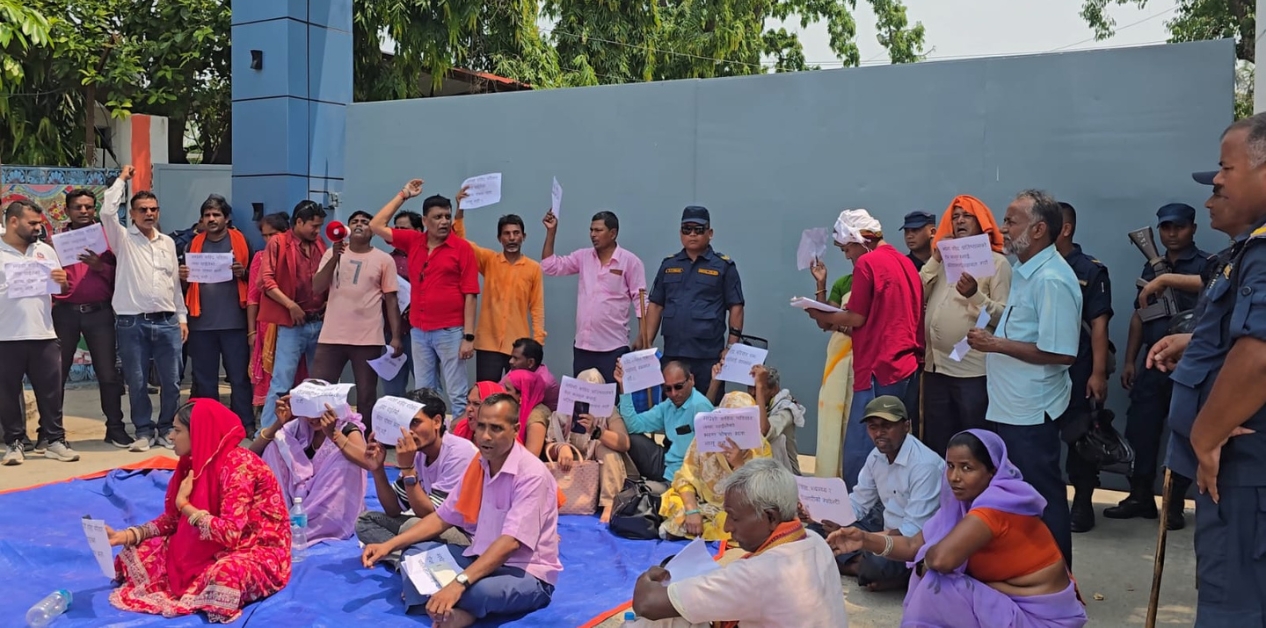
The government’s preparation to remove unauthorized structures and encroachments built on the Jute Mill’s land has stolen the sleep of 650 families living here. When a new person arrives there carrying a diary and a camera, locals ask suspiciously, “Have you come to remove us?”
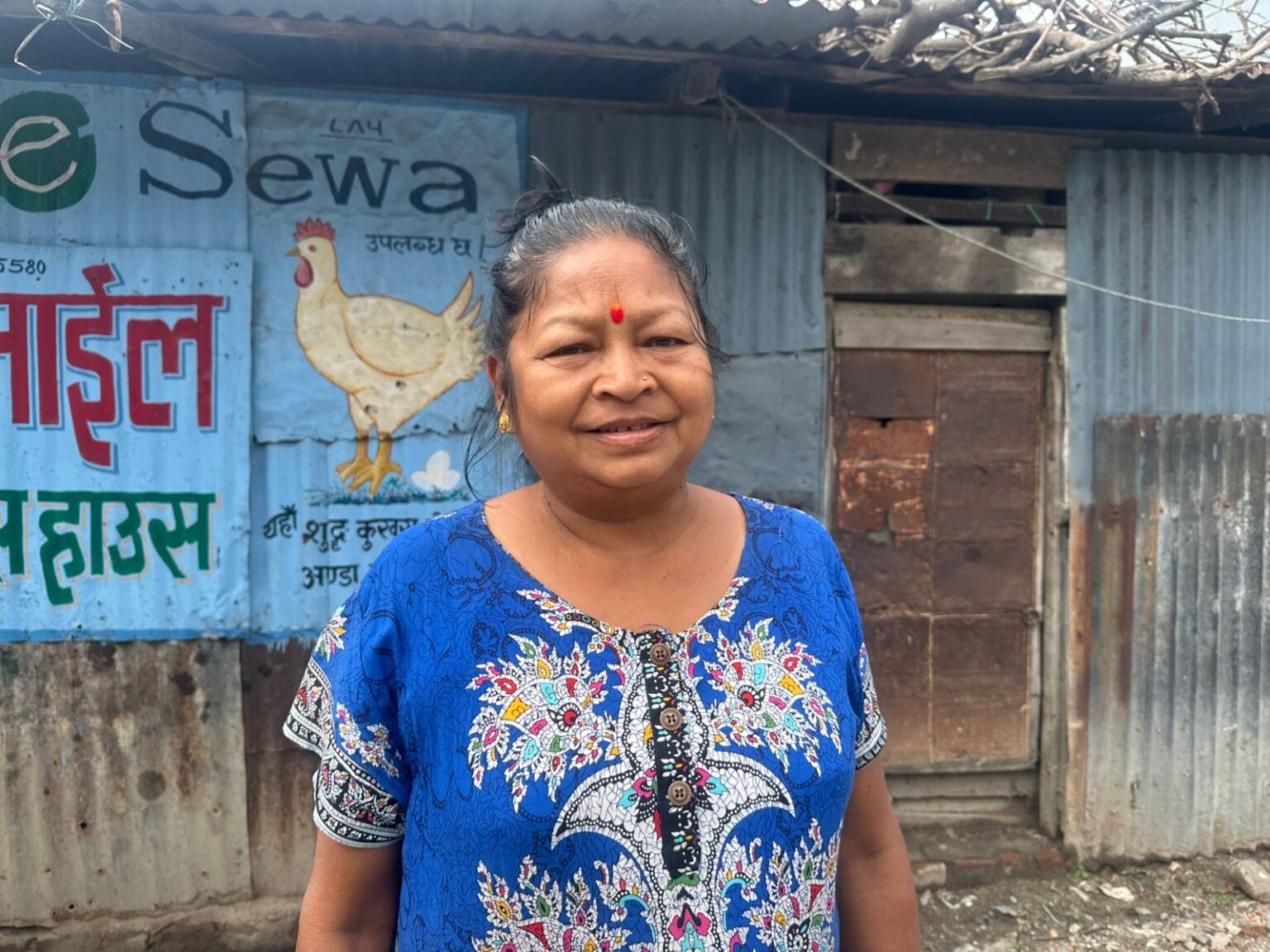
Shanti Majhi, who has been living in the Jute Mill quarters at Hadtali Haat
Forty-seven-year-old Shanti Majhi was staring blankly under this very Pipal tree. Having shed her sweat at the Jute Mill for 35 years, she is now haunted by the fear of having to leave her hearth and home. “Our grandparents passed away here, and while we were working here, the mill closed down in 2011,” Shanti said. “I am yet to receive the money for the work I did, but hearing the news of being evicted from the quarters where I currently live has made me lose my hunger and sleep.”
Her family of four, including her husband and children, takes shelter in that old quarter. She is heartbroken that the state is trying to remove them without providing an alternative. “Where should we go? This Jute Mill is everything to us,” she said.
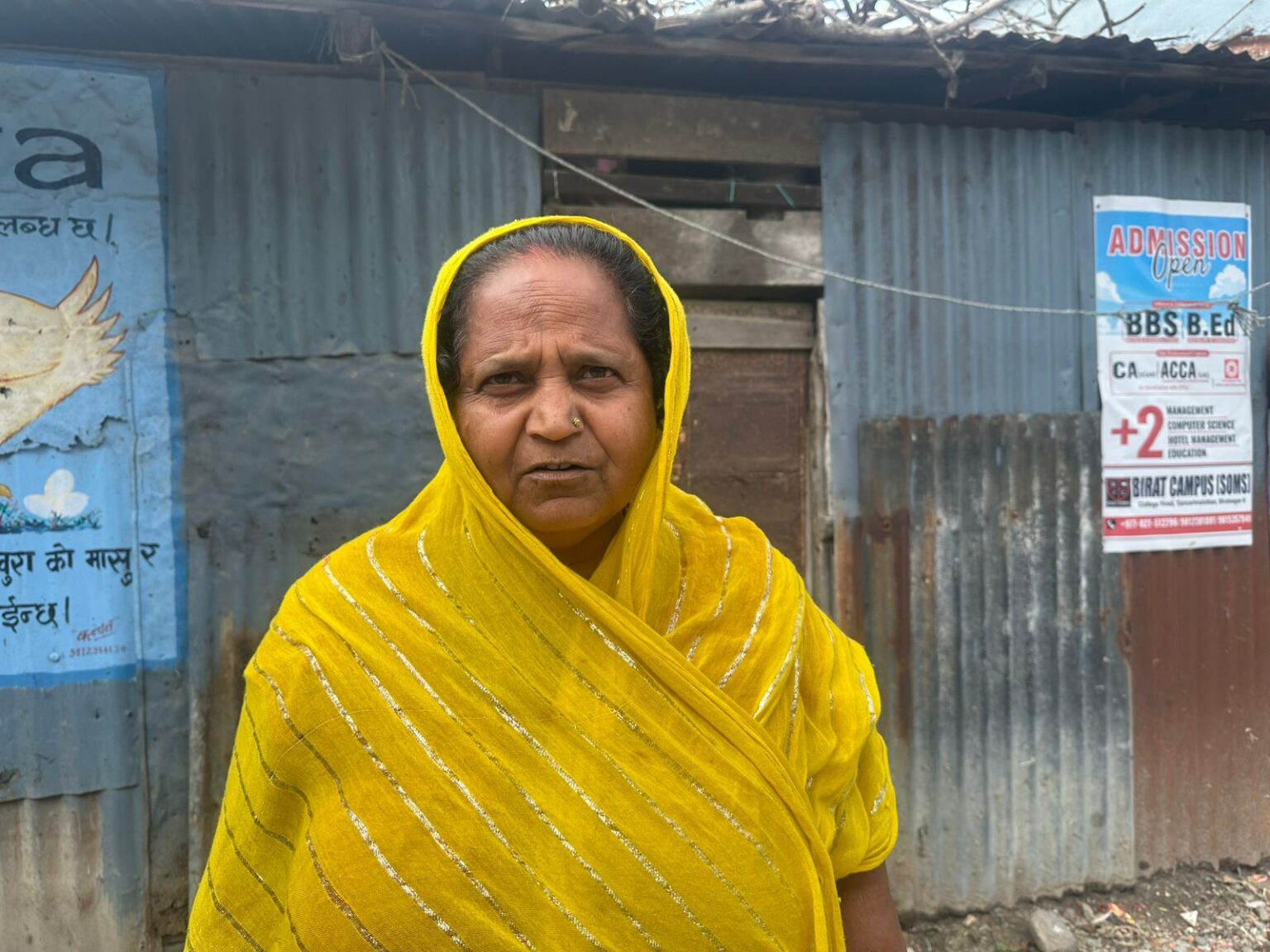
Dhanmati Chaudhary of Hadtaali Haat
Dhanmati Chaudhary shares a worry similar to Shanti’s. Her father-in-law, Kapil Dev Chaudhary, served the Jute Mill his whole life and breathed his last there. The Chaudhary family, who has shared happiness in that hut for three generations, is displeased with being labeled as ‘encroachers.’ “This is the only hut we have; if they remove us from here, we will become homeless squatters,” Dhanmati says. “The state must manage our settlement; otherwise, where will we take shelter?”
The Board of Directors claims that about 14 Bighas (1 bigha equals approximately 2529 square meters) out of the total 69 Bighas of Biratnagar Jute Mill have been encroached upon. Currently, everything from private concrete houses to small industries is operating in the Hadtaali Haat and Harinagara Brick Kiln areas of Ward No. 15, and the South Gate area of Biratnagar Ward No. 16. As the Jute Mill Management Committee prepares to clear the land within a week, more than 600 families have reached the brink of displacement.
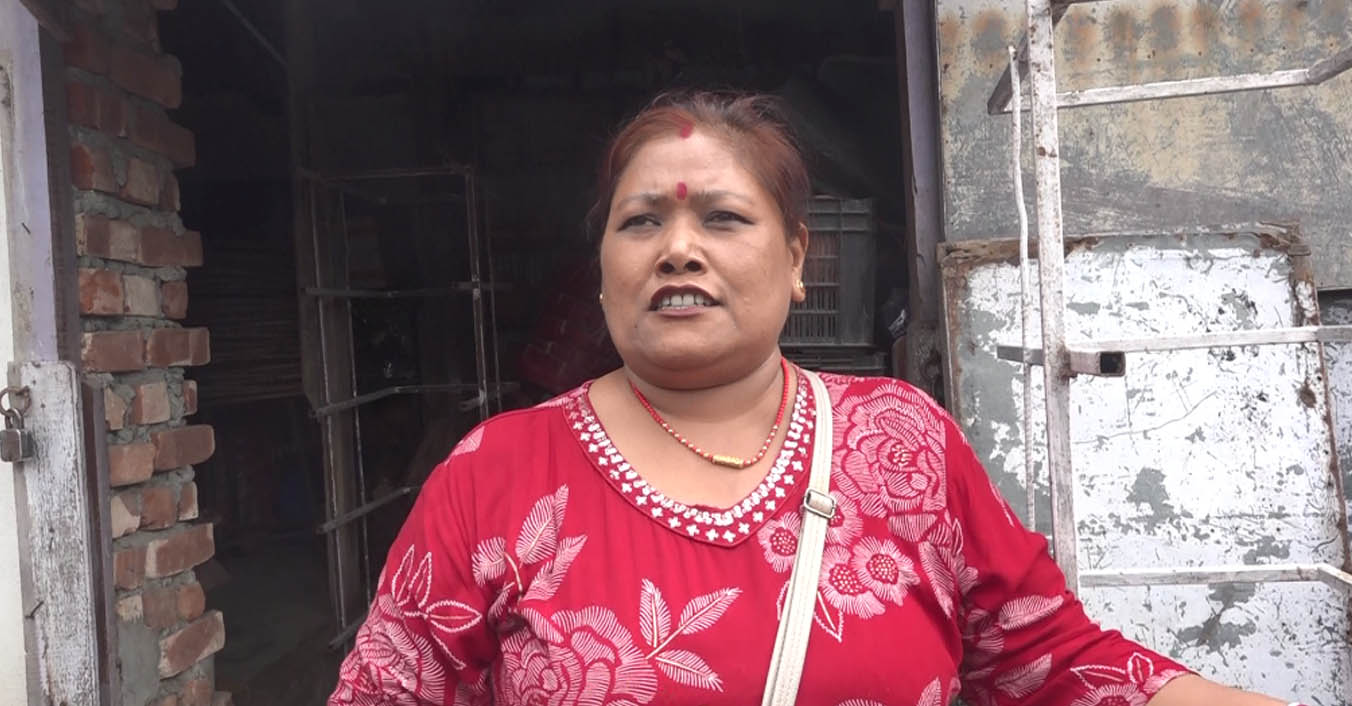
Meena Shrestha
Local Meena Shrestha’s anger is somewhat different. She says, “Those who have lived here for years cannot be removed without an alternative. If they are to be removed, it should start from the constituencies of powerful people and big leaders. Why are bulldozers only for the huts of the poor?” She adds, “Furthermore, squatters should be removed from Prime Minister Balendra Shah’s electoral constituency, Jhapa-5. Once they show they can remove them in Jhapa, we will leave here too.”
For 80-year-old Mohammad Ansari of Hadtaali Haat, this place is connected to his emotions. Having spent the productive years of his life in the Jute Mill quarters, he is now frail. However, he remains firm in his stance. “It has been years since we settled here. We are ready to die, but we will not leave this place,” he said.
Mohammad Ansari
Administration’s preparation: Seeking three-generation details
The Jute Mill administration, however, does not seem inclined to back down. According to the Chairman of the Board of Directors, Rajendra Karki, the local administration has already been written to regarding the removal of unauthorized residents and businesses that haven’t paid rent for a long time. “Many are running businesses in the mill without paying rent. Some have even built houses and rented them out to others,” Karki said. “All these structures will be cleared.”
The District Administration Office, Morang, has started collecting records of those living there before using force. According to Saroj Raj Koirala, Assistant Chief District Officer of Morang, they are looking into the three-generation details of the residents and whether they own land or houses elsewhere. “We are identifying genuine squatters and those encroaching despite having land and houses by coordinating with the Metropolitan City,” Koirala said. “The process will move forward only after giving notice.”
According to the Jute Mill Administration Chief, Shyam Lama, the problem became complicated when staff quarters were not vacated even after retirement and outsiders were added.
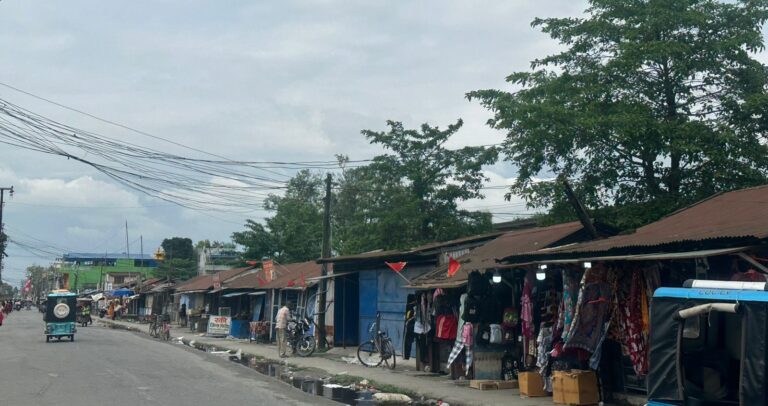
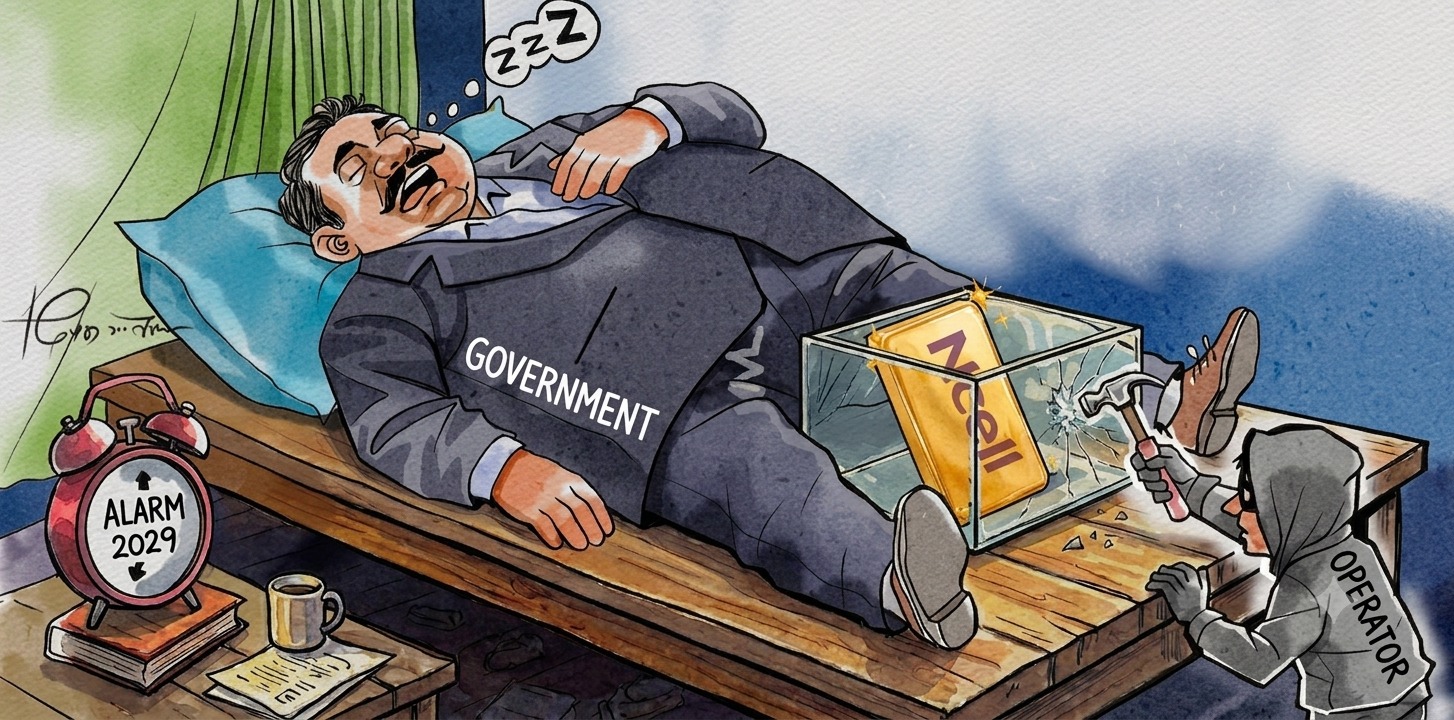
Established in 1936, Biratnagar Jute Mill is the mother of Nepal’s industrial revolution. Due to political interference and managerial weaknesses, it has been completely closed since 2013. Machines worth millions have turned into scrap due to rust. Buildings are collapsing.
46 employees haven’t received 30 million
Forty-six former employees of Biratnagar Jute Mill have complained that they haven’t received their wages for a long time. They complained of not receiving salaries totaling 30,293,923 Rupees from May 14, 2016, to November/December 2020. Former employees have fought legal battles from the labor office to the courts and won the cases. The Labor and Employment Office, Biratnagar, has repeatedly sent letters to pay the said amount immediately through the banking system.
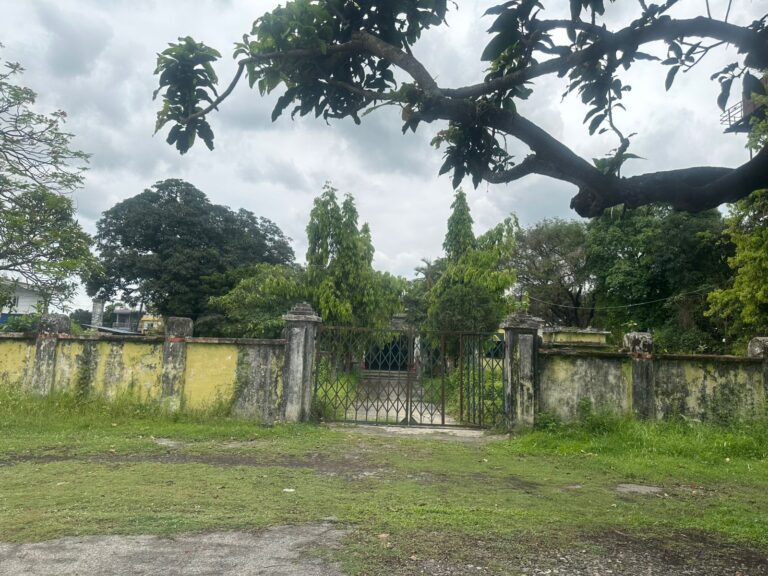
Biratnagar Jute Mill, established in 1936
The letter sent by the then office head, Prem Sanjel, mentioned that Biratnagar Jute Mill, the Department of Industry, or the Ministry should release the funds based on priority. It was clearly ordered that if there was a problem with cash payment, the workers’ wages should be cleared even by auctioning the mill’s land. The order also drew attention to the fact that the Office of the Company Registrar had not properly regulated the institution.
According to Taranath Timsina, former Administration Officer of the mill, the general assembly of the mill held on April 3, 2025, also directed the payment of the employees’ outstanding dues. “The mill closed down without 46 employees receiving their salaries,” he said. “Even now, we frequent various agencies for the salary.”