Kathmandu
Wednesday, June 17, 2026





Government negligent in promoting the rising potential of the ‘care economy’
KATHMANDU: Suman Pokharel, who resides in the United States, leaves his 79-year-old mother in the care of a caregiver every day before heading to work. Since it is daytime in America when night falls in Nepal, he relies entirely on caregiver services to look after his mother during the nighttime hours. He checks on her condition via Facebook Messenger or WhatsApp calls and leaves for work with peace of mind once the caregiver arrives.
Pokharel has been working as a teacher in the United States for six years. His mother lives alone in their house in Kathmandu. He shares that as his mother started facing physical difficulties over the past few years, they began utilizing nocturnal care services to ensure her safety. For the last two years, he has been procuring these services from a Kathmandu-based company called Sahara Cares. “Until a few years ago, my mother could take care of herself. When things became difficult, we opted for this service to avoid incidents like falls while going to the restroom,” he expressed via a WhatsApp message.
He noted that because the caregiver service is reliable and of high quality, he feels completely reassured. “For people like us working abroad, caregiver services have provided immense relief,” he said. “The caregivers remain in regular contact with both my mother and me. We feel truly blessed to receive this service.”
Professional caregiving is not a novel concept abroad. In recent years, however, its demand, importance, and market scope have been rapidly expanding within Nepal’s urban areas as well. For those unable to dedicate sufficient time and care to family members due to busy lifestyles, among other factors, such services are proving to be a godsend.
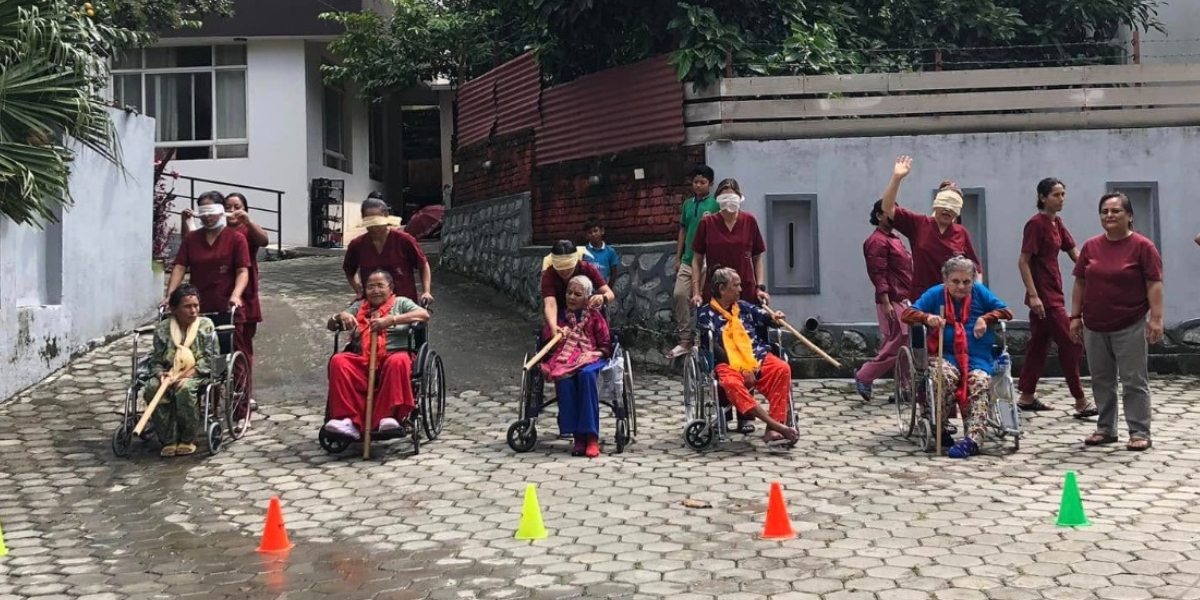
Senior citizens taking refuge at Health Home Care Nepal in Sanepa. Photo Source: Health Home Care Nepal’s Facebook Page
Challenges in caring for senior citizens are compounding daily due to a career-focused youth generation, an inclination toward nuclear families, intergenerational integration issues, and children residing abroad for education or employment. As the demand for caregivers rises alongside elderly care, childcare, and nursing services, this profession and service sector is flourishing. This phenomenon is actively expanding the horizon of the ‘Care Economy.’
Sahara ‘Caregiver’
According to the definition by the American Psychological Association, a ‘caregiver’ assists vulnerable, helpless, or service-seeking individuals based on their needs. Their roles encompass bathing, laundry, maintaining house/toilet hygiene, cooking/feeding, assisting with mobility, hospital admissions and treatments, post-discharge care, therapy/massages, and offering mental and emotional encouragement just like a family member. Clients procure these services by paying fees tailored to various durations, such as day, night, week, month, or year-round plans.
The demand for caregiver services is gradually rising in Nepal. Historically confined to unpaid domestic care, the increasing footprint of women in the formal labor market has generated a vacuum, driving demand for paid care services. Specifically, it is customary to hire assistive services for childcare, postpartum maternal care, and elderly supervision. Over the past decade, children migrating abroad for studies, jobs, or businesses have started hiring home-based caregivers from afar for their vulnerable and helpless parents in Nepal, echoing Pokharel’s situation. Foreign employment, evolving family structures, and the fast-paced, working lifestyles of descendants have exponentially accelerated the demand for ‘elderly care.’
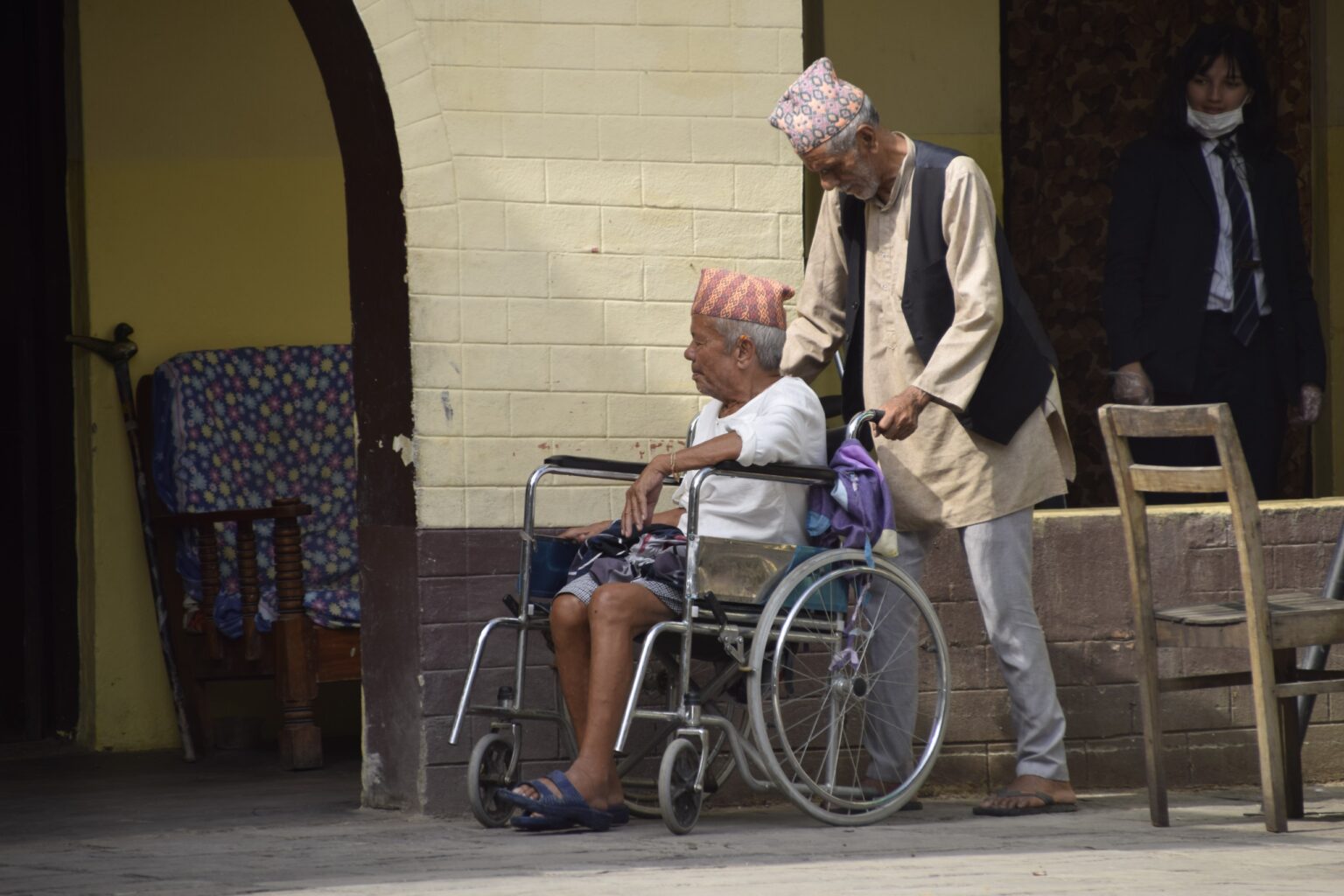
Image 2: Nisahaya Sewa Sadan located in Shantinagar. Photo: Bidhya Rai
Care service provider companies operate in Kathmandu as well as other urban areas like Pokhara and Chitwan. Aastha Panta, the operator of Sahara Cares, notes that these service provider companies are registered and run under the Companies Act, 2006. Sahara has been providing caregiver services in the Kathmandu Valley since 2022.
Whether to earn or study, neighboring India was initially the primary destination for most Nepalis. They migrated as seasonal workers to perform wage labor in caretaking, cleaning, farming, and mining, returning home during the harvest season. Economist Lokendra Fodera remarks, “Data indicates that historically, India used to be the destination for about 80% to 90% of Nepalis migrating abroad for employment.”
In recent times, Nepalis have transitioned toward European and developed nations as semi-skilled and domestic workers, navigating via Malaysia and Gulf countries.
According to Fodera, only around 30% of the total outbound Nepali labor force currently goes to India, the majority of whom hail from Western Nepal. In choosing new destination countries, not only has the duration of stay extended, but unlike India’s open border, easy back-and-forth travel is no longer possible.
Furthermore, joint family structures used to be the norm in the past. Generational family members lived under a single roof and ate from the same kitchen. Because families consisted of multiple members, even if some went abroad, the remaining members looked after the elderly. Gradually, the practice of nuclear family structures took hold. As children migrated abroad, situations arose where only parents remained at home. Children who can afford it are seen attempting to fulfill their responsibilities by hiring caregivers to look after their parents.
Rising demand
According to Sahara Cares operator Panta, the culture of utilizing such services in Nepal started around 15 years ago. She notes that because sons, daughters, and daughters-in-law go to work—or even move abroad—requests flow in from overseas to escort solitary parents to hospitals or attend to them as bedside companions during illness. Most clients opt for nocturnal services, similar to Pokharel in America. Panta says, “When only parents are home at night, a person is needed to look after them in case of emergencies or illness; hence they secure night services. Some take it for 4 hours, 8 hours, 12 hours, or specific durations.”
While studying and earning abroad, many children also opt for ‘chauffeur services’ so their parents in Kathmandu or other cities can ride in their own vehicles to visit hospitals, relatives, go shopping, or take recreational trips. Under this model, drivers provide services utilizing the vehicle and fuel provided by the owner.
Arjun Prasad Subedi, a resident of Sukedhara, Kathmandu, is one such driver providing this service. “Sons, daughters, or daughters-in-law used to drive the car when they were home. Even though elderly parents cannot drive it, the vehicle cannot be sold because it will be needed when the children return,” says Subedi, who has been offering driver services for the past 12 years. “Those who feel there is no need to drive the car all month long, and that starting it occasionally is sufficient, utilize driver services whenever required.”
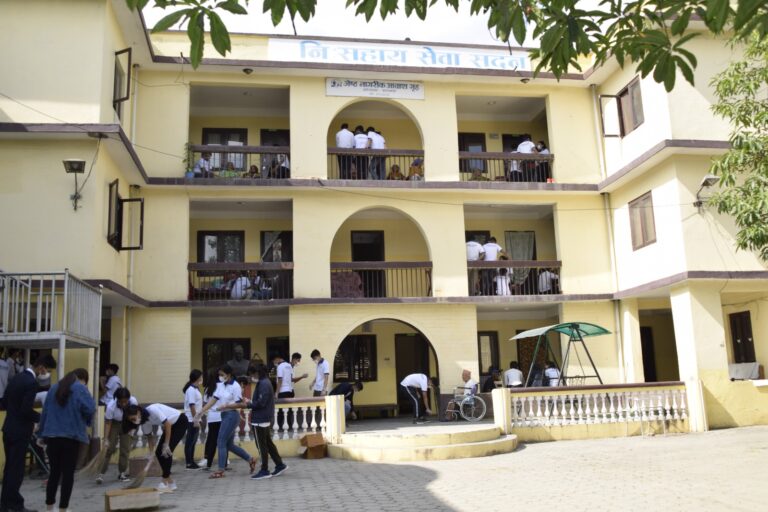
College students engaged in cleaning operations at Nisahaya Sewa Sadan in Shantinagar. Photo: Bidhya Rai
He belongs to the ‘Smart Driving Group,’ which connects more than 25 drivers. Starting with just two or three individuals, additional drivers were onboarded as demand escalated. Clients who have used the service recommend it to others, who then initiate contact via WhatsApp. The drivers are stationed across various hubs like Ghattekulo, Satdobato, Gwarko, or Kalanki. They are assigned tasks by aligning with the clients’ routes. Chauffeurs charge fares for providing their services; for a 4-hour service, they charge around Rs 1,200. Since individuals returning from feasts, banquets, and parties also seek drivers, 18 to 19 drivers from Subedi’s group are deployed daily. There are roughly 4 to 5 daily clients residing abroad who book chauffeur services for their frail parents back home.
Subedi adds, “We place honesty, discipline, and hygiene as our topmost priorities. Around 15 individuals living in America and 30 living in Australia contact us directly from there, requesting us to take their parents to hospitals, relatives, or shopping trips. They repeatedly utilize our services in this manner.”
His group operates 24/7 inside the Kathmandu Valley and travels outside Kathmandu based on requirements. When contacted recently for an interview, he had just reached B&B Hospital in Gwarko, Lalitpur, accompanying a patient.
When visiting hospitals, Subedi personally escorts senior citizens and fragile individuals right up to the treatment areas or doctors. He opens vehicle doors and carries their belongings. Just like Aastha and Arjun, numerous other companies can be found providing care services through their own initiatives. Advertisements for service providers are saturated across social media and online platforms.
Krupa Basnyat, an official at the United Nations International Labour Organization (ILO) Nepal, analyzes this trend as an emerging, significant contributor to the ‘Care Economy.’ According to the ILO, the care economy encompasses direct or indirect, paid or unpaid caregiving, nurturing, and supportive activities provided through public and private sectors, as well as households. Childcare, elderly care, domestic chores, care for persons with disabilities, and home-based patient care (home care) are prime examples. The care and domestic chores performed by family members for their own household are categorized as unpaid services.
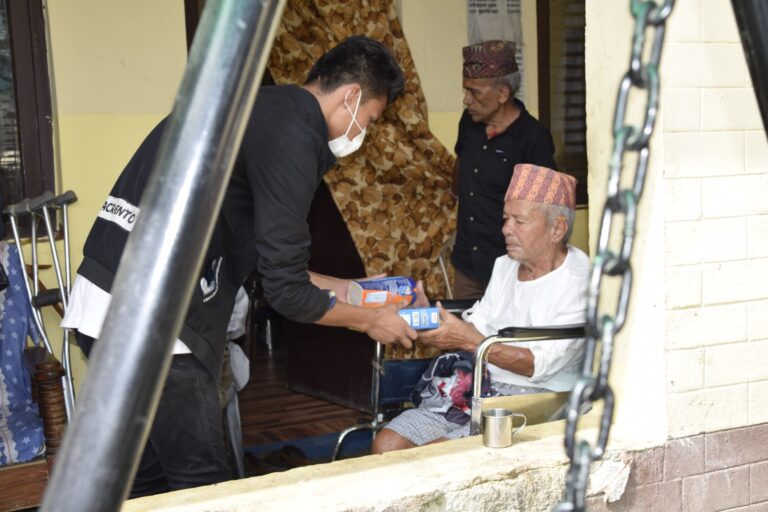
Food distribution to senior citizens at Nisahaya Sewa Sadan in Shantinagar. Photo: Bidhya Rai
Basnyat asserts that if paid services outside this realm are systematized and made dignified, the caregiving sector could generate annual employment for 1.4 million individuals in Nepal. “The care economy contributes approximately 17% to Nepal’s Gross Domestic Product (GDP). If this is transformed into a dignified and respected employment sector, those requiring care will receive it, and job seekers will secure employment,” she explains. “Once it becomes remunerative, men’s attraction toward it will also increase, reducing the burden of unpaid care work on women.” A study conducted by ILO Nepal in Madhesh, Karnali, and Sudurpashchim provinces also indicated an escalating need and demand for elderly care.
An indifferent government
An opportunity exists to further stimulate the economy through the senior citizen care sector in Nepal. ILO Nepal Officer Basnyat emphasizes that care work is not merely a social issue but can be coupled with economic progress. The government, in its budget program for the fiscal year 2026/27, has incorporated plans to implement a ‘Returnee Migrant’ program to harness the knowledge, skills, and efficiency of those returning from foreign employment.
A gateway of opportunity can be opened for human resources who have returned after working as caregivers abroad to utilize their skills and earn within the country. However, Prativedan Baidya, an activist in the elderly care sector, warns that due to the absence of clear and practical policies, senior citizens run the risk of being deprived of the very care services they are currently receiving. His commentary targets the ‘Geriatric Care Center Operation Guidelines and Standards 2020’ formulated by the Nursing and Social Security Division under the Department of Health Services of the Ministry of Health.
According to those standards, government, private, non-governmental, cooperative, or non-profit health institutions established for the long-term care of senior citizens who are frail, chronically ill, lacking family or guardians, incapable of self-care due to physical or mental infirmity or disability, or affected by natural disasters, and who require assistance for daily activities, are designated as ‘Geriatric Care Centers.’ To operate such centers, criteria have been mandated, including an earthquake-resistant building with at least 25 beds (allocating 55 square meters per bed) and a staff strength of 40 personnel.
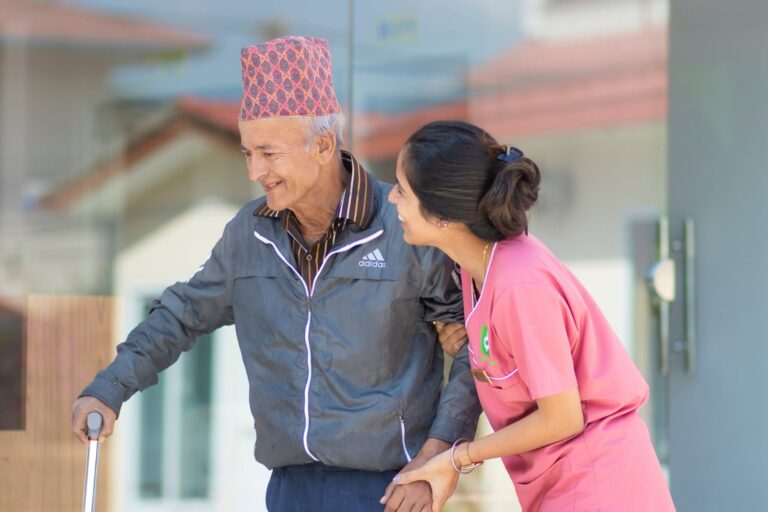
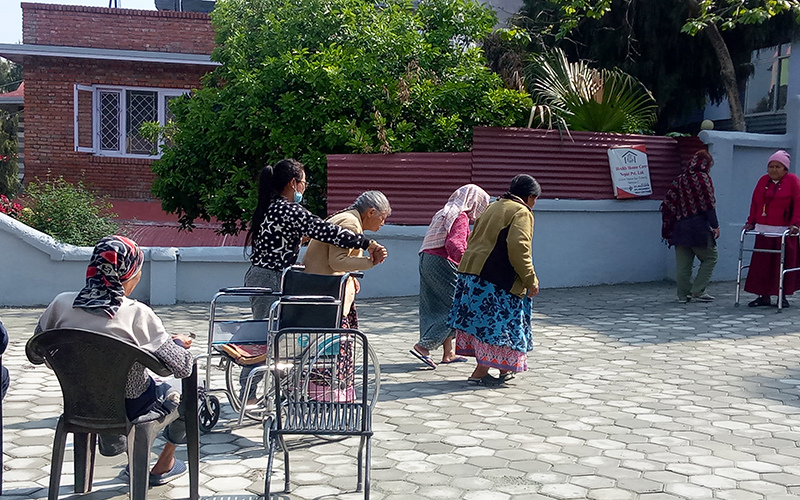
Nursing and caregiver services being provided to a senior citizen. Photo: Naman Care Home’s Facebook Page
Baidya states that because the standards are impractical, not a single center out of approximately 70 geriatric centers operating across the country has obtained an operational permit. He notes that imposing standards akin to developed countries all at once in a nation where 20% of citizens live below the poverty line is completely unfeasible. “Operating a center by fulfilling all specified metrics skyrockets the initial setup cost. In that scenario, the vast majority of middle-class families already reeling under inflation cannot sustain the expenses of a geriatric center,” he points out. “For families whose children are abroad, or must go out to earn even if they are within the country and cannot find time to sit at home looking after parents—where are the senior citizens of such households supposed to go to receive nurturing care?”
Hira Kumari Niroula, Director of the Nursing and Social Security Division, mentions that although complaints are being received regarding difficulties in adhering to the standards due to resource constraints, the regulations cannot be diluted to the point of overriding prevailing laws. According to her, out of 5 to 6 centers that applied for operational permits, none met the criteria. She states, “As the need for care among senior citizens escalates, these centers are an absolute necessity. Therefore, we have initiated groundwork with the objective of facilitating the implementation of these standards.”
The challenge of aging
The Senior Citizens Act, 2006 defines a Nepali citizen who has attained the age of 60 years as a senior citizen. People in this age bracket are generally less active physically and mentally. Nevertheless, senior citizens are revered as mirrors of society, treasuries of experience, storehouses of knowledge, and guides for the nation. The Senior Citizens Act mandates the maintenance and care of senior members as a duty of every family member. Activities such as providing food, clothing, housing, mobility, entertainment, involvement in religious activities, and arranging healthcare services fall within the scope of maintenance and care.
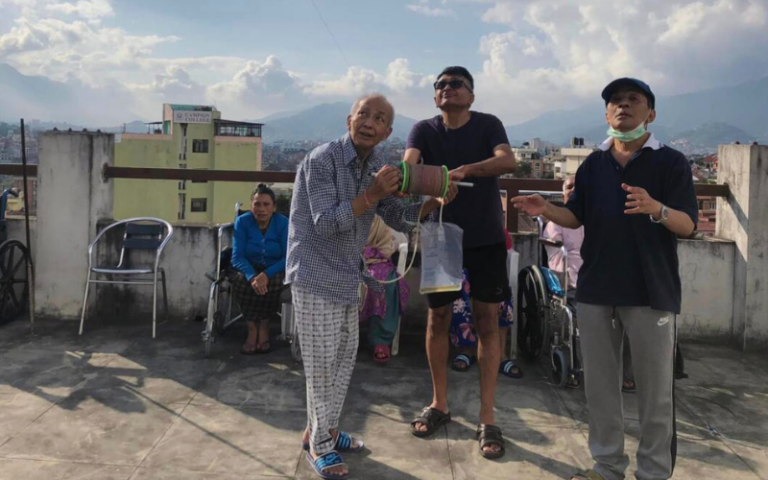
Senior citizens flying kites. Photo Source: Health Home Care Nepal’s Facebook Page
However, outbound migration, a growing preference for nuclear families, a working younger generation, and intergenerational integration issues are compounding the challenges of elderly care day by day. The annual report of the National Human Rights Commission for the fiscal year 2024/25 pointed out that due to poverty, familial discord and fragmentation, and the decline of social and moral values, the honor and protection of human rights for all senior citizens have not been fully realized. The commission’s monitoring revealed that factors such as a lack of responsibility among offspring, ideological conflicts between generations, loneliness, and the search for spiritual spaces are forcing senior citizens to seek refuge in old age homes.
The rate of taking shelter in old age homes is also climbing. According to the annual progress report of the Ministry of Women, the number of senior citizens receiving protection across various old age homes and shelters nationwide stood at 458 in the fiscal year 2019/20. By the fiscal year 2022/23, this figure escalated to 2,397 individuals, sheltered across 116 old age homes and care facilities nationwide. Nirmala Karki, Chief Women Development Officer at the Senior Citizen Protection Section of the Ministry of Women, states that the latest details are currently being studied, and the data is expected to arrive by the end of this month. The Human Rights Commission’s report highlights that the majority of senior citizens residing in old age homes suffer from various familial, psychological, and social issues, alongside physical ailments.
A research article titled ‘Constitutional and Legal Provisions Regarding the Protection of Senior Citizens,’ published in the Journal of Development Review in July 2024, mentions that regular health checkups for individuals in old age homes, day-care centers, and treatment facilities have been deficient. “Even those afflicted with complex diseases have not gone for health evaluations and are unable to consume regular medications,” stated Sushila Sherchan, an assistant professor at Saraswati Multiple Campus under Tribhuvan University, in the article.
Studies have demonstrated that senior citizens are forced to live in isolation. Prahlad Adhikari, an assistant professor of psychology at Tri-Chandra College, conducted a study under the ‘Metropolitan Research Fellowship (MRF) 2022’ on the topic ‘The Responsibility of the Municipality for the Mental Health of Senior Citizens.’ The study, carried out among senior citizens residing within the Kathmandu Metropolitan City, noted that 21.7% of senior citizens who sent their children abroad for education are severely plagued by emotional loneliness. Similarly, 63.3% were found to experience moderate emotional loneliness, while 15% faced no emotional loneliness whatsoever. The study detailed that among the participants, one in four suffered from emotional loneliness, one in three from depression, and one in two from social isolation. The study evaluated 509 senior citizens over the age of 58 residing within the metropolitan city.
ILO Nepal Officer Basnyat affirms that the aging population has emerged as a massive challenge, one that will intensify in the future. According to her, even at present, finding individuals to look after the elderly at home is becoming increasingly difficult.
The average life expectancy of Nepalis has climbed to 71.3 years. Due to an increasing average life expectancy and a declining birth rate, it is projected that Nepal will transform into a country with an aging demographic profile over the next four decades. Data reveals that Nepal is rapidly heading toward population aging. According to the National Population Census of 2001, the number of senior citizens in Nepal was 1.5 million, comprising 6.5% of the total population. In 2011, it rose to 8.13%, reaching 2.154 million. In the 2021, census, it escalated further to 10.2%, totaling 2.97 million. It is estimated that by the year 2051, the population of senior citizens over 60 years of age will reach 21.21% of the total national population.
Baidya, the advocate for senior citizen care, states that if the country transitions into an aging society, supervising them will become highly challenging. “Developed countries fulfill their needs by bringing in human resources from abroad; since we cannot sustain that financially, it presents an immense challenge for us,” he explains. A multitude of Nepalis migrate to countries like Israel and Japan specifically to work in caregiving roles.
The declining birth rate is considered another matter of grave concern. According to projections by the National Statistics Office, the population rate of children in the 0 to 14 age bracket is steadily declining.
Solitary old age caused by children’s foreign residency
Foreign employment has extended a significant contribution to keeping the country’s economy dynamic. According to the ongoing 16th Plan (FY 2024/25 to 2028/29) of the National Planning Commission, the volume of remittances entering Nepal accounts for 22.8% of the country’s GDP. The ‘Nepal Development Update’ report published by the World Bank in October 2024 also highlighted that foreign employment has played an instrumental role in elevating the living standards of Nepalis, reducing poverty rates, and refining the overall Human Development Index (HDI). Yet, while those contributing to the economy by sending remittances remain abroad for years, parents left behind at home face isolated and agonizing conditions.
According to records from the Department of Immigration under the Ministry of Home Affairs, Nepalis travel abroad for diverse purposes including employment, pilgrimages, tourism, family visits, education, temporary residency, permanent residency, conferences, training, dependents, medical treatment, official and business assignments, and sporting activities.
However, migrating for employment and education requires separating from families, relatives, kin, friends, and siblings for prolonged durations. In the year 2024, a total of 856,422 Nepalis flew abroad for employment, consisting of 96,197 women and 769,890 men. In the same year, 119,409 individuals departed for studies abroad, including 55,068 females and 64,335 males.
The trend of moving abroad for long-term studies and work has directly influenced the familial structure. Until a few years ago, when youth and men migrated, only women, children, and senior citizens remained at home. In recent years, as the practice of wives and daughters-in-law relocating to urban towns to educate children has intensified, only the elderly are found in rural households. According to the National Inclusive Commission, it has been observed that more than 85% of senior citizens in Nepal reside in rural sectors.
Aging overlooked by the state
Article 41 of the Constitution of Nepal guarantees senior citizens the right to special protection and social security from the state. Section 122 of the National Civil Code, 2017 explicitly outlines the duties of children toward their parents.
According to the Ministry of Women, there are 17 policies, laws, action plans, directives, procedures, and standards concerning senior citizens. These documents encompass subjects such as provincial-level senior citizen villages, senior citizen service and recreation centers, gardens (parks), care centers, day-care centers, knowledge and skill transfer centers, and old age home operations. By February of the current fiscal year, the number of senior citizen day-care centers reached 368. In accordance with the Senior Citizens Act, 2006, provisions exist to establish senior citizen committees at central, provincial, and local levels for the care, nurturing, and social security of senior citizens, alongside distributing identity cards and social security allowances.
Certain local levels have begun integrating senior citizens into their annual programs and budgets. They have started delivering social security allowances directly to the doorsteps of fragile, disabled, and senior citizens. They conduct health camps, distribute warm clothing during winters, and honor them. However, senior citizens across all regions and classes have not yet gained uniform access to these services and privileges. The Human Rights Commission’s report states: ‘The local government has failed to dedicate adequate focus toward protecting the rights and privileges of senior citizens.’ The commission concludes that even 18 years after the enactment of the Senior Citizens Act, 2006, senior citizens have not received the amenities mandated by law.
Basnyat mentions that the government’s lack of adequate focus on the proper management of senior citizens has forced families to depend entirely on private sector amenities. “The way everyone dedicates focus to childcare, the same does not exist for senior citizens,” she notes. “If children are the leaders of the future, senior citizens are the pillars of history; they contributed to the family, society, and country during their energetic years, yet there is a lack of proper appreciation for that,” she states.
Public critiques have surfaced indicating that the government has diminished its priorities by altering the very name of the ministry directly concerned with senior citizens.
The Cabinet meeting on May 13 approved the Government of Nepal (Allocation of Business) Rules, 2026, removing ‘Senior Citizens’ from the former name of the Ministry of Women. It has currently been designated as the Ministry of Women, Children, Gender and Sexual Minorities, and Social Security. Previously, under the Government of Nepal (Allocation of Business) Rules, 2017, the name was the Ministry of Women, Children, and Senior Citizens.
Nirmala Karki, Chief Women Development Officer at the Senior Citizen Protection Section of the Ministry of Women, claims that the alteration in nomenclature will not overshadow senior citizen issues. She says, “On the contrary, starting from the upcoming fiscal year, in partnership with all three tiers of government, we intend to make active senior citizens productive by linking them with income-generating tasks, honoring their skills, increasing day-care centers, and expanding environments for peer gatherings and intimacy.”
The need for systematization
In Nepal, senior citizen care services have gradually begun taking the form of a ‘commodity.’ Baidya says, “We cannot tell the current generation to clear remote wildernesses to secure a livelihood the way their great-grandparents did. They can head to any corner of the world in search of opportunities; they cannot just sit at home forever. For this very reason, elderly care will inevitably manifest as a commodity.” Even when living under the same roof, intergenerational mismatches arising from changing lifestyles are propelling the demand for ‘elderly care.’
However, Basnyat from ILO Nepal notes that policies regarding proper training, salary, and benefits for caregivers have not been effectively implemented. She recommends that the generation of caregiver human resources and professionalism in care services must be scaled up. She urges, “The government must acknowledge its accountability and monitor service providers involved in care work, including elderly care. It must escalate investments in geriatric healthcare services and align the required doctors, nurses, and other specialized human resources.”
Baidya, who also serves as the chairperson of Pustantaran Nepal (an organization working in the senior citizen sector), suggests that the standards should be amended to allow Geriatric Care Centers to initiate operations with a minimum of 10 to 15 beds. He adds, “Accessible services must be ensured for middle and low-income brackets as well.” Given that the risk of isolation is climbing within the aging population, he suggests placing emphasis on expanding psychosocial counseling services and creating environments that enhance engagement in creative activities. Nirmala Karki, Chief Women Development Officer at the Ministry of Women, mentions that since the government currently operates only the Pashupati Old Age Home for senior citizen care and rehabilitation, the ministry aims to facilitate and streamline the care services being provided to senior citizens by the private sector.