Kathmandu
Tuesday, June 16, 2026





Grieving families face systemic obstruction as police routinely decline FIRs in cases involving state-linked violence and custodial torture.

KATHMANDU: In the incident of the death of 22-year-old Shreekrishna BK in police custody in Sindhuli on April 20, 2026, the police refused to register a First Information Report (FIR) naming specific individuals. According to legal provisions, the victim’s family must file a complaint with the police to seek justice in such cases. However, this is not the first instance where victims have faced hardship due to the police’s refusal to register a complaint.
Another famous case where the justice process became uncertain due to police refusal to take a complaint is the death of Kumar Paudel. Paudel, the then Sarlahi District In-charge of the Communist Party of Nepal led by Netra Bikram Chand ‘Biplav’, died from police gunfire.
When his mother, Durga Devi, tried to file a named FIR claiming her son’s extrajudicial killing, the police refused to register it. She had sent the complaint via post, naming the then Home Minister Ram Bahadur Thapa ‘Badal’ and the then Inspector General of Police Sarbendra Khanal in a homicide case. However, after the police refused to register it, she filed a writ petition at the Supreme Court on November 27, 2020, demanding the registration of the case.
Durga Devi had requested a mandamus order from the Supreme Court to register the homicide case and move the investigation forward against the then Chief District Officer of Sarlahi, the Superintendent of Police, a Police Constable, and the Mayor of Bagmati Municipality.
In that case, the Supreme Court issued a mandamus order in the name of the District Police and the Government Attorney’s Office, Sarlahi, to investigate the incident and proceed with the case. Only then was the police forced to move the process forward.
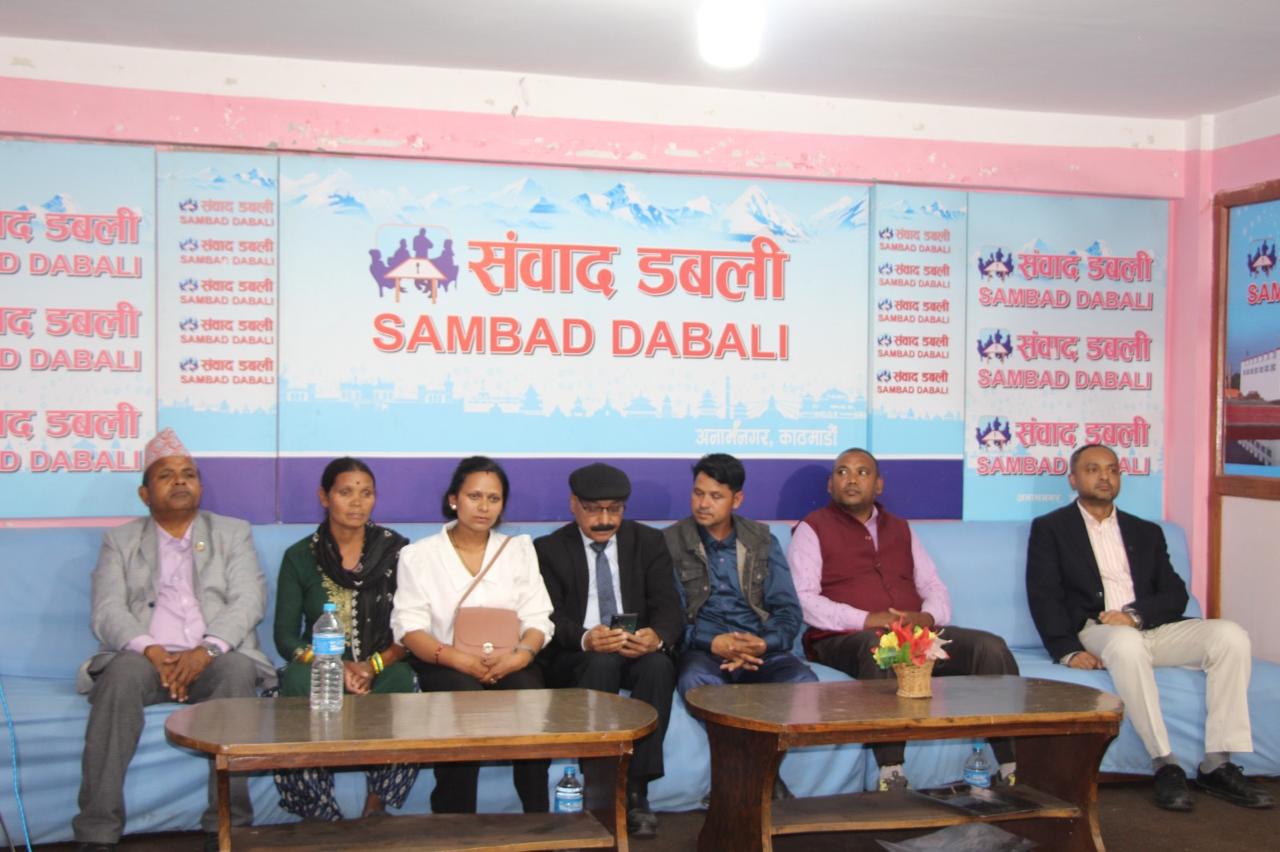
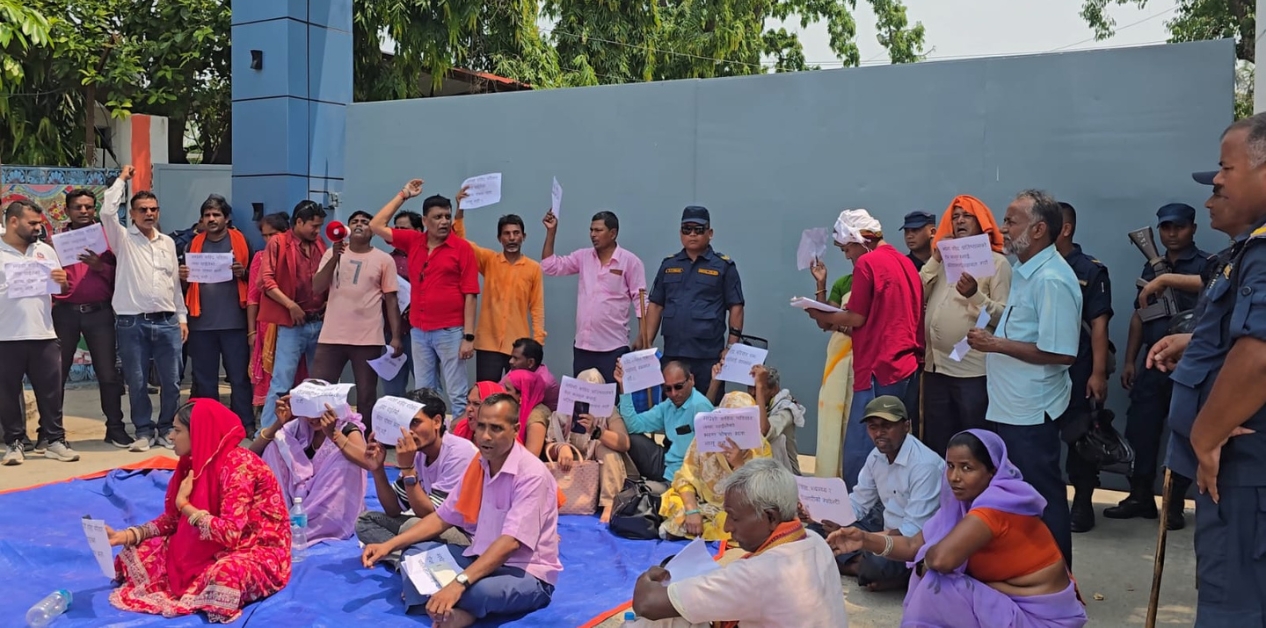
Press conference held in Kathmandu by victims of the Sindhuli incident.
Six and a half years after the incident, on March 12, 2026, a joint bench of Justices Manoj Kumar Sharma and Bal Krishna Dhakal issued the mandamus. It stated that the necessary process should be advanced within two months according to the complaint application submitted by the complainant. Nirajan Pandey, the Deputy Spokesperson of the Supreme Court, informed that the full text of the verdict was made public on April 29.
Article 16 of the Constitution guarantees the right to live with dignity, Article 18 the right to equality, and Article 21 the rights of victims of crime. The Supreme Court interpreted that if a person dies, it is the state’s responsibility to conduct an independent and effective investigation and proceed with action against the guilty. The Supreme Court stated, “The agencies of the state must effectively fulfill their obligations to meaningfully adopt the rights of citizens ensured by the Constitution of Nepal and international conventions into practice.”
What was the Paudel’s case?
Paudel died on June 20, 2019 from police gunfire near Lakhandehi forest in Lalbandi-1, Sarlahi. The police claimed he was killed in an “encounter.”
Following the incident, organizations including the National Human Rights Commission (NHRC) conducted field studies. The Commission submitted a report to the government on October 21, 2019. “He was killed after being shot nine times, and while the police claimed self-defense and a double encounter, the situation of a double encounter or self-defense was not confirmed from anywhere,” said a press release issued by the Commission after submitting the report to the government. “From the nature of the incident and collected evidence, the Commission’s investigation showed he was killed after being taken into control.”
Accusing the police of not conducting an impartial investigation, the Commission concluded that Paudel’s right to life had been violated. The Commission recommended the government provide three hundred thousand rupees in compensation to the legal heir and immediately suspend and prosecute Police Inspector Krishnadev Prasad Sah and Police Constables Binod Sah and Satyanarayan Mishra, who were directly involved and led the incident, on criminal charges. The report also pointed out that Police Inspector Kiran Prasad Neupane and Police Sub-Inspector Surya Kumar Karki made errors while preparing the incident report. The Commission also suggested “arranging for mandatory written information to be given to the Human Rights Commission within 24 hours regarding controversial incidents of death in double encounters, deaths in custody and prison, and rape cases.” However, the suggestions have not been implemented.
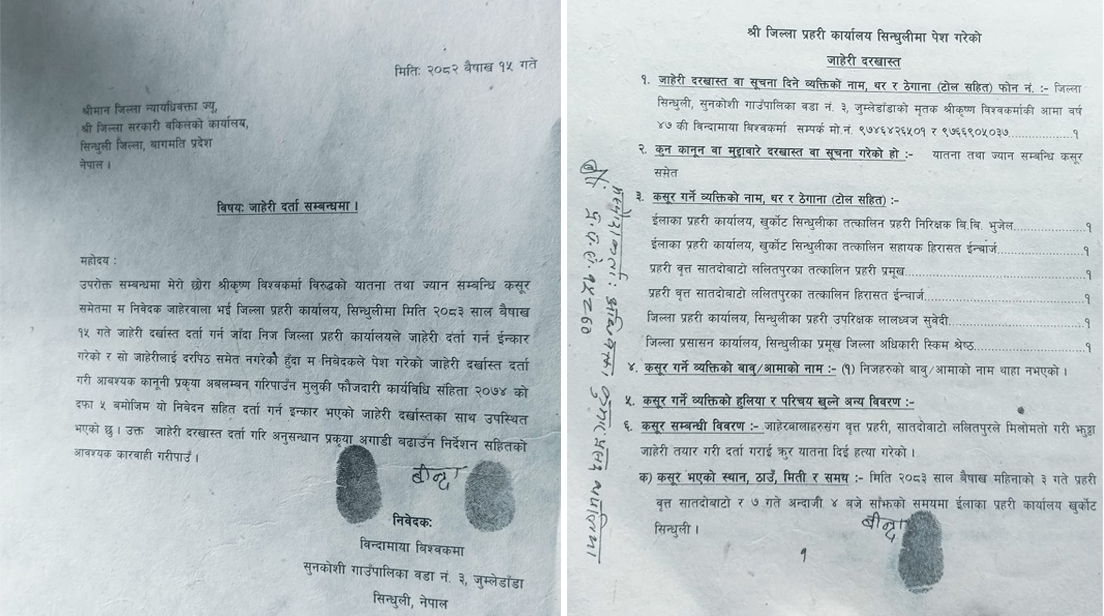
Complaint filed by victims of the Sindhuli incident.
The Commission demanded the truth be revealed through a high-level parliamentary committee for a judicial inquiry into the Paudel murder. “We demand that the institutions and individuals involved in heinous crimes like murder in the name of alleged encounters be brought within the legal framework and held accountable,” the preliminary field monitoring report stated.
The Commission also advised the Biplav-led CPN to respect the rights of others while exercising its own rights. The Commission’s suggestion to the NCP was to immediately stop violent activities including murder, kidnapping, threats, forced donations, and explosions, to become sensitive toward damages, and to transform into peaceful competitive politics.
After the incident, human rights organizations Advocacy Forum and INSEC also conducted an investigation and prepared a joint report. The report mentioned that the series of killings in the name of “alleged encounters” had increased, violating the right to life.
The police’s claim
The District Police Office, Sarlahi, provided information about the incident through a press release on June 20, 2019. It claimed that four people arriving on two motorcycles fired at the police while they were patrolling at 2 PM. It mentioned that one person died on the spot when the police fired back in self-defense. It was stated that the person killed was identified as 47-year-old Kumar Paudel based on an ID card. The police claimed that cases regarding arson, bomb blasts, explosives, and organized crime had already been registered against Paudel at the Sarlahi Police Office before he was killed in the retaliatory action.
The Ministry of Home Affairs had also formed a four-member investigation committee regarding the death of Paudel, the then Sarlahi In-charge of the Biplav group. The committee concluded that he died when a “misfire” occurred while Kumar was firing at the police. The report prepared by the committee also mentioned that Paudel appeared to be involved in capturing public land in the name of the “People’s Council.”

Supreme Court/File photo
In the Sindhuli incident as well, Shreekrishna’s mother, Bindamaya Bishwakarma, has faced similar hardship in registering a complaint after her son’s death. When she went to the District Police Office on April 28 regarding the offense of torture and homicide, the police did not take her complaint. Advocate Kumar Thapaliya informed that both the police and the government attorney refused to register the FIR. According to Section 5 of the National Code of Criminal Procedure, if the police refuse to register a complaint, an application can be made to the relevant Government Attorney’s Office. Upon receiving the complaint, the relevant District Government Attorney’s Office or Police Office must keep a record of it and send the FIR or information to the relevant police office for action.
“My son died after torture in custody. Neither the police nor the government attorney agreed to register my complaint. I have sent the complaint via post,” said Bindamaya.