Kathmandu
Saturday, July 18, 2026





Because of its consistent quality and taste, Khadka Hotel stands firmly in front of the Clock Tower as another symbol of Birendranagar
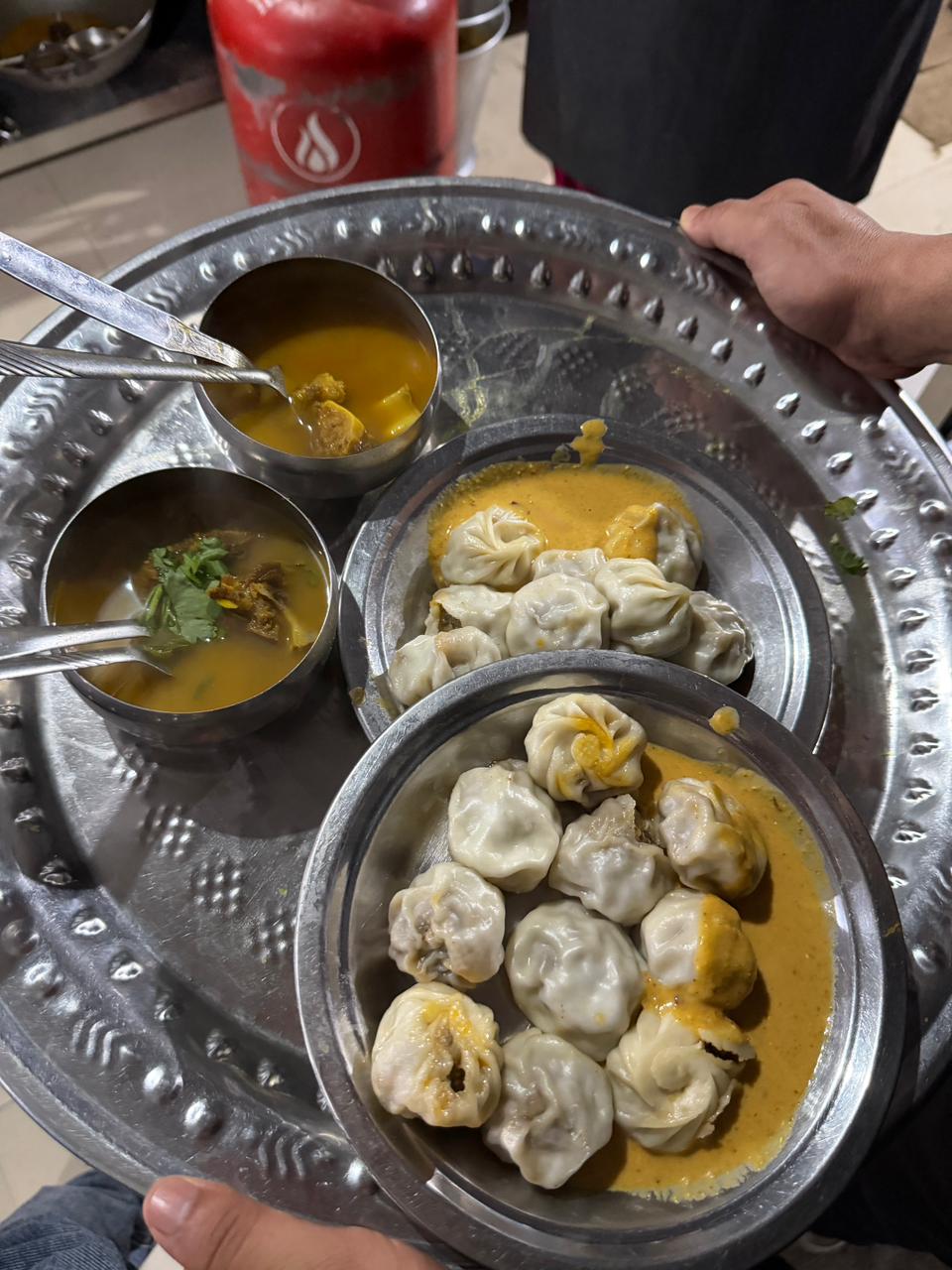
“This place serves the tastiest mutton momo in the world,” my public health expert friend Prabin Paudel told me about five or seven years ago when I first visited Birendranagar, Surkhet, and took me to Khadka Hotel. Located directly opposite the Clock Tower, the mutton momo there truly was delicious. That evening passed joyfully amidst reunions with friends, plates of momo, sekuwa (barbeque), and the lively chatter of project workers, NGO staff, and others around. Since then, I’ve visited Birendranagar many times for work, with different companions. Quite often, colleagues and travel companions have turned into close friends after sharing moments at Khadka Hotel.
This time, however, things were a bit different. Due to bad weather, a 7 a.m. flight was delayed until 2 p.m. I had a meeting scheduled at noon at the office of Barahatal Rural Municipality, about 30 kilometers from Birendranagar. It felt awkward to keep people waiting. Eventually, I called journalist friend Man Bahadur Wali, who told me not to worry. When I landed and came out, he was already there. He took my bag, handed me the key to his new Avenger motorcycle along with a helmet, and said, “Go, finish your work, and come back. We’ll meet in the evening.”
For someone unfamiliar with the road, the journey was quite difficult, but I managed on his new bike. By the time I returned, it was already evening. My body, sustained only by overpriced sandwiches and cups of tea at Kathmandu airport, was starting to weaken. When I met Man Bahadur in Birendranagar, he had an emergency; he needed to take a relative to Nepalgunj. He dropped me at the hotel.
Now what? I wanted a proper meal – something filling, something satisfying. A regular hotel meal would fill the stomach, but not the soul. Just then, I remembered the momo and hot broth at Khadka Hotel, and headed there alone.
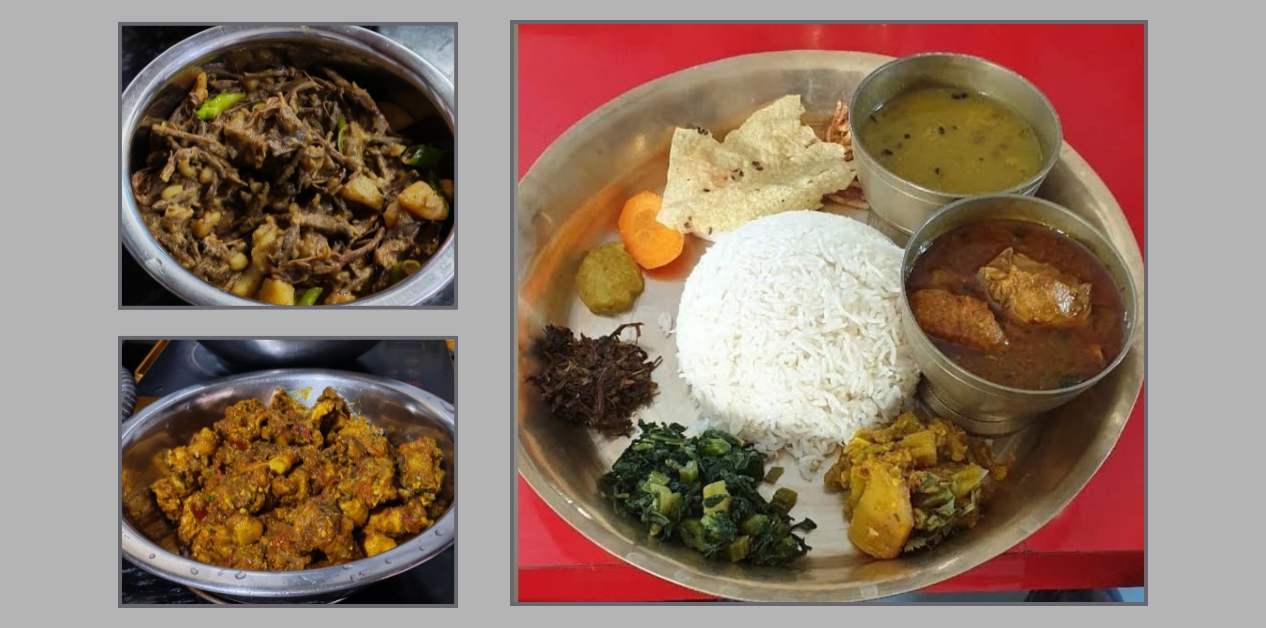
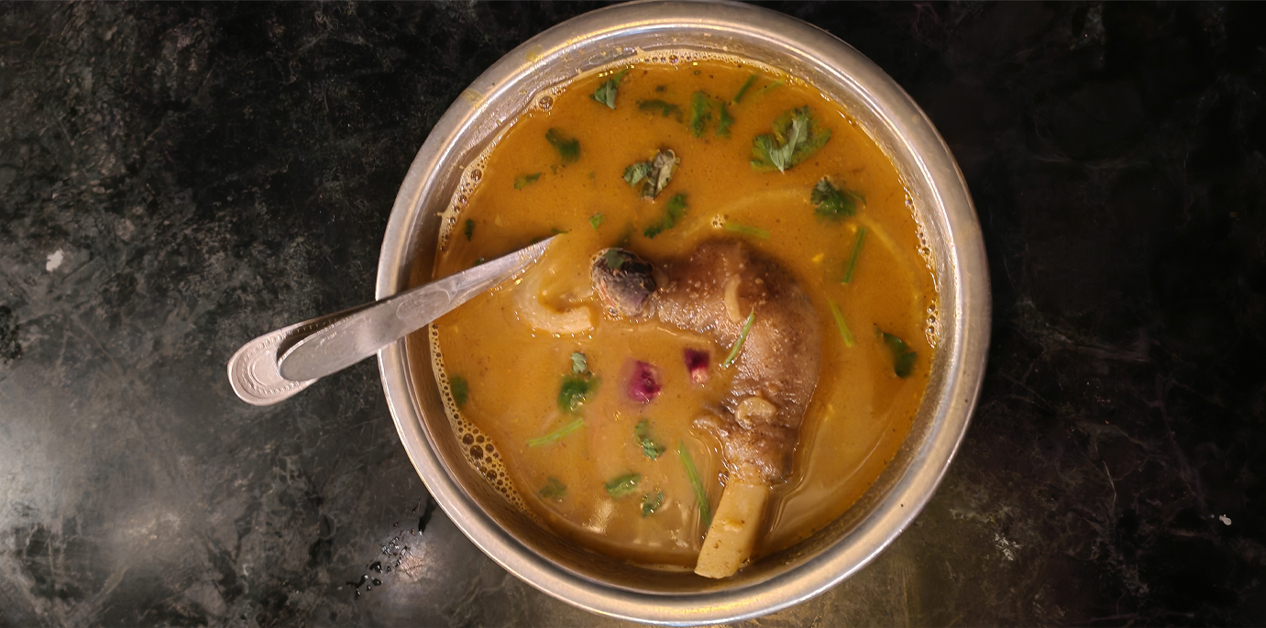
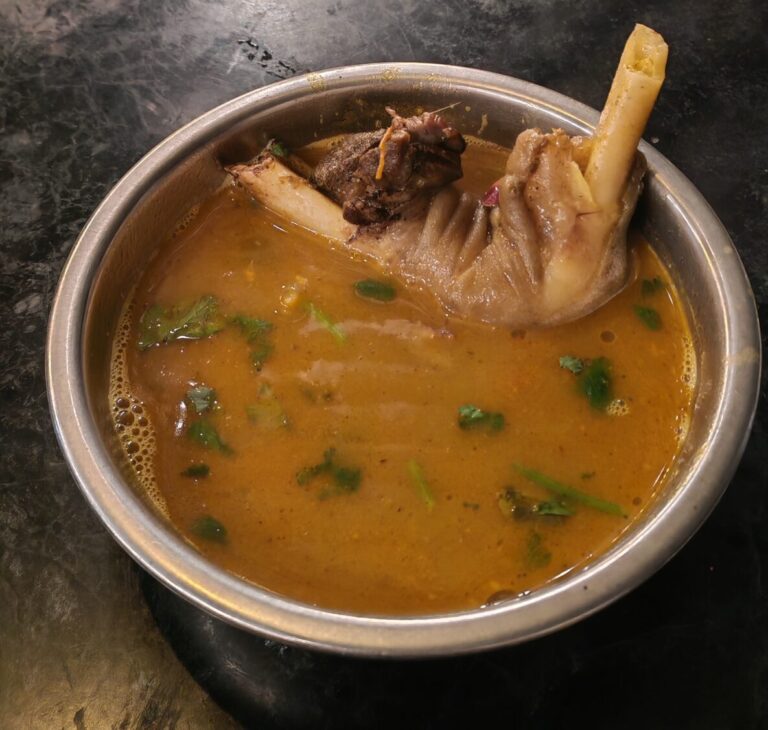
After placing my order, I noticed someone at the next table sipping a steaming bowl of khutti soup (trotter soup). I couldn’t resist and asked the waiter to bring that too. He suggested, “Start with the soup first; I’ll bring the rest gradually so it doesn’t get cold.”
In our culture, consuming trotter soup for strength during illness has long been a tradition. In Kathmandu these days, you even have to pre-book and pay in advance to get goat trotters. As I was thinking about this, the soup arrived, but it wasn’t just a simple trotter broth. It was actually something like dal paya, popular in India, Pakistan, and Bangladesh. There, it is prepared with mung or chickpea lentils or pigeon peas. But at Khadka Hotel, they use beans from Jumla.
The history of paya is considered very old. Between the 8th century BCE and the 4th century BCE, people used to boil animal legs and bones in water with minimal spices to make soup. During the medieval period (5th to 15th centuries), this soup became very popular in the Middle East. It was used to restore strength to soldiers tired from battle and to please royal families. In the Ottoman Empire, it was fed to soldiers for energy. While army cooks prepared it simply, royal kitchens enriched it with saffron and various herbs.
In the Indian subcontinent, Babar’s sister Gulbadan Begum mentioned that the soup was used to cure illnesses and boost strength. Some say the original form of paya is “pacha,” a medicinal broth made with salt, turmeric, bay leaves, and eaten with lemon – once prepared for Saudi King Abdul Aziz. When it entered India, spices like cardamom, garam masala, and onions were added. Over time, people adapted it to their tastes; some added yogurt, while in South India, coconut was included, making it thicker and richer. In dal paya, the lentils should not be overcooked even if the trotters are tender; you should still be able to recognize them.
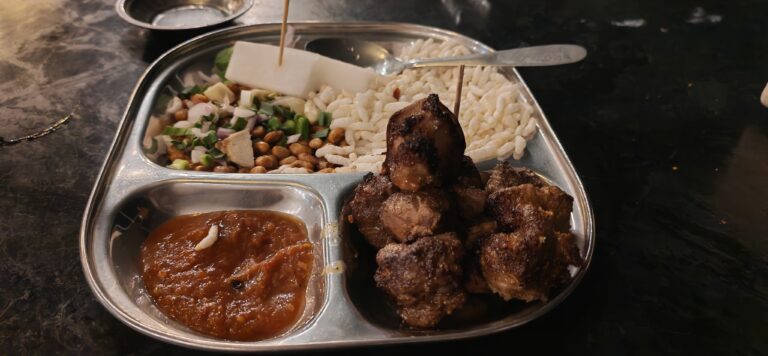
When I studied in Delhi, I used to eat paya with roti quite often. Compared to that, the bone soup sold in Kathmandu’s Putalisadak sekuwa shops feels thin and bland. But Khadka Hotel’s version has a distinctly Nepali identity – worthy of a perfect ten. Reflecting on all this, I sipped the soup, chewing on the tender meat around the hooves. Before I knew it, the bowl was empty. My hunger from the entire day was finally soothed.
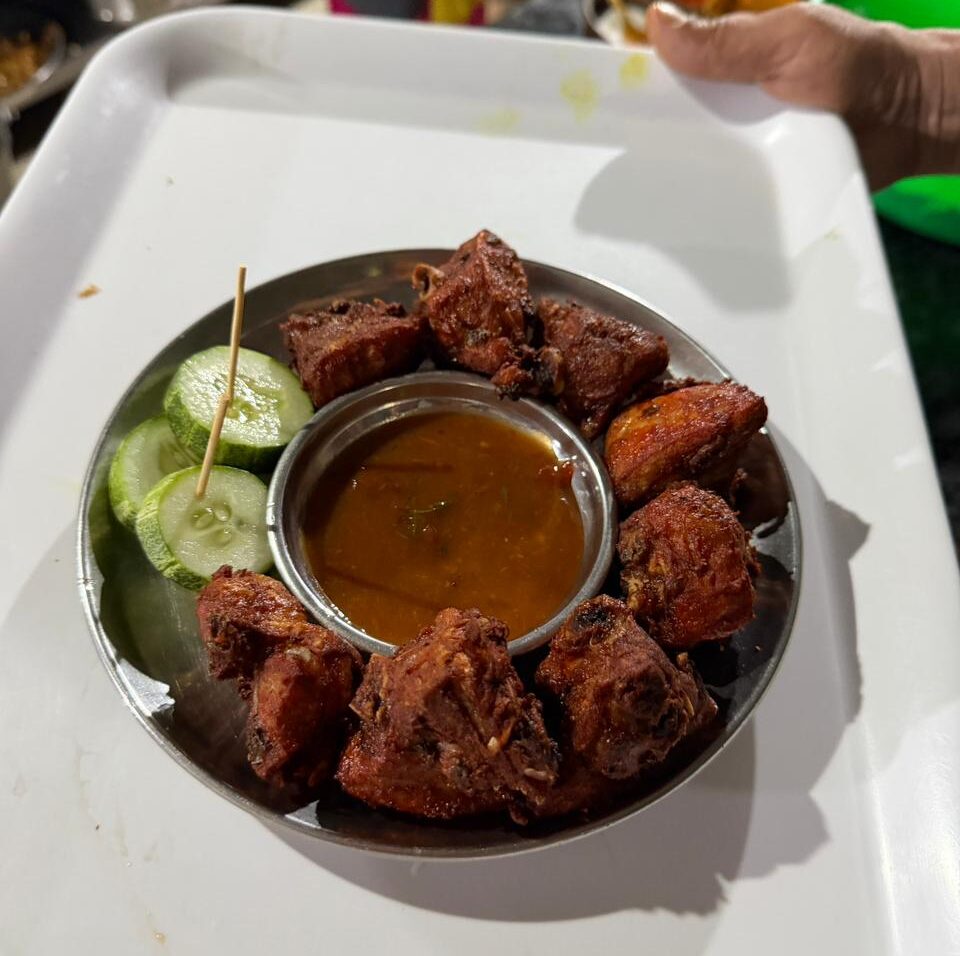
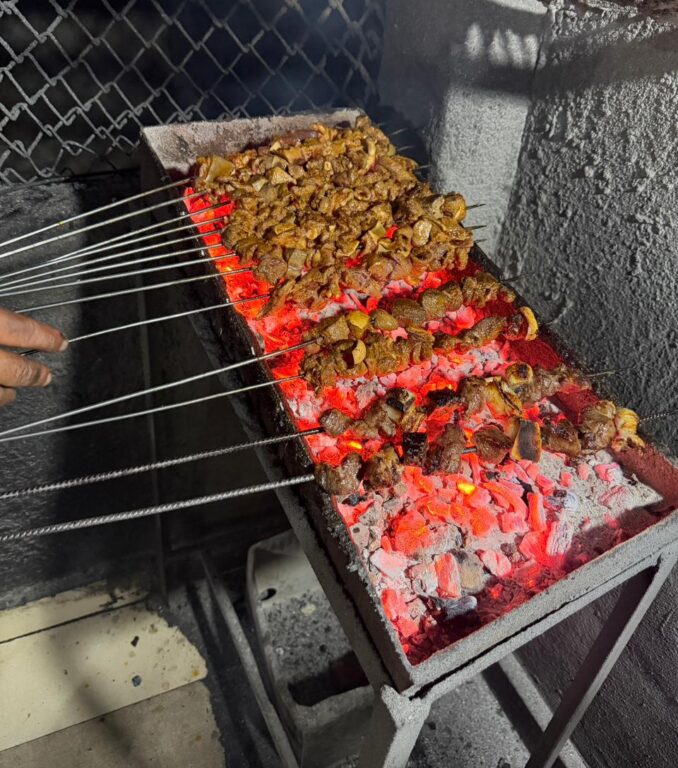
Then came the mutton momos. Then the mutton sekuwa set. Absolutely wonderful – each dish more delicious than the last.
One special feature of Khadka Hotel is its ability to manage all its crowded tables while making every guest feel welcomed and valued. Around 1981, seeing the lack of places for employees to eat, Shiva Raj Khadka, who worked at the Education Office, started Khadka Hotel as a place serving rice meals and snacks. Even back then, about 150–200 people regularly dined there. Later, the hotel moved to Shankar Chowk, where it ran for five years, gradually adding momos, chowmein, and sweets like jeri-puri to the menu. Like many rented businesses, it had to relocate multiple times. Since 2008, it has been operating at its current location.
Over time, the responsibility of running the hotel shifted to Shiva Raj’s three sons. Krishna Khadka handles overall management, while Khem Raj Khadka is in charge of the kitchen and cooking. Another brother works in the police and is expected to join the business after retirement.
Krishna Khadka shared, “After 1999, we sons took over. We decided to focus on specific items – mainly momos and sekuwa.”
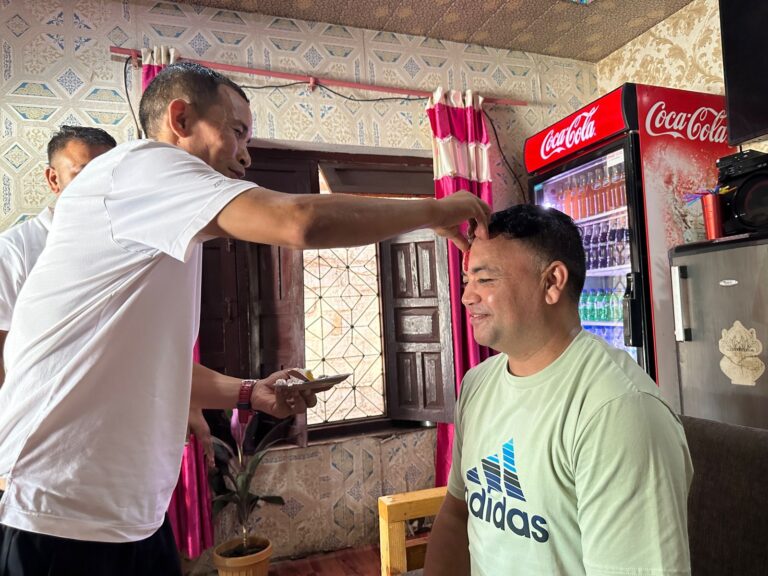
Shiva Raj Khadka, who founded what has become a distinctive part of Birendranagar, was later transferred to Dailekh. He retired in 2009 and passed away in 2024. But the aroma of the food he introduced still lingers among locals and visitors alike.
Due to competition and a slowdown in the market, the hotel now consumes about 100 kilograms of goat meat per day. The supply is handled by a few contractors. Krishna says modestly, “We are just a simple hotel. We don’t know much. Customer satisfaction is what matters most.”
Speaking about the trotter soup, he adds, “There isn’t much profit in it, but since it’s a signature dish, we continue to serve it. We use beans from Jumla, and customers love it. In winter, it’s hard to keep up with demand.”
Krishna may not realize – or may not wish to say – that his hotel has become a symbol of Surkhet. Some eateries quietly become part of a city’s identity. Khadka Hotel is one of them, standing strong in front of the Clock Tower, not just as a place to eat, but as a symbol built on consistency and quality.