Kathmandu
Monday, June 15, 2026





In an interview with Nepal News, the Portuguese strategist frames the US–Iran standoff as both post-Cold War fragmentation and an energy-geopolitical contest, warning of economic shocks, Europe’s limited autonomy, and Nepal’s exposure to oil and remittance risks
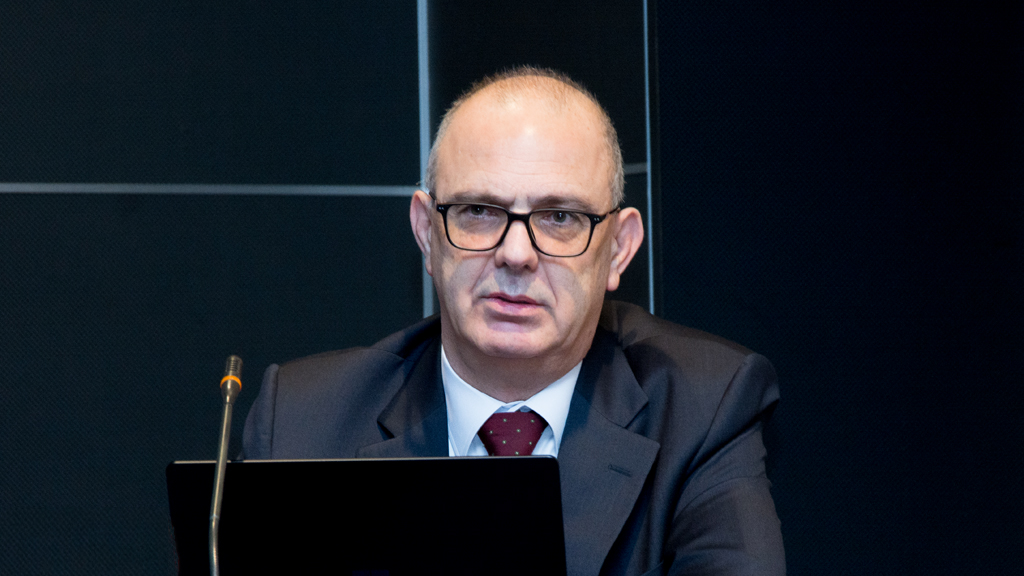
KATHMANDU: Vítor Manuel Ramon Fernandes is a Portuguese scholar and strategist whose career bridges global finance and international security. Currently an assistant professor at Universidade Lusíada de Lisboa and a researcher at CEJEIA, he spent over 25 years as an economist and executive before entering academia.
His professional background includes serving as vice president at JP Morgan in Paris and Madrid, consulting for McKinsey & Company and AT Kearney, and holding board positions in the defense (EMPORDEF) and media (Diário de Notícias) sectors.
Dr. Fernandes transitioned to international relations with a PhD from Universidade Nova de Lisboa and later served as a visiting professor at the University of Cambridge.
His expertise covers international relations theory, U.S. foreign policy, and the geopolitics of the Middle East and Asia. He is widely recognized for his research on global security, NATO-Russia relations, and nuclear dynamics in East Asia.
In an era where global strategic shifts define our reality, Binod Dhakal of Nepal News conducted an email interview with Dr. Vítor Manuel Ramon Fernandes.
From European finance to the complexities of South Asian and U.S. foreign policy, he provides a rigorous analysis of the security challenges facing the global community today. Edited excerpts follow:
How do you interpret the current US–Iran conflict in the context of shifting global power among the US, China, and Europe? Do you see it as post-Cold War fragmentation or a new “energy-geopolitical war”?
I interpret it mainly as a post-Cold War fragmentation in the sense of the process of the dismantling of the unipolar order, which is largely the result of the power shift that has been occurring for some time from the West towards the East due to the rise of China. That power shift has led to a response by the US because it is seeing its hegemonic position severely challenged.
We saw US responses to that situation in the recent past by President Obama with the ‘Pivot to Asia’, amongst others, and a continuation of that by President Biden. The current conflict with Iran is one of President Trump’s responses.
Iran is considered as a particular threat because it is anti-West and if it acquires nuclear military capabilities that would be a major danger to international security. This is why there is so much focus on preventing Iran from getting the nuclear bomb.
Nevertheless, following the above mentioned it is also an energy-geopolitical war because this conflict also affects China directly, amongst other countries, in terms of reducing its access to energy resources, which is in the interest of the US given that it is seen as weakening China.
What have been the biggest strategic mistakes made by the US and Iran so far in this conflict?
Most probably, the biggest strategic mistakes by the US so far in this conflict were to consider that the situation would be solved in a short period of time and to fail to consider that, if that was not the case, it would have dire consequences, both economic and political, in a very short period of time and all over the world, like it is happening.
Also, ignoring how much geography matters given Iran’s position relative to the Strait of Hormuz. Regarding Iran, I am not sure what the biggest strategic mistakes were.
Could the US-Iran conflict escalate into a wider regional war involving Gulf states or global powers?
That possibility always exists, but I do not believe that it will happen. I believe that both the US and Iran want to put an end to the war as soon as possible given its effects on both countries. The difficulty is how and in what terms. Prolonging this conflict is also not in the interest of the Gulf states, Europe, Russia or China.
How is the US-Iran conflict affecting Europe’s foreign policy autonomy from the United States? Is Europe becoming more of a follower of US strategy or developing its own stance?
The foreign policy of European countries is not unanimous amongst them and Europe lacks total autonomy relative to the US given NATO amongst other issues. Some countries, such as Spain, are presently taking a position that in the present situation can be considered as quite autonomous relative to the US, namely by not allowing the US to use Spanish bases in the war against Iran.
In any case, more European countries increasingly wish to become less dependent on the US given the current circumstances. But that will take time.
What economic and political risks does prolonged instability in the Strait of Hormuz pose for Europe, and could this accelerate EU strategic independence in energy and defense?
The most immediate economic problem is the rise in energy prices and uncertainty, which leads to an increase in inflation and lower economic growth. The situation will become even worse if the situation is prolonged in time and there is a disruption in supply not only of energy resources but also in fertilizers, amongst other products.
That would mean an energy crisis in terms of a lack of availability of energy but also of other products, and not “just” an energy shock in terms of higher prices. This would likely have significant political repercussions in several European countries if the affected countries are not able to offset those effects, at least partially. And even under these circumstances and potential risks, there is already a lot of talk in Europe about reducing energy and defense dependence from the US. However, that is not easy nor immediate.
Why is Trump’s diplomacy often seen as unpredictable? Did he change the global rules-based order? How might problems in the transatlantic relationship impact the Ukraine crisis, and could China benefit?
President Trump’s diplomacy is often seen as unpredictable because that is his nature and it is his way of conducting policy. He also has essentially a transaction approach to issues and problems. He certainly has had a most significant, and probably durable, impact on the global rules-based order, which began in his first term.

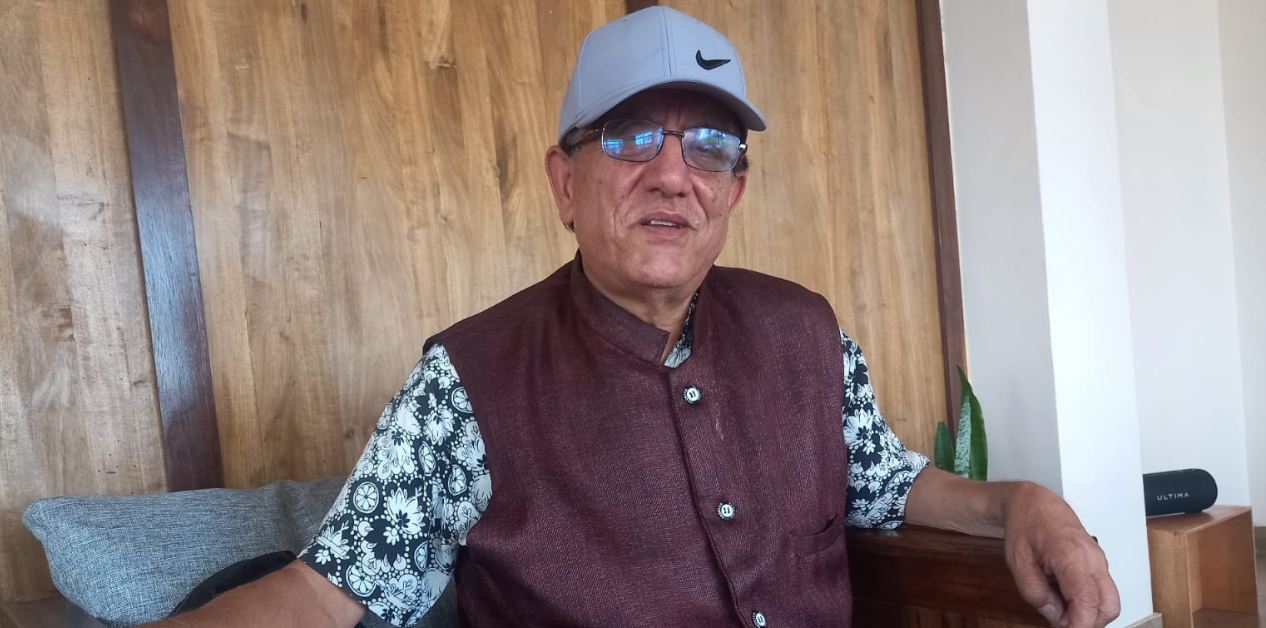
Vítor Ramon Fernandes in August 2018. Photo courtesy: Fernandes’ Facebook
Most probably, things will never be the same again and the global rules-based order is over, if it ever really existed. In the case of Ukraine, that country has already also suffered some of those effects as the US reduced its military and economic aid. China is clearly gaining from this situation as well as Russia.
How vulnerable is South Asia to Middle East conflicts compared to other regions? What indirect channels (oil prices, trade routes, inflation) could affect countries like Nepal, India, Pakistan, and Bangladesh?
South Asia will be affected by the energy crisis through all the indirect channels that you mention. It is difficult for me to assess the case of South Asia compared to other regions, and even each specific country individually, but it may well be one of the most affected regions.
A reduction in the supply of energy resources and in food resources due to a lack of fertilizers would also become a very serious problem in South Asia. But that would affect most regions.
Nepal relies heavily on remittances from the Gulf. How exposed is its economy to instability there, and could this trigger a long-term structural crisis? Is Nepal facing a “double shock” from higher oil prices and reduced remittances?
It is difficult for me to assess that in the case of Nepal. It will also depend on how long this crisis lasts but Nepal is bound to be severely affected both in terms of higher oil prices and a reduction in remittances given its dependence. The longer the crisis lasts the worse it will be.
How should countries like Nepal rethink their remittance-dependent economic model when external income sources become unstable? What does this conflict reveal about the vulnerability of such economies globally?
I can understand that remittances are important to many countries, such as Nepal. The only solution that I can think of is to try to reduce that dependence as much as possible and adopt different economic policies.
What realistic diplomatic pathways exist to de-escalate the US-Iran conflict? Can Europe play a meaningful mediating role? What key lessons should small states like Nepal learn from this evolving geopolitical environment?
The only realistic pathway to de-escalate the US-Iran conflict is for both parties, Iran and the US, to reevaluate their respective positions with respect to their realistic objectives and interests and negotiate. Only through diplomacy it will be possible to put an end to this conflict.
It will have to be done in such a way that both are able to claim that they won. In my opinion Europe can only play a limited role, albeit relevant, in pressuring the US to end the conflict through diplomatic means.
Irrespective of the recent withdrawal from negotiations in Islamabad it may well be the case that talks are taking place between Iran and the US through more discreet and informal channels.