Kathmandu
Saturday, July 25, 2026





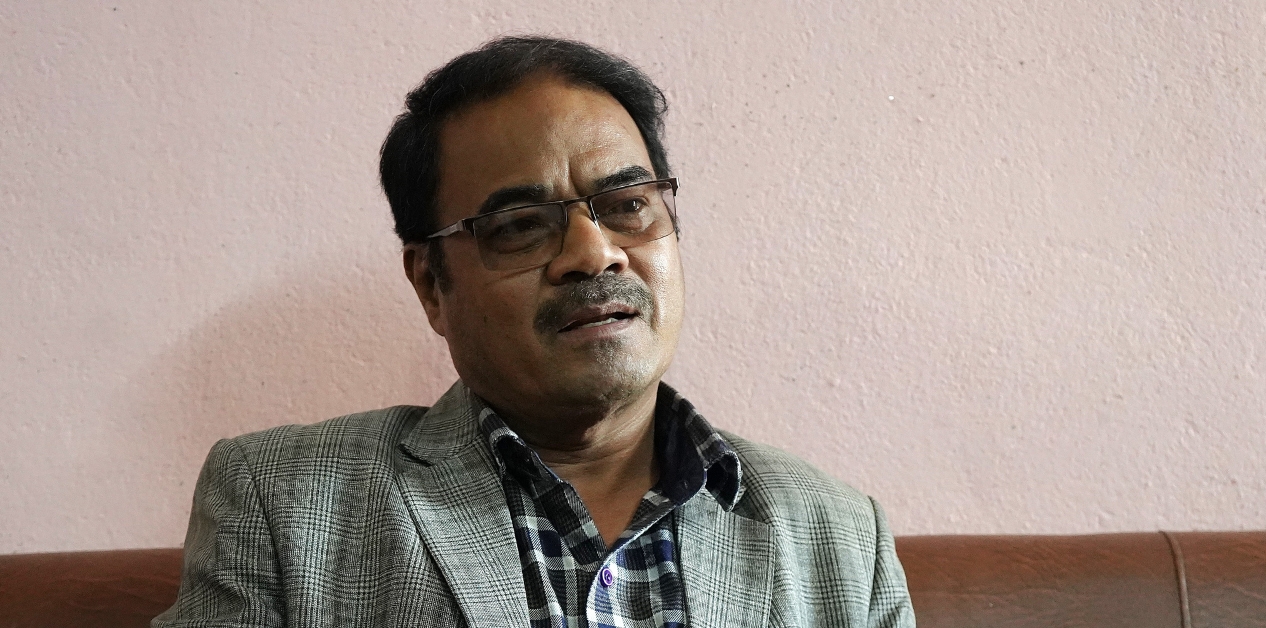
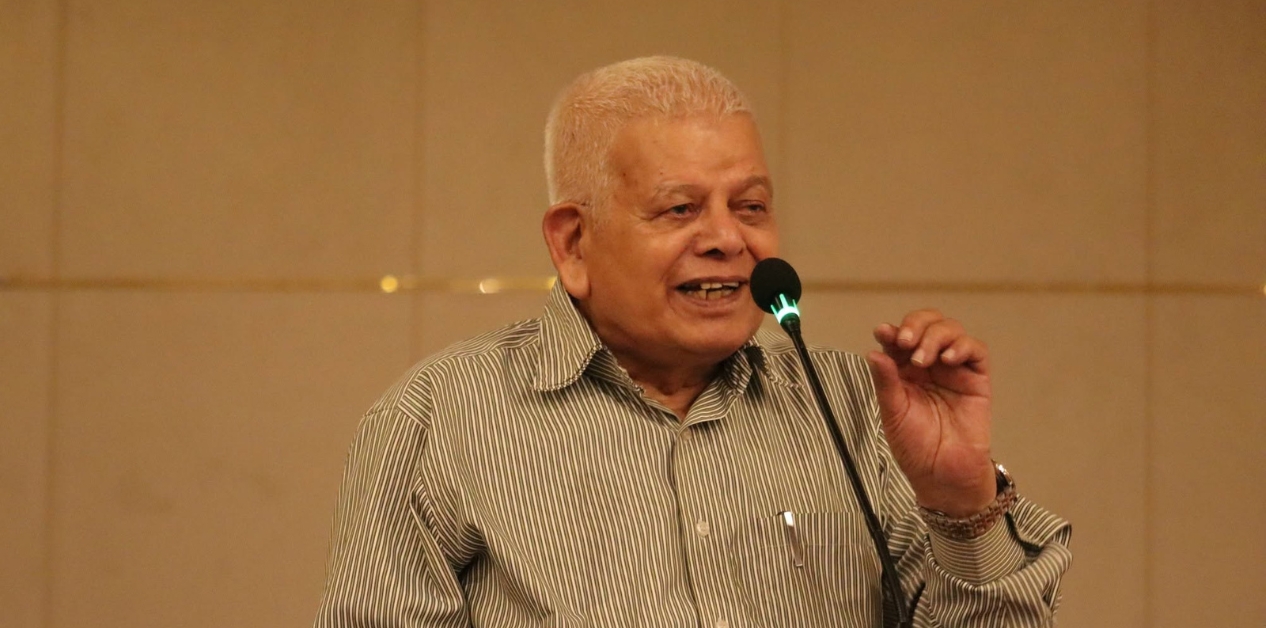
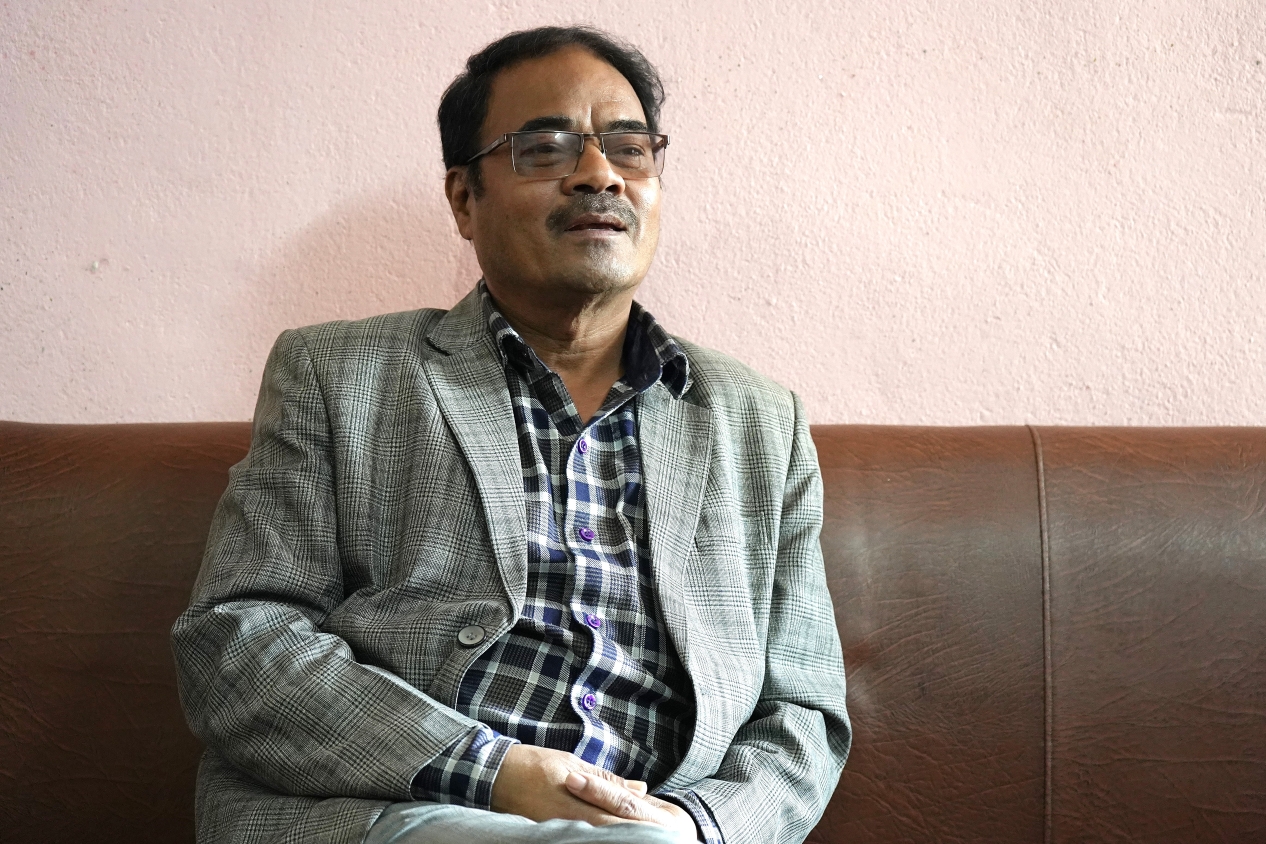
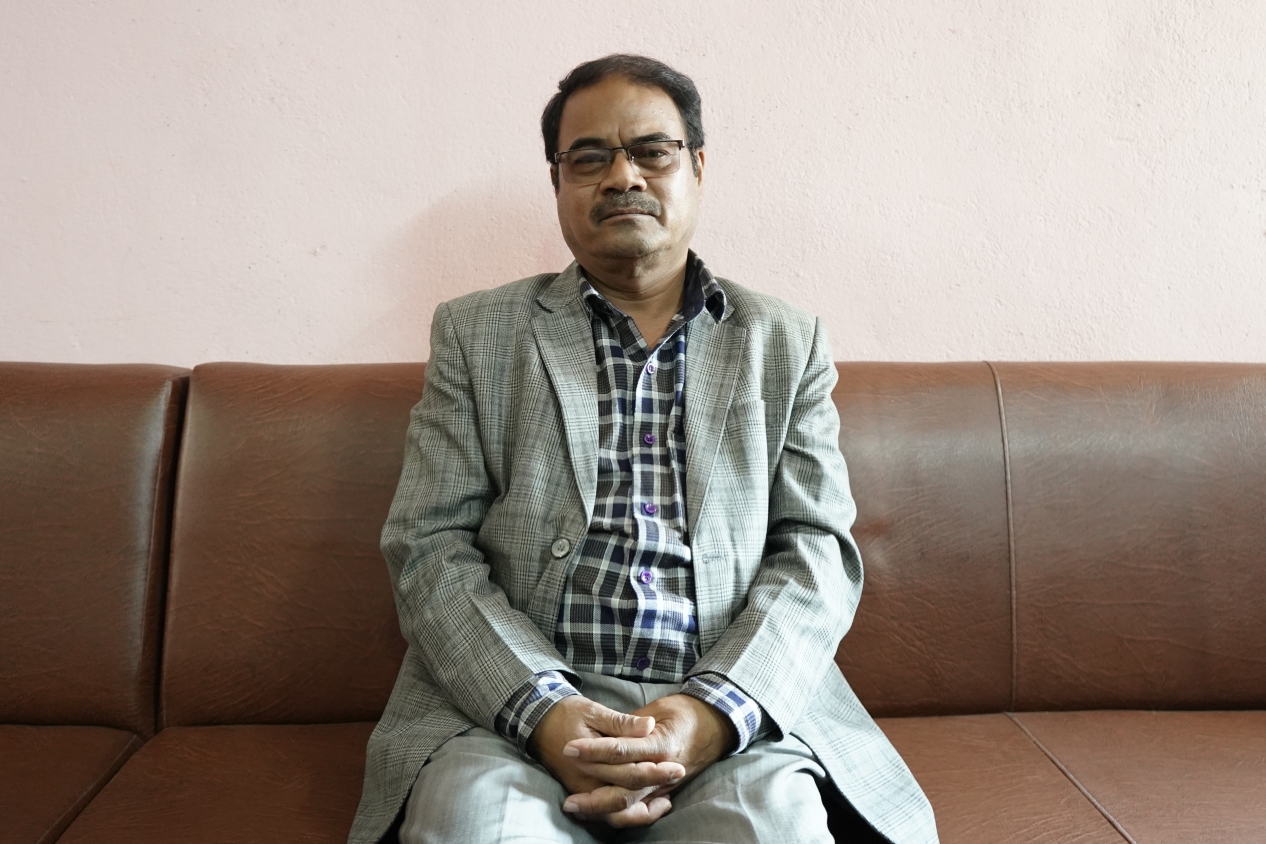
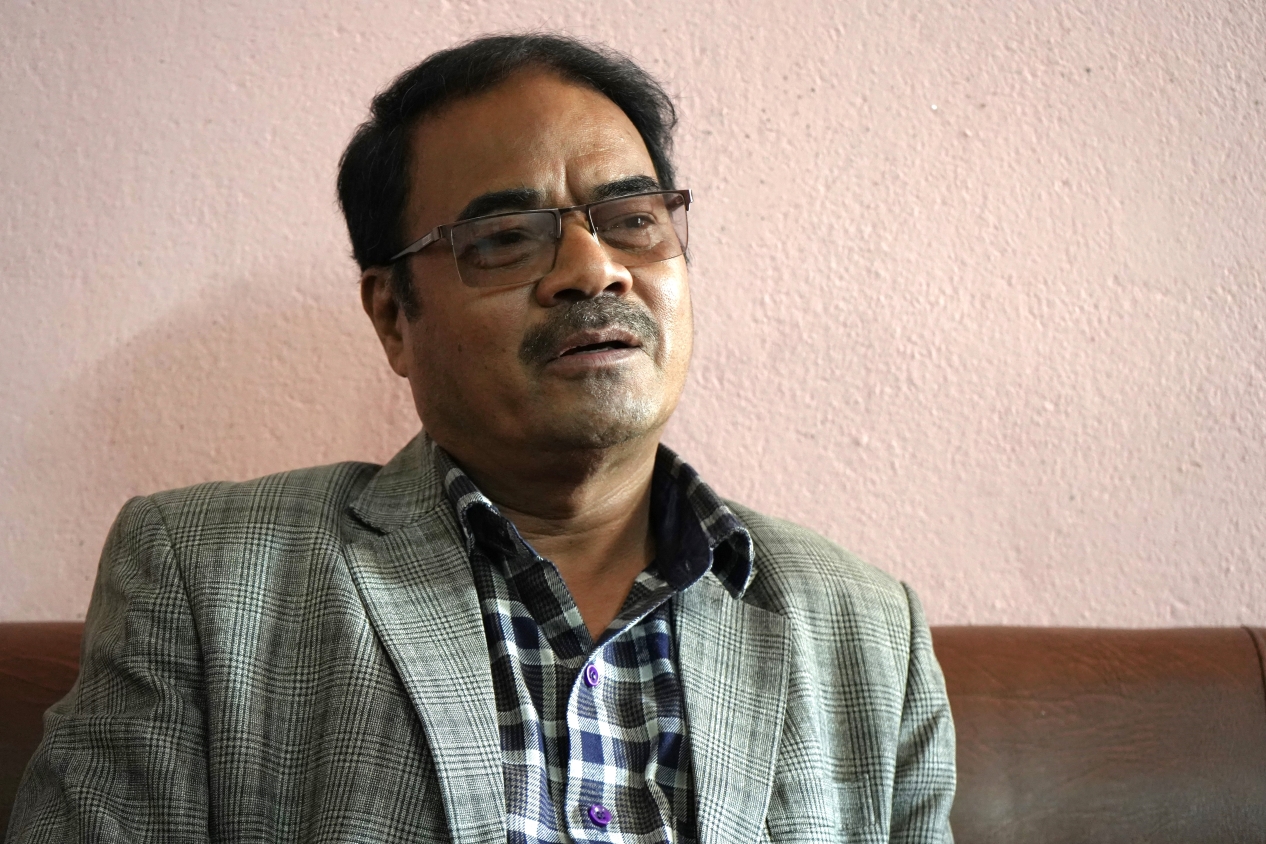
KATHMANDU: Bishwa Bhakta Dulal, better known as Aahuti, is the coordinator of the Scientific Socialist Communist Party, Nepal. A leftist thinker and analyst, he served as a member of the 2008 Constituent Assembly representing the then CPN (Maoist Centre). He has long been a prominent voice on the caste system in Nepali society and on Dalit issues.
On April 7, Dhruba Satya Pariyar and Binod Dhakal sat down with him for an in-depth interview for Nepal News. They discussed the caste system, the political landscape following the Gen Z movement, and the record of the RSP-led government.
Presented here is an edited excerpt of that interview.
The RSP-led government has apologized to the Dalit community for state-enforced caste discrimination in the past. How do you take this?
The Government of Nepal has repeatedly made declarations concerning Dalits — the most oppressed under the caste system — as well as indigenous nationalities, women, and other marginalized groups. Following the People’s War and the successive people’s movements, the state has introduced one reform program or another, either in constitutional or legal form.
Yet in the case of Dalits, these declarations have consistently failed to address their fundamental problems. Proclamations such as declaring the country free from untouchability amount to little more than propaganda and theatrics. The recent apology by the Rastriya Swatantra Party (RSP) and its government to Dalits is no different — just another form of theatrics typical of capitalist governments, nothing beyond that.
It is worth remembering that the constitution drafted after the People’s War and the people’s movements had already introduced what could be considered epoch-making reforms — from representation in Parliament, provincial assemblies, and local bodies, to efforts at making the civil service inclusive.
If we compare the two — guaranteed proportional representation from the local level up to the federal level on one hand, and a verbal apology on the other — which carries more weight? Ensuring representation of Dalits, women, indigenous groups, and minorities across state structures is a concrete achievement. An apology, by contrast, is no different from declaring the nation free from untouchability — simply another act of theatrics.
Even so, the constitutional arrangements made after the People’s War remain insufficient for Dalits. An apology will not resolve that. RSP Chairman Rabi Lamichhane, while speaking in Parliament, declared that caste discrimination is an organized crime. If that is indeed the case, what transformation has his own organization undertaken to confront it?
Among RSP’s candidates elected under the first-past-the-post system, more than 61 percent are Brahmin-Chhetri. Even among those nominally representing Madhesi, indigenous, Janajati, and women’s constituencies, many come from Hindu upper castes. What percentage of Dalits and other marginalized groups did RSP field under FPTP? Have they ensured meaningful representation of Dalits, women, and indigenous Janajatis within their own party and in positions of authority? Who actually holds the key decision-making roles in RSP? And did Santosh Pariyar not leave the party in tears?
They have failed to bring about change even within their own ranks. The current level of Dalit representation from RSP in Parliament makes it evident that this so-called organized crime has been perpetuated by the party itself. This is not merely an allegation — the facts make it clear. At this point, an apology alone will not solve anything.
Then what should RSP and Balen’s government do?
It is not just about their party; the structure of the Nepali state and society itself is rooted in the caste system. This system operates across the economy, political power, and culture. Yet, no meaningful effort has been made to dismantle it.
If we call this an organized crime, then it spans every sphere. In politics, both parties and the state administration are part of it. In the economic sphere, the entire system—including banks and financial institutions—is implicated, from access to loans to patterns of land ownership. In the cultural sphere, society is structured so that every individual is confined to a caste hierarchy, with each caste ranked above or below another. Even cultural institutions operate along these lines. What is needed are concrete programs to dismantle this system.
Yet, the same practices continue—within their party and in their appointments. In fact, all parliamentary parties in Nepal remain rooted in the caste system, and none have a serious program to challenge it. An apology without any structural plan is nothing more than a continuation of the state’s long-standing theatrics.
Then with whom should the government apologize?
To ask for forgiveness means to develop a program for liberation. When something happens by mistake on the street, saying sorry is appropriate — it is a matter of immediate correction. But structural and historical oppression is an entirely different matter. The damage caused must be compensated, and solutions must be implemented at both policy and structural levels.
The state itself once upheld the caste system through provisions in the Muluki Ain (Civil Code). Simply saying sorry now does not compensate for that history. Real resolution requires economic compensation, meaningful representation in political power, and concrete initiatives for cultural upliftment. Only through such measures can forgiveness carry any real meaning.
A verbal apology alone is worthless. It is no different from the apologies made to indigenous peoples in Australia or New Zealand. In New Zealand, apologies were offered — yet the condition of indigenous communities there speaks for itself. It is a familiar pattern: verbal apologies with structures left entirely intact.
What is needed is not words but concrete compensation programs, and a dismantling of the structures that produced the oppression in the first place.
Consider what is happening here. The caste system remains as it is. Political parties are formed on the same caste basis. The administration is structured along the same lines. Banks and financial institutions operate within the same framework. And on top of all this, a verbal apology is offered. For any society with a basic understanding of civilized politics, this is nothing short of laughable.
Then what must this government do so that oppressed communities get justice?
This political system cannot bring fundamental change on the caste system. Nor can it deliver anything meaningful for indigenous nationalities, women, or the working class. The reason is straightforward — this is a capitalist parliamentary system. It can make minor reform adjustments here and there, but it cannot serve the fundamental interests of the working class.
What exists today is a comprador capitalist economy. The very logic of neoliberalism is to exclude oppressed nations and developing countries from meaningful production. It raises costs to discourage agriculture and blocks the development of domestic industries. The result is a consumerist society — one that is reduced to simply buying and consuming goods produced by multinational companies. Where there is no domestic production, unemployment becomes inevitable.
Workers, left with no options, are forced to travel to multinational worksites as modern slaves. Their wages are set by those companies. They cannot strike, organize, or collectively bargain. They are not even able to function as workers in any meaningful sense — they are reduced to conditions of modern slavery. This is the kind of society neoliberalism is actively producing.
And yet, this system and the parties elected within it have embraced that very neoliberal agenda — the one promoted by the World Bank and the IMF — as their guiding principle. So how can they possibly work in favor of the working class?
Are you trying to say that RSP cannot work in the interest of the working class?
Capitalism is fundamentally opposed to indigenous nationalities. This is because indigenous communities are built around three core characteristics that capitalism, by its very nature, must destroy.
The first is communal life. Capitalism must sell more goods, and to do that, it must break communities apart. Only when one family splits into two can two televisions be sold. When a community lives together, ponds and grazing lands are shared — there is little need to buy. So capitalism must fracture communal life to create consumers. Indigenous communities, therefore, become a target.
The second is a deep relationship with nature. Indigenous peoples have lived in the same lands for thousands of years. They know which bird sings in which season. But wherever capitalism goes in pursuit of profit, nature is destroyed. Profit is capitalism’s only driving force. In Nepal, the MCC agreement was set to destroy Tamang settlements. Indigenous peoples live in harmony with birds and rivers — capitalism wants to sell those rivers.
The third is language. Indigenous languages carry generations of traditional knowledge and science. But capitalism must kill local knowledge to sell its own products. The traditional remedy for fever had to be discredited for paracetamol to find a market. So capitalism kills local languages. In no part of the world has capitalism ever worked in favor of indigenous nationalities.
Capitalism equally refuses to fight the caste system. The British who came to India after their industrial revolution were capitalists. They abolished sati — the ancient Hindu practice of a widow immolating herself on her husband’s funeral pyre. They fought against slavery. But they never challenged the caste system. The reason is simple: the caste system was a vast reservoir of cheap labor.
The British built their capitalism by fighting their own workers back home. But in India, they found millions already laboring as untouchables — people who could not speak, let alone form trade unions or demand wages. They lived like slaves. For the British, this was too valuable to dismantle. They had no intention of destroying it. They simply wanted to extract profit from it.
Are the problems of the oppressed in Nepal and India similar?
It has now been 75 years since India adopted its new constitution. Yet the capitalism that arrived with Swaraj (self-rule) did not dismantle the caste system. Today, more than 16 percent of Indians remain at the bottom of the caste hierarchy. And it is not just them — every caste above suffers under the system in one way or another. India’s own data reveals that even five percent of Dalits have not been lifted into the middle class. Worse, the rise of caste-based political parties has only made caste a more permanent fixture of Indian society.
In both Nepal and India, capitalism arrived without a capitalist revolution. Feudal lords simply reinvented themselves as capitalists through trade and business. As a result, the capitalist class in both countries carries a defining characteristic — it remains deeply casteist. Even in marriage, they seek their own caste. A capitalist, by nature, should seek capital. Instead, he seeks caste. In this way, caste-based traditions and culture have been left entirely intact. This comprador capitalist system does nothing more than talk of reform, manufacture illusions, and deceive the people.
Prime Minister Balendra Shah performed religious rituals while taking the oath of office. What is your comment on this?
Populism rises across the world on the back of failed systems and broken promises. Hitler emerged from the despair that followed World War I in Germany. Nepal is no different. The parliamentary system here has failed — it could not solve the country’s fundamental problems even through neoliberalism, and the old parties neither wanted nor were capable of delivering even the limited reforms that neoliberalism allows.
From that frustration and anger, global imperialism found its opening. Its objective is to reshape Nepali society into a consumerist, thoughtless society — one where foreign interference can deepen further. MCC has already been ratified. Attempts are underway to join the State Partnership Program. Their intention to maneuver Nepal within larger geopolitical games is becoming increasingly clear. It is from this alignment that populism arrived in Nepal — talking of a “blue revolution” here, pointing fingers at individuals there, but offering no real answers.
This populism cannot solve fundamental problems. On the very day it came to power, the government took a loan of Rs 28 billion — not to invest in the productive sector, but in the name of Digital Nepal. This money does not serve the fundamental classes of Nepali society.
It is designed to please the middle class. And once the middle class is won over through television, radio, newspapers, and smartphones, it becomes easier to mislead the working class. From there, the path toward authoritarianism is laid. What appears to be populism carries authoritarianism hidden within it. What is unfolding in India today has already begun in Nepal.
Religious blind faith must be understood as inseparable from authoritarianism. Every authoritarian project needs an ideology, and religious blind faith has historically served that purpose. In India, the claim that 80 to 81 percent of the population is Hindu has been used to advance Hindutva and suppress minorities. The same pattern has now appeared in Nepal.
The ritual-based oath-taking ceremony is objectionable on clear grounds — it violates Nepal’s constitutional principle of secularism. None of the religions practiced by Nepali people are foreign imports; they are faiths communities have followed for generations. When certain religions are elevated in a state ceremony while others are sidelined, it is not a harmless tradition. It is a signal — one that points toward populist authoritarianism and actively promotes religious blind faith.
How possible is the concept of “Annihilation of Caste” by B. R. Ambedkar in Nepal?
Ambedkar must be viewed in two ways. His contribution is undeniably bright in one respect — a hundred years ago, he researched the caste system deeply and succeeded in making it a central issue of Indian politics. That achievement stands.
But the path he chose for the annihilation of caste ultimately failed. The essence of his vision was captured in his own words — he was born a Hindu but would not die one. He pointed toward religious conversion as a way out. At the same time, he sought to dismantle caste by working through figures like Mahatma Gandhi and Jawaharlal Nehru — representatives of feudalism and agents of the British government. That contradiction was built into his approach from the beginning.
Religious conversion changed little. It was, in many ways, jumping from the frying pan into the fire. The caste system cannot be dismantled within a capitalist framework — that was the fundamental flaw in the path he charted. India has followed that path for 75 years. The caste system remains. Caste-based political parties have only given caste a more permanent and institutionalized form.
The annihilation of caste, therefore, requires something far more profound — a new economy, a new political system, and a new cultural movement.
Communist parties in Nepal were expected to eradicate the caste system but have performed poorly in elections, what kind of system is needed now?
Five years ago, we already said it clearly — the old communist movement in Nepal is dying. It has failed to recognize capitalism in its new form and has been unable to develop strategies or ideas to confront it. This is not a problem unique to Nepal. Communist movements have been losing ground across the world for the same reason. What is needed is a new set of ideas within communism capable of confronting contemporary capitalism.
The old communist movement made two fundamental mistakes. First, it kept repeating old theories without revision, as though the world had not changed. Second, it entered the parliamentary system and, in doing so, gradually began resembling the very capitalists it once opposed. Parliament is capitalism’s biggest platform.
Communists entered that platform, ratified MCC, and then returned to the people claiming they were still communists. The capitalist class saw through it. Through mere imitation, communists lost their footing on capitalism’s own turf — and the capitalist class made sure they could not hold it.
The Gen Z movement of September 8 and 9, 2025 shook the country. In your view, what did it represent — and what did it not?
The Gen Z movement was a direct product of the old parliamentary system’s failure to solve the nation’s problems. The system could not even reduce unemployment, let alone eliminate it. Parliamentary leaders resorted to slogans like “free visa.” A situation arose where eight million people had to leave the country just to keep their households running.
The parliamentary system failed on four fundamental fronts. It produced no concrete program to address class issues or women’s issues. It could not dismantle the caste system or halt the destruction of indigenous languages. Even when women were openly raped, the perpetrators walked free. Leaving aside any fundamental transformation, the system could not even acknowledge women’s pain.
This accumulated failure bred widespread dissatisfaction, and the Gen Z rebellion was its expression. But the failure was not only on fundamental issues — even basic administrative reforms were neglected. A driving license card, for instance, does not arrive for years after passing the exam. Not because there is no budget, but simply because the cards are not printed. Such elementary dysfunction deepened public anger further.
There is another dimension that must not be overlooked. Our universities do not teach students what imperialist powers seek to achieve in Nepal through institutions like the World Bank, or what kind of social structure they aim to construct here. Students are not assigned research on these questions.
Meanwhile, international powers were quietly training young Nepalis through youth councils to operate within the parliamentary framework. Every year, more than 150 young people were selected, trained, and given visas to travel to America or Europe. Through them, INGO networks were being built. All of this was designed to exploit public dissatisfaction and turn Nepal into a puppet state.
Dissatisfaction had already reached a breaking point. When social media was shut down in the days before Dashain, millions of young people erupted in anger. For a vast section of middle-class youth, social media was not entertainment — it was a source of income. All of this converged into the Gen Z rebellion.
In a different context, old parties like NC and UML won elections in Karnali and Sudurpaschim, while new forces like the Shram Sanskriti Party emerged in the eastern hills. What does this indicate?
This is concrete evidence that the old parliamentary system has run its course. The spirit of the Gen Z rebellion could only have been honored by moving beyond this system entirely. Instead, one government was replaced with another, one parliament substituted with a nearly identical one. The movement’s spirit was reduced to a reshuffling of the same faces.
Repainting the status quo will not solve Nepal’s fundamental problems. The country is being gradually pushed toward authoritarianism, and the system will increasingly seek to sustain itself by stripping people of their rights.
The Shram Sanskriti Party’s call for labor is a positive instinct. But it insists this must happen within the existing system — and within this system, fundamental problems cannot be solved. In the Terai, 41 percent of people are landless. In the hills, 66 percent are agriculturally landless — defined as those holding less than 20 ropani of land. Landless farmers have no choice but to work for landowners.
The slogan of labor, therefore, speaks primarily to the middle class — those who can choose to work. It does not reach those laboring on landlords’ fields or those forced to leave for the Gulf. For them, a slogan is not enough. The system itself must change.