Kathmandu
Wednesday, June 17, 2026





Toxic leachate from Pokhara Metropolitan City’s temporary waste dumping site on the hills of Nirmal Pokhari is now actively flowing into the Furse River, triggering a major environmental crisis as municipal authorities admit to operating without a detailed study or a permanent waste treatment system
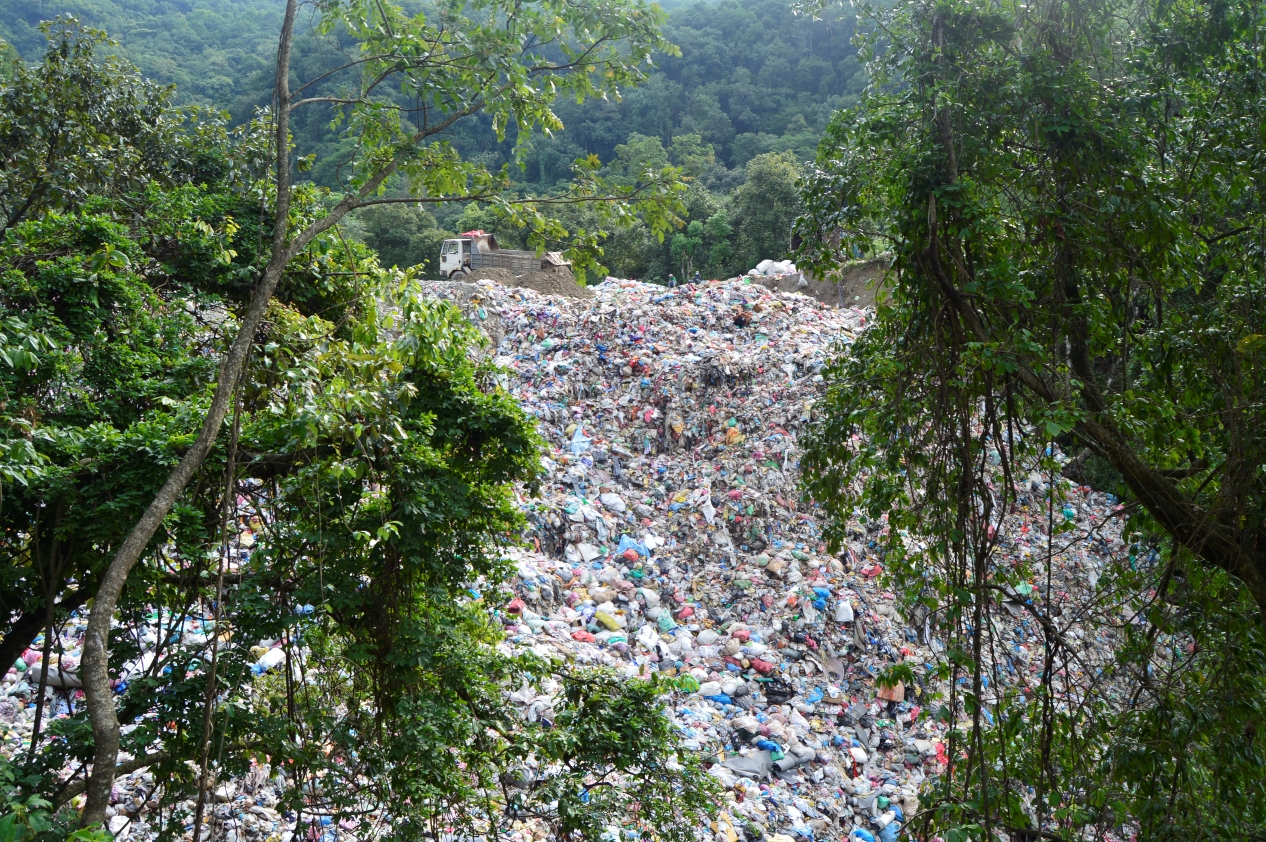
KASKI: Haphazard municipal dumping by Pokhara Metropolitan City has contaminated a vital freshwater spring in the hills of Kharchayang Khahare, Nirmal Pokhari. Locals crossing the Furse River toward ward number 21 report that the small, spring-fed stream is now heavily polluted, threatening downstream communities and local ecosystems.
One day, she saw yellow-red water flowing in the stream. “At first, I thought it was blood. When I went closer and looked, a sharp, foul odor came. I vomited right there,” Madhumaya says.
Her house is at a distance of about 400 meters from the hill. However, nowadays the foul odor reaches up to the house itself. She shares that when going to cut grass, it has started to feel as though she might fall ill due to the strong smell of the waste.
The experience of Laxmi Giri, a local of Pokhara-17, is also similar. She stated that the water source has become contaminated due to Pokhara Metropolitan City dumping waste haphazardly in that location. According to her, the water of the contaminated stream mixes into the Furse River. Swimmers from the nearby settlement of Dobilla reach Furse River during the summer season. Going a little further down, the river mixes into the Seti River.
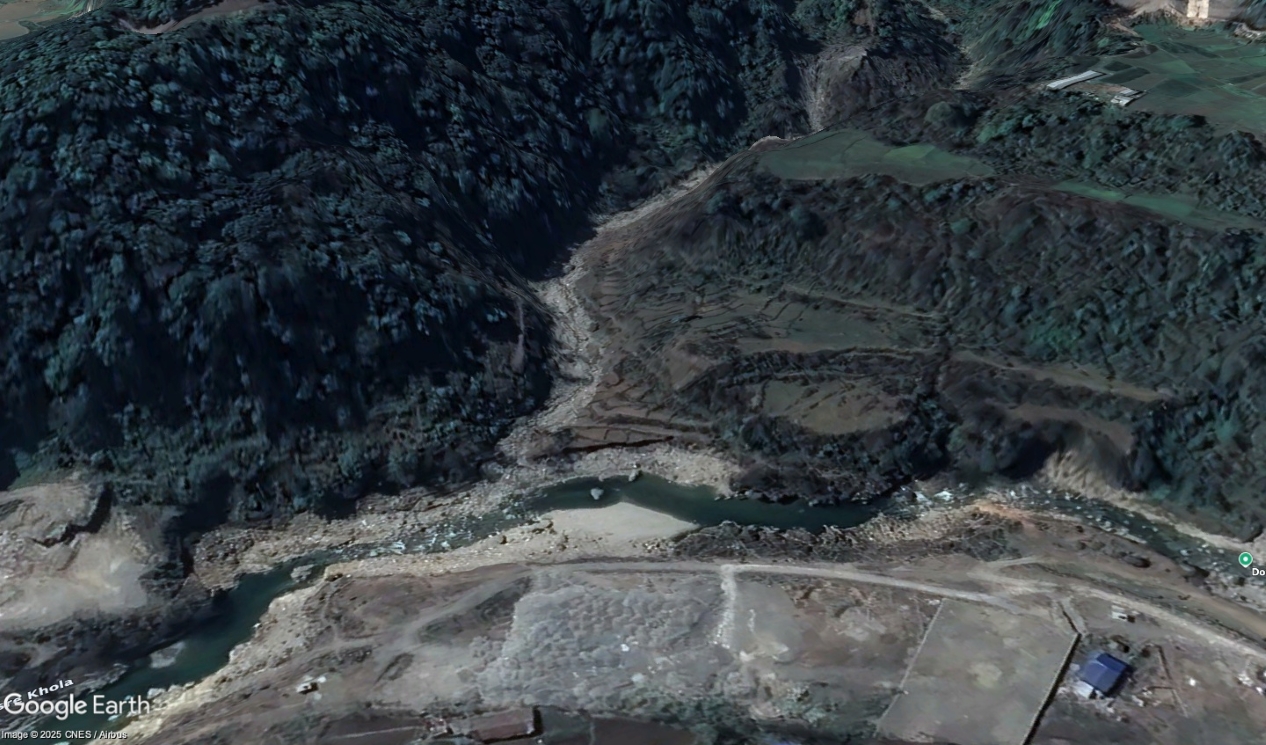
Satellite image of Furse River. Photo source: Google Earth
Hom Bahadur Magar, who has been living in Dobilla since 1994, states that locals have faced problems due to the contamination of the water in the stream located at Kharchayang Khahare. “Waste leachate keeps flowing in the stream. When it rains, it becomes an even worse misery,” he says, “That same dirty water mixes into the entire river. From those who swim to the consumers of drinking water, everyone has been affected by this.”
According to Ashok Tamang, a local businessman of Dobilla, some businessmen in that area previously used the water from the same area for drinking. “Dumping of waste was started near the spring from where we were bringing water. A different kind of layer has started to form there due to the foam of the waste,” he says. He shares that after the metropolitan city started dumping waste there, a source higher than that is being utilized for drinking water now. He states that there are water springs in more than one place in that area. He says, “Waste has been dumped right in the stream where the spring water flows. It was dumped despite knowing that the waste would flow from there and mix into the river.”
Metropolis concedes
Engineer Bimal Ranjan Karki, Chief of the Urban Development, Tourism, Forest, and Environment Division of Pokhara Metropolitan City, admits that there is a water source in the area where waste has been dumped. However, Karki claims that the metropolitan city is aware that the waste should not go directly into the water source or the river.
Karki says, “There are two sectors in the place where the spring is located. We have not dumped waste towards the side where the large spring is located. Waste management is being carried out towards the small spring.” He shares that although it feels like the spring opens up when it rains, there is no water that flows all the way to the bottom.
“Work is underway to bring the water of the small spring through pipes into an intake right at the source site,” he says, “Separate management has been done so that the wastewater emerging from that area does not mix directly into the river.”
However, locals state that the water is flowing and reaching up to the Furse River. In images taken at various times from Google Earth as well, water is seen flowing from the stream.
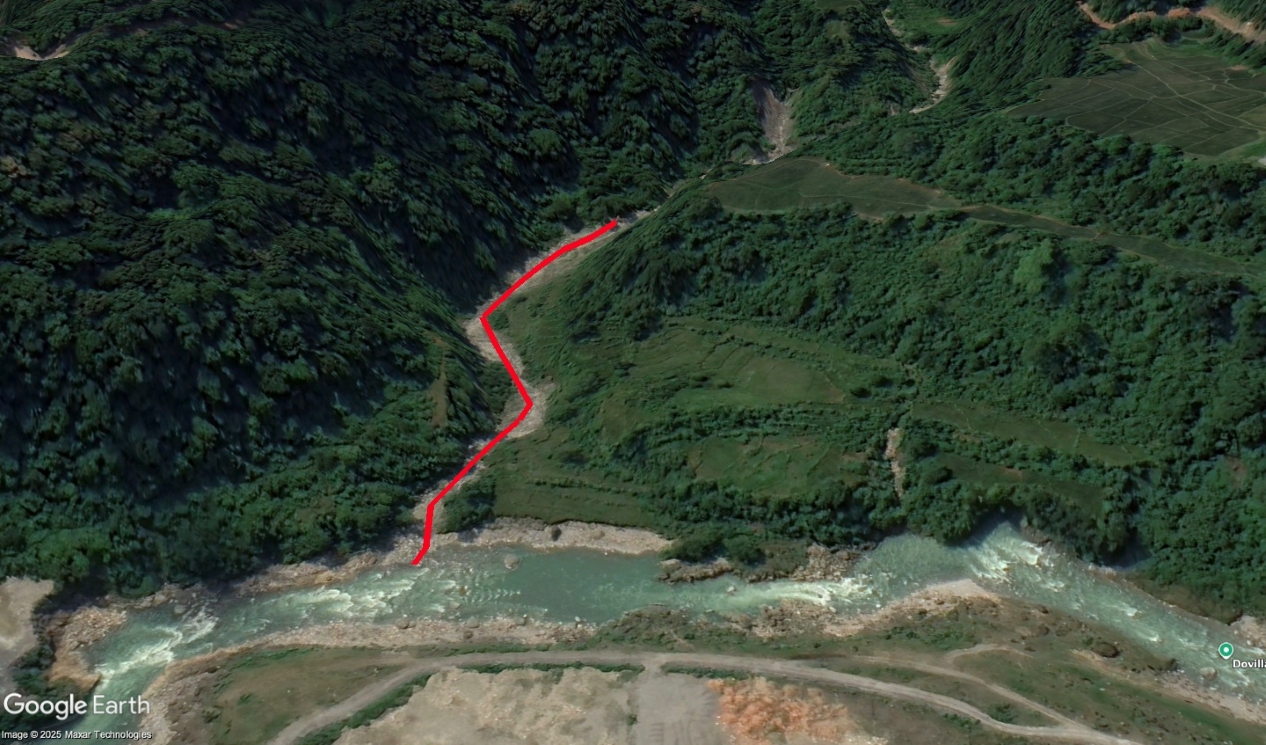
The stream where water mixed with leachate flows. Photo Source: Google Earth
He also admits that the metropolitan city did not conduct a detailed study before dumping waste in that location. Karki states that only a preliminary study was conducted, which showed that waste management could be done for one year.
He says, “Only a preliminary study was conducted. Conversations have also taken place regarding mitigation measures. The study had said one year. But, with the way waste is managed right now, it will last for only three to four months now.”
Karki states that the metropolitan city has both temporary and permanent policies regarding the risks of managing waste in an area where a water source is located. “The metropolitan city has two policies, one is temporary and the other is permanent,” he says, “We must go into permanent management. A treatment plant itself will be in that. Until that is built, it is a situation where we have not been able to do as we thought in temporary management.”
The location where the waste is dumped is sloped. Although the metropolitan city stated it would cover the waste with soil, it is seen left open in many places. According to Karki, because a dam could not be constructed on time, it became difficult to cover the waste in the sloped place.
“The problem arose because the construction work was behind and the waste management work was ahead. We have not been negligent,” he says, “The work of disinfecting with chemicals, covering with soil, and protecting the water sources is underway.”
Environmental risk
Locals and experts complain that protection has not taken place, contrary to the metropolitan city’s claim. According to them, the leachate and foul odor emerging from the waste are affecting the water, soil, and the environment.
Environmentalist Kushal Gurung says, “If waste falls into a spring or a seasonal stream, pollution happens immediately. Furthermore, if there are heavy metals, medicinal substances, and pesticides, it affects everything from the soil to the water and the environment.”
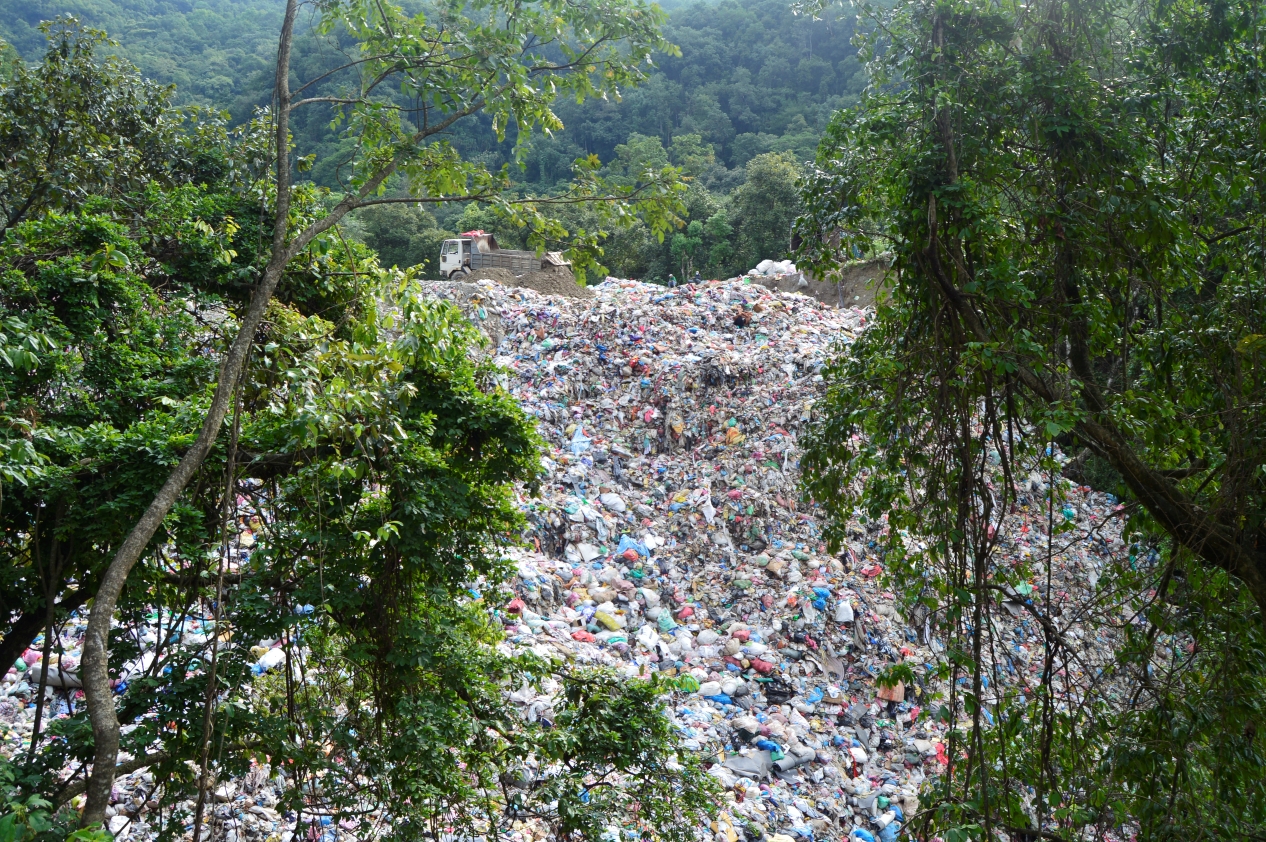
The sloped terrain utilized for municipal waste disposal. Photo: Reena Thapa
He shares that there is a risk of further pollution when the metropolitan city dumps mixed waste into the dumping area without separating biodegradable and non-biodegradable items.
“Waste must not be connected with water at all. Therefore, the very matter of managing waste near a spring is wrong. It affects the aquatic system. Someone might have used that same water for drinking or farming. Water that has come into contact with waste creates more algae than necessary and decreases fertility.”
Repeated problem
This is not the first incident where Pokhara Metropolitan City has dumped waste haphazardly. Prior to this, the metropolitan city had dumped waste in Pokhara-32, Lameahal. Due to which, a situation had arisen where the school there had to be shifted.
Even though problems have appeared continuously in waste management, the metropolitan city has not been able to find a long-term solution.
According to Gurung, the problem has repeated because of the mindset of dumping waste in empty spaces or sloped land without developing a permanent system of waste management.
“The current strategy seems limited to dumping trash down whatever cliffs are available across the metropolitan city, then patching and burying it behind a retaining wall,” Gurung states. “This is an unsustainable stopgap, and the metropolitan city must act without delay to establish a permanent waste management system.”