Kathmandu
Thursday, June 4, 2026





Measured against the grammar of art or established conventions, there are many things in these works that do not conform but understanding that these are paintings made by people with intellectual disabilities allowed another dimension of the art to be seen and enjoyed in its own right.

A painting exhibition titled Sapanaka Paila (Steps to Dreams), organized by Mikha Creative Begins was recently held (14 to 18 March 2026) at Patan Museum in Patan, Lalitpur. The title, carrying a deeper meaning than that of most exhibitions, was itself a signal that the works on display were giving expression to the dreams of particular individuals.
At first glance the works on display looked like those made by children – unpolished, the artists being adults making them seem a little unusual. Measured against the grammar of art or established conventions, there are many things in these works that do not conform but understanding that these are paintings made by people with intellectual disabilities allowed another dimension of the art to be seen and enjoyed in its own right. Whatever subjects the paintings took up, the dreams of the artists themselves felt reflected in them. In that sense, these pictures were radiating a beauty all their own.
The works displayed by Sama Bajracharya, Sandhya Singh, Shrabha Shrestha, Barsha Dahal, Gunjana Shrestha, Rita Duwal, Nirvana Shakya, Samriddhi Shakya, and Lizla Shrestha expressed the support people owe one another and the goodwill they should hold for each other. The organization founded by artist Sarita Dangol, Mikha Creative Begins, has been running programs of this kind for the past four years. In this exhibition, Sarita also served as interpreter for the artists.
The artists’ own lives and experiences
The works on display reflected facets of the lives the artists are living. The moments of happiness they have woven in dreams, the desires and aspirations they have shaped in imagination, could all be felt in the paintings.
Sama Bajracharya made grey paper boats on a green river and showed an airplane flying through the sky. For her, the sky is yellow and the clouds are blue; she had poured the colors of her own mind into the painting.

Beige Scrapbook Vintage Photo Dump Photo Collage – 3
Lizla Shrestha painted insects flying and enjoying themselves in the sky. The grasshopper sitting atop a pile of leaves did not appear to be saying anything directly, yet the feelings of Lizla’s mind could be read well in this painting.
Gunjana Shrestha painted a cheerful duck in a mix of yellow and red. Sandhya Singh showed a duck swimming happily among flowers, large green leaves over water and pink lotus blossoms were beautiful in themselves, with a duck at play among them. The painting takes the viewer to a free-dreaming world connected to nature. Everyone has dreams, and yet the dreams of these artists are of a special kind.
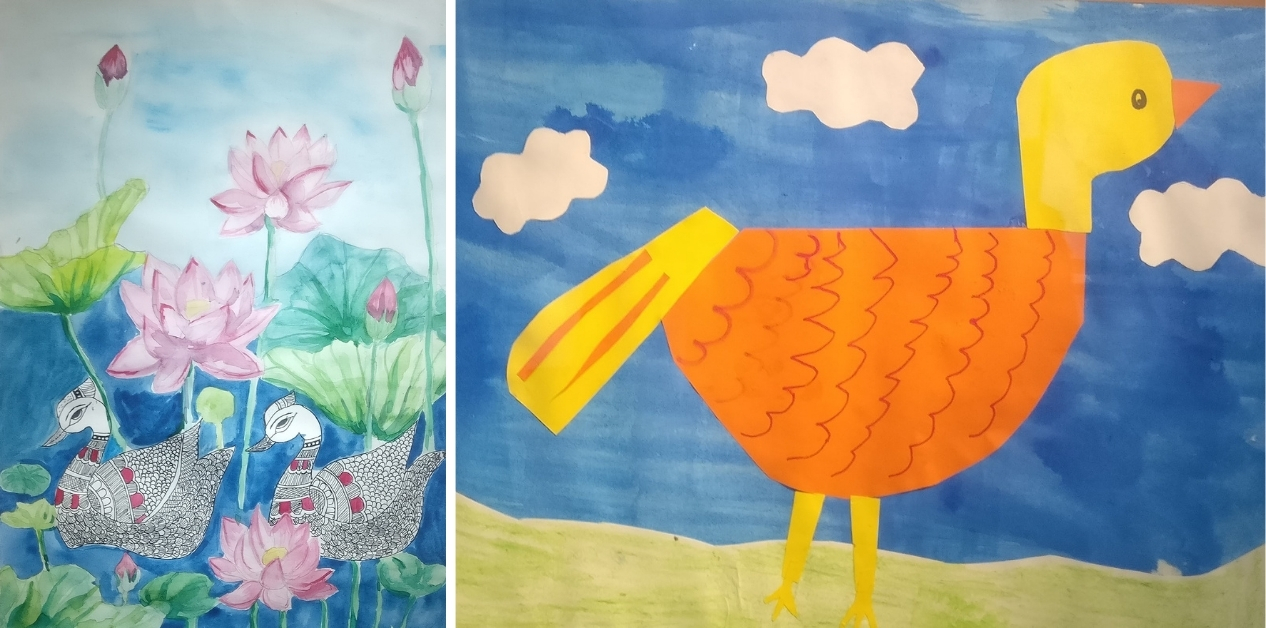
These artists have expressed the dreams and desires within their minds through paintings. Once you understand the title and the artists, you sense that for them the canvas is the place where dreams are arranged. Many feelings that need expressing are pent up inside them, because they cannot express their feelings in words, and some hear little or nothing at all. They appeared to be trying to express their joys and sorrows through art. Essentially, they have imagined a joyful world on the canvas.
Expressing feelings through painting, it turns out, helps them feel mentally at ease, which is why their work is seen through the lens of art therapy. As the exhibition ran and visitors studied the works, these artists appeared enormously happy. Art therapy is used for a wide range of conditions and particularly for mental health, which was another reason this exhibition was organized as a special occasion.
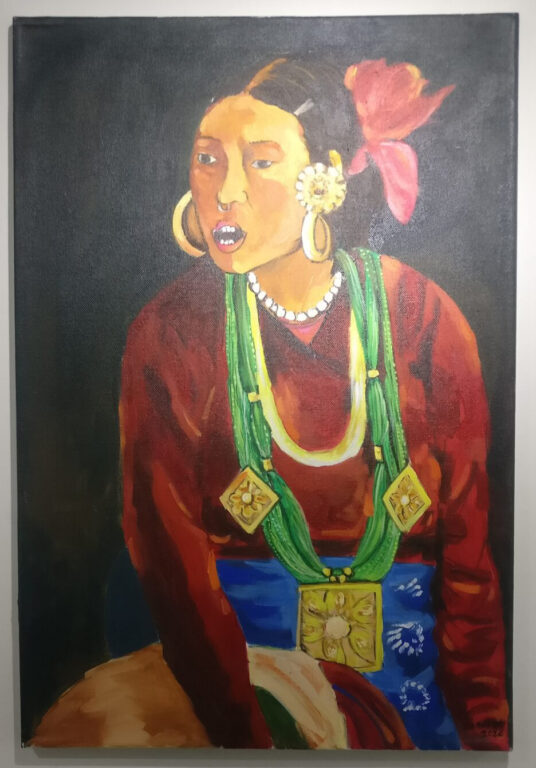
Among the participating artists, I asked Sandhya, “What have you made?” I am not sure what she understood, but she used hand gestures to convey something with a smile. Afterwards artist Sarita Dangol translated her expression into words. Sandhya had been saying: “I made this painting using watercolors.” She was so absorbed in the transparent watercolors that the meaning of the painting was of little interest to her. Seeing her delight in the flow of the watercolors and their softness, it felt as though painting itself was a form of art therapy for her.
Standing in calm and happy disposition, these artists seemed to be saying in their silent language: “Won’t you tell me what you think of the picture I made?”
On the opening day of the program, there was not only a group art exhibition but also a dance performance, a ramp walk, and special presentations by guest artists – notably a wonderful performance by saxophonist Manish Man Maharjan, alongside the singing of Raj Sayami. That musical presentation was not only for the audience who had come to see the art; it was also to bring joy to the participating artists.
The musical presentation was also entertaining visitors who had come to view the paintings. Appreciation of the art could be heard, and some were evidently trying to buy works. When a painting was sold and immediately taken away, it left a gap on the wall, and when someone noticed the empty space and expressed curiosity about it, the artist concerned would come forward and signal with gestures: “That was my painting; it sold and went.” Conveying this message, they appeared enormously happy.
In the usual convention, works sold during an exhibition remain on display until it closes. Here, however, sold works were allowed to be taken immediately, for the happiness of these artists.
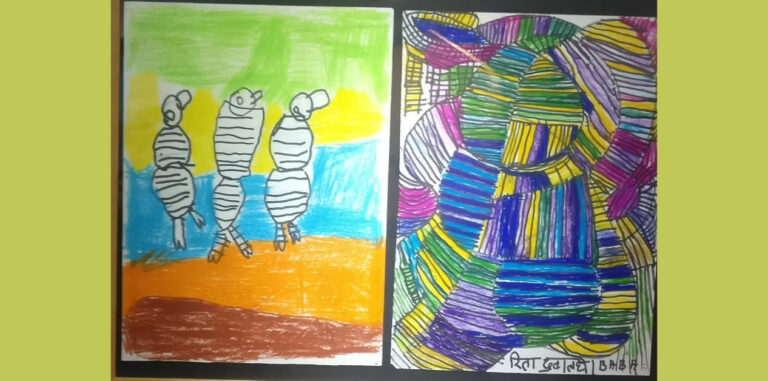
Another visible aim of the program was to build a powerful message that no one should be looked down upon or marginalized simply for having a physical or intellectual disability, or simply for being a woman. These women artists were different from ordinary people, and the program was also held to dissolve that difference and sustain the feeling that we are all the same.
Intellectual disability refers to a condition that makes reading, writing, remembering, or learning difficult, commonly associated with conditions such as Down syndrome and autism. The program was organized to connect women living with these challenges to the mainstream of society and to make them feel like ordinary people.
Artist Sarita Dangol has been teaching these artists at her Classic Art Gallery in Jwagal. The program was also held with the aim of connecting these young women to income-generating art or skills. The works they managed to produce while receiving painting training were the ones placed in the exhibition. Seeing others take interest in and purchase paintings they had made brought them visible happiness.
The program appeared successful not only in building confidence in these artists but in integrating them with people outside and with broader society.
When someone took an interest in the art, these artists would respond with hand gestures. Standing in calm and happy disposition, they seemed to be saying in their silent language: “Won’t you tell me what you think of the picture I made?”
As I observed the art, I kept giving them a thumbs-up with my hands, and they appeared enormously happy.
The fact that this exhibition was held at Patan Museum carried its own meaning because it is a place where domestic and foreign visitors come to see archaeological art, heritage, temples, and architecture. Many Nepali and foreign viewers came to see these artists’ works, shared their reactions, and some purchased paintings.
(Malla is an artist and art critic.)