Kathmandu
Tuesday, July 21, 2026





KATHMANDU: There is a particular kind of silence that settles over Nepali villages when the harvest ends and young men depart. Backpacks on their shoulders, documents in plastic folders, they board buses to Kathmandu, then planes to Doha, Riyadh, Dubai, or Kuala Lumpur — cities they may barely be able to locate on a map.
What they leave behind is not just families, but an entire rural economy that has quietly restructured itself around their absence. What arrives in return, every month, via bank transfers, mobile wallets, or the hands of a hundi broker, is the financial oxygen that keeps millions of Nepali households alive.
Nepal’s remittance story is one of the most dramatic in modern economic history. In 2000, remittances constituted barely one percent of the country’s GDP. By 2023, they had reached an estimated USD 11 billion, equivalent to 26.6 percent of GDP — surpassing the combined inflow of official development assistance and foreign direct investment.
In fiscal year 2024–25, that share climbed further to 28.6 percent of GDP, according to Nepal Rastra Bank data. To put this in perspective: the world average remittance-to-GDP ratio stands at just 5.13 percent. Nepal’s figure is more than five times that global benchmark. In absolute terms, Nepalis abroad sent home Rs 1.72 trillion during FY 2024–25 alone — a sum almost equal to the Government of Nepal’s entire annual budget.
This analysis traces the full arc of Nepal’s remittance economy: its historical roots, macroeconomic dimensions, social and demographic consequences, the murky world of informal transfers, the latest policy challenges including Nepal’s re-entry onto the FATF grey list, and the existential threat now posed by the US–Israel war on Iran, which has drawn Nepal’s 1.73 million migrant workers in the Gulf directly into a geopolitical crisis not of their making.
Nepal’s relationship with migration for economic survival is not new. The Lahure tradition — men serving as mercenary soldiers in the armies of the Ranjit Singh’s Sikh Empire, later the British, and ultimately in the Gurkha regiments of the British and Indian armies — stretches back more than two centuries. This historical precedent established a cultural comfort with male out-migration as an acceptable, even honourable, livelihood strategy, particularly in the hills.
The modern, large-scale phase of labour migration began in the 1980s, initially to India (which remains a major, if statistically murky, destination given the open border), and then to Gulf Cooperation Council (GCC) countries and Malaysia from the late 1990s onwards.
Nepal’s Foreign Employment Act of 1985 created the legal scaffold for overseas employment, while the mushrooming of private recruitment agencies in the 1990s gave that scaffold flesh and blood.

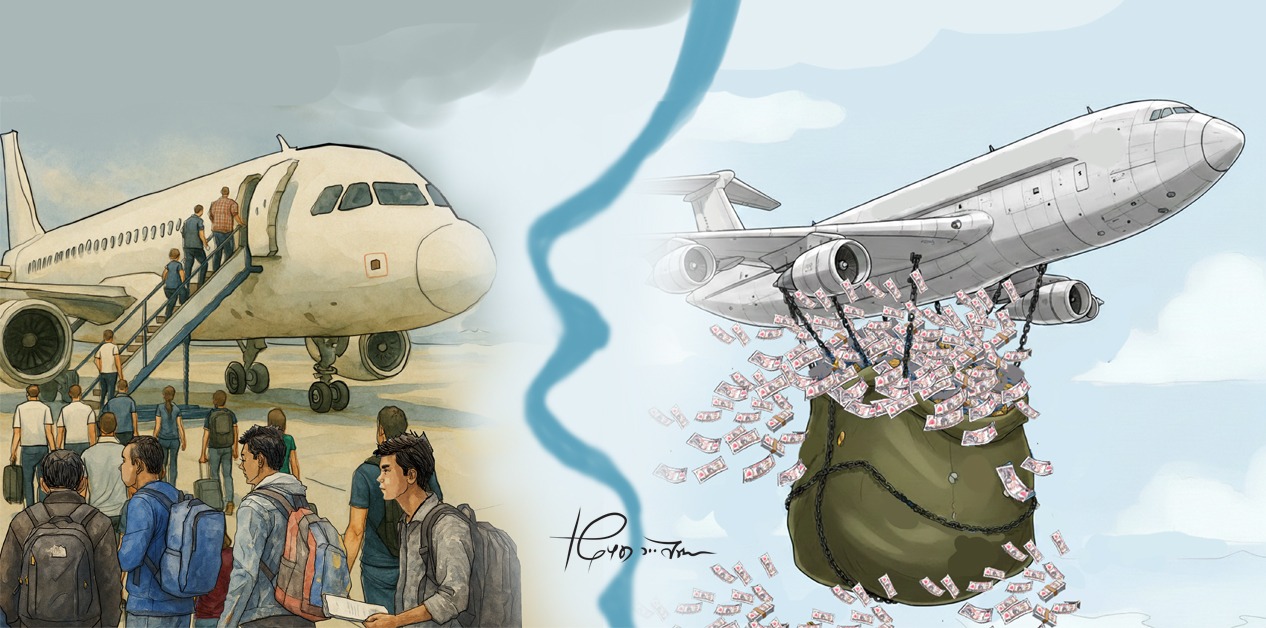
AI-generated image illustrating Nepal’s heavy reliance on remittance inflows from Gulf countries.
The civil conflict between the Maoist insurgency and the state (1996–2006) accelerated the process dramatically: with rural livelihoods destroyed, agricultural incomes depressed, and physical insecurity omnipresent, migration to the Gulf became not merely a choice but a survival imperative for hundreds of thousands of families.
Between 1996 and 2023, Nepali authorities issued more than 6.6 million new labour approvals for migrant workers. By 2023, over 7 percent of Nepal’s total population — a staggering proportion — was estimated to be living and working abroad. The post-conflict period from 2008 onwards saw remittances more than triple from an average of 7 percent of GDP during the conflict years to consistently over 25 percent.
The pattern was clear: what war and political instability had destroyed in terms of domestic economic confidence, migration rebuilt through foreign earnings.
The numbers require careful contextualization. In FY 2024–25, Nepal received Rs 1.72 trillion in remittances — a year-on-year growth of 19 percent. In the first quarter of FY 2025–26 alone (mid-July to mid-October 2025), remittance inflows surged by 35.4 percent to Rs 553.31 billion, compared to just 11.9 percent growth in the same period of the previous year.
For the first time in history, Nepal’s monthly remittance inflow crossed Rs 200 billion in October 2025, coinciding with the major festival season of Dashain, Tihar, and Chhath — when workers abroad traditionally send more money home.
By the first six months of FY 2025–26 (mid-July 2025 to mid-January 2026), Nepal had already received remittances totalling Rs 1.062 trillion, representing a 39.1 percent year-on-year increase.
Converted at contemporary exchange rates, Nepal was receiving approximately USD 4.72 billion in the first five months of that fiscal year alone, with the annual figure projected to comfortably exceed USD 12–13 billion.
Three distinct drivers explain the most recent surge. First, out-migration itself accelerated: in the last full fiscal year, 839,266 Nepalis departed for foreign employment — comprising 505,957 first-time migrants and 333,309 renewals.
This represented a 13 percent increase over the previous year’s total of 741,297. Roughly 2,300 Nepalis were leaving every single day, a figure that does not include the 119,409 students who departed in 2024.
Second, the depreciation of the Nepali rupee against major currencies — particularly the US dollar, which appreciated 2.3 percent against the NPR between mid-July and mid-October 2025, reaching Rs 140.22 per dollar — automatically inflated remittance values when converted to domestic currency.
Third, a structural shift toward higher-wage destinations was underway: more Nepalis were working in Europe, Japan, South Korea, and Australia, where wages are substantially higher than in the Gulf.
The dominance of remittances over other economic inflows is striking. Nepal’s total merchandise exports in recent years have hovered around USD 1.5–2 billion annually, a fraction of remittance receipts.
Foreign direct investment has remained consistently below 1 percent of GDP. Official development assistance, while historically significant, has been declining. The agricultural sector, which employs roughly 60 percent of the labour force, contributes around 25 percent of GDP. In other words, what the country’s farmers produce in an entire year is less than what its migrants send home.
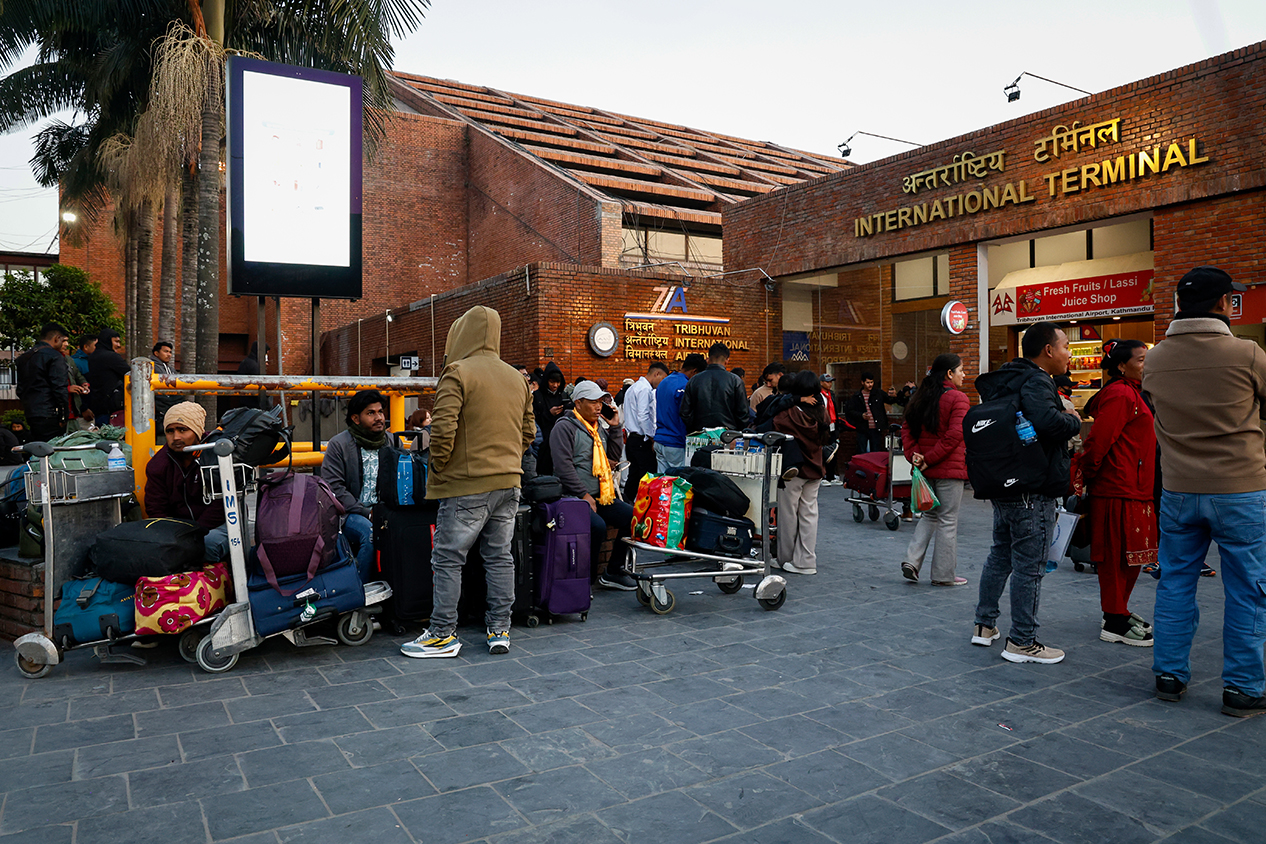
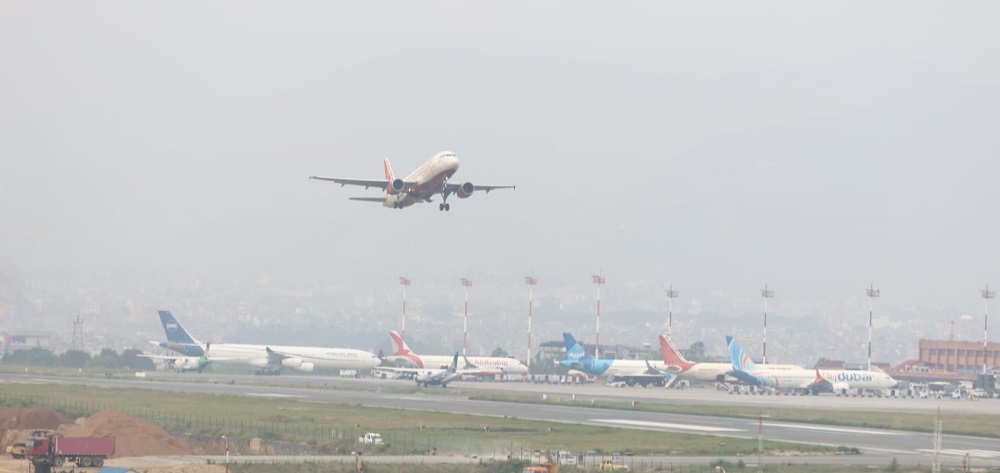
Nepali citizens at the airport departing for foreign destinations. Photo: Bikram Rai/Nepal News
This has profound implications for the balance of payments. Nepal runs a persistent and widening trade deficit — importing vastly more than it exports. Remittances finance this deficit almost entirely. Without remittance inflows, Nepal would face immediate balance of payments stress, currency depreciation pressure, import collapse, and potentially a sovereign debt crisis.
Gross foreign exchange reserves, sustained primarily by remittance inflows, reached Rs 2.97 trillion or approximately USD 21.21 billion by late 2025 — enough to cover 16.4 months of imports of goods and services, a comfortable buffer by international standards.
The World Bank’s Nepal Country Economic Memorandum (March 2025) notes that remittances sustained private consumption even as multiple economic shocks — the 2015 earthquake, COVID-19, the Russia-Ukraine conflict’s inflationary spillovers — hit the economy consecutively.
The Human Geography of Migration — Who Leaves and Where They Go
Nepal’s migrant labour market is heavily concentrated in a handful of destinations. The UAE is the single largest host, with approximately 478,144 Nepalis registered in 2026. Saudi Arabia follows with 383,865, Qatar with 357,000, and Kuwait with 175,000. Iraq accounts for roughly 30,000.
Beyond the GCC, Malaysia has historically been a major destination, with over 500,000 Nepali nationals estimated to be working there. India remains a significant but statistically under-captured destination due to the open border.
In FY 2024–25, labour permit data shows the geographic distribution clearly: 274,590 permits went to the UAE, 152,557 to Saudi Arabia, 140,792 to Qatar, 59,065 to Kuwait, 11,624 to Bahrain, and 8,601 to Oman.
Smaller numbers headed to Cyprus, Jordan, Malaysia, Israel, South Korea, Japan, and increasingly to European countries. The Nepal Rastra Bank calculates that 40–42 percent of all remittance inflows originate from 17 Gulf region countries, with Saudi Arabia, Qatar, the UAE, and Kuwait as the dominant sources.
Labour migration is overwhelmingly male — historically over 90 percent — though female migration is growing, particularly to Gulf countries as domestic workers. Over 80 percent of labour permits have historically been issued to workers aged 18–35, meaning that Nepal’s prime-age male working population is disproportionately deployed abroad.
The educational profile of most Gulf migrants is low — they fill the “3D” jobs: dirty, dangerous, and demanding. Construction sites, cleaning services, security work, domestic labour, and low-skilled hospitality constitute the bulk of what Nepalis do in the GCC.
The economic logic of migration is brutally rational. A construction worker in Nepal might earn Rs 15,000–20,000 monthly (approximately USD 110–150). The same worker in Qatar or UAE can earn the equivalent of USD 300–600 per month — before overtime — while food and accommodation are often provided by employers.
AI-generated image illustrating Nepal’s heavy reliance on remittance inflows from Gulf countries.
Even after paying back the recruitment loans that many workers take (often at usurious informal rates), the net earnings over a two-year contract can transform a family’s economic position.
The World Bank documents that extreme poverty in Nepal — defined at the USD 2.15/day threshold — fell from 55 percent of the population in 1995 to just 0.37 percent by 2023. Remittances are credited as the single most important driver of this remarkable reduction.
The Gulf’s kafala (sponsorship) system means that most Nepali workers in the GCC have their immigration status legally tied to their employer. This creates profound power imbalances: workers cannot change jobs without employer consent, cannot leave the country without a visa clearance, and are frequently unable to report labour violations without risking deportation.
Research published in the Journal of Human Rights and Social Work (2025) describes a “pervasive system of exploitation where the pursuit of economic opportunity abroad often devolves into a perilous gamble with human lives and dignity.”
Physical health risks are severe: Nepali workers in GCC countries frequently labour under extreme heat, often in violation of safe working hours. The kafala system’s vulnerabilities are compounded by recruitment agency fraud in Nepal itself, where workers often pay Rs 100,000–300,000 (USD 700–2,200) in recruitment fees — frequently borrowed — for jobs that may pay less or differ from what was promised.
Deaths of Nepali workers abroad, including from cardiac events linked to heat exposure and hazardous working conditions, have been consistently reported. Between 2008 and 2023, thousands of Nepalis died in Gulf countries and Malaysia, with the majority of deaths attributed to “natural causes” — a categorisation that migration experts and human rights organisations have consistently challenged.
The macro-poverty reduction numbers are real and deserve acknowledgement. The correlation between the surge in remittances from the mid-2000s onwards and the dramatic fall in poverty rates — from 25.16 percent in 2011 to around 20.27 percent in 2023 using official measures, and to near-zero extreme poverty — is not coincidental.
At the household level, remittances have financed children’s education, improved housing, enabled access to private healthcare, and provided buffers against agricultural shocks and natural disasters.
However, beneath these headline improvements lies a more complicated picture.
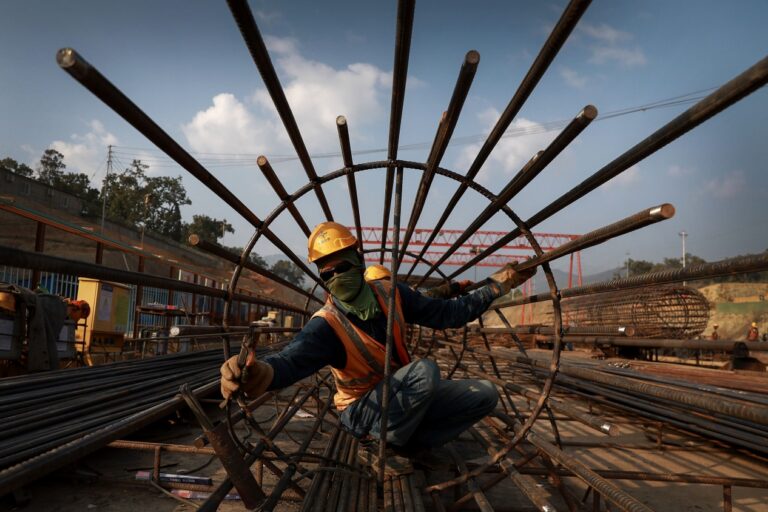
A worker constructing the pillar frame at the Terai/Madhesh Fast Track Highway construction site. Photo: Nepal Photo Library
Remittances in Nepal are predominantly consumption-driven, not investment-driven. Households receiving remittances spend the money on food, clothing, housing improvements, consumer electronics, motorcycles, and school fees — all of which improves welfare but does not generate new employment or productive capacity.
Studies consistently find that the investment rate of remittance receipts in productive economic activities (manufacturing, agriculture, small enterprise) remains disappointingly low, typically estimated at 10–15 percent of total inflows.
The World Bank’s March 2025 Country Economic Memorandum identifies a Dutch Disease dynamic: the large and sustained inflow of foreign exchange has appreciated Nepal’s real effective exchange rate, making Nepali exports less competitive and effectively subsidising imports.
The tradeable sector’s share of GDP has declined as remittances have risen, while the non-tradeable service sector — real estate, retail trade, private education, private healthcare — has expanded. This structural shift away from manufacturing and tradeable agriculture is not inherently problematic in developed countries, but in Nepal’s context it means the domestic economy is generating fewer and fewer productive jobs — which in turn accelerates out-migration, creating a self-reinforcing cycle.
What makes Nepal’s situation particularly acute is that the out-migration is increasingly affecting not just unskilled workers but educated young people. University graduates are leaving for Australia, the UK, the US, and Canada in growing numbers. The 119,409 students who departed Nepal in 2024 — on student visas, but many with the intention of working and settling — represent an accelerating loss of human capital.
Economic analysts describe the situation as follows: youth are leaving the country at an alarming rate, causing a significant brain drain. Foreign investors are hesitant to enter the market, and multinational companies are not considering Nepal as a destination. Private investment remains low, and agricultural output is weak. As a result, Nepal is likely to struggle to achieve long-term growth beyond 4 percent.
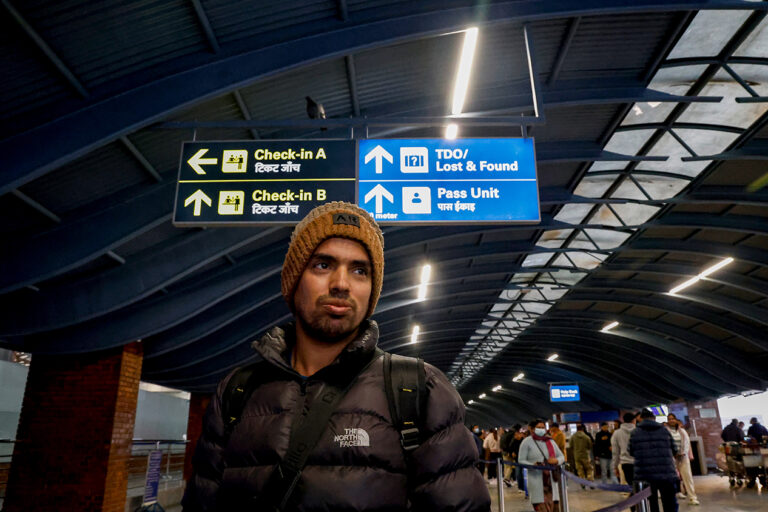
Nepali workers departing for Malaysia for foreign employment. Photo: Bikram Rai
Some economists characterise this as “exchanging generational poverty for brain drain” — a trade-off in which short-term household welfare gains come at the cost of long-term national development capacity.
The feminization of household management is one of the most profound but least discussed consequences of male out-migration. In villages where large proportions of working-age men are abroad, women have assumed decision-making roles in agriculture, household finance, children’s education, and community affairs that they previously did not hold.
This has had ambiguous effects: on one hand, increased agency and autonomy; on the other, a dramatically increased burden of domestic responsibility with few additional resources.
Family separation, particularly extended separation over two-year contracts, has contributed to reported increases in marital breakdown, children growing up without fathers, and documented mental health challenges for both migrants and their families.
The social fabric of remittance-dependent communities has been irreversibly altered. As one researcher noted, many villages in Nepal’s hill districts now resemble what demographers call “feminised landscapes” — dominated by women, children, and elderly, with productive-age men present only for the brief windows between contracts.
The mechanics of how money travels from a construction site in Doha to a village in Tanahun are more complex than they appear. The formal remittance ecosystem involves licensed money transfer operators (MTOs), commercial banks, and increasingly mobile wallet platforms.
Companies like IME, Prabhu Money Transfer, Western Union, MoneyGram, and Himal Remit operate licensed corridors. Since the COVID-19 pandemic, the volume passing through formal channels has increased substantially: in countries like Saudi Arabia and UAE, anti-money laundering tightening by host-country regulators has pushed workers away from informal channels toward licensed operators.
This formalization has boosted recorded remittance statistics significantly. Between July 2023 and July 2024, legal remittances increased by 16.5 percent to approximately Rs 1.4 trillion (USD 10.5 billion).
The improved AML compliance environment in Gulf host countries, the wider availability of digital transfer apps, and Nepal Rastra Bank’s financial awareness campaigns have all contributed. The formalization trend is economically beneficial: formal transfers flow into Nepal’s foreign exchange reserves, support tax collection, and are captured in national accounts.
Yet the formal system does not capture everything. The hundi (hawala) system — an informal, centuries-old value transfer mechanism that moves money without physical currency crossing borders — remains deeply embedded in Nepal’s remittance landscape.
A hundi operator in Doha receives cash from a Nepali worker, contacts a partner in Nepal, and that partner delivers equivalent local currency (minus a small fee) to the worker’s family, often more quickly and cheaply than formal channels. No money actually crosses any border; the operators settle periodically through commodity flows (gold smuggling is a documented mechanism), cryptocurrency, or trade under/over-invoicing.
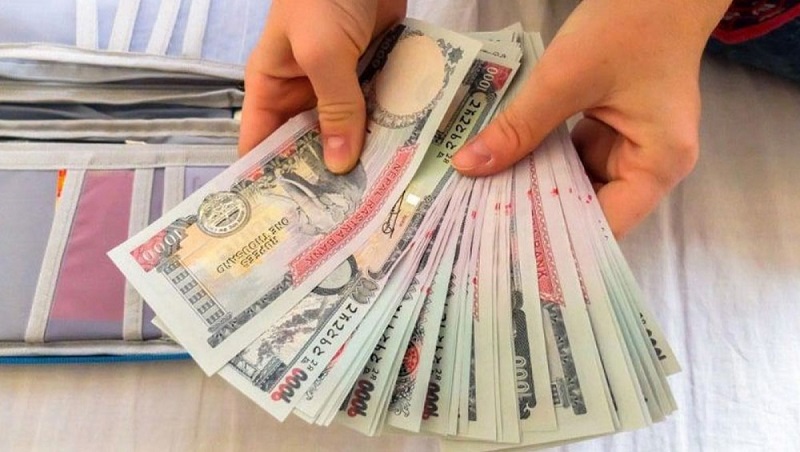
An estimated 40 percent of Nepal’s economy is based on informal transactions. One prominent economist has estimated that while official remittances are around USD 10–11 billion annually, a roughly equivalent amount flows through informal channels — a figure that, if accurate, would put Nepal’s total (formal plus informal) remittance economy at nearly half of its official GDP.
In the Korea–Nepal corridor specifically, a postgraduate study found that over 80 percent of low-skilled Nepali EPS (Employment Permit System) workers preferred hundi over formal channels, estimating that Nepal Rastra Bank was failing to capture the equivalent of approximately USD 384 million per year from Korea alone.
Why do workers persist with hundi despite its illegality? The reasons are rational: lower fees (often under 2 percent of the principal, versus 3–7 percent for formal channels), faster delivery (same-day in many cases), cash delivery to the family’s door (critical in areas without bank branches), and crucially — in some contexts — the option to earn interest of 5–7 percent on the transferred amount, which formal banks do not offer.
The darker implications are significant. Hundi networks are documented conduits for gold smuggling, cryptocurrency transactions (illegal in Nepal), drug financing, tax evasion, and potentially terrorist financing.
In November 2024, Nepal Police dismantled a large hundi ring in Kathmandu that had been facilitating the transfer of billions of rupees annually through connections in Gulf countries. The systemic relationship between hundi and financial crime is precisely what brought Nepal to the attention of the FATF.
In February 2025, the Financial Action Task Force placed Nepal on its “increased monitoring” (grey) list for the second time in 20 years — the first occasion being 2008–2014.
The placement followed Nepal’s failure to implement adequate anti-money laundering (AML) and counter-terrorist financing (CFT) reforms despite receiving an extension from the Asia/Pacific Group on Money Laundering (APG) until October 2024. Nepal had met only 21 of FATF’s 40 key recommendations.
Core deficiencies cited included weak regulatory enforcement in the real estate sector, cooperatives, and informal remittance systems; insufficient investigation and prosecution of financial crimes; and the persistence of the hundi network.
By April 2026, one year into the grey listing, the economic costs were becoming visible. Foreign direct investment commitments declined from approximately Rs 60 billion in the corresponding period of FY 2024–25 to just Rs 40 billion in FY 2025–26.
Foreign aid received by the government — Rs 13.24 billion against a target of Rs 53.44 billion — was running at barely 25 percent of projections. The European Union formally classified Nepal as a “high-risk third country” through Delegated Regulation 2025/1184, issued in June 2025, complicating banking relationships with European institutions.
The implications for remittances are multidimensional. Increased compliance scrutiny means that Nepali banks and money transfer operators face higher costs and delays when processing international transactions.
Correspondent banking relationships — the backbone of international money transfers — become more expensive to maintain when a country is grey-listed, as counterpart banks apply enhanced due diligence.
This cost increase tends to be passed on to migrant workers in the form of higher transaction fees. Countries like the UAE and Thailand increased visa scrutiny for Nepali nationals, citing the grey listing.
There is a cruel irony in the FATF situation. One of the primary reasons for Nepal’s grey listing is the persistence of informal remittance channels. Yet if compliance costs for formal transfers rise too sharply as a result of the grey listing, more workers will migrate back to hundi — creating exactly the dynamic the FATF’s listing is meant to discourage.
Nepal’s challenge is to simultaneously crack down on hundi while ensuring that formal channels become cheap, fast, and accessible enough to attract the millions of workers who have historically found hundi more convenient. This requires investment in digital infrastructure, mobile banking penetration in remote areas, and negotiated reduction of transaction fees — none of which is straightforward in a politically unstable country.
Nepal also faces a parallel challenge from the United States, where a proposed 3.5 percent remittance tax — narrowly passed by the House of Representatives in May 2025 — threatened to add USD 40 million annually in additional costs on remittances from non-citizen Nepalis in the US.
With an estimated USD 1.28 billion in annual remittances originating from the US, such a tax would likely drive a portion of those transfers underground, undermining both US and Nepali financial integrity objectives.
The geopolitical calculus of Nepal’s remittance vulnerability became catastrophically concrete on 28 February 2026, when the United States and Israel launched a full-scale military campaign against Iran. Within hours, the implications for Nepal were severe. The conflict escalated rapidly: within days, Iranian retaliatory strikes targeted military infrastructure across Gulf states, including assets near Dubai, Bahrain, Kuwait, and Qatar.
Doha’s international airport, the Burj Al Arab hotel, and residential areas in the UAE suffered damage from intercepted drone fragments. Iran’s attacks on Saudi Aramco facilities in the Kingdom’s east, on gas infrastructure in the UAE’s Al-Hasn field, and most consequentially on the Ras Laffan industrial zone in Qatar — home to the world’s largest LNG production complex — disrupted an estimated 17 percent of Qatar’s LNG export capacity.
The US–Israeli offensive, launched ostensibly targeting Iran’s nuclear programme and conventional military infrastructure, resulted in the assassination of Supreme Leader Ayatollah Ali Khamenei through strikes on his compound in Tehran. Yet contrary to coalition expectations, this did not precipitate the collapse of Iran’s governance structures.]
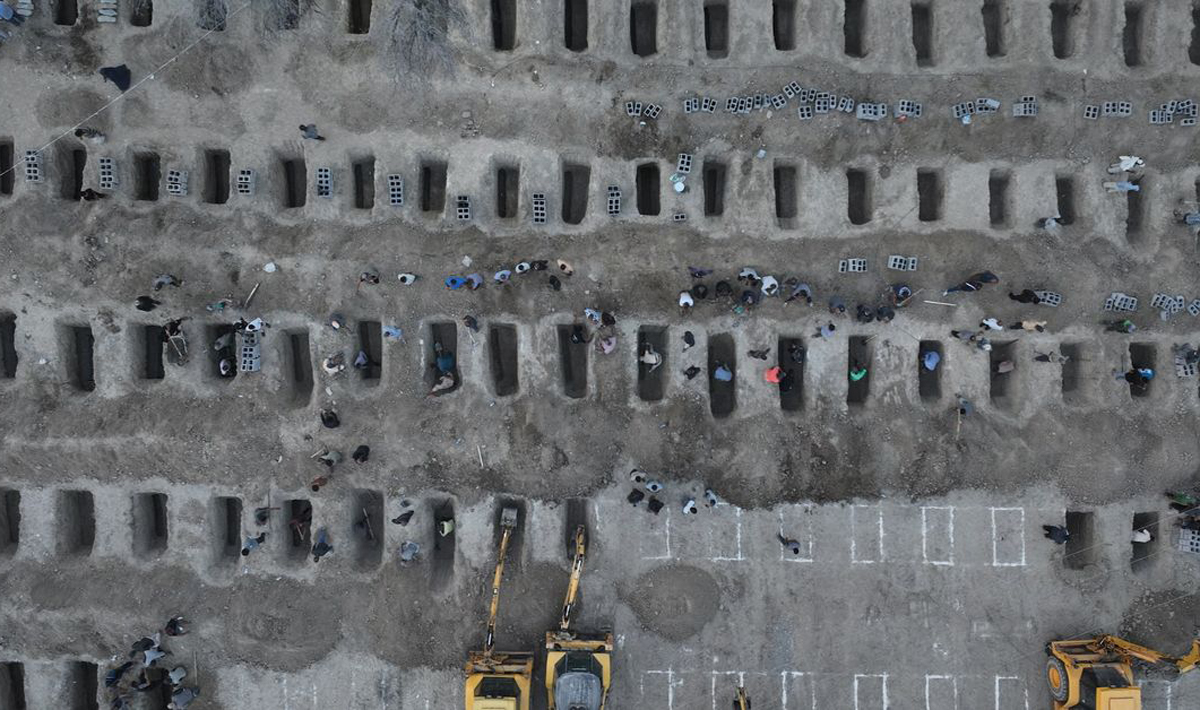
Drone footage from Minab in Hormozgan Province shows excavators digging fresh graves after Iranian state media reported that more than 160 people were killed in a strike on a girls’ elementary school
Instead, it produced what is termed as “escalation without exit” — a prolonged conflict with no clear US strategic end-state, resulting in Iran adopting a posture of multi-month sustained confrontation, including the weaponisation of the Strait of Hormuz and targeted strikes on Gulf states hosting American bases.
For Nepal, the immediate impacts were simultaneous and severe. Airspace closures across the Gulf — Qatar, Kuwait, UAE, Saudi Arabia — grounded all flights, stranding hundreds of Nepalis at Kathmandu airport and thousands more across Gulf cities.
Nepal’s private carrier Himalaya Airlines suspended all West Asia flights indefinitely. The Nepal government, through a ministerial-level emergency meeting, temporarily halted the issuance of labour permits to 10–12 countries including Saudi Arabia, UAE, Qatar, Kuwait, Bahrain, Oman, Iraq, Yemen, Jordan, Lebanon, Turkey, and Israel.
The Ministry of Foreign Affairs confirmed 1.73 million Nepalis in the affected region. One Nepali worker — Diwas Shrestha from Gorkha district — was killed in an attack in Abu Dhabi; two others were injured.
The Ministry established an Emergency Response Team led by Foreign Secretary Amrit Bahadur Rai, coordinating with eight Nepali embassies and two consular offices across the region. An Emergency Control Room at the Ministry of Foreign Affairs became operational around the clock. Yet the government was candidly unprepared: the spokesperson of the Ministry of Labour acknowledged “no established mechanism for rescue and repatriation of Nepalis from West Asia.”
The war affects Nepal’s economy through multiple, reinforcing transmission channels:
Remittance disruption: With 40–42 percent of Nepal’s remittance inflows originating from Gulf countries, any prolonged reduction in employment or remittance capacity in the region constitutes a macroeconomic shock of the first order.
It is noted that when the economies of Gulf countries contract, one of the first impacts is job losses, which can directly affect Nepali workers employed there. A 20 percent reduction in remittances from the Gulf alone would remove approximately Rs 70–80 billion from the economy annually.
Oil price and inflationary pressure: Nepal imports 100 percent of its liquid fuels — diesel, petrol, LPG, and aviation fuel — from India, which in turn sources much of its crude from the Gulf.
Any sustained oil price spike from Strait of Hormuz disruption or production infrastructure damage filters through to Nepal’s fuel costs, elevating domestic inflation, increasing transport costs, and reducing household purchasing power.
Nepal is already, in the words of the World Bank’s April 2026 Development Update, experiencing “higher fuel prices moderating household purchasing power.”
Trade route and supply chain disruption: The Strait of Hormuz has already experienced a cycle of closure and temporary reopening during a ceasefire, but with no agreement now in place, it has effectively been shut again. Given that roughly 20 percent of global oil trade and a significant share of container traffic passes through this route, the renewed disruption is expected to drive shipping costs sharply higher worldwide.
Earlier, the World Bank noted that shipping costs from Asia to Europe had already tripled at one stage due to Houthi movement disruptions in the Red Sea. A renewed closure of Hormuz would be far more severe in its global economic impact.
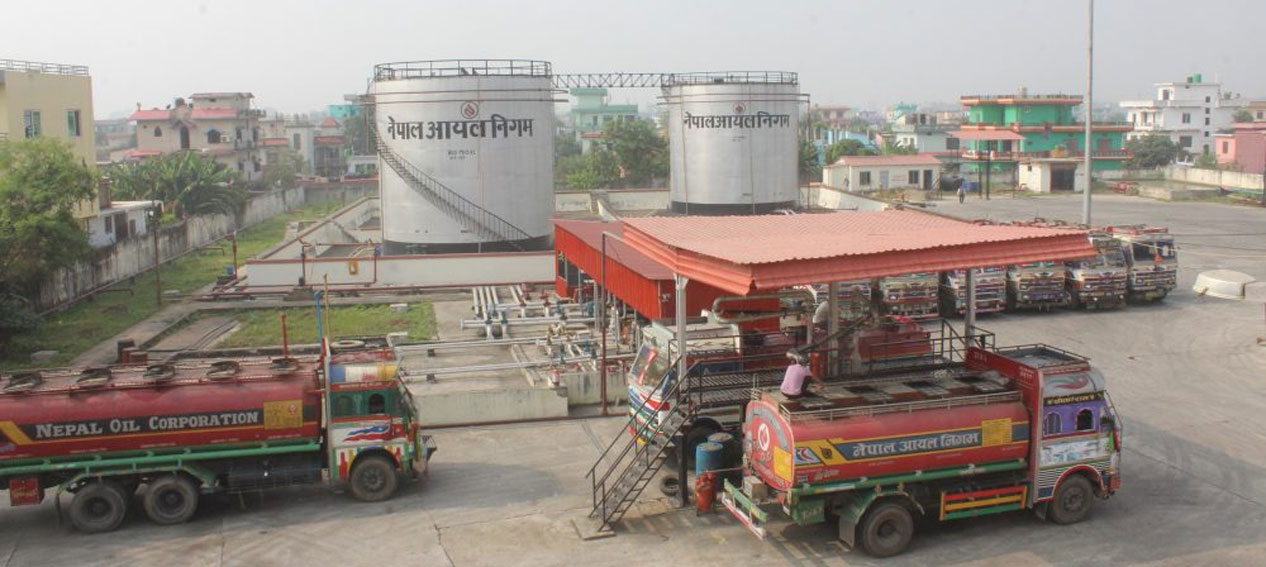
Nepal Oil Corporation. File photo
Tourism: Nepal’s trekking and mountaineering season (March–May) coincides with the current escalation. A large proportion of tourists arrive through Gulf hub airports — Dubai, Doha, and Abu Dhabi — which serve as transit points for European and other visitors.
Airspace closures and flight cancellations have disrupted this flow, and the Nepal Tourism Board’s record of 115,442 tourists in February 2026 — a 19.15 percent year-on-year increase — may prove to be a short-lived peak if the conflict persists through the trekking season.
Labour market freeze: The halt in labour permit issuance, while temporary, is economically consequential. In the first six months of FY 2025–26, approximately 207,341 new Nepali migrant workers departed for Gulf countries.
If this flow is interrupted for several months, the remittance trajectory for the year will be substantially lower than projected, and thousands of families awaiting a family member’s departure will face delayed income.
Analysts describes a condition of “strategic disorientation” in the United States, referring to a military campaign launched without a clearly defined and achievable political end-state.
The assassination of Khamenei, rather than precipitating political collapse in Tehran, produced a new cadre of more ideologically committed leadership.
Iran’s missile capabilities, significantly underestimated by US and Israeli planners, have continued to function with minimal degradation. Iran has demonstrated the capacity to target civilian and energy infrastructure across multiple Gulf states simultaneously.
The three main parties to the conflict — the United States and Israel on one side, and Iran on the other — have achieved certain gains and suffered setbacks, yet none has reached the conclusion that the expected benefits no longer justify the costs involved.”
This suggests a protracted conflict scenario. The window for negotiated settlement is described as “narrow,” with Iran demanding comprehensive sanctions relief, guarantees against future attacks, and recognition of its regional role — conditions that Washington cannot easily meet domestically.
The most optimistic scenario involves a US declaration of ceasefire within six to eight weeks to manage domestic political pressures (midterm elections, rising energy costs, public opinion), but even this would not fully resolve the underlying confrontation.
For Nepal, the protracted scenario is the most economically damaging. A war extending months rather than weeks means: sustained airspace disruption, prolonged labour permit halts, potential mass returns of Nepali workers (possibly hundreds of thousands), a collapse in Gulf employment, and a structural decline in remittances that could persist even after active hostilities end as Gulf economies rebuild and restructure their labour markets.
The logistics of potential mass repatriation present a crisis management challenge that Nepal is manifestly unprepared for. The largest concentrations of Nepalis are in the UAE (478,144), Saudi Arabia (383,865), Qatar (357,000), and Kuwait (175,000). Airspace closures have already stranded hundreds at Kathmandu airport and thousands more at Gulf airports. Nepal’s state carrier, Nepal Airlines, arranged special flights to rescue Nepali citizens from Gulf in early April 2026, but capacity is tiny relative to the scale of potential need.
If even 20 percent of Nepal’s 1.73 million Gulf workers were to return — 346,000 people — the domestic economy would face a shock on multiple fronts simultaneously: lost remittances, the need to absorb returnees into an already stagnant job market, the accumulation of debts from recruitment loans that workers took to finance their original migration, and the psychological and social disruption of premature return.
The World Bank’s April 2026 Nepal Development Update projects real GDP growth moderating to just 2.3 percent in FY 2026, citing the Middle East conflict as the primary downside risk. Recovery to 4.4 percent growth is projected for FY 2027–28, but only if hostilities moderate and reconstruction spending picks up.
Nepal’s over-dependence on remittances is not the result of policy design but of policy failure. For three decades, successive governments failed to create a domestic employment environment that could absorb Nepal’s young, growing labour force.
The business environment remains deeply challenging: Nepal ranks in the lowest quintile globally for market competition, according to the World Bank B-Ready 2024 report. Manufacturing output is stagnant. Agricultural productivity has not improved meaningfully in decades.
Hydropower, which holds enormous potential — Nepal has estimated capacity of 83,000 MW of technically feasible hydropower, of which less than 3,000 MW has been developed — has progressed slowly due to policy uncertainty, land acquisition challenges, and inadequate grid infrastructure.
The domestic investment rate has been suppressed by political instability, rampant corruption, and regulatory unpredictability. Transparency International’s 2025 Corruption Perceptions Index scored Nepal just 34 out of 100.
The September 2025 youth-led anti-corruption protests — which escalated into widespread unrest, led to a prime ministerial resignation, and dissolved the House of Representatives — were a direct expression of public frustration with a political class that has consistently prioritised personal gain over national development.
The snap elections of March 2026 produced a single-party majority government, offering a potential window of political stability, though given Nepal’s recent history this must be taken provisionally.
The World Bank’s Country Economic Memorandum explicitly recommends a multi-pronged reform agenda: integrating migration into national development strategies while actively diversifying both destinations and the skill mix of Nepali migrants; improving export competitiveness through infrastructure investment and regulatory reform; developing the hydropower sector to generate both domestic employment and export earnings; and advancing digitalization to improve both the efficiency of the remittance system and the broader business environment.
Destination diversification is particularly urgent in light of the Middle East crisis. In recent years, Japan and South Korea (through the Employment Permit System) have emerged as alternatives offering higher wages and stronger worker protections. European countries are beginning to attract Nepali workers in sectors like hospitality and construction.
Australia, Canada, and the UK absorb significant numbers of Nepali students who subsequently work and send remittances. Expanding bilateral labour agreements with these destinations, improving pre-departure training to increase workers’ qualifications for higher-skill positions, and reducing recruitment costs (which remain exorbitantly high) are all actionable priorities.
The shift toward skills-based migration is also critical for the remittance economy itself: a single skilled Nepali nurse in a US hospital sends more money home in a month than a labourer on a Qatari construction site. Investing in vocational training, professional qualifications recognised internationally, and language skills represents a longer-term but higher-return migration strategy.
The battle to bring remittances fully into formal channels requires parallel action on multiple fronts. Fee reduction must be a priority: the SDG 10.c target of reducing remittance costs to 3 percent of the transfer value by 2030 remains aspirational for many corridors.

Digital finance analysis room. File photo
Expanding mobile banking infrastructure into Nepal’s remote villages — so that families can receive transfers without travelling hours to a bank branch — is achievable given the rapid penetration of mobile networks. The role of Nepal Post as a remittance delivery mechanism, particularly for remote areas, has been underutilised and deserves policy attention.
On the AML front, Nepal must exit the FATF grey list within the two-year window (by February 2027) or risk blacklisting, which would impose dramatically more severe consequences.
This requires genuine institutional reform — not the “last-minute, symbolic” scramble that the FATF placement exposed — including a credible anti-money laundering prosecution track record, depoliticisation of financial regulators, and systematic crackdown on hundi networks while simultaneously improving formal channel accessibility so that workers have a genuinely better alternative.
Nepal’s remittance economy is simultaneously its greatest achievement and its most dangerous exposure. The achievement is real: extreme poverty has been virtually eliminated, household welfare has improved dramatically, foreign exchange reserves are robust, and millions of families have accessed education, healthcare, and opportunity that the domestic economy could not provide.
The sacrifice behind this achievement — paid in separated families, dangerous working conditions, accumulated debt, and lives lost far from home — is also real, and frequently invisible in the macroeconomic statistics.
The dangerous exposure is equally real. More than a quarter of the national economy — and potentially more when informal transfers are included — flows from the earnings of workers in a single geographic zone: the Gulf.
When that zone erupts into the most serious military conflagration it has seen in decades, Nepal is not a bystander. Its 1.73 million workers are in the line of fire. Its economy shudders. Its government scrambles to improvise response mechanisms that should have been institutionalised years ago.
The US–Israel war on Iran, described by analysts as an “escalation without exit” in which none of the principal actors has yet reached the point where costs clearly outweigh benefits, presents Nepal with its most severe remittance shock since COVID-19.
Unlike COVID — which was global and temporary — a prolonged Middle East conflict may permanently restructure labour markets, energy flows, and the economic calculus of Gulf states in ways that reduce their appetite for large-scale South Asian migrant labour.
Gulf countries increasingly invest in automation, robotic construction technology, and domestic workforce nationalization programs (Saudi Vision 2030’s Saudization, UAE’s Emiratization). These trends predated the current war; the war may accelerate them.
Nepal cannot control the geopolitics of the Middle East. It can control how it builds resilience: diversifying migration destinations, improving migrant worker protections, channelling remittances toward productive investment, developing domestic employment alternatives, cleaning up its financial system to exit the FATF grey list, and building genuine emergency response capacity for worker repatriation. The question is whether the political will exists to do so before the next crisis, rather than during it.
The young man who boards a plane from Tribhuvan International Airport for Dubai or Riyadh is not just an economic unit generating foreign exchange. He is a citizen taking on disproportionate personal risk to sustain a national economy that has failed to create opportunities at home.
Understanding this — and taking seriously the obligation it creates — is the first step toward a migration and remittance policy worthy of the sacrifices already made.
| Indicator | Value | Period |
| Remittances as % of GDP | 28.6% | FY 2024–25 |
| Total remittance inflow | Rs 1.72 trillion (~USD 12.3 bn) | FY 2024–25 |
| Year-on-year remittance growth | 19% (FY 24-25); 35.4% (Q1 FY25-26) | 2025–26 |
| Annual labour permits issued | 839,266 | FY 2024–25 |
| Nepalis in Middle East | ~1.73 million | March 2026 |
| Gulf share of remittances | 40–42% | 2025–26 data |
| Foreign exchange reserves | Rs 2.97 trillion (~USD 21.2 bn) | Late 2025 |
| Extreme poverty rate | ~0.37% | 2023 |
| FATF Grey list date | February 2025 | — |
| Labour permits halted | 10–12 Gulf/Middle East nations | March 2026 |