Kathmandu
Sunday, June 7, 2026






KATHMANDU: As Nepal navigates an increasingly complex geopolitical space between its two giant neighbours, India and China, questions of strategy, sovereignty, and regional balance have taken on new urgency. From debates over China’s expanding economic footprint to India’s enduring security concerns, Kathmandu today finds itself at the centre of competing regional priorities.
The conversation is no longer limited to diplomacy alone. It now touches infrastructure choices, border management, remittance dependence, and the uncertain future of regional platforms like South Asian Association for Regional Cooperation (SAARC).
Amid these shifts, ideas such as Nepal’s evolution from a “buffer” to a “bridge” state, the sustainability of Chinese-funded projects, and the credibility of India’s Neighbourhood First policy are being actively debated.
At the same time, deeper structural challenges continue to shape the region, including South Asia’s heavy reliance on Gulf remittances and the continued paralysis of regional cooperation.
In this context, Binod Dhakal of Nepal News conducted an email interview with Dr. Dhananjay Tripathi, Associate Professor and Associate Dean at the South Asian University in New Delhi. A scholar of border studies, regional integration, and international political economy, Tripathi brings a fresh perspective to the evolving India Nepal relationship.
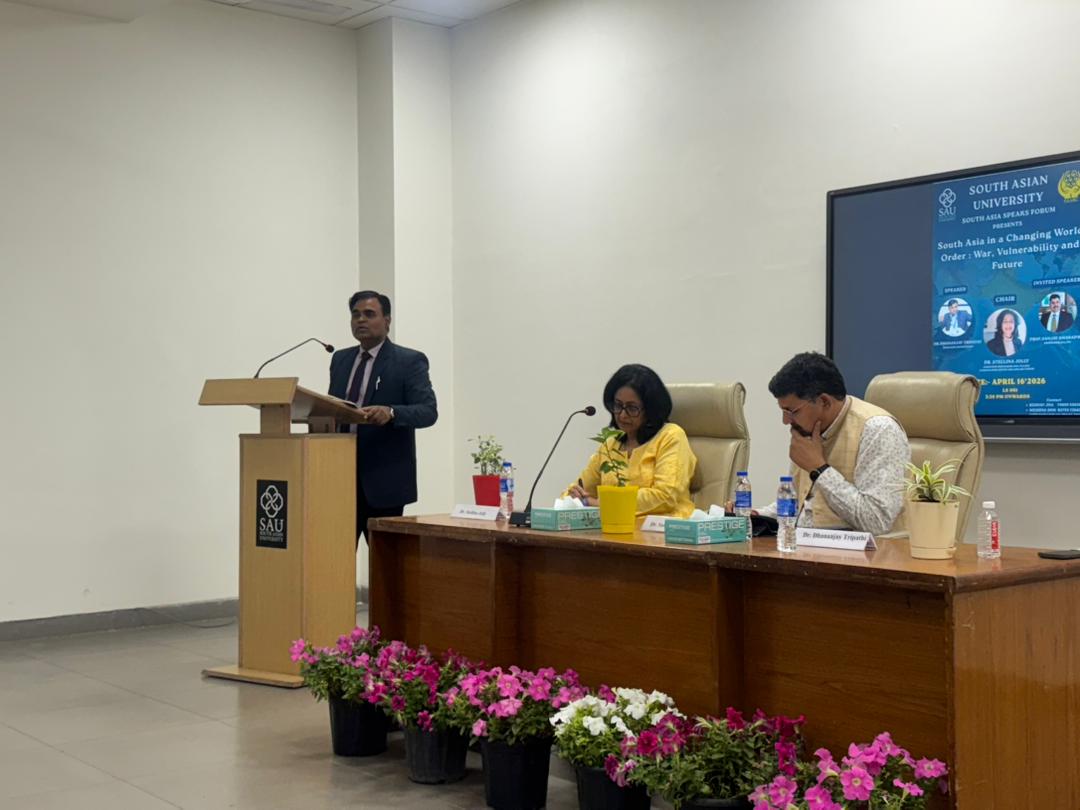
Dr Tripathi speaking in a discussion program on the impact of the Iran war on South Asia at the SAU. Photo courtesy: Dhananjay Tripathi/X
In this interview, he reflects on how Nepal can navigate great power competition, what India needs to recalibrate in its regional approach, and why South Asia’s future may ultimately depend on its ability to move beyond narrow national interests. Below are edited excerpts from the email interview.
India tends to view Nepal’s engagement with China through a security lens rather than a development lens. How should India recalibrate its approach to Nepal’s China partnerships without inadvertently pushing Kathmandu closer to Beijing?
China’s growing presence in South Asia is no longer new; it has become an established reality. Its expanding economic investments across the region are well recognized in New Delhi. The concern for India is not China’s economic engagement per se, but the manner in which this engagement increasingly carries strategic implications.
India itself maintains significant economic relations with China, and therefore it would be misleading to suggest that New Delhi fundamentally opposes economic partnerships between South Asian countries and China.
Rather, the issue lies in the nature and pattern of Chinese investments. Infrastructure projects such as ports, airports, and roads—some of which have limited commercial viability and are located close to India’s borders—raise legitimate strategic concerns in New Delhi.
In this context, India expects its neighbours to be mindful of its security sensitivities. These concerns are further compounded by the unresolved border dispute between India and China, which continues to shape their political relationship.
Given the shifting geopolitical landscape, it is imperative for both India and China to reassess their political ties and make renewed efforts to address the boundary issue.
At the same time, India should continue to deepen its engagement and investment in neighbouring countries such as Nepal, irrespective of China’s role in the region.
Balen Shah’s government has reframed Nepal’s identity from a passive “buffer state” to a “vibrant bridge” between India and China. From your border studies perspective, is this a genuine strategic shift or mostly diplomatic rhetoric without institutional backing?
This is not an entirely new idea; it is largely a change in terminology. Even in the past, political leaders such as Baburam Bhattarai have described Nepal as a bridge between China and India. Regardless of how the current leadership in Kathmandu frames this concept, the more important question is how it can be translated into practice.
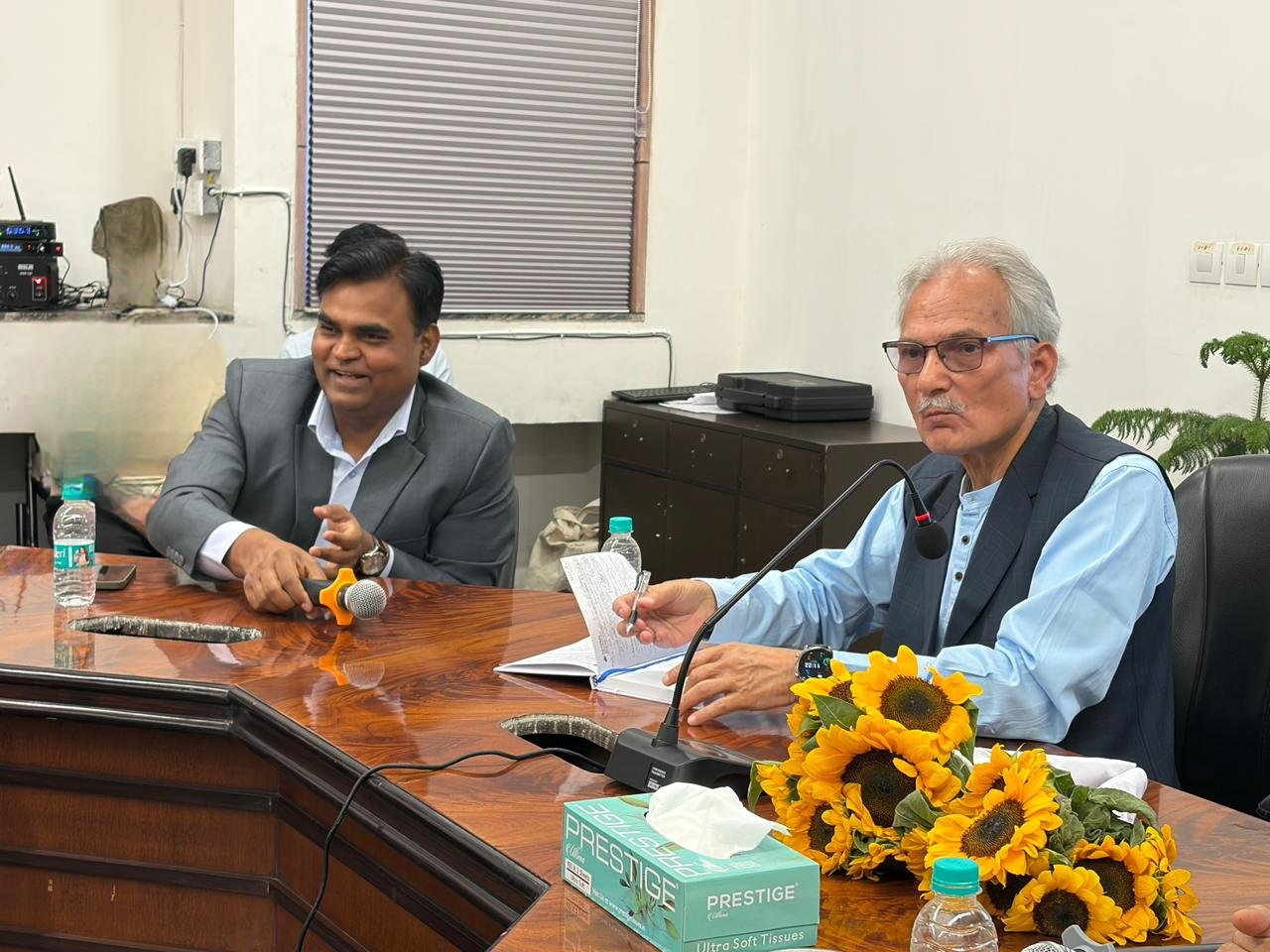
Dr Tripathi chairs a session featuring Dr Baburam Bhattarai, former Prime Minister of Nepal, as chief guest at an SAU program in New Delhi, India. Photo courtesy: Dhananjay Tripathi/X
Nepal’s geographical location naturally positions it to play a connecting role between India and China. However, the critical issue is whether both India and China are willing to accept and support Nepal in this role. If Nepal aspires to become a “vibrant bridge,” it reflects a positive intention on the part of the new leadership.
The real challenge, however, lies in how Nepal will operationalize this vision. For such a policy to succeed, it is essential that both India and China agree to and facilitate Nepal’s proposed role.
The Nepal-India open border is increasingly being questioned on security grounds by sections of the Indian establishment. Would securitizing this border be a strategic miscalculation given the lived realities of millions of border communities?
The open border between India and Nepal is a defining feature of their political, social, and cultural relationship. Any move to securitize this border especially if it shapes public perception could significantly affect how the India–Nepal relationship is understood and experienced.
While New Delhi has legitimate security concerns, particularly in the context of terrorism, it must approach the issue with sensitivity in its dealings with Nepal. At the same time, Kathmandu is expected to acknowledge and understand India’s security concerns.
The way forward lies in greater coordination and cooperation between the two sides, both at the political and security levels. It is crucial that such concerns are managed without disrupting the long-standing system of an open and accessible border between the two countries.
Hundreds of thousands of Nepali and Indian workers remain economically vulnerable to Gulf instability. From your International Political Economy background, is South Asia’s remittance dependence on the Gulf a structural vulnerability that regional policy has dangerously ignored?
This represents a major challenge for all South Asian countries. The region receives nearly USD 200 billion in remittances from the Gulf, making it highly vulnerable to developments in West Asia. Any instability there is likely to have significant repercussions, not only for remittance flows but also for energy supplies.
There are new governments in several South Asian countries including Nepal. These governments have made a lot of promises to the people, at the same time, people have huge expectations from new leadership. The crisis in West Asia, however, at this juncture will create economic pressure on these governments and limit their ability to deliver on some the promises. This is not a happy situation and it requires much rethinking both at national and regional levels.
Unfortunately, South Asian countries have rarely approached such challenges in a coordinated manner. There is a pressing need for the region to collectively reflect on these shared vulnerabilities. Moving beyond narrow national perspectives, South Asia must develop a broader regional understanding and response mechanism.
Crises originating in West Asia, as well as global shocks such as COVID-19, have affected all countries in the region. Yet, there has been little effort to devise a unified approach to managing these disruptions. It is imperative that South Asian leadership begins to prioritize regional cooperation and collective resilience in addressing such challenges.
SAARC has been paralyzed since 2016. Given your expertise in regional integration, do you think SAARC in its current design is even the right vehicle anymore — or does it need fundamental structural redesign before revival makes any real sense?
The SAARC Summit remains crucial, and South Asian countries should make concerted efforts to convene it sooner rather than later. Regional institutions like SAARC must be given the necessary space and political support to function effectively and be strengthened over time.
Across South Asia, countries are grappling with internal transitions and challenges—Nepal, Sri Lanka, and Bangladesh are navigating new political mandates, Pakistan faces economic difficulties, and India continues to confront significant development concerns, as do others in the region.
South Asia faces a wide range of shared challenges—from development deficits to climate change—and without collective action, addressing many of these issues will remain difficult.
The countries of the region are deeply interconnected; a crisis in one inevitably has spillover effects on others. While much attention is often given to geopolitics, there is a pressing need to focus equally on geoeconomics.
Across South Asia, countries are grappling with internal transitions and challenges—Nepal, Sri Lanka, and Bangladesh are navigating new political mandates, Pakistan faces economic difficulties, and India continues to confront significant development concerns, as do others in the region. Afghanistan, too, requires sustained regional attention.
This is an opportune moment to rethink and revitalize regionalism in South Asia. The SAARC remains relevant, and with sufficient political will from its member states, it can provide meaningful direction to regional cooperation and integration.
As the saying goes, “where there is a will, there is a way.” In this context, South Asian leaders could even consider convening a virtual SAARC Summit as a practical step forward.
There is a need to move beyond narrow political articulations and adopt more forward-looking approaches to regional cooperation. Such cooperation is not meant to serve the interests of one or two countries alone; it is a collective enterprise that benefits the entire region.
For it to succeed, major players must remain actively invested. In the case of South Asia, a significant share of this responsibility rests with India.
India’s “Neighborhood First” policy has often felt transactional to smaller neighbors like Nepal. As a scholar who has studied both European and South Asian integration, what must India concretely do to make this policy credible on the ground?
India’s Neighbourhood First policy is well-conceived; the real challenge lies in implementing it with the same spirit and consistency. There appears to be a disconnect between the vision articulated at the leadership level and its execution on the ground.
Greater and more sustained attention from the highest political level, including the Prime Minister, is necessary to ensure that this gap is addressed. The key question is whether the broader vision for the region is being effectively translated into policy and practice.
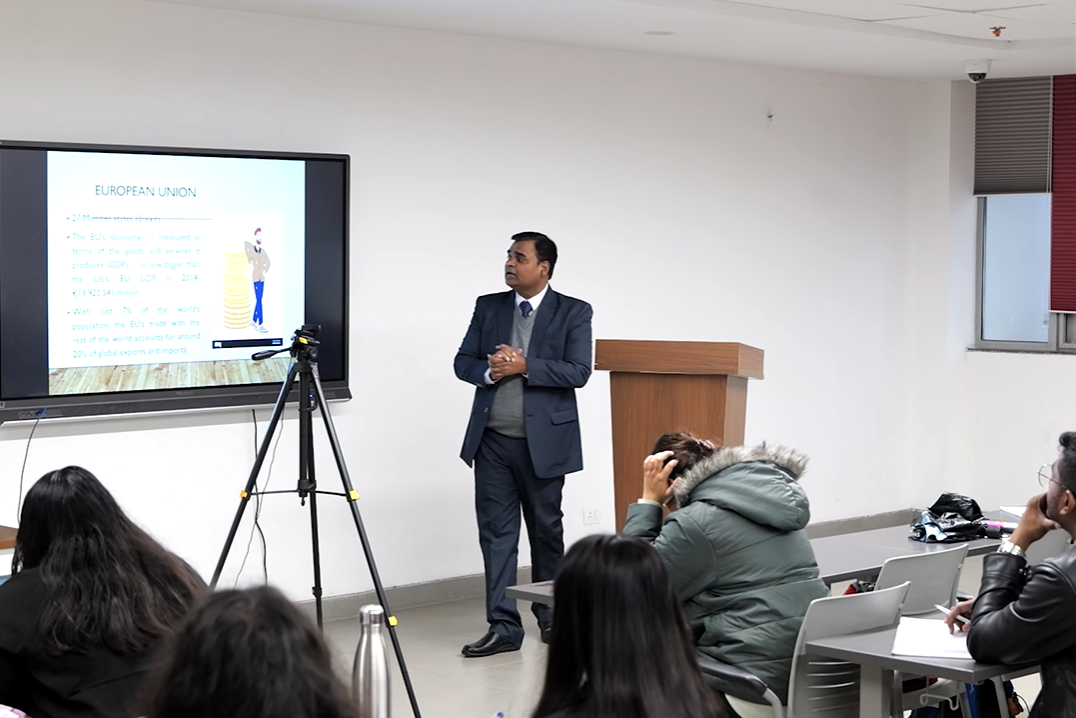
Dr Tripathi teaching a class of International Studies at South Asian University. Photo courtesy: SAU/YouTube
There are positive examples – India’s support to Sri Lanka during its recent economic crisis and its ongoing management of ties with Bangladesh despite periodic tensions. At the same time, challenges persist across the neighbourhood, and domestic politics in some countries often evolve around perceptions of India, which further complicates relations.
India has the potential to play a far more constructive and proactive role in the region. One important area is deeper engagement with the youth of South Asia.
Transforming India into a regional knowledge hub, through education, research, and capacity-building initiatives, could significantly strengthen regional connections and goodwill. While there is both vision and political willingness, these need to be translated into more effective policies and consistent implementation.
Your volume Afghanistan in Transition: From Taliban to Taliban tracks a tragic arc. For Nepal — also landlocked and pressed between two giant neighbors — what lessons does Afghanistan’s experience offer about the dangers of being geopolitically instrumentalized by larger powers?
Nepal and Afghanistan are fundamentally different cases and are not directly comparable. Afghanistan’s domestic conditions are vastly different from those of Nepal. From Nepal’s perspective, both India and China are major neighbours, yet it has maintained constructive relations with both.
Afghanistan, by contrast, has historically been shaped by external interventions—from the “Great Game” to later phases of great power rivalry—followed by prolonged periods of instability, conflict, and terrorism. More recently, regional dynamics, including tensions involving Pakistan, have further complicated its situation.
Nepal presents a very different trajectory. While both countries are landlocked, Nepal has experienced relatively greater political coordination with external powers and has made more consistent progress in economic terms.
The Pokhara International Airport built on Chinese loans is already generating debt-servicing anxiety. Does Nepal have the institutional capacity to engage with BRI on genuinely favorable terms, or is the power asymmetry simply too great for small states to navigate?
Smaller states need to carefully assess how they engage with the Belt and Road Initiative (BRI). While large-scale infrastructure projects may appear attractive, an important question is whether these countries have the capacity to effectively utilize and sustain them.
At times, such projects align well with domestic political narratives and aspirations, but this does not necessarily mean they are economically viable or strategically necessary.
It is therefore essential for states to critically evaluate not just the appeal of these projects, but also their long-term utility, financial sustainability, and alignment with national priorities.
You work at South Asian University — itself a regional integration project at a time when SAARC is politically stalled. Does South Asian solidarity actually feel real in SAU’s corridors, or does geopolitics follow students into the classroom too?
We all carry our own imagination of the region; however, once a student joins and completes a degree at SAU, that imagination is likely to evolve and transform. Learning at SAU is a two-way process—students learn from faculty, and faculty, in turn, learn from students.
I have personally benefited from my interactions with students; in many ways, they have helped me understand South Asia better than any of the established texts on the subject.
SAU should be envisioned as a regional knowledge hub. With greater institutional support and a stronger commitment from regional leadership, it has the potential to fully realize this vision.
Your research shows how Indian and Pakistani textbooks manufacture enemy images. Do you see a similar — perhaps subtler — dynamic in how Nepali and Indian curricula represent each other, and what does that mean for long-term people-to-people relations?
I have not examined Nepali textbooks in detail and therefore would prefer not to comment on that aspect. However, for the people of India, Nepal is a close and valued friend, and this sentiment is likely to endure in the future.