Kathmandu
Wednesday, July 1, 2026





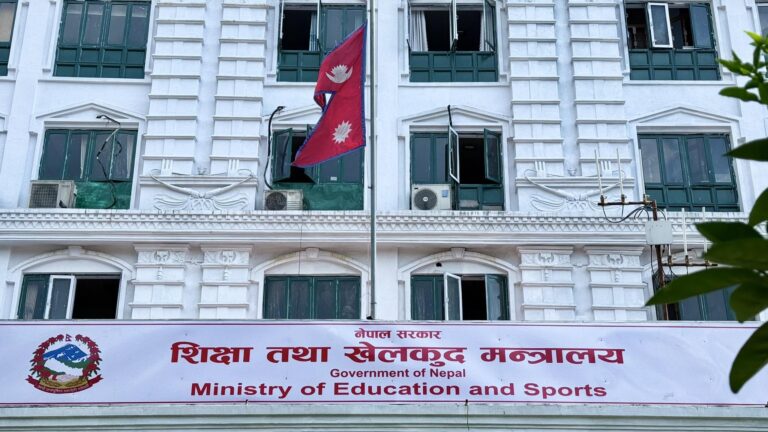
KATHMANDU: Since the formation of the current government, notable progress has been made toward reforming the examination system, improving university governance, expanding digital services, and enhancing administrative efficiency across Nepal.
According to the Ministry of Education, Science, Technology and Sports, priorities have been placed on making the examination system from secondary to university levels time-bound, streamlining the No Objection Certificate (NOC) issuance process, freeing universities from political interference, and expanding digital governance.
Accelerated Examination Results
Ministry Spokesperson Shibakumar Sapkota stated that the results for the Secondary Education Examination (SEE), Grade 12, and university-level examinations are being published much faster than in the past. Moving forward, SEE results will be published within one month of exam completion, Grade 12 results within 40 days, and university results within 65 days.
This arrangement is being implemented under the government’s ‘100-Point Action Plan’ for governance reform. The action plan mandates that universities and the Council for Technical Education and Vocational Training (CTEVT) publish exam results within two months of completion, ensuring undergraduate and postgraduate results align strictly with the academic calendar. Currently, nine universities have successfully brought their academic calendars into implementation.
Service Streamlining and Digital Interconnection
To make the Foreign Study Permission (NOC) distribution system more efficient, the ministry has integrated its system with the data systems of Tribhuvan University and Kathmandu University via API. Preparations to interconnect with the National Identity Card (NIN) system have also been completed. Furthermore, NOC issuance and educational certificate verification services are now being provided even on public holidays.
Over a three-month period, the ministry issued 40,413 NOCs, verified 12,210 educational certificates, and monitored 56 educational institutions operating under affiliations with foreign universities. Additionally, all 212 grievances received through the ‘Hello Sarkar’ hotline were successfully resolved.
Strengthening university governance
The ministry has intensified its campaign to end partisan political interference in universities. Preparations are in the final stages to formulate guidelines that prohibit student unions from occupying university buildings or land, remove political symbols, and implement ‘Student Council’ and ‘Voice of Students’ systems.
Following the removal of several university officials who were appointed through political quotas, interim arrangements have been made for daily administration. The selection of new officials through a clean, competitive process is in its final stages. Interviews and presentations for the selection of Vice-Chancellors for eight universities commenced on Saturday.
In a major administrative cleanup, the government has recovered approximately NPR 500 million in revenue from around 400 Tribhuvan University professors who went on study leave but failed to return within the stipulated timeframe. A total of approximately NPR 2 billion is to be recovered from them.
School-level reforms
At the school level, the ministry has abolished traditional internal examinations up to Grade 5, replacing them with a continuous alternative evaluation system designed to reduce psychological pressure on young students. Furthermore, children lacking birth registration certificates can now enroll in schools based on verified details provided by their respective local bodies.
To facilitate higher education, preparations are underway via the University Grants Commission (UGC) to issue a directive ensuring that citizenship certificates are not mandatory for students studying up to the undergraduate level.
Infrastructure and strategic developments
The ministry has advanced several administrative and digital reforms, including: Re-engineering administrative workflows via Business Process Re-engineering (BPR).
Launching preparations for an e-Pension Card system for teachers. Expanding digital signature verification and the GIOMS system.
Setting up dedicated help desks for grievance management. Completing the final draft of the National Quality Standards for School Education.
In terms of research and evaluation, the ministry published the Educational Information 2026 (2083 BS) report and completed a comprehensive policy analysis of past research. A national evaluation policy guideline aimed at reforming learning achievement tests for Grades 3, 5, 8, and 10 is in its final stages.
Furthermore, the Medical Education Commission and the Policy Research Institute have signed an agreement to conduct a joint study on the commission’s scope of work, scholarship management, fee structures, and operational systems.
Support for citizens
Targeting those affected by the Gen-Z movement, the ministry, through technical education and vocational training centers, has initiated programs focusing on employment, skill development, psychosocial counseling, and rehabilitation, already reaching more than 76 beneficiaries.
Ministry Spokesperson Sapkota emphasized that these collective initiatives are aimed at enhancing good governance, making service delivery highly effective, ensuring quality education, and holding educational institutions accountable to the public.