Kathmandu
Saturday, July 18, 2026





Three adult tigers captured on camera in Palpa and Arghakhanchi signal a possible long-term presence in Lumbini’s hill forests, prompting calls for caution and conservation amid rising human-wildlife conflict
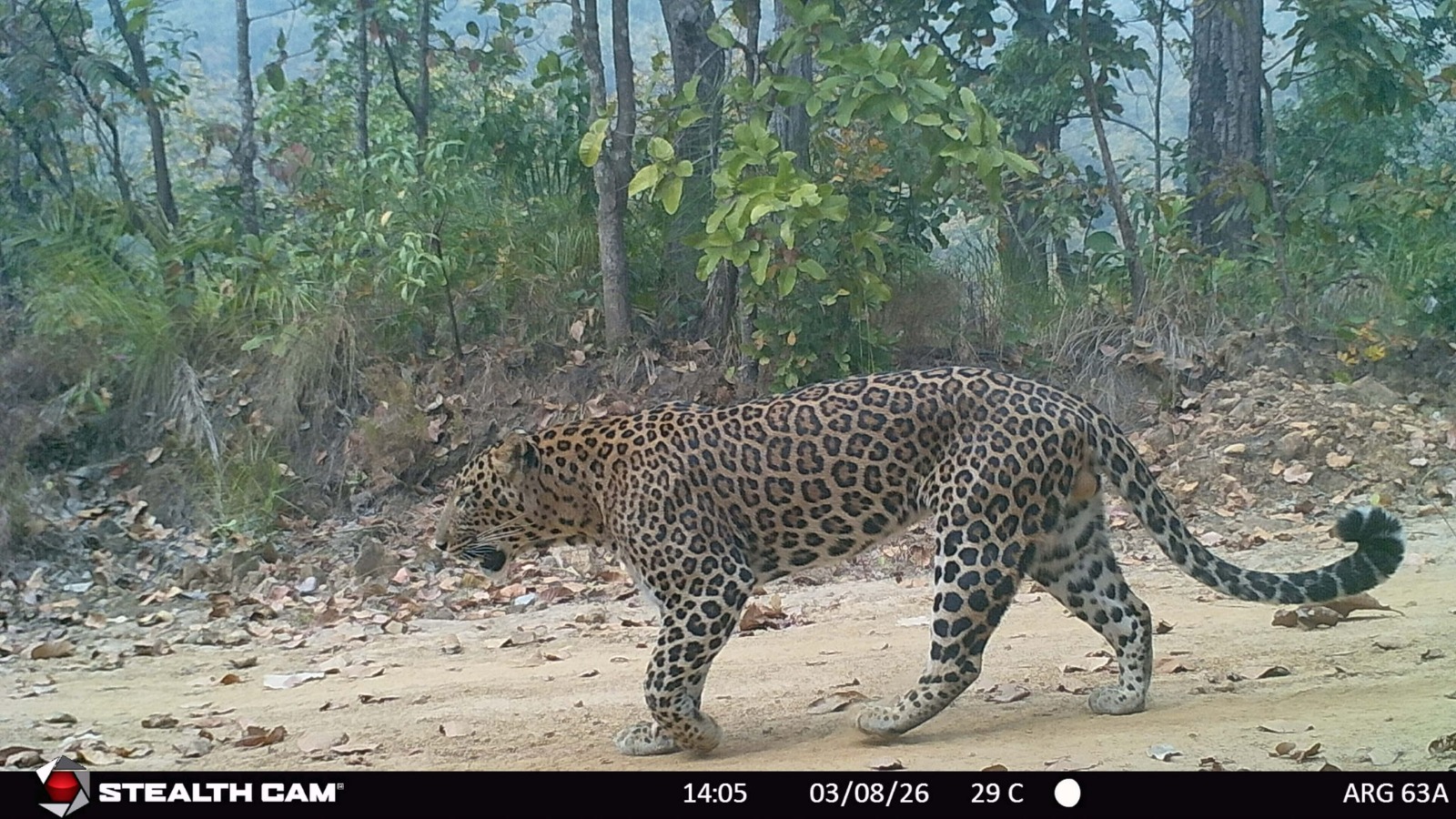
BUTWAL: Three tigers have been recorded in Palpa and Arghakhanchi in Lumbini Province. The three tigers were spotted in camera traps set in Palpa and Arghakhanchi by Tribhuvan University’s Central Department of Zoology.
TU professor and study team coordinator Hari Prasad Sharma informed Nepal News that tigers appeared in cameras placed near Mathagadhi Fort in Mathagadhi Rural Municipality of Palpa, above Jhumsa Khola in Tinau Rural Municipality, and near Rajiya in Sheetganga Municipality of Arghakhanchi, during an ongoing study of wildlife and fauna in Lumbini Province. According to him, all three tigers are adults.
The tigers were caught in traps at an elevation of 1,110 meters in Mathagadhi Rural Municipality of Palpa and at 536 meters above Jhumsa Khola in Tinau. Similarly, a tiger was found at 934 meters elevation in Rajiya of Sheetganga in Arghakhanchi, an area Sharma noted falls right alongside a route frequently used by people.
“The distance between human settlements and the tigers now caught in camera appears to be quite large, but both caution and conservation are necessary,” he said. “Our preliminary study shows that the tigers found in this area are adults and may have been living here for a long time.” He added that details about the tigers’ habitat and other matters observed in the preliminary study would only be confirmed after full research.
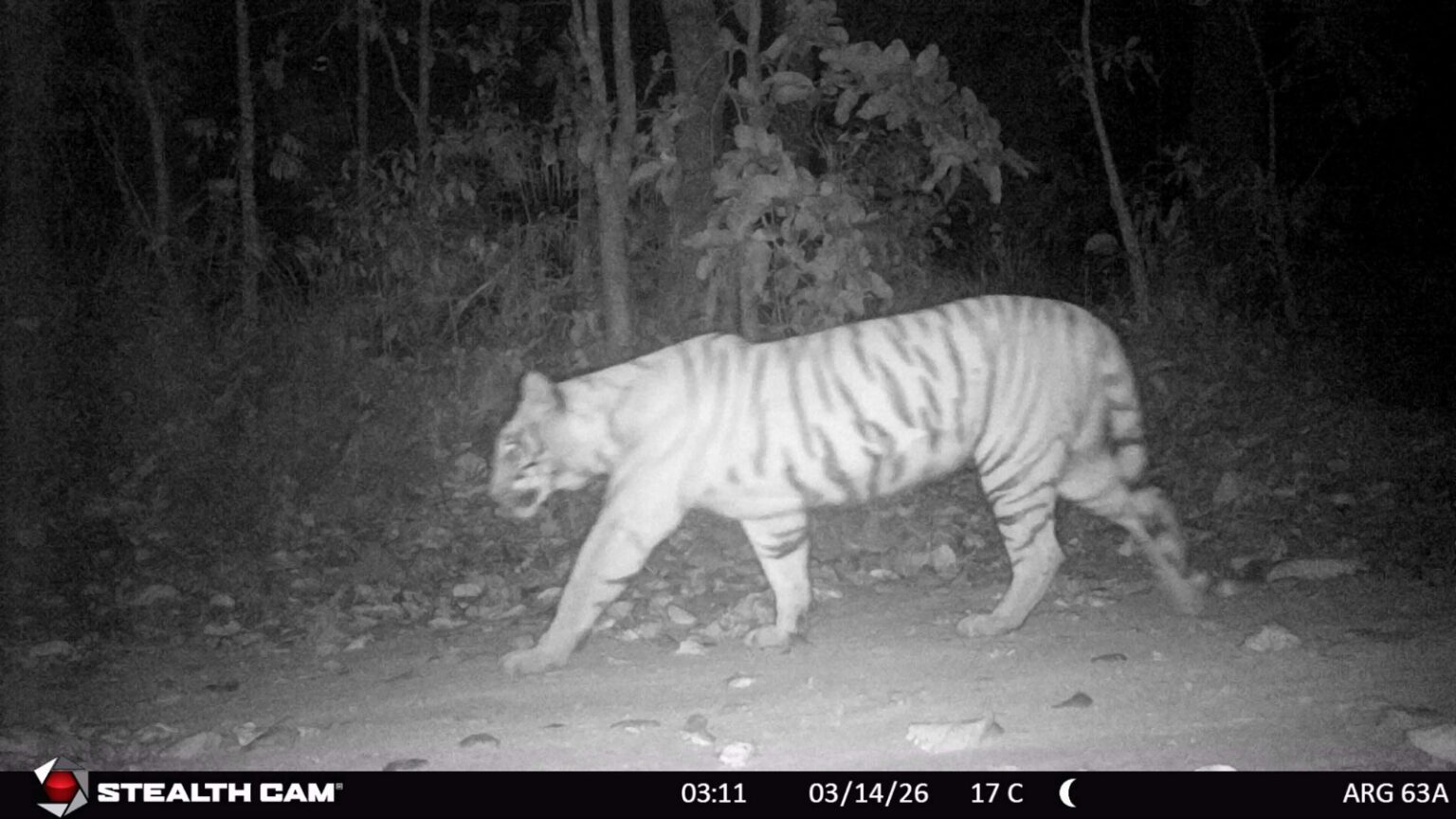
A tiger spotted in Arghakhanchi.
According to him, 44 camera traps were placed in Palpa and 50 in Arghakhanchi. These 94 cameras were installed across approximately 800 square kilometers, with four cameras placed in each 25-square-kilometer area by creating grids of five by five square kilometers.
Sharma said cameras were placed in national forests and community forests of the Chure region and forests of hilly areas. “We are conducting a study of wildlife and aquatic life in Lumbini Province,” he said. “This time during the wildlife study, cameras were placed at probable wildlife movement routes, river and stream banks, junction fire lines, mountain passes, footpath tracks, and water sources, and tigers and leopards were successfully tracked there.”
According to him, three tigers were found based on a study conducted over approximately 20 to 21 days. Cameras were set in Palpa on 3 and 13 February and in Arghakhanchi on 16 and 17 February. Tigers were tracked at Mathagadhi in Palpa on 15 and 16 February and in Arghakhanchi on 14 March.
Leopards far outnumber tigers. Between 18 and 19 leopards were trapped on camera in Palpa and 19 to 20 in Arghakhanchi. Although tigers had been caught in camera traps in Rupandehi, Kapilvastu, and Palpa in Lumbini in 2018, no study had been conducted since then.
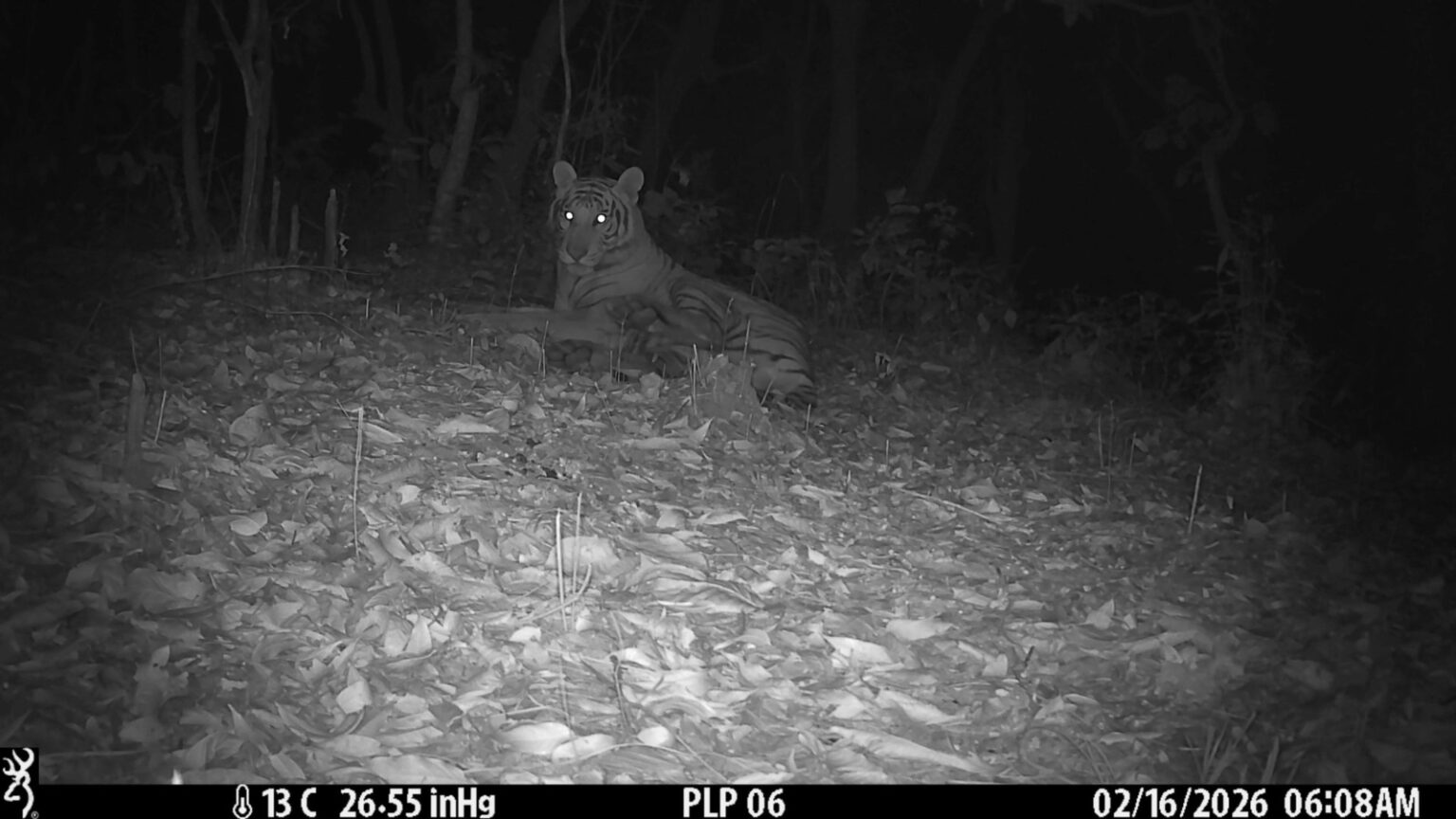
A tiger spotted in Palpa.
In 2018, tigers were first seen in the border area of Rupandehi, Kapilvastu, and Palpa. A joint study on biodiversity in the Chure region conducted by the President Chure Terai-Madhesh Conservation Development Board and the National Trust for Nature Conservation had shown the presence of tigers in Rupandehi and Palpa along with Kapilvastu.
At that time, a female tiger had been spotted at more than one location in the Rupandehi-Palpa border area, and a male tiger had been seen in the northern area of Kapilvastu, about 40 kilometers to the west. In the Nepali month of Paush of 2080 BS (mid-December 2023 to mid-January 2024) in Kapilvastu, two tigers were caught on camera in Buddhabhoomi Municipality and one in Vijaynagar Rural Municipality.
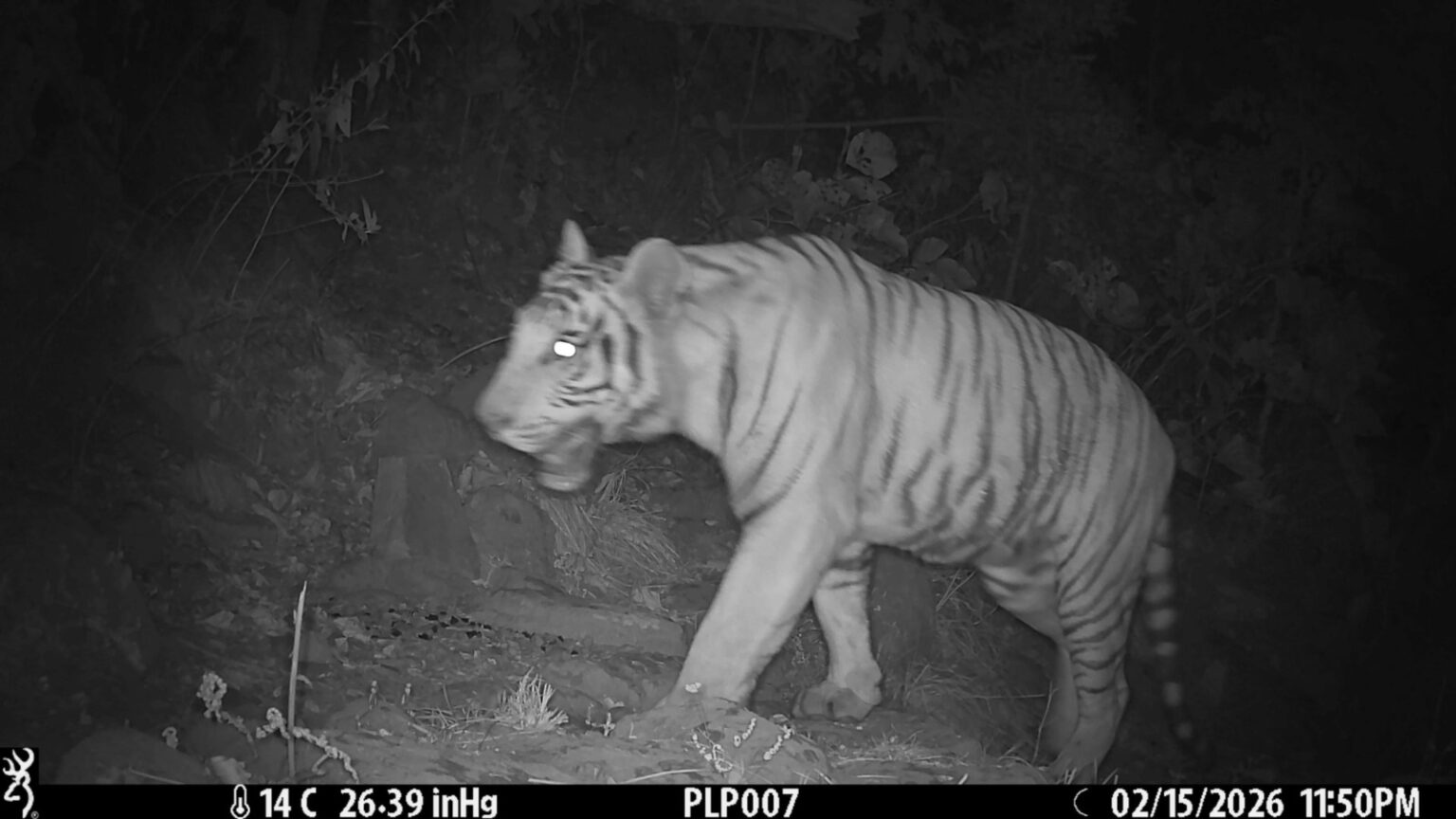
The other tiger spotted in Palpa.
Human-wildlife conflict is also growing in Lumbini Province. In just six months of the current fiscal year 2025/26 from mid-July 2025 to mid-January 2026, as many as 10 people have already lost their lives to attacks by tigers and other wildlife in this province. Of these, eight deaths occurred in Bardiya and one each in Kapilvastu and Banke.
During this period, 14 people were injured in wildlife attacks and 97 domestic livestock were killed, according to the province’s Ministry of Forest and Environment. Wildlife losses have been equally significant; Forest Directorate Director General Prabhat Sapkota informed Neeepal News that 17 wildlife animals died and 315 were rescued in the six months since mid-July 2025.