Kathmandu
Thursday, June 18, 2026





The protesters voted with their feet and blood and the citizens with their ballot. The message is clear, the mandate absolute and there should be no excuses for failure.
While the party does have its own manifesto, a commitment that they need to honor, the party should also prepare its immediate, short-, mid- and long-term goals and action plans that it should share with the public and hold themselves accountable to.
While there is a desire to steer the nation towards peace, democracy and prosperity, it may be tempting to fall into the “majoritization over consensus building” trap. Justice over witch hunting, nation over party, equal opportunity over favoritism/nepotism, meritocracy but at the same time uplifting of the exploited, needs to be the focus. The nation deserves a systems-based government, with clear demarcation of roles and responsibilities, independent and transparent structures and the end of “adesh” based democracy!!! The days of “party dictatorship” need to end.
The task at hand is mammoth, the expectations are high and the leaders do not have the luxury of time. The citizens want to see results and action and small victories are essential to prevent any “legitimacy gap”.
Below is a tentative list of action plans, challenges and opportunities for the Party moving forward.
Immdiate:
1. Implement the recommendations of the Karki Commission without any compromises. If the current legal systems and mechanisms are compromised and political leadership establishes a fast track, time bound, nonpolitical, independent, empowered judicial tribunal to:
a) Implement the recommendations of the Karki Commission b. try all major pending high profile corruption cases and scams including the cooperatives c. Investigate the wealth of all political leaders and their family members “once removed”. Create a mechanism for witness amnesty, plea bargaining, punishment reduction for confession but otherwise harsh punishment to set precedence and deterrence.
b) In a consultative and participatory manner review and revise all anti-corruption laws to deter all forms of corruption in the future. All adult family members/partners also need to be be held accountable for aiding, abetting and benefiting from corruption. The slow time-consuming judiciary process, lenient laws, political interference and impunity seem to incentivize corruption and not deter it.
c) All future action of the government needs to be evidence-based. Therefore assess, research and investigate the types, reason and magnitude of corruption in the country and implement action plans based on the findings and recommendations. Evaluate the case handling system and the operation of the court system and make it transparent, accountable and systems-based, reducing political interference.
d) Democracy has merely ended up being a buzz word used by politicians to serve their own interest whereas “democracy” begins after the votes have been counted. In the long term, issues such as right to recall and NOTA could be introduced but as an immediate step the government along with the academic institutions and civil society should develop the “benchmarks” for democracy with clear progress indicators and evaluate performance against it. Structured community dialogue and conversations need to happen at a regular basis in all municipalities. Political leaders need to share development agendas, report on progress and answer questions and not engage in merely speeches.
2. All previous governments have abused power and used public offices for personal benefits. In this regard, billions of rupees of taxpayers’ money has been spent on medical treatment for politicians. This is conflict of interest, unethical and therefore undemocratic. All politicians who have benefited from this need to be made to refund the money.
3. Set up an independent ethics, quality control and standards commission. Their role will be to look into the benefits and packages to politicians, monitor the ethical and moral code of conduct, abuse of power, develop standards and guidelines and be a third party quality control and monitoring body on all development projects.
4. End the VVIP culture in Nepal. The entourage that follows every politician is based on protocol but seems feudalistic in its approach. The protection mechanism needs to be based on risk assessment and on public acceptability, low profile and subtle in its nature. The overtly deterrent approach is possibly creating more threats and not mitigating it. Review existing systems and procedures. All so-called VVIP areas need to be converted into space for people with special needs, families with infants, and senior citizens.
Short term:
1. Review the fiscal year cycle. At the current moment, there is frenzy of infrastructure activities at the fag end of every fiscal year, that mostly falls during the monsoons, leading to shoddy work. The two options would be a) hold the ministries accountable for their quarterly work and financial plans so that there is no last minute frenzy or b) change the fiscal year so that the reporting and planning are done during the monsoons and actual work can happen during favourable seasons.
2. Ban all political party-affiliated trade unions and also party-based unions in government and educational institutions.
3. Review laws and legislation governing political parties. Revised laws need to ensure that the political parties have inner party democracy mechanisms, transparency, decentralized power mechanism, accountability and measures are put in place to deter “family based” monopolies in the parties (one family one post). Investigate the financial status of all political parties.
4. Redraft the constituencies and thereby reduce the number of MPs to less than 100. Proportional representation to be within the party mechanisms and the house needs to be only for elected members.
5. Decentralize power to the municipality level and do away with the federal structures or streamline the system justifying their existence with clear roles and mandate. If in doubt, seek public opinion.
6. Since 1990, between 30-40 commissions have been formed, reports finalized but many of them were never published or their recommendations ignored. The citizens have the right to know. Therefore, make them public unless they have serious national security threats and risk implications.
7. Though over 17,000 people died in the civil war, over 2,400 disappearances and thousands of survivors of sexual abuse from all sides,the victims are still awaiting justice. War crimes have been committee with impunity. Successive governments, after all these years, continue to play politics and the Truth and Reconciliation Commission is toothless and against the interest of the victims and more in line with protection of the perpetrators. Endorse the Rome Statue and be a part of the ICC.
8. Digitize and automate all government offices. Physically restructure the offices so that citizens do not have to go from one window to another, file in hand, greasing palms to get basic tasks done. A professional one-window system and approach.
9. Revitalize the bureaucracy by reducing unnecessary political interference, enforce meritocracy and transparency, incentives and a career pathway for all bureaucrats. Review the training curriculum of the bureaucracy ensuring that they have the necessary knowledge and skills to perform their jobs and view themselves as service providers and problem solvers. Keeping in mind the 80/20 rule, review existing bureaucracy structure and bodies and do away with those considered redundant and wasteful.
10. All government plans, programs and budgets at the municipality level need to be discussed and debated publicly before being finalized. Ad-hocism has to be replaced by strategy-based development with a five-year strategic plan and yearly action plan will end the current system where there is no continuity of projects and the municipality littered with incomplete projects leading to waste.
11. Justice delayed is justice denied. Cases take decades to be decided and there seems to be an ad-hoc approach. There are hundreds of thousands of pending cases in the various courts in Nepal. The backlog will take decades to clear. Creation of a para legal force based at the community level with the mandate to legally resolve “local cases, excluding the heinous crimes, locally” could go a long way in reducing the burden at the courts and also being cost effective for the contestants. There is a lot to learn from the Scandinavians where the emphasis is shifting from retributive to restorative justice and the Singapore model where there are elements of “public shaming.”
12. Review the policies and legislation governing NRNs and the diaspora. The Nepali diaspora can play a significant role in the economic development of the nation not only through financial investment but also by their technical knowledge and expertise. They could be a potential catalyst in reviving their villages and communities by investing there.
Mid Term:
1. Democracy can only be established if all laws, legislation and policies are in line with democratic values and principles. Most of the laws still operational in Nepal have come from the days of the Panchayat system. Therefore, all ministries will review all existing laws and update them based on democratic norms and the need of the time.
2. Nepotism and favoritism exist and are promoted by the leaders currying favors with their cadres by finding them government employment and playing a nefarious role in their transfers and promotions. To combat this, ensure that all employees have a ToR and a 360 degrees performance evaluation is conducted. To prevent favoritism and biases, develop an algorithm-based AI mechanism to look into promotions and transfers of all government officials till a certain level.
3. Impose a cooling period of at-least three years for all government retirees. This along with a mandatory non-political party affiliation policy will contribute to the non-interference of politics into governance.
4. The government does have the responsibility of nominating and appointing candidates at senior level. However all posts, including that of the President, ambassadors and other government nominees need to be allocated only to nonpolitical party affiliated candidates and their candidatures need to be discussed within the central committee of the party in a transparent manner. They should not be associated with any political parties for at-least a period of ten years.
5. The police bears the brunt of the public ire and in many cases rightfully so for they are ill-trained and ill-equipped to maintain peace or deal with modern day crimes. Review holistically what is requited for a “professional police force”. Lay the building blocks for the creation of a force that knows citizens rights, crowd control, progressive use of force, rights, duties, responsibilities and accountability. Ensure that it has the technical expertise and equipment to deal with modern day crimes and challenges.
6. Our roads are a death trap. On an average, there are 2,500/3,000 accidents a year, 20,000/30,000 injuries and about 2,500 to 3,000 deaths. Most of these could have been avoided. Undertake a research on road safety and based on the findings implement action plans which would include better roads, more robust driving test procedures, standardized manuals, awareness programs in schools and a well trained and equipped traffic police.
7. Nepal is too small to fail, however, ad-hocism, party-based development agenda, political interference and corruption are driving the development agenda. Develop a national strategy endorsed by all political parties on issues such as health, education, infrastructure, environment, transport/communication, energy and water and ensure that no matter which party comes into power, they cannot deviate from the strategy. Our foreign policy, for example, needs to be based on nationalism, pragmatism and geopolitical reality and not on party ideology.
8. Review the constitution and revise the sections that are a hindrance to democratic development of the nation. Issues such as federalism, government structures and bodies, secularism, monarchy could be presented for national debate/referendums.
9. The disillusionment with a representative model of democracy is global for the citizens feel that those elected barely represent them and are more interested in serving the interest of vested interests and corporate bodies. Moving forward elements of direct democracy and civil engagement in governance needs to be incorporated.
National Development
In any multiparty democracy, the roe of MPs is mainly to develop national laws, legislation and policies, national strategies, raise local issue in a national platform and lobby for local issues. However, most of them win elections by promising local development projects. This is not their mandate though they can lobby for it and as a result strategies get sidelines by powerful leaders to divert funds and projects to their area merely to secure their position in the next elections. This creates a lopsided development model that one sees in Nepal (eg. life expectancy in Mugu 60-62 years, Kathmandu 72-74 years.) creating further divisions and fissures. On top of this, all development is Kathmandu-focused and therefore people in the rest of the country are left wondering why they have to bear equal brunt of the loan that has mainly been used to serve the minority.
Funds, programs, budgets need to be allocated in such a way that they go to the areas most in need within Nepal with the objective being that the difference in all human, social and economic development index between any two districts in the country should not be more than 10%. This has to be the mantra backed by a time-bound action plan by when this goal will be achieved.
Economic
For the nation to develop and become a prosperous, independent nation, it has to be energy independent and food secure. An economic development strategy identifying opportunities, challenges and focusing on our assets, backed by political will and finances will go a long way in developing a middle class and uplifting the under-privileged.
Businesses in Nepal need to come clean. It is impossible to believe that our leaders and politicians are corrupt but our businesses are clean and ethical. Every country in transition creates its own “oligarchs and princelings” who have manipulated the systems, corrupted the leaders for self aggrandizement. Nepal is no exception. Businesses need to be investigated, held accountable and a level-playing field created for business to thrive.
SMEs
Nepal needs to avoid the pitfalls of the “too big to fail model” of monopolies and cartels and promote a system that ensures the distribution of wealth and opportunities. The emphasis needs to be on Small and Medium Enterprises (SMEs) and a focus on “co-opetition, cooperation rather then merely competition”. Japan’s economy is sustained by over 95% SMEs. Their strategy is simple and easily replaceable. Access to capital and loan, subsidy for innovation, technical know-how, R&D, skills development, market support, digitization, network with corporations, regional strategies and overall government support.
Organize nationwide workshops for the development of the SME sector, bringing the private (finance institutions, banks, enterprise, traders and entrepreneurs) and public sector together with the youth and other stakeholders to identify potential businesses, opportunities, challenges and the way forward.
A small and medium enterprise development and promotion strategy needs to be developed and entrepreneurs supported with smooth government procedures, financial and technical support and market assessments and availability.
High-value Greens
Nepal needs to capitalize on its “green gold” – high value herbs and spices which are abundant in Nepal due to our geographical terrain. Today, however, many such raw materials are being exported without any value addition in Nepal; rotting in the field due to lack of knowledge, expertise or market exploration and/or being harvested in an unsustainable manner. This needs to change. Horticulture and herbi-culture need to be promoted and products designed and marketed accordingly.
Wellbeing Industry
One of the fastest growing sectors globally is the “well being” sector. Meditation, yoga, alternative healing, mental health, Ayurveda, organic food, well being spas, spirituality are on the rise. Like Kerala, Nepal needs to position itself as the global center of well being. Kerala has developed the necessary infrastructure including training and skills development institutions and today attracts over 750,000 well-being tourists, generating over USD 1.5 billion and employment for millions. Nepal already attracts “people in search for the meaning of life” and organizing this spirituality/well-being sector will ensure the inflow of a different type of tourists untapped till date. The needs, gaps, possibilities and its development need to be brainstormed.
At Nepal’s initiative, April 15th has been declared as the international wellness day by the UN. This will highlight the importance of overall wellness and spiritual well-being and not merely disease treatment. Nepal now needs to gear up to deliver on this initiative.
Remittance
Today, around an estimated 7 million Nepalis live abroad and their remittance contributes around 28-30% of the national budget. Conflict in the Middle East and the rapid rise of AI and automation, many of the jobs these Nepali migrant workers do, will be made redundant. If a substantial portion of these workers are made to return, not only will it have a negative impact on our GDP but could also post a security threat in Nepal unless they have jobs and livelihoods to come back to.
Public-Private Enterprise
Over the last three decades, there has been a significant push to privatize most public enterprises mostly under the diktat of the World Bank. It is important to take an assessment of the current condition of these privatized enterprises and understand how public property via loans taken from public funds ended up becoming private property. Most of these industries failed mainly due to political interference and making them recruitment centers for party cardres. Assessments have also to be carried out to explore the revitalization of the industrial sector through a public-private partnership.
Like in Norway, public projects have to be identified and developed that could generate national sovereign funds.
Environment
The focus has to be on environmentally sustainable development models. If environmental scientists are to be believed, we have already crossed seven of the nine planetary threshold and the life spans of the glaciers are limited and highly reduced. While there are no studies, it is estimated that 70 to 80% of our water source is glacial and the remaining is rain-fed, many of which are now drying. Revitalizing of these rivers through creating and protecting the recharge systems, forestation and other bio-engineering practices are now urgent.
Hydropower
While there are over 6,000 glaciers in Nepal, they would lose up to 70% of their mass or more by 2100, depending on their altitude and size. Over 90% of our energy is hydro and while the writing is clear on the wall regarding the future of the hydro projects to prevent a crisis in the future we need to diversify our portfolio and invest in alternative energy. One cannot put all the eggs in one basket. This needs to be clearly stated in our national energy strategy. The generation of energy should not only be looked as a product to be sold but to be consumed nationally to reduce our dependence of fossil fuels and run our industries. Energy should also be subsidized for those living below the poverty level.
Portable Water
Portable water is the next global crisis. An ICIMOD report on natural springs in Nepal is alarming as they seem to be steadily drying up while rain water is being wasted and not even recharging underground reservoirs due to haphazard urbanization. All municipalities need to draw up their action plans on portable water sources, their conservation, protection and water distribution. Emphasis also has to be on rainwater harvesting, underground recharge and drip irrigation farming to conserve water.
Hills Fragility
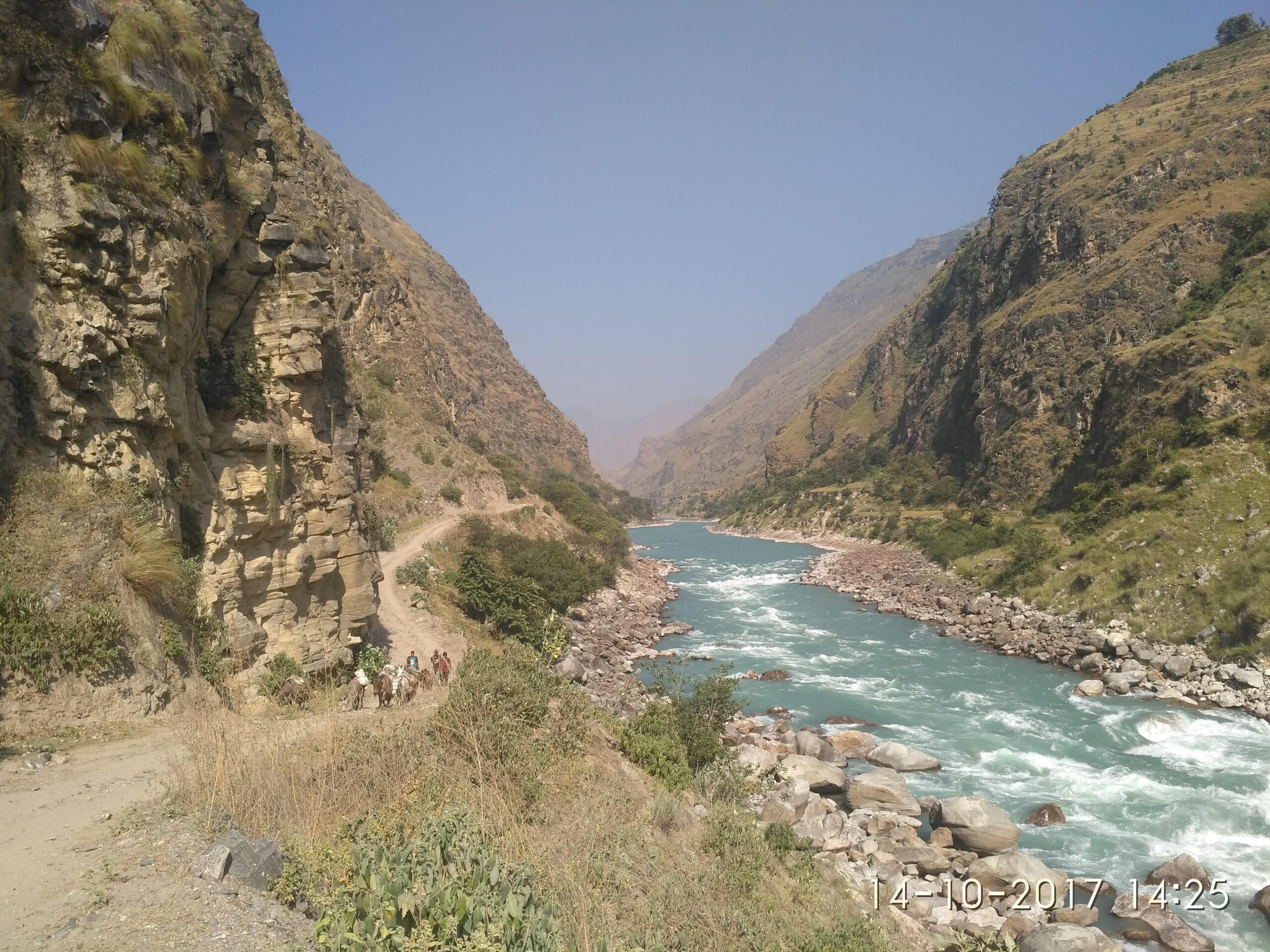
The Chure hills are the lifeline of Nepal but they are the youngest mountain ranges and therefore the most fragile; rocks are loosely compacted and the slope are unstable. It is also the water recharge zone for the Terai.
Bulldozer terrorism is rampant in the hills as in the name of infrastructure development roads are being dug up hazardously, hillocks bulldozed for land plotting without any care for the impact on the environment or the surrounding community, sand and stone quarried both legally and illegally, forests cut down and rapid, unsystematic and haphazard urbanization and most of this is done without any EIA. This has increased risks for landslides and increased risks and fragility.
Standards and policies need to be developed and enforced immediately, beginning with developing minimum standards for all infrastructure projects in the hills including for personal property development. If the standards exist, they need to be reviewed.
Agriculture
With uncertain and extreme weather conditions, the misuse of chemical fertilizers, soil petrification and decrease in land under cultivation (land being left fallow) a decrease in agricultural output is assured, making food security a challenge. The agriculture sector is already stressed due to haphazard construction, urban migration, unprofitability, decrease in productivity, high risks and low prices. Agriculture strategy to address these challenges, including food sovereignty, needs to be designed where the farmer is in the center and his/her rights are protected and his needs responded to. Maximum amount of agriculture land left fallow needs to be brought under cultivation.
Organic farming, permaculture, horticulture needs to be promoted and products designed, manufactured and marketed accordingly. Farm to table models need to be developed and promoted. Traditional berries, fruits and nuts need to be cultivated and products developed.
Natural Disasters
With the changing climate, natural disasters and emergencies are on the rise. Strengthening national capacity on disaster prevention, mitigation, preparedness and response strategies at the local level has to be the priority. Threat and risk mapping along with its seasonality needs to be undertaken at the local level and appropriate mitigation and response plans simulated to ensure our readiness. Engaging the local youths in this action plan will be an effective way of keeping the youth engaged. Cost effective bio engineering models for environment protection needs to be promoted.
Civil Society and Aid
The Aid sector is shrinking drastically and this is expected to continue till it becomes insignificant. However, there is immense and diverse talent, knowledge and expertise in this sector developed over decades. The nation needs to continue benefiting from this and as a way forward, the current policies governing NGOs need to be reviewed in line with the current donor climate and architecture, creating the possibility of NGOs becoming potential technical and implementing partners for the government.
Tourism
Though Nepal receives 1 to 1.2 million tourists annually, the income does not exceed that of Bhutan. It’s time to attract tourists with a higher spending capacity and longer duration stay in Nepal. The sector also needs to promote decent work, especially for those engaged in high adventure tourism. Local tourism along with religious tourism has a huge potential that needs to be tapped on and promoted. The tourist circuit cannot be limited to the “usual suspects” and new destinations need to be promoted. While infrastructure does need to be developed, it cannot be at the cost of our environment, nature, culture and local communities. Destroying our pristine environment for infrastructural projects needs to be carefully evaluated. Tourists flock to Nepal to enjoy our nature, laid back welcoming attitude, culture and tradition, adventure and our way of life. This needs to be preserved.
Our roads, trekking routes and airways need to be safe. The amount of road accidents and plane crashes will deter tourists. The EU recommendations for our aviation sector needs to be implemented as soon as possible.
Education
Amartya Sen felt that primary health and education should be public/free. While both health and education are fundamental human rights, the nation needs to develop a plan whereby with economic progress the nation will invest in free primary health and education for all, especially the under-privileged. In today’s reality, a medical ailment in the family or to send a child to a “good” boarding school can bankrupt a family.
Investing in early childhood development and quality primary education is the best investment that any nation can make in its citizens. Finland and Singapore have contrasting but the world’s best primary education models, that focus on creativity and problem-solving, that the nation can learn from.
Schools need to be safe, nurturing and stimulating. Therefore investing in teachers and their development is of prime importance. Schools should not only impart knowledge but also employable skills and abilities that cater to the needs of the current times.
Piece meal reform and constantly tinkering with the education system will not work. A holistic review of the education system needs to be undertaken, public schools revitalized and meritocracy established, whereby financial constraints cannot be a roadblock to higher education, depriving thousands of children to live up to their fullest potential.
Technical schools (CTVET) need to be further strengthened.
Health
Health is a basic and fundamental human right and needs to be guaranteed to all citizens. The current privatized model of health care with almost no medical insurance is a huge stress to most citizens. Private hospitals are expensive, profit-oriented and in many cases, unethical. Medical malpractices need to be be curtailed. There has to be a third-party check and balance mechanism.
Medicine needs to be holistic, patient-centric, prevention-focused, affordable, and accessible, decentralized, state-owned, transparent and accountable. Alternative medical practices and beliefs too need to be promoted. To be able to do this, a medical strategy needs to be developed that looks at all aspects of medical health – education, health facilities, medical supplies, production and supply.
First aid, health and nutrition courses need to be carried out at the school level and students need to understand that they are in charge of their health; every citizen needs to have access to health insurance (currently less than 20% citizens have medical insurance) with community-based micro insurances and safety nets for the vulnerable set up and operational in all districts; the nexus between medical representatives and doctors needs to be investigated with clear code of conduct established; minimum standards on medical buildings/hospitals need to be established and operationalized. Medical facilioties across all provinces must meet the same standards as those in Kathmandu.
(The author is a development practitioner with more than 25 years of professional experience in relief and development, having worked in senior leadership, management or technical advisory roles for international organizations such as Save the Children, IRC, UN ILO, UNICEF, Street Child & Caritas International.)
![Empty chairs of lawmakers in HoR [Photo feature]](https://english.nepalnews.com/wp-content/uploads/2026/06/Sansad-Khali-chair-kurshi-4-scaled-1.jpg)