Kathmandu
Tuesday, July 21, 2026





To retain the youth within the home country and bring back those abroad, the government must introduce private sector-friendly policies and laws to guarantee total security for industries and businesses

KATHMANDU: During the House of Representatives election a couple of months ago, all political parties gave various slogans and distributed assurances to win the hearts of voters. The Rastriya Swatantra Party (RSP) has brought forward a slogan that if it wins the election, it will not only stop the youth from migrating abroad but will also create an environment for the Nepalis residing abroad to return to the home country. Which became popular.
It is a matter of joy that the very party that had made the issue of stopping youth migration its main election agenda has reached power with around a two-thirds majority. It is hoped that the government will work in a way to stop the youth from going abroad and to return those residing abroad to the home country.
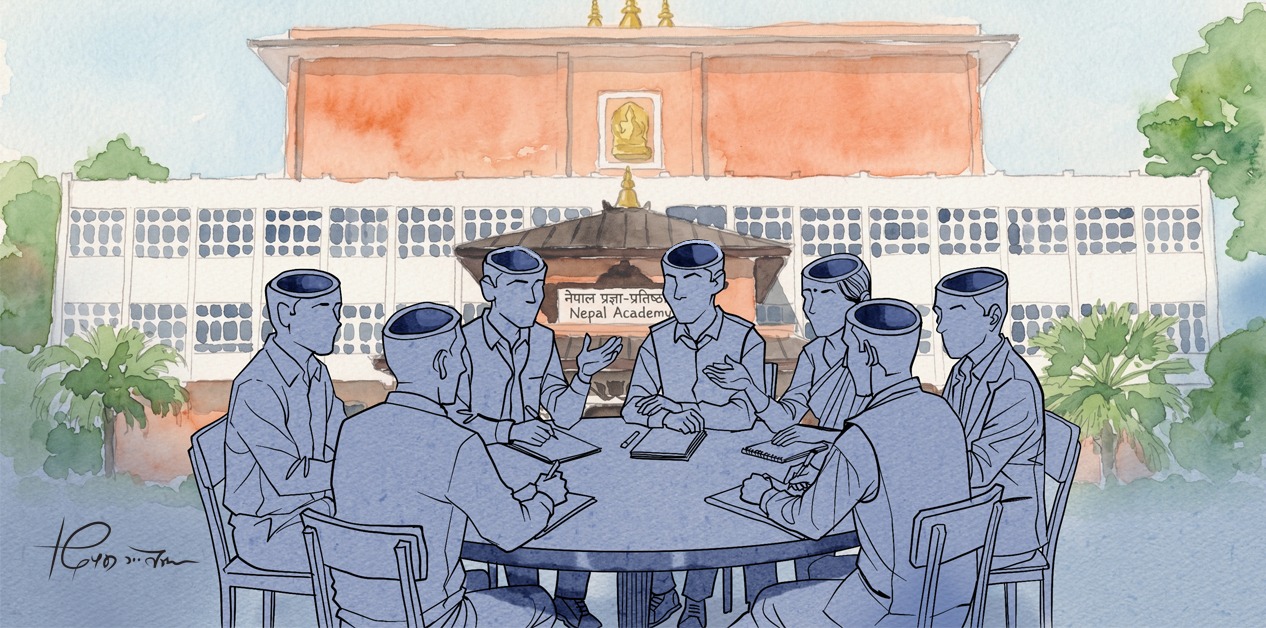
After the results of the election were declared, this writer conducted a discussion with some youth residing in cities, villages, and abroad. This article is focused on the questions of why the youth are forced to go abroad, what happens that stops them, and under what circumstances those in foreign lands return to the country.
The global trend of going abroad
Looking at human history, migration appears like a regular process. It is an old practice for people to move from villages to cities and from one country to another in search of access to education and healthcare or opportunities for an easy lifestyle. The tradition of going abroad for employment and higher education is not only in Nepal; it exists even in neighboring countries, including India, Sri Lanka, and Bangladesh. In the year 2023 alone, more than 27.2 million citizens migrated from India for education and employment, while 1.3 million youth left the country from Bangladesh for employment. In Sri Lanka, more than 1.1 million youth had migrated abroad in the year 2022.
It is not that only the youth of developing countries have migrated abroad; citizens of developed countries, including the United States, the United Kingdom, Australia, Japan, Canada, and China, also go abroad for education and work. In the year 2022 alone, more than 5.4 million American citizens had left the country. The migration of youth for employment, education, and skills is not new in the world, but skilled citizens of other countries enter developed countries. In developing countries like Nepal, the rate of skilled citizens entering from other countries is extremely low.
Due to reasons such as rampant corruption, bad governance, lack of employment, and anomalies in education prevailing in Nepal, the number of youth migrating abroad has increased. Even when all these are fixed, the trend of going abroad does not stop. Because, wherever a better opportunity is found, wherever one feels right, many youth want to go there. Therefore, it appears that the government and political parties need to think about how to secure the future of the youth who have returned to the home country now and how to create an environment for them to happily enjoy within the country itself.
The United Nations body, the International Labour Organization (ILO), says that youth migrate abroad in search of employment and due to the desire to acquire quality education. Along with these two reasons, the youth go to foreign lands while worrying about their future also to get liberation from poverty, rampant corruption prevailing in the country, bad governance, and unrest.
The Nepali youth do migrate abroad for employment and higher education, but in addition to this, there are plenty of those who leave attractive jobs in government banks and the private sector and go. The reason for this too is the bad governance and uncertain future present in the country.
Investment environment
Upon the government doing what, or the country’s situation being how, do the youth remain in the home country itself, and do even those who went abroad return to the home country? Focusing precisely on these questions, this writer had spoken with a 35-year-old youth who returned after staying in South Korea for a few years. He had returned with the thought of investing the money earned by laboring abroad in the home country itself and staying by doing some small-scale trade and business. He has not seen an environment to invest in any trade and business in the country. His experience says that one has to depend on middlemen to bring produced goods to the market. There is a flaw in our society’s perspective itself toward businessmen and traders. The society considers industrialists and traders frauds.
He has already made a decision to go to South Korea again for five years. What is proven from this is that there is disappointment among the youth who returned to the home country after spending their energy in foreign lands for half their age; they are not getting an environment to use their skills learned abroad in the home country or to invest the little capital they possess. Therefore, it is necessary for the government to be serious regarding this matter.
Consultancy institutions have shown dreams of a golden future to those going abroad for both study and employment. Students remain assured that education will be good abroad, examinations will take place on time, and they will get to do a job while studying. Similarly, those going for employment are also given assurances such as the salary being attractive, adequate leaves being obtained, allowance for extra time being received, residential facilities being obtained, and health insurance being good. When the youth reach the respective country after managing loans and wealth, they do not receive the services and facilities as stated here.
One friend of this writer has been residing in the United States. His complaint is that some of his friends have made progress by engaging in some profession and business in the country itself, but he has not been able to get that level of respect abroad. He was saying, ‘How many friends around my own age have already become professors in Nepal? Some reached high posts of the civil service, police, and army; many engaged in the private sector are spending a prestigious life. I might have money, and life might be luxurious, but I am feeling as if I am lost somewhere.’
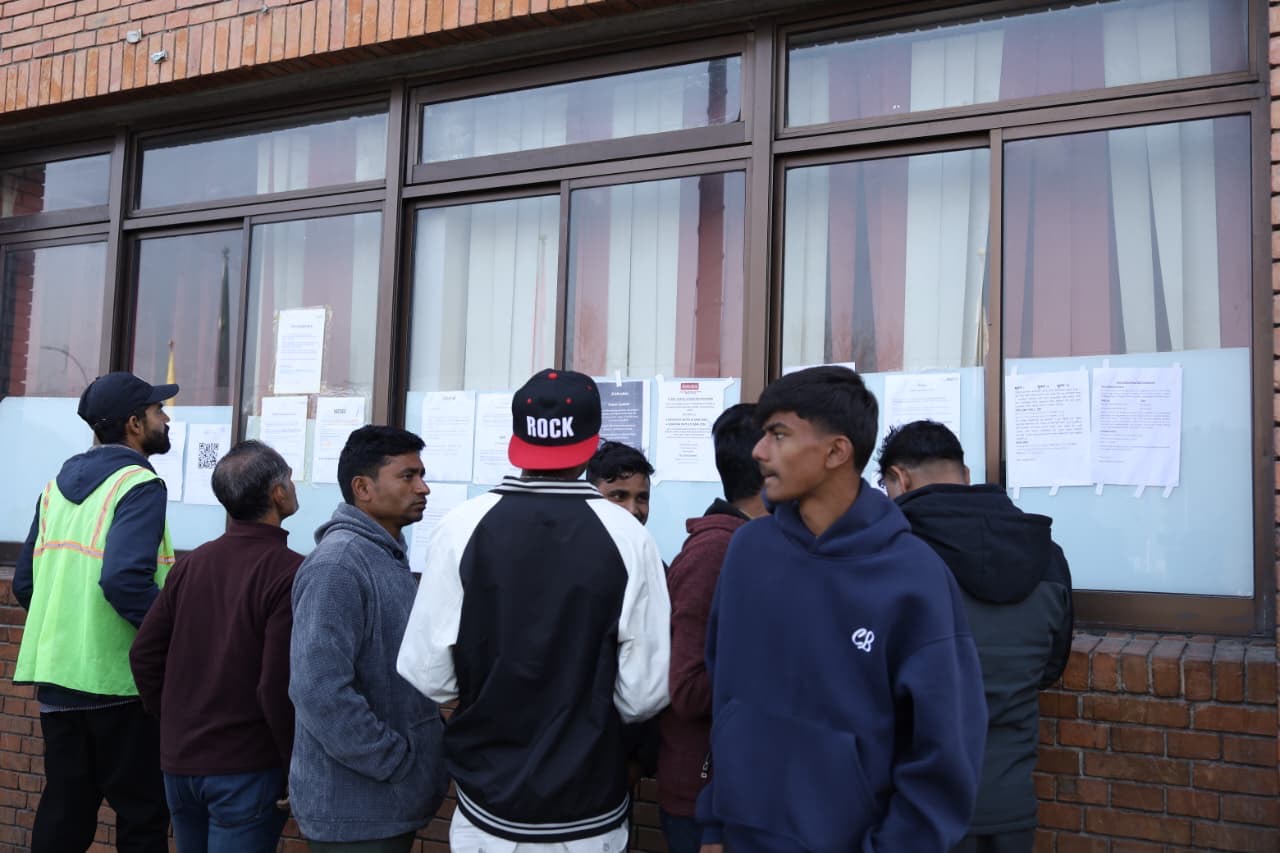
Passengers checking flight information. Photo courtesy: Nepal Photo Library
He was feeling vexed about his existence not having value in the nation and society where he was born and raised. In his understanding and experience, if the government sector itself clearly tells those wanting to go abroad about the difficulties and challenges along with the good aspects there, many might abandon the thought of going abroad.
Our constitution has given all citizens the right to obtain employment and to get to choose their employment. Except for the civil service, police, army, teachers, some corporations, and commercial banks, which give a few thousand employment annually, other areas of employment are limited. Lately, the youth appear more attracted toward the private sector than government jobs, but this area is shrinking instead of flourishing. Since even the private sector fell under the target of the Gen Z protests of the last year, investors conclude that the investment environment has deteriorated. If the government has a true intention to give employment to the youth in the home country and to return even those who went abroad, then along with making private sector-friendly policies and laws, the government must provide the guarantee of the security of industries and businesses.
Today’s Nepali youth feel proud when being self-employed. Investable money has piled up in banks and financial institutions, but the youth are hesitating to take loans. There are two reasons for this. First, the asset to keep as collateral is not in his name with the youth, and the process of taking a loan is extremely cumbersome. Second, the banking system, market management, and industry trade of Nepal are under the capture of a limited number of influential individuals. There is a situation where limited business houses get loans immediately from banks, and the loans of common citizens do not get approved even when waiting for months.
One youth had started a small investment business by taking a loan from a bank, microfinance, or cooperative. However, due to high interest and the produced goods not getting a proper price, he had to face a loss. According to the information that came to him, some youth had to sell ancestral property when facing a loss because of high interest and the produced goods not getting a price and market. Some youth are in the thought of going abroad, being pressed by debt.
Education and healthcare
This writer has also conducted discussions with the youth regarding education and healthcare upon reaching some districts. Many youth have the complaint that quality school education is not available in villages. Some have brought their children to the city and educated them. The expensive expenditure that needs to be done in the education of private schools has also pushed many into foreign employment.
The situation of medical treatment in Nepal is also no different from education. One young man of the city was saying, ‘Some reach foreign hospitals when catching a cold, while some do not get to see the face of a hospital even when suffering from a serious disease.’ The constitution has provided citizens the right to receive basic health services free of cost, but in the case of the poor and helpless, this provision has not been implemented anywhere.

In the course of the election campaign of March 5, the current Prime Minister Balendra Shah (Balen), had declared, ‘If our party’s government is formed, no Nepali shall be deprived of quality education and health treatment even if there is no money in the pocket.’ It is hoped that he will give relief to the people by implementing the said commitment.
The youth of the village go abroad to support the family, educate children, and manage the health treatment expenses of parents. If quality education and health services are made free of cost for poor and helpless families, the economic pain of citizens will decrease and the rate of migrating abroad will decrease.
Desire for good governance
The constitution has said, ‘to guarantee good governance by ensuring equal and easy access of the people to the services and facilities obtained from the state while making the public administration clean, competent, impartial, transparent, corruption-free, publicly accountable, and participatory.’ However, the experience of many youth is that corruption is rampant in the country, and one has to face a lot of hassle even to do small works.
At the time of the election, one young man had just returned to Nepal from Japan. Regarding the few tolas of gold he wore, not even a normal inquiry had taken place at the airport of Japan, but after stepping into Nepal, his experience remained that customs interrogated him as if he had brought it by stealing or robbing. He stated that due to such behavior as well, one does not feel like staying in the country.
On the other hand, no area of the country is untouched by politics. It has taken roots in the entire sectors including professors, doctors, lawyers, teachers, journalists, and employees. Not only the youth but all citizens are vexed with the political polarization and the negative impact it has brought on public service delivery. An independent citizen who is not a member of any party does not get a place even in the forest user committee of a village. The syndicate of parties prohibits the youth who say they will do something for the country. The youth do not get opportunities in public posts. Therefore, purification and transformation are necessary in politics which is entangled in power, strength, post, and luxury.
(Timilsina holds a PhD on the subject ‘Local Government in School Development and School-Based Management’.)