Kathmandu
Friday, June 19, 2026





RPP Claims: The Party Has Never Weakened the Agenda of Monarchy
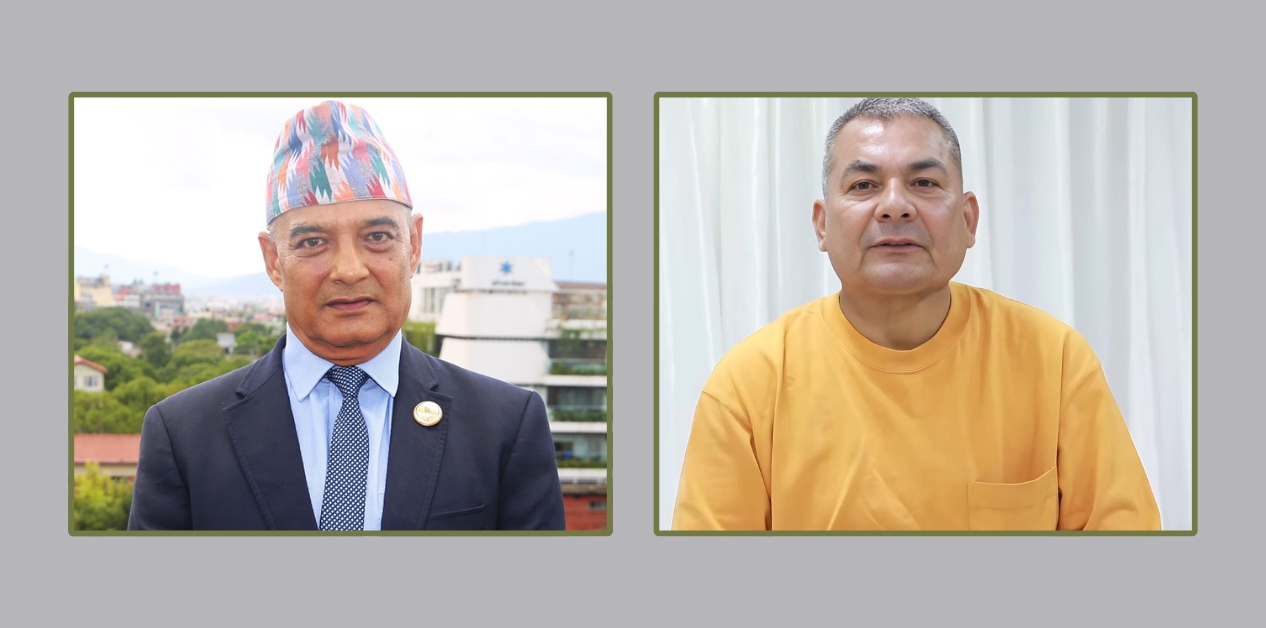
A new political polarization has begun centered around the agenda of restoring the monarchy. Following their departure from the Rastriya Prajatantra Party (RPP) on June 4, 2026, Dhawal Shumsher Rana and Durga Prasai, coordinator of the Nation, Nationality, Religion-Culture, and Citizen Rescue Mega-Campaign, are preparing for a nationwide campaign to restore the monarchy.
Having agreed on June 5, 2026, to form a new political party aimed at building a nationalist force that includes the monarchy, both Rana and Prasai are currently active in their respective regions to lay its organizational foundation. Prasai is occupied with political meetings and discussions centered in Eastern Nepal and Kathmandu, while Rana, the former General Secretary of RPP, is consulting on the structure, leadership, and strategy of the new party from his base in Nepalgunj.
Both leaders have stated that the core ideological foundation of the proposed party will be the restoration of the constitutional monarchy, a Hindu nation, and the unification of nationalist forces. They are also preparing to champion the concept of a Vedic Sanatan Hindu Kingdom that embraces Nepal’s diverse cultural traditions, including Kirat and Buddhist heritages, as a central political issue.
They are set to launch this campaign from the Madhesh Province. According to Prasai, the campaign for the restoration of the monarchy and party building will begin on July 6, 2026, from Saptari district in Madhesh Province and will extend up to Parsa. “We will tour the eight districts of Madhesh to seek endorsement from the people. We will ask the citizens of Madhesh what kind of party we should build and how the movement should be conducted,” he said. “There are many victims of cooperatives, banks, and landless squatters in Madhesh; we will consult everyone.” According to him, the proclamation of a nationalist force capable of accommodating everyone, including the King, will initiate from Madhesh.
Analysts believe that launching the campaign from Madhesh, which has a predominantly Hindu population, carries meaningful significance. Analyst Chandrakishore Jha says, “After Gyanendra took state power into his hands, he toured Madhesh. Whenever he visits temples and offers prayers here, massive crowds gather. Observing this, Rana and Prasai must have chosen this region to mobilize people.”
However, according to Jha, the socio-political psychology of Madhesh cannot be understood solely through a religious lens. The Madheshi community, which has long felt neglected by the state apparatus and ruling structures, is experiencing growing frustration. This discontent could manifest as nostalgia for the past or an attraction toward alternative political forces. “The feeling is strong here that those who reached power have always treated the Madheshi people as subjects rather than empowered citizens,” he explains. “At a time when such dissatisfaction is rising, a mindset might grow among certain groups that a return to the old system could bring about some change.”
Prasai had initially started his campaign to restore the monarchy on February 13, 2023, from the Mechi region. That campaign was inaugurated by former King Gyanendra Shah. Over the past four years, he had been collaborating with RPP in the campaign to restore the monarchy. However, he accuses RPP Chairman Rajendra Lingden of backing down just as the movement for the restoration of the monarchy gained momentum. “RPP turned out to be a force that commercializes the agenda—taking it up during elections to amuse the public, only to trade it away later,” Prasai claims. “The flame lit by the King’s hands must be kept burning continuously.”
Rana also states that the situation has evolved to a point where the issue of the monarchy must not just be raised, but fully rescued. “The way the public voted has created a narrative that this agenda is dead; we intend to change that,” Rana says.
According to Prasai, following the elections driven by the Gen Z protest, they concluded that even the newly established forces could not sketch the country’s future, which compelled them to unite and build a nationalist force. “The new forces did worse things in three months than what the old ones did in 36 years. The landless squatters are kept in holding centers.
Children are unable to study, and poor citizens are struggling to eat,” he says. “The squatters are crying out in agony while the Prime Minister sits around posting photos of himself eating delicacies, or wearing a white shirt, pants, and dark sunglasses. The Prime Minister claims that Nepal has encroached on India’s land, while over in Susta, the Indian Army has entered.”
Rana and Prasai share a fundamental understanding regarding agendas aimed at poor farmers. Prasai has been voicing concerns on behalf of victims of microfinances, banks, cooperatives, loan sharking, blacklisted individuals, and landless squatters. When an 11-point agreement was reached between Rana and Prasai, this issue was included as the fifth point.
They have announced that the newly formed party will ensure 60 percent participation of youth and women. Rana and Prasai have put forward agendas such as a mixed economy based on domestic production, a reformist federalism with national dignity, a non-aligned foreign policy, good governance, a corruption-free society, and the right to hold dual citizenship.
How did Rana and Prasai unite?
The Tinkune protest of March 28, 2025, dissatisfaction with the RPP leadership, and the shared goal of restoring the monarchy appear to have brought Rana and Prasai onto the same political front. Currently, they are attempting to bring fragmented factions within the royalist spectrum into a single fold to create a new political axis.
Although both have announced the creation of a nationalist force, they have not yet made the party’s name public. “The name and flag are ready; we are discussing it with the public,” Prasai says. According to Rana, matters regarding the party’s policy, agenda, name, and flag are yet to be formally passed in a meeting. Rana states that a meeting will be held within a week to deliberate on these matters.
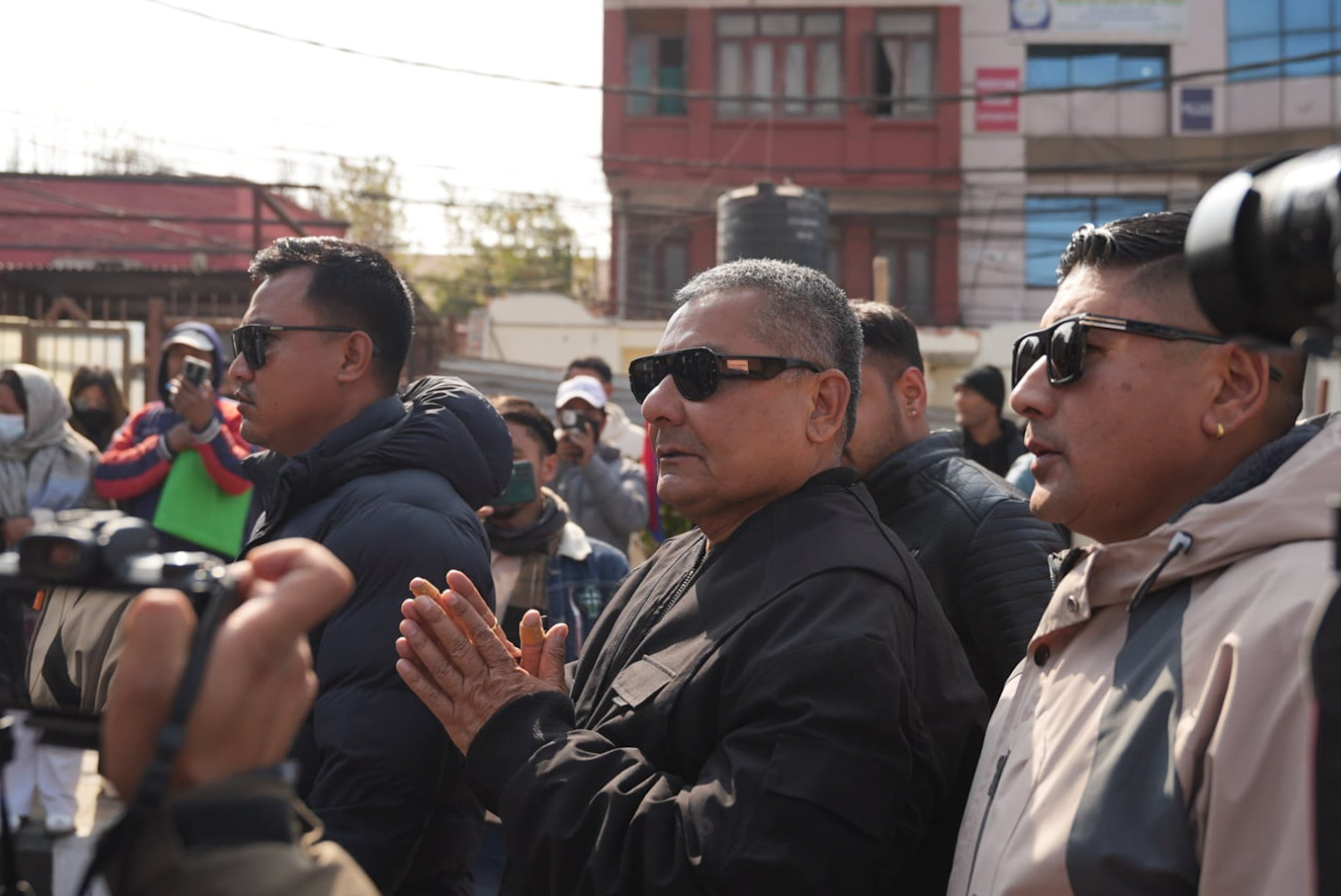
Durga Prasai. Photo: Nepal Photo Library
On June 4, 2026, expressing dissatisfaction with the RPP leadership, General Secretary Rana along with 183 leaders quit the party. Most of those who left are hardline royalist leaders, including Sagunsunder Lawati (son of royalist leader Padam Sundar Lawati), Vice Chairman Mukunda Shyam Giri, and Dilnath Giri, among others.
Fundamentally, Rana had been dissatisfied with Chairman Lingden since the Tinkune protest. Rana accuses Lingden of non-cooperation when launching the campaign to bring back the monarchy. During the Tinkune protest, both Rana and Prasai were arrested and faced state offense charges. Lingden was accused of failing to sustain the campaign even while his leaders were arrested and held in custody.
These events brought Rana and Prasai closer. While in custody, they discussed building a new political force centering on the monarchy, a Hindu nation, and nationalist forces. Their understanding was that growing dissatisfaction with traditional parties and the political outrage of the new generation meant people were looking for alternatives to established parties. “We anticipated that a new rebellion would erupt soon, displacing all the old parties. That is exactly what happened after the Gen Z protest. When even this new force showed no signs of leading the country forward, we united on the premise of launching a new Vedic Sanatani party,” Prasai says.
What is the RPP doing?
During the Gen Z protest, discussions regarding the possibility of restoring the monarchy became widespread. At the peak of the movement, Chief of Army Staff Ashok Raj Sigdel’s meeting with Prasai also sparked various speculations within political circles. However, it yielded no concrete political impact.
The RPP, which had won 14 seats (seven direct and seven proportional) in the 2022 House of Representatives elections, failed to convert the post-Gen Z anti-traditional big party wave into votes. In the 2025 parliamentary elections, the party was confined to just one seat under the first-past-the-post system. While Gyan Bahadur Shahi was elected from Jumla, other influential leaders failed to protect their strongholds. Securing four seats under the proportional representation system, RPP’s presence in parliament shrank to five seats.
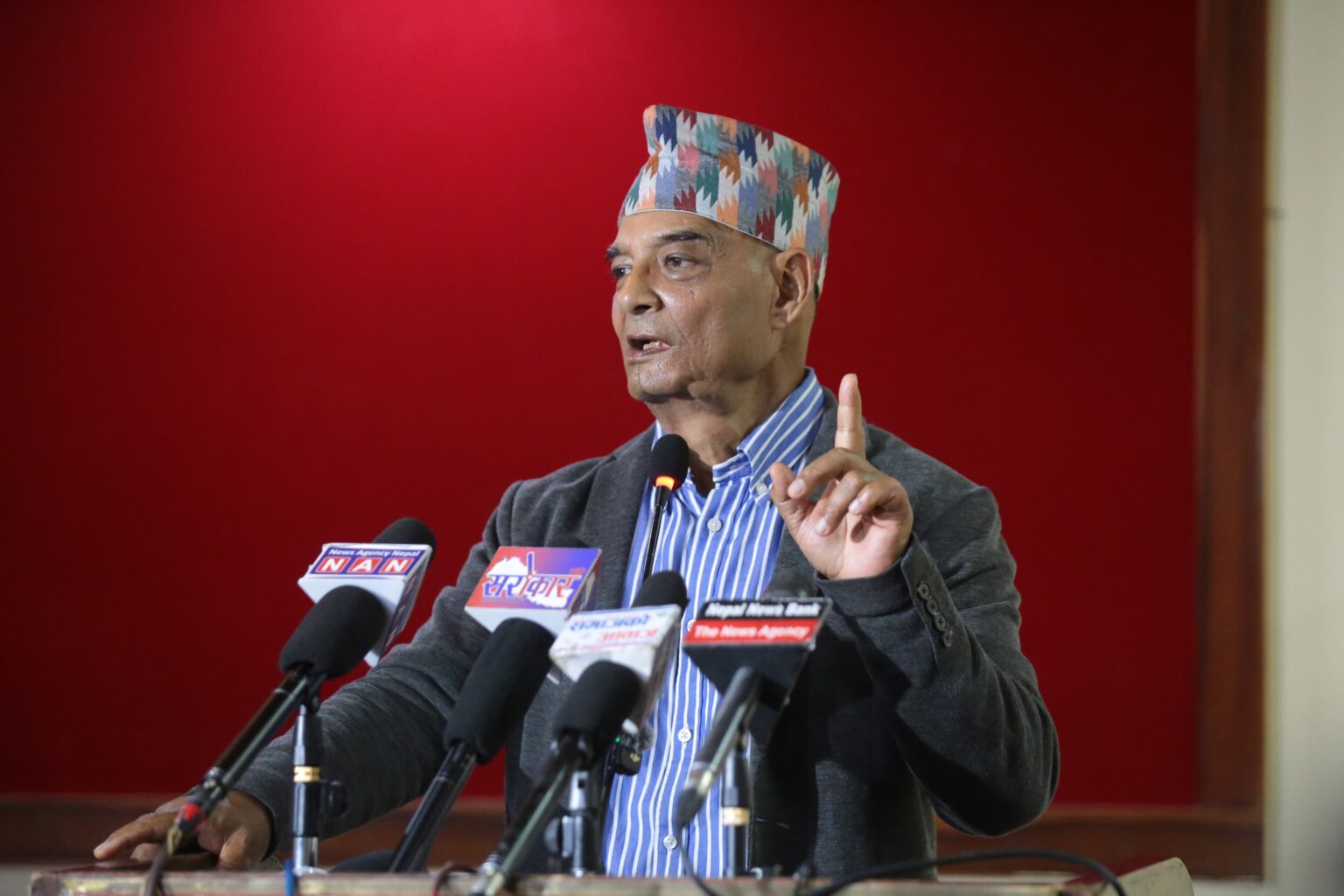
Dhawal Shumsher Rana. Photo: Nepal Photo Library
Leaders close to Dhawal Shumsher Rana claim that the primary reason for such a shrunken election result was the party leadership’s failure to give sufficient priority to the agenda of the monarchy. In their view, Chairman Lingden failed to translate the energy of the movement and the streets into political outcomes. As a result of this dissatisfaction, 183 leaders, including Rana, left the RPP on June 4, 2026.
However, the RPP expresses no regret over Rana and his faction leaving the party. According to RPP spokesperson Mohan Shrestha, the Rana faction did not split the party; they simply left it. “For a split to happen, technicalities like percentages come into play. It is more accurate to say they chose to leave the party,” he says.
The RPP is currently holding daily meetings. Discussions regarding setting a date for the general convention are underway. The RPP’s unity convention was held in December 2021. Although it was supposed to take place by December 2025, the RPP postponed the general convention after the House of Representatives elections were scheduled for March 5, 2026.
According to spokesperson Shrestha, the RPP has never weakened the issue of the monarchy. The agenda of the monarchy has been raised in internal forums, party documents, street protests, and even inside parliament. “How can those who fought elections and reached parliament be accused of weakening the agenda? This is a baseless argument,” he says.
The RPP does not seem intent on teaching the departed Rana faction a lesson. “We do not need to stage any activities just for show right now; we are moving forward with our programs at a natural pace,” Shrestha says.