Kathmandu
Sunday, July 19, 2026





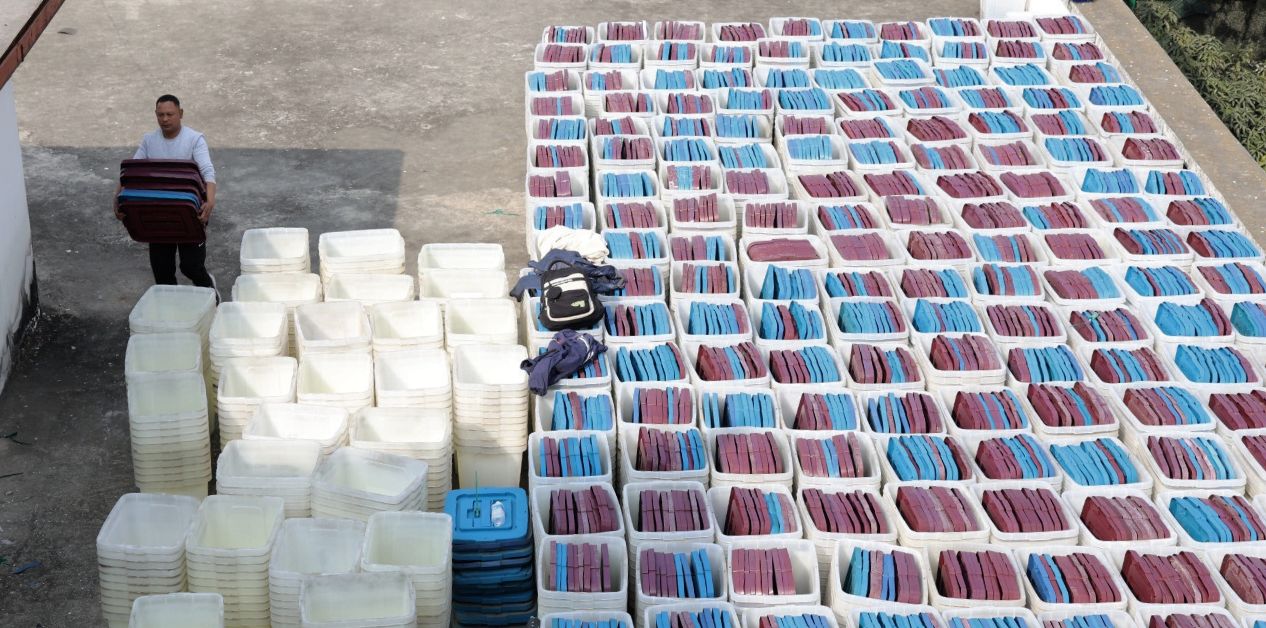
KATHMANDU: In every election, voters are eager to learn the outcome of the invaluable ballots they cast and closely watch for when results will be announced. With the House of Representatives election held on March 5, public interest has centered on how long the final tally will take. The Election Commission (EC) has pledged to publish results swiftly.
The Commission earlier stated that first-past-the-post (FPTP), also known as direct results, would be released within 24 hours of the start of counting. On February 24, Acting Chief Election Commissioner Ram Prasad Bhandari said direct results would arrive within a day of counting and that all outcomes would be made public by March 9.
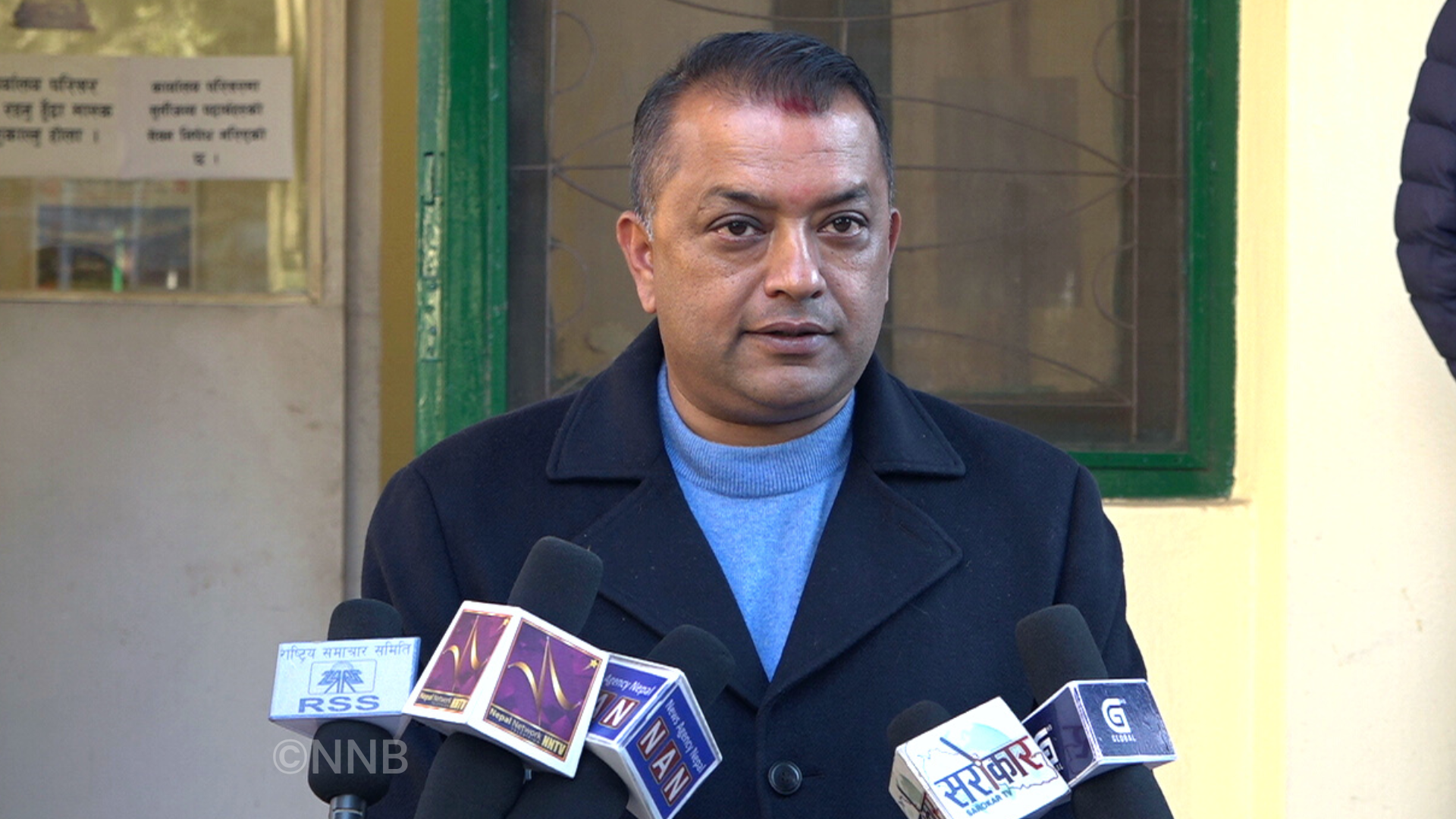
However, past practice suggests a 24-hour turnaround is unlikely. Information Officer Suman Ghimire noted that previous elections required seven to 10 days for complete results. While counting may conclude within hours in districts with small voter populations such as Manang, it often takes longer in densely populated areas, including Morang.
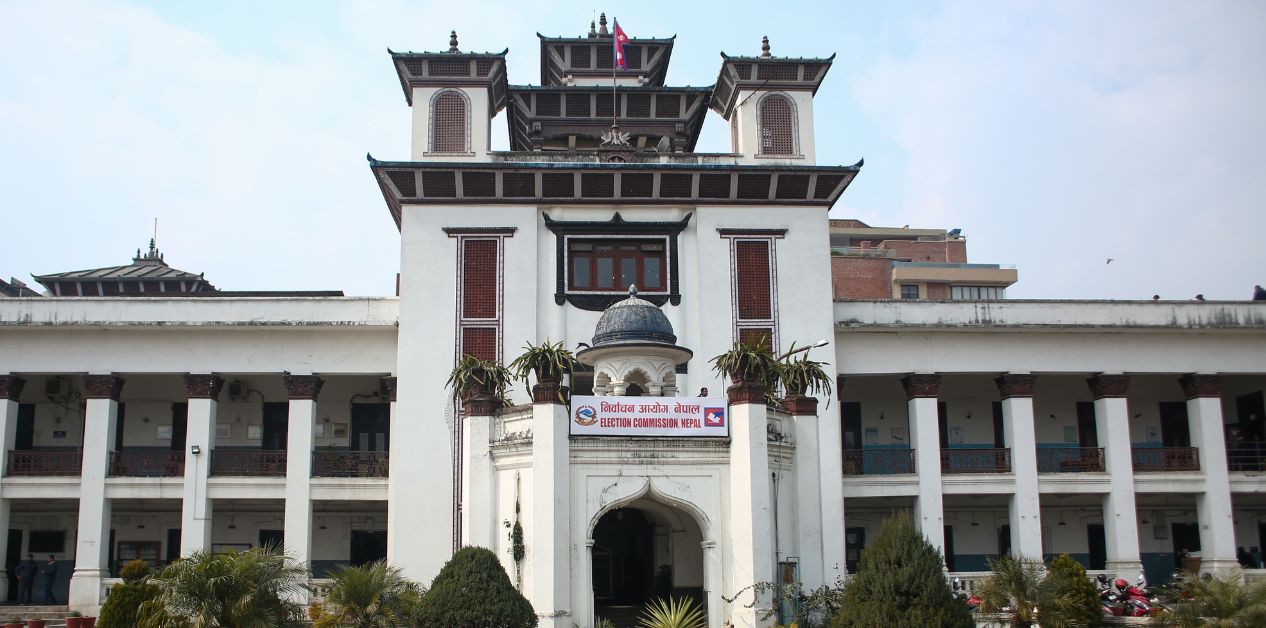
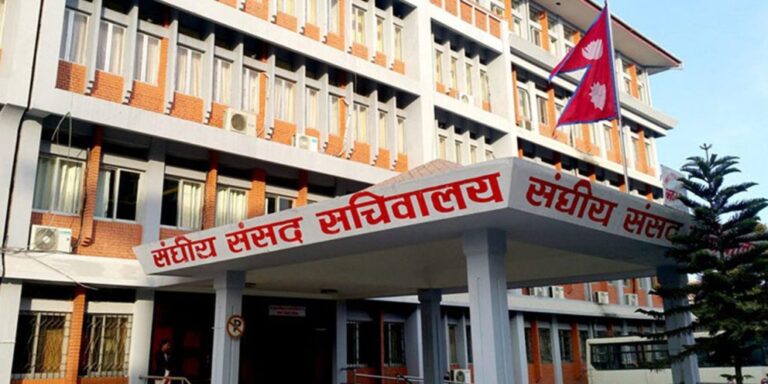
Election Commission Office
This year, the Commission says it is better prepared to accelerate the process. Many commissioners and officials have prior experience from the 2022 House of Representatives election, and the institution has organized its workforce to ensure faster tabulation and timely publication of results.
Information Officer Suman Ghimire said the Commission plans to work around the clock to expedite results, taking into account each constituency’s geography, total ballots cast, and available resources.
“The Commission said it would move quickly in line with that goal. It may not happen in exactly 24 hours. The 24-hour timeline was a symbolic commitment to speed things up,” Ghimire said.
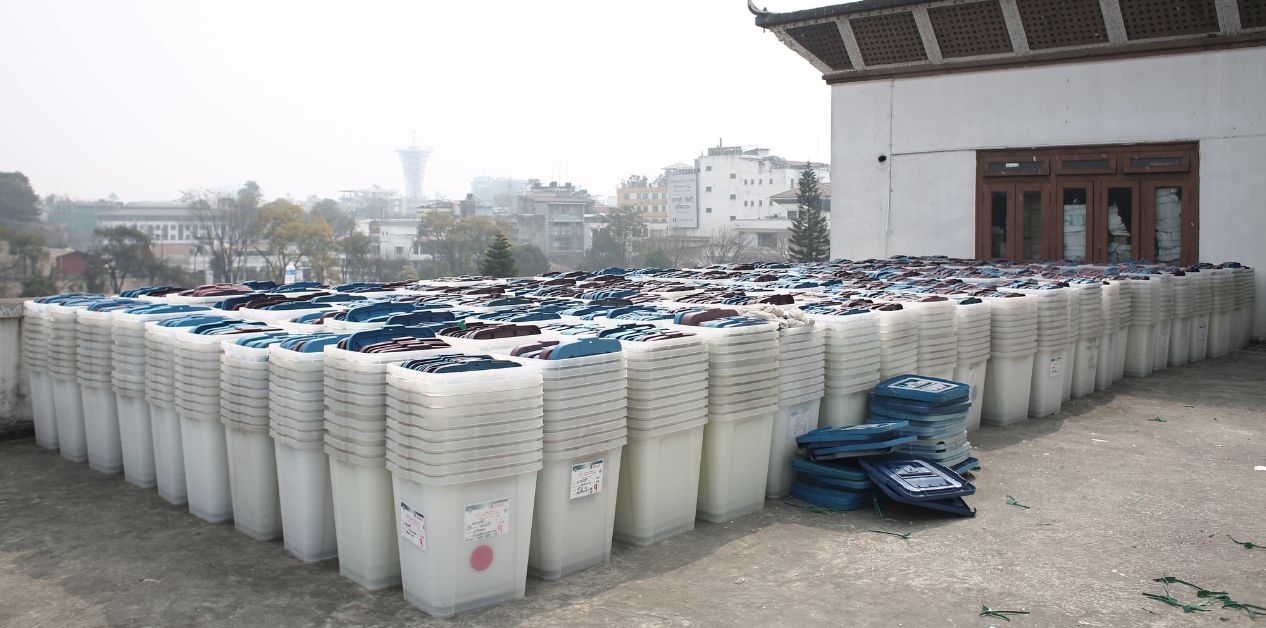
Election materials stored at the Election Commission premises
Under election directives, counting begins only after voting concludes and all ballot boxes reach the Office of the Election Officer. In remote or mountainous areas, transporting ballot boxes from polling centers can take one to two days. Counting cannot start until every box from a constituency is assembled, meaning delays in collection directly affect the timeline.
“Counting does not even begin until ballot boxes are gathered, so the duration depends on how long they take to arrive,” Ghimire added.
To accelerate the process, the Commission has trained counting staff and formed multiple teams.
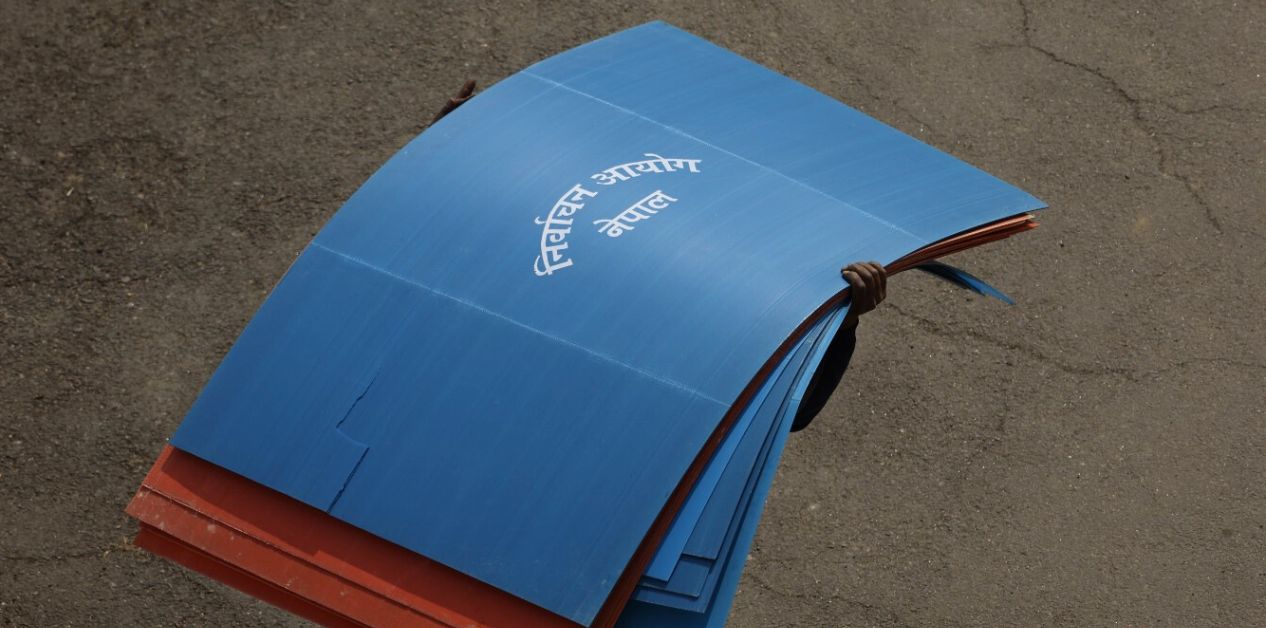
Personnel managing the logistics and distribution of election materials within the Election Commission grounds on February 12
“If the Election Officer finds it appropriate, five to 10 teams can be deployed for counting. That will certainly produce results faster than before,” Ghimire further added.
The Commission has also arranged for FPTP results to be uploaded promptly to its website. Data will be entered into dedicated software from each constituency, allowing real-time updates as counting progresses. As figures are entered, the public will be able to track how many votes each candidate has secured directly on the Commission’s website.
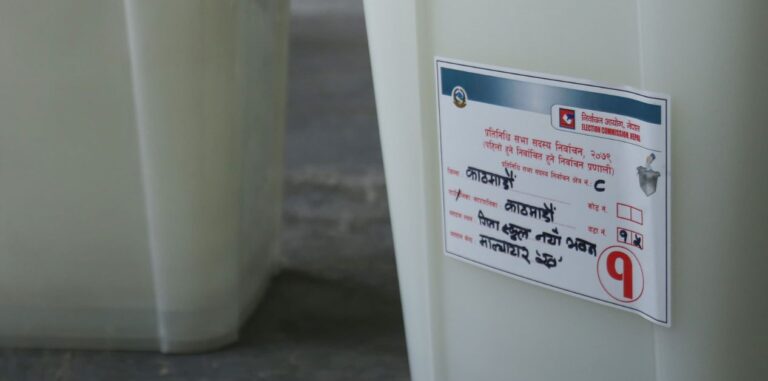
Ballot boxes
Counting under the proportional representation system for 110 seats will begin only after the completion of direct or FPTP counting across 165 constituencies. As in previous elections, voting and counting will be conducted using paper ballots.
Although electronic voting machines were tested in the past, they will not be used this time. While machines could speed up counting, political parties and the government have yet to adopt them for nationwide polls.