Kathmandu
Tuesday, July 28, 2026





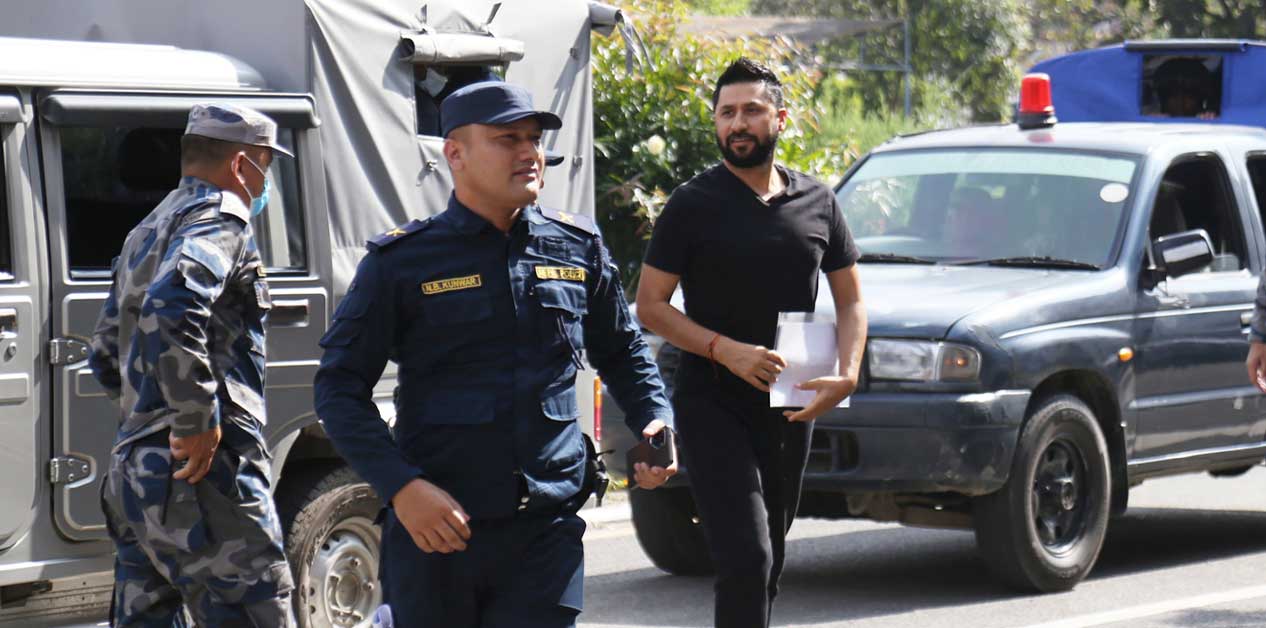
KATHMANDU: In a statement given to the High-Level Investigation Commission led by Gauri Bahadur Karki, formed to probe the “Gen Z” incident, A Deputy Superintendent of Police (DSP) Sangam Shrestha of the Armed Police Force (APF)-who was deployed for security at Nakkhu Jail on the day of the incident-mentioned that a mob of 3,000 to 4,000 people issued an ultimatum to release Lamichhane within ten minutes and eventually removed him from the prison around 2:00 PM.
The statement of DSP Shrestha is as follows:
I was stationed at Nakkhu Jail as the Commander from July 16, 2025, to October 18, 2025 (2082-04-01 to 2082-07-02 BS). On the morning of September 9, 2025 (Bhadra 24, 2082), the situation at Nakkhu Jail was normal, similar to any other day. However, anticipating that a crowd might gather and march toward the jail due to the events of the previous day (Bhadra 23), I had prepared barricades using available concertina wire and iron poles to be placed at the main gate.
Around 10:00 AM, the concerned entities—Jail Administration, Nepal Police, and the Armed Police Force—were engaged in intensive discussions on how to manage and control a potential mob. The Jail Administrator was requesting the District Security Committee for additional security personnel after concluding that extra reinforcement outside the prison was necessary. Subsequently, we locked the three internal blocks and summoned the Naikes (inmate leaders) and Bhai-Naikes (assistant leaders) to the administration office, instructing them to remain safe.
While protesters were moving outside, they were initially heading toward the Ministers’ Quarters in Bhaisepati. Around 10:30–11:00 AM, ASI Ramesh Chaudhary of the National Investigation Department (NID) informed us that a crowd of approximately 700–800 had gathered about 700–800 meters north of the jail, chanting slogans and burning tires.
Simultaneously, we received social media reports that Harisiddhi in Lalitpur and the BICC building had been set on fire, and that security personnel had been killed or injured, with weapons being looted. The Jail Administrator repeatedly reported to the relevant authorities requesting reinforcements. That morning, a mobile team of 10 personnel under the command of an ASI from the APF Prison Security Base had already been deployed to the Ministers’ Quarters. Additionally, for prison security, I had deployed 15 personnel at the main gate under a Junior Police Officer, 7 personnel in each block, and a regular team of 5 at the perimeter light points.
Around 1:00 PM (13:00), the mob began gathering at the prison’s main gate. The crowd, numbering between 3,000 and 4,000, demanded that Ravi Lamichhane be brought out within 10 minutes, threatening vandalism, arson, and physical attacks. After the ASI at the main gate reported this, I assembled the security personnel for a briefing and instructed them to use minimum force. At that moment, the Nepal Police commander and the Jail Administrator informed me that an order had been received to move Ravi. We escorted Ravi Lamichhane from the CRC block to the psychosocial hospital inside the prison, accompanied by a Nepal Police Inspector and the Jail Administrator, under the pretext of allowing him to meet his family.
Around 2:00 PM (14:00), the enraged mob broke through the main gate and entered the prison premises. Security personnel managed the crowd for about an hour through persuasion and baton charges. During this time, Ravi Lamichhane walked from the hospital toward the main gate where the crowd was. Since his safety was our responsibility, we separated him from the crowd and moved him a few meters back to the Pipalbot tree rest area (Chautari) inside the prison. He requested a microphone, saying he wanted to calm the crowd, and stated, “I am legally inside the prison; I will not leave without an official letter.” Due to the chaos, the mob overwhelmed the security forces. Around 3:00 PM (15:00), that same mob took Ravi Lamichhane out of the prison.
At 3:30 PM (15:30), the mob returned to the prison, engaging in stone-pelting, vandalism, and arson. I personally entered the field to manage the situation using persuasion, restraint, and minimum force, which momentarily dispersed the crowd. Subsequently, the Nepal Police team left the prison premises. This left only 46 APF personnel from our base on the field, whereas the Nepal Police had a strength of 52. The mob then vandalized and set fire to the Jail Administration office and vehicles. They broke the locks of all three blocks and freed the prisoners.
Some prisoners actually came toward the security personnel to seek safety. While the mob was shouting at us to “drop your weapons, take off your uniforms, and run,” the prisoners were also fleeing. The mob facilitated the escape of inmates from Nakkhu Jail. This occurred between 4:00 PM and 4:15 PM (16:00–16:15). One Nepal Police personnel sought refuge at the APF security base carrying a .303 rifle. We successfully secured him by providing him with an APF uniform and protected his weapon.
During the incident, the APF fired 21 tear gas shells, 6 rounds of blanks, and 5 rounds of warning shots into the air. By maintaining restraint and engaging the mob, APF personnel managed to save the psychosocial hospital, the Vipassana Meditation Center, one Bolero pickup, one water tanker, one hospital vehicle, and the CRC block.
Given the extreme level of vandalism, arson, and the massive size of the mob, the situation had escalated to a point where only lethal force could have been used. However, we acted considering the potential for high-level human casualties. The APF made every effort within its capacity, resources, and the prevailing circumstances to mitigate and control the anarchic situation. We remained restrained despite reports since morning that security weapons were being looted, which suggested the mob might also open fire.
As of September 9, 2024 (Bhadra 24, 2081), there were 1,281 prisoners in the jail. The inmates were moved out by the mob between 3:50 PM and 4:15 PM. The internal administration leaders at the time were Rabin Shahi and Ashok Khadka (CRC Block), Bishal Dhwoj Karki and Ujjwal Khatri (DRC Block), and Nrip Saud and Sajal Karki (New Block). Generally, these inmates assigned to internal administration roles had tried to assist the prison administration and security personnel in their own capacities.
Ravi Lamichhane, Chairman of the Rastriya Swatantra Party, faced security challenges even inside the prison due to the enraged mob from outside. I had no knowledge regarding any letter given to him, as I was deployed in the field managing the crowd. I was injured myself, as was my Inspector. When Ravi Lamichhane was brought from Rupandehi Jail to Nakkhu Jail on August 15, 2025 (2082-04-31), a large number of Nepal Police were deployed for security outside; however, during the incident on September 9 (Bhadra 24), no additional security reinforcements arrived from anywhere. Analyzing the event, the incident on Bhadra 24 was significantly more violent, anarchic, and involved a much larger crowd.
the APF remained deployed and did not leave the prison premises until 10:30 PM (22:30) that night. We only returned to our battalion after the Nepal Army team arrived. Reports of state offices being vandalized, set on fire, and weapons being looted had also weighed on us. Furthermore, once the Nepal Police team assigned to the prison left their unit, it created an even more challenging environment for the APF personnel to remain stationed and maintain restraint.
Even after the main gate was breached two or three times, we stood our ground to manage the crowd. The APF also worked to extinguish the fires set that day. I performed my duties professionally to the best of my judgment and intellect. I state before this Commission that I did not engage in any act to assist or facilitate the escape of any prisoner.