Kathmandu
Sunday, July 19, 2026





The country’s oldest democratic party, the Nepali Congress, has become fragmented due to internal conflicts as it moved from the Gen Z movement, through a special general convention, to reaching Parliament via elections
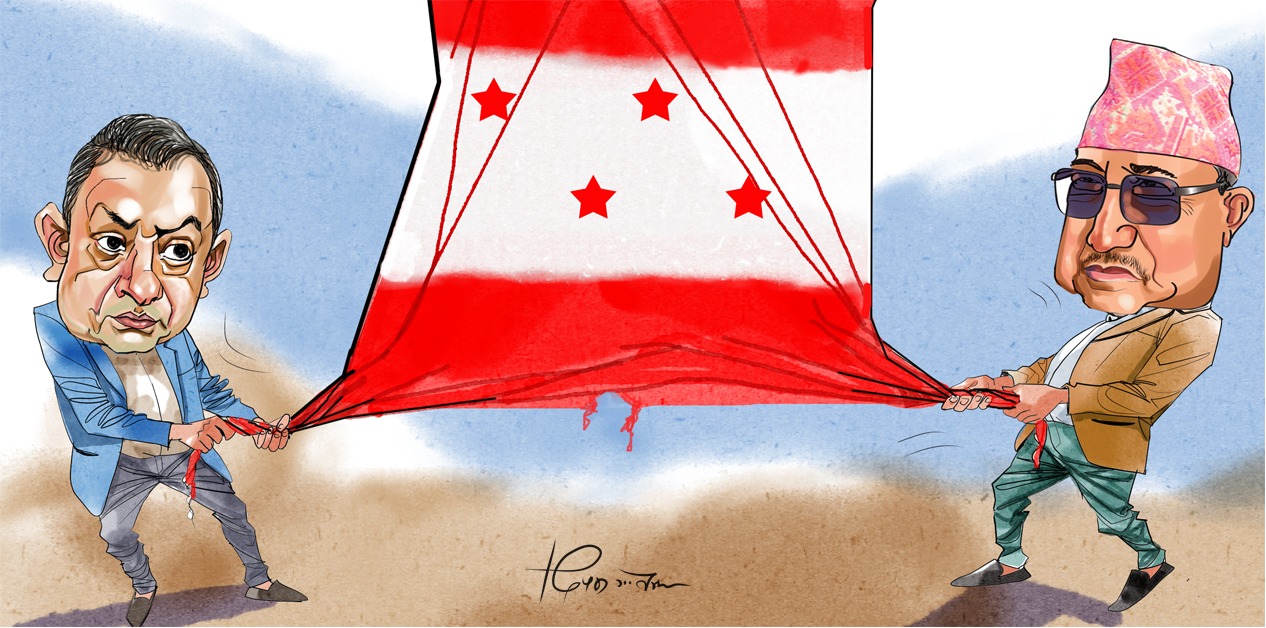
KATHMANDU: The dispute and conflict within the Nepali Congress have burst into the open after the party’s central discipline committee issued a seven-day clarification notice on 15 April 2026 to former vice-president Purna Bahadur Khadka, accusing him of activities contrary to party rules. Khadka had issued press statements on 28 March and 13 April 2026, using the party’s official letterhead in his capacity as vice-president. The new working committee led by Gagan Kumar Thapa, elected through a special convention, says Khadka no longer holds the vice-presidency and has demanded an explanation. Khadka, however, has responded that since the committee that emerged from the special convention is not the official leadership, asking him for a clarification is laughable.
After the Gen Z movement of September 8 and 9 last year, the Nepali Congress was unable to hold its regular convention. A faction that had long been calling for a special convention held one at Bhrikutimandap in Kathmandu and elected Gagan Kumar Thapa as party president on 14 January 2026. However, the faction of then-president Sher Bahadur Deuba did not participate. Nepali Congress leader Shekhar Koirala’s group also stayed away. Although the Thapa leadership from the special convention is considered official, former president Sher Bahadur Deuba and leader Shekhar Koirala continue to operate in parallel.
The Deuba faction, which boycotted the special convention, had gone to the Election Commission claiming to be the official Nepali Congress. The Thapa faction also filed a petition claiming the same. On 18 January 2026, the Deuba faction went to the Supreme Court against the Election Commission’s recognition of the Gagan-led Nepali Congress as official. The court has begun hearing arguments but has not yet ruled. Because the question of official party status remains before the court, Khadka maintains that until a verdict is reached, he remains the duly authorized vice-president of the Nepali Congress. The Nepali Congress is thus visibly divided into Thapa, Deuba, and Koirala factions.
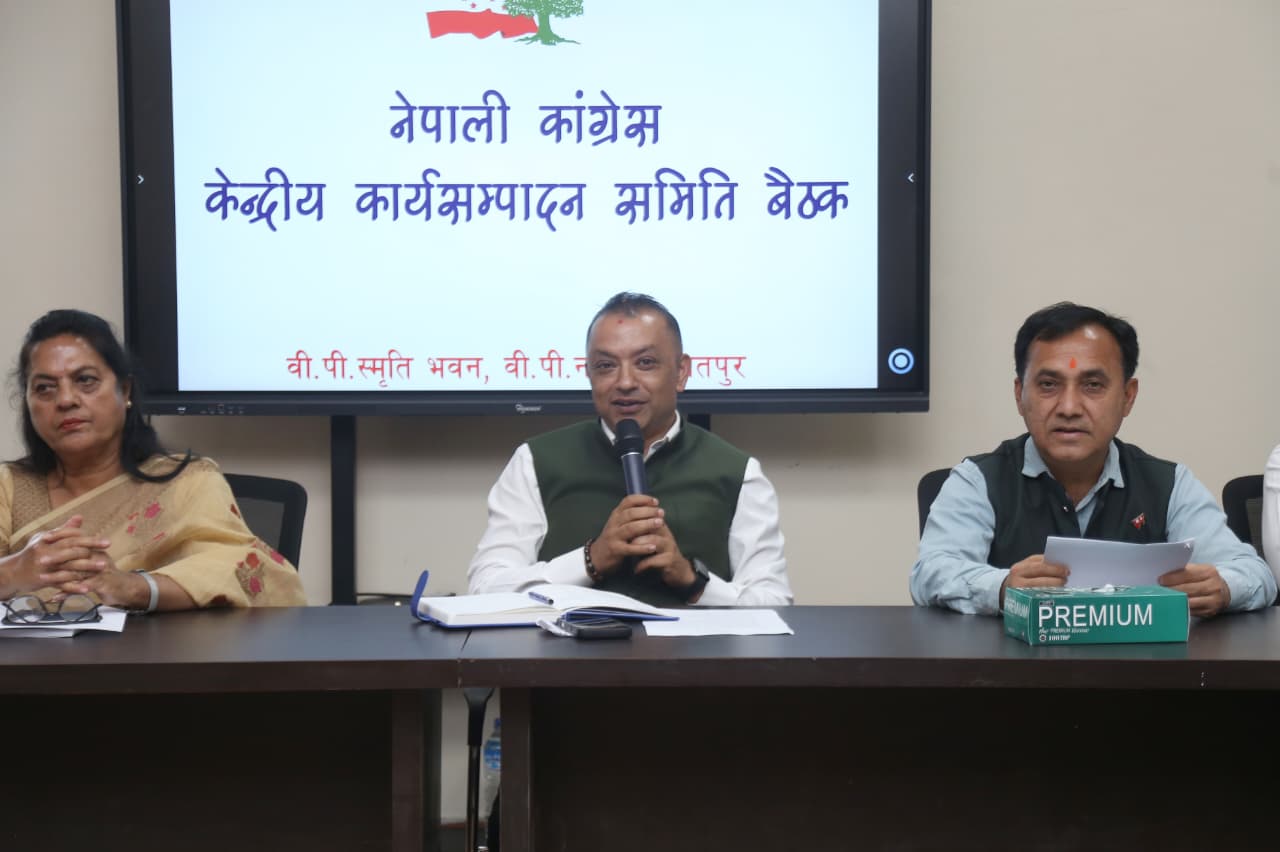
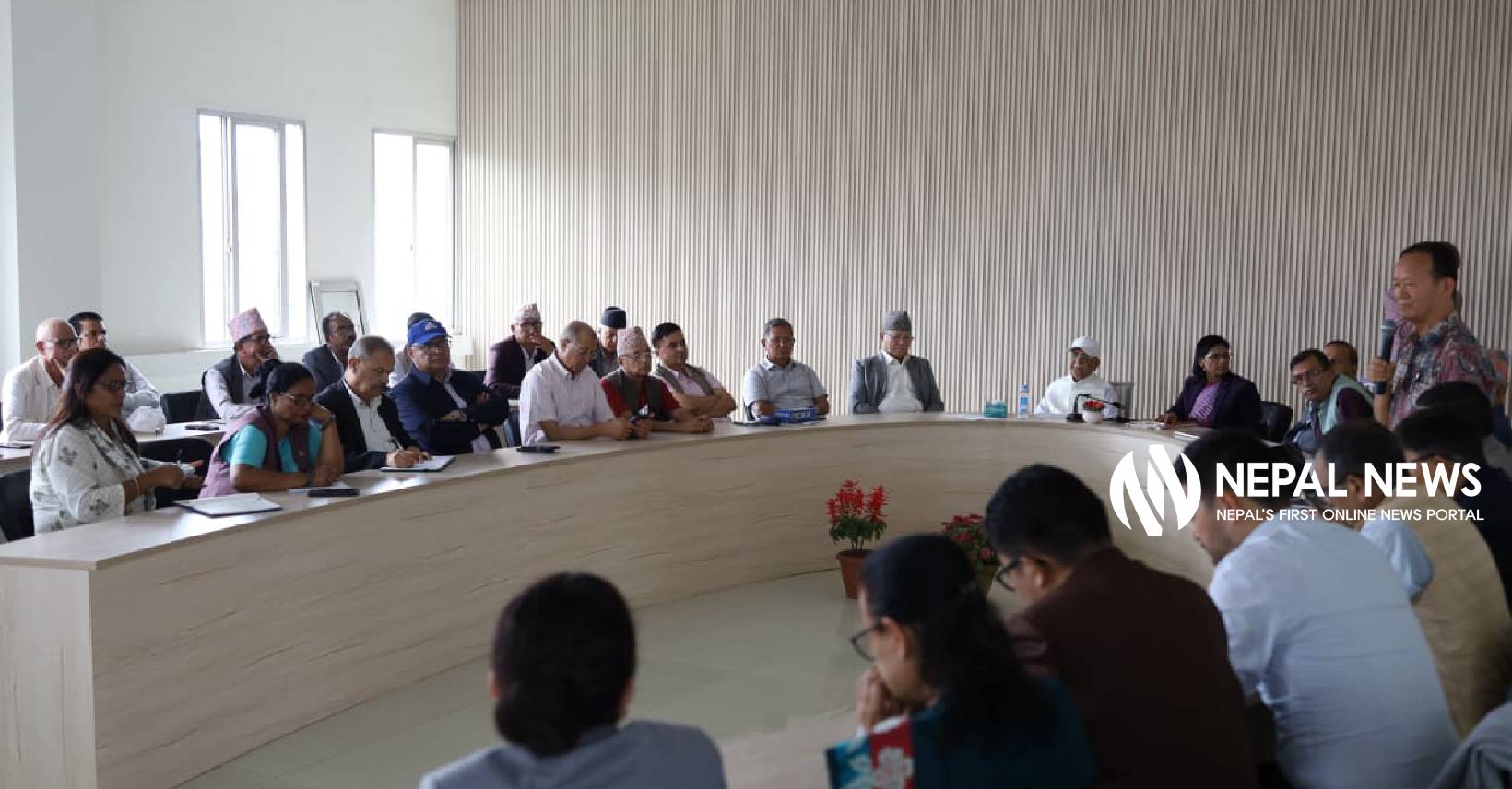
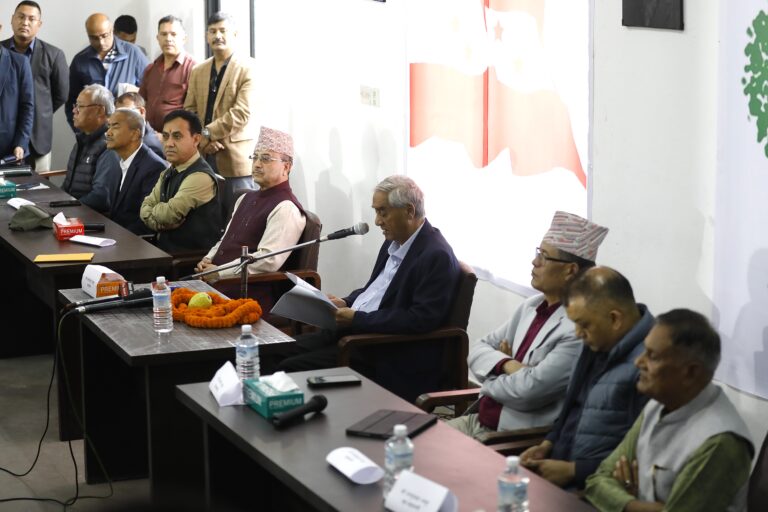
A meeting of the central working committee of the Nepali Congress held in Sanepa on April 15. Photo source: Nepal Photo Library.
In the journey from bringing democracy and multiparty politics to promulgating a constitution through a constituent assembly, the Nepali Congress has produced six Prime Ministers: Matrika Prasad Koirala twice, BP Koirala once, Krishna Prasad Bhattarai twice, Girija Prasad Koirala four times, Sushil Koirala once, and Sher Bahadur Deuba five times. The Nepali Congress has led government 15 times, and throughout this period there were also internal struggles against the Koirala dynastic legacy.
The Nepali Congress won a two-thirds majority in the 1959 general election and again won 110 seats and a majority in 1991, but failed to deliver on public expectations. In 1994 voters issued a warning by cutting the Nepali Congress to 83 seats and making it the second party. In 1999, the Nepali Congress again won 111 seats and a majority. Voters had warned them and then restored them to first place, but the Nepali Congress failed to reform. Its inaction also played a role in the escalation of the Maoist conflict. After the Maoists entered the peace process, voters in the first constituent assembly election of 2008 made the then-new CPN (Maoist) the first party, and the Nepali Congress shrank to 37 seats. After the first constituent assembly failed to produce a constitution, a second was elected in 2013 in which the Nepali Congress came second with 105 seats.
The second constituent assembly promulgated a new constitution, and the Nepali Congress played an important role in that. After the new constitution, the country moved to a federal system, but the Nepali Congress took no meaningful initiative to change the lives of the people as the constitution envisioned. In the 2017 election, it won only 23 seats and became the third party. In 2022, it won 63 seats and became the second party but then formed a government in coalition with the Communist parties with which it shared no principles. This was the Nepali Congress travelling in reverse. As leaders became entangled in the pursuit of power, the Nepali Congress steadily lost public trust, with money changing hands in every appointment, the fake Bhutanese refugee scandal, and involvement in various irregularity scandals. The Nepali Congress that had formed a coalition with the CPN (UML) on the pretext of amending the constitution simply forgot about constitutional amendment once in government.
From the revolution of 1951 through the people’s movements of 1990 and 2006, the Nepali Congress has been at the forefront of the fight for liberal democracy. It now finds itself trapped in internal conflict and on the threshold of a split.
The Gen Z movement arose against the old ways of the Nepali Congress and other established parties. With the Nepali Congress and its leaders in the crosshairs of the movement, young people within the party chose the path of a special convention, and since then the Nepali Congress has become even more entangled in internal conflict. Political analyst Geja Sharma Wagle analyzes that a weakened Nepali Congress in national politics means the country’s democratic current has itself become weaker. “With the RSP’s powerful government in place, the country needs a strong Nepali Congress as the main opposition,” he says.
Internal conflict and a weakened opposition
During the Gen Z movement, not only were physical attacks carried out at the Budhanilkantha residence of then party president Sher Bahadur Deuba and then foreign minister Arzu Rana Deuba, but the residence was also set on fire. During the protests, the party headquarters of the Nepali Congress was vandalized, and the homes of many leaders were damaged.
Already weakened by the Gen Z movement, the Nepali Congress has become even more fragmented when unity was what it needed. Even in the March 5 election, Nepali Congress leaders could not unite. Most leaders sidelined through the special convention were not active in support of the Nepali Congress during the campaign. President Thapa made no effort to bring disaffected leaders on board, and ticket distribution for the election further fueled the internal conflict. With the Thapa leadership dominating the process, most Deuba faction leaders did not participate in the campaign. Thapa himself, touted as a future prime minister, was defeated in Sarlahi-4. The Nepali Congress, which fought long for democratic values both within the country and within the party, has reached the point of disappearing from national politics after the Gen Z movement and the March 5 election. It won a total of 38 seats combining first-past-the-post and proportional representation.
Then Nepali Congress president Sher Bahadur Deuba handing over the responsibility of acting party president to party leader Purna Bahadur Khadka. Photo: Bikram Rai/Nepal News
Nepali Congress leader Bhimsen Das Pradhan says the party has become ineffectual in the House too, because most of the influential leaders capable of raising a clear opposition voice were defeated. “The Nepali Congress has become a weak main opposition in parliament,” he adds.
On the threshold of a split
Nepali Congress leaders themselves acknowledge that when the party should be conducting a ruthless review of the Gen Z movement and the election defeat and uniting, it has instead been brought to the threshold of a split by internal conflict. Nepali Congress leader Min Bahadur Bishwakarma, also a former minister, says, “The Nepali Congress is on the brink of a split. An invisible force has conspired to weaken the Nepali Congress, which has fought for democracy, in order to keep Nepal in political instability, and the Nepali Congress is now caught in that whirlpool.”
Bishwakarma claims the current situation arose because the Nepali Congress, which fights for democracy and pursues a balanced foreign policy, refused to yield to pressure from anyone. “A script was written that if the Nepali Congress, which leads the democratic order, is weakened, other parties will weaken too, and the Gen Z movement was staged accordingly. Then a special convention was engineered to weaken the party further. In the end, the Nepali Congress has reached the point of splitting in two.”
Currently, the Nepali Congress is entangled in a dispute overactive membership on one side and the two factions are now openly pitted against each other following the clarification notice to Khadka. It is because of this conflict that the Nepali Congress has still been unable to elect a parliamentary party leader.
On 4 January 2026, party president Sher Bahadur Deuba announced he was ready to accept all the other faction’s terms, while claiming that invisible forces were behind the forced special convention. “The Nepali Congress becoming weak in this way means not just one party becoming weak; it means parliamentary politics itself becoming weak,” says leader Bishwakarma. “The problem within the Nepali Congress will also increase enmity between political parties. The same disease that has struck the Nepali Congress could spread to the UML and other parties.”
Currently, the Nepali Congress is entangled in a dispute overactive membership on one side and the two factions are now openly pitted against each other following the clarification notice to Khadka. It is because of this conflict that the Nepali Congress has still been unable to elect a parliamentary party leader.
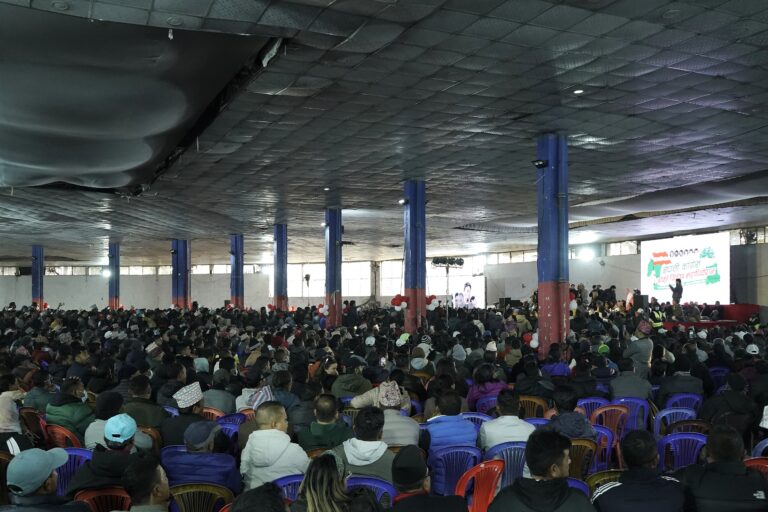
The special general convention of the Nepali Congress held at Bhrikutimandap. Photo: Bikram Rai/Nepal News
The Nepali Congress was unable to speak up when its own leader, former Home Minister Ramesh Lekhak, was arrested, and remains silent even as an arrest warrant has been issued against then-president Sher Bahadur Deuba. Leaders say the party has reached a point from which it cannot avoid an imminent split, as Gagan confines himself to a narrow circle and ignores senior leaders.
Nepali Congress leader Bhimsen Das Pradhan claims the Gagan Thapa faction from the special convention bears primary responsibility for bringing the Nepali Congress to its weakest point in history. “After a devastating electoral defeat, rather than consulting senior leaders on how to move forward, Gagan, who became party president through the special convention, consulted no one,” Pradhan says. “After Gagan ignored the senior leadership, the Nepali Congress, which should have been walking the path of unity, deteriorated further. He fell short in whatever initiatives he should have taken to save the party.”
Nepali Congress leader Minendra Rijal says the party’s future rests on the court’s verdict, given that the special convention dispute remains before the court. “There is nothing to say until the court’s decision comes,” he says.
If the court rules in favor of the Deuba-led group from the 14th convention, the disaffected faction will break away; if it rules in favour of the special convention, a large group of senior leaders will split off.
Nepali Congress leader Bishwakarma, however, says a split is virtually certain regardless of how the court rules. According to him, if the court rules in favor of the Deuba-led group from the 14th convention, the disaffected faction will break away; if it rules in favor of the special convention, a large group of senior leaders will split off.
Former Nepali Congress general secretary Shashank Koirala issued a statement Thursday (April16), calling on party leaders and workers to stand for broad unity. The statement reads: “The internal dispute arising at such a time increases the risk of affecting not just the party but the country’s entire democracy and system. Therefore, in such adverse circumstances, unity from the grassroots to the top level is indispensable.”
Political analyst Wagle says the Nepali Congress is currently in ruins and both the Thapa and Deuba factions share responsibility for bringing it to this state. “Division and unity may be genetic traits of the Nepali Congress, but the failure to unite at this juncture is genuinely sad,” he says. “After an electoral defeat, the party should be reviewing where it went wrong and correcting course, but even after the election, it has remained mired in accusations and counteraccusations, and that has brought the party to ruin.”