Kathmandu
Sunday, July 19, 2026





After clearing thousands of riverbank homes in Kathmandu, the government is relocating displaced families to their home districts, a plan critics say ignores their livelihoods and the realities of urban migration.
KATHMANDU: “Do you remember, or have you forgotten, the sight of thousands of people living on the riverbanks of Kathmandu having to flee, leaving all their belongings behind just to save their lives, and the government having to rescue them due to the annual floods?”
This is the first sentence of a long status written on social media on April 24, by Prime Minister Balendra Shah, arguing that the landless settlers in riverbank settlements are unsafe and need proper management. Mentioning that he has repeatedly written and spoken about the need to arrange safe housing for the landless settlers who face floods and inundations every year, he wrote: “Is it appropriate to manage them in a proper place, or to keep them dangling for years to come, just as they have been left dangling for years? Is their right as citizens to continue living in that unorganized and flood-prone area, or to move to a safer place? Without a doubt, risk-free management is their right.”
The day after Prime Minister Shah wrote this emotional status showing concern for the proper management of landless settlers, bulldozers moved into the settlements of Thapathali, Gairigaon, and the Manohara area on April 25. The government turned ruthless in the name of clearing public land. The huts and shelters were demolished without even allowing the landless settlers to take out their belongings.
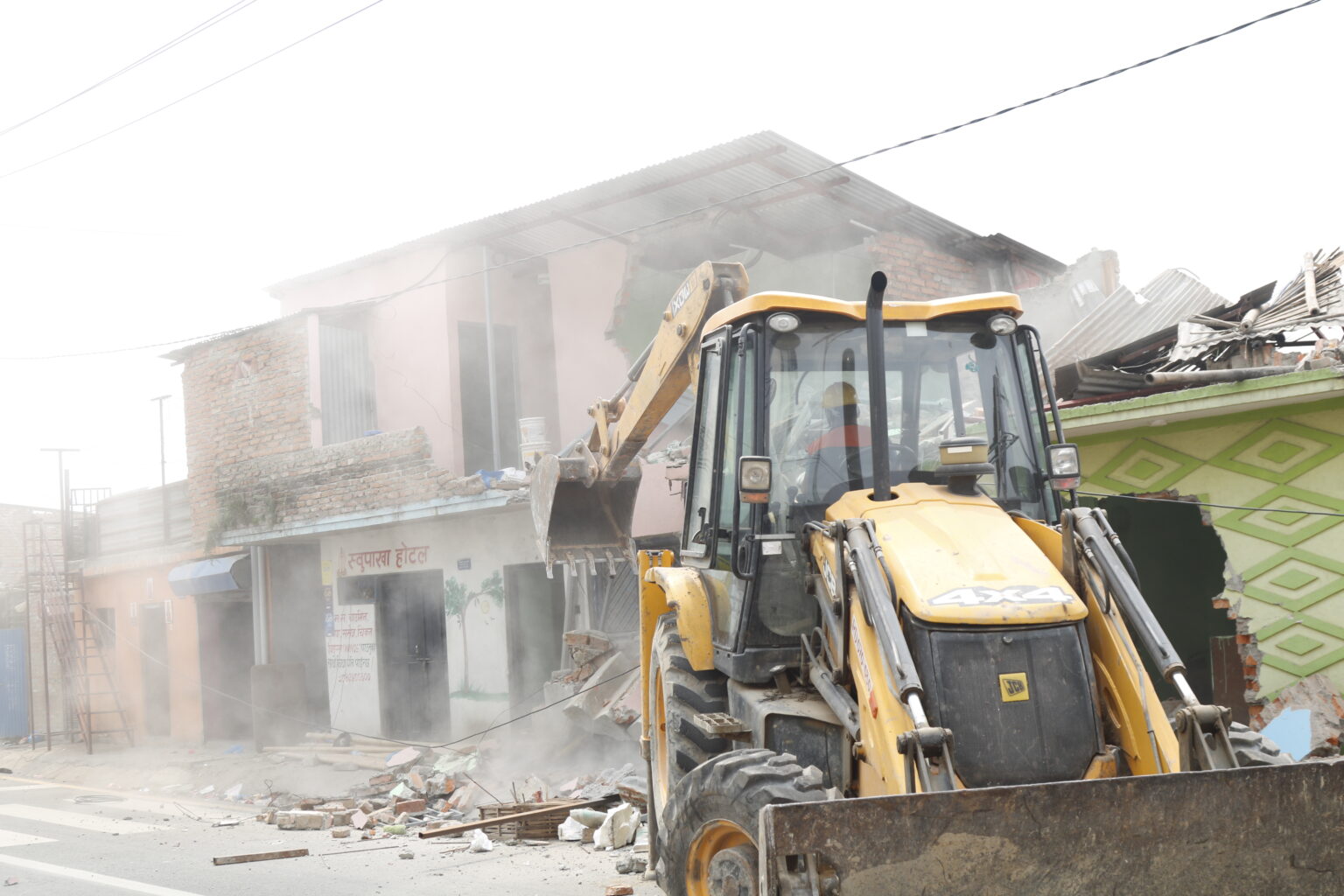
Landless people’s settlement being demolished in Gairigaun, Kathmandu. Photo: RSS
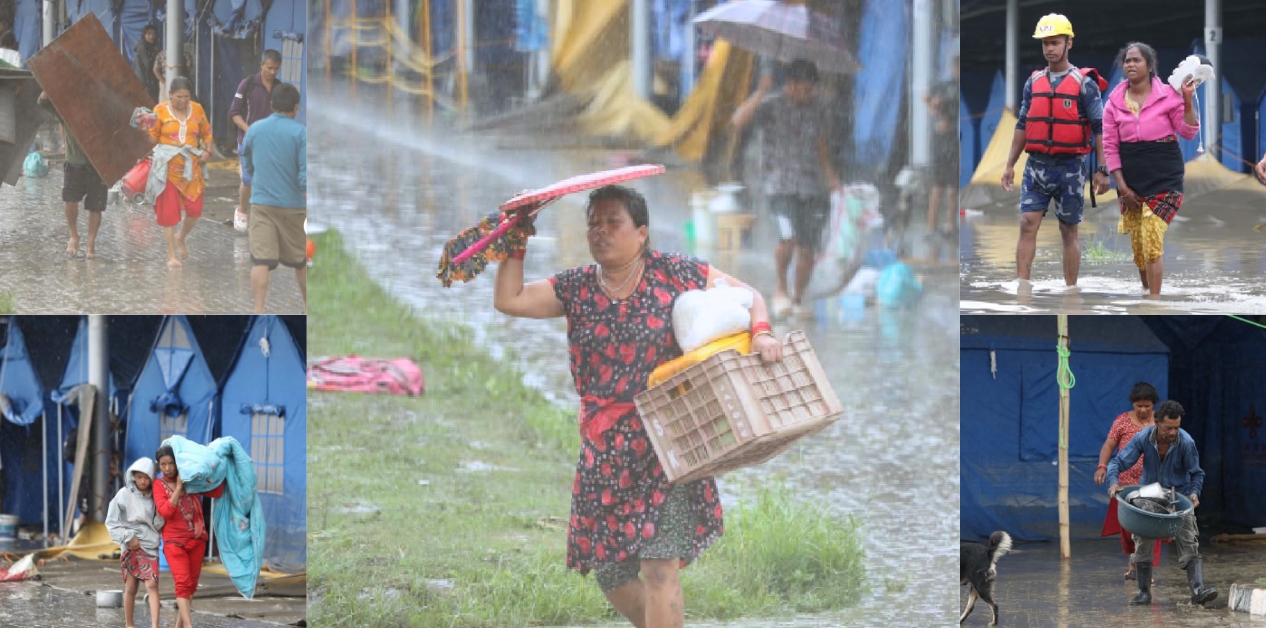
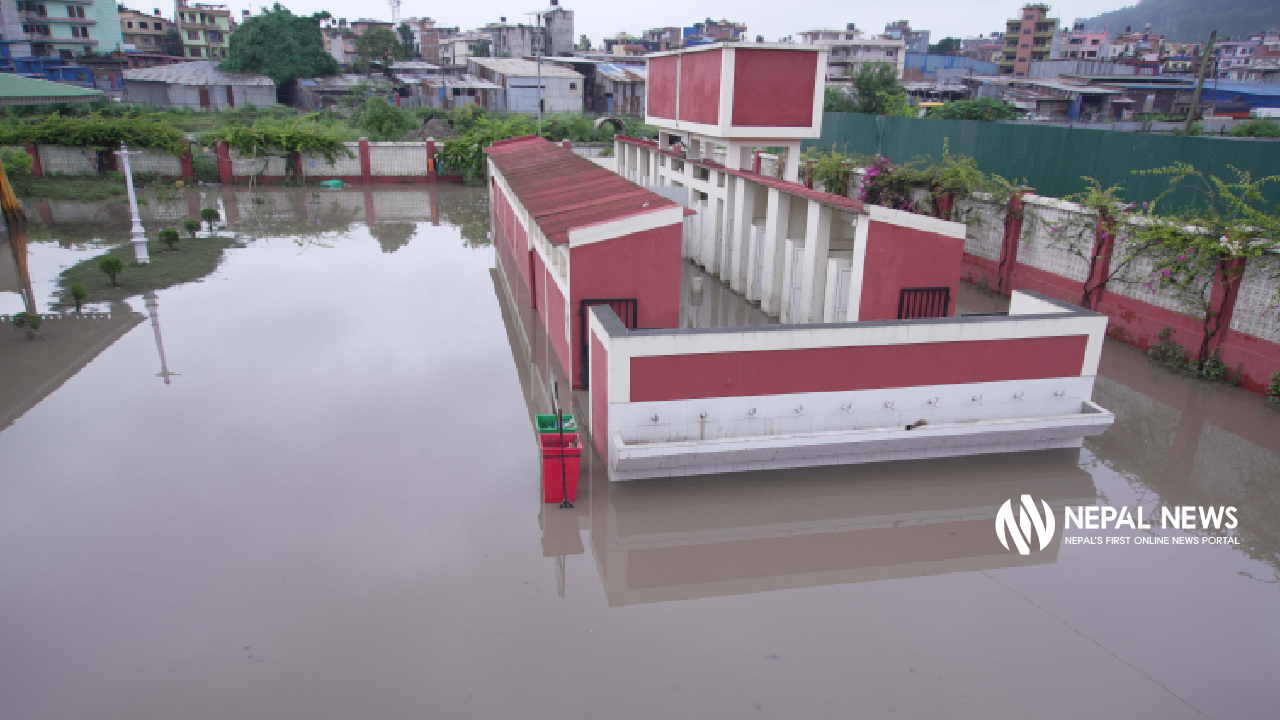
Those who had a source of income moved by finding rented rooms. Some went to the homes or rooms of their relatives. Landless settlers who had nowhere else to go were kept in temporary shelters (“holding centers”) in various places. However, the Radha Swami Holding Center in Kirtipur, where they were kept after the Prime Minister claimed the riverbanks were unsafe, was inundated following a midnight downpour in mid-July. As the Bagmati floodwaters entered their sleeping quarters, the landless settlers, who were fast asleep, scrambled to escape. Senior citizens and children were left in an even more desperate state. Clothing, medicines, and children’s textbooks were completely destroyed by the flood. The police had to use rubber boats to rescue them. Since it was no longer possible to stay at the Kirtipur Holding Center, they have been moved to Kharipati in Bhaktapur. The landless settlers, who were inhumanely displaced by the government under the pretext of proper management, are being transferred from one place to another. This has already proven that the government, which rushed to evict the landless settlers by demolishing their settlements, has no alternative plan to manage them.
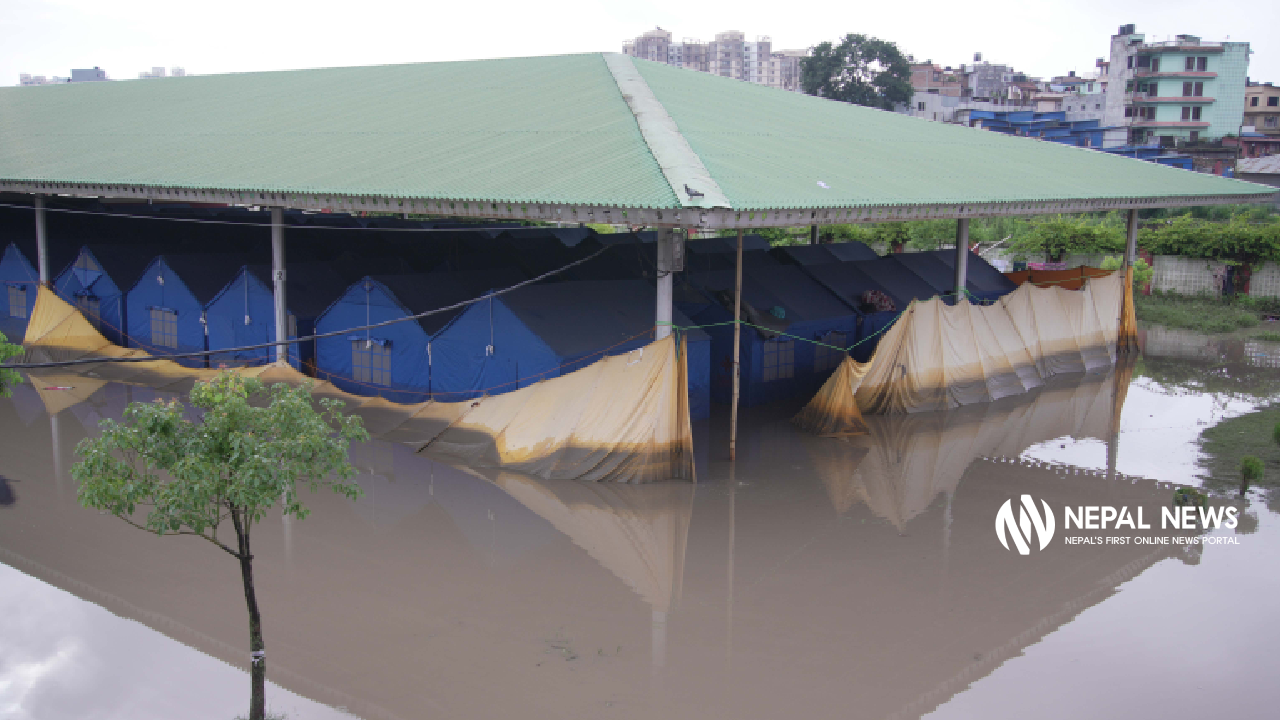
Floodwaters entering the landless settler holding center in Kirtipur.
Nepali Congress Member of Parliament Geeta Gurung raised this issue in the House of Representatives on July 15, 2026. “When the question was raised right at this rostrum, the Prime Minister said they were relocated to save their lives because the riverbanks get flooded. But why were they taken and kept in the Kirtipur area, which was already prone to flooding?” she asked.
According to data from the Joint National Landless Settler Front, the government demolished 3,500 houses across 27 settlements within the Kathmandu Valley. A total of 5,706 families lived in those houses. Among them, the number of families that came to register with the High-Powered Committee for Integrated Development of the Bagmati Civilization was 2,608. The remaining 3,098 families—more than half—did not get in touch at all.
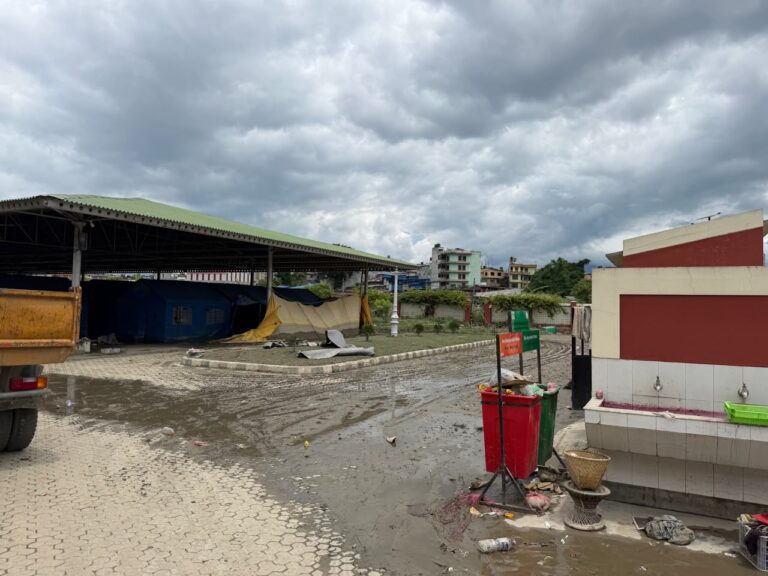
Floodwaters entering the landless settler holding center in Kirtipur.
The government did not keep all those who registered in the holding centers. Most managed by finding rented rooms on their own. Those who could not manage on their own were kept in holding centers across seven locations. A total of 388 families were accommodated in the Banepa holding center, Kharipati in Bhaktapur, Ichangu Apartments, Bode, Nagarkot, Kirtipur holding centers, and the Suryadarshan Hotel. However, comfortable arrangements for accommodation, food, and water were lacking in many of these places.
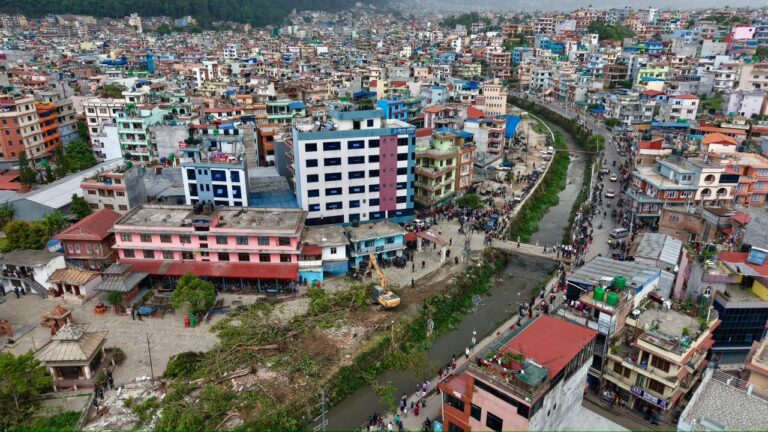
Drone view of the settlement in Balaju. Photo: Nepal Photo Library
Those kept in the holding centers without a permanent management plan faced various problems. Due to the relocation, many children were deprived of education. Their previous schools and communities were all left behind. Kumar Karki, Chairman of the Joint National Landless Settler Front, says that the residents were left in a miserable state because the government ran bulldozers over the settlements without any study. He says, “On one hand, there is no certainty of food, shelter, and clothing; on the other hand, by scattering the community across different places, the social ties of weddings and funerals have been severed.”
The government started removing the landless settlers, who were enduring discomfort and hardship in the holding centers, from there as well starting June 23. The government adopted a policy of wearing them down, exhausting them, and pushing them away by adding numerous hardships. During this process, complaints surfaced that even food and water were cut off. After a notice was issued to leave the holding centers by offering Rs 25,000 in rehabilitation costs per family and Rs 15,000 monthly room rent for up to three months, many left.
According to Top Bahadur Baniya, Information Officer of the High-Powered Committee for Integrated Development of the Bagmati Civilization, only 110 families now remain across the holding centers in Kharipati, Bode, and Ichangu. Although the landless settlers have demanded that they be managed within Kathmandu, the government has not brought forward a clear plan. It has adopted a policy of sending them back to the districts they originally came from.
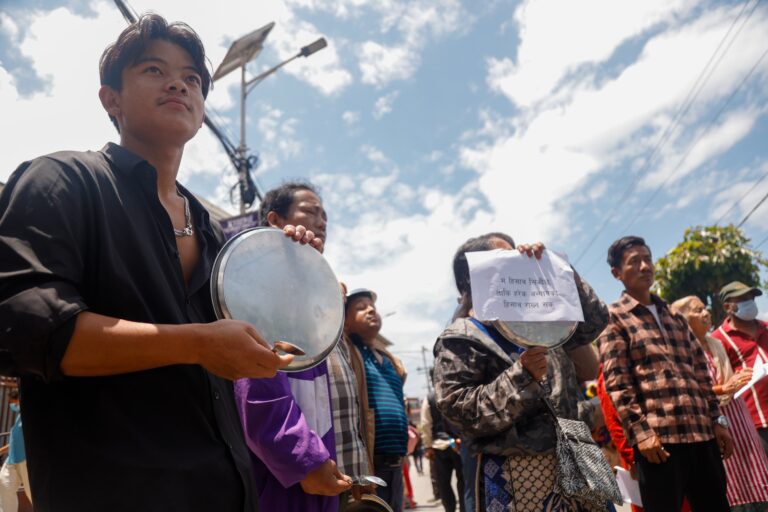
A demonstration by the Landless Settler Front against the government with plates and spoons in hand at Maitighar Mandala, Kathmandu. Photo: Suryams Upreti / Nepal Photo Library
Anthropologist Suresh Dhakal states that even basic constitutional rights were violated by the government in the name of managing the landless settlers. Pointing out that the Constitution guarantees every citizen’s right to food, shelter, clothing, and the right to live, he says, “Management does not mean picking people up from one place and dumping them in another, as is being done now. This is nothing but the inhumane behavior of an irresponsible state.”
Plan to send them to the villages
The government, which forced the residents of unorganized settlements and landless settlers to leave by unleashing midnight bulldozer terror, has yet to bring forward a clear plan on how to manage them.
Article 27 of the Constitution of Nepal clearly states that ‘every citizen shall have the right to appropriate housing.’ However, the problem has worsened because the government removed the landless settlers and unorganized residents who built shelters on riverbanks and public land without a proper management plan.
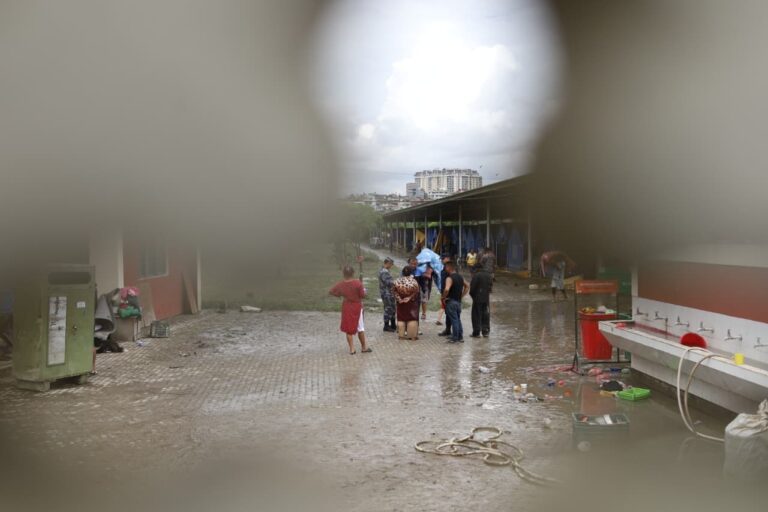
Waterlogged holding center in Kirtipur
The government ran bulldozers through landless settler settlements in areas such as Kalopul, Thapathali, Gairigaon, Balkhu, Manohara, Gaushala, Banshighat, Balaju, Shankhamul, Swayambhu, Kalimati, Dhobikhola, Kapan, Tenzing Chowk, Sattale, and Krishna Mandir in Kathmandu. In these settlements, not only the huts of the landless settlers but also the schools where their children studied were demolished. Following this, most of them moved to rented rooms for the sake of their children’s education. Kumar Karki, Chairman of the Joint National Landless Settler Front, states that many children were unable to study, and the education of those currently enrolled was disrupted. Similarly, the temples, churches, and monasteries where the residents worshipped based on their faiths were also demolished.
Civil society, activists, and the general public had raised their voices, stating that the government should identify genuine landless settlers among those living on public land, keep records, properly manage them, and remove the rest. However, without a well-organized plan, bulldozers were run through all huts indiscriminately. Following this, two people from the landless settler settlements have committed suicide.
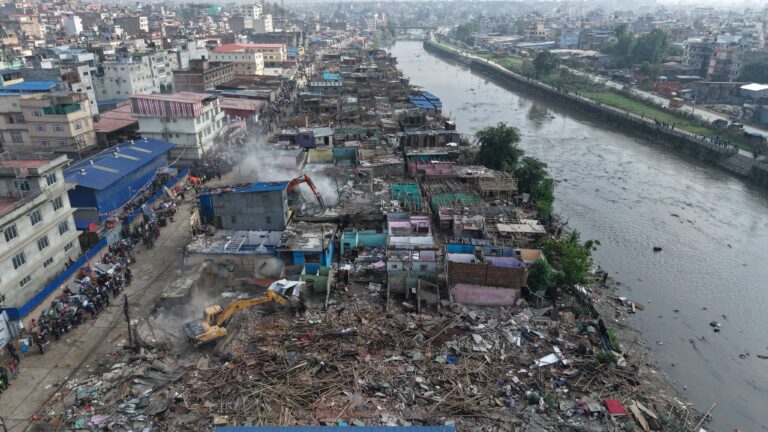
Bulldozer being deployed at the landless settlement in Balkhu. Photo: Nepal Photo Library
Most of those living on the riverbanks are unorganized residents. Even though they own land in the hills or villages, they moved to the city and began living on the riverbanks because farming cannot be done properly there, water is scarce, and the food crops produced are insufficient to feed them for the whole year. The government, however, does not consider such individuals as landless settlers. Therefore, the government is preparing to send them back to their original homesteads.
For this purpose, the High-Powered Committee for Integrated Development of the Bagmati Civilization is collecting details. According to the committee’s records, out of the 388 families initially kept in various holding centers, 278 families have left so far. Among them, only a small number are ready to return to their old places, while the rest are living around Kathmandu doing daily wage labor and various other jobs.
Based on the details provided by the committee, the National Land Commission has started sending the landless settlers to their respective local levels (Palikas). According to the Commission’s data, 23 families have been sent back to their original places so far. The Commission’s district offices facilitate this by putting them in touch with the local levels. After that, the respective local level will find a suitable location and manage them, says Sanjeev Kumar Sah, Chief Survey Officer of the Commission. He says, “As provided in the Act, we send them to their addresses, and from there, a suitable place will be found to distribute land ownership certificates.”
How to manage?
Macha Kaji Maharjan, Project Chief of the High-Powered Committee for Integrated Development of the Bagmati Civilization, says that the process for managing the landless settlers is moving forward, so the problem will be resolved now. According to him, the government plan involves providing employment to those capable of working and making proper arrangements for the helpless and the elderly.
Experts and stakeholders have pointed out that this plan of the government for landless settler management is inappropriate. According to land rights activist Jagat Deuja, the problem of landless Dalits, landless settlers, and unorganized residents cannot be solved merely by creating a project with a new name without amending the Acts, regulations, and directives. He argues that although landlessness looks like a single problem on the surface, the nature of certain regions is different, so everyone’s problem cannot be solved using the same method. In the monthly bulletin ‘Bhumi Adhikar’ (Land Rights) of the Community Self-Reliance Centre (CSRC), Deuja wrote: ‘For this, it is necessary to evaluate past work and formulate a new strategy.’
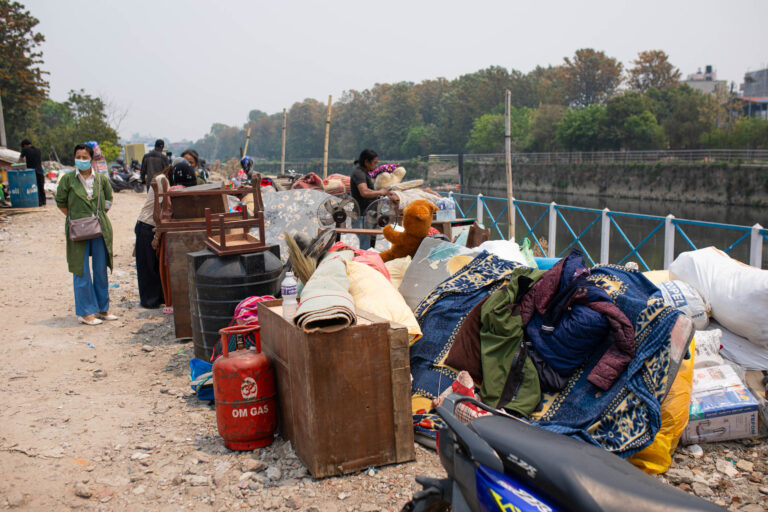
Arranging belongings after a bulldozer ran through the informal settlement in Thapathali. Photo: Nepal Photo Library
Kumar Karki, Chairman of the Joint National Landless Settler Front, says the Front demands that the government manage those living in risk-free zones within the same location, and those living in high-risk zones within a suitable location inside the same local level. He says, “Telling someone to go back to whichever district issued their citizenship is in no way practical.”
Anthropologist Dhakal also agrees that the policy of sending landless settlers back to their original places is incorrect. He states that since there are many examples of people moving to cities because they could not survive off their land on steep hills, attention must also be paid to their livelihoods. He mentions that the landless settlers fulfill the high demand for informal laborers in the city, so they must be accepted as a part of the city itself. “Many people in the city think it would be fine if the landless settlers just went back to their places, but it seems the government also fails to realize what the city would look like without the landless settlers,” he says. “The city needs them, and they need the city. Therefore, management should be done in a way that accommodates both. Pushing them elsewhere will not solve the problem.”
The example of Odisha
In his article, land rights activist Deuja presented the example of how the state of Odisha in India is properly managing its slums (settlements of the urban poor). According to the article, the slums of Odisha lacked basic necessities such as drinking water, electricity, toilets, roads, and drainage. Due to the lack of open spaces within the cramped settlements, children had no place to play. Poverty and unhealthy living conditions plagued the settlements.
In 2017, the Odisha government launched the ‘Jaga Mission.’ Following this, it formulated the Land Rights Act and made it a policy that 25 percent of the budget of every municipality must be utilized for the development of slum settlements. Accordingly, data from 2,000 settlements were collected, and land rights, housing improvement, and slum-dweller empowerment were carried out simultaneously.
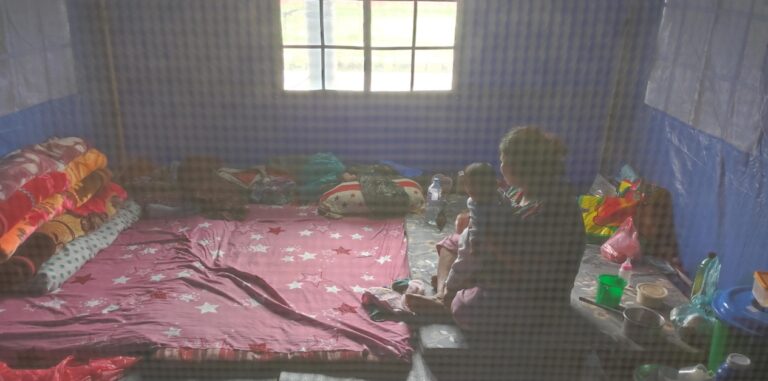
Radha Soami Satsang Holding Center in Kirtipur. Photo: Nepal Photo Library
The Jaga Mission of Odisha State is considered the world’s largest slum improvement scheme. Deuja argues that Nepal should also learn a lesson from this scheme of Odisha.
The Constitution of Nepal places land-related work within the jurisdiction of all three tiers of government. Deuja says that the local level should collect data, verify, survey, and distribute land ownership certificates, and the federal and provincial governments should support these tasks.
Anthropologist Dhakal says that when managing landless settlers, the focus should be on the basic elements guaranteed by the Constitution rather than just how big a house to build or how to build it. Emphasizing that ensuring food, shelter, and clothing when managing landless settlers in any location is the responsibility of the state, he says: “The state has a responsibility towards all its citizens, and even greater attention should be paid to the marginalized. For that, we must first free ourselves from the mindset that a city is built by removing the marginalized and the poor.”