Kathmandu
Wednesday, June 17, 2026





Footballers are earning while playing and seem to be heading to a safe career. Football academies are making this possible.

Buddhi Bikash Football Ground in Lagankhel, Lalitpur, comes to life early every morning. Children under the age of 16 begin their routine, some open their bags, others put on their boots and jerseys.
Some are engrossed in their own practice. Some pass the ball, while others listen carefully to the coach’s instructions. Their goal is not just to run and kick, but also to decide which way to turn in their future, starting now.
Lekhima Khilwal stood nearby, observing this setting. She used to be prohibited from kicking a ball in addition to being unable to play with friends her own age.
“Earlier, my family used to say ‘study, study’. Now, my parents themselves say ‘play, play’. They bring me here to play themselves,” she says.
Nine-year-old Lekhima, who is currently studying in grade four, has had an interest in football since childhood. She is a big fan of Nepal’s all-time top goalscorer, Sabitra Bhandari. Her goal is to play for the national team like ‘Samba’ in the future. That is why she paid Rs 8,500 to participate for one week in the ‘Next Gen Boot Camp’ organized by the academy of Nepali national men’s ‘B’ team forward, Anjan Bista.
In the past, open trials for the ANFA Academy were held once across the country, and the players selected in those trials would automatically reach the national team pool.
“I have liked playing since before. I never got an opportunity. That’s why I came to play this time. I always like to play. I will play in the future as well,” she says.
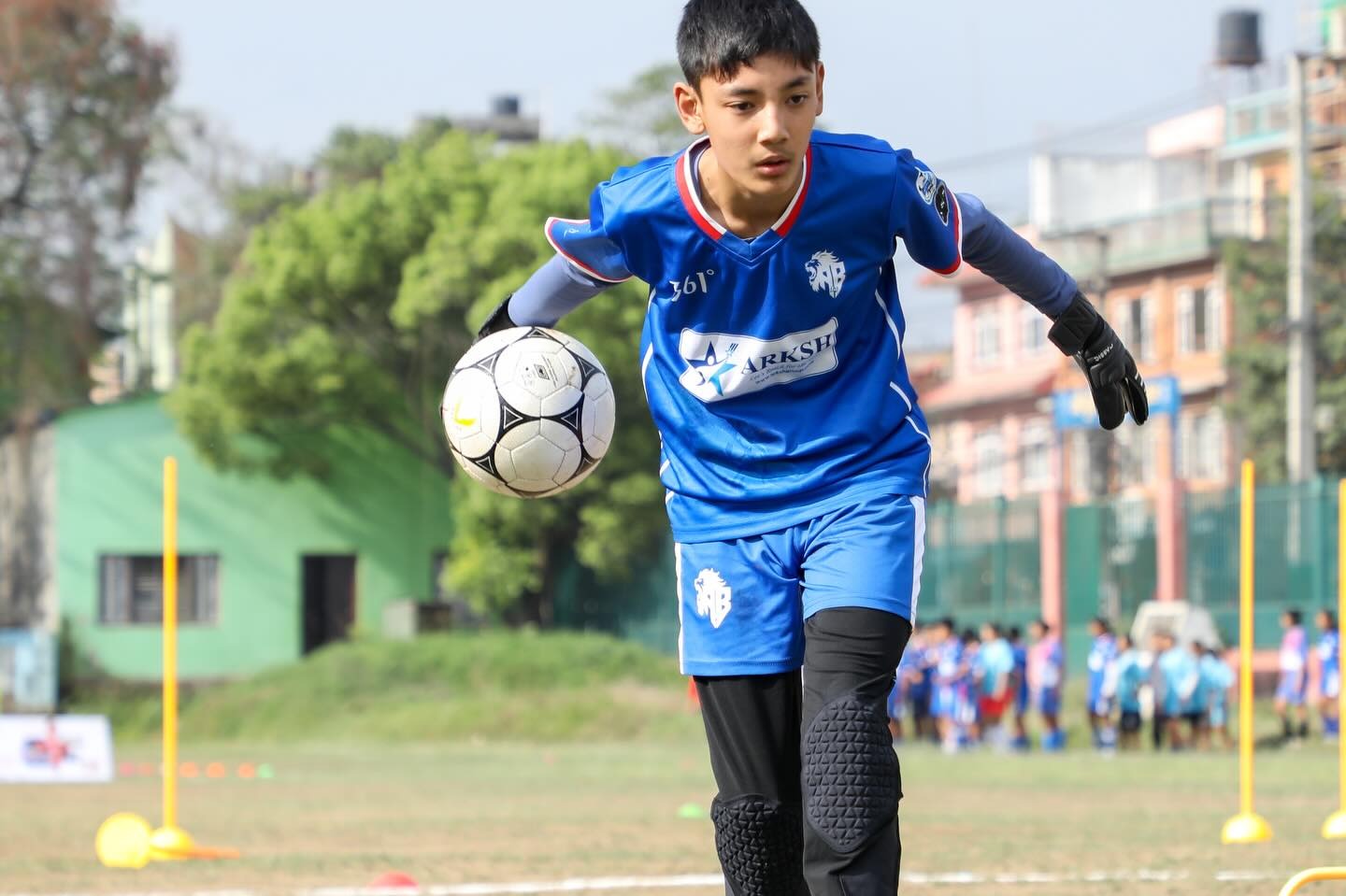
Players who came to train at Anjan Bista’s camp. Photo: AB
Anjan Bista, who has scored 13 goals, equaling former players Hari Khadka and Nirajan Rayamajhi, has not yet reached the age to retire. The 27-year-old forward organized the ‘Next Gen Boot Camp’ from April 4–13, 2026, with the aim of producing a new generation alongside his playing career. Lekhima got the opportunity to participate in this same camp.
The seeds planted by ANFA
According to Nepali football analyst Sanjib Mishra, the formal start of football academies in Nepal is considered to be from the mid-to-late 1990s. Even though football was played before that, the concept of an academy providing systematic training was not yet established.
In this situation, the All Nepal Football Association (ANFA), prioritizing youth development, started training programs for various age groups in 1997, after which the academy system began to gain momentum.
After the FIFA Goal Project arrived, former players Raju Kaji Shakya, Umesh Pradhan, and the late Bhim Thapa (Technical Director) started going to various places to scout players. The ANFA Academy was started after finding and bringing 40 players from across the country.
“Later, various football academies also started to open at the private and club levels. ANFA had laid the foundation for the ladder to rise to the national team through this very academy,” he says. Anjan from Hetauda is a product of this same academy.
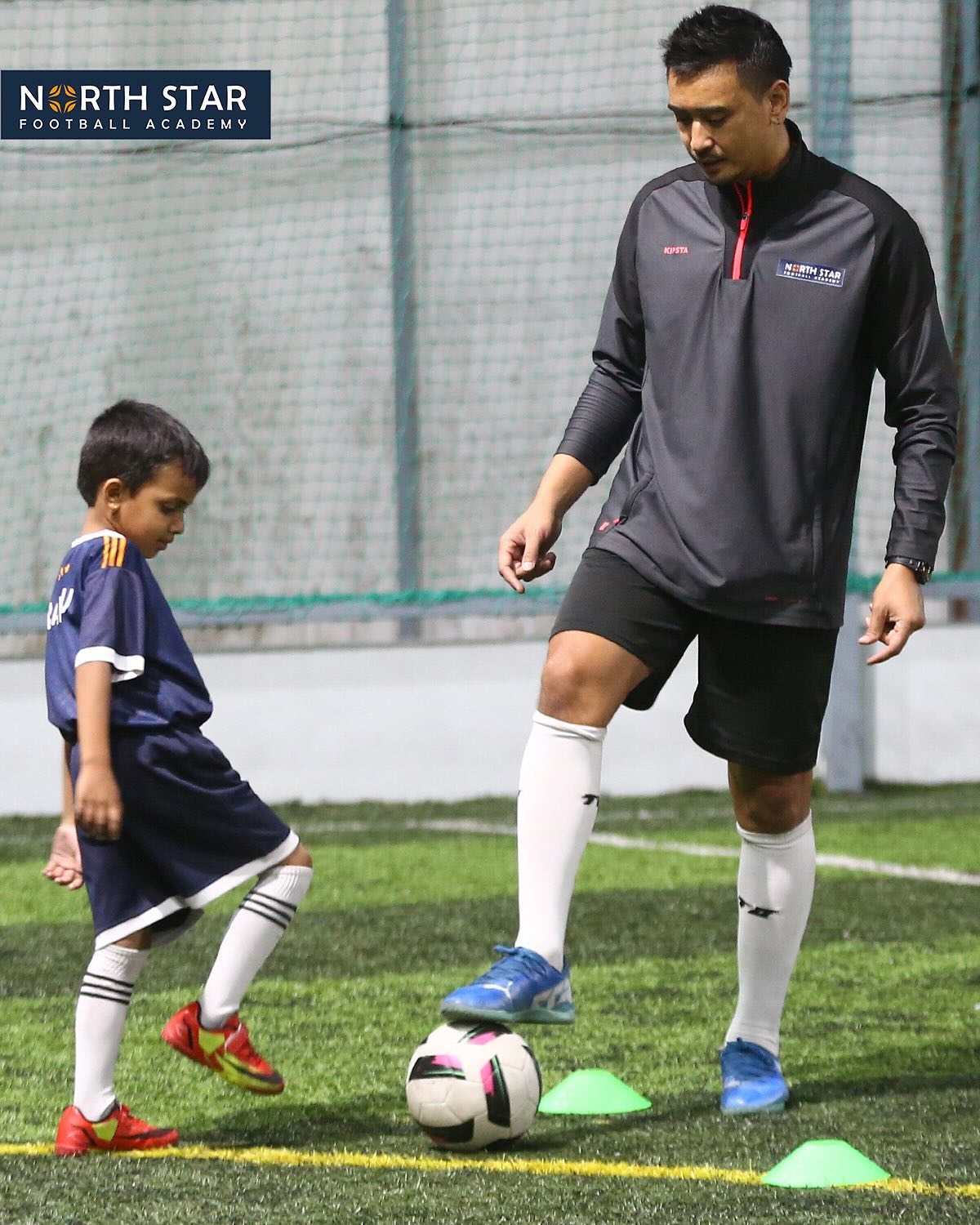
Vishal Shrestha. Photo: North Star Academy
Anjan played with Bimal Gharti Magar and Ananta Tamang at the academy from 2011 to 2014. This academy also earned him the opportunity to wear the national jersey.
He has not only represented the senior national team but also Nepal’s U-16, U-20, and U-23 teams. Due to the contribution of this academy, he even got the opportunity to play in the academy of Spain’s Marbella FC. Football was very vibrant at that time. But now it has slowed down. He says that because of this, he himself has stepped in, refusing to let football die.
“Nepali football is in a challenging situation. As long as we are around, football will also remain alive. That’s why we have started this work,” he says.
Playing and earning
There was a time in Nepali football when players were not forced to prove themselves repeatedly. Back then, open trials for the ANFA Academy were held once across the country, and the players selected in those trials would automatically reach the national team pool. However, players who had already proven themselves in the domestic league based on special circumstances, weaknesses, or needs were also given a place in the team.
Players like Janak Singh Tharu, Sagar Thapa, Surendra Tamang, and Rajendra Tamang are examples of those who, despite not being in the academy, proved themselves in the domestic league and reached the age-group national team. Many of these players later became assistant coaches for various age-group teams of clubs, gradually rising to become head coaches.
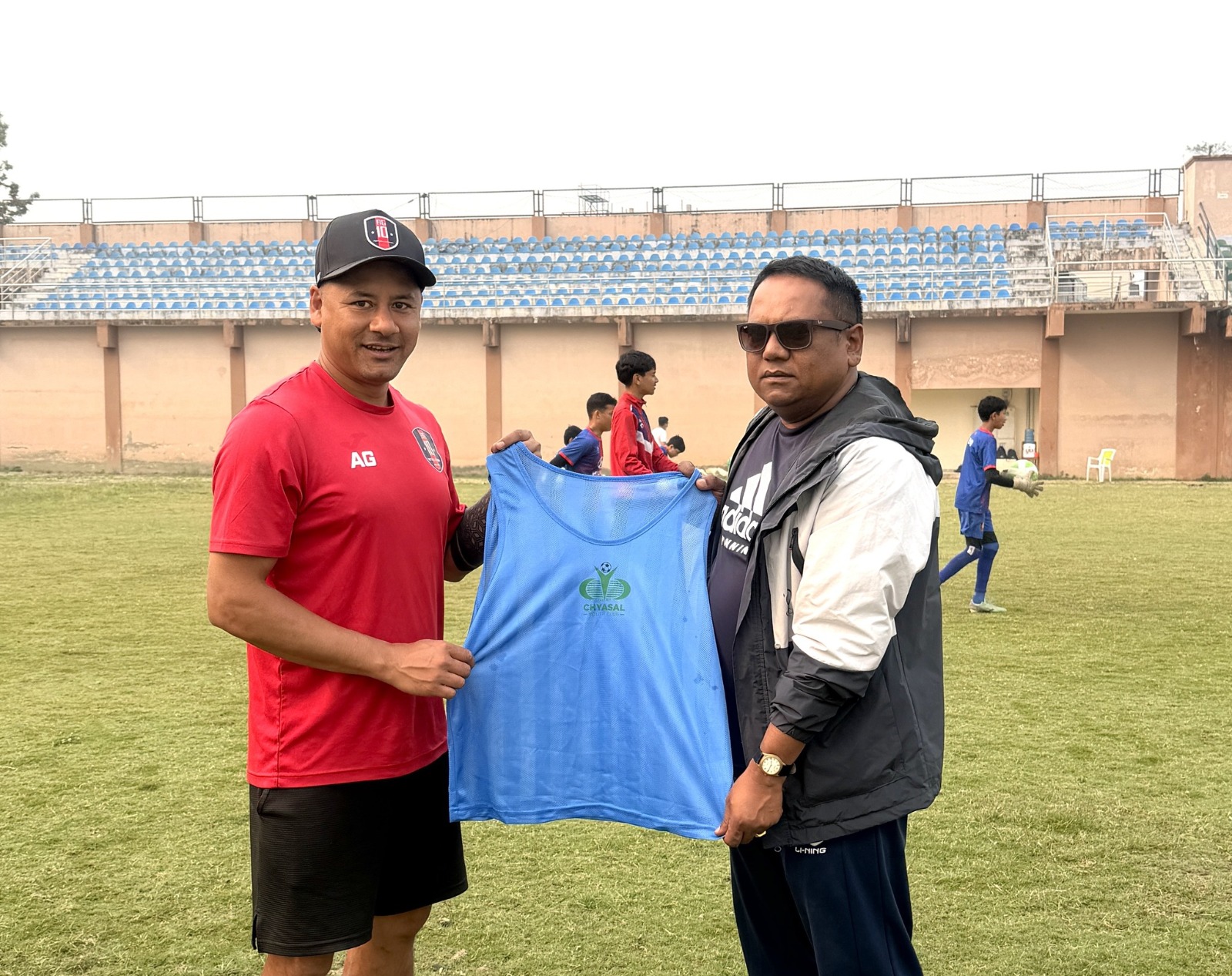
Anil Gurung (left), owner of AG Ten.
Raju Kaji Shakya, currently a member of the national team selection committee, is also a personality who got into coaching after his playing career. He has been an assistant coach for the national team while working as a coach at ANFA. While players like Janak, Sagar, and Surendra could not continue this path, Rajendra got the opportunity to handle clubs like Manang Marshyangdi and APF, eventually becoming the head coach of the women’s national team. Under his leadership, the Nepali team reached the finals of the WAFF Championship, the Tri-Nation Cup, and the SAFF Championship. He is currently associated with APF again.
The reality that the environment for players to continue football after their active playing career is weakening has become clearer in recent years. Especially after the COVID-19 pandemic, incidents of many famous players heading towards foreign employment show that the structure of Nepali football is weak. While a limited number of players like Anjan and Ananta remain active on the field, more than three dozen players, including Bimal Gharti Magar and Sujal Shrestha, have migrated abroad, highlighting this problem.
In this situation, some former players are active in trying to save football and produce a new generation. One of them is former captain Anil Gurung. Gurung, who started his playing career at Sahara Football Academy, established his own AG 10 Football Academy in 2024.
Starting with 8-10 children, the academy has now become a center for over 150 players. This growth is not just a numerical achievement but also an indication of the potential for Nepali football’s future. According to Gurung, after retiring from playing, many players are confused about what to do next. He had put forward the concept of an academy to address that emptiness, which was initially started in Lagankhel.
Structural imbalances are clearly visible in the current development of Nepali football. On the one hand, there is a formal structure like ANFA, but on the other, the number of private academies is increasing. Most of them are focused on futsal. However, the long-term player development system based on open fields is weak. This has been directly impacting the production of national-level players in recent times.
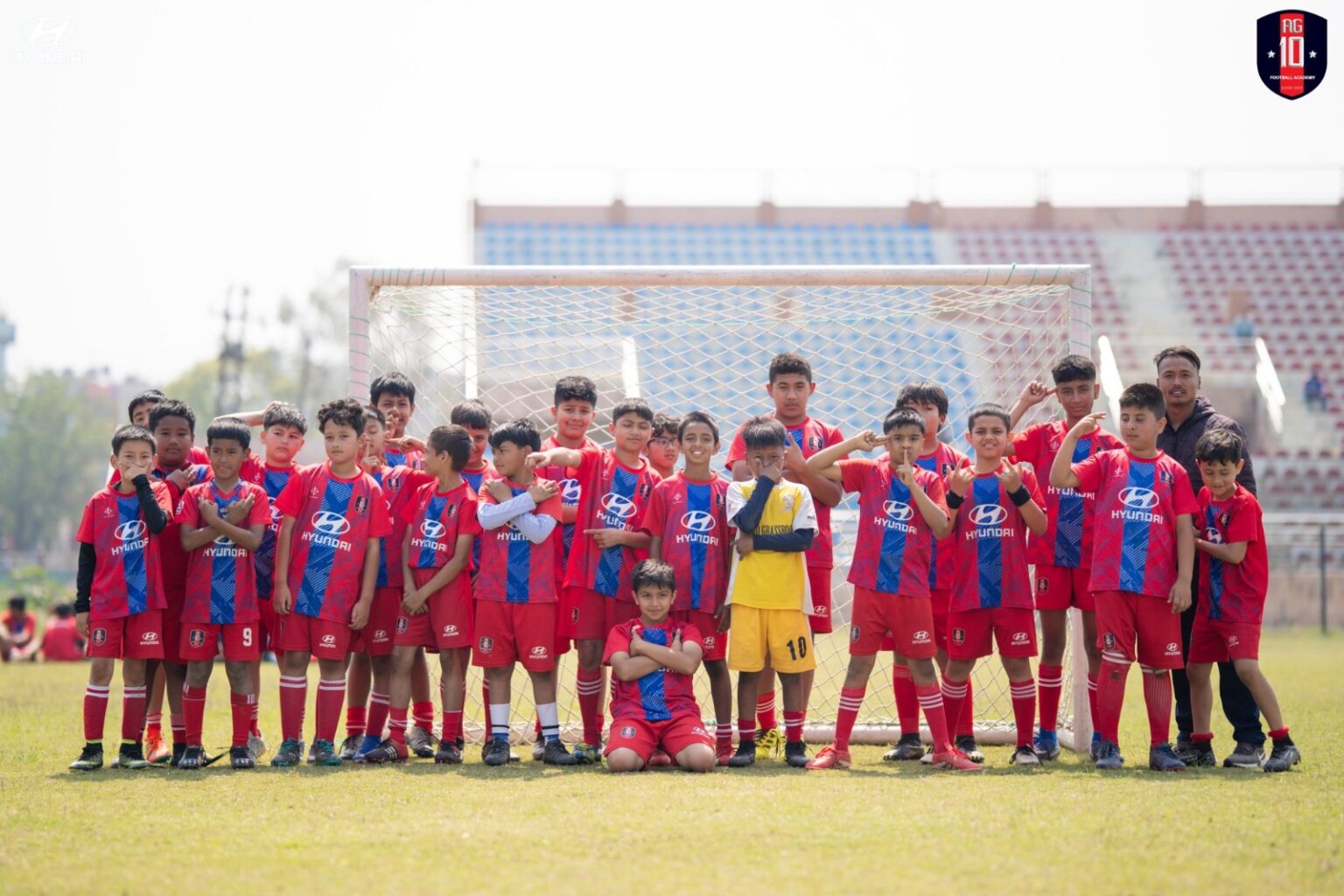
AG Ten players who came to train in Chyasal. Photo: AG Ten
“Once strong in South Asia, Nepal’s age-group teams are now weak. They haven’t even been able to win the SAFF Championship. On the other hand, ANFA’s academy is not like before. In such a situation, academies like these can play a role,” he says.
AG 10 Football Academy has already achieved success at the international level. Last year, the academy’s team performed excellently in the U-14 Dana Cup held in Denmark, becoming champions. Beating a team from Kenya 3-0 in the final can be considered another success for the academy. There is immense pressure from players to join this academy. Even though there are many academies in Kathmandu, managing training is challenging due to the lack of sufficient grounds. Therefore, only a limited number of seats are available for the admission process. For this reason, practice is conducted at the Chyasal ground in Lalitpur on Saturdays and Sundays, according to coach Samir Bista.
“Currently, we have 6 coaches. Our goal is to develop this into a club and participate in national competitions in the future,” he says.
While Anil has focused on his academy after his active playing career, goalkeeper Bishal Shrestha is running his academy while still playing. He retired from his international career after failing to surpass goalkeeper and captain Kiran Chemjong for about 10 years. Currently, he is playing domestic competitions for Machhindra Football Club.
Having experienced that sitting on the bench for a long time hinders the development of new players, Bishal is now himself involved in producing new talent. He has launched North Star Football Academy in Budhanilkantha, Kathmandu.
Bishal is known as a busy player. Even though there hasn’t been an ‘A’ Division league for over three years, he is active in competitions outside the valley. He also participates in the franchise league, Nepal Super League (NSL). Receiving a remuneration of about Rs. 0.15–0.20 million per season, he has pursued his academy as a ‘side career’ for long-term security. His academy also shows attractions similar to Anil’s.
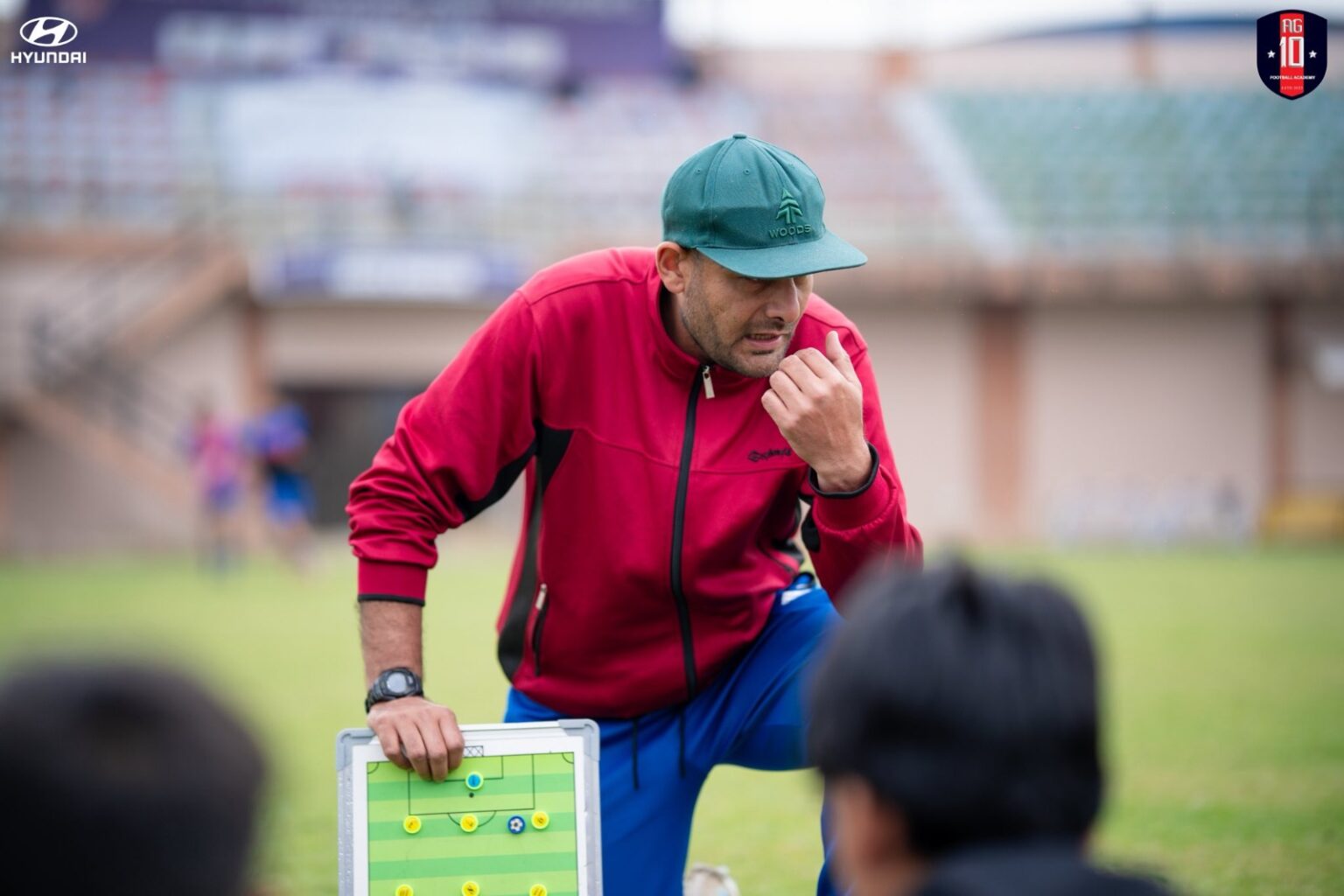
AG Ten coach Sameer Bista giving strategic information to the players.
“Whatever we got from football, we are giving it back through the academy. The financial aspect is secondary, but the things we learned must be passed on to the new generation,” he says.
While players like Anjan Bista, Anil Gurung, and Bishal Shrestha have established academies, they are not fully focused on training. They have hired other coaches and are advancing their playing careers in parallel. This has helped create employment as well. In this context, former Nepal national football team captain Biraj Maharjan and goalkeeper Bikesh Kuthu are exceptions. These two have been personally providing training at the Twelve Football Training Center.
While Biraj has retired, Bikesh Kuthu, like Bishal Shrestha, is active in domestic football. Bikesh, affiliated with the departmental team Tribhuvan Army Club, also plays in the Nepal Super League (NSL). Even though he does not face the career instability of players from outside clubs, Bikesh, like his contemporaries, has advanced his academy as a long-term profession.
Even though there are so many academies centered in Kathmandu, the number of competitions is almost zero.
These two had operated a summer football camp at NSF Ground, Satdobato last week, where they themselves were seen in the role of head coaches. A fee of Rs 5,000 per player was charged for the 12-day training. There were 60 participants.
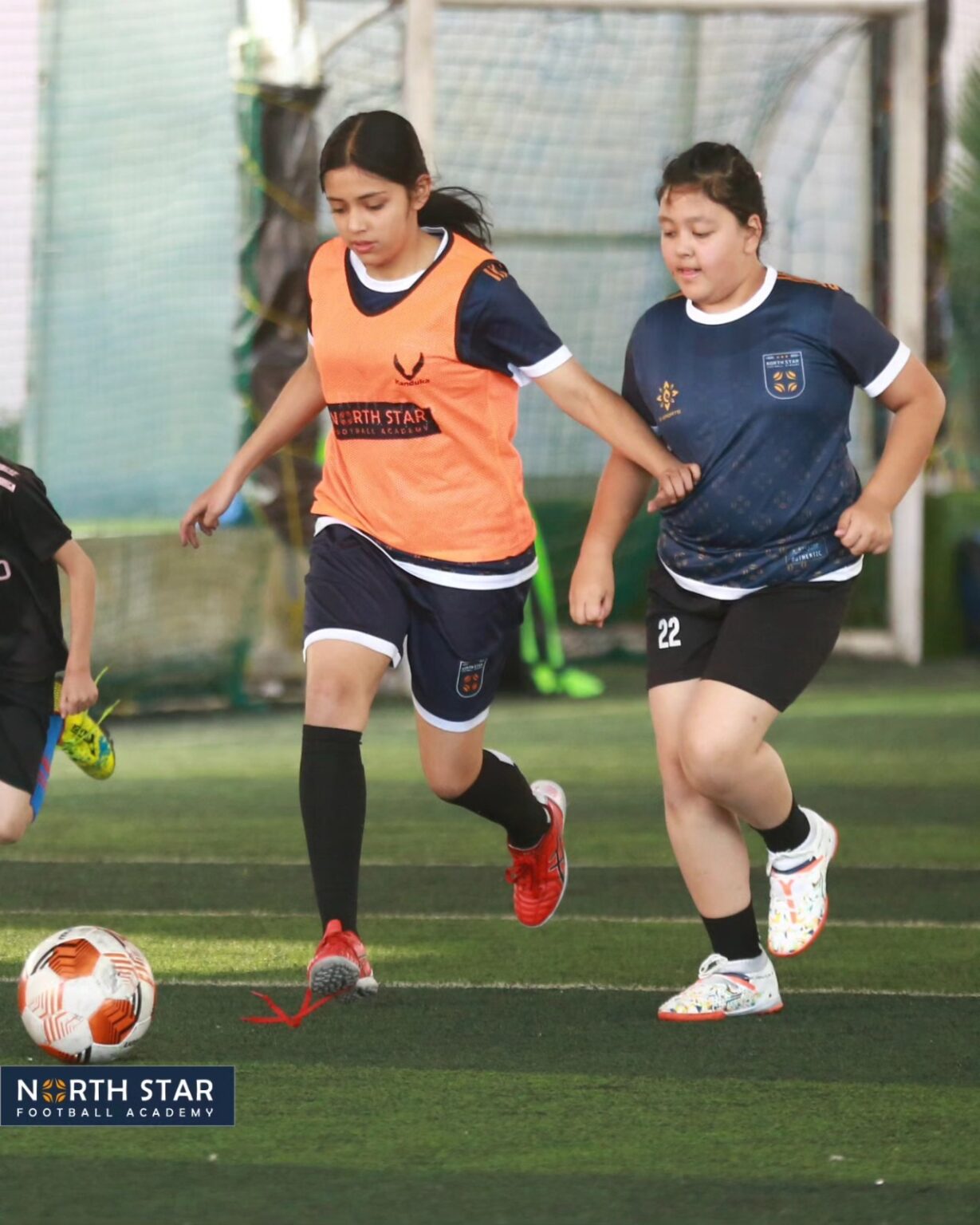
Female players training at North Star Academy. Photo: North Star Academy
Similarly, they are also operating regular training every Saturday. The fee for this is considered comparatively cheap. Those joining the training for the first month pay a fee of Rs 7,000. From the second month onward, they only need to pay Rs 2,500. “This is a grassroots-level initiative. If they play well, we believe players capable of representing the nation can be born in the future. Even if not, our main objective is to teach discipline,” they say. These two players invested their own money to start the academy they are training. Currently, financial support has started to come from both domestic and international sources.
No competitions
During the time when Anjan, Bimal, and Ananta were playing, the Nepali age-group team was considered very strong. During their time, Nepal won the SAFF U-19 Championship title, which started on home ground in 2015. The following year, they successfully defended the title in the same competition, named U-18, held in Bhutan.
After that, the performance seems to have declined. Except for the achievement of reaching the final of the SAFF U-20 Championship held at the ANFA Complex in Satdobato in 2024, Nepal has become comparatively weaker in South Asia over the last five editions. Not being able to advance beyond the semifinals is further proof of this. Moreover, Bhutan, once considered weak, has also started to challenge Nepal in recent years.
In this situation, ANFA does not seem to be providing enough ‘platform’ to the academies run by players like Anil, Bishal, Anjan, Biraj, and Bikesh.
Even though there are so many academies centered in Kathmandu, the number of competitions is almost zero. The existing competitions are mostly limited to the senior level. However, ANFA has been operating U-16 and U-18 leagues for men recently. Only the 14 ‘A’ Division clubs can participate in those leagues. Therefore, to enter such competitions, a backdoor approach is necessary. The recent example of this is Sindhupalchok FC.
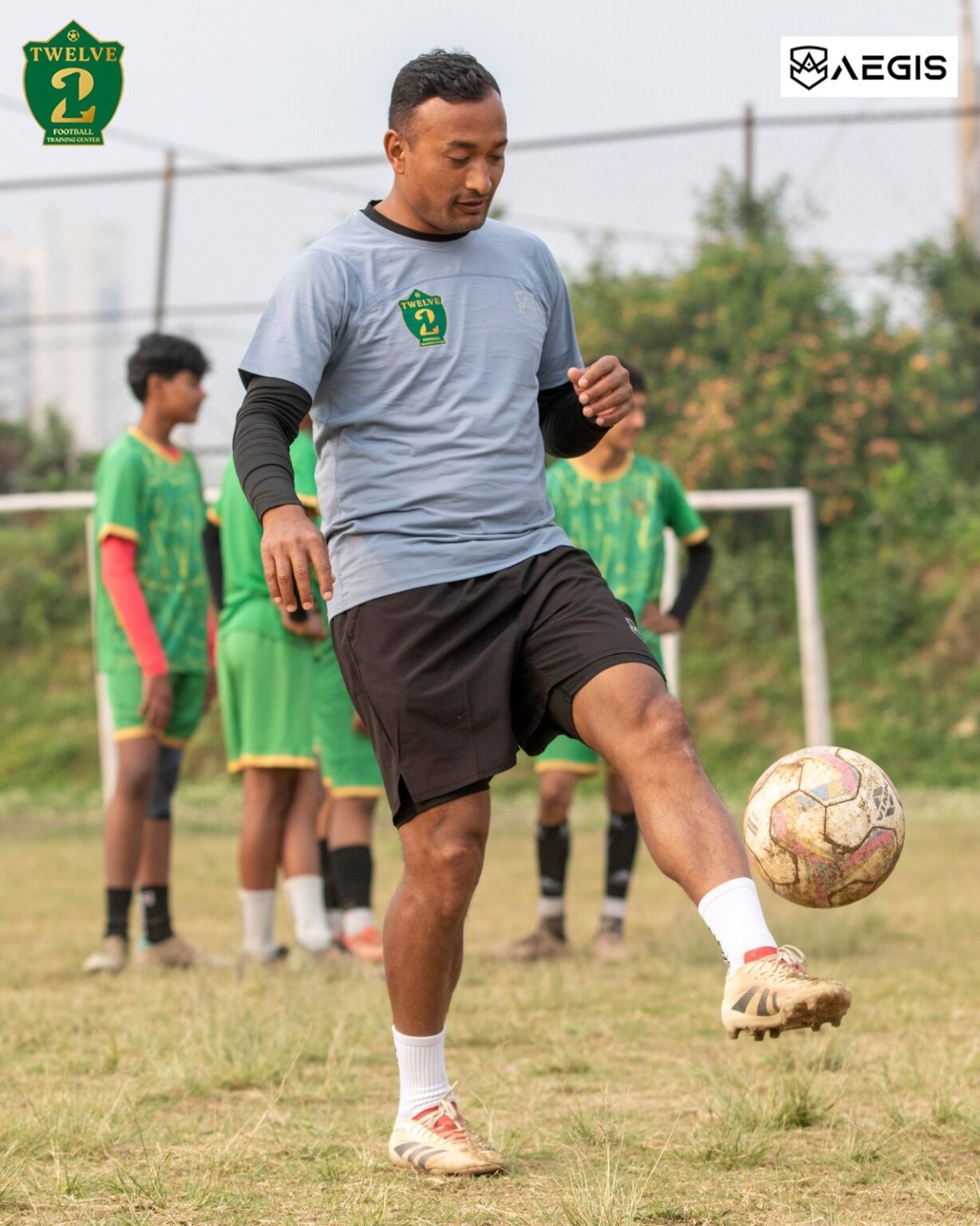
Biraj Maharjan training the players.
This club, which had just been promoted to ‘C’ Division, played in the 2024 ANFA U-16 and U-18 leagues under the name FC Khumaltar. Since Khumaltar doesn’t have its own academy, this club got to play the two leagues on the initiative of Mahesh Shrestha, who is also an assistant coach of that club. Although the team, which fielded mostly players from Sindhupalchok, couldn’t make much of an impact, it produced a player like Alik Shrestha, who represented the age-group national team. He played in the SAFF U-17 and U-20 championships. He now plays in the front line of Machhindra alongside Bishal. Last year, however, Khumaltar gave the name to Kathmandu Kickers, snatching it away from Sindhupalchok FC, and was deprived of playing the league. Amit Khatri, President of Ocean Club, says that this kind of policy by ANFA is depriving outside academies and small clubs of opportunities.
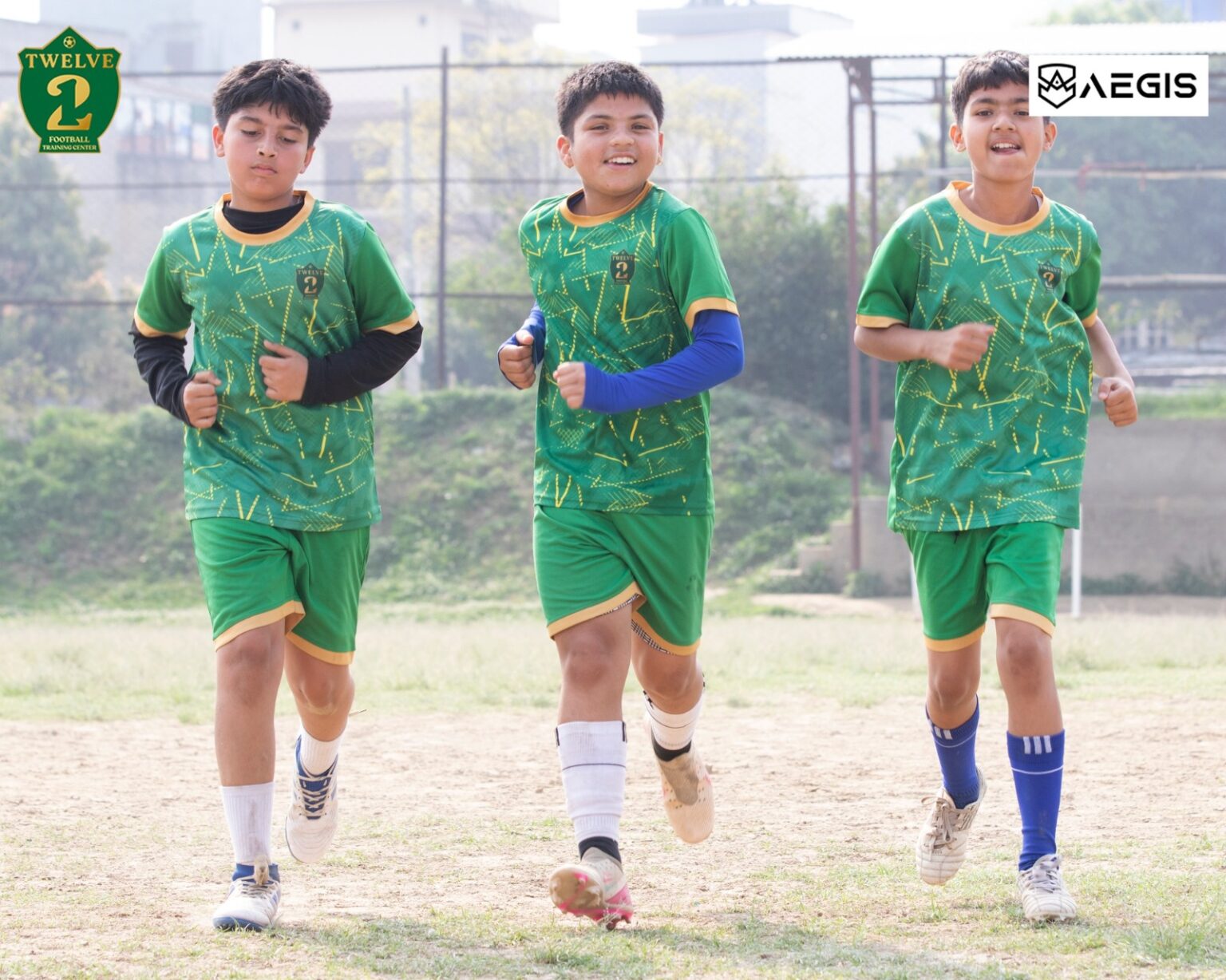
Players training at Tuvel Football Academy. Photo: Academy’s Facebook page
“At the senior level, there are competitions even outside the valley, but there are very few competitions for juniors. It would be good if ANFA also understood this and organized age-group competitions. I don’t know who understands this, which is why we are looking into everything ourselves,” he says. His club, Ocean, organizes the Ocean Cup U-13 National Football Tournament every year. Even then, due to parents not allowing them to take their children to the one or two competitions outside the valley, players from all academies cannot get ‘match exposure’, argues Amit, a suspended member from Gorkha district who has also worked at ANFA.
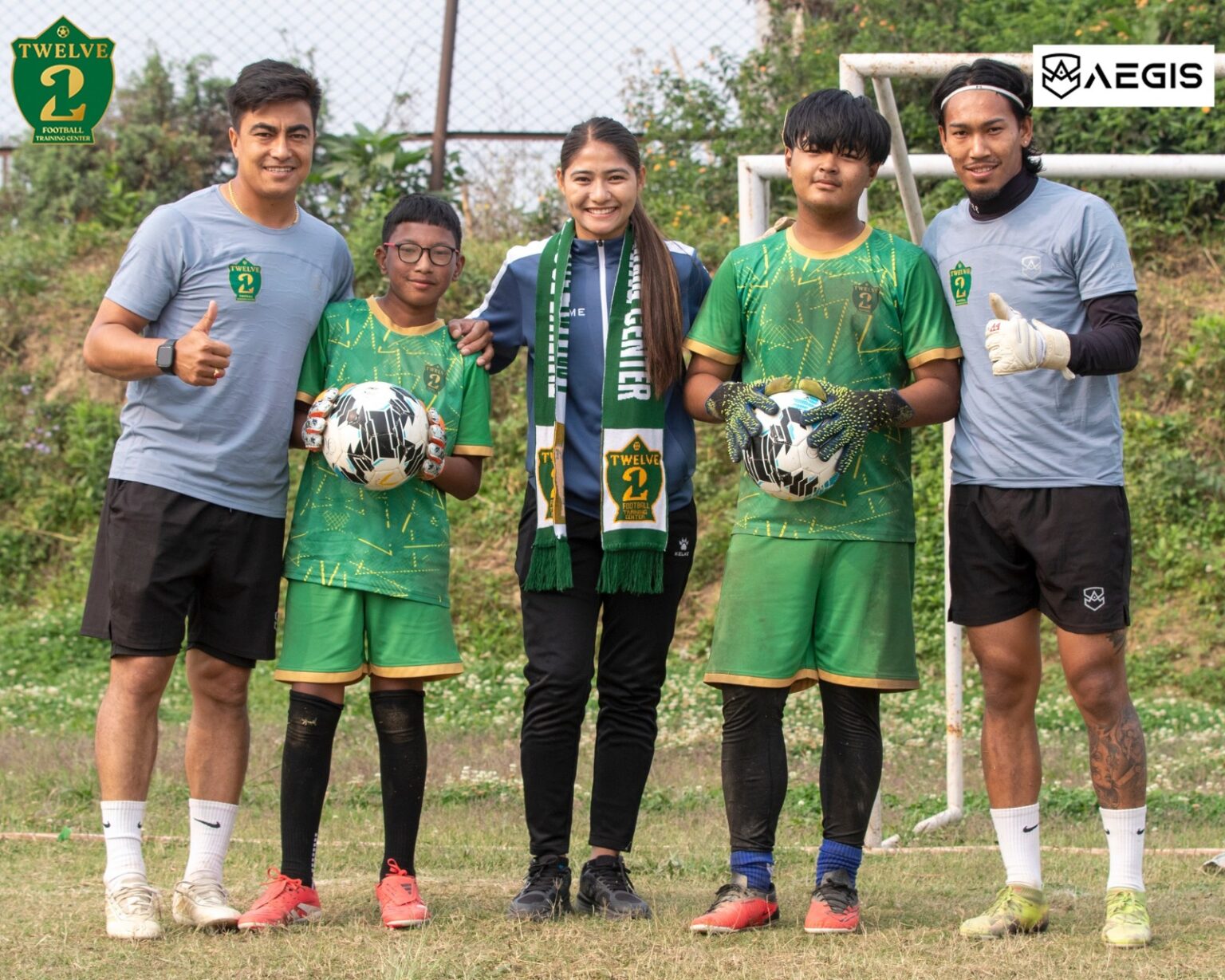
Coach Vikesh Kuthu and women’s team goalkeeper Anjana Ranamagar with the academy players. Photo: Tuvel Football Academy
He himself is operating an academy through his club. Since it is a private initiative, it is difficult to gather external support. So, only a limited number of teams can participate in the competitions they organize. Seeing this situation, he argues that footballers trying to contribute something to football while playing are being discouraged. He questions, “If players who have invested at least something were given a proper place, perhaps they wouldn’t have to leave?”
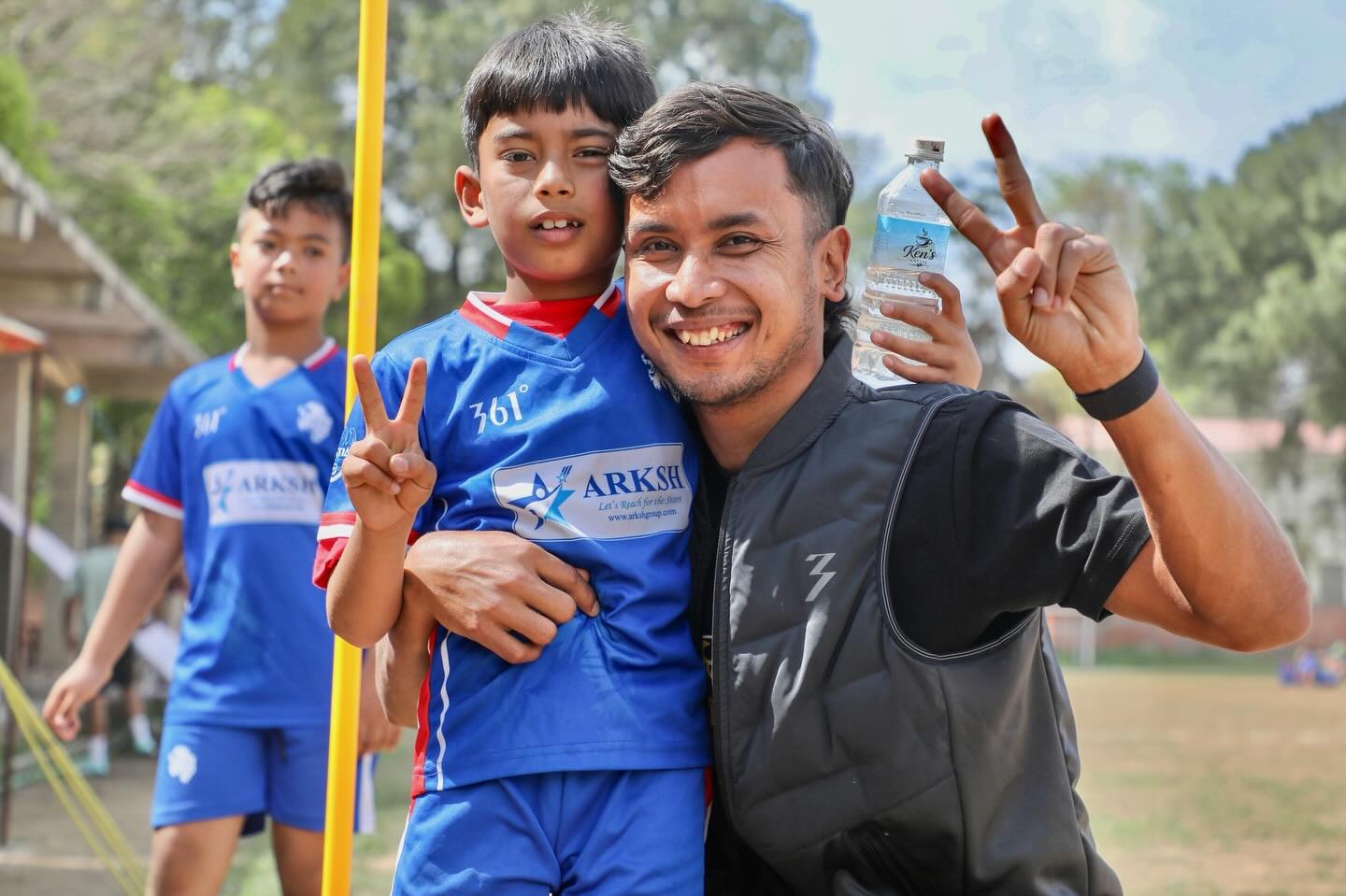
Anjan posing for a photo with the players after training. Photo: AB