Kathmandu
Sunday, July 19, 2026





As missiles fly over the Gulf and airlines abandon their routes, Nepal’s desperate labor migration machine grinds on, revealing just how little choice the country’s workers really have
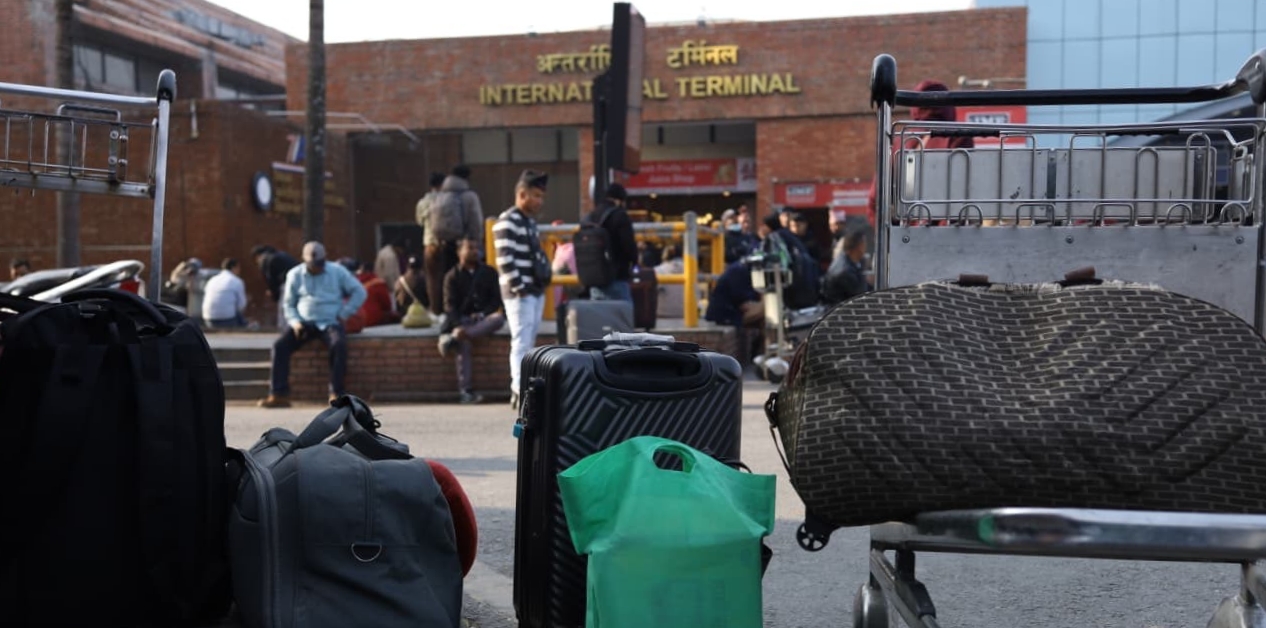
KATHMANDU: Despite the ongoing tension caused by US and Israeli attacks on Iran, more than 500 people from Nepal are still traveling to the Middle East on a daily basis. Government data shows that an average of 565 people are going daily to Middle Eastern countries, considered Nepal’s primary labor destination.
According to Tribhuvan International Airport data, 5,653 people traveled from Nepal to the Middle East between 4 and 14 March 2026. Similarly, a total of 6,370 people – a daily average of 637 – returned to Nepal from the Middle East during that same period.
After the US-Israel attack on Iran, on 28 February, Iran attacked US military bases in various Gulf and Middle Eastern countries. Following this, Qatar, the UAE, Kuwait, Iraq, Israel, Jordan, Lebanon, and Bahrain closed their airspace to flights. For a few days after that, air flights from Nepal to war-affected countries were suspended.
Since March 4, four airlines have been operating flights between Nepal and Middle Eastern countries. According to airport information officer Tej Bahadur Paudyal, from March 4 onward between 120 and 186 passengers have been arriving daily from the Middle East to Nepal, while between 23 and 262 have been departing from Nepal to those countries daily.
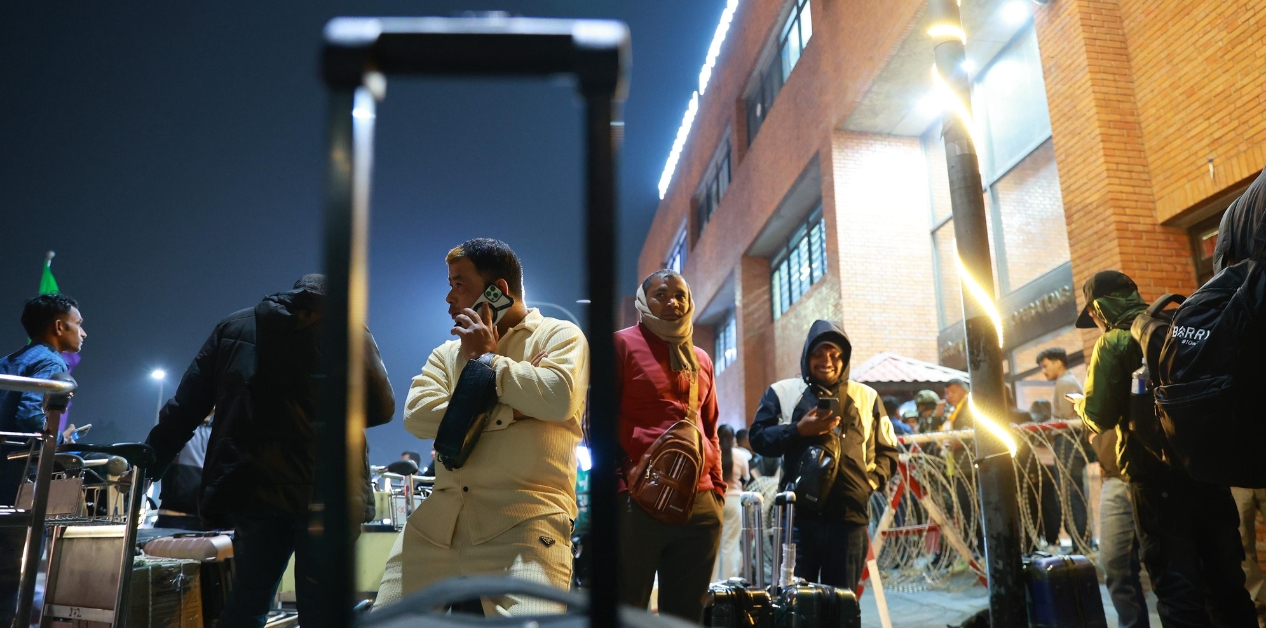
Passengers stranded at Tribhuvan International Airport.
Seven airlines had been operating from Kathmandu airport – Himalaya Airlines, Jazeera Air, Kuwait Air, Air Arabia, flydubai, Qatar Airways, and Nepal Airlines. After the Middle East tensions, only flydubai, Air Arabia, Himalaya Airlines, and Nepal Airlines have continued operating. On February 28, the very day of Iran’s attack, 8,115 people departed from Kathmandu International Airport while 8,787 returned to Nepal. But since then, passenger movement has dropped by 60 percent.
Before February 28, more than 50 international flights were departing and landing at Nepal daily. Tribhuvan International Airport data shows that after the attacks on Iran, only around 30 international flights and landings are now taking place. On February 27, as many as 54 international departures from Nepal and 52 landings from other countries were recorded. After February 28, the number of international flights departing Nepal dropped significantly.
On February 28, there were 41 departures and 49 landings, while on March 1, only 38 flights departed Nepal and 36 landed from other countries. The flights that were cut are those on Middle East routes. According to airport spokesperson Santushta Kumar Basnet, flights to those countries have been affected since tensions arose in the Middle East. Basnet says, “After the attack on Iran, the number of Nepalis going to the Middle East for employment has dropped significantly.”
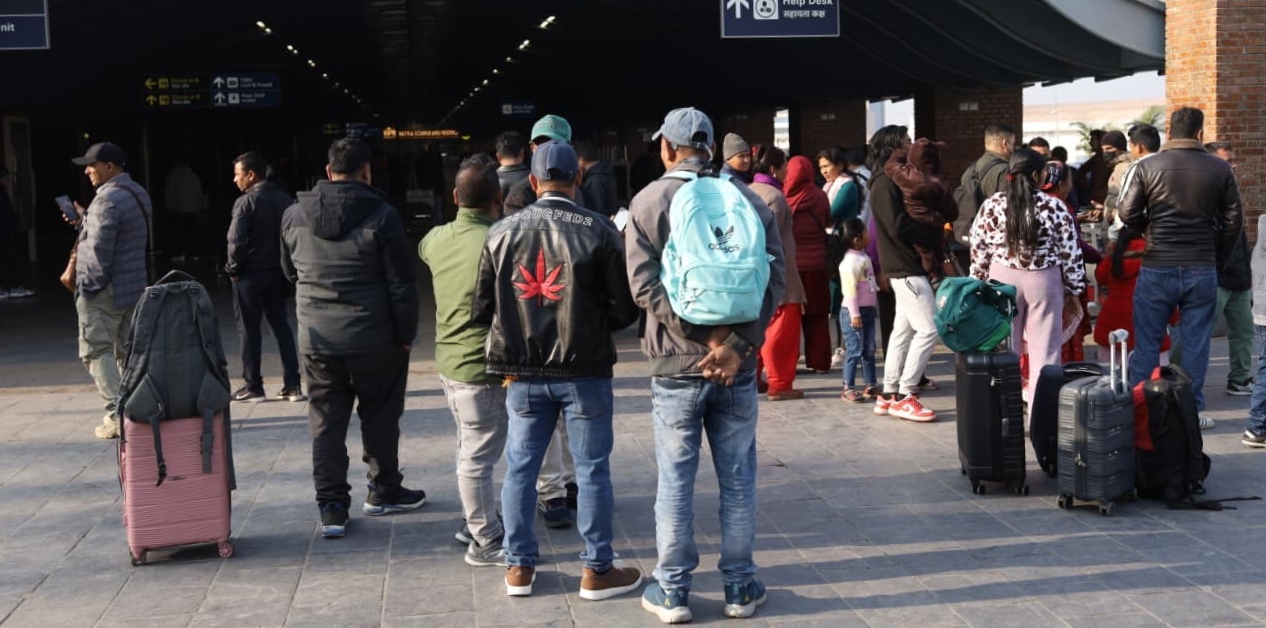
Passengers at Tribhuvan International Airport.
Under normal circumstances, more than 2,300 Nepalis go to various countries daily for foreign employment, the majority to various Middle Eastern countries. After the Middle East tensions, the government has suspended labor approvals for these countries altogether. Department of Foreign Employment data shows that approximately 53,000 people had received labor approvals up to February 28, before tensions began in Iran.