Kathmandu
Sunday, July 19, 2026





Nepal’s Parliament will be without the party’s representation for the first time
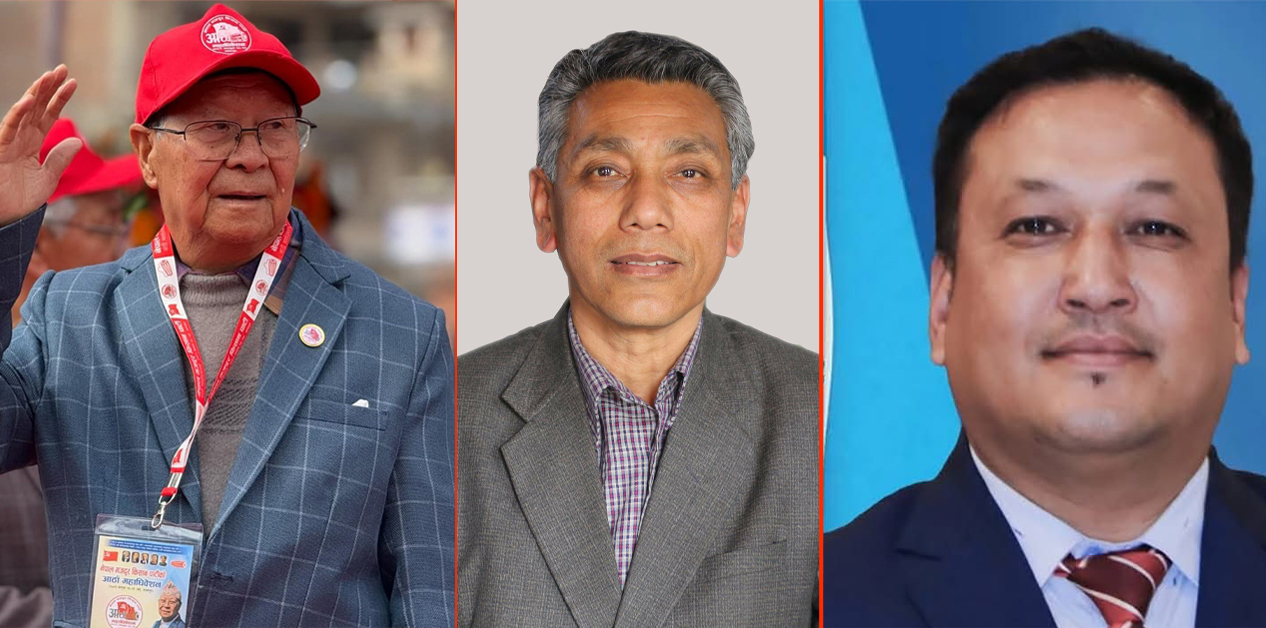
KATHMANDU: Until the election held on March 5, it was widely believed that no party other than the Nepal Workers and Peasants Party (NWPP) could win in Bhaktapur Constituency No. 1. Since 1991, the NWPP had won all seven elections in the constituency. The area, where NWPP Chairman Narayan Man Bijukchhe ‘Rohit’ resides, had been run by the party almost in a “commune-like” style. While some notable work had been done in the fields of education and health, the public’s attraction toward the NWPP had remained steady.
However, the electoral tsunami brought about nationwide by the Rastriya Swatantra Party (RSP) this time has dismantledthe NWPP’s Bhaktapur ‘commune.’ Prem Suwal of the NWPP, who had won the seat in 2017 with 33,076 votes and again in 2022 with 42,761 votes, has been defeated this time. The RSP’s Rukesh Ranjit secured 33,436 votes, while Suwal received only 28,147 votes. Ranjit has not only defeated Suwal but also brought down the NWPP’s lone stronghold.
The NWPP has an interesting history. The party was formed in 1975 through the unification of the Rohit Group, the Proletarian Revolutionary Organization Nepal, and the Peasants’ Committee. Since its establishment, Narayanman Bijukchhe (Rohit) has continuously served as the party’s chairman for the past 51 years. Working closely with farmers in Bhaktapur, the NWPP played an active role in the 1980 referendum and the 1990 People’s Movement.
Because of its close ties with the people, voters in Bhaktapur consistently chose the NWPP, the party led by Rohit, in every election. From 1991 to 2013, Bijukchhe himself won five elections from Bhaktapur-1. He secured 20,163 votes in 1991, 16,770 votes in 1994, and 16,533 votes in 1999.
After participating in the movement against King Gyanendra’s direct rule and the 2006 People’s Movement, the NWPP performed better than in the past in the first Constituent Assembly election of 2008. In that election, Bijukchhe secured 19,970 votes. The first Constituent Assembly was dissolved before it could draft a constitution, but in the second Constituent Assembly election held in 2013, Bijukchhe received an even higher 20,446 votes.
After winning five elections, Bijukchhe took a break in the 2017 general election. The NWPP’s Prem Suwal was fielded as his successor. Suwal also won the election with 33,076 votes. He was re-elected in 2022, securing 42,761 votes. That year, Suwal received 59.63 percent of the 71,709 votes cast in Bhaktapur Constituency No. 1.
Because of its close ties with the people, voters in Bhaktapur consistently chose the NWPP, the party led by Rohit, in every election. From 1991 to 2013, Bijukchhe himself won five elections from Bhaktapur-1.
After the promulgation of the new constitution in 2015, Nepal transitioned into a federal system. In the Bhaktapur-1 (B) provincial assembly constituency formed afterward, the NWPP continued its winning streak. Surendra Raj Gosain of the NWPP won both the 2017 and 2022 provincial elections. The party has also consistently won the Bhaktapur Municipality. In fact, the party maintained dominance across all three tiers of government from Bhaktapur-1. But in the House of Representatives election held after the Gen Z movement, its dominance in Bhaktapur-1 has been broken.
In recent years, the NWPP had become limited largely to Bhaktapur-1. Earlier, however, the party’s influence extended as far as Karnali. In the 1991 election, Bijukchhe won from Bhaktapur-1 while Dilli Bahadur Mahat was elected from Jumla. In the 1994 election, the party won four seats: Bijukchhe from Bhaktapur-1, Bhakta Bahadur Rokaya from Jumla, Asha Kaji Basukala from Bhaktapur-2, and Binod Kumar Shah from Dailekh-2.
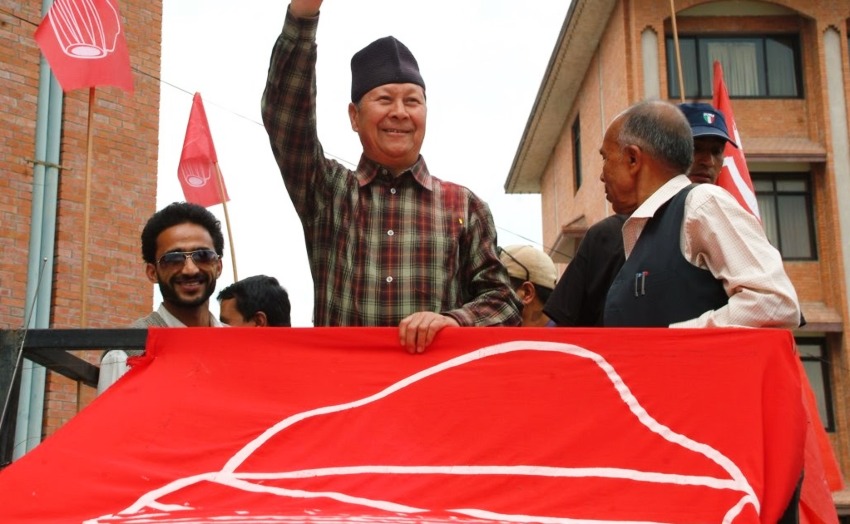
Narayan Man Bijukchhe: File Photo
In the 1999 election, however, only Bijukchhe managed to win from Bhaktapur-1. From that point onward, the NWPP’s presence shrank largely to Bhaktapur. In the first Constituent Assembly election of 2008, Bijukchhe won from Bhaktapur-1 and Sunil Prajapati won from Bhaktapur-2 under the first-past-the-post system. In the proportional representation category, the NWPP’s Nabaraj Koirala and Lila Nyai Chhyain became members of the assembly.
In the 2013 second Constituent Assembly election, Bijukchhe again won from Bhaktapur-1 under the direct system, while Prem Suwal, Dilli Prasad Kafle, and Anuradha Thapa Magar became assembly members through proportional representation. In 2017 and 2022, Prem Suwal represented Bhaktapur-1 in Parliament.
The NWPP has also spoken in Parliament about translating the constitution’s vision of building a socialism-oriented state into practice.
The NWPP considers itself a true guardian of communist ideology. The party upholds Marxism, Leninism, and Mao Zedong Thought as its guiding principles. It has consistently raised issues in Parliament such as making education free and compulsory up to the secondary level, ensuring easier access to university education, increasing the education budget, and guaranteeing free healthcare services.
The party has also strongly advocated for the abolition of Gurkha recruitment, the establishment of a chemical fertilizer factory within Nepal, and investment of Nepal’s capital in the country’s own development. The NWPP has also spoken in Parliament about translating the constitution’s vision of building a socialism-oriented state into practice.
Even with just a single lawmaker, the NWPP’s parliamentary presence used to stand out. The party often played the role of a strong opposition voice in the House. But Nepal’s Parliament, for the first time, is going to be without NWPP representation.