Kathmandu
Monday, July 13, 2026





A match between Nepal and the Algeria national football team at Malaysia’s Merdeka Cup 42 years ago descended into a brawl so fierce that security personnel pointed a pistol at a Nepali player on the field
Nabin Aryal
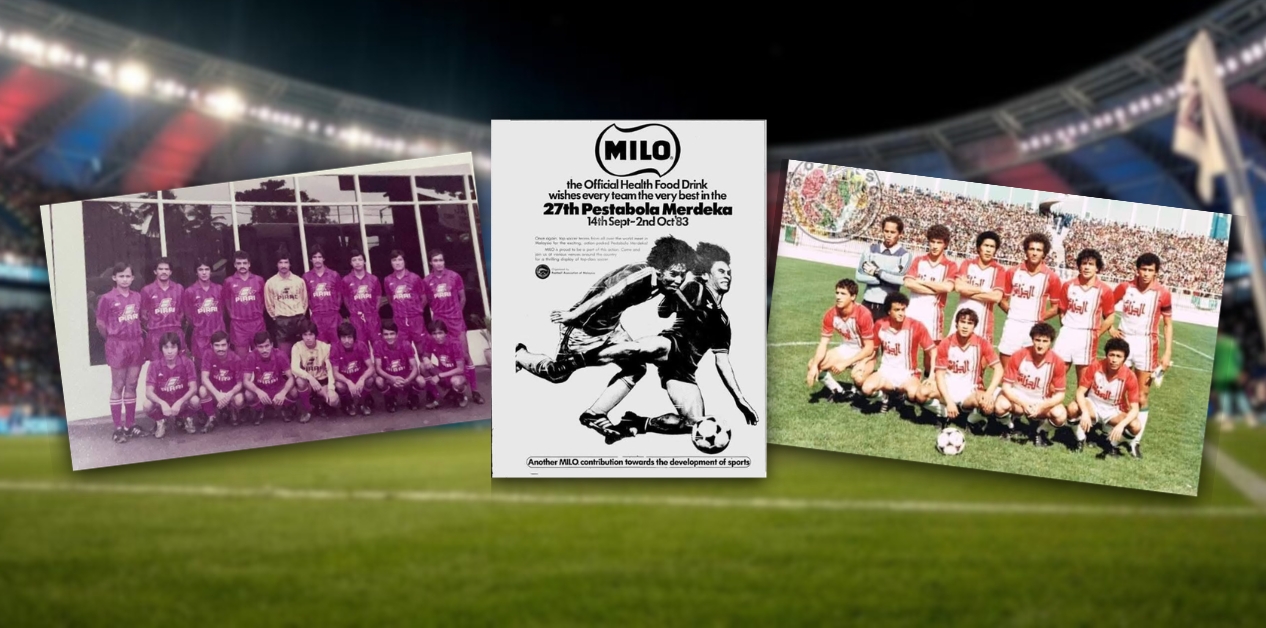
KATHMANDU: After gaining independence from Britain in 1957, Malaysia announced that it would organize a major international football tournament. The competition would invite foreign teams every year and was named the Merdeka Cup.
To participate in the 27th edition of this tournament, the Nepali national football team traveled to Malaysia in 1983. The event is considered unforgettable in the history of Nepali sports for many reasons.
In the tournament, Nepal had the opportunity to play not only against the Algeria national football team, which had played in the 1982 FIFA World Cup, but also against a club team from Buenos Aires in Argentina, the South Korea national football team, as well as Malaysia national football team and the Bangladesh national football team. However, an incident occurred during the tournament that provoked the Nepali players on the field so much that the situation escalated dramatically. And to bring the situation under control, Malaysian security personnel had to point a pistol at the temple of a Nepali player.
That incident occurred on 28 September 1983, when Nepal came onto the field to play its final Group “A” match against Algeria at the Johor Bahru stadium near the Singapore border.
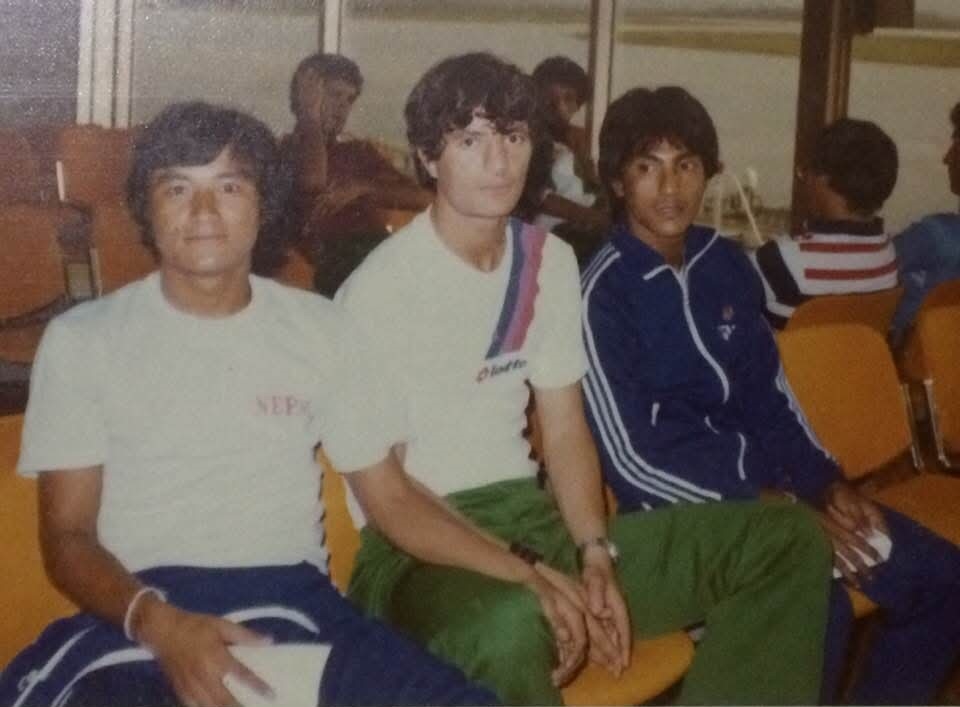
Nepali players YB Ghale and Raju Kaji Shakya, with an Algerian player in the middle. Photo: Raju Kaji Shakya’s Facebook wall.
A 23-member Nepali delegation had left Tribhuvan International Airport in Kathmandu on 17 September 1983 for Malaysia. The delegation was led by National Sports Council member Subarna Chhetri. The team manager was Dipak Harsha Bajracharya and the coach was Chinese national Wang Lu. The team also included FIFA referee Rameshwar Raut, physician Ajay Rana, and interpreter Suman Shrestha for the Chinese coach. The squad consisted of captain Rupak Raj Sharma and players Ashok KC, Ganesh Thapa, goalkeeper Lok Bahadur Shahi, Suresh Panthi, Dhirendra Pradhan, Shriram Ranjitkar, Bhakta Rajkarnikar, Krishna Thapa, YB Ghale, Man Bahadur Malla, Narendra Bahadur Shrestha, Bidur Bista, Raju Shakya, Gopal Shrestha, and Binay Shrestha.
On 19 September, Nepal played its first group match against the host team, the Malaysia national football team, and suffered a heavy 7–0 defeat. Before the match, the Nepali team had endured a long flight from Kathmandu to Kuala Lumpur, Malaysia’s capital, and then another flight to Kota Bharu near the Thailand border.
When the team reached Kuala Lumpur, it was already 1 a.m., and early the next morning they had to take another one-hour flight to play the match. Because of the long travel, the players were suffering from jet lag and lack of sleep, which made them extremely fatigued. “This was the main reason Nepal conceded seven goals in that match against Malaysia,” notes the team’s then physician Ajay Rana.
Even before the match began, Nepali striker Ganesh Thapa fainted in the changing room. Goalkeeper Lok Bahadur Shahi complained during halftime that he was seeing three or four balls instead of one. Because of jet lag, Narendra Shrestha even vomited after halftime.
Although the result of the first match was poor due to exhaustion, the Nepali team performed much better in the second match.
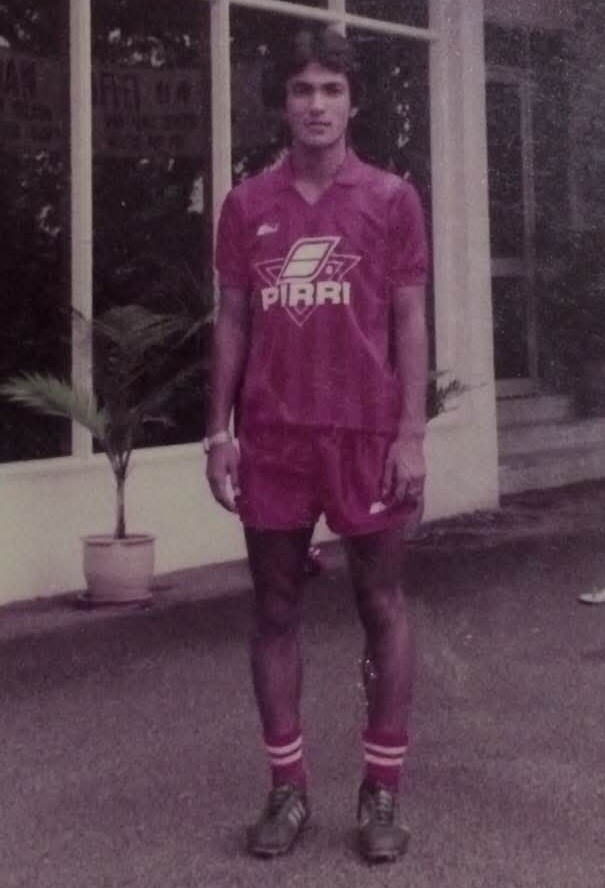
Raju Kaji Shakya. Photo: Shakya’s Facebook wall.
The second match was played on September 22 in Seremban against Nepal’s traditional rival, the Bangladesh national football team. Despite playing well, Nepal lost 1–0. The main reason for this defeat was the extreme heat. The Nepali players, who were used to playing football in the cool climate of Kathmandu, had to compete in 40-degree Celsius temperatures in Seremban. Moreover, the match was scheduled at 2 p.m., under blazing sunlight, and by the second half the Nepali players were struggling to continue playing.
Nepal’s most praised performance came in its third match against the South Korea national football team on 24 September in Johor Bahru. That year, South Korea had entered two teams in the Merdeka Cup. One was a youth team preparing for the 1988 Olympics, placed in Group B. The team that played against Nepal consisted of national and club-level players and was considered a strong contender for the title.
In the Johor Bahru match, Nepal performed impressively but still lost 1–0. The winning goal was scored by Han Yong-sun in the 78th minute.
The following day, local newspapers praised the Nepali team’s performance and published headlines calling them “Tigers from Nepal.” South Korea had struggled greatly to defeat them.
Nepal played its fourth match on September 26 against an Argentina-11 team from Buenos Aires. That squad included professional players such as D Luis from the English club Arsenal, Leandro Perez from the Argentine club Deportivo Español, Mora from the famous All Boys club that later produced players like Carlos Tévez and Ariel Ortega, and Marcelo Vázquez from a Buenos Aires club.
Because of the strong presence of professional players in the Argentine team, many expected Nepal to concede at least half a dozen goals. However, contrary to expectations, Nepal managed to hold the Argentine club side to a 3–0 defeat.
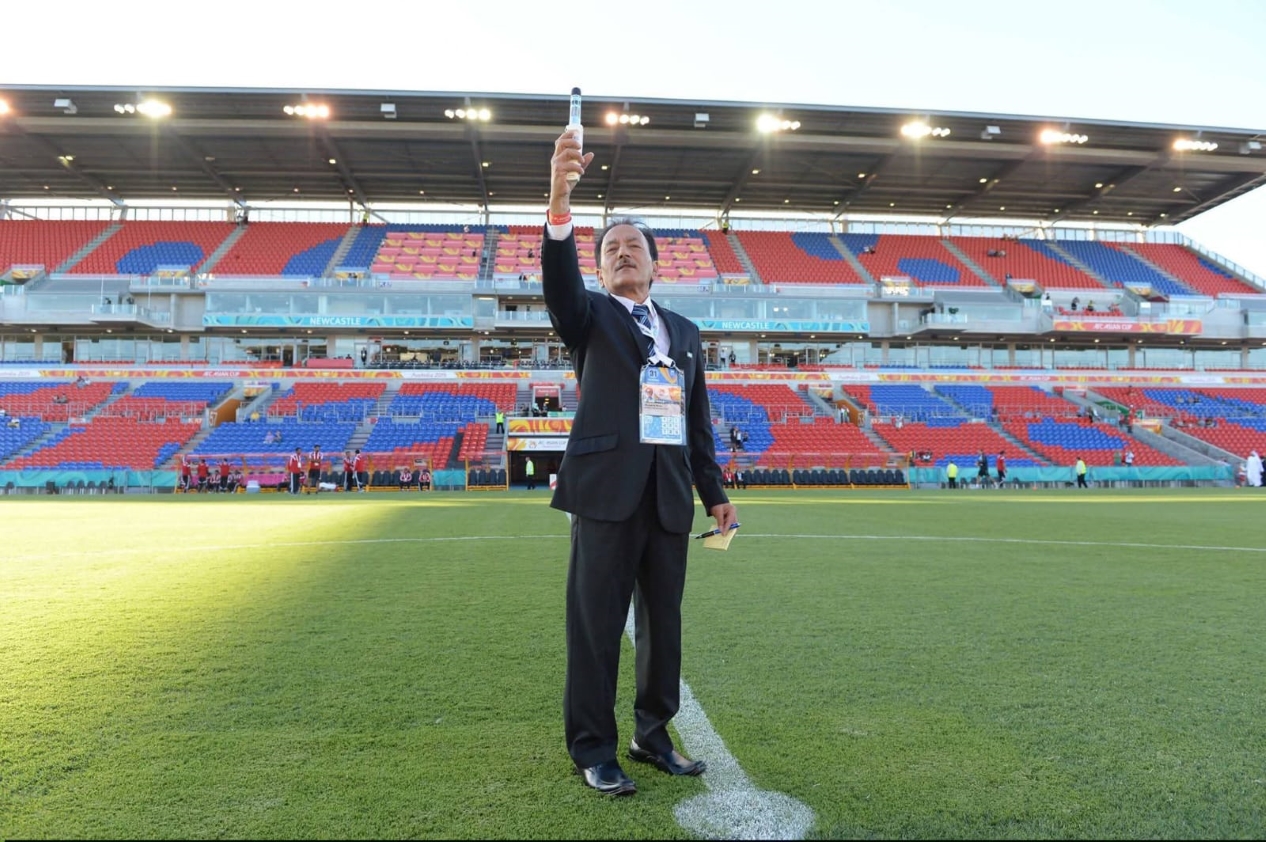
Dr Ajay Rana. Photo: Rana’s Facebook wall.
With that victory, the Argentine team qualified for the semifinals from Group A. However, the second semifinal spot was still undecided. There was intense competition between Algeria and South Korea. Algeria was under pressure because it had scored fewer goals than South Korea.
After four matches, South Korea had scored six goals, while Algeria had scored only four. Therefore, Algeria needed a large-margin victory against Nepal in the final group match to qualify for the semifinals.
Algeria and Nepal faced each other in that decisive match on September 28 in Johor Bahru. When the teams entered the field at 6 p.m., light rain was falling. “The Algerian players had entered the field with the intention of scoring at least half a dozen goals,” recalls Nepali defender Dhirendra Pradhan.
However, Nepal’s defensive line, consisting of Pradhan, Shriram Ranjitkar, Man Bahadur Malla, and Suresh Panthi, played brilliantly and did not allow the Algerian strikers much space during the first half. As a result, the first half ended in a goalless draw. Nepal even had a golden chance early in the match. In the 10th minute, Krishna Thapa could have scored after Man Bahadur Malla crossed the ball from the right wing. The ball had already bypassed the Algerian goalkeeper and was only three yards from the goal line. Thapa needed only to touch it for a goal, but he attempted a powerful shot instead, and the ball struck the goalpost and rebounded. “Our bad luck! It would have been enough to score a goal if I had simply touched the ball. But the ball hit the goalpost and rebounded when I tried a powerful shot. The match might have taken a completely different turn, if I had scored,” says striker Thapa.
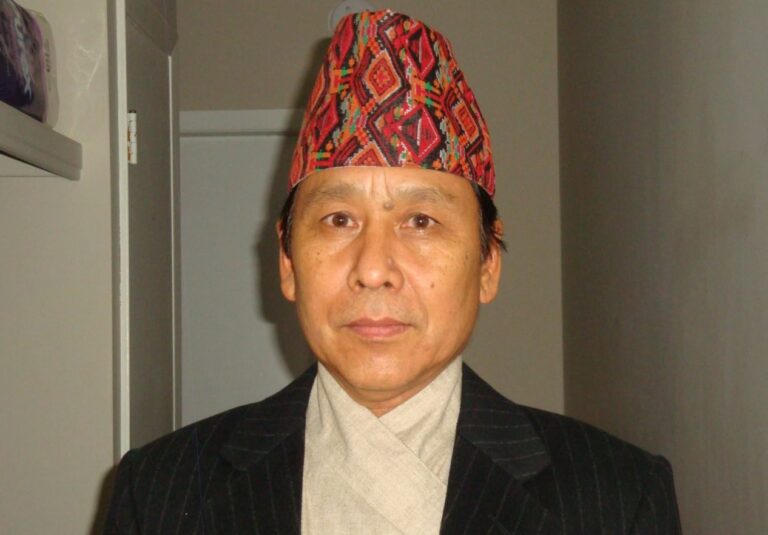
Man Bahadur Malla. Photo: Malla’s Facebook wall.
Because the first half ended without a goal, the Algerian players, who needed many goals, became increasingly frustrated. Even 15 minutes into the second half, Nepal continued to hold them back. Eventually, the Algerian players began to lose their patience and started behaving aggressively on the field. “They repeatedly tried to provoke us by pushing and confronting us,” recalls Nepali defender Shriram Ranjitkar.
Everything was normal until around the 60th minute, when the match suddenly took a dramatic turn. Nepali captain Rupak Raj Sharma was carrying the ball from midfield toward the opponent’s half when an Algerian player pulled his hair from behind. Angered by this, Sharma turned around and punched the Algerian player in the face.
“The Algerian players had been trying to provoke us and break our rhythm throughout the match. What else did they need? After the punch, the Algerian player fell to the ground dramatically as if severely injured,” explains Nepali player Raju Kaji Shakya.
Immediately afterward, Algerian players rushed toward Rupak to attack him. Nepali players also ran toward the scene to defend their captain. Within moments, the football field turned into what looked like a battlefield.
For nearly 10 minutes, players from both teams fought on the field. Some Nepali players even uprooted the corner flags and ran around holding the poles like sticks.
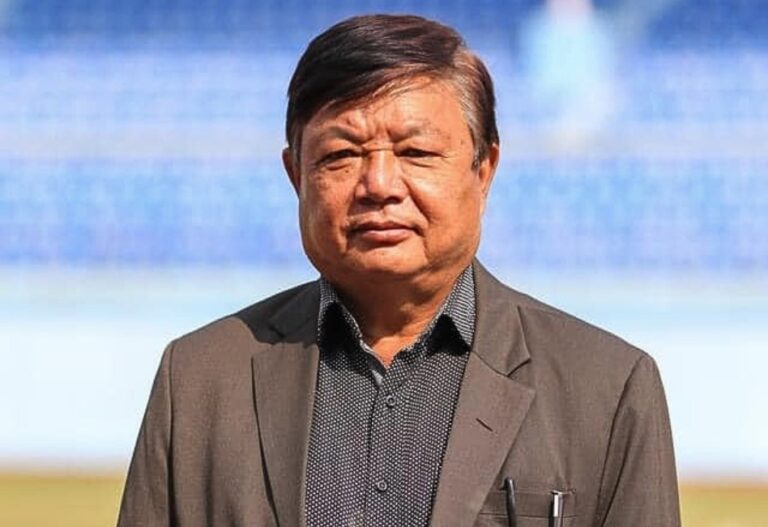
Dhirendra Pradhan. Photo: Pradhan’s Facebook wall.
Since the referee was unable to stop the fight, Malaysian security forces had to intervene. During the chaos, Malaysian police pointed a pistol at the temple of Nepali midfielder YB Ghale to restrain him. Team doctor Ajay Rana, who had run onto the field in the heat of the moment, was also forced out at gunpoint. “I realized the seriousness of the situation only when a pistol was pointed at my temple,” recalls midfielder YB Ghale, the son of Victoria Cross winner Gaje Ghale.
Because of the fight, the match was stopped for nearly 20 minutes. When play resumed, the Algerian team had already succeeded in breaking the concentration of the Nepali players. Eventually, Algeria defeated Nepal 2–0, with one of the goals coming from a penalty. At that time, FIFA rules were not as strict as they are today, so despite such a large fight, no red cards were issued.
On the same day, South Korea defeated the Buenos Aires team 3–1. However, because Algeria had beaten Nepal, Nepal was eliminated from semifinal contention. Interestingly, the final of that year’s Merdeka Cup was played between the Argentine team and Algeria, both from Nepal’s group. The Argentine side won 2–1 and lifted the trophy.
Nepal finished the tournament without winning a single match and returned home after conceding 14 goals throughout the competition.