Kathmandu
Thursday, June 4, 2026





‘KATHMANDU: The elections have finally concluded with around fifty-nine new members of the House of the Representatives that are under forty years old, a number set to increase drastically once the parties submit the lists of their candidates elected under the proportional representation system.
This is the most striking result coming out of the suffrage, a turning point that wraps up a very brief but also an incredibly unique time of Nepal’s recent history. This watershed moment will hopefully mark a new beginning in the country’s politics. This new crop of national politicians will be busy trying to change for good the shapes of the nation.
They will learn by doing, making mistakes while trying to promote smart and possibly inclusive policies. Inevitably, there will be a huge amount of hype on their work and their visibility and recognition will be enhanced multifold. Articles about them will be written and interviews will also come.
Yet it is also essential not to forget those who have turbocharged this transformation: the young electors who pushed for the changes that allowed the elections to unfold and, with the stroke of their vote, they have enabled this epochal change to be institutionalized.
Unlike their peers who fought for and won the elections, their lives will not change overnight. Fame will not reach them. Yet it would be a mistake to forget them or simply set them aside. It will be too naïve to believe that the future of the nation will only depend on a promising new generation of members of Parliament.
They will certainly play a huge role but what the young voters will do in the coming weeks, months and years will be even more consequential. That’s why they must step up and remain engaged because the future of the Republic will be shaped by their attitudes and actions.
That’s why I am writing the following open letter to them:
Dear young voters,
As the elections have wrapped up, there is a lot of excitement in the air. The most significant election of recent times is heralding a future that could be significantly better then present. You had the courage to demand and seek change.
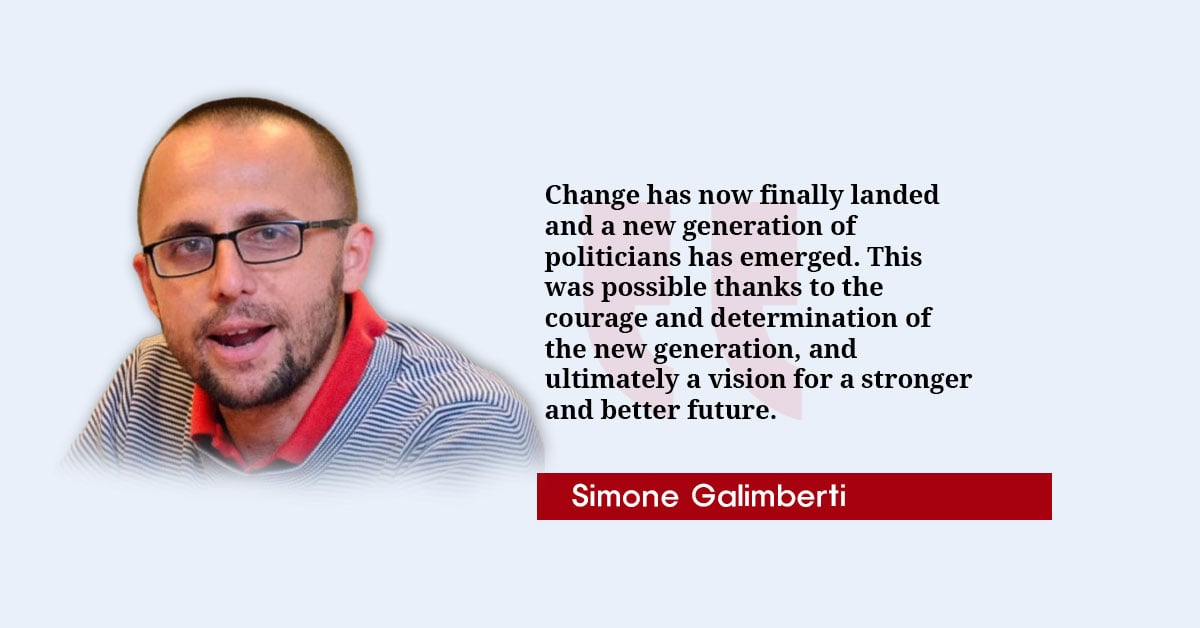
This change has now finally landed and a new generation of politicians has emerged. This was possible thanks to your courage, determination and ultimately vision for a stronger and better future. Many of you discovered politics only through the shocks caused by the bloodshed of the 8 September and following days.
Before that apathy and disengagement towards politics was widespread. Like many other members of society who had resigned to the status quo, most of you never even contemplated that politics could, one day, change.
But it happened and change has finally started. Yet there will be a long and difficult road ahead. Even the most competent and honest politicians will not have a magic stick.
Some frustrations might even arise because the pace of change might end up being too slow or the proposed policies will not be as transformative or effective as you might hope.
Yet, even if you have delegated your power through a vote to a new batch of politicians many of whom are of your age and might even be your friends, you retain power. After all, do not forget, as electors, you have agency, and do not let others use it on your behalf.
The current prevailing model of democracy widespread around the world is based on representation. The idea is simple: you vote for someone who will put all their efforts to represent you and will try to reflect your ideas and opinions in the political arena.
Despite being described as the best system available, this model, based on the delegation of power, does not encourage participation and involvement of the electors. Those elected end up being busy as professional politicians and tend to ignore their real masters, the people.
But real democracy should not only be about voting and then immediately moving on with life just because you have someone else in your place doing the job of writing and voting new laws. The electors must continue to exercise their agency and must have opportunities to express their ideas and opinions on a continuous basis rather than through on-off episodes called elections.
Around the world a new form of democracy is emerging and it is called deliberative democracy where citizens have the opportunity to express their opinions sometimes even through binding decisions. There is a huge potential in a country like Nepal for this type of democracy to be integrated with and complement the current model.
Yet any form of improvement in the way the existing democracy works requires your participation. It is going to be paramount for you to continue to remain engaged in the political process. If past bloodshed is what forced you to discover that politics matters and it is paramount for you to claim your rights, then the overarching desire of building a new Nepal is what should lead you to stay involved.
But how to start?
First of all, it all depends on good character leadership. Being able to be aligned to positive values by embracing accountability can make a huge difference.
Personal accountability & effective communication
Each of you can become a paragon of personal and professional accountability by always doing your best both at personal and professional levels. Living and embracing accountability means realizing that responsibility for your future and for the country you envision starts with you.
Set high bars for yourself and always pursue high standards while communicating well and efficiently with others.
Communication is weaker and weaker and too much emphasis has been put on public speaking skills.
Nepal has become a nation of excellent Toastmasters but what’s the point if people lost the habit of good and responsive communication?
Public speaking, without any doubt, is important but it is just an element of the skills required to communicate effectively and timely.
Read the news and express yourself
Make a habit of reading newspapers either online or in the printed editions. Social media is a medium of communication, use it wisely. Through them, you can also discover interesting and worth-reading news and analysis. Make efforts to read them and build your own view on the topics that are close to you.
Equally important is you should consider making an effort at writing your own views and trying to get them published. Undertake this process by yourself and avoid as much as possible the utilization of AI bots.
Trust me, writing your own opinion essay is a difficult process but you can learn it if you are consistent and give it a serious try. The final result, trust me, is going to be empowering and uplifting and will bring you satisfaction and perhaps some recognition.
Have an inquisitive mind
What does it mean?
It means ask questions in good faith not in order to doubt others ‘intentions but simply because respectfully asking questions is the best way to pursue a better knowledge and better understanding of an issue.
Building knowledge on some issues is also paramount
This is how you build the foundations of expertise, and you know that without at least a basic level of it, it is hard to come up with good ideas and subsequent propositions.
Do not let only elected members of Parliament undertake this process.
After all, the stakes are high and it is simply not just up to them, to those who are now in parliament.
Do not forget that with fame comes also responsibilities. Those you have elected might feel under pressure and themselves might become frustrated with party politics or with the slowness of parliamentary democracy.
These young politicians might want to do way more than what actually the system allows them.
This is the reason why they will need your help and indeed you can be of tremendous support.
Always think altruistically and with empathy
Society is still so divided and segregated that there are thousands of youths who could not even imagine themselves running for elections.
This is a fundamental injustice and it must change.
The caste system and the amounts of discrimination that it brings can be abolished only if new partnerships among new generations of citizens from different backgrounds are enabled.
A more inclusive Nepal, after all, should be one of the major goals of a Naya Nepal that you worked so hard to lay its foundations.
Now that the tasks of the elections have been accomplished, you should continue playing a fundamental role in keeping the Inclusion Agenda on the top of the national priorities.
Wrapping Up
You might have noticed that I did not refer to you as members of Gen Z.
I do believe that this is just a too generic, “catch all” kind of simplistic description of different identities and complex dynamics that represent the new generation of citizens.
Then, at this point, you might ask why someone like me should offer some advice. Who am I after all?
The reason is that I have been lucky enough to live as a guest in Nepal for a long period and I have been fortunate enough to work with many young people like you.
I saw firsthand your potential and the results that come when opportunities rise to put into practice.
Finally, a few words about hope because it was hope that brought you to fight and assert your rights over the last few months.
Hope with hard work should continue to define the future trajectory of Nepal because only these two things can truly mark a difference.
Hope and hard work will help fend off disillusionment and the frustration that you might again feel in the future about the course of national politics.
But your leadership and your engagement are truly indispensable.
You need to be involved, engaged and proactively work to help achieve a Naya Nepal because without you, this new country you have been working so hard to create, will never become a reality.
Nepal will remain a source of frustrations, despair and continuous outbound emigration.
You should not allow this to happen.