Kathmandu
Sunday, July 12, 2026





As Nepal approaches its planned exit from the LDC category, economists and business leaders disagree on whether the country is ready or should request a delay
KATHMANDU: Nepal is set to graduate from the Least Developed Country (LDC) category to a Developing Country on November 24, just eight months from now, marking a decisive shift in its global economic standing. For a country long defined by structural vulnerability, this transition represents not merely a formal reclassification by the United Nations but a critical turning point with far-reaching economic and diplomatic implications.
A 2025 monitoring report by the United Nations confirms that Nepal has met all the criteria required for graduation. The country has achieved all three key indicators necessary to exit the LDC category. The report notes, “In 2025, Nepal’s Gross National Income (GNI) per capita reached USD 1,404. Its Economic and Environmental Vulnerability Index (EnVI) stands at 29.96, while the Human Assets Index has steadily risen to 77.58, indicating that the thresholds for graduation have been fulfilled.”
Meeting just two of these three indicators would have been sufficient for graduation.
Nepal had previously met two of the three criteria in both 2015 and 2018, with only per capita income falling short. While this did not technically prevent graduation, the country faced major disruptions. In 2015, Nepal was hit by a devastating earthquake and an economic blockade. In 2018, it requested additional time from the United Nations to prepare for a smoother transition. Following a re-evaluation in 2021, the UN granted a five-year preparation period, setting the graduation timeline for November 2026.
Former Vice Chairman of the National Planning Commission, Min Bahadur Shrestha, argues that the benefits of graduation outweigh the drawbacks and that Nepal should proceed as scheduled.
Over the past two decades, improvements in education, health, and basic services have helped Nepal achieve the indicators required for graduation. School enrollment has increased, child mortality has declined, and average income levels have steadily risen. However, meeting these indicators does not necessarily mean that the country’s economic structure has become robust. According to the government’s Economic Survey for fiscal year 2024/25, Nepal’s economy stands at Rs 6.107 trillion. The service sector accounts for more than half of the economy, while the industrial sector remains relatively weak. Remittances continue to be the backbone of economic activity.
Due to limited employment opportunities at home, more than 2,000 young people leave the country each day for work abroad. The remittances they send sustain economic activity, contributing significantly to poverty reduction and domestic consumption.
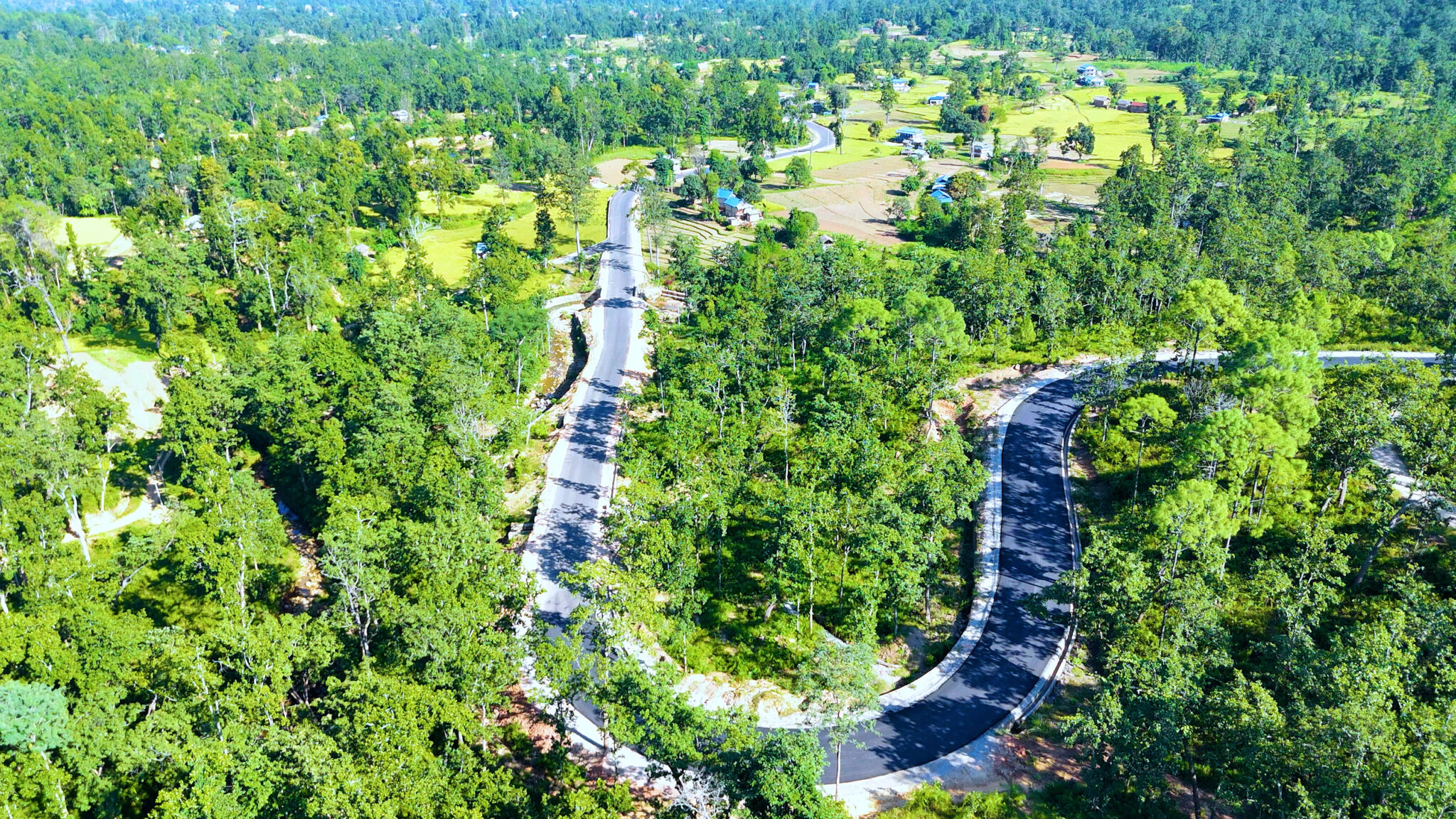
Aerial view of the Madan Bhandari Highway and its vicinity in Surkhet’s Chaukune Rural Municipality-7. Photo: Suresh Acharya/RSS
As the graduation date approaches, debate persists within Nepal over whether to proceed as scheduled or seek additional time. While some economists support immediate graduation, others argue that the country should request a three-year extension. Representatives of the private sector have also expressed concern, warning that the economy may not yet be resilient enough to absorb the potential impacts of graduation.
The example shown by those who argue that graduation should be pushed back a bit is the neighboring country, Bangladesh. The United Nations has placed Bangladesh and Laos, along with Nepal, on the list to graduate to developing countries this year. However, Bangladesh has already submitted an application to the UN asking for three years of time, stating it cannot graduate under existing conditions. The Government of Bangladesh, while submitting the application to the UN Committee for Development Policy, asked for time until 2029 for graduation. Bangladesh stated that additional time is needed because economic stability has not been maintained and the ‘Smooth Transition Strategy’ made by the government could not be effectively implemented. The UN Committee for Development Policy has started discussions regarding that.
According to the government of Bangladesh’s data, immediate graduation would remove current benefits, resulting in an annual loss of approximately USD 8 billion in exports. This is about 14% of Bangladesh’s total exports. A large portion of what Bangladesh exports is garments. Beyond that, it has pointed out the risk of losing incentive benefits worth USD 1 billion annually.
Laos, which is on the graduation list along with Nepal, has also expanded its economic structure and made energy and mineral exports the base of its economy. Laos is increasing its foreign currency income by exporting hydroelectricity to neighboring countries.
Nepal has also made a ‘Smooth Transition Strategy’ for a seamless graduation from an LDC. The plan was to complete the preparations required before graduation by implementing this strategy made by the National Planning Commission in 2024. Four objectives have been set in that strategy.
The strategy mentions the objective of determining priorities to prepare the base for a smooth, high-quality, and sustainable graduation to the developing country category. After graduating from the LDC status, some international trade benefits and loan and grant assistance that Nepal has been receiving until now will gradually be removed. The strategy mentions the objective of minimizing the impact resulting from that and preparing to utilize the opportunities brought by graduation. Similarly, the strategy also includes the objective of evaluating the progress and implementation of important policies and plans necessary for graduation. This strategy sets a goal for 2030 by mentioning the work to be done after the LDC graduation.
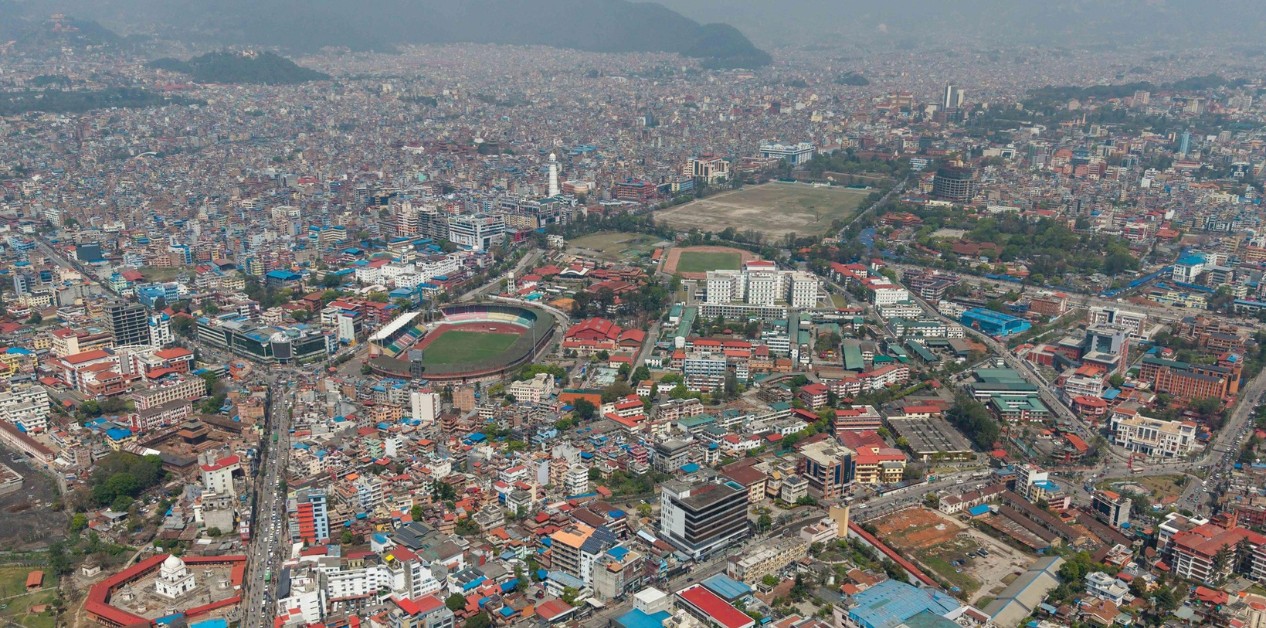
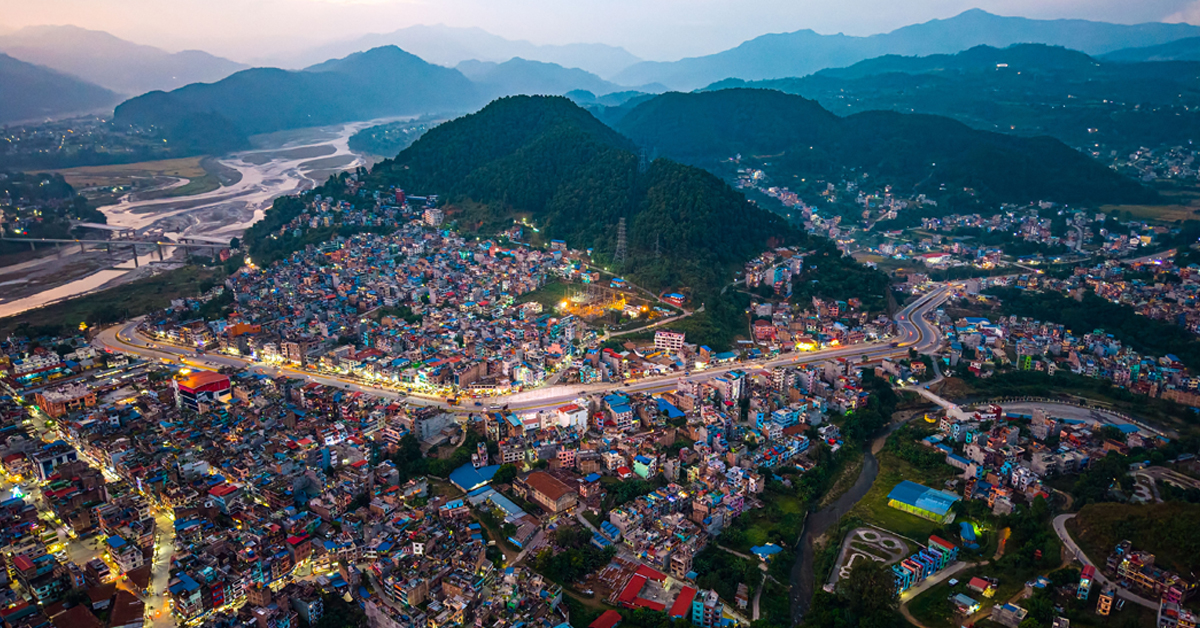
Aerial view of Kathmandu: Photo courtesy: Nepal Photo Library
Key vulnerabilities
Nepal has technically met the indices to reach the developing country status from LDC. However, some basic preparations remain in a weak state. For example, the ‘Smooth Transition Strategy’ has not been effectively implemented. Along with that strategy, the Nepal Trade Integrated Strategy was also updated. However, many tasks mentioned in those strategies have not been implemented. It was said that Free Trade Agreements (FTA) would be made with China, the USA, Australia, and Japan. But so far, there has been no preparation regarding what Nepal’s strategy will be or what the framework for negotiations will look like for an FTA.
After the three-year transition period of graduating to a developing country in 2029, to receive trade concessions from countries including the European Union, one must enter the Generalized Scheme of Preferences Plus (GSP Plus). The ‘duty-free’ and ‘quota-free’ benefits that Nepal currently receives will be removed. To take benefits under GSP Plus, various conventions and labor standards must be followed. Primarily, the International Labor Organization (ILO) Freedom of Association and Protection of the Right to Organize Convention (Convention Number 87) and Labor Inspection Convention (Convention Number 81) must be ratified. Additionally, the UK has created the Developing Countries Trading Scheme to provide concessions in trade. Nepal must be ready for various agreements and treaties to participate under that.
These processes have not yet been completed. Even when there was a politically strong government in the past, these steps could not move forward. The opportunity to work quickly on this remains for the upcoming government and Parliament.
Min Bahadur Shrestha, the former vice chairman of the National Planning Commission who played a leading role in making the strategy Nepal is currently implementing, says that even though the preparation work for graduating from an LDC has been slow, it is not a situation where one should remain stuck because of it. “The previous government also could not work on time for the preparations needed for graduation. After that, due to the Gen Z protest and elections, this issue was overshadowed to some extent. But this is not a situation where we should fall behind because Nepal’s preparation is insufficient.”
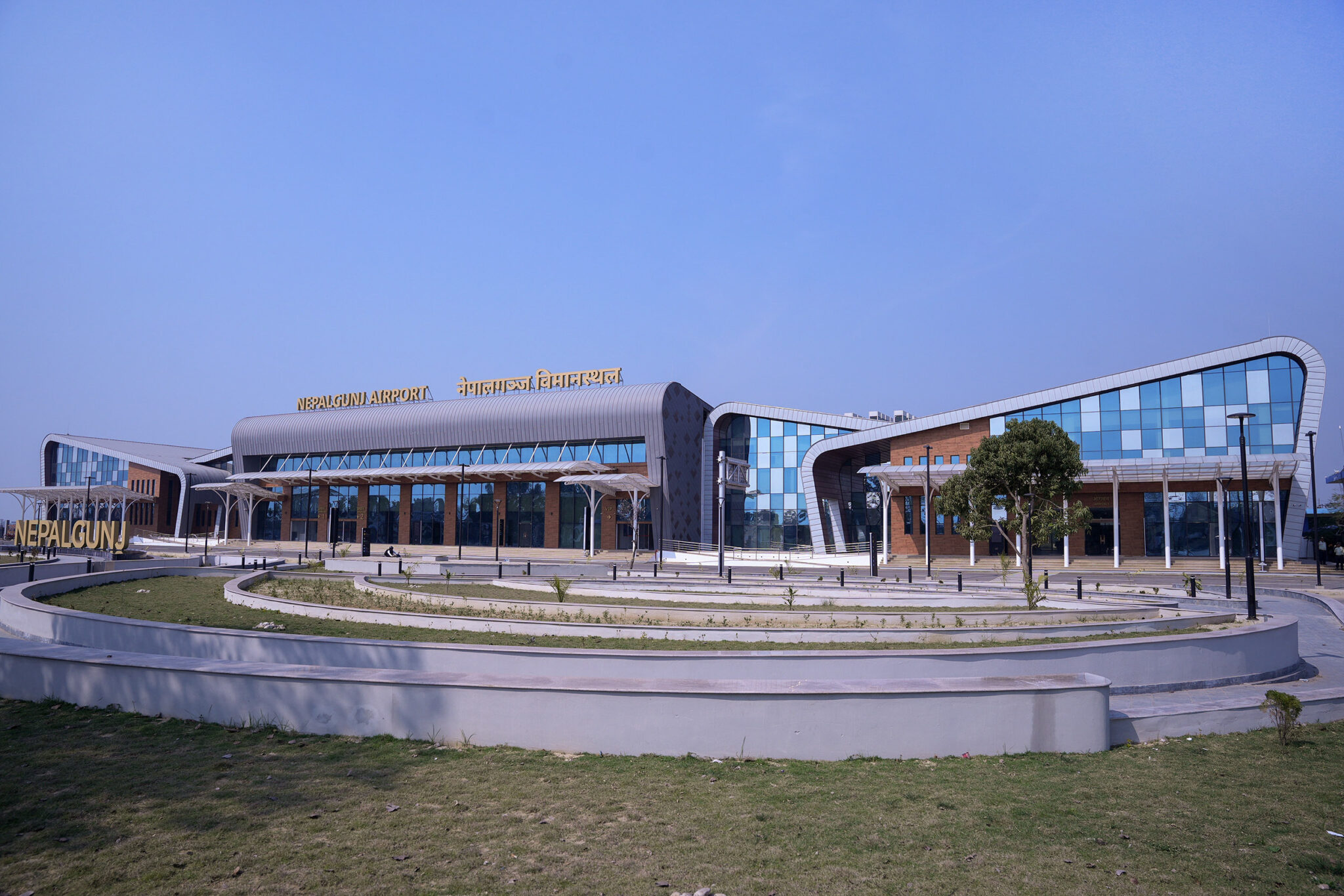
New building of Nepalgunj airport. Photo courtesy: Nepal Photo Library
Immediately after Rameshore Khanal took over the responsibility of the Ministry of Finance in the government formed after the Gen Z protest on September 8 and September 9, he discussed the preparation for graduation from a Least Developed Country with the National Planning Commission and stakeholders. After Prakash Shrestha was appointed as the Vice Chairman of the National Planning Commission, he also called representatives of the private sector for discussion. Other than that, not much work has been done regarding graduation to the developing country category. Assistant Spokesperson of the Planning Commission, Diwakar Luitel, says, “Since the Gen Z protest, there have been two discussions regarding graduation to a developing country. In those discussions, representatives of the private sector expressed disagreement regarding the graduation.”
Luitel says that because it is an election-focused government, the issue of graduation from an LDC could not be moved forward with priority.
Opportunities of graduation
The biggest achievement is the image that Nepal, which has been identified as an LDC until now, is a developing country. When graduating to a developing country, international image and credibility increase significantly, which helps establish Nepal as a stable and emerging economy. The ‘Smooth Transition Strategy’ made by the government states, “Graduating from a least developed country will be another important milestone for Nepal’s development, which can contribute significantly to sustainable development. This will improve the country’s international image and change the world community’s perspective toward Nepal.”
After the identity is formed that Nepal is a country with an emerging economy, foreign investors’ confidence increases, making it easier to bring in foreign investment. Nepal’s prestige on the international stage also rises. Nepal’s international perception as a high-risk country tied to its Least Developed Country status is expected to shift, positioning it instead as a more stable and lower-risk destination after graduation.
Graduation also signals an improvement in the country’s economic capacity. The National Planning Commission’s strategy highlights that “graduation will enhance Nepal’s creditworthiness and reduce its risk premium, thereby expanding the potential for both domestic and Foreign Direct Investment (FDI). It is also expected to improve Nepal’s access to commercial finance.”
Since foreign investment can be increased as a developing country, it becomes an opportunity for positive transformation in the country’s economic improvement. Rather than depending on the benefits Nepal receives as a Least Developed Country, after graduation, industries here will move toward quality improvement, technology use, and value addition. That will strengthen competitive capacity in the long term. The opportunity to find new markets for exports and diversify exports will also expand equally.
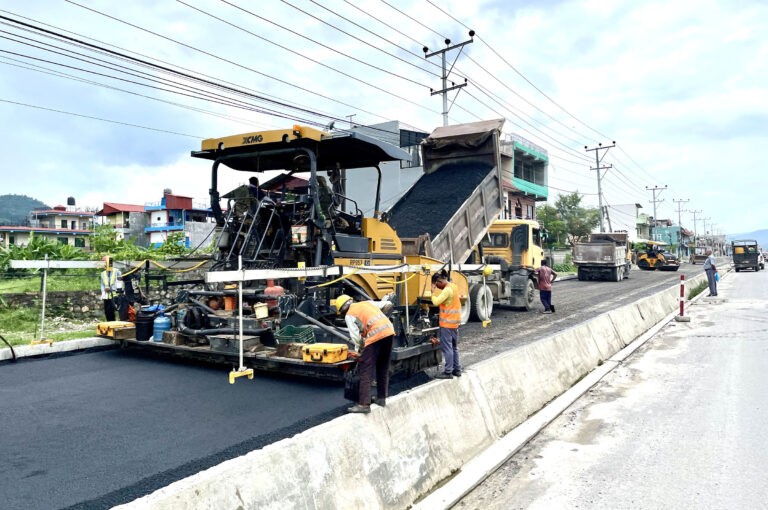
Construction crews blacktopping the service lane in Shukla Gandaki Municipality-5, Tanahun, on August 13, 2025. Photo courtesy: Krishna Neupane/RSS
Dependency on grants and concessions for development and reform will gradually decrease. After that, the country will have to focus on its own internal resource mobilization, revenue growth, and production capacity. That prepares the base to make the economy strong and sustainable in the long term. Along with graduation, policy and institutional reforms gain momentum. Pressure is created to strengthen good governance, transparency, financial discipline, and private-sector-friendly policies. This helps improve the overall economic structure.
“The image of being ‘developed’ is a very big thing for the country. The value of such an image is extremely high for every citizen. Another thing is that the investment environment in Nepal will improve, and upper-class investors will come to invest,” said former Vice Chairman of the National Planning Commission Min Bahadur Shrestha.
Shrestha says that having the identity of a developing country will attract upper-class tourists with high spending capacity compared to the tourists coming now, and the country will take economic advantage from that. After graduation, when the economy becomes strong as a developing country, it also helps in climbing to the next level of development.
However, Paras Kharel, economist and executive director of South Asian Watch on Trade, Economics and Environment (SAWTEE), does not believe in the argument that foreign investment will increase and the country will become prosperous just because Nepal graduates from being a Least Developed Country.
“Foreign investment does not increase automatically just by graduating from LDC. Currently, the flow of foreign direct investment in Bangladesh or Laos, which are still LDCs, is much higher than in Nepal. Therefore, graduation from LDC alone is not the basis for economic progress,” Shrestha further added.
Paras Kharel, economist and executive director of South Asian Watch on Trade, Economics and Environment (SAWTEE), does not believe in the argument that foreign investment will increase and the country will become prosperous just because Nepal graduates from being a Least Developed Country.
Post-graduation effects
Along with ease, graduation from LDC will also bring difficulties. Primarily, the advantages Nepal has been receiving from the world community as a Least Developed Country will gradually be cut. Identifying it as a country walking the path of prosperous nations, international donor agencies will cut grants, and the interest on loans will also be more expensive. The exemptions and concessions Nepal has been receiving in international trade will gradually be lost.
Nepal currently benefits from customs concessions on its exports to the European Union and the United States. Under the European Union’s “Everything but Arms” (EBA) initiative, all imports from Least Developed Countries, except arms and ammunition, are granted duty-free and quota-free access. This has enabled Nepal to export goods to the EU with zero tariffs. However, following graduation, these benefits will continue only during a transition period until 2029, after which they will be phased out. At present, roughly 4 percent of Nepal’s total exports are directed to countries within the European Union and the United Kingdom.
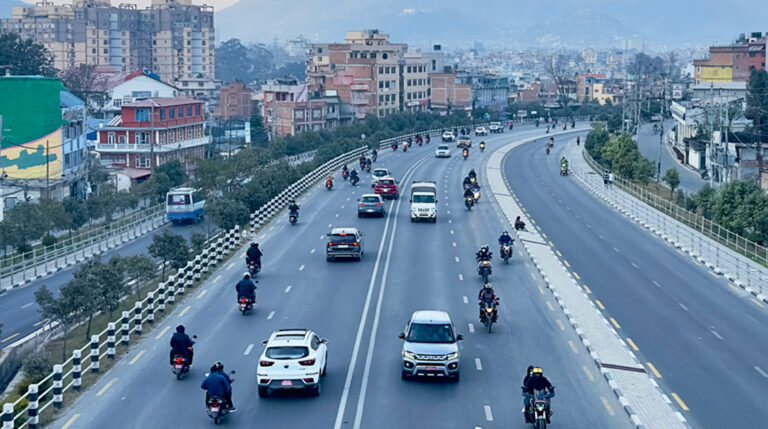
View of the Lalitpur segment of the Ring Road. Photo courtesy: National Planning Commission
According to the report titled ‘Employment Impact Assessment of Nepal’s LDC Graduation’ released by the International Labour Organization (ILO) on March 16, if the current situation remains even after graduating from a least developed to a developing country, about 132,000 jobs could be lost within five years and an economic loss of nearly USD 1 billion could be faced. The report mentions that more than half of those losing jobs will be women.
Since both exports and employment will be at risk if the current situation remains after graduation, the ILO has said to prepare for a smooth transition. To minimize the damage to income and employment, the report states that Nepal should increase investment and become capable in production and trade competition. Numan Özcan, director of the ILO Country Office for Nepal at the International Labour Organization, said at the report release program, “Graduating from LDC is a transition toward a decrease in international assistance and a highly competitive environment. For that, Nepal must prepare effectively.”
The ILO has estimated that a loss of about 2.5% to 4.3% of total exports from Nepal could occur based on market and production after graduation from LDC. The report mentions that such damage will occur especially in export-oriented products like handicrafts, readymade garments, and carpets.
At the program, Prakash Kumar Shrestha, vice chair of the National Planning Commission, said that to successfully graduate from a Least Developed Country, coordinated efforts among all levels of government and strong partnerships with the private sector, labor, and employer organizations, along with development partners, are necessary.
The ILO has estimated that a loss of about 2.5% to 4.3% of total exports from Nepal could occur based on market and production after graduation from LDC. The report mentions that such damage will occur especially in export-oriented products like handicrafts, readymade garments, and carpets.
Nepal’s key exports to these markets include readymade garments, carpets, handicrafts, pashmina, cardamom, and coffee, all of which currently benefit from duty-free and quota-free access in European markets. However, within three years of graduating to a developing country, these preferential trade benefits will be withdrawn, requiring Nepal to compete on standard market terms.
This potential loss of trade advantages lies at the heart of arguments against immediate graduation. Some industrialists and economists contend that Nepal’s high production costs limit its competitiveness in the global market, making continued access to duty-free and quota-free provisions essential, at least for the time being.
An important aspect is the changing trend of the world market. While Nepal is maintaining dependency on traditional products, other countries are moving toward new products as per market demand. South Korea, which has established its identity as a prosperous country today, used to export wigs (hairpieces/toupees) at one time. But today, the same country has become capable of building everything from electric vehicles to ships.
Former Planning Commission Vice Chairman Shrestha says that if businessmen only look for protection and relief, they cannot become competitive in a timely manner.
“Trade and production systems are changing rapidly. The market is moving toward digital. Consumers’ desires and needs are also changing. If businessmen continue to look only for protection and transitional relief in the coming days, they cannot transform into new sectors by becoming competitive,” said Shrestha.
Shrestha further adds it is not appropriate to present Bangladesh as an example now and push back graduation. “Bangladesh’s and Nepal’s contexts do not match. There is a difference in the structure and volume of trade. About 80% of Bangladesh’s total exports are based on the garment sector, whereas a large portion of Nepal’s exports depends on items like soybean oil, which are imported from a third country and exported toward India.”
The impact of LDC graduation on such products also appears limited. Therefore, the argument that it is not appropriate for Nepal to make a decision based on Bangladesh is becoming strong.
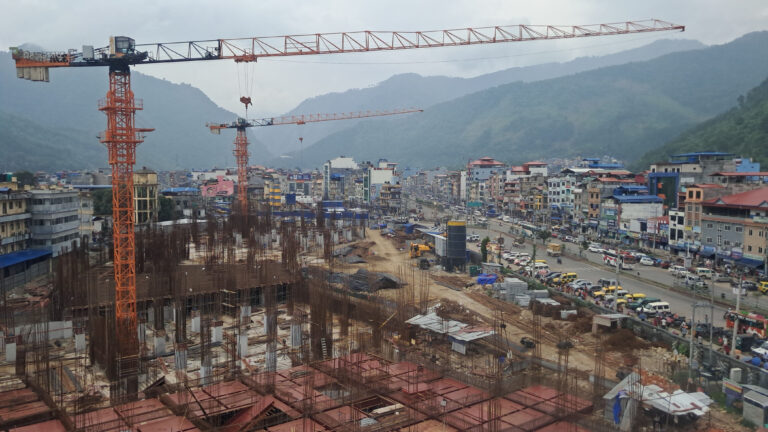
Under-construction 12-story facility at Lumbini Provincial Hospital. Photo courtesy: Bharat KC/RSS
In the past, both the government level and the private sector did not agree on the issue of graduating to a developing country. At that time, some government officials had the understanding that international meetings, visits, and opportunities available due to the status of a Least Developed Country would be lost. But now, the views of senior officials at the Ministry of Foreign Affairs have changed. They have started to say that a negative message is sent by being presented as a ‘Least Developed Country’ on the international stage for a long time.
The morale of the private sector is in a slumped state after the movement. In such a situation, Shrestha says that the graduation process should be initiated only after taking the private sector into confidence and making them understand. He says, “The sector that will be most affected after graduation is trade. But some things about this have been exaggerated. It is estimated that the impact on Nepal’s total trade when duty-free and quota-free benefits are removed will be only about 4%. We should not stay in the Least Developed category just for that.”
He suggests that the government should also prepare effectively to give concessions to the business sectors that will be directly affected after graduation. Citing the example of the government providing concessions when converting from auto rickshaws to microbuses for environmental improvement in the past, Shrestha says, “A rescue package should be brought for the sectors that will be directly affected. A policy is necessary to provide compensation for a certain period to the industries affected when duty-free and quota-free benefits are removed and to help them transform toward new sectors and develop competitive capacity.”
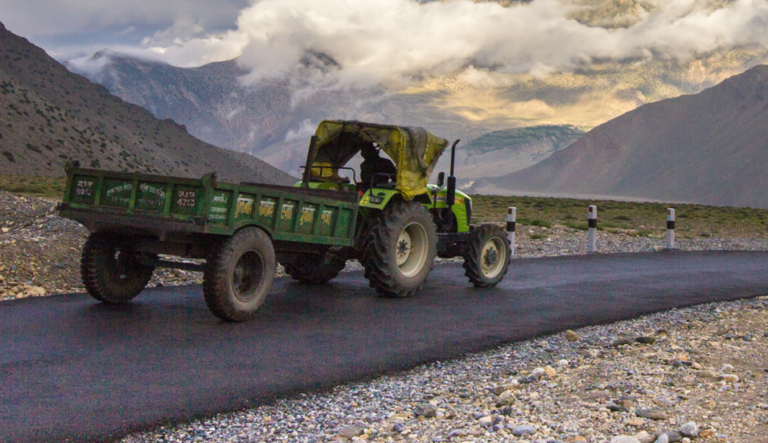
Photo courtesy: National Planning Commission
Industrialists and businessmen do not appear ready for graduation from a least developed country this year. Their argument is that graduation will affect Nepal’s export trade.
In the five years Nepal received as a transition period, it has not done much work to make Nepali industry and trade competitive. It could have made an environment where Nepal’s products could go easily to various countries by making Free Trade Agreements (FTA). Neighboring country Bangladesh is doing exactly that now.
The European Union has given duty-free market access to Nepal under the Everything but Arms initiative. But due to limitations related to production capacity and supply, Nepal has not been able to fully utilize this opportunity. By utilizing this very advantages, Bangladesh has succeeded in expanding large-scale exports to the European market through the garment industry. Not only that, but Bangladesh has already ensured zero customs benefits in garment exports by making a trade agreement with Japan. The advantages given by Japan to Nepal as a Least Developed Country right now are available only until 2029. After that, such benefits might be cut.
Birendra Raj Pandey, president of the Confederation of Nepalese Industries (CNI), says that when the trade of carpets, garments, handicrafts, and pashmina, which reflect Nepal’s originality, is affected, the employment dependent on it will also be affected.
“Even if only one sector is affected, its impact falls on the overall economy,” Pandey says. “After the advantages Nepal is receiving in trade are removed, Nepali items will be expensive in the international market. This can be managed by reducing production costs and increasing productivity, but policy facilitation is necessary for that.” He says that even though there is an opportunity to increase exports by bringing in foreign investment, Nepal has not been able to fully utilize it.
Pandey says that the trade negotiations Nepal was supposed to do with various countries have been slow, the ILO conventions necessary for GSP Plus are yet to be ratified, and it will take time for that.
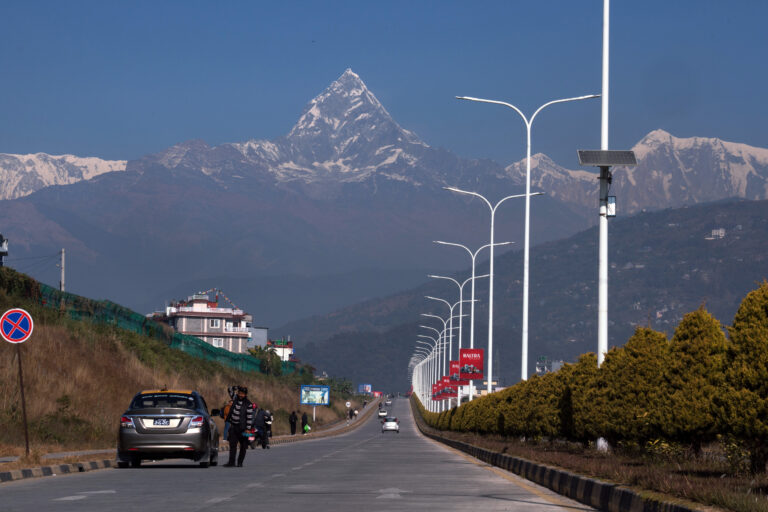
Annapurna Range visible from the Pokhara International Airport on Saturday, March 21. Photo courtesy: Yunish Gurung/RSS
Kharel, an economist and expert on international trade affairs, says that because the implementation of Nepal’s long-term plans is weak, the impact has fallen on the economic and social sides. “If those plans had been effectively implemented, economic progress could also have been significant, and social dissatisfaction could also have been less. The current debate is not just about whether to graduate from LDC or not. The main thing is how strong to make the policy preparations required after that.”
Confederation of Nepalese Industries (CNI) President Birendra Raj Pandey also believes that graduation should proceed only after adequate preparation. He warns, “Once graduation takes place, it cannot be reversed. A sudden shift into open trade competition could adversely affect export-oriented industries. It is therefore prudent to move forward only after sufficient preparation.”
However, these challenges are not insurmountable even after graduation. A three-year transition period remains in place, during which significant adjustments can still be made. Economist and former Vice Chairman of the National Planning Commission, Min Bahadur Shrestha, emphasizes that this window provides ample opportunity for reform. “Graduation should move ahead alongside targeted support packages for sectors likely to be affected,” he says. “Even after exiting the LDC category, there remains sufficient time to strengthen and adapt the economy.”
With a new government set to take shape following the elections, a key decision lies ahead: whether to request additional time for graduation or proceed as scheduled. Ultimately, the process is not determined by Nepal alone. The United Nations’ evaluation reports and recommendations carry decisive weight, and even if Nepal seeks a delay, the final decision rests with the UN Committee for Development Policy.