Kathmandu
Tuesday, July 21, 2026





The government says it will appoint judges on the basis of merit and competition, but there has been neither discussion nor preparation on what the standards will be
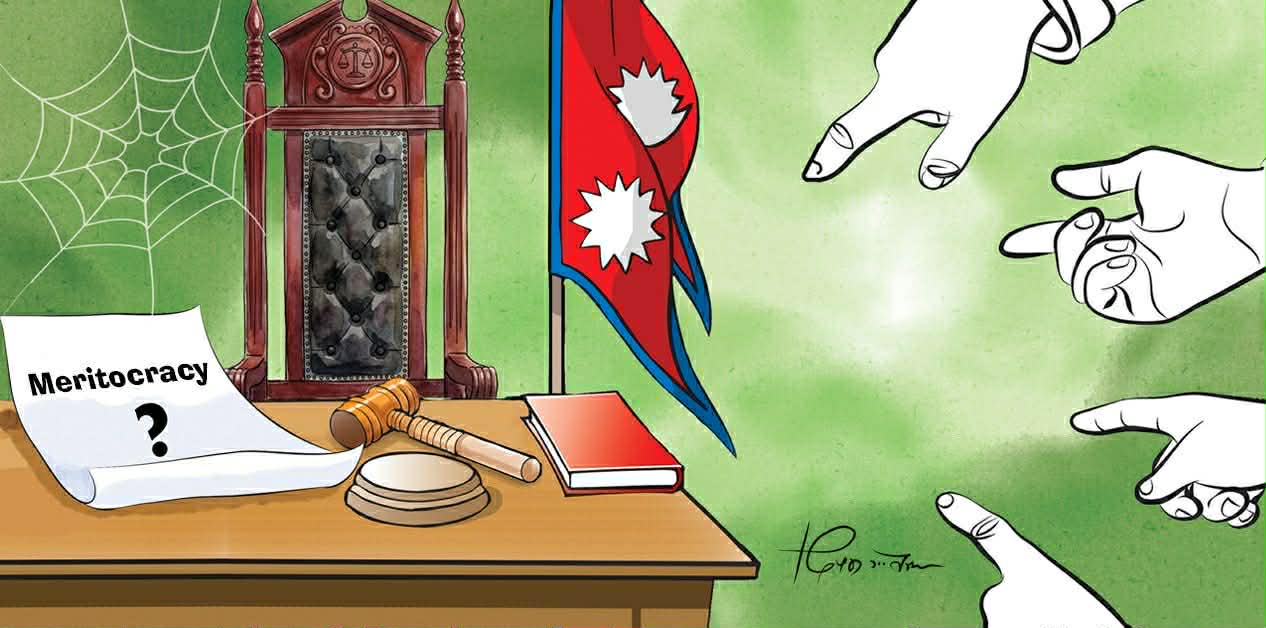
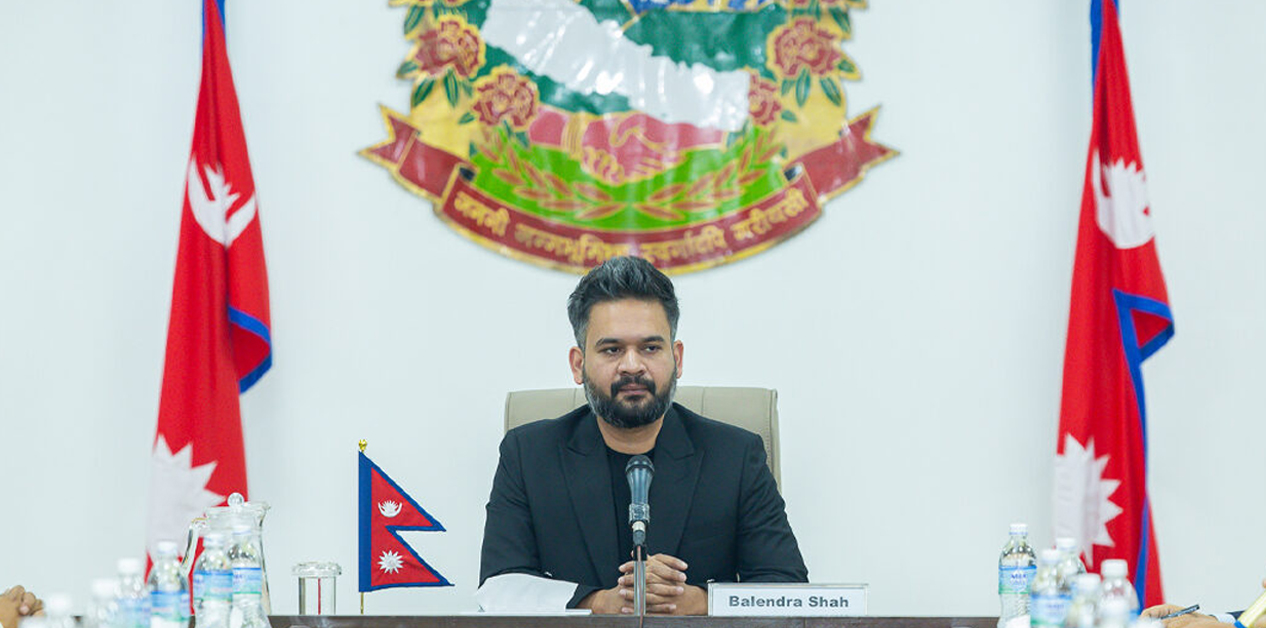
KATHMANDU: A debate has arisen in legal circles over what the appointment process will look like for the Supreme Court, which currently has vacancies for a Chief Justice and three justices. The debate was triggered by the Balendra Shah government’s stated intention to appoint judges on the basis of meritocracy and a competitive system.
Questions about judicial appointments have always been raised. The judiciary had long been criticized for becoming distorted and overshadowed by party politics when appointments were made through political quota-sharing. Therefore, calls have grown for judges to be appointed through competition on the basis of merit, on the grounds that judges appointed through political deals cannot perform independently, impartially, and fairly.
To address this, the national commitment paper the government made public on April 14 also touches on the basis for judicial appointments. The commitment paper states: “A method of integrity and ethical testing will be followed in appointments. Judicial appointments will be made on the basis of meritocracy and a competitive system.”
Yet the government has not spelled out what the meritocracy standards and framework will look like, nor has it initiated any discussion or public debate on the matter. Without clear criteria established for what qualifications a person needs and through what process a judge will be appointed, the talk of “meritocracy” risks becoming nothing more than a maze of words.
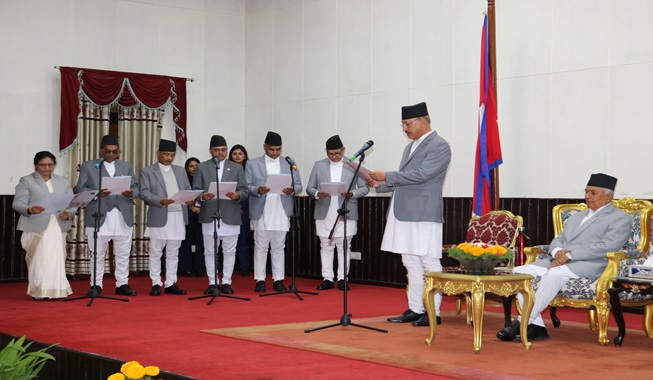
Former Chief Justice Bishwambhar Prasad Shrestha administering the oath to judges. Photo: Supreme Court.
The ruling Rastriya Swatantra Party (RSP)’s manifesto for the March 5 election had also included a policy commitment to appoint judges on the basis of meritocracy and a competitive system. It promised to end the trends of party-based influence, absence of internal competition, and quota-sharing recommendations in the appointment process for High Court and Supreme Court judges. Point number 16 stated: “We will adopt policy arrangements based on meritocracy and a competitive system. We will make arrangements for recommending to the Judicial Council candidates selected on the basis of merit for appointment as judges of the High Courts and the Supreme Court.”
This wording implies that rather than the Judicial Council recommending judges, the government will make recommendations to the Judicial Council. The manifesto also mentioned ensuring reservation and inclusivity provisions in accordance with prevailing law and the spirit of the constitution. Although the RSP, which won close to a two-thirds majority in the election, has included the basis for judicial appointments in its national commitment paper in line with its manifesto, the clear path forward has not been set out.
The current practice is to appoint the Chief Justice on the basis of seniority. Senior advocate Lalit Bahadur Basnet, an expert in constitutional law, says that since the government has not spelled out any meritocracy criteria or process, and the constitution makes no mention of it, the appropriate course for now is to make appointments in accordance with the existing constitutional provisions. “The meritocracy arrangement can be put in place tomorrow by amending the constitution, but for now appointments must be made according to the constitutional provisions,” he says.
Senior advocate Ram Prasad Shrestha, who served as a Judicial Council member for four years, says it is possible to implement merit-based appointments as the government proposes by strengthening the criteria. But arrangements must be in place to prevent government interference in appointments.
Basnet’s suggestion is that since meritocracy means precisely capacity, ethics, seniority, experience, qualifications, and integrity, appointments should be made on those bases.
Nepal Bar Association President Bijaya Prasad Mishra says virtually every past government has talked about meritocracy in appointments, but none has been able to act accordingly. “The government is again talking about meritocracy-based judicial appointments; the government must make clear which mechanism will work and how,” he says.
He says that current vacancies at the Supreme Court and High Courts must be filled on time within constitutional limits.
Senior advocate Ram Prasad Shrestha, who served as a Judicial Council member for four years, says it is possible to implement merit-based appointments as the government proposes by strengthening the criteria. But arrangements must be in place to prevent government interference in appointments. He says the Judicial Council’s current structure is not appropriate, pointing out that having two government representatives on the council means the law minister regularly interferes in judicial appointments. “When we made appointments during our time (2077–2081 BS), we developed criteria, and making appointments on the basis of those criteria meant there was no controversy as there had been before,” he says.
Delay in appointing a Chief Justice
The apex court is currently running on acting leadership because no Chief Justice has been appointed. The Judicial Council has already recommended names for the position, but the appointment cannot be made because the Constitutional Council is not yet complete. After Chief Justice Prakash Man Singh Raut retired on reaching the age limit of 65 on March 31, 2026, Justice Sapana Pradhan Malla has been serving as acting Chief Justice since April 1, having taken on the responsibility as the most senior justice.
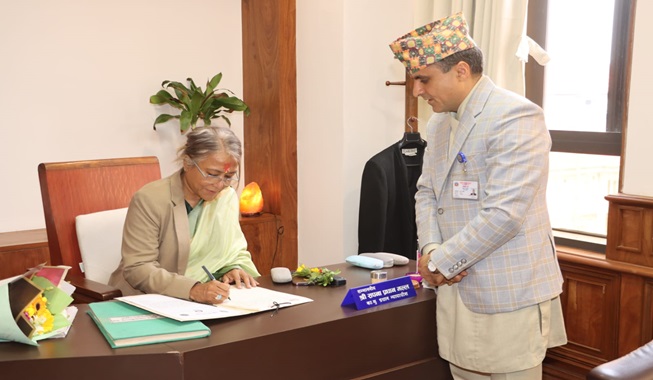
Acting Chief Justice Sapana Pradhan Malla. Photo Source: Supreme Court.
Senior advocate Basnet says the judiciary should not be kept on acting leadership for a long time, and a Chief Justice should be appointed promptly from among those the Judicial Council has already recommended. “Confidence is weakened when working in an acting capacity, and since this affects the judicial system itself, the Constitutional Council must appoint a Chief Justice on time,” he says.
The Constitutional Council is chaired by the Prime Minister, and its members include the Speaker of the House, the Chair of the National Assembly, the leader of the main opposition in the House, and the Deputy Speaker. RSP’s dominance is visible in the council’s current composition, with the Shram Sanskriti Party holding the Deputy Speaker position with RSP’s support. However, the council remains incomplete because the main opposition Nepali Congress has still not elected its parliamentary party leader.
Even once the council is complete, there is the question of how much the meritocracy talk will actually change the traditional practice of appointing on the basis of seniority.
Senior advocate Basnet says the Chief Justice must be appointed on the basis of the Judicial Council’s recommendations. “If the Judicial Council’s recommendations are overridden, the grounds and reasons must be stated,” he says.
The Chief Justice should have been decided a month in advance as the constitution requires, but that has not happened and the constitution has been violated.
The Judicial Council recommended six judges to the Constitutional Council for the Chief Justice position more than a month ago. While Sushila Karki was still Prime Minister, the Judicial Council met on 10 March 2026 and recommended six names who were both eligible and in the seniority order: Justices Sapana Pradhan Malla, Kumar Regmi, Hari Prasad Phuyal, Manoj Kumar Sharma, Nahakul Subedi, and Til Prasad Shrestha. The process requires the Constitutional Council to select one name from the list, after which the proposed Chief Justice undergoes parliamentary hearing before being appointed upon endorsement.
The constitution provides for the Chief Justice to be appointed by the President on the recommendation of the Constitutional Council, and for Supreme Court judges to be appointed on the recommendation of the Judicial Council. A person must have served at least three years as a Supreme Court justice to be appointed Chief Justice.
Former Judicial Council member Shrestha says for now the Chief Justice appointment should be made on the basis of seniority. “It is not easy to immediately dismantle the structure; the constitution and the law would have to be amended,” he says. He says once the Constitutional Council is complete, it should meet and make a recommendation for the Chief Justice appointment in accordance with constitutional provisions.
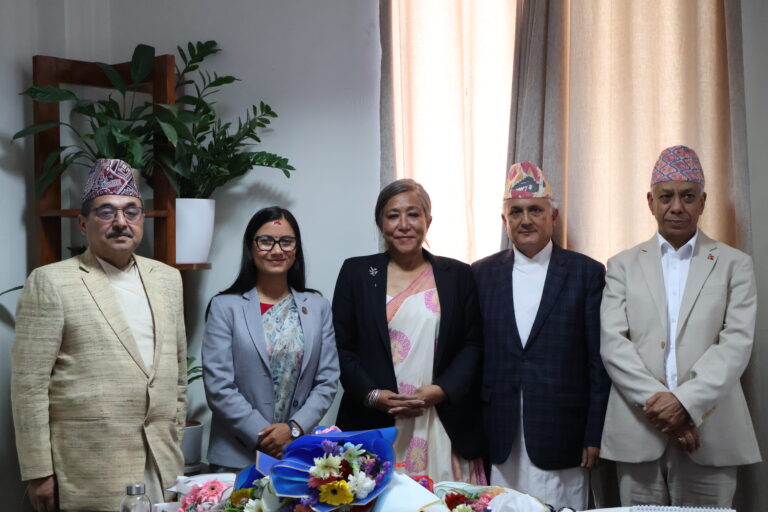
Office-bearers of the Judicial Council. Photo source: Judicial Council.
Nepal Bar Association President Mishra says the constitution has long been violated in Chief Justice and judicial appointments. “The Chief Justice should have been decided a month in advance as the constitution requires, but that has not happened and the constitution has been violated,” he says. “From now on, the Chief Justice, judges, and heads of constitutional bodies must be appointed within the timelines the constitution sets, and the constitution must be followed to the letter.”
He says the graph of constitutional violations far exceeds compliance, and that the pattern of violating the constitution appears designed to keep potential Chief Justice and judicial candidates under pressure.
The constitution does not contemplate a vacancy in the Chief Justice position. Failure to implement what the constitution provides is a constitutional violation. Article 284(3) of the constitution requires the Constitutional Council to make a recommendation for appointment at least one month before the Chief Justice position falls vacant. The Article states: “The Constitutional Council shall, at least one month before any position of Chief Justice or head or official of any constitutional body falls vacant, make recommendations for appointment in accordance with this constitution.”

Office-bearers of the Constitutional Council whose appointments are yet to be completed.
But this constitutional provision has been continuously violated. The Supreme Court has been left to function under acting leadership repeatedly because the Constitutional Council failed to recommend a Chief Justice on time. After an impeachment motion was filed in parliament against then-Chief Justice Cholendra Shumsher Rana on 13 February 2022 and he was suspended, Deepak Kumar Karki became acting Chief Justice. He retired due to reaching the age limit of 65 on 3 October 2022 while still in an acting role. Even before that, when he went on leave, Hari Krishna Karki became acting Chief Justice on the basis of seniority on 27 September 2022. The Constitutional Council failed to recommend him on time, meaning that after serving eight months as acting Chief Justice, Karki served only one and a half months as Chief Justice. Having been formally appointed on 16 June 2023, he retired on 5 August of the same year due to reaching the age limit.
After Rana’s retirement on 13 December 2022, the apex court ran on acting leadership for six months until mid-June 2023. This time too, failure to appoint a Chief Justice on time means it has now been 15 days since Malla took on the acting Chief Justice role.
The Supreme Court has a Chief Justice and a maximum of 20 justices. Three justice positions are currently vacant. Article 129 of the constitution provides for the appointment and qualifications of the Chief Justice and Supreme Court justices.
The constitution and the Judicial Council Act set out the qualifications for judicial appointments, covering seniority, experience, knowledge of subject matter, professional competence, integrity, impartiality, professional and ethical conduct, reputation earned in public life, and contribution in the field of justice and law. A nine-member study committee coordinated by former Chief Justice Hari Krishna Karki spent a year producing a 2078 BS (2021) report on the distortions, irregularities, corruption, and broker-related activities that could occur in the judiciary and the measures needed to prevent them. The report noted that in some instances the practice of making appointment recommendations on the basis of nepotism, favoritism, patronage, and quota-sharing had prevented compliance with the prescribed standards.
It is in this context, with questions being raised about the very structure of the Constitutional Council that appoints the Chief Justice and constitutional body heads, and the Judicial Council that appoints judges, that the government has announced merit- and competition-based judicial appointments.
Questions about structure of constitutional and judicial councils
Questions are periodically raised about the structures of both the Constitutional Council and the Judicial Council. The debate over whether the Chief Justice should be a member of the Constitutional Council has been going on for a long time.
The Judicial Council consists of the Chief Justice as chair, the Minister for Law, Justice, and Parliamentary Affairs, the most senior justice, one legal professional appointed by the Prime Minister, and one member representing the Nepal Bar Association. Having two government representatives on the council has repeatedly drawn accusations of political interference in judicial appointments.
The study committee report led by former Chief Justice Hari Krishna Karki also noted that the Judicial Council had not been able to work in accordance with the constitution, and that judicial appointments had become the primary driver of the distortions, corruption, and broker-related activities occurring in the judiciary.
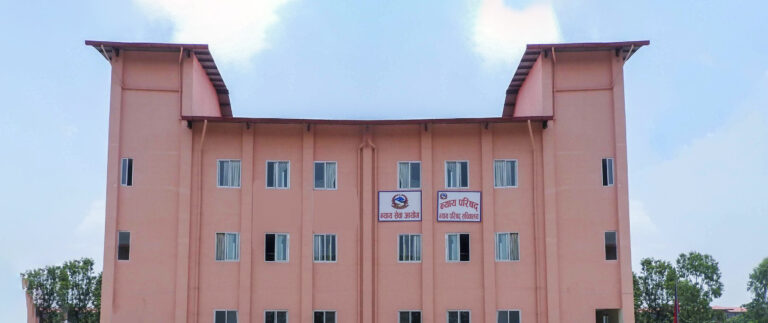
Photo: Judicial Council
The Judicial Council was formed under Article 153 of the constitution to make recommendations or provide advice on judicial appointments, transfers, disciplinary action, dismissal, and other matters of judicial administration. The report noted that improving the council’s effectiveness would reduce existing and potential distortions in the judiciary but found that the council had not been effective in fulfilling the responsibilities the constitution had assigned it and had in fact been making controversial decisions. The report states: “Whether in matters of appointment, transfer, or action, the Judicial Council’s decisions have generally tended to be controversial.”
The report also suggested that a detailed study should be conducted and conclusions reached on whether it is appropriate to assign the Judicial Council responsibility for both judicial appointment recommendations and disciplinary and dismissal matters.
The Nepal Bar Association had also taken the position that the constitution should be amended regarding the Constitutional Council and the Judicial Council. The national conference the Nepal Bar Association held in Kathmandu from May 17 to 19, 2024, proposed amending the constitutional articles related to the judiciary. It suggested that Article 284(1) provisions concerning the Constitutional Council should be reviewed and the constitution amended so that the Chief Justice is no longer a member. The specific concern was that the Chief Justice’s presence on the Constitutional Council creates the possibility of quota-sharing in recommendations for heads and officials of constitutional bodies, and the Bar sought an amendment so that the Chief Justice would have no such role. The Bar also proposed increasing the Supreme Court’s justice numbers from the current 21 to 25 to ensure the constitutional bench can hear cases continuously.
The Bar also recommends removing the parliamentary hearing requirement for Supreme Court justices appointed on the Judicial Council’s recommendation. It suggests arrangements should be made for the Constitutional Council in the Chief Justice’s case and the Judicial Council for other judges to publish public notices, check objections, and appoint on the basis of qualifications, with parliamentary hearings reserved for officials of constitutional commissions only.
The bill and ordinance blocked by the President
Previous attempts were made to amend the Constitutional Council (Functions, Duties, Powers, and Procedures) Act 2010 through an ordinance. President Ram Chandra Paudel blocked an ordinance concerning the Constitutional Council that the Sushila Karki government had sent for endorsement on 18 November 2025, rejecting it on the grounds that it was another form of a bill that had already been sent back to the Federal Parliament.
The constitution requires unanimous decisions of the council for constitutional appointments. The ordinance had been sent to open a path for constitutional appointments to be decided with the presence of at least the council’s chair and 50 percent of members. The bill passed by the previous parliament on the Constitutional Council – which would have allowed appointments to constitutional bodies to be decided by as few as three members of the six-member council – was of the same nature.
When then-Prime Minister KP Sharma Oli used an ordinance to make appointments even with the Constitutional Council Act 2010 in place, the dispute reached the Supreme Court. Oli had appointed 52 officials across constitutional bodies including the Commission for the Investigation of Abuse of Authority, the Election Commission, and the National Human Rights Commission in two rounds, under the ordinance. Advocate Om Prakash Aryal filed a writ petition at the Supreme Court arguing these appointments were unconstitutional. More than four and a half years after the writ petition was filed in December 2020, the Supreme Court upheld the 52 appointments on 2 July 2025, with the constitutional bench’s five justices split three in favor of upholding and two against.