Kathmandu
Saturday, July 25, 2026





Balen threw away the ballot paper for provincial election in 2022. That was a strong symbolic gesture against federalism. But he sang federalism's praises in early 2026. Which one was the lie?

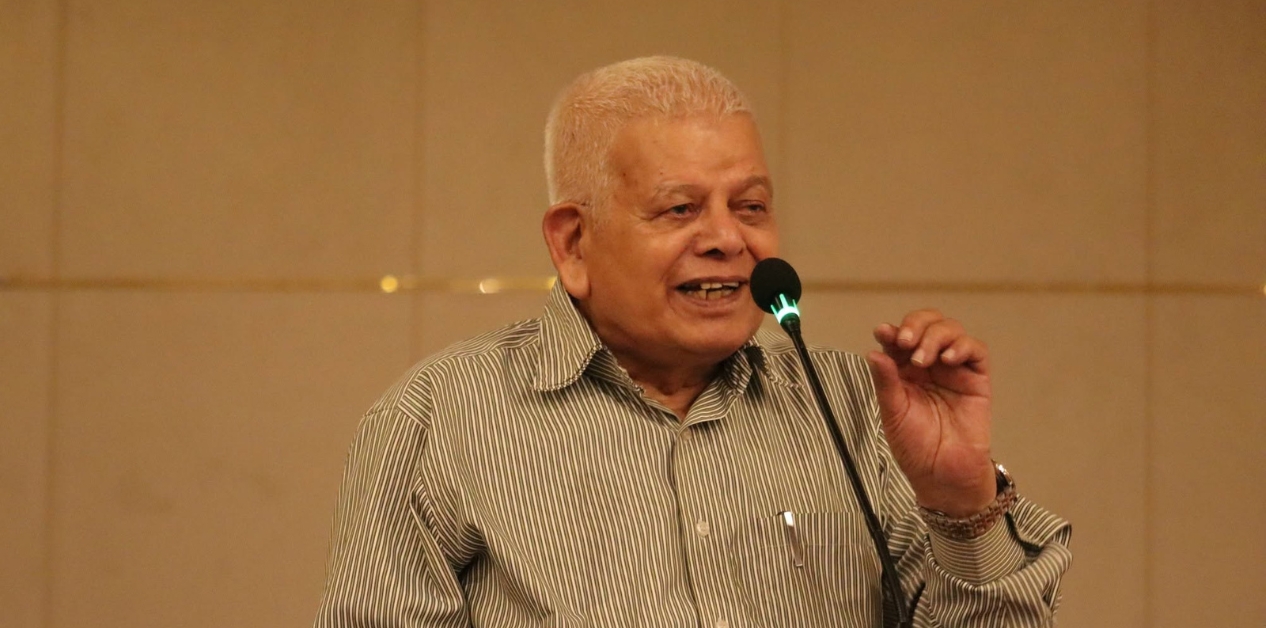
KATHMANDU: There is a version of Balendra Shah whom Nepal has come to adore. He did not arrive through Kathmandu’s political establishment. Rather, his entry was via the microphone. First, he appeared in rap videos before taking off on one of the most improbable journeys in recent Nepali electoral history, starting out in December 2021 as a viral campaign on social media. He appeared, in the truest sense, unbought. Unconditioned. Unscripted. In short, his journey seemed uncorrupted by any money or politics.
That version of Balen chose to boycott the provincial elections held in 2022, neither writing an op-ed nor holding a press conference, but taking an action so symbolic that it would define both him and his principles. He threw away the provincial ballot paper given to him, refusing to have anything to do with a layer of government he felt Nepal simply couldn’t afford. After casting his vote for the House of Representative election, Balen exited the polling center.
When the poll officials and security personnel reminded him that he had not cast his vote in the provincial election, he waved them off without not even looking at them, saying, perhaps, “That is not needed!” That was his soul speaking.
Flash forward to January 19, 2026. Balen Shah gives a brief, electrifying speech at a massive election rally held in Janakpur, which marks the beginning of a nationwide election campaign for the Rastriya Swatantra Party (RSP). This also marks Balen’s return to national politics after his resignation from the position of mayor of Kathmandu. And Balen addresses the very electorate that federalism intended to uplift with promises of “reinforcing federalism.” “Federalism needs to be further bolstered,” he told the Janakpur rally. That was his political mind speaking.
The gap between these two events, the discarded voting paper in 2022 and the glorification of federalism in 2026, is not just about changes in policies. It is perhaps also about a breach of morality and ethics. And for a person who had fashioned his political image entirely on being genuine, the breach needs immediate public recognition. After all, what changed Balen’s mind so drastically, vis-à-vis federalism?
The Bhattarai variable and the fear tactic
The whisper networks within Kathmandu’s political commentariat scene have certainly not been subtle on this issue. Several observers have openly pointed to none other than Dr Baburam Bhattarai, a leader who is considered to be very close to India and an ardent champion of Nepal’s federal structure, as the turning point in Balen’s so-called ideological conversion. According to the theory, which is openly talked about in various circles although not publicly proven, Dr Bhattarai’s supposed move away from his political base in Gorkha to support the RSP’s candidate for that constituency in the March 5 House of Representative election was reportedly due to Balen’s personal request (some people say RSP Chairman Rabi Lamichhane too had made the same request to Bhattarai).
When the poll officials and security personnel reminded him that he had not cast his vote in the provincial election, he waved them off without not even looking at them, saying, perhaps, “That is not needed!” That was his soul speaking.
Both men have neither confirmed nor denied this yet. Maybe they should do it. For the people of Nepal, this is a very crucial matter that they need to know about. Given the nature of such an important matter, when someone like Balen does an act which would seem so much against the tenets of federalism but then turns around and begins to support this form of governance, a lot more should come out of this.
There is a phrase that is constantly mentioned in the discourse surrounding federalism in Nepal, promoted almost like a “self-evident truth.” This is the phrase that goes: “If anyone attempts to take away federalism in Nepal, the Madhesh will catch fire.” This assertion has been made so strongly within the circles of the previous establishment in Nepal and within the parliament that any attempt to logically argue on federalism becomes impossible.
It seems Balen, too, has been singed by this fire, metaphorically speaking.
However, what such a warning overlooks is the fact that each one of those federalists who ran for office in the last ten years or so was given an unequivocal electoral message. Those Nepalis who live under the shadow of the federal experiment, who see firsthand the inefficiency of bureaucracy, duplicity of cost, and poor spending by provincial governments, have shown increasing consistency at the polls in expressing their discontent.
The loudest champions of federalism have not received any reward; rather, they have suffered humiliation, election after election since 2008.
Madhesh overwhelmingly voted for Balen and his party because the voters there believed in the person he is, not because they believed in his new-found belief in federalism. After all, what tangible benefits have the people of Madhesh gotten from federalism, apart from the sad realization that Madhesh has emerged as the province with the highest incidence of corruption among the seven provinces?
This is not a fringe observation. Like the national government, the provinces of Nepal have proven incapable of spending even their meager budget allotment on development projects. In a nation that cannot produce enough income to sustain its own federal government with so many parliamentarians, ministers, and other administrative officials in its ranks, the fiscal problem of federalism is no theoretical debate. It is very much a reality.
Did federalism provide employment to Madhesi youths within the country? The honestly blunt answer to this question is – NO! In fact, the districts of the Terai-Madhesh send the highest number of young people abroad for employment, where they often toil hard in extreme heat, sometimes reaching 50°C, in the Gulf and other regions. Ask these youths what federalism gave them.
The loudest champions of federalism have not received any reward; rather, they have suffered humiliation, election after election since 2008.
In the particular case of Nepal, federalism has become very much akin to that impulse buy which seems great at first sight but ends up being costly in retrospect. Federalism promised the solution to decades of Kathmandu-centered politics, where people in Madhesh, hills, and mountains felt neglected and some people projected it like they were being governed like colonized territories. Maybe these complaints were valid. Maybe they were justified. And maybe these complaints deserved a system change.
What emerged, however, seems more like a source of employment for a political class that is too much a burden for Nepal as it is. The figures for development expenditure speak for themselves. The gap between income and expenditures continues to widen. And all those who make up the Nepali populace continue to bear the brunt of governance architecture, which has increased the cost of government administration without providing corresponding benefits.
Prime Minister Balen should listen to his soul
Balen, in his gut, knows this. That 2022 ballot paper was not discarded carelessly. It was discarded deliberately. It was the act of a man who had studied the problem and made a judgment.
Balen is no product of rally politics. His politics was born on the internet before he made it to the rallies and streets. He was at one time Nepal’s shining beacon of a politics that was more substance than show. But the sadness in Balen’s Janakpur speech lies not in what he said, but in how inauthentic it felt. Using the words of the establishment he once implicitly defied, Balen sounded like any other traditional politician of Nepal.
Nepal doesn’t need another politician who tells the people what they want to hear. Nepal needs someone who tells them what the statistics and lived experience say. But in this case, Balen’s soul told him what the experience tells us and what the statistics want and need, while his politics walked it back.
“You don’t need to go to Kathmandu to seek rights. You go there to visit Pashupatinath and Swyambhunath, explore the city and enjoy yourself,” Balen told the Janakpur election rally in Maithili, the local language. It sounds great to the ear. But what is also true is the so-called “rights” given by federalism to Madhesh, and other provinces, are debatable not only in terms of substance but also in terms of pragmatic purpose.
The bitter truth is these provinces still depend, to a large extent, on the center’s equalization and other grants even to cover their administrative costs.
The people of Madhesh do come to Kathmandu every day, most likely in thousands. But a huge chunk of them come here to leave the country. Rather than Pashupatinath and Swayambhunath, the foreign employment department, the passport office, the manpower agents and companies, and the loans they have taken by mortgaging whatever little land they have to go abroad, occupy their minds, bodies and souls, before they eventually fly off to the Gulf and Malaysia from Kathmandu’s Tribhuvan Airport.
What has federalism done so far to change all this? Hardly anything, because this exodus has only increased over the past many years, even after the implementation of federalism. The morning shows the day is an old but wise saying.
The bitter truth is these provinces still depend, to a large extent, on the center’s equalization and other grants even to cover their administrative costs.
It is time for the Prime Minister to speak out. It is time for him to honestly evaluate the glaring shortcomings of federalism, the pressures that may have led to his change in stance, and the issue of whether he is doing this out of principle or political pragmatism and convenience.
The overwhelming participation of the Madhesi people in the Madhesh Movement of 2007-2008 was against the centuries of discrimination they had faced. However, the Madhesi stooges of foreign powers cleverly reframed this widespread anger and frustration over discrimination as a demand for federalism which was then portrayed as the bottom line demand of the Madhesi people.
Balen has appointed his key advisor Asim Shah as the coordinator of the all-party panel formed to discuss and decide the all-important matter of constitutional amendment. We all know in advance what the representatives of the old parties on this panel are going to say in relation to federalism. They are not expected to escape this sunk cost fallacy; they are doomed to defend this failed concept they introduced at the behest of foreign powers. But Balen and his party can gather the courage to call a spade a spade.
The rapper-mayor seemingly always spoke his truth. The Prime Minister must find the courage to do the same.