Kathmandu
Saturday, July 18, 2026





Through viral videos, TikTok-style reels, AI-generated awareness clips, and visually engaging posts, the Nepal Police is reshaping how it communicates with citizens.

KATHMANDU: A video of a youth carelessly performing motorcycle ‘stunts’ on a busy road in Kathmandu went ‘viral’ on social media.
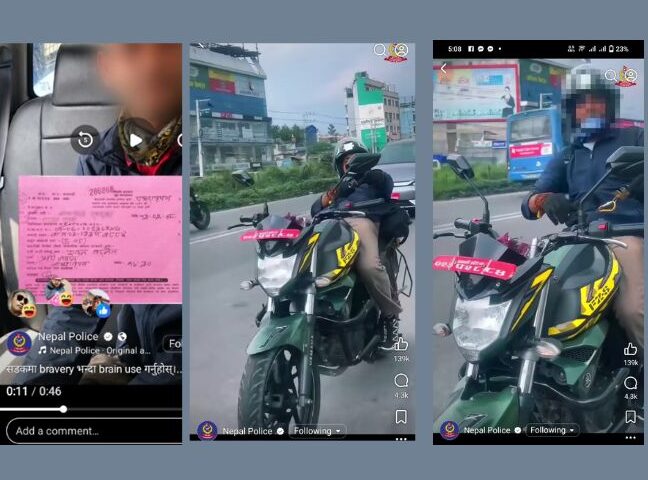
In the video released with the song ‘Bairodko batoma dhulo udaudai’ (Blowing dust on the bypass road), a motorcycle’s number was clearly visible. The Kalimati Police Circle of Nepal Police searched for and arrested the rider.
Previously, the police used to take actions like cautioning such careless individuals and fining them. This time, however, the police did not just caution the rider, but also used him to release a video to warn others against engaging in such activities.
A video of him delivering a message to others not to ride motorcycles that way, stating that he was arrested for making a mistake, was released on the Nepal Police’s Facebook page on Saturday.
In the video released under the title ‘Use your brain, not bravery on the road,’ the youth says, “The act I committed is against traffic rules; it is a violation. It also poses a threat to life. It causes loss of life and property. Therefore, I will not do it again in the future and I advise others not to do this either.”
Lately, the Nepal Police has been regularly releasing such creative ‘content’ on social media. Regular posts regarding carelessness on roads, accidents, various crimes, and positive works of the police are being made on social media platforms including Facebook pages, Reels, and TikTok.
To mitigate the rising digital crimes in Nepal, the police have also started creating awareness videos using Artificial Intelligence (AI). An example of this is a video released on the Nepal Police page on April 21. The message given in it is:
“I am OTP, don’t share me with anyone,
No bank will ever call to ask for me, none.
Once you give me away, it’s gone in a flash—
Your hard-earned money can vanish in a dash.”
The trend of cheating common citizens by falsely claiming to speak from banks or e-Sewa is increasing. At a time when cases of asking for bank account numbers for account updates and stealing money by making victims forward OTPs are on the rise, the police have started making such videos to alert citizens.
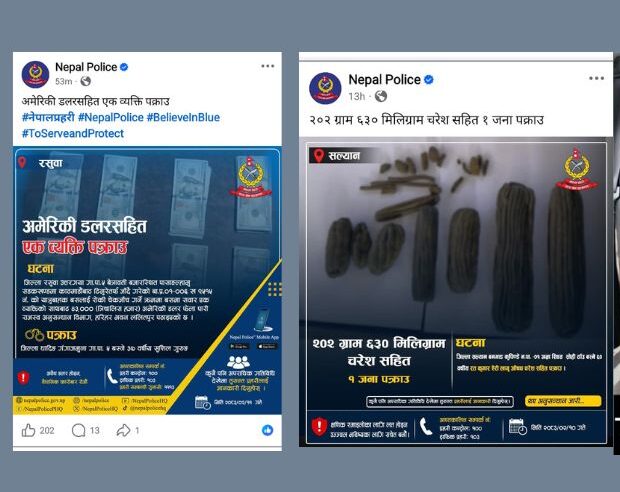
The police have changed their method not only in crime control and awareness but also in the way they convey information about incidents. Previously, when providing information about a criminal incident, they used to issue long descriptions and press releases of a similar nature using legal language. However, now they post a brief description of such incidents on their Facebook page along with a poster showing the location, which is also easier to understand.
For instance, on Monday, the police released a poster through the ‘Nepal Police’ page titled ‘One person arrested with US dollars.’ It mentions the district of arrest, the name of the person arrested, and other brief details.
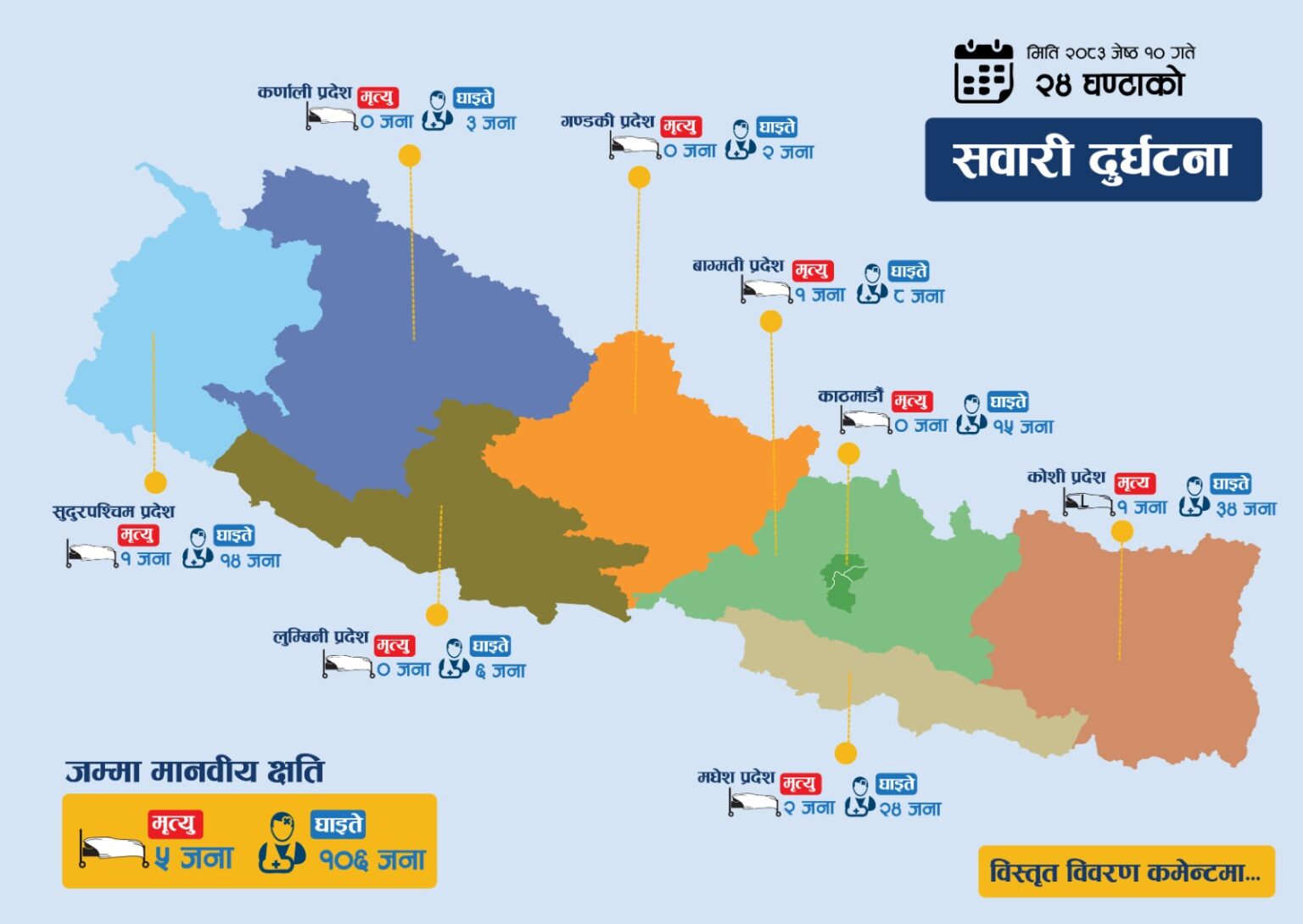
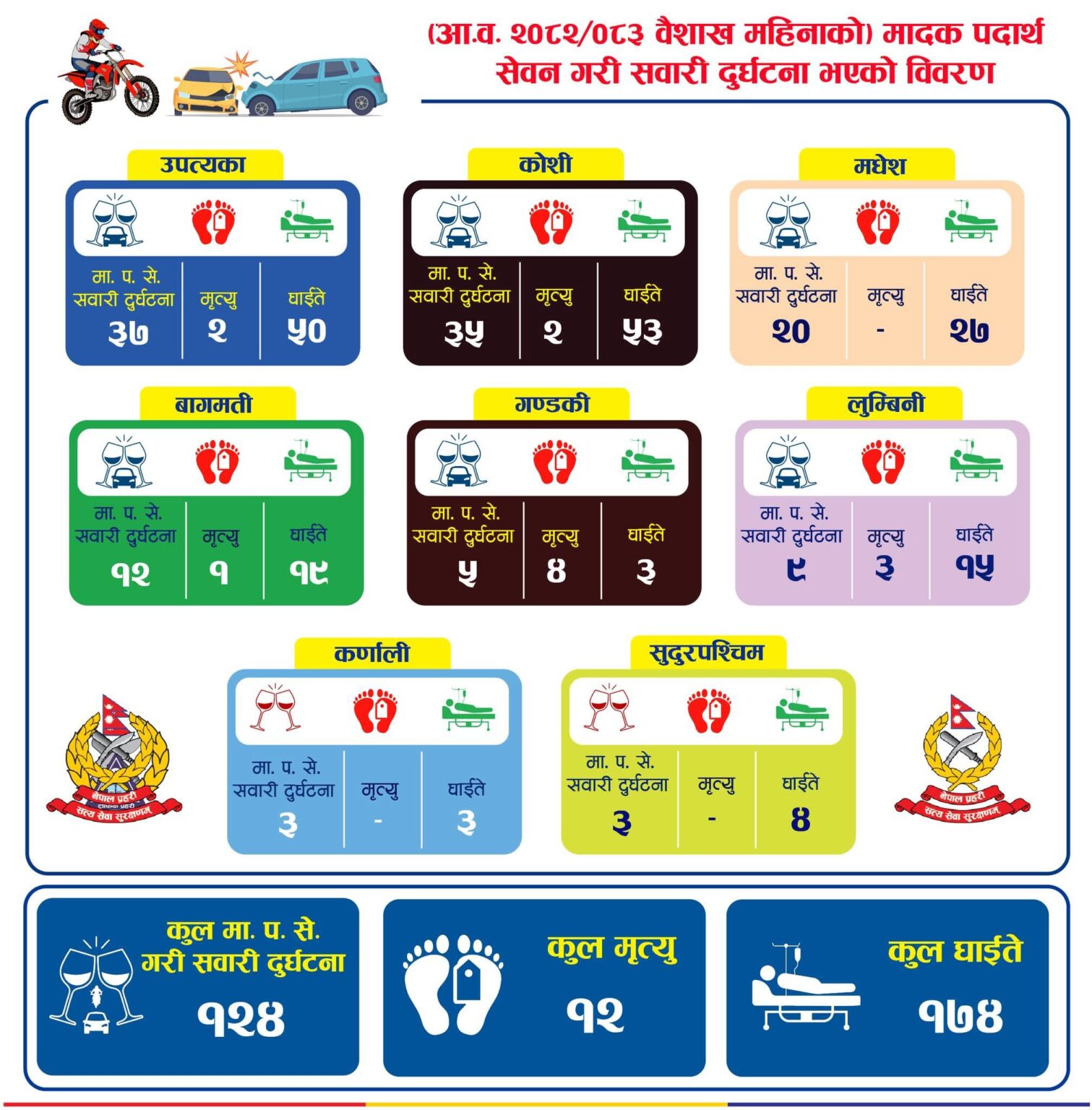
Similarly, the police have been releasing details of which roads across the country are blocked due to natural disasters like rain, floods, and landslides in a way that is understandable to everyone. Details of accidents caused by driving under the influence of alcohol are also released using attractive posters in the same manner.
Social media users interact through likes, comments, and shares on the videos, posters, or other content released in this manner. While some express gratitude, others criticize as well. Some provide advice and suggestions.
On May 23, the Nepal Police uploaded a ‘Reels’ on its Facebook page showing police personnel, deployed in uniform, clearing a road blocked by a fallen tree due to strong winds using axes and khukuris in Itahari-20, Tarahara of Sunsari. A song is played in the background of the video:
“Winter or summer, sun or rain,
They stand on duty through joy and pain.
For every village, every town,
With service worn like a crown.
To every citizen, far and wide,
The Nepal Police serve with pride.”
The song has made the video even more attractive. In the video, which was viewed by 422,000 people in a single day, 633 people reacted by Monday evening. Among them, many suggested that the police should use modern technology to clear fallen trees from the road. Reacting to the video, Bhupendra Bohora wrote, “Nepal Police should keep a cutting machine for such tasks.”
Three weeks ago, a video was posted on the police page showing the Area Police Office Mahendranagar Sunsari conducting a long-distance foot patrol in a rural area, featuring a song sung about the police itself:
“In every village, in every city,
Like fragrance drifting soft and free,
Guarding citizens, near and far,
Through every hour, as they are.
For every person, every place,
The Nepal Police stands in grace”
The Chief of Area Police Office Mahendranagar, Sunsari, Inspector Diwas Kunwar, states that when such activities of the police are released through TikTok, Reels, and Facebook pages, interaction with the general public is taking place. He says, “Lately, the use of social media has helped information reach citizens quickly. Various inputs are also received from citizens. This has played a positive role in connecting the police and citizens.”
It has not been very long since the Nepal Police started providing information through social media in this manner. The police began flowing such information systematically only prior to the House of Representatives election on March 5.
The central spokesperson of Nepal Police, Deputy Inspector General of Police Abi Narayan Kafle, states that ‘content creation’ was started before the elections following the vision of Inspector General of Police Dan Bahadur Karki.
According to him, the police had studied what kind of content youths are interested in and attracted to. Based on that, content creation was initiated on topics such as crime, drugs, good governance, and digital violence. He says, “Time-relevant content creation has been done according to the interest of the younger generation. It is expected to assist in crime control.”
Stating that challenges have been added due to growing cybercrime, fake and misinformation, organized criminal networks, and financial crimes, the Nepal Police had started the Artificial Intelligence and Advanced Analysis Cell. On March 25, the then Home Minister Om Prakash Aryal inaugurated the cell at the Police Headquarters.
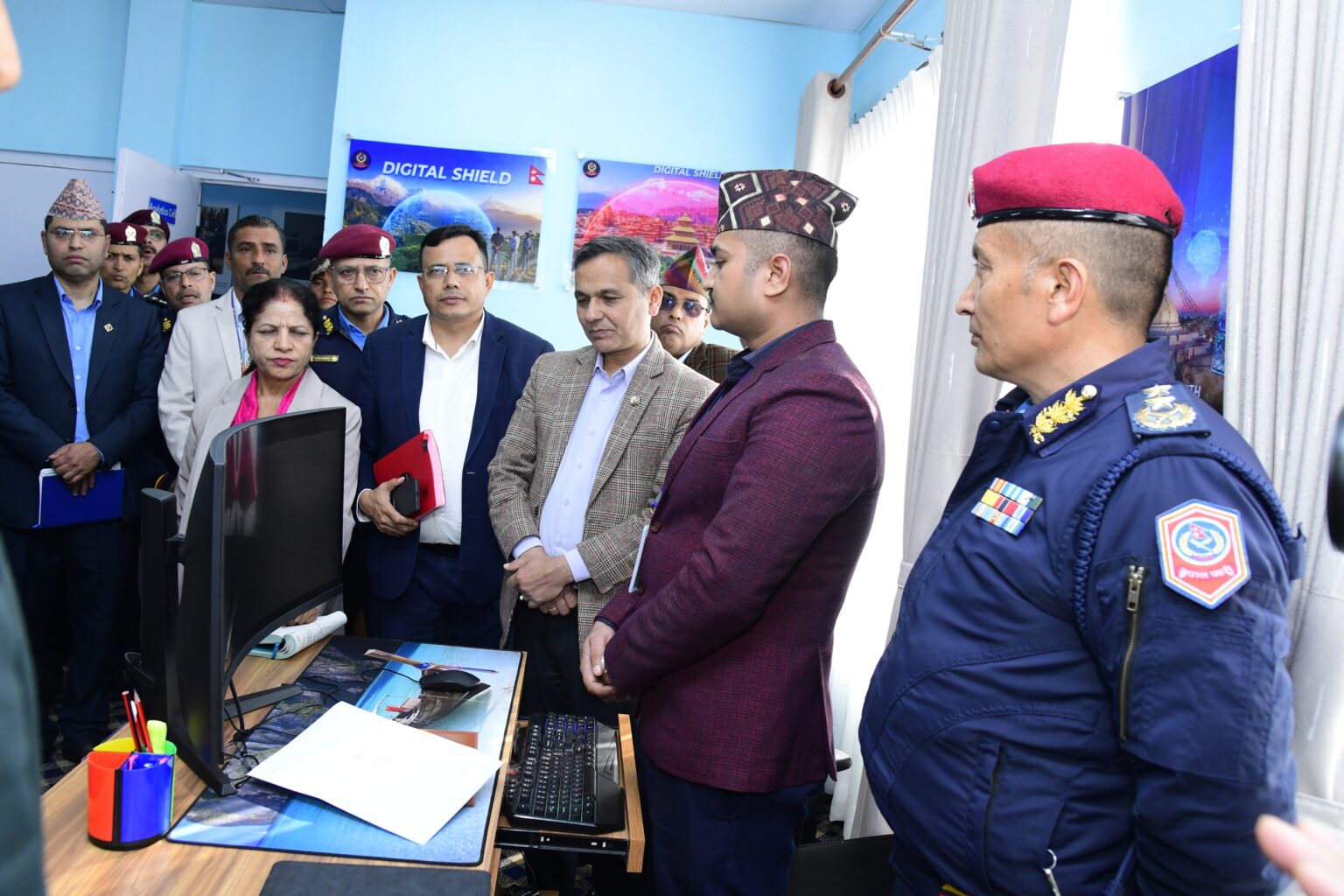
This cell works by forming a closed group with police offices across the country. It instantly gathers information about an incident, creates content, and posts it on its social media.
Similarly, the police have also formed a Social Media Coordination Desk (SMCD). It also prepares content by studying social media and analyzing incidents.
There is a team of more than 10 people just to create content for social media using internal human resources of the police. The team led by SP Dharmaraj Bhandari collects information about incidents by studying social media and posts content after creating it.
Previously, the police used to conduct awareness programs in collaboration with communities under the Community Policing Program to reduce crime. “However, with changing times and the development of technology, it was not possible to reduce crime through traditional styles alone,” says Police Spokesperson Kafle. “As society moved forward, police activities also had to be focused there. As every activity became digital, crime also started becoming digital. A situation arose where we had to work digitally to control crime.”
Therefore, Police Spokesperson Kafle states that the police are conducting awareness programs using technology.
He says, “This campaign has made raising awareness among common citizens and crime mitigation much easier. We plan to expand this further.”