Kathmandu
Friday, July 24, 2026





Even though the scheduled time has ended, the positions of the teams remain uncertain; millions in investments are trapped.
KATHMANDU: Even though the scheduled time of the league has ended according to the schedule published by the All Nepal Football Association (ANFA), the positions of the participating teams remain uncertain. If everything had gone according to plan, it would have been clear by now who would win the National League title or in which position which team would finish the league.
Tankalal Rai (Reuben), president of Church Boys United, says, “We were in the title race. The league was stopped midway with only five matches remaining. We are in continuous contact with ANFA, but there is no definitive answer as to when the league will resume.”
After the ‘A’ Division League, which should be organized regularly, could not take place, ANFA initiated the National League in its old format from January 14, through the initiative of the then Minister for Youth and Sports, Bablu Gupta. A total of 13 teams from the top division participated in the tournament, including ‘A’ Division winners Church Boys United and runners-up Machhindra Football Club. Similarly, the league was organized with the participation of a total of 17 teams, including Laligurans Association Football Club (winners of the ANFA President’s League), Chitlang FC (runners-up), and Navajanajagriti Youth Club and Kankrebhihar Youth Club, who had reached the semifinals.
As the league neared its end, departmental team APF Club, Church Boys, Machhindra, Laligurans, and Tribhuvan Army Club were in the title race. Just when the title race had reached a highly exciting turning point, the league was suddenly suspended on March 19. Rai states that the suspension of the league has left the potential achievements of the teams in limbo.
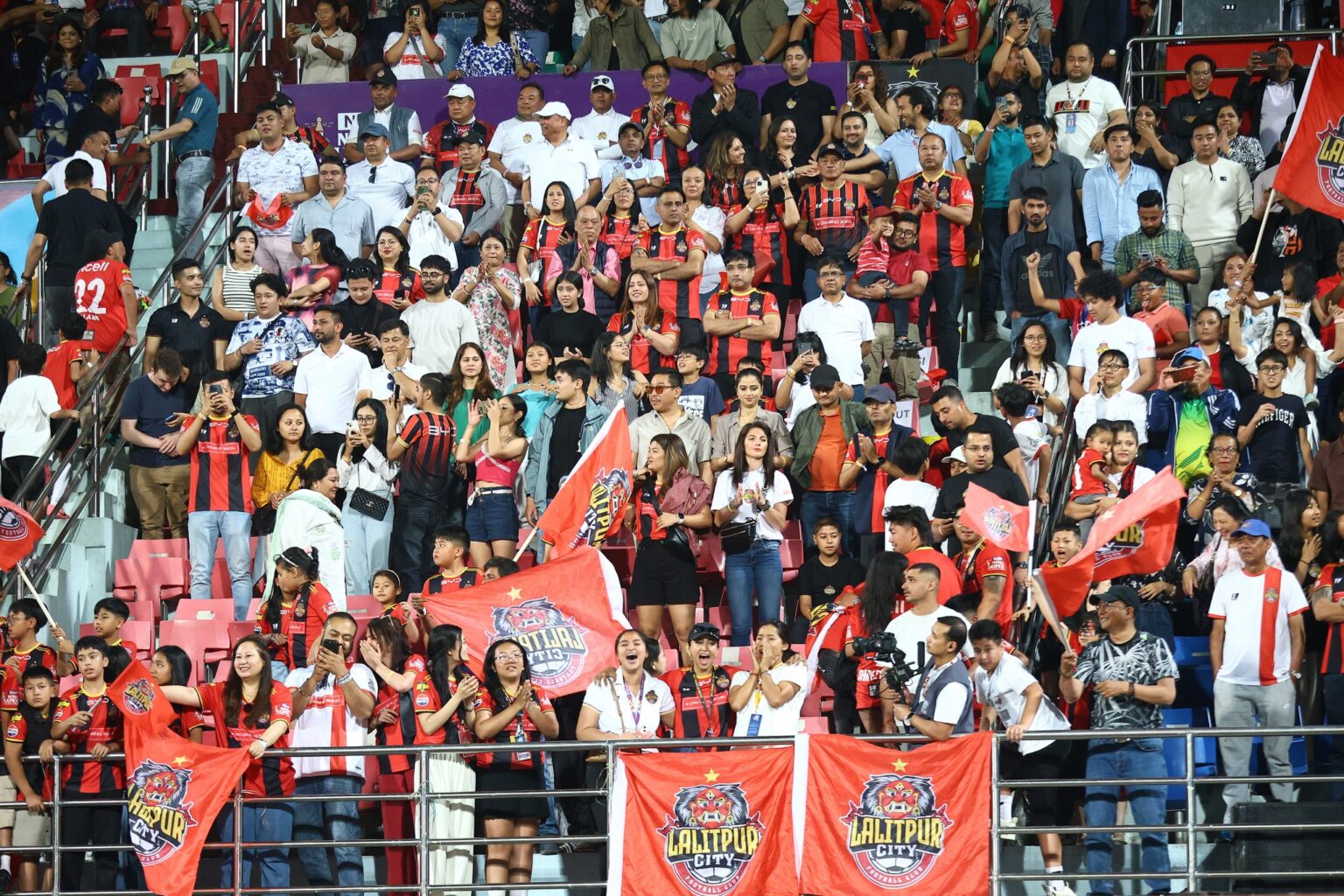
Spectators present at Dasharath Stadium during the final of the third edition of NSL. Photo Source: NSL
“It would have been easier if ANFA had made a clear decision on whether to resume the league from that exact point or to suspend it completely,” he says. “We have invested more than Rs 10 million in the club. Expenses incurred for players’ salaries, hotel stays, training, etc., are yet to be cleared. However, currently, ANFA seems more focused on the Nepal Super League (NSL) rather than conducting the league. This has hurt the sentiments of those of us who came up through the pyramid.”
Club Sorrows
On June 10, 2023, Church Boys became the champion of the ‘A’ Division. However, the regular league could not be organized the following year. Nevertheless, since games were going to happen after a long time, Church Boys shifted its focus toward the National League.
Along with the men’s team, Church Boys also participated in the ANFA Women’s League. However, following a directive from the Department of Immigration on March 19 not to allow foreign nationals on tourist visas to participate in football matches held in Nepal, ANFA closed the league indefinitely. While the men’s side had played 11 matches, Church Boys, having played only one match on the women’s side, is now left bewildered. Some players associated with these clubs are contracted to Bhutanese clubs, while some are out of contact.
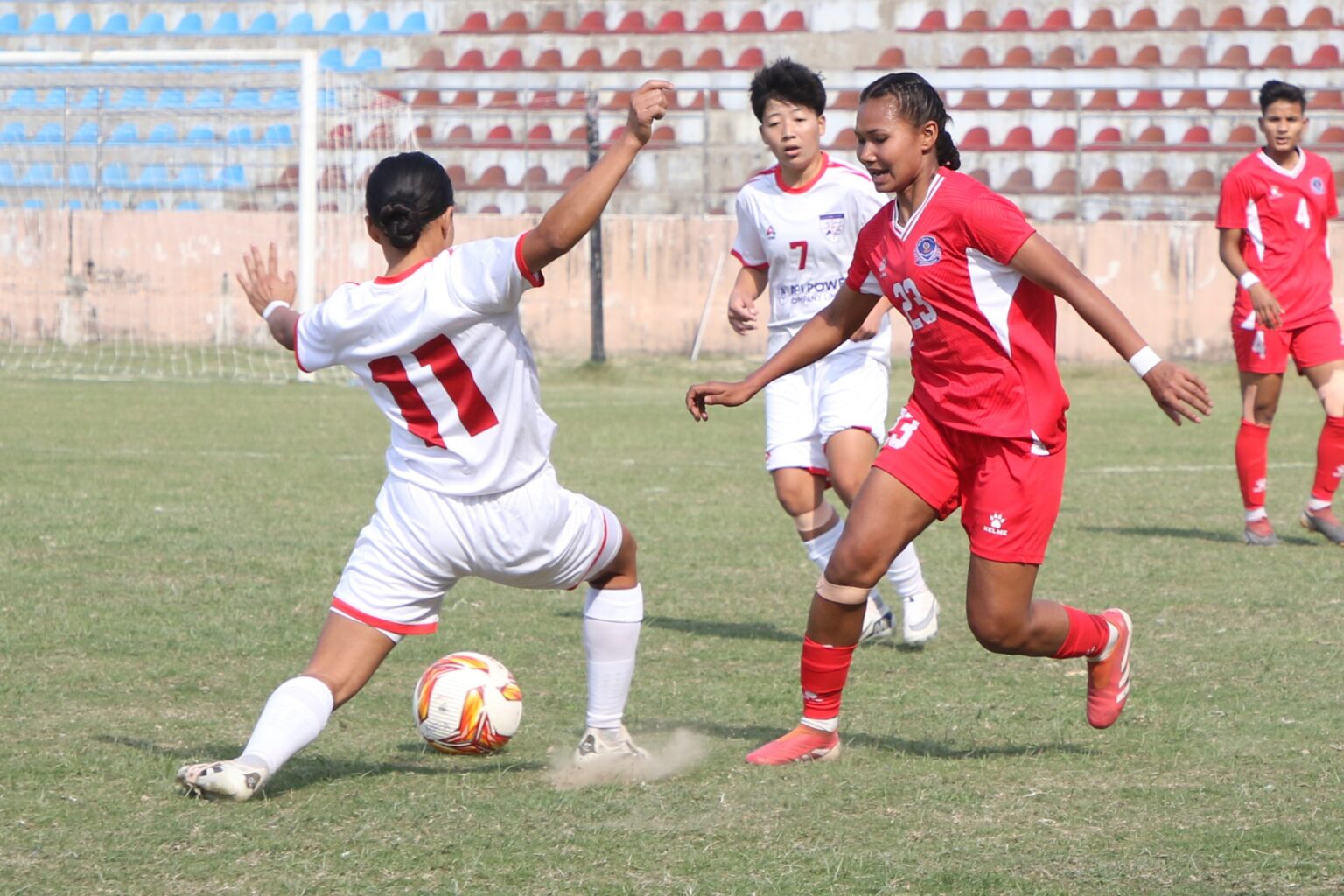
Church Boys and Nepal Police Club battling in the Women’s League. Photo Source: ANFA
Anil Shrestha, president of Machhindra, who finished as runners-up just three points behind Church Boys, is full of regret, saying they are suffering because of their own decision. Expressing his anxiety with his hands on his head, he says, “There is a shortage of players. When playing ‘A’ Division all at once, it is difficult to separate which player is good and which is bad. Instead, we told the Minister to hold the National League first and then the ‘A’ Division. Now, I wonder why I ever said that.”
At that time, due to the lack of leagues, players were migrating. Those who remained had gone to Bangladesh and Bhutan to play football. Since the league, considered the backbone of football, was not happening, football fans had gone to protest and rally at the ANFA office. As the voice of dissatisfaction grew louder following the Gen Z movement, the then Sports Minister Gupta played the role of a mediator.
A meeting between ANFA officials and ‘A’ Division club presidents held on November 3, 2025, agreed to organize the ‘A’ Division League after nearly four years. Machhindra President Shrestha, however, had asked for at least three months of time for it.
“We had said that if we were to go on a home-and-away basis, we should be given two to three months. I had proposed to hold the ‘A’ Division League one month after finishing the National League so that preparation could also be done before that,” he recalls.
Later, ANFA President Pankaj Bikram Nembang and General Secretary Kiran Rai promised the clubs and the Minister to conduct the league within a period not exceeding 120 days.
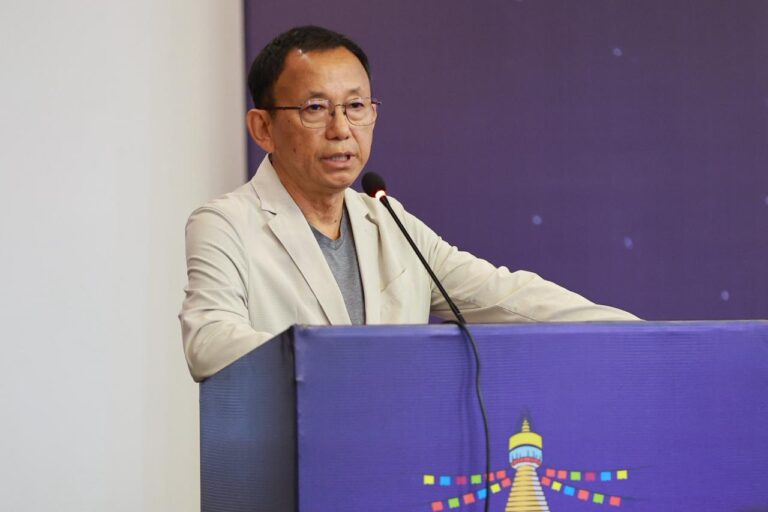
ANFA President Pankaj Bikram Nembang. Photo Source: Nepal Photo Library
Initially, it was said that 10 teams would participate in the National League, including the top 6 teams from the ‘A’ Division League and the top four from the ANFA President’s League. However, after the players themselves resorted to protests later, the door was opened for 18 clubs to play, comprising all teams from the ‘A’ Division League and four teams from the President’s League. Nevertheless, except for former ANFA President Karma Tsering Sherpa’s Himalayan Sherpa Club, everyone participated in the league.
In the National League that started on January 14, clubs like Laligurans, Planning Boys United, Manang Marshyangdi, Shree Bhagwati, and Chitlang FC had already played 12 matches each. The remaining teams had played only 11 matches each. ANFA had announced that the league winner would receive a prize of Rs 5 million along with the opportunity to participate in the qualifiers of the AFC Challenge League. Similarly, a prize of Rs 2.5 million was announced for the runners-up and Rs 1.5 million for the third-placed team.
Shrestha states that since the league was being operated amid such huge expenses and a competitive structure, they participated by spending more than Rs 10 million. “We came to play football. We played the league thinking why not spend if it benefits football itself. Now, neither is the league complete, nor have the expenses been recovered,” he says. According to him, 17 clubs have already spent over Rs 150 million in the men’s league alone. In the women’s category, 10 clubs have spent around Rs 40 million.
ANFA’s focus on NSL
ANFA spokesperson Suresh Shah blames the National Sports Council (NSC) along with the Department of Immigration for the current situation. Taking action in accordance with the National Sports Development Act, 2020, and the National Sports Development Regulations, 2022, NSC had suspended ANFA for three months on March 25.NSC had accused ANFA of failing to follow repeated directives, attempting to move forward with the election process without a
pproval, and providing unsatisfactory explanations to the clarifications demanded. In particular, NSC took a strict step, stating that procedures were advanced against the decision of the executive committee.
ANFA had tried to advance the process related to the General Assembly (Auditory Congress) and elections without the council’s approval. Deeming the step contrary to prevailing laws, NSC decided to suspend it for up to three months.
During the suspension period, ANFA was prohibited from conducting any administrative or election-related activities. ANFA spokesperson Suresh Shah states that this had a direct impact on the regular activities of Nepali football. He says, “At that time, there was no condition to make any financial decisions. The Department of Immigration also obstructed various processes. That is why the league was stopped back then. NSC is also responsible for this.”
According to him, NSC has already lifted the suspension against ANFA without any conditions on May 15. With the lifting of the suspension, a situation has been created where ANFA can conduct its activities regularly. However, even two weeks after the lifting of the suspension, ANFA has not made public any plan regarding when to operate the suspended National League, Women’s League, and the previously announced ‘A’ Division League.
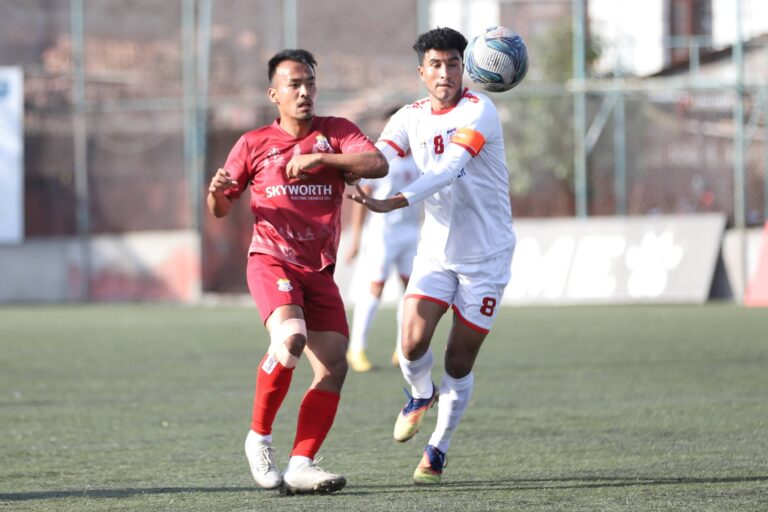
Church Boys captain Arik Bista struggling for the ball with a Sankata player. Photo Source: ANFA
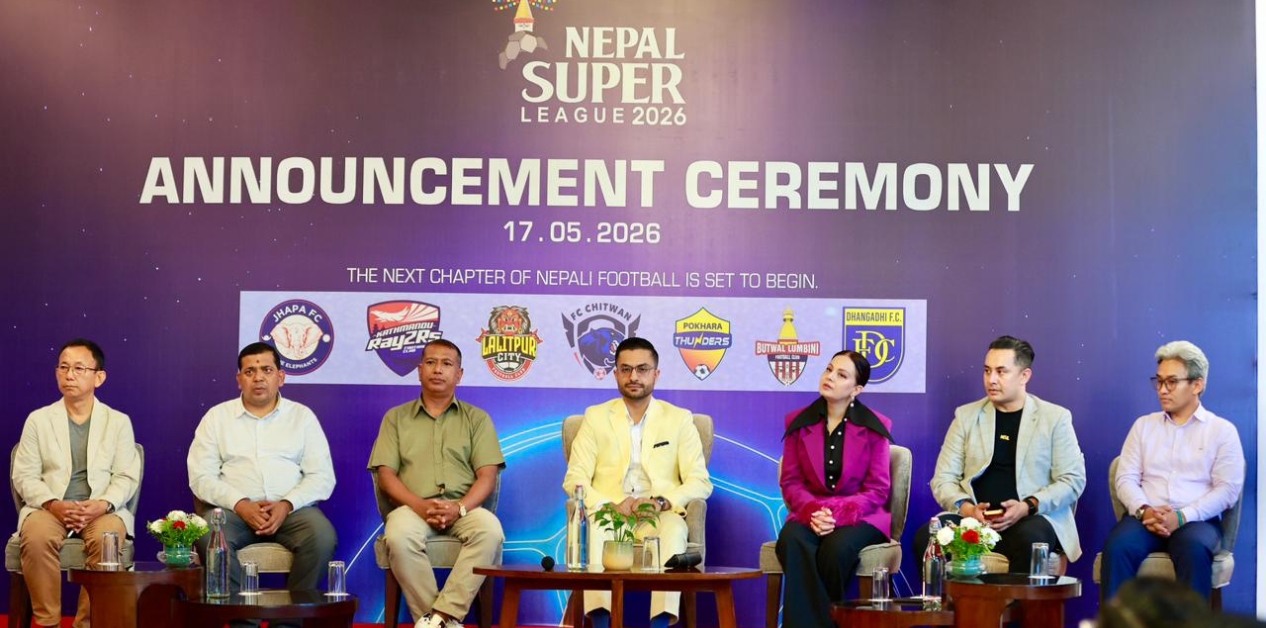
Instead, ANFA currently appears focused on operating the Nepal Super League (NSL), organized by Nepal Sports and Events Management (NSEM) under the Chaudhary Group. According to ANFA President Pankaj Bikram Nembang, NSEM has been granted time to organize the NSL starting from September 5. The franchise league, which is expected to see the participation of 10 to 12 teams, is said to run for about four months.
From its inception, NSL has been a tournament operated with the technical support of ANFA. During the COVID-19 pandemic, the then ANFA President Karma Tsering Sherpa signed a 10-year agreement with NSEM, introducing the concept of a franchise football league in Nepal. Accordingly, the first edition started on April 24, 2021, and concluded on May 15.
However, before the start of the second edition, a dispute arose after ‘A’ Division clubs refused to ‘release’ players. The clubs protested, stating that the timing would clash with the domestic league operated by ANFA and cause problems in player management. Subsequently, based on the recommendation of a dispute resolution task force, the 10-year agreement was terminated on March 23, 2022.
Nevertheless, on December 20, 2022, the ANFA leadership under Nembang signed a new eight-year agreement with NSEM. According to the agreement, NSEM agreed to provide Rs 172.1 million to ANFA over a period of eight years. Since then, the company has completed two editions of the NSL and is currently preparing for the fourth edition.
The dispute that started in India
Long before the concept of franchise football was introduced in Nepal, it had already begun in India. The All India Football Federation (AIFF) had signed a 15-year ‘Master Rights Agreement’ (MRA) with Football Sports Development Limited (FSDL), under the Reliance Group, in 2010. The agreement opened the way to establish a new commercial league and develop it as the country’s top division in the future. The Indian Super League (ISL) was later born through this very process.
Following this agreement, the ISL expanded rapidly, while the I-League, considered India’s traditional top tournament, gradually weakened. This created two parallel league structures in Indian football. As a result, a long-standing dispute has been going on between the clubs, the federation, and the commercial entity.
When the ISL started in 2014, the Asian Football Confederation (AFC) did not grant it official top-league recognition. At that time, the ISL was viewed as a type of commercial tournament, while the official top league of India was considered to be the I-League. Therefore, ISL clubs did not get a place in continental tournaments like the AFC Champions League or the AFC Cup.
However, due to the massive investment, attractive presentation, star players, and broadcasting reach in the ISL, its popularity began to grow rapidly. As spectators, sponsors, and the commercial market gradually drifted toward it, it became clearly visible that Indian football was divided into two streams.
In 2017, the AFC approved AIFF’s proposal and allowed both the ISL and the I-League to operate in parallel. Accordingly, provision was made for the I-League winner to get a place in the preliminary round of the AFC Champions League, and the ISL winner to participate in the AFC Cup. With this decision, the ISL received official recognition.
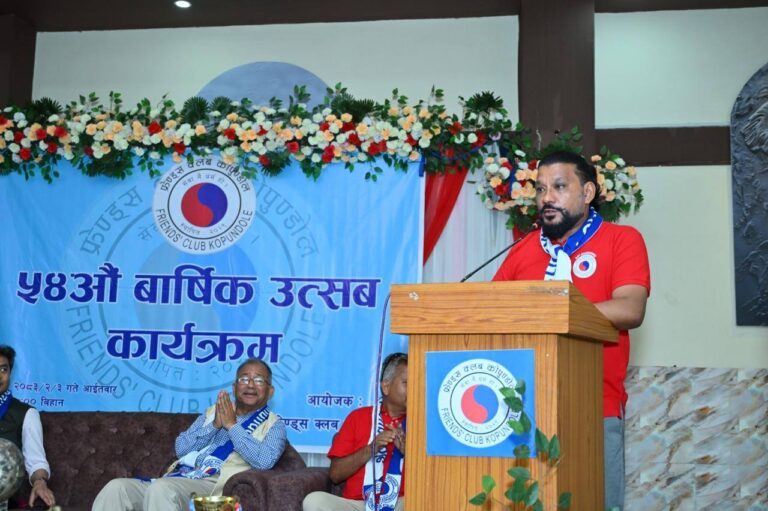
Friends Club President Bishwas Bikram Shah. Photo Source: Shah’s Facebook
After this, the importance of India’s old knockout tournament, the Federation Cup, declined, while some historic I-League clubs also gradually began to be included in the ISL. Over time, the I-League became financially weak. The value of broadcasting rights fell, sponsorship decreased, and the audience’s attention shifted completely toward the ISL. This created a crisis for the very existence of the I-League. Many I-League clubs accused the AIFF and FSDL of systematically weakening traditional club football.
As FIFA had been signaling its preference for a single clear top-league structure for a long time, the AIFF also moved forward in the direction of making the ISL the country’s top division. According to the Indian Express, the agreement with FSDL provided the legal basis for that.
Against this backdrop, a meeting between the AFC and AIFF in 2019 prepared a new ‘roadmap’ for Indian football. According to the plan, the goal was to introduce a single unified league system by changing phases step-by-step from 2019/20 to 2024/25.
According to this, the arrangement proposed continuing the ISL as the top league in the initial phase, gradually including I-League clubs into the ISL, and granting entry into the top division to the I-League winner through promotion from 2022/23. Additionally, plans to fully implement a promotion-relegation system from 2024/25 and operate a separate knockout cup tournament were also included.
However, I-League clubs continuously protested the decision to make the ISL the top league, calling it unjust. They argued that since the I-League was India’s historic and traditional league, weakening it was an attack on the fundamental structure of football.
Currently, the ISL has established itself as India’s ‘top-tier’ league, while the I-League has been limited to the second tier. However, since the promotion-relegation system has not fully stabilized and disputes regarding commercial rights persist, the Indian football structure is still not considered completely stable.
In Nepal too, many have started comparing the tension seen between the NSL and the traditional club structure with India’s experience. ANFA Senior Vice President Bir Bahadur Khadka states that prioritizing the franchise model while traditional competitions like the National League and ‘A’ Division become uncertain is not an appropriate step. He says, “If this continues, it cannot be said that the conflict and structural imbalance suffered by Indian football will not happen to Nepal as well.”
For the past two years, Nepali clubs have not been able to participate in major club tournaments of the Asian Football Confederation (AFC). Last year, Nepali clubs were excluded from AFC competitions after the First Instance Body (FIB), the body that makes decisions regarding AFC club licensing, did not grant the necessary licenses.
Nevertheless, the FIB had granted licenses to Church Boys and Tribhuvan Army Club for the 2024/25 season. Accordingly, Church Boys got the opportunity to play against Bhutan’s Paro FC in the preliminary qualifiers of the AFC Challenge League.
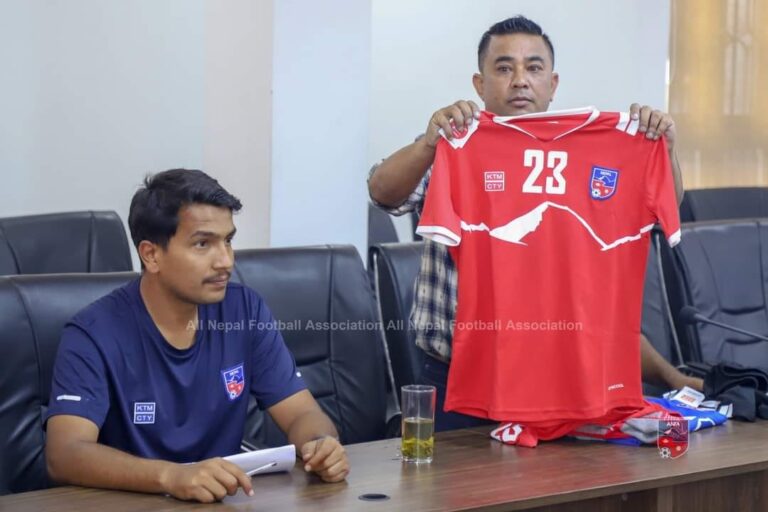
Anil Shrestha (right). Photo Source: ANFA
This year too, there is a risk that Nepali clubs will be deprived of AFC competitions. “To participate in AFC competitions, at least 192 league matches must be completed domestically. Therefore, we have made a schedule to conduct 137 matches in the National League. We are preparing to conduct the remaining matches in other competitions,” ANFA League Director Sanjeev Mishra had said while announcing the league. However, the currently operating National League has not even been able to cross the mark of 100 matches.
On the other hand, the AFC has not given official structural recognition to the NSL like India’s ISL. Therefore, there is currently no possibility that a Nepali club will secure a place in AFC competitions based solely on the NSL.
‘We were betrayed’
When the NSL started, it was considered the beginning of a professional era in Nepali football. Due to private investment, the franchise model, entertaining presentation, and media attraction, it drew attention in a short period. However, Friends Club President Bishwas Bikram Shah states that since the main foundation of Nepal’s football is the ‘A’ Division League itself, ANFA has scored a self-goal by pushing the NSL forward.
“After the NSL came as a separate franchise tournament, a situation has been created as if two separate top structures have been formed. This has raised questions about which league is the real top, through which system player selection takes place, and which is the backbone of national football. In such a situation, the ‘A’ Division should not have been left to die,” he says.
To obtain the AFC club license, ‘A’ Division clubs have recently started prioritizing long-term academy development and youth player production. However, since the NSL is based on a franchise model, he says that the participating teams look more like brands run by investors rather than permanent football clubs. Just as he said, the number of teams has been fluctuating since the first edition of the tournament.
Seven teams participated in the first edition of the NSL. Two years later, during the second edition, the number of teams reached nine with the addition of Birgunj United FC and Sporting Ilam De Mechi FC.
However, in the third edition, these two teams did not participate, and the tournament was again limited to seven teams. It is said that additional new teams will be included in the fourth edition. “The ‘A’ Division clubs were running the football pyramid. There was relegation and promotion in it. But there is no such arrangement in the NSL. That model cannot address the foundational structure,” he says.
There are currently 56 clubs in the ‘A’, ‘B’, ‘C’, and ‘D’ leagues being organized by ANFA. However, due to ANFA’s failure to conduct the league on time, Planning Boys United and Shree Bhagwati Youth Club, who were promoted from the ‘B’ Division the previous year, have not been able to play in the top division.
Similarly, Bagmati Youth Club and RC32, who were promoted to the ‘B’ Division on June 4, 2024, have not been able to play in the league even though it is about to be two years. Apart from those, it is uncertain when the ‘C’ Division and ‘C’ Division qualifiers will take place.
Shah says, “If football were running, this pyramid would also be complete. On the other hand, financial losses would also be reduced. But due to ANFA being selfish, football is exactly where it was in the beginning. This is sure to betray the clubs that have been investing for 93 years.”