Kathmandu
Tuesday, July 21, 2026





Government embroiled in constitutional amendment debates while neglecting dozens of laws required to implement constitution and federalism
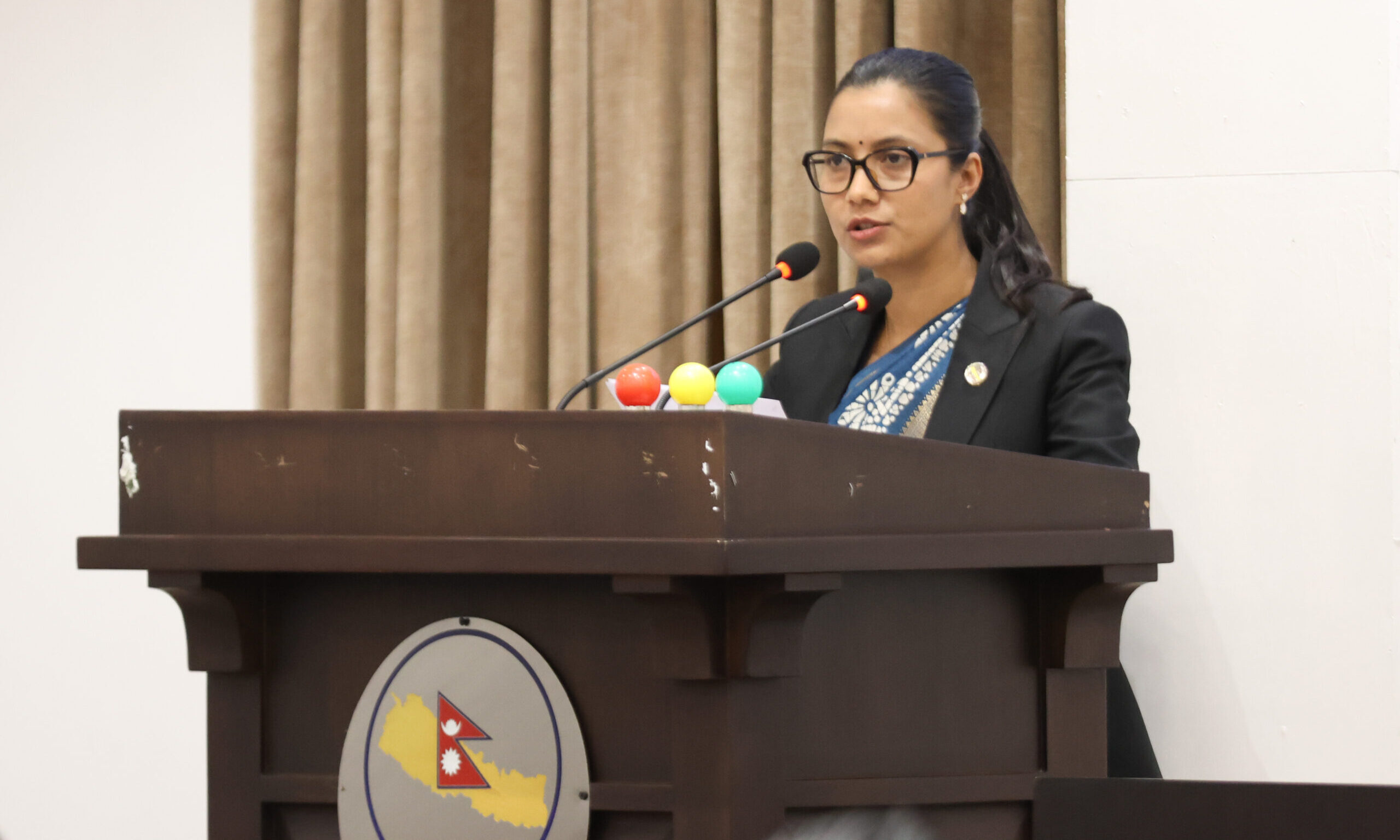
KATHMANDU: The scene in the House of Representatives meeting on the evening of May 31 looked like a minor battlefield. The atmosphere turned tense after Speaker Dol Prasad Aryal attempted to present the House of Representatives Regulations, 2026 for a decision amidst a blockade of the well by opposition lawmakers. A physical scuffle broke out between opposition lawmakers—who demanded further discussion and argued that the regulations should not include provisions conflicting with the Constitution and prevailing laws—and ruling party lawmakers who countered them. The severe jostling escalated to the point where the rostrum was nearly overturned, and physical altercations almost broke out.
Amidst the chanting of slogans and unruly behavior by opposition lawmakers, Speaker Aryal mobilized a large number of marshal escorts to pass the regulations by a majority vote. The regulations serve as the legal document guiding the proceedings and meetings of the House of Representatives. The new regulations include a provision stating that a lawmaker will only be suspended if they are in custody for a criminal case carrying a sentence of three years or more, a clause that conflicts with the Prevention of Corruption Act, the Commission for the Investigation of Abuse of Authority Act, and the Money Laundering Prevention Act.
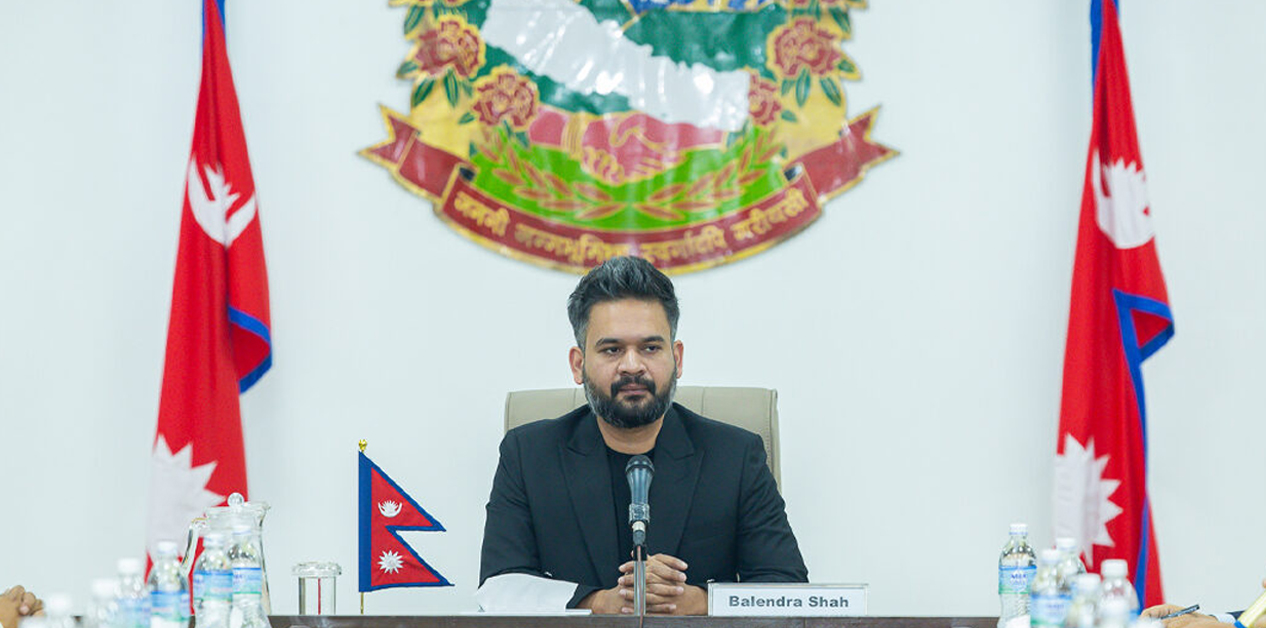
This incident in Parliament exemplifies the high-handedness of the Rastriya Swatantra Party (RSP), which holds a near two-thirds majority in the House of Representatives, to craft laws to its own liking. However, the government led by Balendra Shah has failed to show a similar level of urgency when it comes to drafting essential acts.
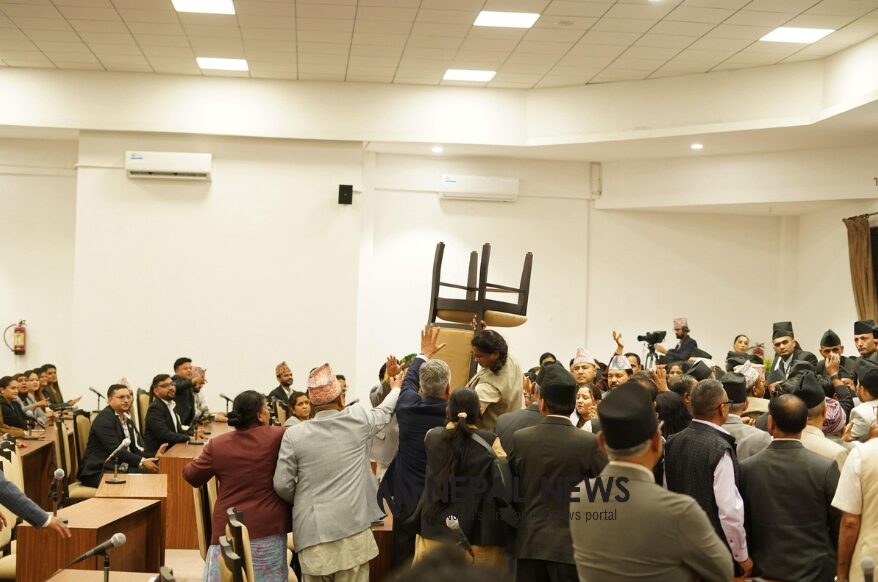
The scene observed during the House of Representatives meeting held on May 31
The process of tabling a bill in Parliament, debating it, presenting it for a decision, and passing it into law is identical to the process used to pass the House of Representatives Regulations. However, even though more than a decade has passed since the promulgation of the Constitution of Nepal, 2015, and many laws regarding constitutional implementation are yet to be made, the majority single-party government has taken no steps in that direction. Instead, the government, which circumvented Parliament to issue ordinances to ease its governance, has prioritized law amendments solely to execute its 100-point governance reform agenda. Consequently, the crucial aspect of drafting core laws for the implementation of the Constitution and federalism has been sidelined.
Paradoxically, before the 2015 Constitution has even been fully implemented, the government remains focused on debates surrounding constitutional amendments. The government has formed a task force and is conducting discussions across various groups to prepare a debate paper aimed at building national consensus on constitutional amendment issues.
A study report by a sub-committee of the previous Parliament had noted that laws concerning fundamental rights were yet to be drafted, and suggested the immediate formulation of 39 laws in accordance with various articles of the Constitution.
This recommendation was made in the report titled “Study Report on Laws Yet to be Formed Under the Constitution, 2024,” prepared by a five-member study sub-committee formed under the coordinator-ship of Bedu Ram Bhusal by the then Legislation Management Committee.These included: Article 25 (3): Matters related to property rights, acquisition, and compensation. Articles 22, 23, 273 (12): Laws for integrated compensation. Article 166 (1, 2): Matters related to the authority and
ements for homeless Dalits. Article 31: Laws regarding women’s rights. Article 266 (4): Laws related to other provisions of the National Security Council. Article 17 (2): Matters related to freedom of opinion and expression. Article 35: Public health laws, among others.
Following the formation of the new government, the Ministry of Law, Justice, and Parliamentary Affairs has compiled a list of 45 bills to be presented to Parliament this year. However, bills designed to make legal arrangements for constitutional implementation are scarce on this list. Instead, bills to amend existing acts dominate. Bills drafted by the Office of the Prime Minister and Council of Ministers, as well as the Ministries of Finance; Industry, Commerce, and Supplies; and Energy, Water Resources, and Irrigation, have already reached the Law Ministry.
Bills submitted to Parliament by the then-government after the parliamentary elections of November 20, 2022 automatically lapsed following the dissolution of the House of Representatives on September 13, in the wake of last year’s Gen Z protest. According to statistics from the Federal Parliament, 26 bills in the House of Representatives and 12 bills in the National Assembly from the previous Parliament remain lapsed. This includes the Federal Civil Service Act Bill, 2023.
Highlighting the problems arising from the failure to enact the Federal Civil Service Act, the Supreme Court recently issued a mandamus on February 5, 2026, ordering the immediate introduction of the law. The full text of the verdict issued by the Supreme Court in the first week of this Jestha states: “Since the Federal Civil Service Act has not been issued for a long time after the promulgation of the Constitution, administrative federalism has failed to take shape… causing uncertainty in the adjusted service conditions of employees, an order has been issued to draw the attention of the Federal Parliament and the Government once again to formulate it as soon as possible.”
The Supreme Court has repeatedly ordered the swift issuance of the Federal Civil Service Act during times when disputed employee matters have reached the court. On February 5, 2026, while ruling on a case regarding a promotion dispute of employees who transferred from the federal level to the provinces, the court explained that problems had arisen due to the absence of the law.
According to the Constitution, bills that originate and are debated in the National Assembly never lapse. However, bills that were previously registered (originated) in the House of Representatives, passed by the National Assembly, and sent back to the House of Representatives are currently in a lapsed state.
According to Dal Bahadur Adhikari, Joint Secretary and Spokesperson for the Ministry of Law, Justice, and Parliamentary Affairs, bills that have lapsed and returned to ground zero must be revived from scratch following standard procedures. The Cabinet has already decided that government approval is not required for lapsed bills. This has made it easier to reintroduce those bills to Parliament.
Spokesperson Adhikari states that the Ministry is prioritizing work on these bills to accomplish the tasks listed in the government’s 100-point governance reform agenda. Preparations are also underway to introduce some matters, which were previously brought as ordinances, as replacement bills. Among the bills that have now lapsed, some had already undergone clause-by-clause discussions in various committees of the previous Parliament, while others were in the process of being passed.
Ministry Spokesperson Adhikari states that bills like the civil service bill, serving as guiding principles for every employee from the federal to the local level, hold immense significance for the implementation of federalism.
The “Bill Formulated to Provide for the Constitution, Operation, and Conditions of Service of the Federal Civil Service” is also on the list to be submitted to Parliament.
In addition, the “Bill to Amend the Public Procurement Act, 2007,” the “Constitutional Council Act Amendment Bill,” and the Water Resources Bill, among others, are entering Parliament. For the RSP government, which enjoys a near two-thirds majority, passing and amending bills does not seem to pose much of a challenge at present. This also presents an opportunity for the government to draft laws for constitutional implementation.
Constitutional expert and Senior Advocate Chandra Kanta Gyawali attributes the failure to draft all constitutional implementation laws to the negligence of political parties. “Laws that the federal government needs to draft for local levels and provinces have not been made,” he says. “For 21 jurisdictions of the provinces, the federal government needs to draft 35 laws. Six laws that provinces need to draft for local levels are also yet to be made.”
Out of the 31 jurisdictions written into the Constitution, 16 laws have been made but have not been implemented. Gyawali mentions that the government can alter the lapsed laws in Parliament, restart the process from the beginning, and take them to the new Parliament. He specifically suggests that the federal civil service law, police bill, and other bills should be passed swiftly.
Parties failing in constitutional implementation
After the first Constituent Assembly dissolved without delivering a constitution, the second Constituent Assembly, elected in 2013, promulgated the Constitution on September 20, 2015. During the decade since, political parties taking turns in power failed to fully implement the Constitution and federalism. They did not draft the necessary laws. Although various task forces were formed and reports submitted for the implementation of the Constitution and federalism, they were never executed.
Immediately after the promulgation of the Constitution, an understanding was reached among parties to form a ‘Constitution Implementation Commission.’ However, because the commission could not be formed due to political infighting over power, the implementation aspect was left stranded, according to Khim Lal Devkota, a member of the Constituent Assembly who participated in drafting the Constitution. He says, “Every government formed after the promulgation of the Constitution focused on staying in power, while the parties outside focused on pulling down the government by forming new coalitions, because of which the formulation of necessary laws never became a priority.” He notes that a Constitution Implementation Commission could still be formed even now.
Regarding the current government’s inclination toward constitutional amendment, he suggests that it should first take steps toward the full implementation of the Constitution. “The Constitution must be fully implemented, tested, and practiced, and only when problems arise during that course should amendments be pursued,” he says. “Something that has not even been tested cannot be deemed a problem. Amendments should only be made after implementing it and gaining experience.”
He agrees with other experts that lapsed bills from the previous Parliament can be reintroduced through a new process. He mentions that during his time in Parliament, he had suggested passing bills in the same session they were presented to ensure they did not go to waste, but it was never implemented.
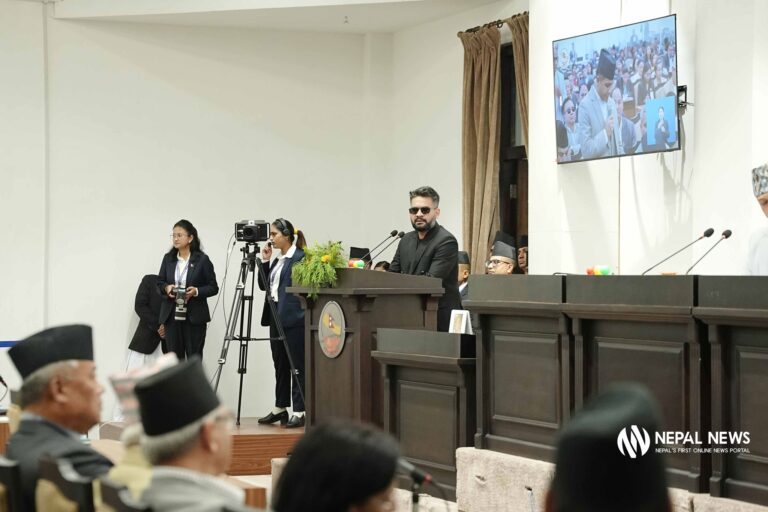
Prime Minister Balendra Shah replying to questions raised by lawmakers
According to Devkota, who is also a federalism expert and Senior Advocate, the phrase “shall be as provided for by law” is written in 221 places in the Constitution. He states that several key laws, including those, are yet to be made. Crucial laws such as the Federal Civil Service Act, the Provincial Police Service Act, the Education Act, the Provincial Government Operation Act, and the Financial Federalism Implementation Act are yet to be formulated. He shares that the Civil Service Act could not be passed because parties repeatedly failed to forge a consensus on it.He mentions that although many laws regarding fundame
ntal rights have been made, they could not be implemented because the corresponding regulations were not drafted. “When governments formed after the promulgation of the Constitution indulged in power games, less attention was paid to constitutional implementation,” he says. “After the Constitution was issued, the Constituent Assembly transformed into the Legislature-Parliament. The purpose of that transformation was to draft laws for constitutional implementation. But consensus could not be reached among parties.” During that period, only one act, the ‘Inter-Governmental Fiscal Management Act, 2017,’ was issued.
On October 18, 2022, the ‘Parliamentary Special Committee for Study and Monitoring of Federalism Implementation,’ coordinated by National Assembly member Khim Lal Devkota, made its report public. According to the report prepared by the seven-member committee, from the promulgation of the Constitution in 2015 until July 2022, 121 new acts were issued by the federation, while 431 acts were amended and updated. To make them compatible with the Constitution, 23 acts and 46 regulations were repealed. During that period, the provinces enacted 430 laws.
The report pointed out that because the federal system was a new experience for Nepal, problems and ambiguities existed among the three tiers of government regarding the exercise of authority. It highlighted the issue that police adjustment could not be achieved despite being under the sole jurisdiction of the provinces. ‘Because the Federal Civil Service Act has not been drafted, provinces have been unable to manage employees as expected. This has also affected the local levels,’ the report stated. The problem pointed out three years ago still persists today.
In 2024, a five-member study committee was formed under the coordinator-ship of then-lawmaker Bedu Ram Bhusal to study the laws remaining to be formed under the Constitution. In the report submitted on January 3, 2025, the committee mentioned that 39 laws, citing specific articles of the Constitution, and two regarding fundamental rights, totaling 41 laws, had not entered the legislative process. The report noted that under fundamental rights, the Federal Education Law under Article 31, and the Federal Civil Service Law under Article 285(1)(2) had been presented in the House of Representatives and were pending in the committee. Both laws lapsed after the dissolution of Parliament.
The report had suggested that 24 laws in accordance with the Constitution needed to be made at the provincial level, and 6 laws by municipal and village assemblies. However, because the recommendations given by repeated reports were not implemented, the Constitution could not be fully realized.
According to data maintained on the Federal Parliament’s website, from July 4, 2018 to September 21, 2025, at least 97 laws were authenticated by the President after being passed by the House of Representatives and the National Assembly.
Constitutional expert and Senior Advocate Gyawali suggests that the government should form a recommendation commission to identify the reasons and problems behind the failure to implement the Constitution. “We must implement the Constitution, keep in mind the problems that arise during the course, and only then move toward constitutional amendment according to the time and circumstances,” he says.
The Civil Service Bill embroiled in complications
In 2018, the ‘Bill Formulated to Provide for the Constitution, Operation, and Conditions of Service of the Civil Service’ was registered at the Federal Parliament Secretariat. The bill was presented to the House of Representatives on April 5, 2021. The bill, which lay stranded in Parliament, was withdrawn on October 5, 2021 following a cabinet decision.
For the second time, the ‘Federal Civil Service Bill 2023’ was registered in the House of Representatives on March 4, 2024. Heated debates broke out over provisions in the bill regarding a ‘cooling period’ for employees, service duration, and retirement age.
Ultimately, the bill was passed by a majority in the House of Representatives on June 29, 2025, with a provision keeping a two-year cooling period for employees to take up constitutional or government appointments post-retirement or resignation. However, an uproar ensued after the bill returned overnight with alterations, stating in another clause that the cooling period would not apply.
To investigate the alterations made to the bill’s provisions, a seven-member Special Study and Investigation Committee was formed on July 7, 2025 under the chairmanship of Jeevan Pariyar, Chairperson of the State Affairs Committee of Parliament. The bill had been passed with a provision in sub-clause 4 of clause 82 stating that ‘a civil servant or an employee resigned or retired from other government services shall not be appointed to any constitutional or government position before the completion of a two-year period from the date of retirement from service.’ However, because questions were raised that the provision in sub-clause 5 would render the cooling period arrangement ineffective, the parliamentary special investigation committee was formed. In the report submitted to Parliament on August 3, 2025, the investigation committee noted that the lack of harmony between sub-clauses 4 and 5 of clause 82 was a “serious error.”
Regarding the failure to introduce the Federal Civil Service Act, the Supreme Court, in its verdict on February 5, 2026, explained that ‘since the Federal Civil Service Act has not been issued for a long time after the issuance of the new Constitution with a federal structure in the country, administrative federalism has failed to take shape.’ The verdict also notes that practical complexities exist in the transitional arrangements made by the Employee Adjustment Act, 2019. This verdict came in a case where employees adjusted into Koshi Province moved the Supreme Court, claiming their promotions were halted because the employee laws between the province and the federation clashed. ‘If federal law is to apply to adjusted employees in every service condition, keeping the provincial service under sole jurisdiction holds no meaning,’ the Supreme Court explained.
Ministry Spokesperson Adhikari states that the Law Ministry is preparing to present the civil service bill to Parliament.
Following the formation of the government led by Balendra Shah, the ‘House of Representatives Member Election (First Amendment) Bill 2026’ and the ‘Voter List (First Amendment) Bill 2026’ have been passed by the House of Representatives and were also passed by the National Assembly on May 31. Both bills will now emerge as acts. The ‘Nepal Rastra Bank (Third Amendment) Bill 2026’ has been presented to the House of Representatives and distributed to members for study. Spokesperson Adhikari states that the remaining bills are in the process of being tabled in Parliament.