Kathmandu
Sunday, July 5, 2026





From the arrest of KP Sharma Oli to a parliamentary uproar over border encroachment claim, Prime Minister Balendra Shah's first hundred days have been fast, disruptive and deeply contested, with the government claiming near 90 percent delivery on its own reform agenda even as the opposition calls it a failure.
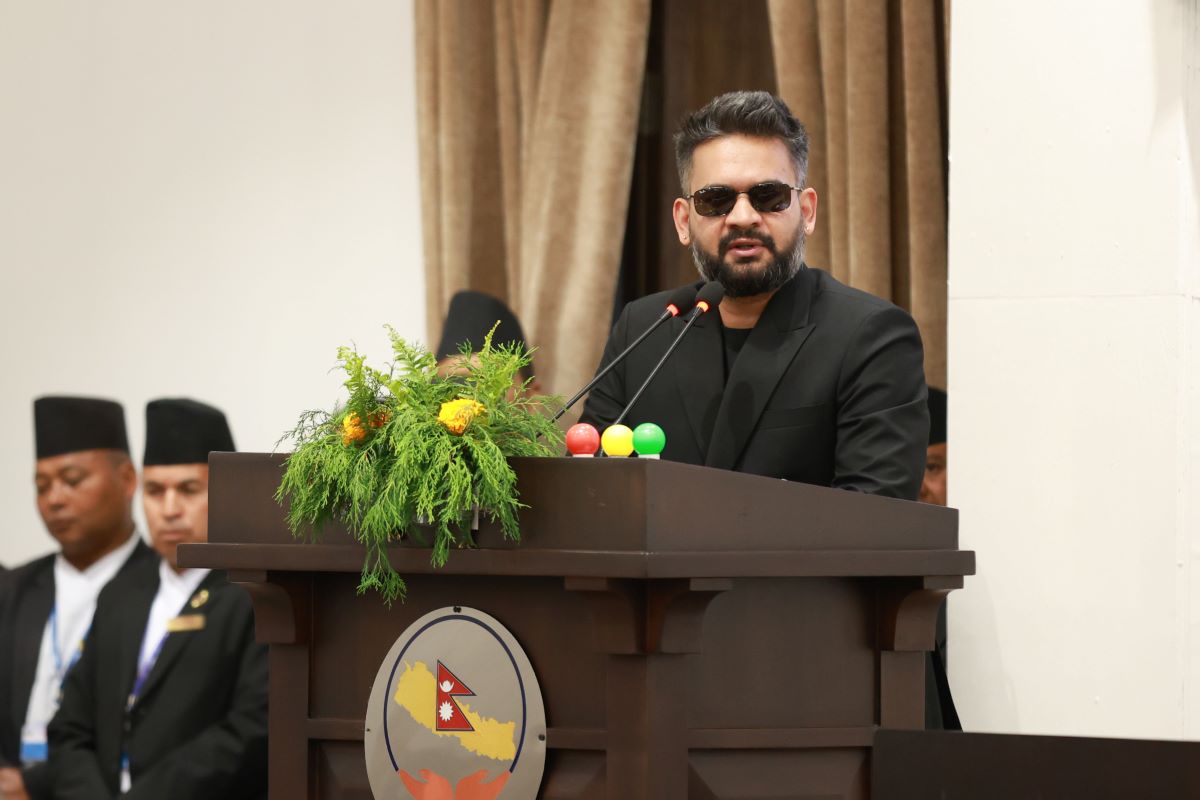
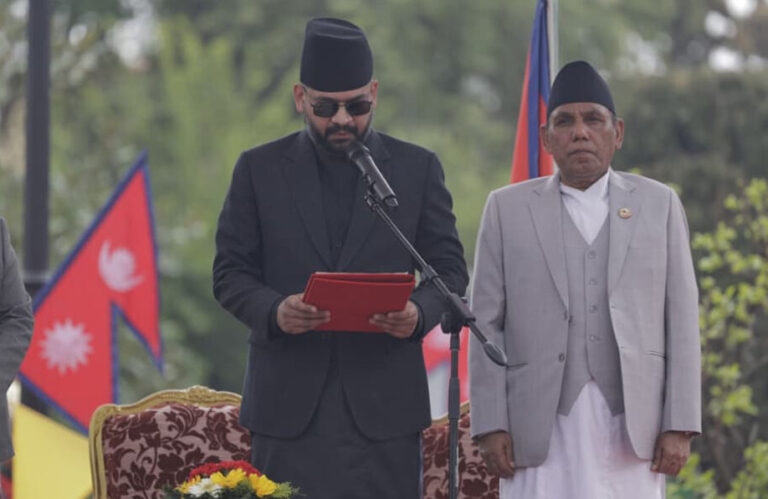
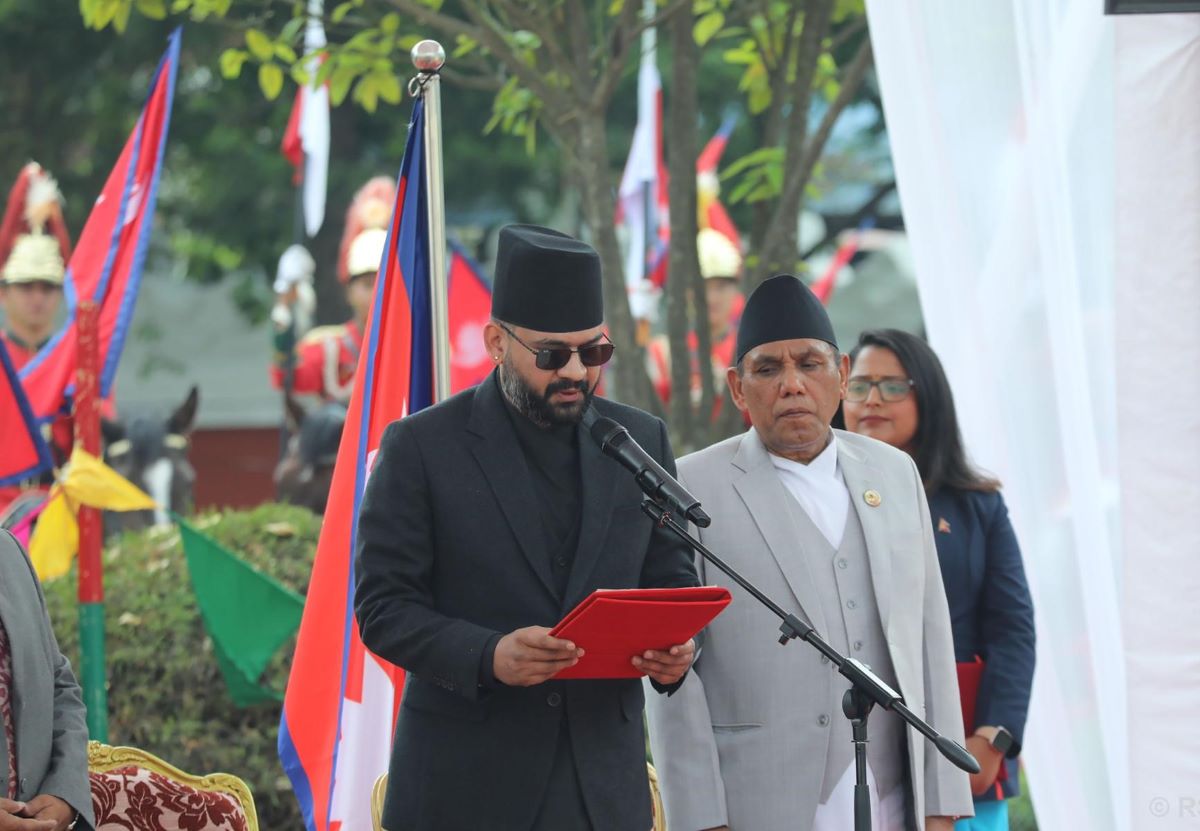
KATHMANDU: Balendra “Balen” Shah, the 36 year old former Kathmandu mayor and rapper turned politician, was sworn in as Nepal’s prime minister on March 27, 2026, after his Rastriya Swatantra Party swept the March 5 general election with 182 seats.
His government completed its first hundred days on July 4, a milestone marked by arrests of former leaders, sweeping bureaucratic changes, a bruising India border row in Parliament and sharply divided verdicts on whether the RSP’s promised transformation has actually begun.
What exactly happened on July 4 and why does it matter?
On July 4, 2026, the Balen Shah government formally completed its first hundred days in office, a milestone that in Nepal, as in many democracies, is treated as an early report card on a new administration’s intent and capability.
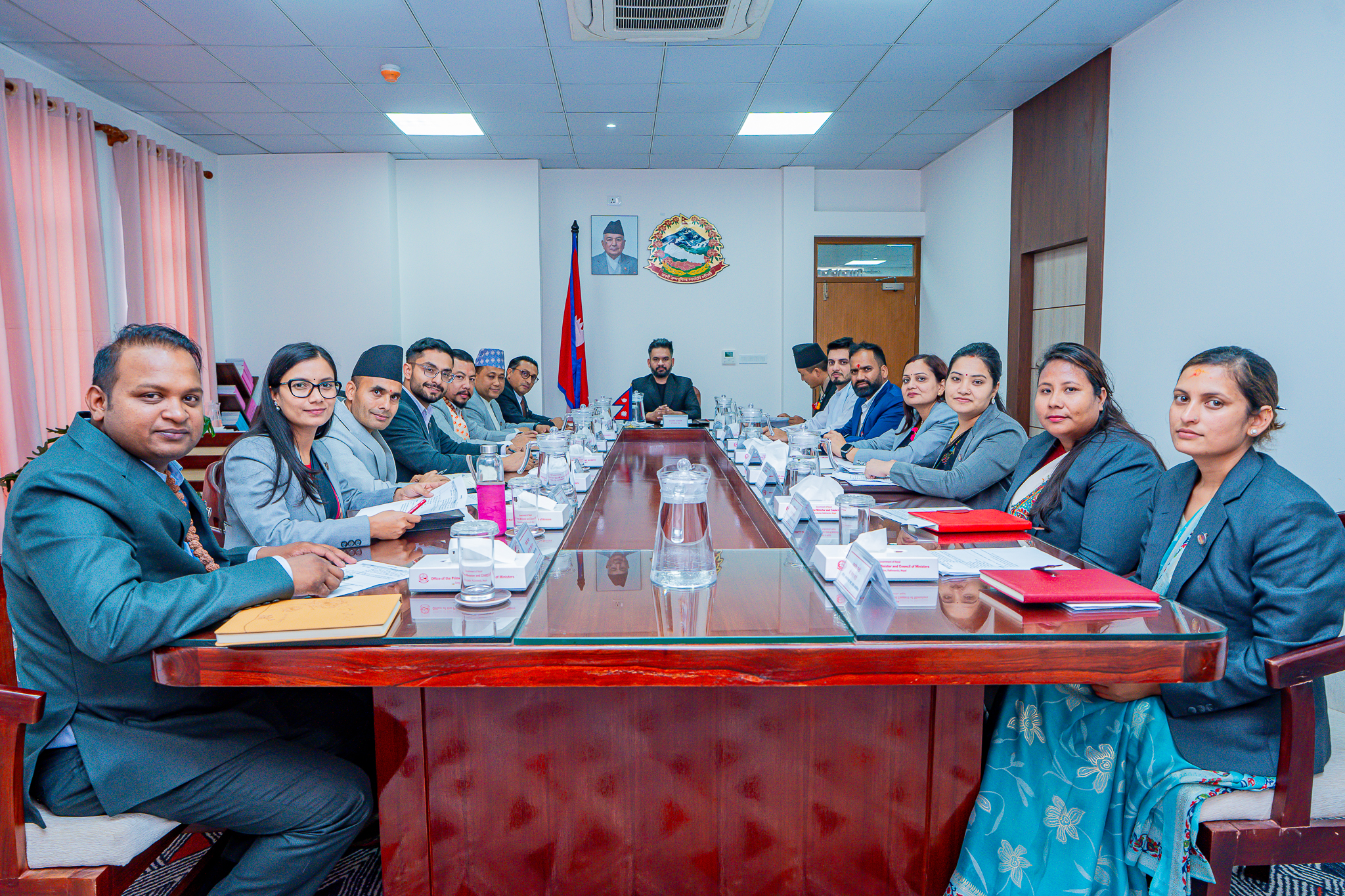
Government spokesperson and Education Minister Sasmit Pokharel presented the achievements at a press event at the Office of the Prime Minister and Council of Ministers in Singha Durbar, claiming that 87.2 percent of the government’s own hundred point governance reform agenda had been achieved, with seventy of the hundred points fully implemented.
The date matters because it closes out what political observers call the honeymoon period, the window during which even critics and opposition parties tend to extend some benefit of the doubt to a new government.
With that period now over, the RSP administration faces a harder test in the coming months, since public patience for disruption without visible results tends to shrink quickly in Nepal’s fast moving political environment, and both supporters and opponents have used the occasion to stake out competing narratives about what the government has actually delivered.
How did Balen Shah come to lead the government in the first place?
Shah’s rise followed a dramatic chain of events that began with the Gen Z protests of September 2025, during which anger over corruption, nepotism and a since reversed social media ban led to violent clashes that killed dozens of demonstrators and saw state buildings, including the parliament and Supreme Court, set ablaze.
The unrest forced the resignation of then prime minister KP Sharma Oli and led to an interim government under Sushila Karki, which called snap elections. In the March 5, 2026 vote, the RSP, riding a wave of youth driven disillusionment with Nepal’s traditional parties, won 182 of 275 seats in the House of Representatives, an unprecedented result for a party barely four years old.
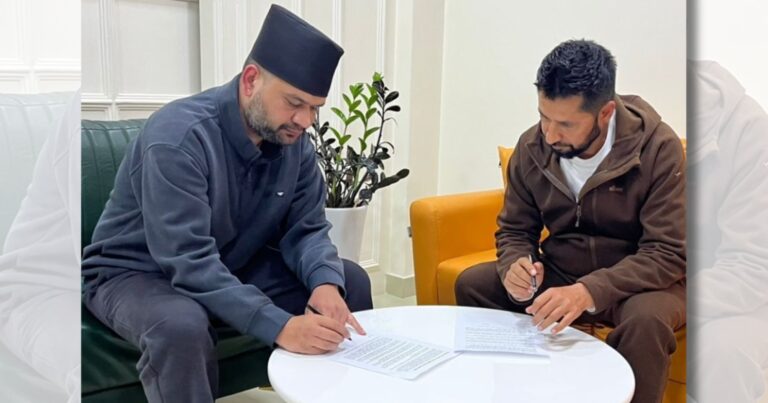
Rabi Lamichhane and Balen Shah signing a seven-point agreement in December, 2025. File photo.
Under a seven point agreement signed in December 2025 between RSP chair Rabi Lamichhane and Shah, the party’s parliamentary leadership and prime ministerial candidacy went to Shah, while Lamichhane retained the party chairmanship.
Shah was appointed prime minister on March 27 and took the oath of office that same day, becoming, at 36, the youngest head of government in the world at the time.
Why were former prime minister KP Sharma Oli and former home minister Ramesh Lekhak arrested so soon after the new government took office?
Within eighteen hours of being sworn in, Shah’s cabinet held its first meeting and decided to act on the recommendations of a high level inquiry commission led by former special court judge Gauri Bahadur Karki, which had investigated the security response to the September 8 and 9, 2025 Gen Z protests. The commission held Oli, as then prime minister, and Lekhak, as then home minister, criminally negligent for failing to prevent the use of excessive force that killed nineteen unarmed protesters on September 8, recommending charges under the sections of the criminal code dealing with negligent killing.

Former PM Oli being escorted by security personnel after his arrest on March 28. Photo courtesy: Nepal Photo Library
Acting on Home Minister Sudhan Gurung’s orders, Nepal Police arrested both men from their homes on March 28, using an urgent warrant provision that allows investigators to detain suspects without prior court approval if there is a risk of flight or evidence destruction, a justification critics found weak given that both men were elderly, no longer in power and had shown no intention of fleeing.
The Kathmandu District Court approved a five day remand, but twelve days later, on April 9, the Supreme Court ordered their release on bail after their wives filed a habeas corpus petition, and as of the hundred day mark no formal charges had been filed against either man.
Has the government’s arrest campaign extended beyond Oli and Lekhak?
Yes, and quite aggressively. The government pursued a similar pattern with several prominent businessmen, arresting Deepak Bhatta of Infinity Holdings, Shanker Group figures Shanker and Sulav Agrawal, industrialist and former FNCCI president Shekhar Golchha, and Nepal Investment Mega Bank chief executive Jyoti Prakash Pandey over the disputed auction of Smart Telecom’s seized assets.
Most notably, on June 22 the Central Investigation Bureau arrested Bishnu Paudel, a former finance minister and CPN-UML vice-chair, in connection with a money laundering probe, with his custody repeatedly extended by the Special Court through the hundred day mark.
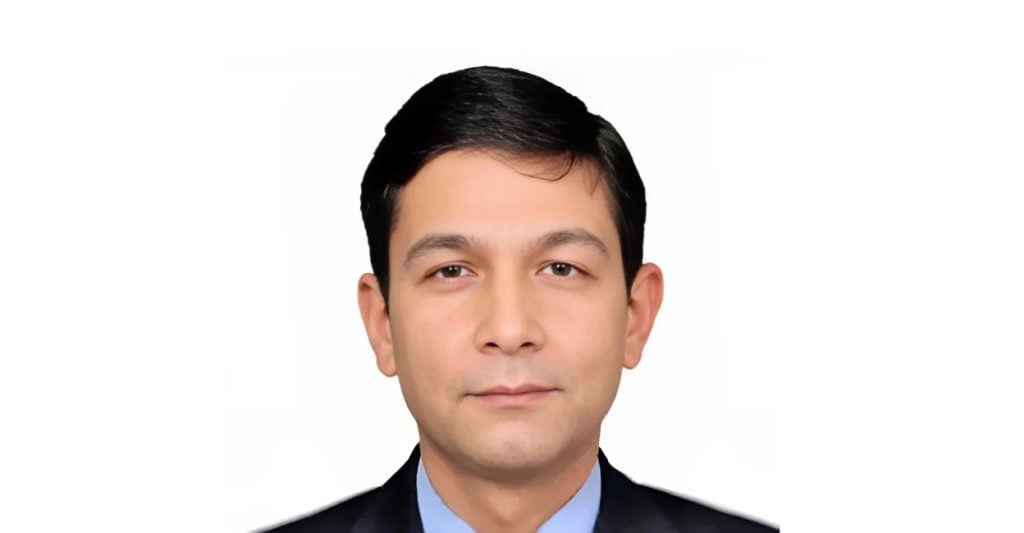
Tirtha Raj Aryal, Director General of the Department of Passports. File photo
Separately, the Commission for the Investigation of Abuse of Authority detained the Department of Passports’ director general and other officials in mid-June over an e-passport procurement contract awarded to two German firms, eventually filing a corruption case against eighteen defendants, including the two companies, seeking recovery of over Rs 10 billion in alleged state losses.
While the government presents these actions as proof of its anti corruption resolve, legal experts, bankers’ associations and opposition leaders have repeatedly questioned whether due process was followed, given how many of the accused were released on bail or had their cases stall without formal charges for months.
What was the border remarks controversy that disrupted Parliament in late May and early June?
On May 31, during his first parliamentary question and answer session as prime minister, Shah responded to a question about the long running Kalapani, Limpiyadhura and Lipulekh territorial dispute with India by saying that Nepal had also encroached on Indian land in various places, a claim he said he learned only after becoming prime minister, and he further suggested that the United Kingdom should be involved in resolving the boundary dispute alongside India.
The remarks caused immediate uproar, with opposition lawmakers across parties demanding evidence, an apology and the removal of the statement from the official parliamentary record, arguing that a prime minister’s words from the floor of Parliament carry legal weight in international law and cannot simply be retracted.
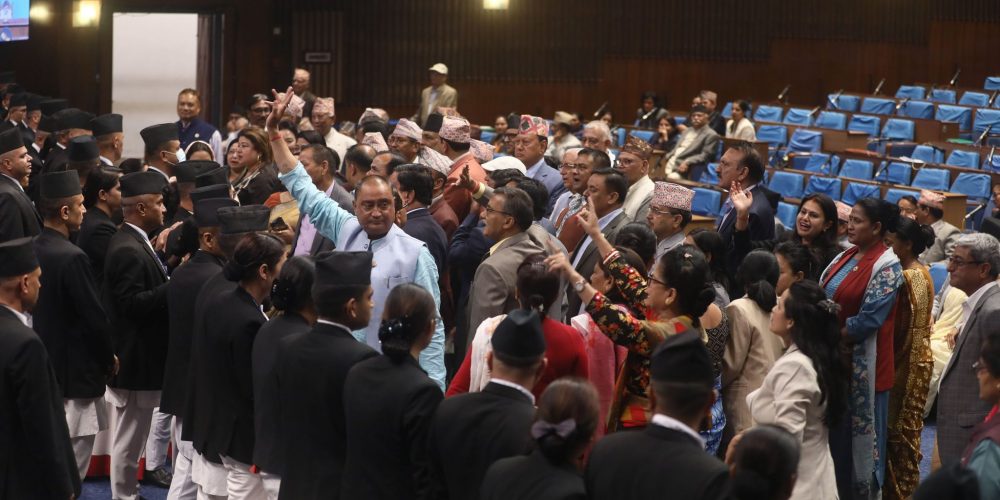
Opposition parties disrupted the House proceedings demanding PM Shah’s apology over his border encroachment statement.
Both houses of Parliament were disrupted over the following days as protests continued, forcing Nepal’s Ministry of Foreign Affairs to issue a clarification stating that Shah’s comments referred to technical, localized encroachment issues involving boundary pillars and no man’s land rather than any shift in Nepal’s longstanding position on the disputed territories.
Commentators in India, meanwhile, described the episode as a diplomatic gain for New Delhi, since it appeared to concede ambiguity in a dispute Nepal has otherwise pressed firmly.
How has the government approached foreign policy and diplomatic visits during these hundred days?
The Shah government’s foreign policy posture has been unusually reserved by Nepali standards. Prime Minister Shah has declined to make any foreign trip in his first year and has avoided one on one meetings with visiting dignitaries, including Indian Foreign Secretary Vikram Misri, whose Kathmandu visit was postponed after he could not secure a meeting with Shah, and United States Special Envoy Sergio Gor, who instead met Foreign Minister Shisir Khanal and RSP chair Rabi Lamichhane.
This break from tradition, in which incoming Nepali prime ministers have historically made an early visit to India or China as a signal of foreign policy orientation, appears to reflect Shah’s stated preference for strategic ambiguity and non-alignment.
In practice, foreign engagement has instead been led by Foreign Minister Khanal, who visited both India and Beijing and by RSP chair Lamichhane, who traveled to New Delhi from June 1 to 5 at the invitation of India’s ruling Bharatiya Janata Party and met Prime Minister Narendra Modi, Home Minister Amit Shah and External Affairs Minister S Jaishankar.
Critics argue this has left Nepal’s international relationships to be shaped more by party level diplomacy than by the government itself, while supporters see it as sensible delegation that avoids repeating Shah’s earlier diplomatic missteps.
What made Rabi Lamichhane’s visit to India significant?
Lamichhane’s five day visit, which began on June 1, was notable for several reasons. It marked the first visit to India by any senior figure from the new ruling party since the government’s formation, and it came at a moment of visible strain in Nepal-India relations following the border remarks row, a dispute over customs duties on low value Indian goods, and the postponed Misri visit.
Lamichhane secured meetings with a striking roster of top Indian officials, including Modi, Jaishankar, Home Minister Amit Shah, National Security Advisor Ajit Doval and BJP national president Nitin Nabin, an access level rarely extended to a party chief rather than a head of government.
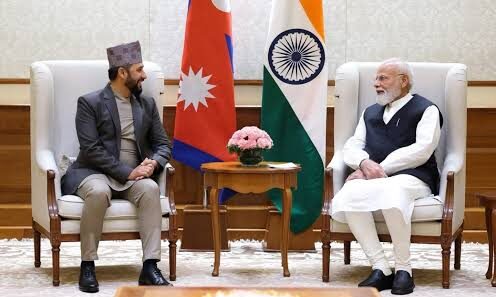
RSP Chair Rabi Lamichhane met Indian Prime Minister Narendra Modi in New Delhi on June 3 during his five-day India visit. File photo
During his hour long meeting with Modi, both leaders spoke of resetting bilateral ties around what Lamichhane called development diplomacy, and Modi indicated he had already invited Prime Minister Shah to visit and was ready to host him.
Nepali government spokesperson Pokharel was careful to describe the trip as being in Lamichhane’s personal and party capacity, insisting it had no direct connection to the prime minister’s own plans, though the visit was widely read in both capitals as an attempt by New Delhi to build a working relationship with RSP leadership even as Shah himself kept his distance.
Why has the prime minister’s absence from Parliament become such a major controversy?
Since assuming office, Shah has been sharply criticized for what opposition parties describe as an unprecedented pattern of avoiding direct parliamentary accountability. The controversy peaked in mid-May when President Ram Chandra Poudel presented the government’s policy and programme to the House, and Shah left partway through the session; his political advisor Asim Shah initially claimed the prime minister was unwell before deleting that statement.
When the House took up debate on the policy and programme days later, the government confirmed that Finance Minister Swarnim Wagle, not Shah, would respond to lawmakers’ questions, a decision that triggered sustained protests from the Nepali Congress, CPN (UML), Nepali Communist Party, Shram Sanskriti Party and Rastriya Prajatantra Party, all of whom argued that parliamentary tradition and constitutional accountability require the head of government to answer directly.
RSP’s own chief whip countered that parliamentary rules do not mandate the prime minister’s personal presence and that authorizing a minister to respond is legitimate. The dispute dragged on for weeks, with opposition lawmakers picketing the well of the House and even demanding Shah’s resignation, while critics and some commentators framed his continued absence as either an authoritarian disregard for democratic norms or, in a more sympathetic reading offered by some columnists, a deliberate choice to avoid further missteps of the kind that produced the border remarks controversy.
What is the controversy surrounding Prime Minister Shah’s advisors and personal secretariat?
Shah’s twenty five member secretariat, revealed on March 31, includes only four formally designated advisors: chief advisor Kumar Byanjankar, political advisor Asim Shah, governance advisor Sudeep Dhakal and information technology advisor Bibek Mishra.
Despite their small number, these unelected advisors have been accused of wielding outsized influence over government decisions, most visibly in the e-passport procurement scandal, where advisors reportedly summoned commissioners of the Commission for the Investigation of Abuse of Authority to Singha Durbar for hours and pressed them to file a corruption case against the German contractors and Nepali officials involved, while the German ambassador was reportedly left waiting separately at the Prime Minister’s Office.
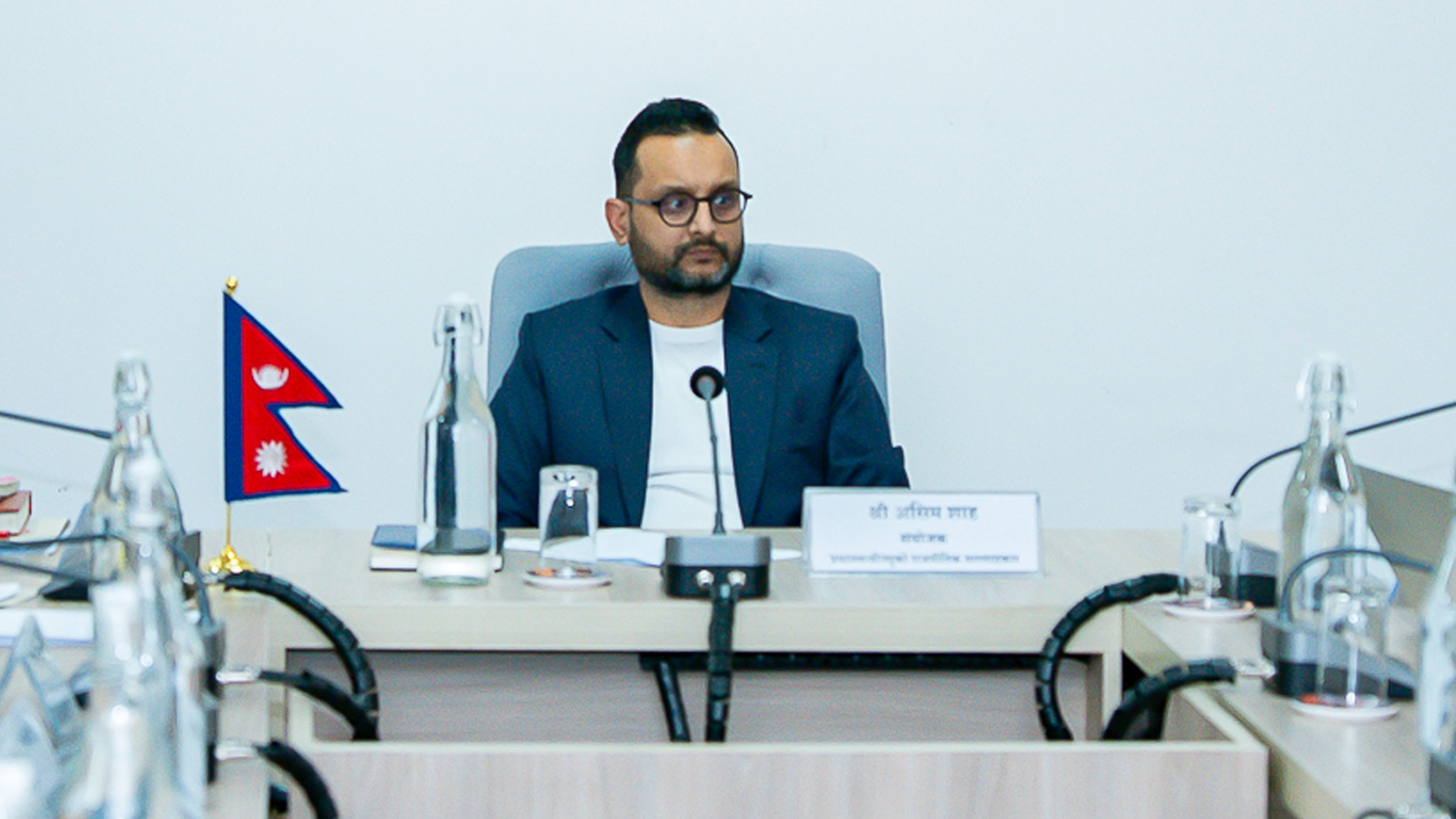
Asim Shah/File photo
Reports have also described chief advisor Byanjankar independently contacting the British ambassador in Kathmandu about Nepal’s territorial claims in the Lipulekh area, a step some officials found improper given that foreign engagement is supposed to run through the Ministry of Foreign Affairs.
Bureaucrats and even junior ministers have reportedly complained that they struggle to access the prime minister directly and are instead directed to deal with his advisors, prompting criticism that the government, while dismantling one set of unelected power centers in the civil service and political appointees, has simultaneously allowed an unelected inner circle of loyalists to accumulate significant informal authority over state affairs.
What has the government done on civil service and bureaucratic reform?
The government moved quickly and aggressively to restructure the state apparatus. It issued an ordinance banning party affiliated trade unions for civil servants, dissolving twelve such unions along with associated student and teacher organizations, arguing that these unions had allowed political parties undue influence over promotions and postings.
It also issued an ordinance annulling more than 1,200 political appointments across institutions including Tribhuvan University, the Nepal Electricity Authority, Nepal Airlines, BP Koirala Institute of Health Sciences and the transitional justice commissions, and later appointed new vice-chancellors to seven universities to fill some of the resulting vacancies.
In mid-May, the government capped the number of federal ministries at eighteen, down from twenty two, a restructuring it says will save around Rs 20 billion annually, and began drafting a new Civil Service Act that would set a mandatory retirement age of fifty five, a provision that if enacted would force roughly ten thousand serving civil servants into early retirement.
Many senior officials transferred to remote postings as part of this reshuffle chose to resign rather than accept the demotions in status.
Supporters describe this as a long overdue effort to build a leaner, merit based civil service, while critics note that most of these sweeping changes were enacted through ordinance rather than legislation debated in Parliament, despite the government commanding a near two thirds majority.
What happened with the eviction of settlements along the Bagmati river?
Beginning April 25, security forces including the Nepal Police and Armed Police Force carried out a mass eviction and demolition of informal settlements along the Bagmati riverbanks in Kathmandu, following an April 23 cabinet decision to begin the first phase of clearance in the Thapathali, Manohara, Sinamangal and Gairigaun areas.
The government argued that these settlements were illegal and that many residents were not genuine landless settlers but people who owned property elsewhere. Human rights organizations including Amnesty International, Human Rights Watch, the International Commission of Jurists and United Nations special rapporteurs raised concern about the absence of a clear resettlement plan before evictions began, and those fears proved largely justified.
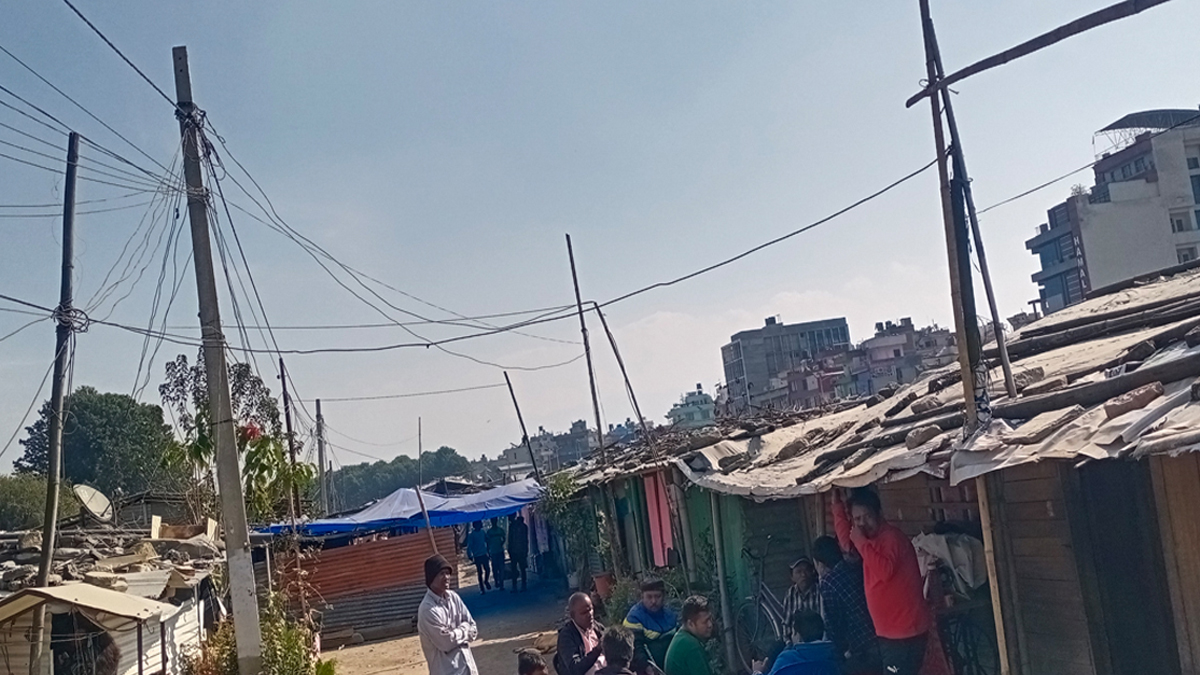
More than two months later, over 1,400 evicted people remained in temporary accommodation, with the government still working to verify who qualifies as a genuine landless eligible for permanent housing and land relief.
A one time payment of Rs 25,000 and monthly rental support of Rs 15,000 for three months were offered to verified settlers, but an initial deadline to vacate holding centres by June 26 had to be extended by a week to July 3 after public outcry that the timeline was unworkable, leaving the resettlement question still largely unresolved as the hundred days closed.
What does the government’s own hundred day report claim it has achieved?
Presented by spokesperson Sasmit Pokharel, the report claims an overall score of 87.2 percent against the government’s hundred point governance reform agenda, with seventy points fully implemented, seventeen points above eighty percent progress and thirteen points below sixty percent.
Specific claims include the establishment of a Property Investigation Commission to probe illegally acquired assets of officials who held office between 2006 and 2026, which has already collected more than 11,000 asset declarations and complaints; the filing of seven money laundering cases naming 101 individuals and entities with claims of Rs 118 billion in illicit assets; the blocking of more than 200,000 gambling related domain links following a directive requiring such platforms to be shut down within 24 hours; and the issuance of a National Integrity Policy and an Employee Code of Conduct across several ministries.
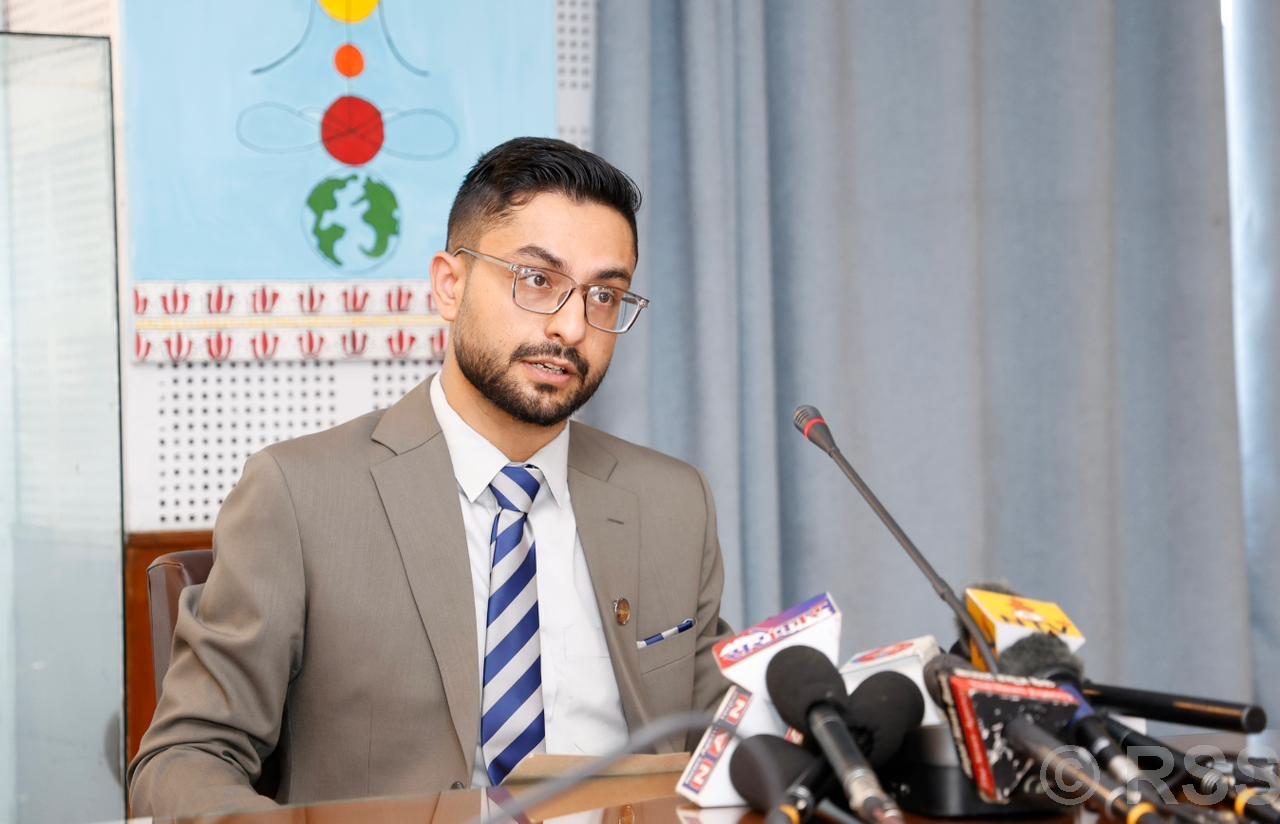
Government spokesperson Sasmit Pokharel
The government also cited the distribution of nearly 89,200 metric tonnes of subsidised chemical fertiliser, continued monthly relief payments to 513 people injured in the Gen Z protests, finalisation of an energy strategy targeting 28,500 megawatts of installed capacity by 2035, and the tabling of a Public Procurement amendment bill in Parliament. Pokharel described the government’s first year as a foundational period for longer term governance transformation.
How has the opposition party, CPN (UML), responded to the hundred day report?
CPN (UML) issued its own scathing hundred day review a day before the government’s announcement, describing the Shah administration’s performance as weak, immature and controversial, and accusing it of failing to meet public expectations while contradicting its own election manifesto.
In a six point statement, UML General Secretary Shankar Pokharel alleged that Singha Durbar was being run arbitrarily by individuals not formally recognized under the law, an apparent reference to the outsized influence of the prime minister’s unelected advisors. The party further accused the government of pursuing constitutional amendments without transparency or consultation with other political parties, of weakening the implementation of federalism, and of attempting to centralize power in the prime minister’s office.
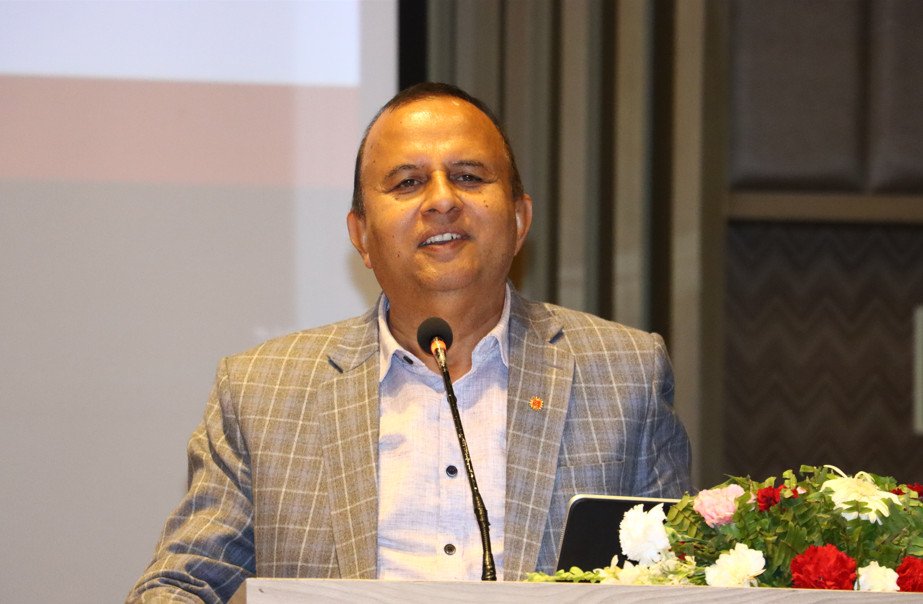
Shankar Pokharel/File photo
UML also criticized the government’s investigation into the violent incidents of September 8 and 9, 2025, arguing it had been weak and appeared more focused on political retaliation against former leaders than on delivering genuine justice for those killed and injured.
The party concluded that the Shah led government had failed to deliver on its central promises of good governance and administrative reform, a sharply more critical assessment than the government’s own self reported score of 87.2 percent progress.
How has RSP chair Rabi Lamichhane, as head of the ruling party, assessed the hundred days?
In contrast to the opposition’s blunt criticism, Lamichhane offered a more measured, cautiously supportive assessment, saying the government’s first hundred days had been a good start but that it would take two to three years for the results of its reforms to become visible to ordinary citizens. This framing is notable because it implicitly acknowledges that the tangible benefits many voters expected from the RSP’s landslide victory have not yet materialized, while still defending the pace and direction of the government’s actions.
Lamichhane’s comments also reflect the broader dynamic within the ruling party, where he retains formal leadership of the RSP as party chairman while Shah runs the government, a division of labor formalized further at the party’s Chitwan convention, where Lamichhane was re-elected unopposed as chairperson and Shah was elected unopposed as senior leader.
Political observers have noted that Lamichhane’s more emollient tone toward the government’s record, compared to his sharper criticism of past administrations, suggests the RSP leadership is trying to manage public expectations ahead of a longer runway for delivering results, rather than promising immediate transformation.
What is the significance of the RSP’s first general convention in Chitwan?
Held in Bharatpur, Chitwan from June 21, the RSP’s first general convention marked a major organizational milestone for a party barely four years old that had, within one election cycle, risen from a minor player to the dominant force in Nepali politics with 182 seats in Parliament.
Roughly 4,500 delegates from all 77 districts attended, alongside goodwill representatives from the Nepali Congress, CPN (UML), Nepali Communist Party and other parties, with Prime Minister Shah, Lamichhane and Nepali Congress president Gagan Thapa sharing the inaugural stage.
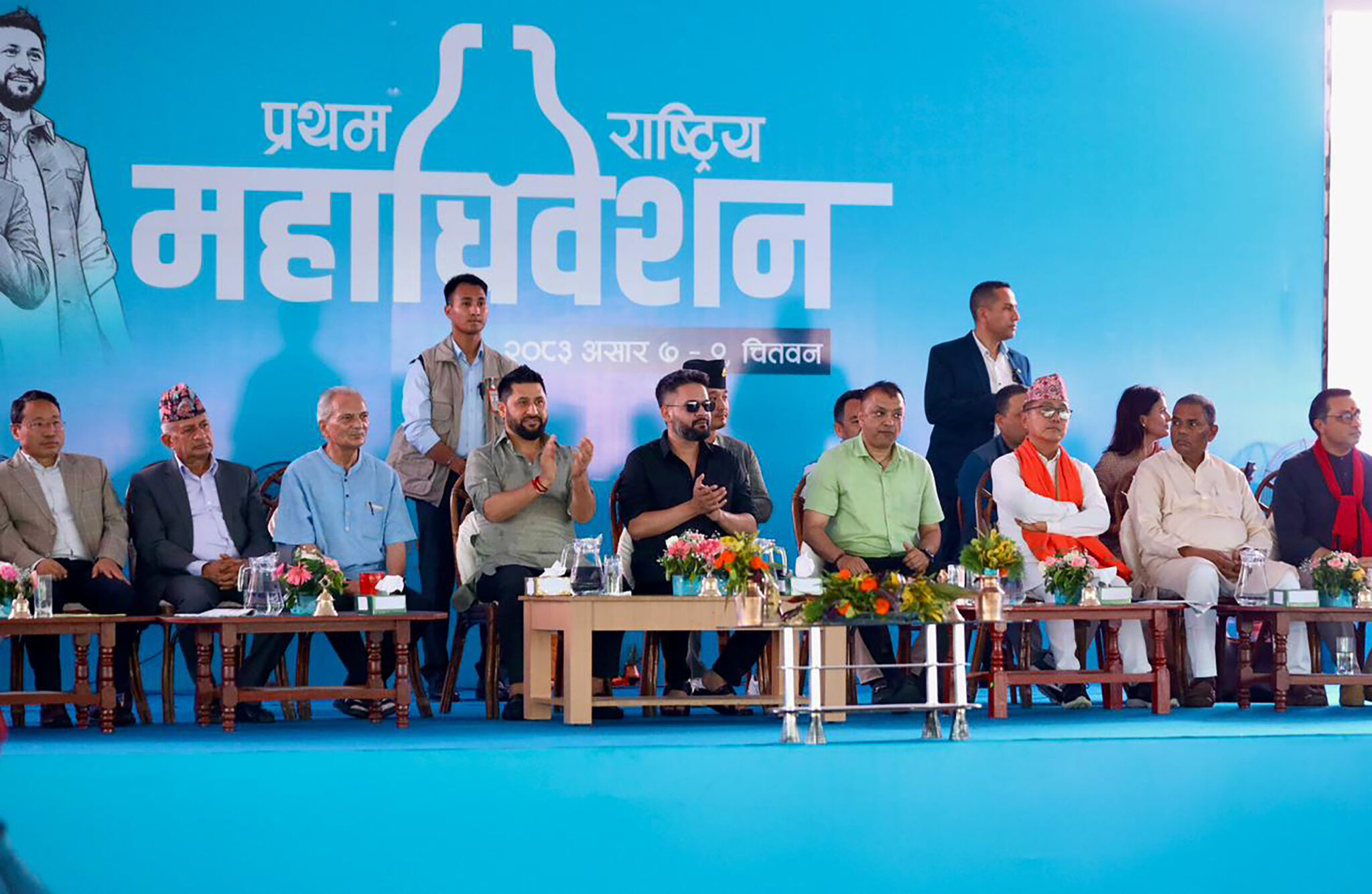
Leaders of various political parties attending the opening ceremony of the RSP’s first general convention. Photo: Pradeep Raj Wanta/RSS
The convention re-elected Lamichhane unopposed as chairperson, elected Shah as senior leader and Finance Minister Wagle as vice-chair, and elected a 99 member central committee along with other office bearers, formalizing a leadership structure that party insiders say puts to rest earlier speculation about factional tension between the Lamichhane and Shah camps within the party.
The event coincided with the RSP’s foundation day and was choreographed as a show of unity and organizational maturity, with new central committee members and office bearers taking their formal oath in Kathmandu on July 1, just three days before the government marked its hundred days in office.
What criticism has the government faced over press freedom?
As the hundred days concluded, journalists and media observers pointed to a series of developments they say signal growing pressure on press freedom. These include a government policy directing public advertising exclusively to state-owned media, warning laden remarks from senior ministers, sustained online harassment of critical journalists by supporters of the ruling party, and court rulings seen as having a chilling effect on reporting.
When Home Minister Sudhan Gurung resumed office on June 9 after an asset investigation cleared him, his first public remarks focused on warning media organizations against publishing content he characterized as insulting or defamatory rather than addressing law and order matters more broadly.
Separately, Kathmandu District Court handed down a prison sentence in a case tied to a 2023 newspaper report on army colonels, a verdict the Federation of Nepali Journalists condemned as an assault on the constitutional guarantee of free expression, and about a week later the Kathmandu District Court ordered the removal of 66 previously published articles from a news website, a step media bodies found alarming since Nepal’s journalistic code of ethics generally prohibits deleting published news reports.
International bodies including the International Federation of Journalists have also raised concerns about the state advertising policy’s implications for editorial independence.
What is the e-passport procurement scandal and why has it drawn German diplomatic attention?
The controversy centers on a roughly Rs 7.66 billion contract awarded to two German firms, Muehlbauer ID Services and Veridos, to supply and personalize millions of new Nepali passports over five years, a process that had already drawn complaints from a losing bidder over alleged irregularities in technical evaluation before the new government took office.
In mid-June, the Commission for the Investigation of Abuse of Authority detained the Department of Passports’ director general, its information technology director and a local company representative, and by June 23 it had filed a formal corruption case against eighteen defendants, including the two German companies and several of their executives, alleging that evaluation criteria were manipulated to favor the firms and that the resulting losses to the state exceeded Rs 10 billion.
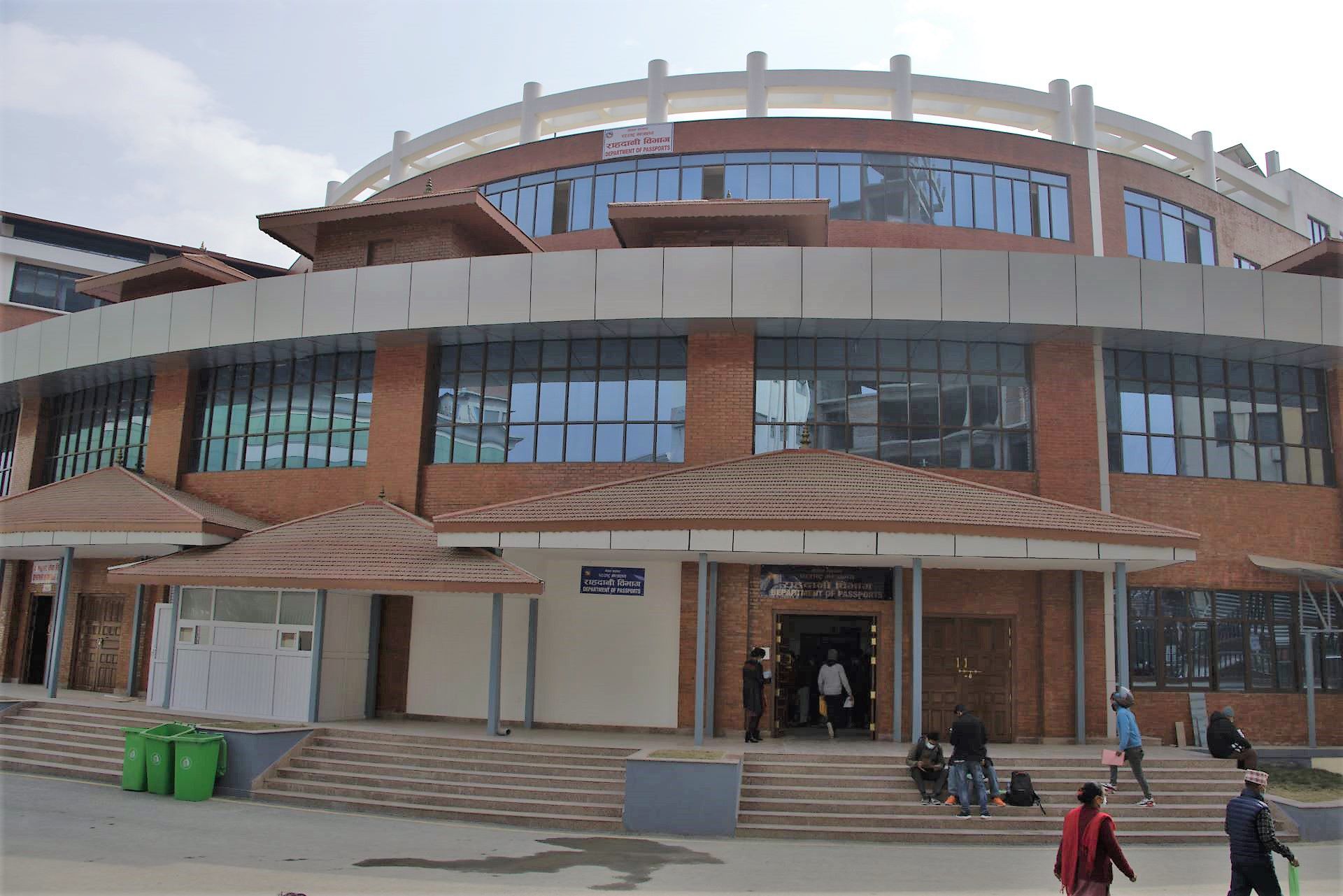
Department of Passport. File photo
The case became entangled in wider controversy after reports emerged that the prime minister’s advisors had pressured CIAA commissioners to pursue the case aggressively and had confronted German company representatives directly over technical performance claims, even after German engineers reportedly demonstrated their equipment worked as specified.
Germany’s embassy in Kathmandu clarified that it had only invited Nepal’s representative in Berlin for a meeting and had not lodged a formal diplomatic protest, despite some Nepali media reports suggesting otherwise, but the episode has strained an important bilateral relationship at a delicate moment for the new government’s international standing.
What controversy emerged around the national budget and electric vehicle taxation?
Finance Minister Swarnim Wagle presented the national budget for fiscal year 2026/27 at a joint sitting of Parliament on May 29, introducing a significant overhaul of electric vehicle taxation that replaced the old motor-power based system with a new structure based on a vehicle’s customs value, alongside a tiered clean infrastructure investment fee.
Shortly after, the Armed Police Force seized 776 electric vehicles imported through the Korala and Rasuwagadhi border points, amid suspicion that information about the coming tax changes had been leaked before the budget’s official presentation, allowing importers to rush shipments through customs at the old, lower rates just before the deadline.
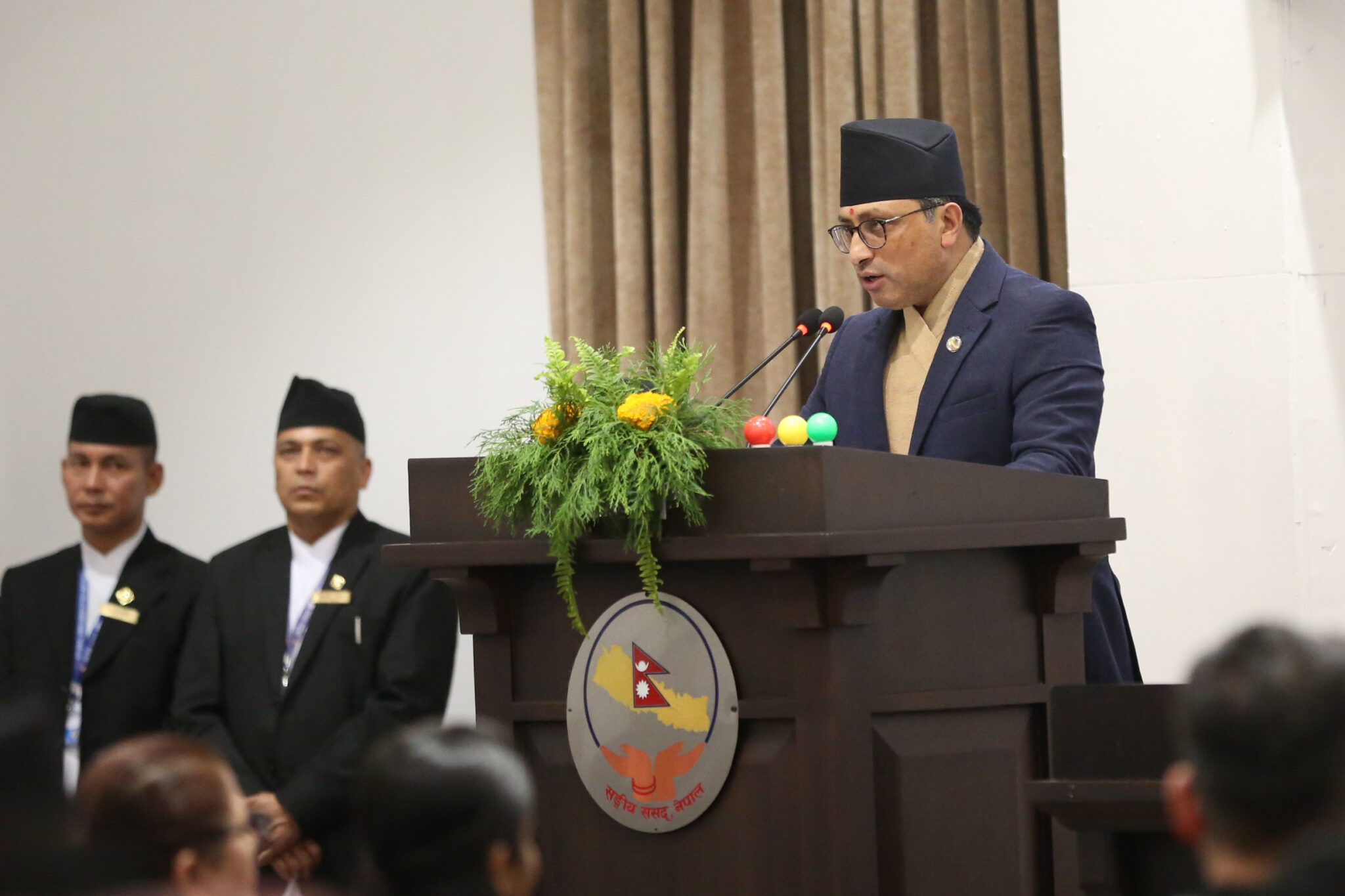
Finance Minister Swarnim Wagle addressing the House on EV tax controversy. Photo: RSS
Wagle firmly denied any leak or wrongdoing, first before the House Finance Committee and later before the Public Accounts Committee, where he challenged critics to produce evidence and argued that post-budget amendments to the Economic Bill were routine technical corrections rather than any concealment of favoritism.
Critics, however, noted that Wagle offered varying explanations for the changes across different forums, at times calling them corrections and at other times describing them as consistent with past administrative practice, which fueled further scrutiny of both the finance minister’s conduct and the broader credibility of the budget process.
What are the biggest economic challenges the government still faces after a hundred days?
Independent economic assessments published around the hundred day mark generally credit the government with real momentum on administrative and digital governance reforms, including integrating business registration with tax administration, expanding electronic billing, and beginning repayment of long stalled cooperative deposits, but they are far less convinced that these steps have translated into renewed investor confidence.
Analysts have noted that despite the pace of bureaucratic change, both domestic and international investors remain cautious, with markets still unsettled and foreign capital unconvinced that Nepal has entered a genuinely more predictable era of economic policymaking.
The energy sector illustrates this gap well, since the government’s Energy Consumption Growth and Export Strategy sets ambitious targets for expanding installed hydropower capacity and domestic electricity consumption, but mobilizing the actual capital needed to build that capacity remains largely unresolved.
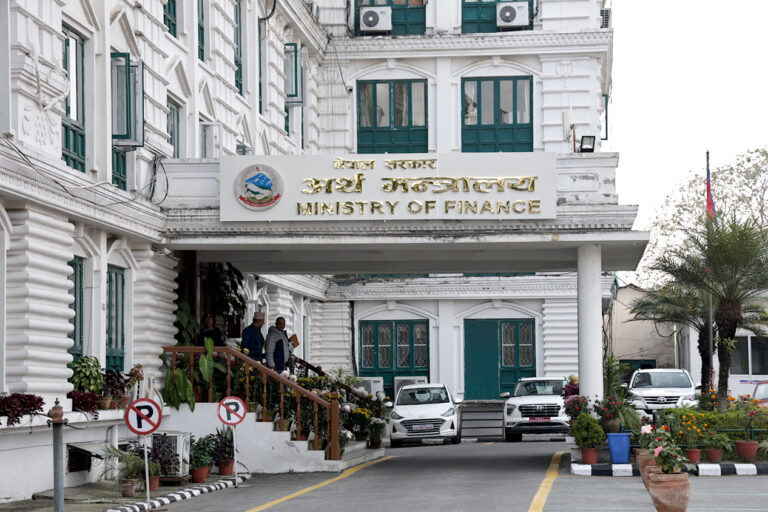
The Ministry of Finance inside Singha Durbar. Photo: Bikram Rai/Nepal News.
Broader concerns persist over sluggish economic activity, unemployment, weak private sector sentiment and slow implementation of the national budget, issues that several commentators argue matter more to ordinary citizens than the administrative reforms the government has emphasized in its own self assessment, suggesting that reforming how the state operates has so far proven easier than convincing markets and citizens that the changes will endure.
What should be expected from the Shah government as it moves beyond its first hundred days?
Commentators broadly agree that the government’s first hundred days were defined by speed, disruption and a willingness to confront entrenched interests, from arresting a former prime minister within a day of taking office to dismantling political appointees and civil service unions through ordinance rather than legislation.
That approach delivered visible, headline grabbing action but left many of its own initiatives incomplete or contested, whether in the stalled resettlement of evicted settlers, the yet to be filed charges against Oli and Lekhak, or the unresolved questions around the passport tender and EV tax controversies.
Analysts argue that the coming phase will need to shift from what one widely read commentary described as a move fast and break things approach toward one focused on building durable institutions and processes rather than relying on the will and popularity of one leader.
With RSP’s organizational structure now formalized at its Chitwan convention and the government’s honeymoon period officially over, the next stretch is likely to test whether the administration can convert its aggressive early momentum into sustained governance results, particularly on economic confidence, judicial follow through on its anti-corruption cases, and a more conventional relationship with Parliament and the press, all while managing a still unsettled relationship with India following the border remarks controversy.