Kathmandu
Sunday, July 5, 2026





While the debate over the monkey menace and social division intensifies in parliament, a new scientific study conducted in the Swayambhu area reveals a public health crisis concerning the potential transmission of parasites from wildlife to humans.
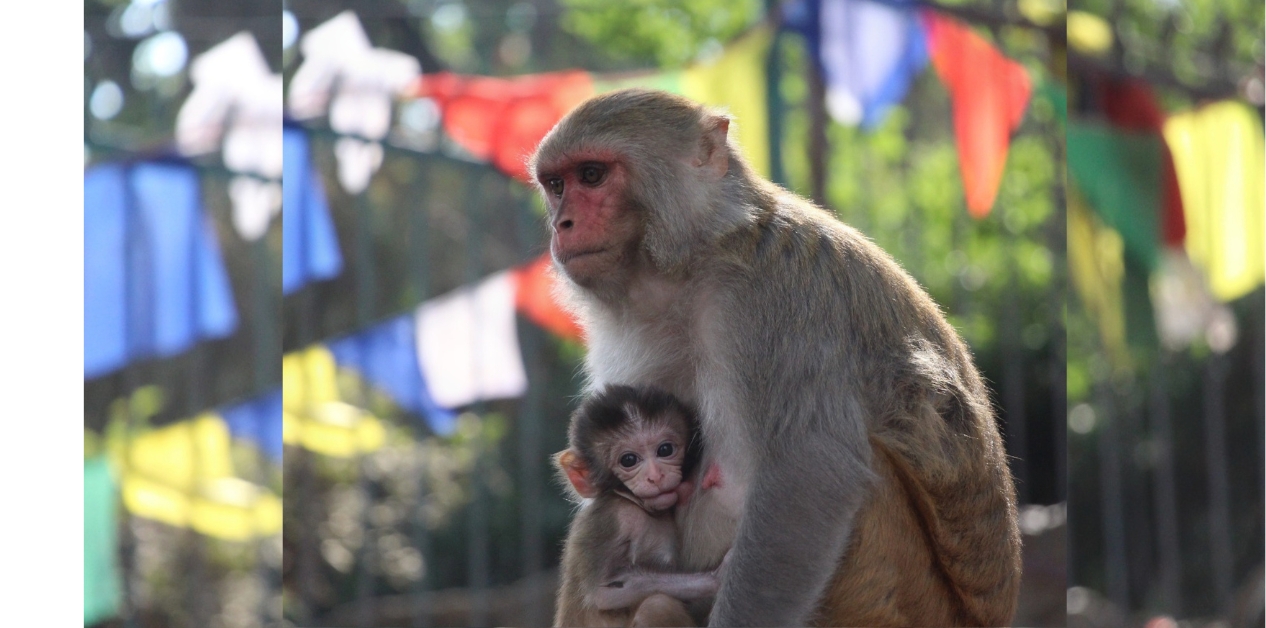
KATHMANDU: From the mid-hills to the plains of the Terai, farmers are suffering as rhesus macaques destroy their crops. With troops of monkeys wiping out harvests and threatening livelihoods, farmers in several areas are being forced to migrate to urban centers. This issue has fueled a heated debate in parliament over the past few months, dividing society into two distinct factions: whether to kill or protect the monkeys.
During the parliamentary session on May 20, CPN (UML) lawmaker Rajendra Kumar Rai warned that if the government did not take concrete steps to control the monkey menace within a week, they would obstruct parliament proceedings. Similarly, Shram Sanskriti Party lawmaker Dhruba Raj Rai implied that monkeys should be culled, while lawmaker Ashika Tamang of the ruling Rastriya Swatantra Party (RSP) argued for the protection of wildlife rights.
Amidst these intense political debates, however, the severe public health risks triggered by the growing daily proximity between humans and monkeys have been largely overshadowed. In this context, a recent scientific study conducted in the Swayambhu area of Kathmandu has brought alarming facts to light.
Study revelations
A comprehensive scientific study recently conducted on the premises of Swayambhunath—a popular tourist destination listed as a UNESCO World Heritage Site—shows that the risk of parasitic infection among humans, urban dogs, and rhesus macaques is rising rapidly. The study reveals that due to our seemingly ordinary daily interactions with urban wildlife, these areas are becoming hotspots for parasitic infections.
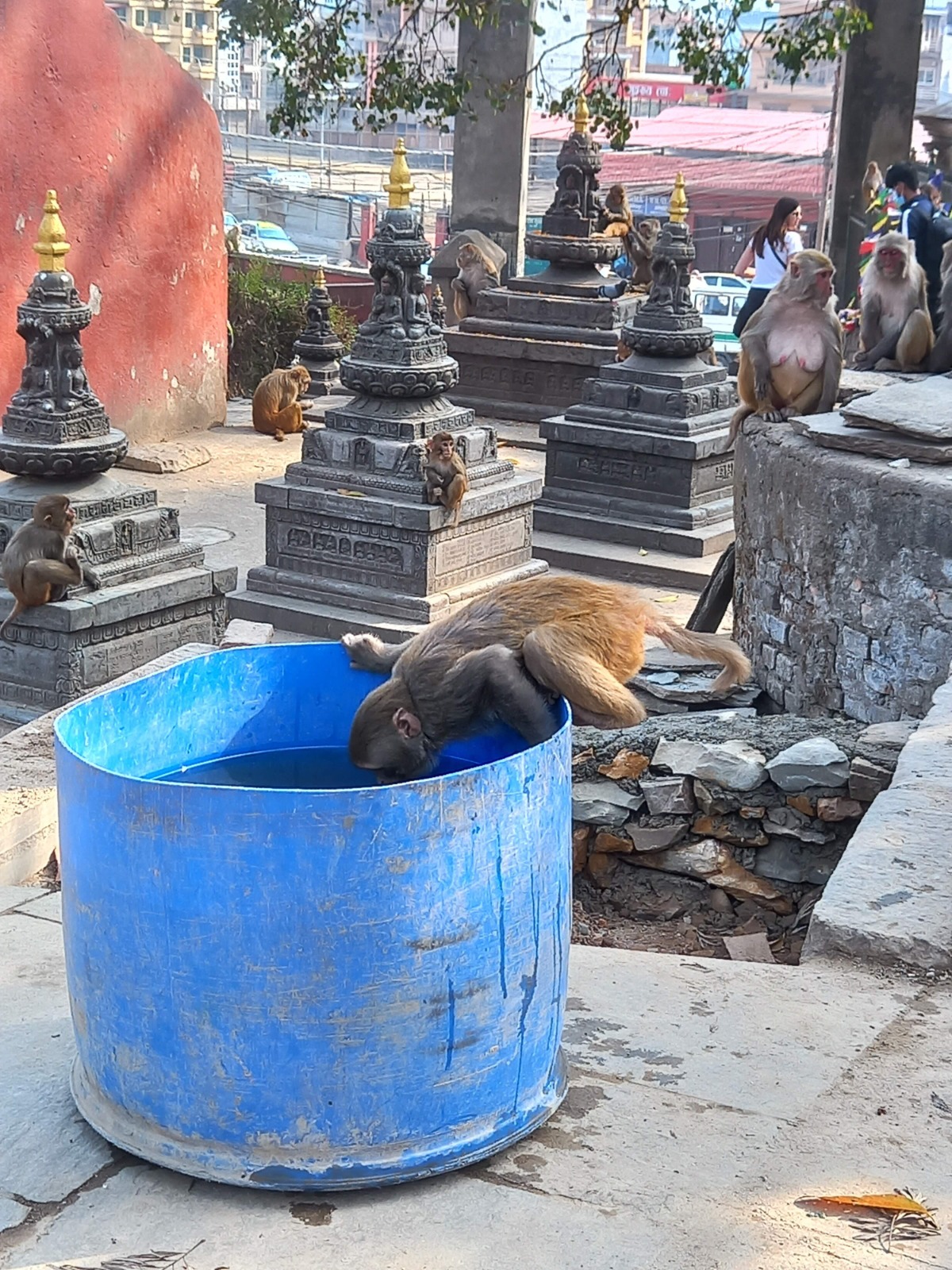
Combining behavioral observations, questionnaires with visitors, and laboratory analysis of parasites, the research team identified various species of parasites in all three groups: humans, dogs, and rhesus macaques. This research article was jointly prepared by Professor Laxman Khanal, Associate Professor Kishor Pandey, and students Rosary Karki, Anisha KC, and Sabina Luintel from the Central Department of Zoology at Tribhuvan University, in collaboration with an international team of researchers from the University of Lincoln, Nottingham Trent University, and Keele University in the UK. The study has been published in the prestigious journal Parasitology.
Data and ‘Zoonotic’ risk
The study showed that although the rate of parasitic infection varied across all three groups, it was equally alarming. The infection rate was found to be 96.67% in rhesus macaques, 90% in urban dogs, and 26.67% in humans. Primarily, the Entamoeba species found in these three groups possess zoonotic potential. In other words, these parasites can easily be transmitted from animals to humans.
What effect does such an infection have on human health? According to doctors, infections by parasites like Entamoeba generally cause diarrhea, abdominal pain, nausea, and physical weakness, while in some cases, it can lead to complications such as bloody diarrhea (amoebic dysentery) and liver abscesses.
Similarly, Iodamoeba buetschlii was found in both humans and monkeys, and Ascaris species (Ascaris spp.) were detected in both humans and dogs. This indicates that these parasites can easily transmit from monkeys or dogs to humans, and from humans to animals. Various previous studies have also confirmed cross-species transmission among wildlife, domestic animals, and humans, a fact that this study further reinforces with solid evidence.
Seeing the parasite rate in urban dogs reach up to 90% presents another major threat to humans. The eggs of parasites like Ascaris, which can also spread through dogs, can easily enter the human body via air, soil, or water through their feces or fur. This can severely impact human health, causing abdominal pain, intestinal obstruction, and respiratory complications when the larvae reach the lungs.
Just like Swayambhunath, monkey activity is highly visible in other temple areas, including Pashupatinath. Tourists visiting the temples, local residents, and especially priests and sanitation workers who come into direct contact with wildlife—often without wearing masks or gloves and remaining within touching distance of monkeys or dogs—are at the highest risk of this infection.
Traditional beliefs and behavioral stress
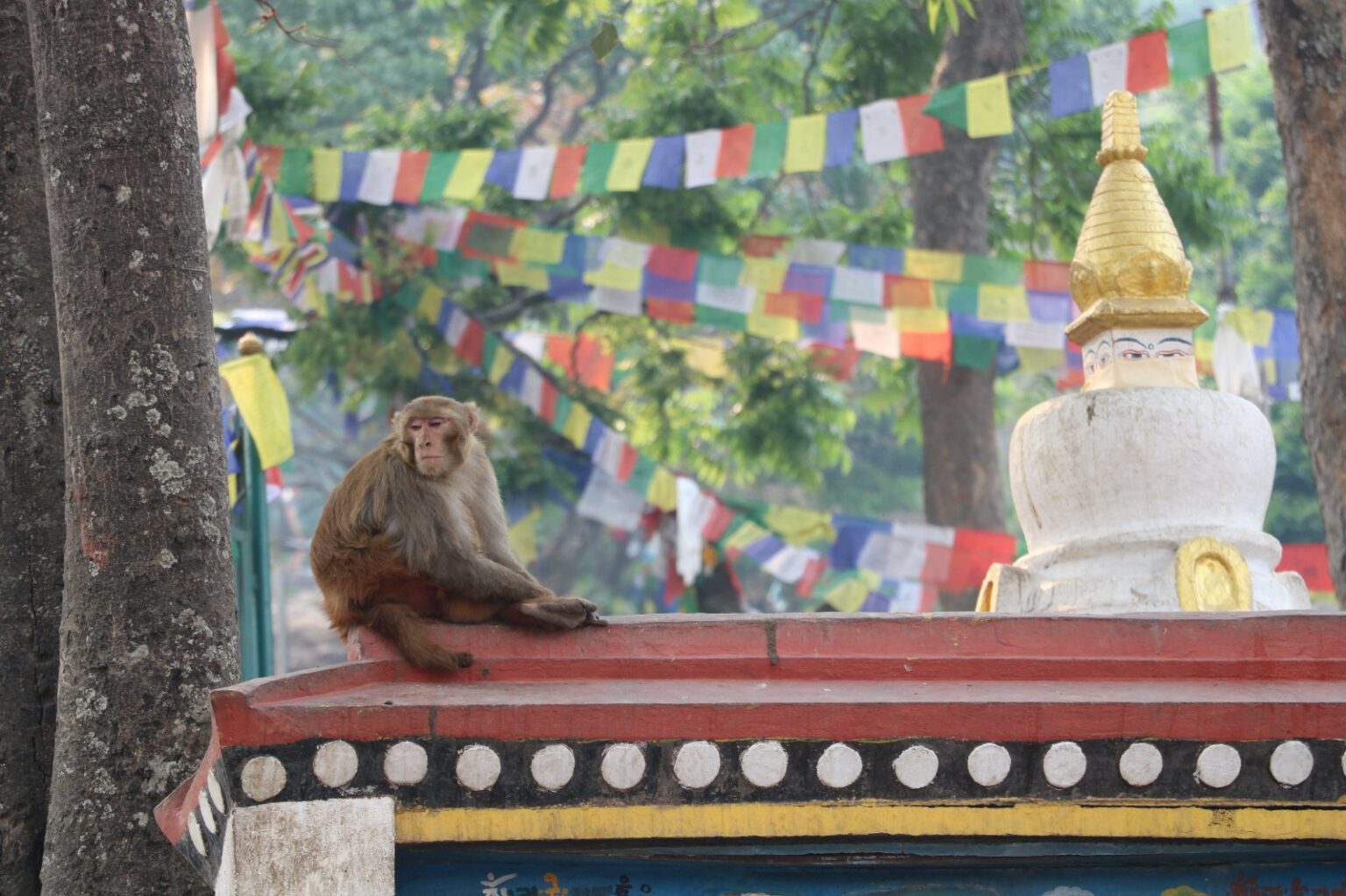
The interesting results shown by this study challenge our traditional beliefs. Nepali society has maintained coexistence with rhesus macaques for generations. Hindus and Buddhists consider monkeys as symbols of religious faith. At pilgrimage sites like Swayambhunath and Pashupatinath, feeding food and water to monkeys and dogs has become a daily routine connected to service and faith for both devotees and tourists. However, this scientific study shows that these very activities, meant to earn spiritual merit, are visibly triggering a health crisis. The study indicates that parasitic infection is driven not only by physical proximity but also by human behavior, a contaminated environment, and increased psychological stress in animals.
According to Dr. Laetitia Maréchal, co-author of the study and Associate Professor at the University of Lincoln, humans, domestic animals, and wildlife interact much more closely than we think in crowded urban tourist destinations. “Even simple activities like feeding monkeys or standing close to free-roaming animals can create opportunities for parasites to transfer between species,” she notes.
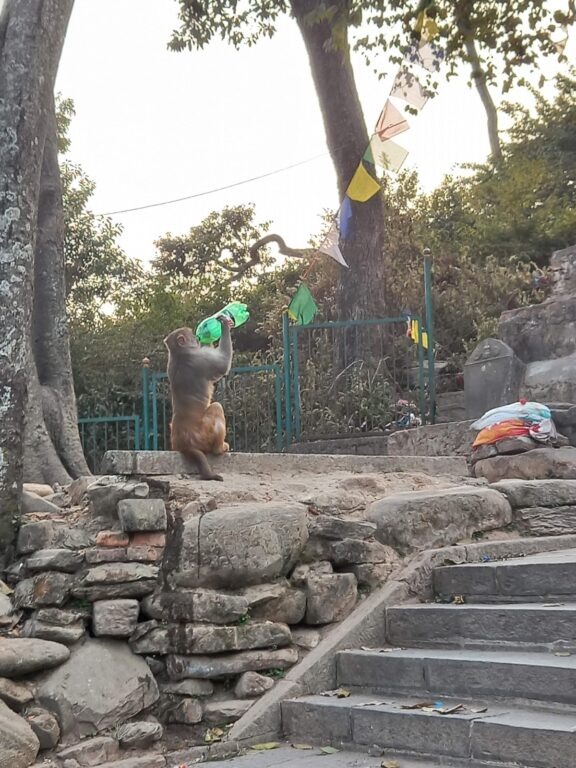
Among the three species studied, monkeys exhibited the highest diversity of parasites. For this reason, researchers have emphasized that monkeys and stray dogs serve as crucial “disease vectors” for health risks in our cities.
Dr. Stefano Kaburu, a Senior Lecturer in Conservation Biology at Nottingham Trent University and co-author, noted that these circumstances are leading to a serious crisis. According to Kaburu, “Human activities such as feeding wildlife and close contact with animals not only increase the risk of transmission but also alter animal behavior and stress levels, inadvertently magnifying the risk.”
According to Professor Dr. Laxman Khanal of the Central Department of Zoology at Tribhuvan University, when monkeys get habituated to food provided by humans, their social balance changes. Due to crowding, their stress levels spike rapidly, making them more aggressive. This behavioral change has been directly experienced by people living around Kathmandu’s monkey troops.
Due to rapid urbanization across Nepal, the natural habitats of wildlife are shrinking and becoming fragmented. This has forced wildlife to abandon wild foraging and rely on human food supplies through direct feeding or poorly managed urban waste. On one hand, monkeys entering houses daily to destroy belongings, polluting the environment with excrement, and scratching or biting people while snatching food has created a fear of rabies and other bacterial infections; on the other hand, it has generated constant psychological stress and a sense of insecurity among locals. Similarly, indiscriminate defecation by street dogs contaminates soil and walkways, allowing parasite eggs to enter the human body when people walk barefoot or eat without properly washing their hands.
The relevance of this Tribhuvan University research comes at an even more crucial juncture today. Currently, monkey troops are not limited to urban areas but are entering rural settlements, destroying crops in fields, leading to rising interaction and conflict between humans and monkeys. Therefore, it is absolutely essential to raise community awareness about potential parasitic infections during such interactions.
The way forward
The findings of this study provide an important scientific blueprint for urban and rural planners, policymakers, and public health officials to take immediate action. Controlling or managing the monkey menace should not be confined to chasing away animals, getting entangled in the social division created in parliament over whether to kill or protect them, or limiting it to population control debates. Instead, regulating human activities and adopting long-term scientific strategies are imperative.
For this, a strict ban should be imposed on feeding monkeys or other wildlife in cultural heritage sites and public places, including Swayambhu and Pashupatinath. This will reduce the monkeys’ dependence on humans and their habit of clustering in urban areas.
Furthermore, open garbage dumps are the main reason attracting monkeys and stray dogs to cities. “Monkey-proof” bins should be placed around heritage areas, and proper disposal of organic waste must be arranged. Additionally, the Government of Nepal must prioritize and implement the “One Health” approach—which recognizes that the health of humans, animals, and the environment is interconnected—into its public health policy. Animal health and public health authorities should collaborate to monitor such diseases. Awareness must be raised among domestic and international tourists visiting temples, local residents, and especially priests and cleaning staff to use masks and gloves and maintain a safe distance from wildlife.
The root cause of monkeys entering cities is deforestation and encroachment. The natural habitats of monkeys should be enriched by planting fruit-bearing trees that they prefer in the forests of the mid-hills and around Kathmandu. Nepal is currently facing a major challenge in striking a balance between wildlife conservation, agricultural protection, and heritage tourism. This study of Swayambhu clarifies one thing: debating over the binary choice of “whether to kill or protect monkeys” is not enough to control the issue; we must also change our own behavior. The style of our interaction with nature and animals outlines the profile of tomorrow’s diseases and pandemics. Therefore, until the debate on the monkey menace echoing through the parliamentary microphones shifts toward waste management, a “no-feeding” policy, and a “One Health” strategy, today’s scientific warning could erupt into a massive public health crisis tomorrow.
(Wildlife researcher Karki is currently working at the National Trust for Nature Conservation.)