Kathmandu
Friday, July 24, 2026





As the Nepali Congress ends its provincial alliance with the CPN (UML), coalition politics has triggered another round of government reshuffles. Experts warn that repeated interventions by central party leaders are eroding provincial autonomy and weakening the foundations of federalism.
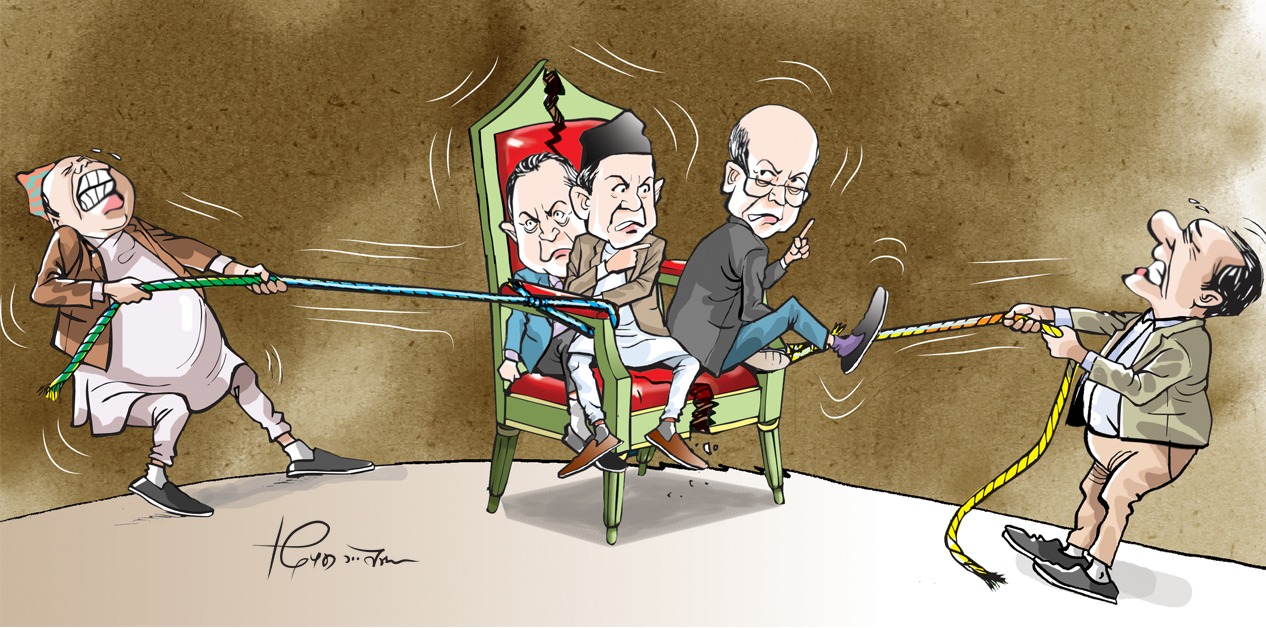
KATHMANDU: On July 15, four ministers from the Nepali Congress in Karnali Province submitted a collective resignation to Chief Minister Yam Lal Kandel. Just hours later, Kamal Bahadur Shah, the Chief Minister of Sudurpashchim Province, dismissed four ministers belonging to the CPN (UML).
Immediately after the Nepali Congress decided to break its coalition with the CPN (UML) across all seven provinces, the impact was felt in Karnali—where the CPN (UML) held the Chief Minister’s seat—and in Sudurpashchim, led by a Nepali Congress Chief Minister. This event has sent ripples through other provinces as well, sparking friction between chief ministers and ministers.
On July 1, 2024, former Nepali Congress President Sher Bahadur Deuba and CPN (UML) Chairman KP Sharma Oli signed a seven-point agreement to form a coalition at both federal and provincial levels. On that basis, CPN (UML) led the federal government alongside Koshi, Lumbini, and Karnali provinces, while the Nepali Congress led Madhesh, Bagmati, Sudurpashchim, and Gandaki provinces.
Although both parties were displaced from the federal government following the Gen Z protest, the coalition continued at the provincial level. After the youth movement, a special convention brought a leadership change within the Nepali Congress. While newly elected President Gagan Kumar Thapa consistently stated that he would not engage in unnatural coalitions or compromise for power, there was pressure from within the party to remove the chief ministers appointed by former President Deuba.
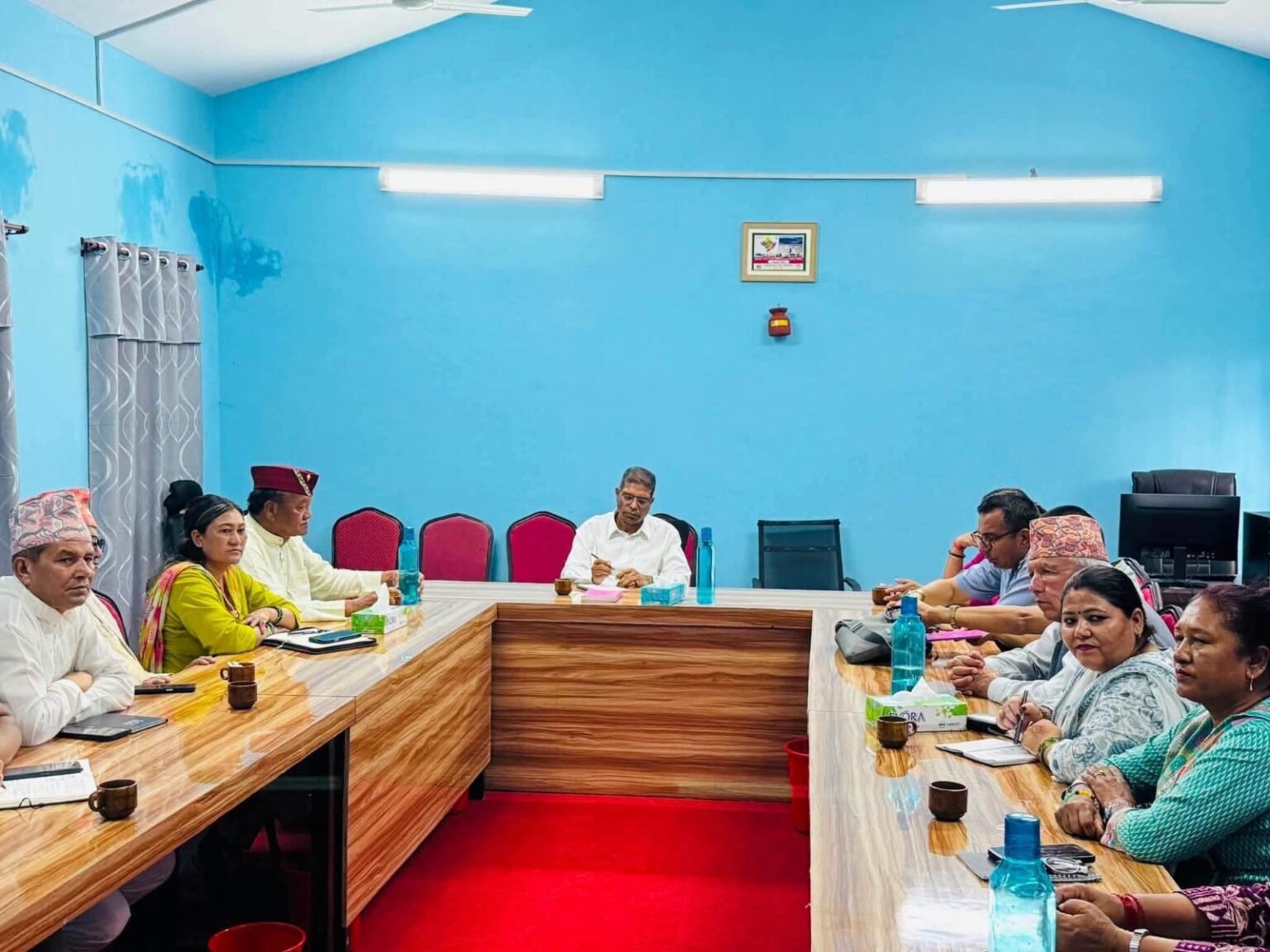
Karnali Province Nepali Congress Parliamentary Party Meeting. Photo: Deepak Jung Shahi
Following the decision by the Nepali Congress to break the coalition with CPN (UML), a game to form new governments is underway in all provinces. At the center of this game is Pushpa Kamal Dahal, coordinator of the Nepali Communist Party (NCP). He is currently busy holding discussions with both the Nepali Congress and CPN (UML).
After the House of Representatives election on March 5, NCP Coordinator Dahal and Nepali Congress President Thapa met on April 20 to analyze the political situation. Discussions about provincial coalitions have been ongoing since then. However, fearing a negative message if provincial governments were collapsed right after the election, both parties did not move forward immediately. On July 14, Dahal and Thapa discussed working together at the provincial level. Once the Nepali Congress decided to break its provincial coalition with CPN (UML), further talks took place with Dahal, though a formal coalition agreement has not been finalized.
On the other hand, CPN (UML) also wants to form another coalition to establish new provincial governments. On the afternoon of July 20, CPN (UML) Chairman Oli and NCP Coordinator Dahal held a two-hour discussion focused entirely on forming a provincial government coalition. However, the coalition between CPN (UML) and NCP has not been finalized either, as NCP continues to bargain for power with both parties.
After the 2022 House of Representatives and Provincial Assembly elections, CPN (UML), Nepali Congress, and the then-Maoist Center formed federal and provincial governments through various permutations. Initially, the CPN (UML)-Maoist Center coalition held power. Then, the Nepali Congress and Maoist Center formed a government together, followed by a CPN (UML)-Maoist alliance, and most recently, a CPN (UML)-Nepali Congress coalition.
These top-tier leadership alliances have continuously dictated the creation and collapse of not only federal but also provincial governments. Once again, preparations are underway to change political equations and form new governments in all seven provinces on the instructions of top leaders.
Federalism expert Khim Lal Devkota states that an incorrect practice is occurring regarding provincial government turnovers. Devkota, a former Constituent Assembly member, remarks, “At times, provincial chief ministers claim there is intervention from above, yet they themselves wait passively for orders from central leaders. This approach further weakens provincial structures.”
Article 56 of the Constitution explicitly states that state power shall be exercised through three levels of government—federal, provincial, and local—in accordance with the Constitution and law. Furthermore, Article 57 outlines separate explicit lists of powers for federal, provincial, and local levels.
Article 168 provides that the leader of the parliamentary party commanding a majority in the Provincial Assembly shall be appointed Chief Minister. Thus, the Constitution envisions provinces as autonomous tiers capable of forming their own governments, formulating policies, and exercising constitutional and legal powers. Therefore, provinces are considered the primary foundation of federalism. Establishing provinces aimed to decentralize a centralized system of governance. However, the actions of top political leaders clearly show an intent to keep the provinces controlled by the center or top figures.
Under the constitutional vision of federalism, the formation or dissolution of a provincial government should depend on the parliamentary arithmetic within that province. In the absence of a single-party majority, provincial committees of political parties should make local decisions to form governments. Instead, the practice remains that governments are formed or collapsed only as federal-level leaders desire.
Due to this central intervention, members of provincial assemblies cannot form governments spontaneously. Provincial committees of political parties are likewise barred from making independent decisions, forced instead to follow whatever central leaders dictate. This behavior by top leaders brings disrepute to federalism.
Amrit Kumar Shrestha, an associate professor at Tribhuvan University, notes that in other federal countries, provincial governments run stably even when the federal government is unstable, but Nepal experiences the exact opposite. Pointing out that unstable provincial governments foster negative public sentiments toward federalism, he says, “This tendency among parties risks further deepening negative attitudes toward federalism.”
Same as the center, so goes the province
With the nation transitioning into a federal structure, seven provincial governments were established for the first time in 2017. The Constitution fixes the term of the Provincial Assembly at five years. Accordingly, the tenure of provincial governments should also be five years. However, among all seven provinces, only Lalbabu Raut, the first Chief Minister of Madhesh Province, completed a full five-year term, though ministers were frequently shuffled during that period.
In the other six provinces, chief ministers changed repeatedly. Koshi Province experienced the highest number of government turnovers. During its first five-year term, CPN (UML)’s Sher Dhan Rai initially served as Chief Minister from February 14, 2018, to August 26, 2021. Amid internal conflict within CPN (UML) and following then-Prime Minister Oli’s dissolution of Parliament, Madhav Kumar Nepal led a rebellion that split the party. The CPN (Unified Socialist) was registered with the Election Commission on August 18, 2021. In Koshi’s 93-member assembly, excluding the Speaker, there were 92 lawmakers, requiring 47 members for a majority. CPN (UML) initially held 51 seats, but when five members moved to CPN (Unified Socialist) after the split, the provincial government lost its majority.
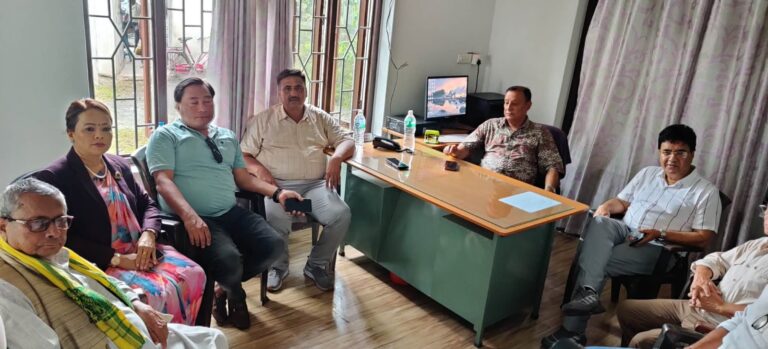
A provincial-level mechanism meeting of the Nepali Congress held in Biratnagar on July 20. Photo: Anil Shrestha
CPN (UML) Chairman Oli then summoned Chief Minister Rai to Kathmandu and directed him to resign, paving the way for CPN (UML) leader Bhim Prasad Acharya to become Chief Minister. Upon returning to Biratnagar, Rai resigned. On August 26, 2021, Acharya was appointed parliamentary party leader and sworn in as Chief Minister on the same day. Acharya, who had aligned with the Madhav Kumar Nepal faction to oppose Oli during internal disputes, was brought back into the party fold and made Chief Minister. Having failed to secure a vote of confidence, he resigned about two months later, on November 1, 2021.
Subsequently, Rajendra Kumar Rai of CPN (Unified Socialist) became Chief Minister representing a five-party coalition, serving from November 2, 2021, to January 8, 2023. Thus, during its first five-year term, Koshi Province had three chief ministers.
Following the second provincial assembly election in 2022, Hikmat Kumar Karki of CPN (UML) served as Chief Minister from January 9, 2023, to July 6, 2023. When federal realignments led to a coalition between the Nepali Congress and Maoist Center, Uddhav Thapa of the Nepali Congress was appointed Chief Minister on July 6. However, because he included the Speaker’s signature to claim a majority, he was removed after just 22 days. To help the coalition secure the required majority for a new government, Provincial Assembly Speaker Baburam Gautam resigned on August 1, 2023.
Thapa was appointed Chief Minister for a second time on August 2, 2023, marshalling 47 lawmakers: 29 from Nepali Congress, 13 from Maoist Center, four from CPN (Unified Socialist), and one from JSP. This tenure was also short-lived. The Supreme Court ruled his vote of confidence unconstitutional and ordered the appointment of CPN (UML)’s Hikmat Kumar Karki, leading to Thapa’s removal on September 7, 2023.
Appointed by court order on September 8, 2023, Karki also failed to win a vote of confidence and was unseated a month later, on October 14. Kedar Karki of the Nepali Congress was then appointed Chief Minister on October 15, 2023. However, after a new CPN (UML)-Maoist coalition formed at the center, Kedar was forced out, and Hikmat Karki of CPN (UML) assumed office for his third term on May 9, 2024.
Thus, over nine years, Koshi Province has seen nine changes of Chief Minister. Whenever central politics shifts, power changes across all provinces. Since the second election, Madhesh Province has seen four power shifts (five total since federalism). Similarly, power shifted six times in Bagmati, seven times each in Gandaki and Lumbini, four times in Karnali, and five times in Sudurpashchim. The primary cause of these shifts remains political realignment at the central level.
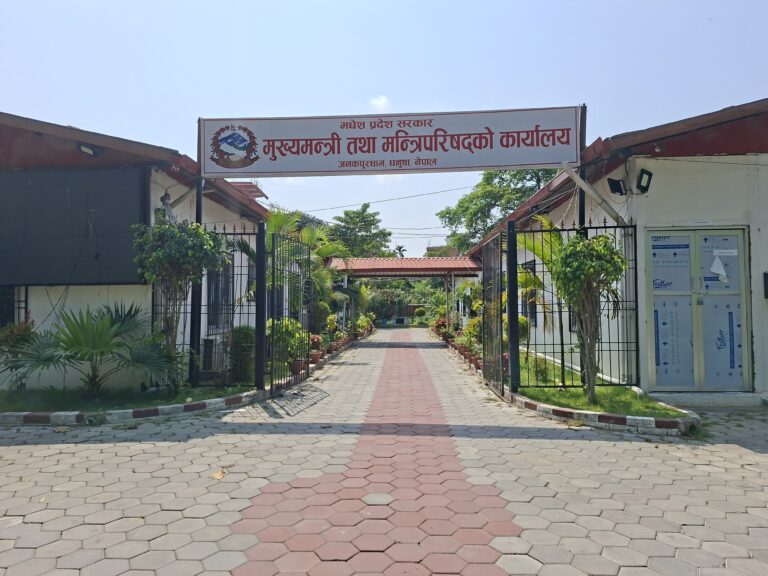
Office of the Chief Minister and Council of Ministers, Madhesh Province. File Photo
In an article published in the journal Asian Politics & Policy, researchers Thaneshwar Bhusal and Mitchell G. Brin studied the first five years of provincial governments and concluded that provinces failed to function effectively because the federal government concentrated significant powers and resources within itself. The study noted that leadership changes in provincial governments were driven by central political maneuvering. Furthermore, it claimed that instability arose because provincial chief ministers remained accountable to top party leaders rather than to their voters.
Federalism expert Devkota states that although political parties write in their manifestos that they need to reform provincial party structures, they fail to implement this in practice. He remarks, “Even though federalism is implemented in governance, it has not been implemented within the parties themselves. Central intervention in provincial matters contradicts the spirit of federalism.”
Unreformed legacy parties
Since the new constitution and federalism were introduced, legacy parties such as the Nepali Congress, CPN (UML), and NCP managed governments through rotational coalitions. However, following the Gen Z protest on September 8 and 9 last year, these party coalitions were not merely broken; the parties were completely displaced from power.
In the House of Representatives election on March 5, 2026, the Rastriya Swatantra Party (RSP) swept into power with nearly a two-thirds majority, reducing legacy parties to minor players. With their avenue for central political maneuvering blocked, legacy parties redirected their focus toward provincial governments, where they still held power.
states that although the country transitioned to a federal system, centralized mindsets among political party leaders and cadres remain unchanged, leading to central interventions. He adds, “Having recently transitioned from a unitary to a federal system, changing old habits takes time.”
In the 93-member Koshi Provincial Assembly, there are currently 92 members excluding the Speaker: CPN (UML) holds 40, Nepali Congress 29, NCP 17, RPP 5, and JSP 1. Forming a government requires 47 members.
In Madhesh Province, out of 101 members, JSP Nepal holds 25, CPN (UML) 24, Nepali Congress 22, NCP 15, Janamat 12, RPP 1, and Nepal Federal Socialist Party 1. Support from 51 members is required to form a government.
In Bagmati Province, out of 104 members, Nepali Congress holds 36, CPN (UML) 25, NCP 25, RPP 12, NWPP 3, and Hamro Nepali Party 2. Forming a government requires 53 members.
In Gandaki Province, 59 members remain: Nepali Congress holds 27, CPN (UML) 22, NCP 7, RPP 2, and independents 1. A total of 30 members is required to form a government.
In Lumbini Province, out of 83 members, CPN (UML) holds 29, Nepali Congress 27, NCP 12, RPP 4, JSP Nepal 3, JSP 2, Janamorcha 1, and independents 1. A majority requires 42 members.
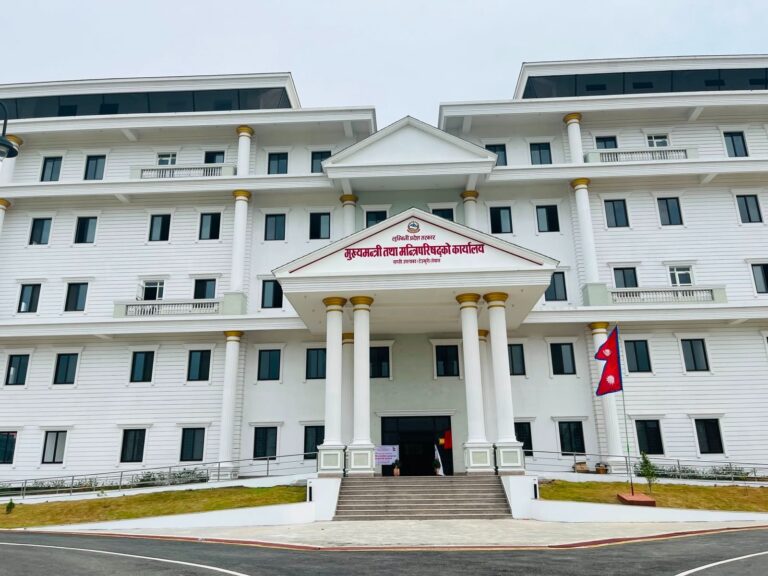
Office of the Chief Minister and Council of Ministers, Lumbini Province. File Photo
In Karnali Province, out of 40 members, Nepali Congress holds 14, NCP 14, CPN (UML) 9, RPP 1, and independents 1. A majority requires 21 members. In Sudurpashchim Province, out of 51 members, NCP holds 20, Nepali Congress 18, CPN (UML) 11, and RPP 1. A majority requires 26 members.
Across all seven provinces, if the coalition between Nepali Congress and CPN (UML) collapses, political maneuvering is underway to form governments through alliances either between CPN (UML) and NCP, or between Nepali Congress and NCP. The Gen Z protest was directed against power-centric coalitions and party politicization of state structures fostered by legacy parties. Consequently, voters rejected legacy parties in the March 5 election. Despite this, instead of reforming, these parties continue their old habits of forming coalitions to build and collapse provincial governments.
Federalism expert Devkota notes that political parties should have moved toward leadership reorganization and restructuring in line with the spirit of change from the Gen Z protest, but failed to do so. He says, “At a time when parties should be restructuring, seeing them still engaged in power struggles sends a message that legacy parties will never reform.”
Tribhuvan University Associate Professor Shrestha also argues that maneuvering by legacy parties in provincial government turnovers reveals a lack of awareness regarding the need for reform. He states that although the country transitioned to a federal system, centralized mindsets among political party leaders and cadres remain unchanged, leading to central interventions. He adds, “Having recently transitioned from a unitary to a federal system, changing old habits takes time.”
Shrestha suggests that if influential regional parties were to develop in the provinces, central intervention would decrease. Currently, although parties have provincial committees, they cannot overrule decisions made by central committees and top leaders; doing so risks disciplinary action for violation. However, regional parties would allow decisions to be made at the provincial level, making governance smoother.
Meanwhile, federalism expert Devkota suggests that adopting a system with a directly elected Chief Minister during ongoing constitutional amendment discussions could reduce the current instability in provincial governments. Given that legacy parties played a key role in introducing federalism, he believes they must actively protect it. He concludes, “Instead of engaging in past political games, they must adapt to the times. In upcoming constitutional amendments, it would be appropriate to adopt a model with a directly elected Chief Minister and a Parliament-elected Prime Minister.”