Kathmandu
Saturday, July 25, 2026





An exploration of humanity’s greatest creation, showing that language is not merely a tool for communication, but the very lifeline that rescued humankind from destruction and continues to define our fate
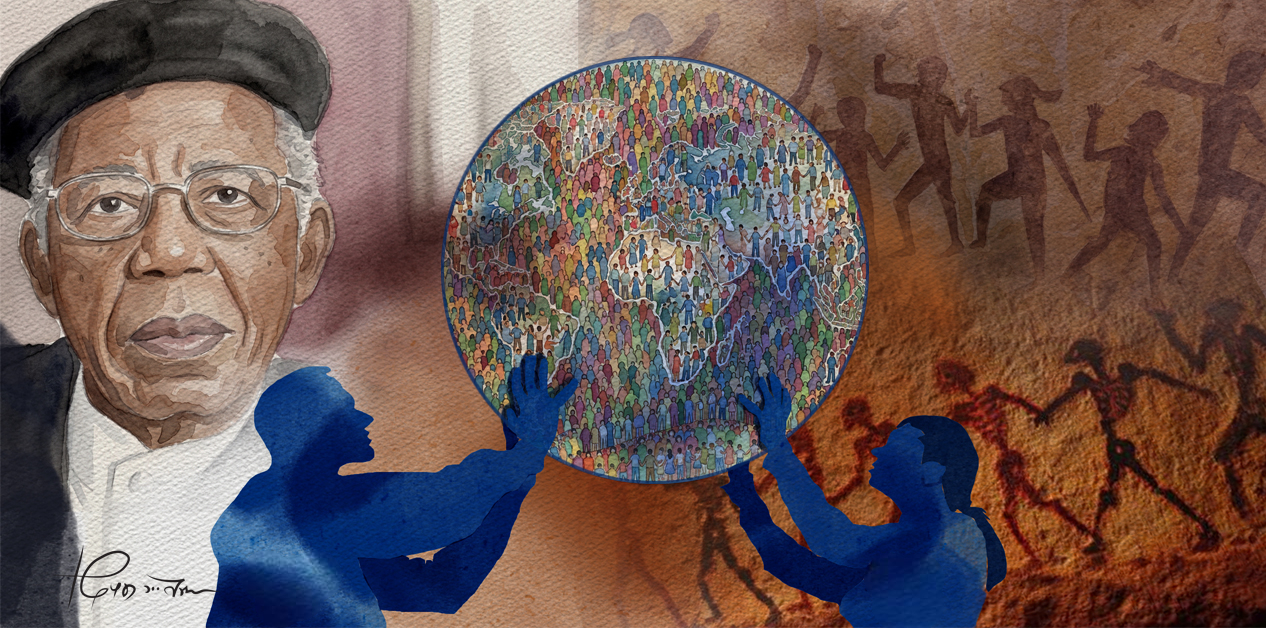
KATHMANDU: Among all the greatest achievements attained by humanity over the long course of human civilization, there is hardly any greater than the creation of human society. Based on this foundational achievement, man developed those special qualities of thinking and behaving which, at the very least, set him apart from lower, undeveloped living beings.
We sometimes forget this fact. The reason for this is that we have lived within the protection, support, and conveniences of society for so long that we have begun to take its importance for granted. In one sense, this very act of forgetting can be considered the highest form of respect toward society. It is just like how, with every breath a person takes, they express gratitude and reverence toward God without speaking a word. If this were not the case, we would not be humans but like angels who know nothing of suffocation or irritation in life.
There is no room for doubt that the role of language was extremely vital in the creation of society. Without language, the very existence of human society would not have been possible. By “society” here, we do not mean a mechanical and unconscious group like a beehive or a column of ants, which accomplishes only simple objectives through a few basic signals. Borrowing the words of writer Joyce Lunel Cary, society is that community condemned to be free, where man is capable of building a meaningful and creative existence by challenging his perilous fate.
Just like society, our speech feels so natural to us that we do not think much about it, nor do we imagine the human condition before its invention. However, we know that the knowledge of language is not innate in humans. Only the capacity for it comes naturally at birth. Therefore, it is clear that in some ancient time, our ancestors did not possess language.
Let us imagine an event from that ancient time. Unknowingly, a person enters a stone cave where another human is sitting in a dark corner, having just eaten food. The person entering the cave does not know this. The new arrival learns for the first time that there is another human there only when someone hits him on the head with a stone. If that situation had been humane, as we call it today, perhaps a simple question like “What do you want?” or an angry phrase like “Get out of here immediately!” could have ended that confrontation in a non-violent manner.
To be sure, it is foolishness to claim that language can eliminate almost all violence. After all, humans are no less violent than other animals; rather, it can be said they are even more so. Man is likely the only creature that inflicts continuous violence upon his own kind. However, despite all this, one truth remains: had there been no language, the human race would probably have perished long ago.
In the 1950s, many people following the famous excavations conducted by Louis Seymour Bazett Leakey in the Olduvai Gorge of East Africa were stunned by one of his claims. After researching the remains of an approximately 12-year-old child named “Pre-Zinjanthropus,” considered a major discovery of modern paleontology, Leakey stated that the child had likely been murdered. Professor Raymond Dart, conducting studies even further south in Africa, also discovered similar evidence of homicide in the caves of Transvaal. But if we understood the early psychology of human history, such a revelation would not seem so surprising to us.
Now let us look at another and somewhat different example. Suppose a newborn infant is crying. Thinking that the baby might be hungry, the mother tries to breastfeed, but the baby refuses to drink and cries even harder. Has the baby soiled itself? Is it in pain somewhere? Have ants crept inside its clothes and bitten it? Or is it sleepy? Or is there some other problem altogether?
Until the true reason for the baby’s crying is found, an inexperienced mother has to keep guessing based solely on speculation. Meanwhile, the child suffers pain while the mother endures mental strain. In other words, due to the infant’s lack of knowledge of a few words, its basic needs cannot be understood or satisfied. I believe that even from this crude example, one can understand that language is a vital tool that facilitates the behaviors and relationships of society.
The importance of language is seen even more clearly in small and close-knit societies. For example, in the creation story of the Hebrews, God created the world through the Word. In the Christian tradition, in the Gospel of Saint John, it is mentioned that the “Word” itself became God.
In many African societies as well, similar notions are found regarding the power of language and the influence of words. Writing about the Igbo society of Nigeria, Igwe and Green note that an individual who knew how to use language skillfully and made good use of proverbs and idioms was respected by the community, and leadership of that society was often entrusted to them.
Mugo Gatheru, a writer from another African region, Kenya, writes in his autobiography with a strong illustration that in the Kikuyu community, a person who speaks well is always respected, and there, the very word for “chief” means “one who speaks well with the mouth.”
A creation myth from the Wapangwa community of Tanzania is even more interesting. It begins like this: the sky was vast, bright, clear, and empty. There were neither stars nor a moon. Only a single tree stood in the air, and a gentle breeze was blowing. There were a few ants on the tree. The wind, the tree, the ants, and the sky were being controlled by the invisible power of the word. That word was not a visible object, but it was a power that made it possible for one object to be created from another.
Even though today’s societies in Africa and elsewhere have moved far beyond old religious beliefs, the ancient dignity of language is still found preserved in certain contexts. Writer Camara Laye mentions that such a viewpoint was still alive in Guinea, the country where he spent his childhood. According to him, the village people there possessed a high level of dignity that was often lacking in city life. They spoke only after thinking, because speaking there was considered a special and serious matter in itself.

Chinua AchebeChinua Achebe, 1960, with two editions of his first novel, ‘Things Fall Apart.’ Photo courtesy: Encyclopædia Britannica
Finally, let us look at an example from a completely different cultural setting. From the traditional poem “Magic Words” of the Eskimo community, included in the fine poetry collection Shaking the Pumpkin, edited by Jerome Rothenberg, these lines state:
That was a time,
When words were like magic.
The human mind possessed mysterious power.
Even a word spoken casually
Could bring about strange results.
That word would suddenly come alive
It would create whatever people desired
For this, merely speaking that word was enough…
What this shows is that at one time, words were not considered merely a medium of communication, but also the power of creation and transformation.
In the small, self-reliant societies where such myths were born, the reliability of language remains protected because everyone there can easily know, understand, and evaluate what is happening within their community. Therefore, the boundary between truth and falsehood is usually clearly drawn there. When an individual speaks with the people of their community, they already know what kind of nature and character that person possesses.
In the words of an Igbo saying, there are some people whose words you can trust and act upon. And there are also those who, if they tell you to “stand right here,” you should understand that you need to run away immediately!
However, as society becomes large and complex, we cannot know all the facts ourselves; instead, we are forced to believe what others say. We even entrust the authority of making many decisions to others whom we do not even know.
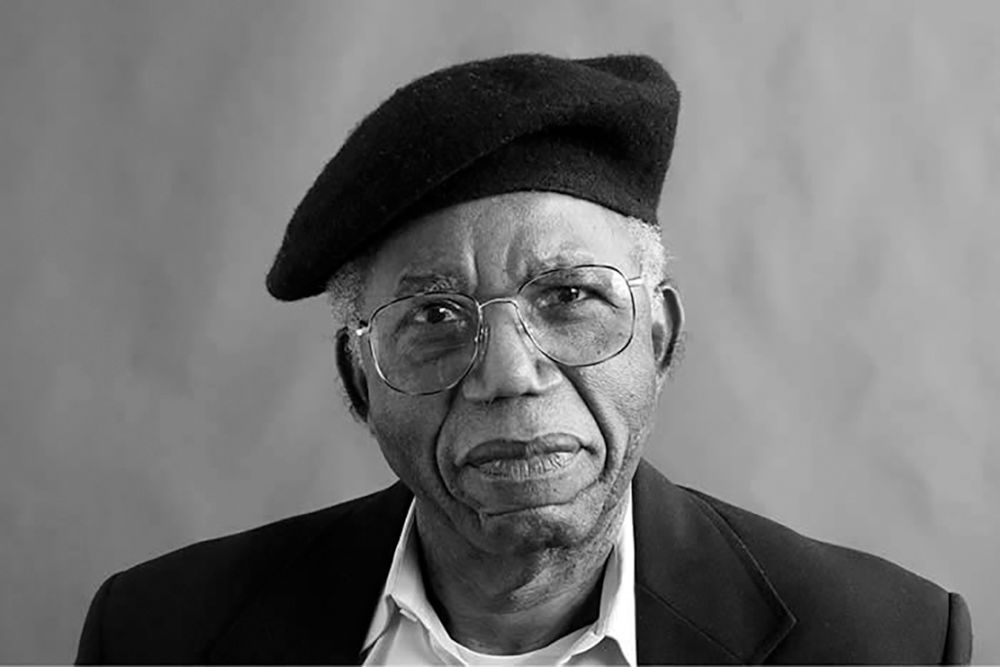
Chinua Achebe was born November 16, 1930, and died March 21, 2013 (age 82 years)
I will return to this topic in a moment. But before that, let us discuss another important problem related to this. That problem is that language cannot change at the speed necessary to encompass every new change in its surrounding environment, every new perception gained by humans, every new dimension added as societal life grows more complex day by day, and the private feelings and specific expressions of every individual. For this reason, continuous pressure is created upon language.
In this context, those unforgettable lines from poet T.S. Eliot’s Four Quartets come to mind, where the poet has expressed most poignantly the continuous struggle, disappointment, and pain endured when grappling with words:
Trying to learn to use words correctly,
Every attempt is a wholly new start and a different kind of failure.
Indeed, ordinary people like us can raise the question: Is this truly everyone’s problem, or is it merely another form of lamentation by an overly sensitive practitioner harshly disciplining himself through pain to receive the grace of his ideal power?
When Eliot begins to sing the glory of the “right sentence,” his words seem to reflect a touch of spiritual frenzy:
Common words that are correct without being vulgar,
Formal words that are precise without boasting erudition,
And all of them dancing together in a single rhythm…
This strange mix of grand purpose and celebratory joy may leave us somewhat confused. However, there is no doubt about how serious and conscious Eliot was regarding the purity and dignity of words. And let not those among us with very simple and practical mindsets assume that such concern for language and the strict discipline emphasized by Eliot are necessary only for poets. When language becomes corrupted, all of us must bear the loss. This is just like how, when a country’s currency undergoes devaluation, the impact falls not only on the finance minister or bank officials but on every citizen.
Speaking of the finance minister and currency devaluation, an interesting incident is worth remembering. In an essay titled “Polluting Our Language” by Professor Douglas Bush, published in the Spring 1972 edition of The American Scholar magazine, an amusing quote is given. The then-US Secretary of the Treasury, John Connally, had said: “In the early sixties, we were strong, we were contagious.”
It can be clearly stated that the word he intended to use and his meaning were not that. This was merely a common slip of the tongue, though this type of mistake could become a very interesting topic for followers of the psychoanalyst Sigmund Freud. However, it might not be entirely unreasonable to conclude that certain professions inherently possess a tendency to devalue words.
Now we must turn from the discussion of the natural limitations arising due to the nature of language and the character of the society it serves toward another, even more serious danger. That danger does not arise from the innate imperfection of language or the incompetence or carelessness of its general users. Rather, it arises from a planned assault on the dignity of language by people who deliberately distort words to fulfill their self-interests and use them according to their own motives.
It is well known that language, like other inventions created by humans, can be misused. Language can be diverted from its original purpose and turned into a meaningless and destructive medium. George Orwell, who expressed deep concern over this modern crisis in his writings, reminds us that language is not merely a medium for expressing thoughts; it can also be used to conceal thoughts and prevent people from thinking altogether.
Perhaps all of us are well acquainted with this reality. It begins with attractive slogans in advertisements that tell us, “Be progressive! Use such-and-such toothpaste!” or when a department store calls on us to join a “Savings Festival.”
Then come the complex vocabularies used by certain scholars to keep their domains of knowledge inaccessible to others. For example, instead of saying “both breasts were removed,” the term “bilateral mastectomy was performed” is used. Next comes the turn of politicians who, under the shield of complicated bureaucratic jargon, obscure crucial matters related to citizens’ lives or their children’s futures. Or government statisticians who cloud reality by using bewildering sentences such as “the growth rate of crime is increasing at a decreasing rate.”
Across every community lies a heritage of sacred myths, created by humans to understand the mysteries of mortality and bring sense to a complex existence.
It is not necessary to spend more time on these familiar trends of modern life. Rather, I would like to conclude this context by quoting a thought expressed by the poet Wystan Hugh Auden in an interview published in The New York Times on October 19, 1971:
“Not as a citizen, but as a poet, I have only one political duty: to protect my language from being corrupted. Today, this responsibility has become even more serious because language is being corrupted at an extremely rapid pace. Once language is corrupted, people lose trust in what they hear, and that very mistrust ultimately gives birth to violence.”
Thus, the matter ends up returning right back to the state of that initial caveman from where we began our discussion. In fact, my main objective is to present this very point: that our primitive ancestors, who created language for us, preserved it, passed it down through generations, and quite frankly crossed the first step from animality to humanity, have also handed down serious warnings to us through various symbols and myths not to misuse language.
Every community possesses a heritage of its ancient myths or sacred religious stories. These supernatural tales were created as an effort by humans to understand the mysteries and problems of life and death, and to give meaning to the complexity of existence. In the northern savanna region of West Africa, which stretches from Cameroon and Nigeria to Mali and Senegal, the Fulani community is one such proud nomadic tribe. Their lives are intimately linked with cattle, and cow’s milk is the primary basis of their livelihood. A creation myth of the Fulani (or Peul) community collected from Mali begins like this:
In the beginning, there was only a giant drop of milk.
Then Doondari (the supreme creator god in the traditional, pre-Islamic mythology of the Fulani people of Mali and the broader Sahel region) came and created stone.
From stone arose iron;
From iron, fire;
From fire, water;
And from water, air.
Then Doondari came to Earth a second time.
He gathered these five elements
And from them, created man.
But man became proud.
Then Doondari created blindness,
And blindness defeated man.
But when blindness itself became extremely proud,
Doondari created sleep,
And sleep defeated blindness.
But when sleep also became proud,
Doondari created worry,
And worry defeated sleep.
When worry too became proud,
Doondari created death,
And death defeated worry.
But when death itself became extremely proud,
Doondari descended to Earth a third time.
This time he came as “Gueno,” the eternal existence,
And Gueno defeated death itself.
You may have noticed that in the second section after the creation of man, the phrase “became extremely proud” repeats continually like the main beat of a rhythmic song. It is clearly evident that those who crafted this myth wanted us not to ignore it. In fact, this very point was their main message.
Pride ultimately destroys man. This message has been repeated again and again. It is as if someone is shouting a message loudly from one end of the savanna to the other, piercing through the speed and roar of the wind, so that even a person far away may hear it clearly. To put it in a modern image, just as when making a long-distance call during bad weather or over a disrupted telephone line, the same thing is repeated multiple times so that the person on the other end hears it distinctly.
The French structural anthropologist Claude Lévi-Strauss attempted to explain such repetition seen in myths by connecting it to information theory. According to him, our ancestors are the senders of messages, and we, the new entrants into society, are the receivers of those messages. Those ancestors, through their long experience and history, are continuously sending messages about the meaning of life, the virtues we ought to develop, and the values we must preserve. However, they are very far from us in terms of time, and we are surrounded by the noise and busyness of daily life. Therefore, they must repeat the same thing sentence after sentence, myth after myth. Sometimes the words change, sometimes the form of the story, but the core message does not change until it settles deeply within our minds.
If this interpretation is correct, the Fulani creation myth not only warns against the dangers of pride, but also highlights the overall purpose and role of myths most beautifully.
Now let us turn to another short myth of the Igbo community of Nigeria, which is more directly related to the subject of language.
Distorting language and severing it from truth risks unleashing terrifying disasters upon humanity once more.
When death first arrived in the world, humans sent a messenger before Chuku. Their plea was: could dead people not be given life again and returned to their own homes? For this message, they chose the dog as their messenger.
However, the dog did not go straight to Chuku. It loitered along the way. Meanwhile, the frog overheard the humans’ message. Wanting to punish humankind, it ran ahead of the dog and reached Chuku first. It said, “Humans have sent me to deliver their message to you; they do not wish to return to the former world after death.”
Chuku assumed that this was indeed the desire of humans. When the dog, arriving after the frog, reached with the correct message, Chuku refused to change his decision. Therefore, a human can be reborn, but can never return to this world with the same body and the same personality.
It is said that over 700 different variations of this myth are found across Africa. A message that repeats over time within a single myth is thus seen spread across an entire continent. This makes it clear that our ancestors considered this message to be extremely important. That is why it has spread so widely and why so many forms of it are found.
In some stories, the messenger is a dog, in others a gecko, a lizard, or some other animal. In some tales, the message gets ruined due to the incompetence or carelessness of the messenger, while in others, it happens out of planned malice against humans. In another version, humans become impatient and send a second messenger to God, and becoming angry at this, God withdraws the boon of immortality altogether.
However, no matter how different the story may be, its core essence remains the same. Humans send a message to their Creator asking for the gift of immortality, and the Creator is ready that day to grant it. But at the very last moment, an error occurs in the message itself. And humanity forever loses that unique boon, almost within reach, that would have made man godlike. Then man learns that even from the gates of heaven, the path to hell can lie open.
In my view, this is the greatest myth regarding language and human destiny. Its lesson should be clear to everyone. It is as if our ancestors who created language and made the journey from animality to humanity possible with its support are still warning us today not to tamper with the purpose of language. Because whether through ignorance or even more terrifying malice, whenever language is severely distorted and separated from the truth, terrible disasters can once again befall humanity.
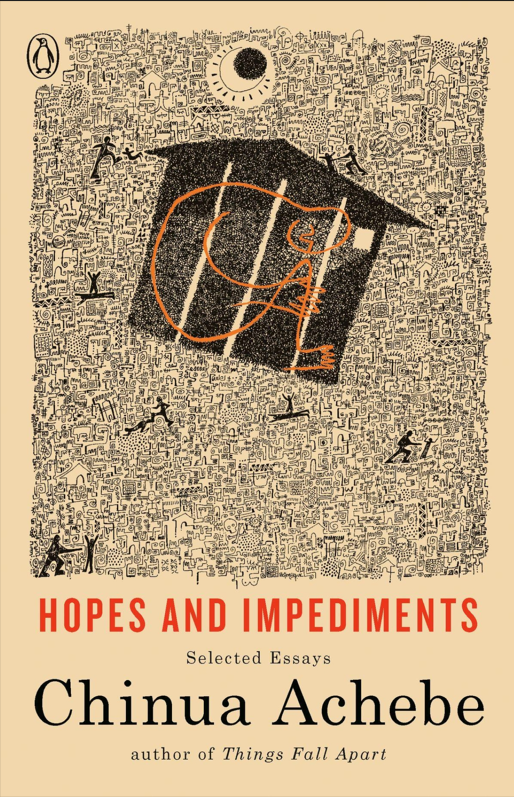
(Translated into Nepali by Suresh Badal from the essay “Language and the Destiny of Man,” compiled in the essay collection Hopes and Impediments by the renowned African writer Chinua Achebe.
To read the original article Click here)