Kathmandu
Thursday, June 18, 2026





Displaced after their settlements were demolished, families now face poor shelter, unsafe food, and uncertainty over their children’s future
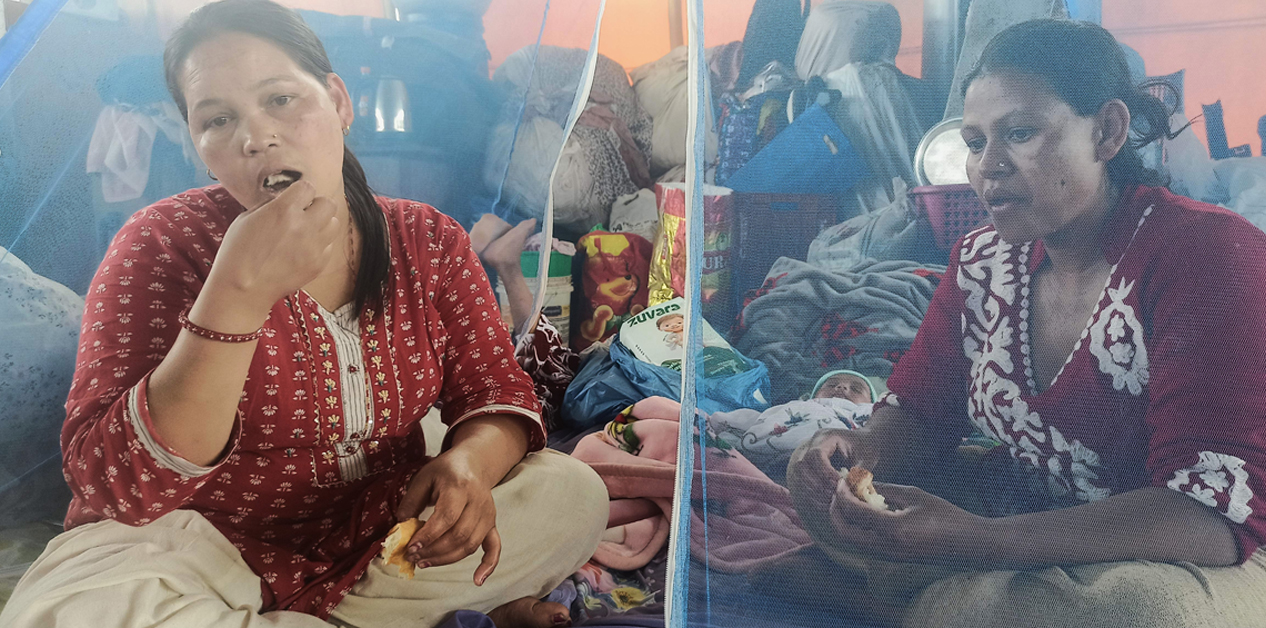
KATHMANDU: A night of wind and rain turned into a test of endurance for Niraj Thapa’s family, exposing the fragile reality of life inside a temporary shelter meant to offer relief.
The family of 34-year-old Thapa, a landless settler now staying at the Radha Soami Satsang Beas Ashram, a designated holding center in Kirtipur, endured a grueling night on Tuesday. Displaced from Thapathali, their tent offered little protection as strong winds and rain tore through it. The seven-member family, including elderly parents, his wife, and three daughters, was forced to stay awake through the night.
After being evicted from the Bagmati riverbank settlement in Thapathali on April 25 and relocated to Kirtipur, they were told the stay would be temporary, with proper arrangements to follow soon. But conditions at the ashram remain inadequate. There is no clarity on how long they will be kept there or when a more permanent solution will be arranged.
Thapa says the uncertainty is as troubling as the conditions. “When it rains, the situation becomes unbearable. Wind and water reach our beds, and we struggle just to protect ourselves and our belongings,” he says. “We are already dealing with the pain of losing our home, and here too, we face one problem after another.”
On April 25, authorities used bulldozers to clear settlements along the Bagmati River in Thapathali, where Thapa’s family had been living through daily wage work. Similar demolitions in areas such as Gairigaun in Sinamangal and along the Manohara left many families homeless. According to the Kathmandu Metropolitan Police and Nepal Police, 126 people from 49 displaced families are currently housed at the Kirtipur ashram. Among them are 62 women, 49 men, 11 girls, and four boys, most of whom are living in difficult conditions. Officials say the number could rise as more displaced families arrive.
In addition to the Kirtipur ashram, displaced families have been placed in the holding center at Dasharath Stadium and in various hotels across the city.
Five days into their displacement, families in Kirtipur are already facing multiple hardships, including inadequate food, exposure to harsh weather, limited access to medical care, and growing uncertainty over their children’s education.
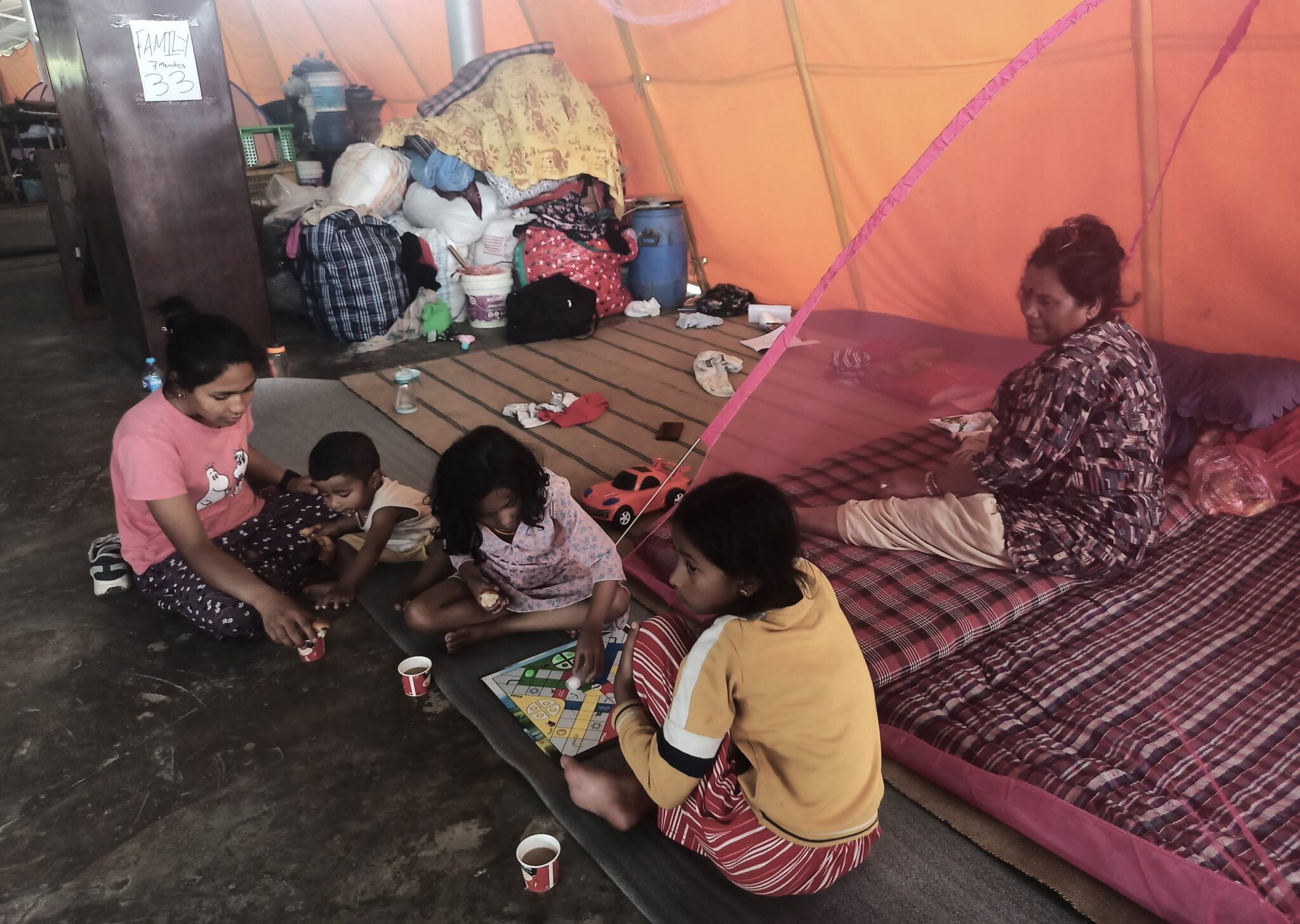
Family of Niraj Thapa at the shelter
Just a few tents away from Niraj Thapa’s family, another story of quiet suffering is unfolding, one that reflects the deeper vulnerabilities inside the shelter.
The condition of Sabina Nepali, a mother who gave birth four months ago, appears even more distressing. Staying in a tent next to the Thapa family, she arrived at the site after her home in Gairigaun, Sinamangal, was demolished. Since then, the mother of a four-month-old daughter has been unwell and often breaks down in tears. Proper nutrition, essential for postpartum recovery, remains out of reach. Instead, she has been forced to eat the same poorly cooked food distributed to others.
“The food here is not properly cooked. I am not even allowed to bring nutritious items like fish or meat from outside. My body feels weaker by the day, and my hands and feet have started trembling,” she says.
Because the ashram is a religious site, bringing in meat or fish is prohibited. Meals are basic, and snacks typically consist of donuts and tea. When we visited, Sabina, who urgently needs nutritious food, was seen eating a donut.
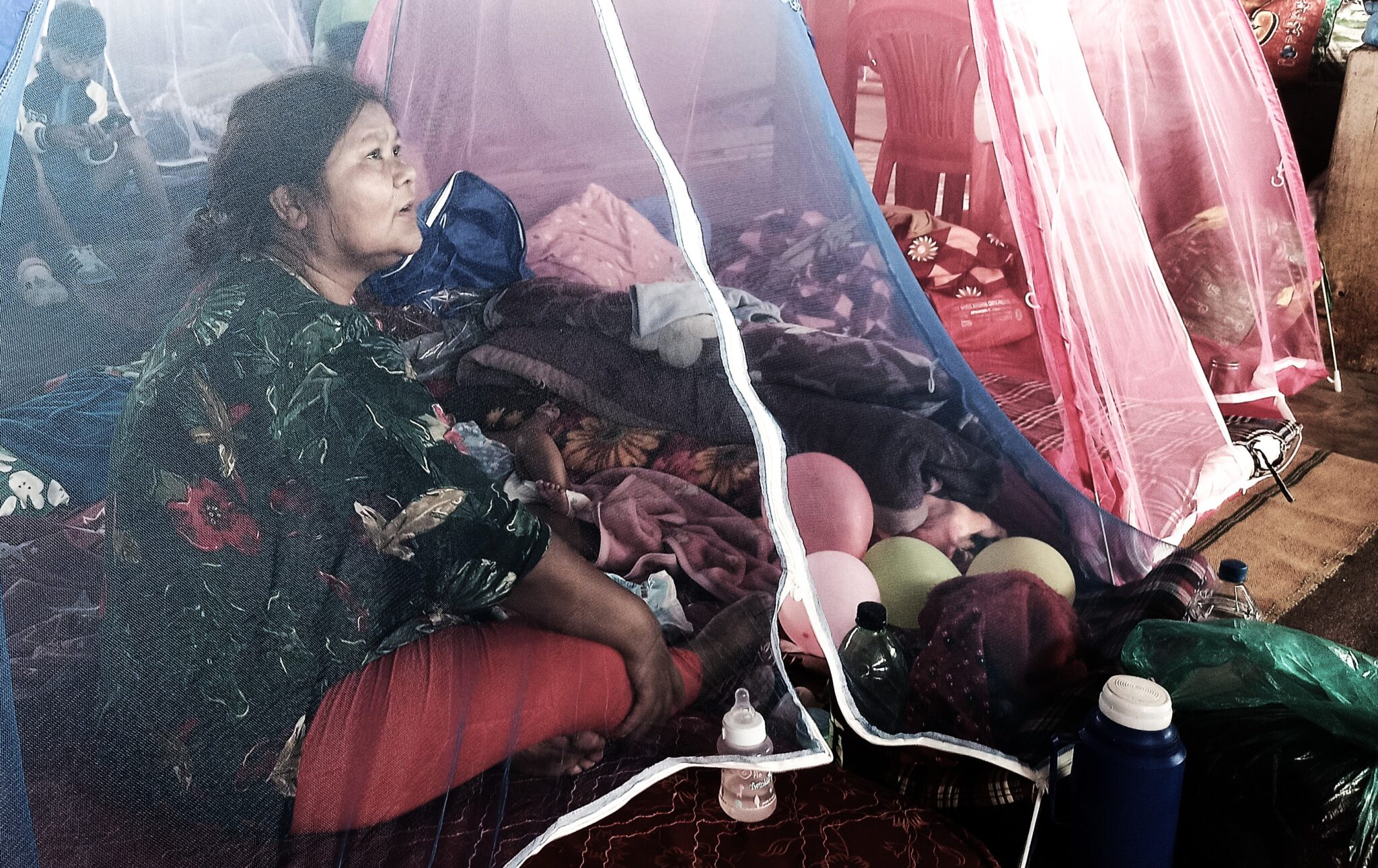
A postpartum mother at the Radha Soami Satsang Beas Ashram in Kirtipur
Police stationed at the ashram say the situation is especially severe for vulnerable groups. Families of Bimala Sunuwar, who is bedridden with paralysis, along with postpartum mothers Sabina Nepali, Pavitra Thapa, Anjali Paswan, Chandrakala, and two pregnant women, are facing extreme hardship. Basic needs such as proper food and medical care have not been met. Officers on site say these families should be moved immediately to hotels or more suitable facilities.
Food and water have emerged as pressing concerns across the shelter
During a visit to the Radha Soami Satsang Beas Ashram in Kirtipur on Tuesday, more than 15 families reported a lack of safe housing, insufficient drinking water, and no access to healthcare. Evening downpours have only worsened their situation.
Residents also voiced strong concerns about food quality. Niraj Thapa says the meals provided are so poorly prepared that children struggle to eat them. He shared that his daughter developed diarrhea after consuming undercooked food. The Kathmandu Metropolitan City supplies meals brought in from outside, but their quality remains a major issue.
“The food is not properly cooked. It is not suitable for children, the elderly, postpartum mothers, or the sick. We somehow manage, but small children cannot eat it, and even if they do, they cannot digest it,” he says. “Because of the food and unsafe living conditions, my daughters fell ill.”
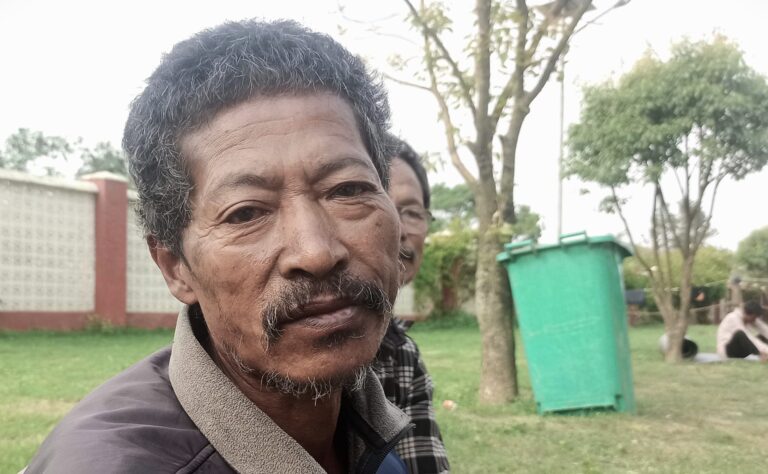
Trikram Pakusa Kasai, a daily menial wage laborer within the shelter
He adds that restrictions at the ashram prevent families from providing even basic alternatives. “We are not allowed to feed eggs to our children. I also have an infant who cannot eat adult food. Back in Thapathali, we used to prepare soft rice porridge for her, but now I am forced to make her eat the same food as adults,” he says.
Access to drinking water is equally strained. Residents say that for all 49 families, only two taps fitted with water jars have been arranged, making daily survival even more difficult.
A heavy security presence now surrounds the shelter, but for many families inside, it has only deepened a sense of discomfort and loss of dignity.
Security cordon and surveillance
The Nepal Police and Kathmandu Metropolitan Police have placed the displaced families inside the ashram under a strict security cordon. CCTV cameras are installed throughout the premises, and several residents say they feel constantly watched.
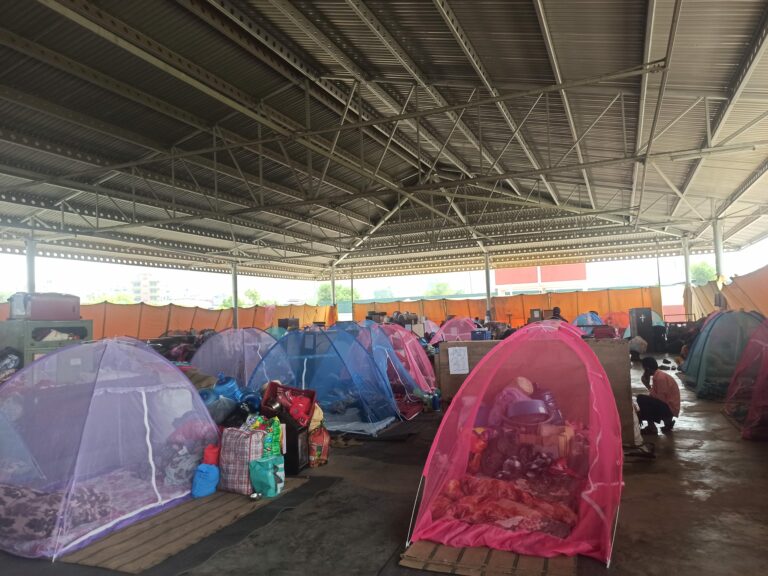
Tents set up for displaced landless settlers within the ashram premises with no privacy
Food is brought in and distributed by the Kathmandu Metropolitan City, but some families say the process has been humiliating. “While distributing food, they asked, ‘When have you ever eaten such food?’ That hurt our self-respect,” says one landless settler, who requested anonymity due to fear of repercussions under constant surveillance.
Residents also report feeling unsafe despite the heavy monitoring. Families have been housed together in a large open area, and some women say the lack of privacy is troubling, especially for households with adolescent daughters.
Educational uncertainty
For Niraj Thapa, the demolition of his home has triggered a chain of disruptions that now extends into his children’s future.
His 25-year-old wife, Griwanika, is currently sitting for her Grade 12 board exams. Since moving into the ashram, she has been unable to prepare. Most of her books were buried in the rubble when their home in Thapathali was demolished. She managed to save just one. Even then, the ashram offers no proper study environment, with limited lighting and no internet access.
“There is no environment to study here, and no mental space either. I am going to Kalimati to take my exams only because I have to,” she says. “The government has disrupted our entire life.”
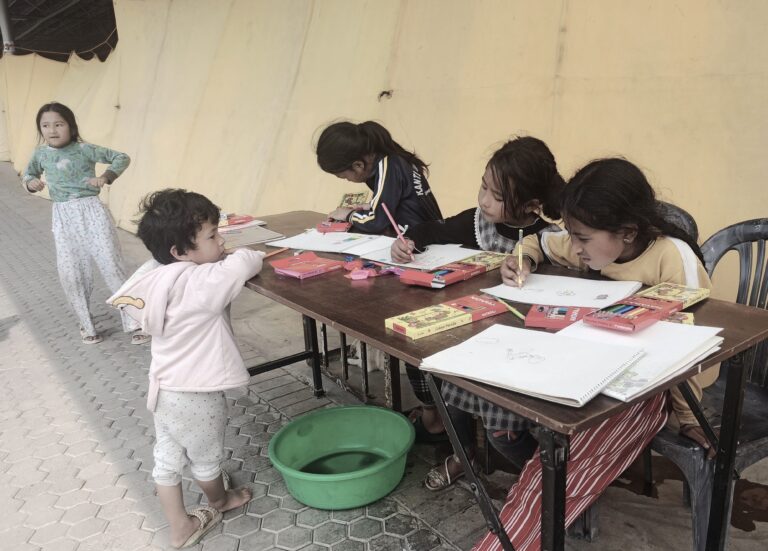
Children continuing their studies at the ashram following their eviction from school
Beyond the exams, uncertainty weighs heavily on her. Her daughters have fallen ill due to poor food and exposure to rain, adding to the stress. “My school-going daughters are in this condition. It is worrying where they will study now and what we will do next,” she says.
Her two daughters had been studying at Viswa Niketan Secondary School in Tripureshwor, one in Grade 1 and the other in Grade 3. Their textbooks were also lost in the demolition, and their education has been disrupted ever since the eviction.
In the days leading up to the clearance, Niraj had tried to find a rented room nearby to keep his family’s life stable, especially for his daughters’ schooling and his wife’s exams. But the short notice made it impossible. He says discrimination made things worse.
“We searched everywhere for a room, but once they found out we are squatters, no one would rent to us. My parents are here, and the food provided is not suitable for them. Even when we tried to cook porridge for the children, we were not allowed,” he says. “We are not even easily allowed to go outside.”
Amid these conditions, psychosocial counselors, in coordination with the Kathmandu Metropolitan City, have begun offering support to displaced families. According to them, many residents are showing signs of stress, anxiety, and emotional distress as they struggle to cope with sudden displacement and an uncertain future.
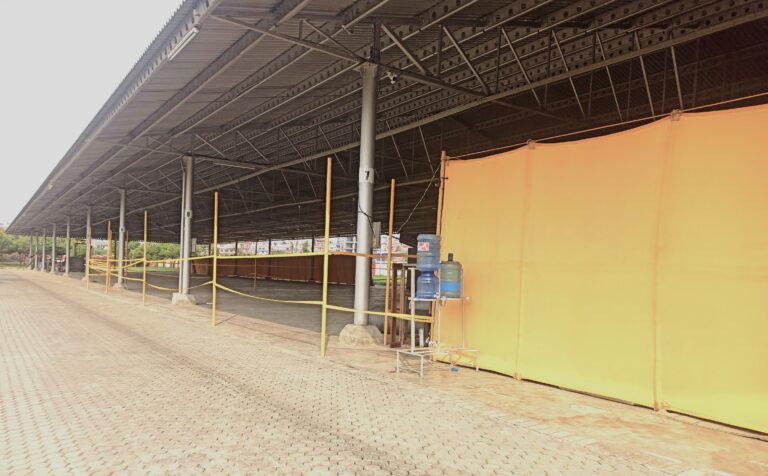
Radha Soami Satsang Beas Ashram in Kirtipur
What was meant to be a temporary solution has instead raised deeper questions about planning, accountability, and the government’s response to displacement.
Apathetic government
The government, which forced landless settlers to vacate their homes on short notice, now appears to be prolonging their hardship even in temporary shelters. With little preparation or planning for relocation, those displaced are continuing to bear the consequences of that rushed decision.
Authorities, however, are not unaware of the situation. From the Kathmandu Metropolitan City to the Office of the Prime Minister and Council of Ministers, officials have been fully informed about the difficult conditions faced by families sheltering in places like the Kirtipur ashram.
On the afternoon of April 28, Metropolitan Police briefed officials from the Prime Minister’s Office stationed at the ashram about the ground reality. They highlighted several urgent concerns, including poorly cooked food, children falling ill, severe difficulties faced by pregnant and postpartum women, lack of access to medicines, and the limited availability of drinking water, with only two distribution points serving more than a hundred people.
On the same day, Ranju Neupane (Darshana), a Member of Parliament from the ruling Rastriya Swatantra Party, visited the site to assess conditions. After witnessing the situation, she urged officials to take immediate and serious action, emphasizing the need for sensitivity toward women, children, postpartum mothers, and senior citizens.
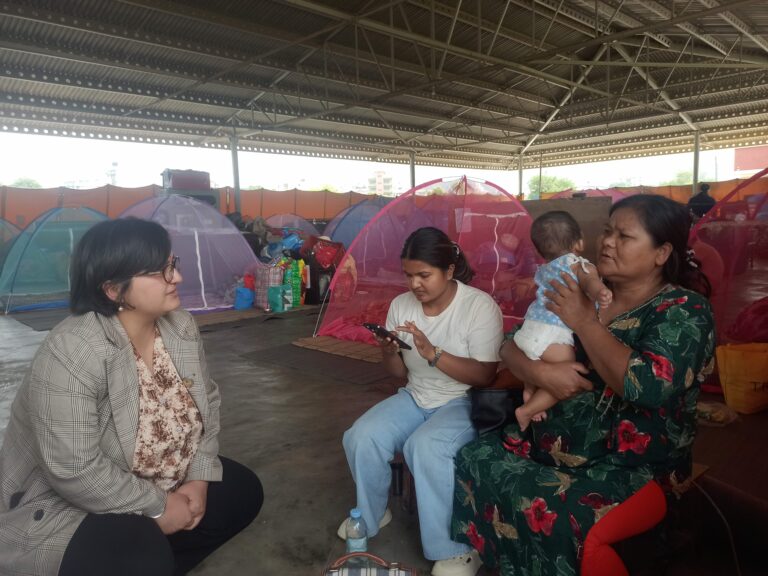
Ranju Neupane (Darshana), the elected Member of Parliament from Kathmandu-1, with the displaced victims
“There are countless problems here, from food to shelter. The Prime Minister’s Office must take this seriously,” she said. “They cannot be treated with disregard just because they are squatters. They should be managed with dignity, as guests of the state, not left in neglect.”
Officials from the Prime Minister’s Office assured that vulnerable groups, including the sick and postpartum mothers, would be relocated to hotels or safer facilities and that improvements would be made in essential services such as food and water.
The crisis stems from a government notice issued on April 23, directing residents of informal settlements along riverbanks in the Kathmandu Valley to vacate by 7 pm the following day. It warned that failure to comply would lead to demolition starting at 6 am on April 25. In line with that notice, police reported that homes belonging to 2,081 households across four settlements were demolished on April 25 and 26. This included around 1,000 homes in Gairigaun, at least 144 in Thapathali, and 937 households along the Manohara.
While the government has stated that it will manage and rehabilitate landless settlers after clearing public land, it is currently in the process of verifying records. According to Kathmandu Metropolitan City data, by April 28, a total of 3,584 individuals from 1,124 families had submitted applications identifying themselves as landless squatters in the Kathmandu Valley.