Kathmandu
Thursday, July 23, 2026





The report says rapid urbanisation has eliminated natural water retention while outdated combined sewers struggle to handle increasingly intense rainfall.
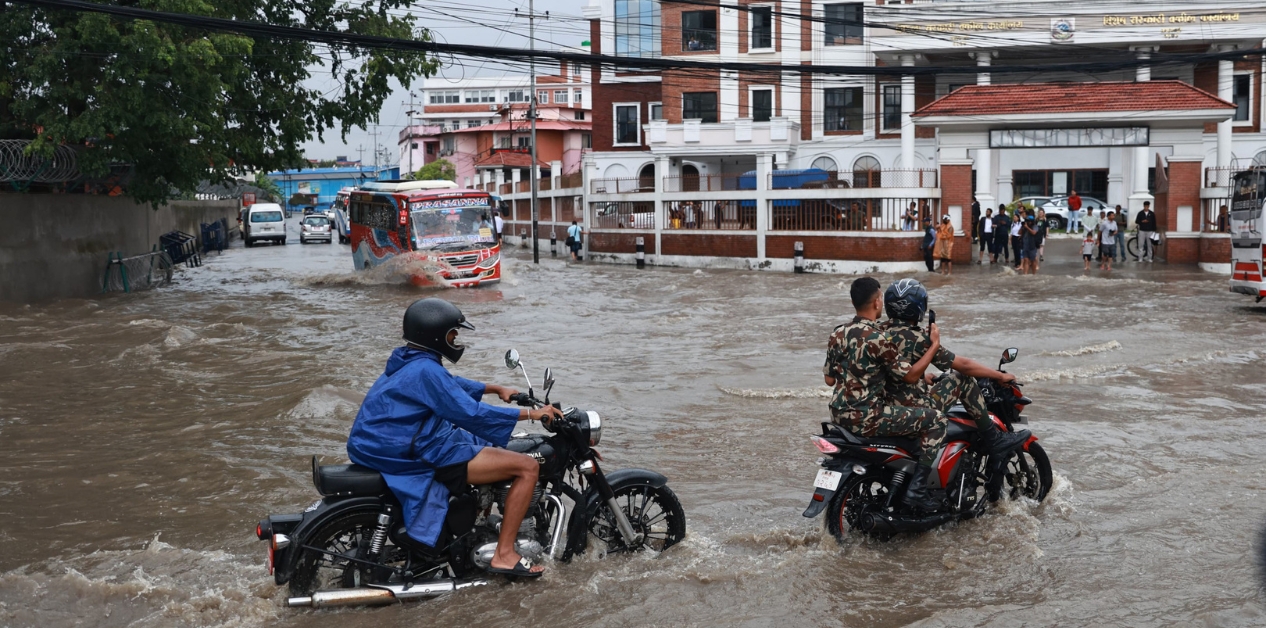
KATHMANDU: A technical study has revealed that Maitighar frequently experiences flooding even after brief rainfall due to drainage encroachment, waste blockage, and an outdated sewer system.
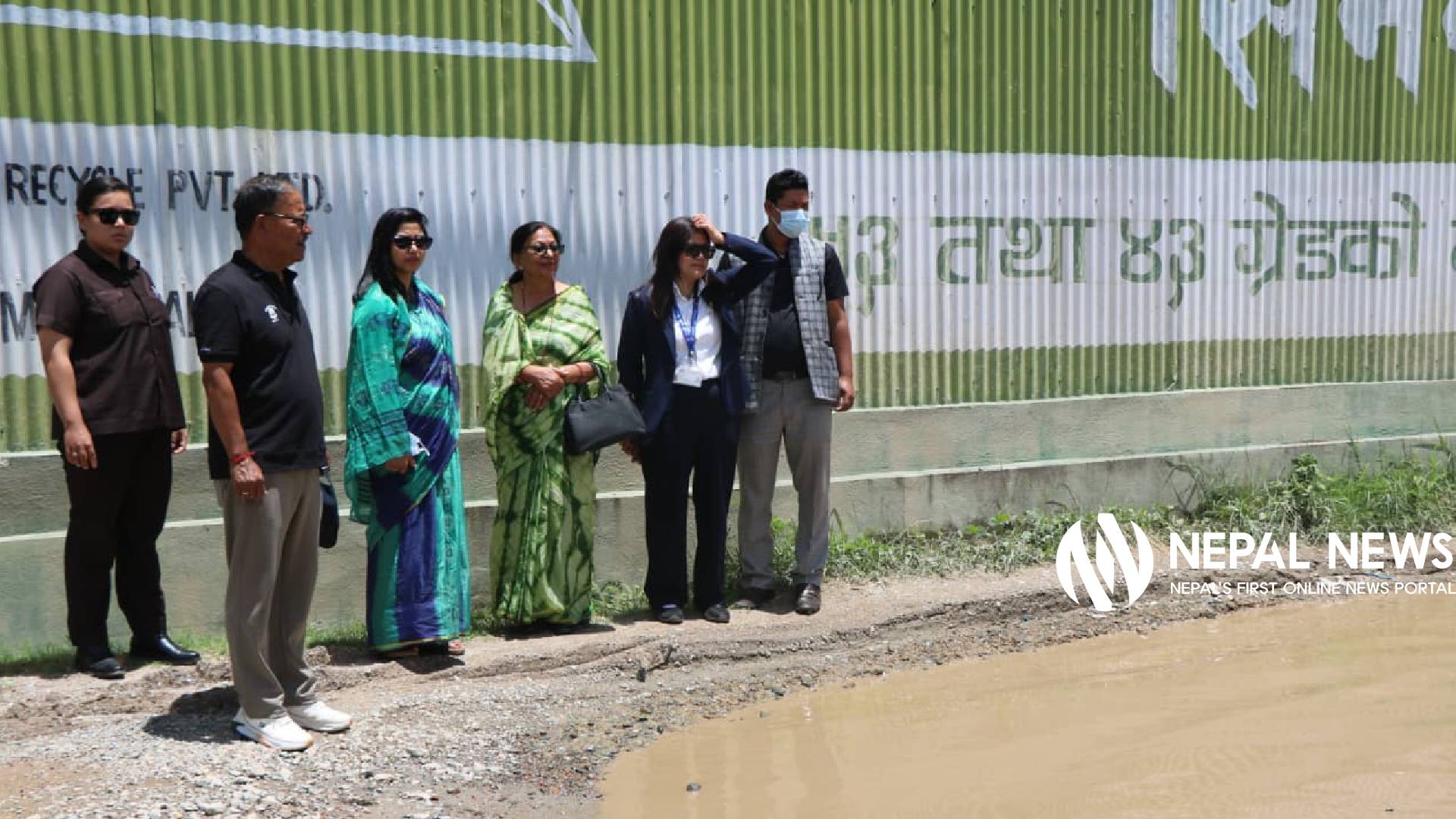
Short bursts of rain on July 16 and July 21 caused severe waterlogging in the Maitighar area, bringing vehicular traffic to a complete standstill. Subsequently, a technical committee formed to identify the causes of the flooding conducted a field study on July 22.
According to the committee’s report, personal and institutional structures in the Maitighar and Thapathali areas have covered the drainage outlets. The report highlights that structures within the premises of Thapathali Campus, Rastriya Banijya Bank, and the National Statistics Office have obscured these drainage lines.
The committee concluded that covering the sewers has made monitoring, maintenance, and regular cleaning extremely difficult. “We found that compounds were constructed by burying the drainage outlets on the premises of Thapathali Campus, Rastriya Banijya Bank, and the National Statistics Office,” says Ram Bahadur KC, coordinator of the committee and Under Secretary at the National Disaster Risk Reduction and Management Authority (NDRRMA).
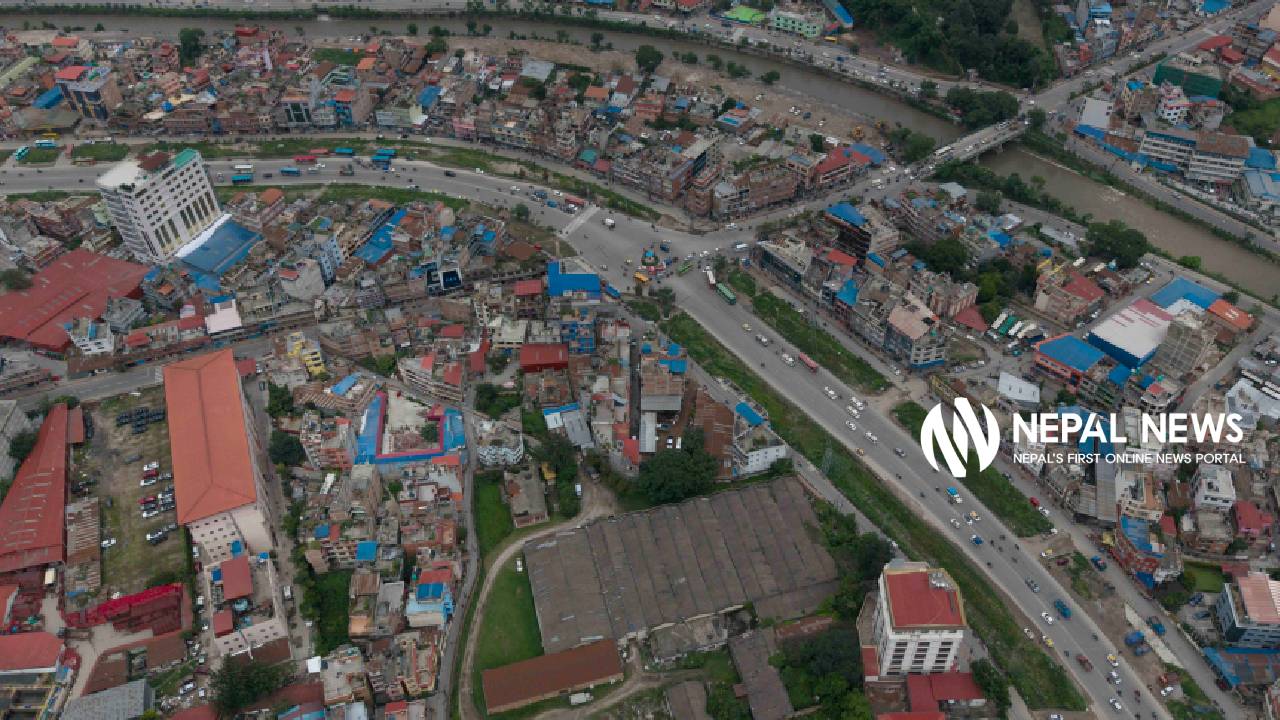
Previously, the land adjacent to Maitighar Chowk was open and lower than the road level. It served as a natural retention basin, temporarily storing rainwater.
After collecting in the open field, the water would gradually drain into the Tukucha Stream through the sewer system. As a result, the main sewer line at Maitighar did not face sudden, immense pressure. However, with the open area now covered by structures, the space for rainwater retention has vanished. The study indicates that as concrete and paved surfaces have expanded, rainwater cannot seep into the ground and flows all at once into the lower-lying areas.
Flow blocked by waste
The committee noted that plastic, clothing, bottles, and other solid waste accumulated inside the sewers block the water flow, causing sewage to back up onto the roads even during moderate rainfall. “Plastics, clothes, bottles, and solid waste have accumulated inside the drain,” KC explains. “This obstruction causes the water to back up and pool on the road during moderate rain.”
There is very little elevation difference between the water level of the Tukucha Stream and the final discharge point of the sewer. The report points out that during continuous rainfall, the rising water level of Tukucha blocks the outflow of sewage altogether.
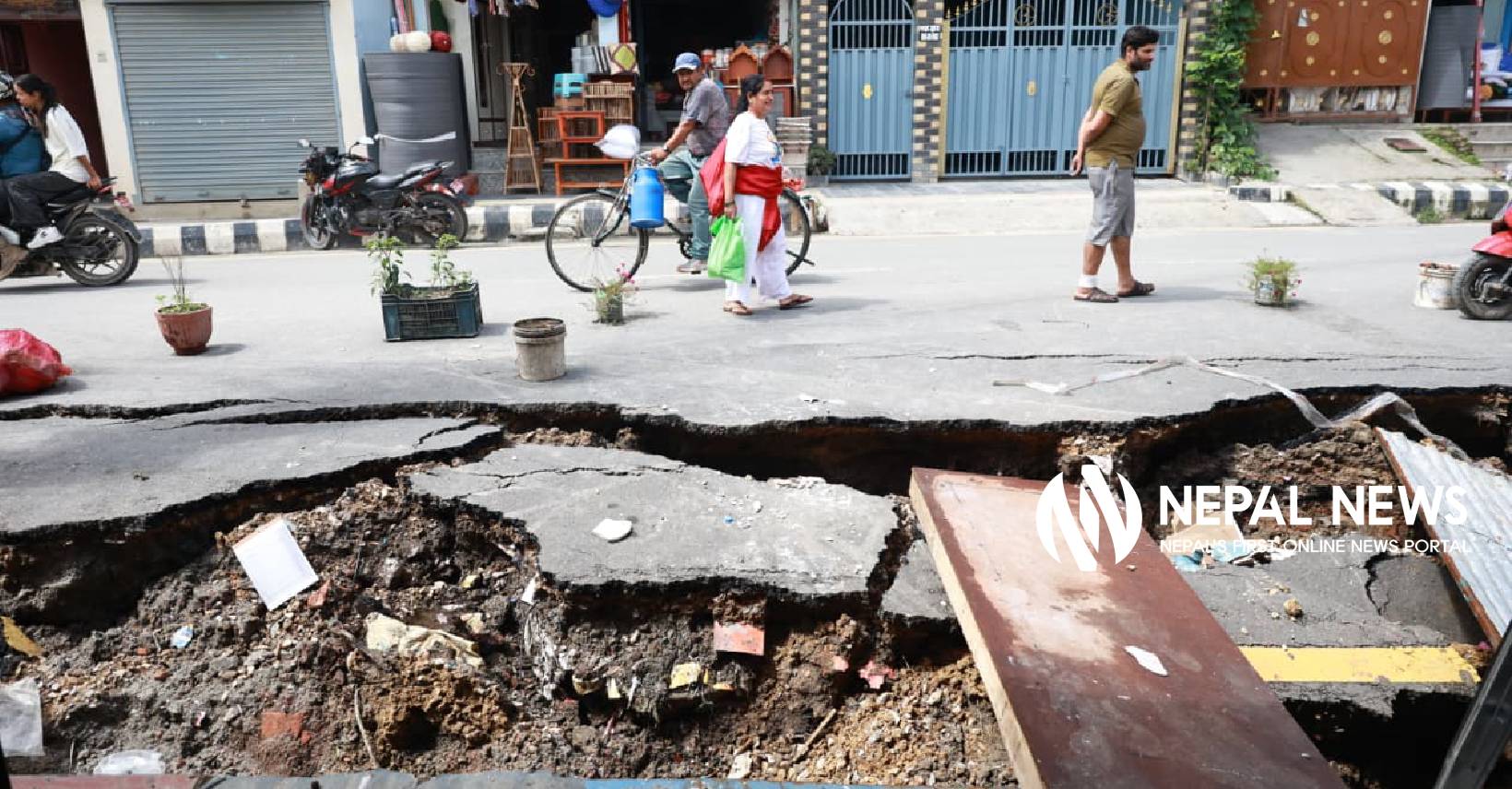
Furthermore, utility providers—including the Nepal Electricity Authority, Nepal Telecom, and water supply authorities—have laid cables, pipes, and structures beneath and around the drainage system, further hindering the flow. Uncoordinated road excavation and backfilling among various agencies have severely damaged the drainage network.
In Kathmandu, household sewage and rainwater runoff flow through the same pipe. Shanti Mahat, spokesperson for the Authority, explains that the outdated and limited-capacity pipes cannot cope with the sudden influx of large volumes of water.
“The existing drainage systems are old. Intensity of rainfall has increased compared to the past, and concrete structures have sprung up everywhere,” she says. “Rainwater cannot seep into the ground and quickly rushes to lower areas. A combined system carrying both sewage and rainwater simply cannot handle this volume.”
She adds that besides upgrading the sewer capacity, a separate system for managing stormwater and sewage independently is essential.
Six Immediate Solutions
To mitigate flooding, the technical committee recommended six measures for immediate implementation. It suggested removing personal and institutional structures built over drainage lines to leave them open and visible from the outside. Solid waste, plastics, clothes, and bottles accumulated inside the sewers must be cleared immediately, followed by regular cleaning.
The committee advised uncovering buried or hidden manholes along Maitighar and other major roads, raising them to surface level. Installing grit chambers or mesh screens was proposed to prevent trash from entering the sewer lines.
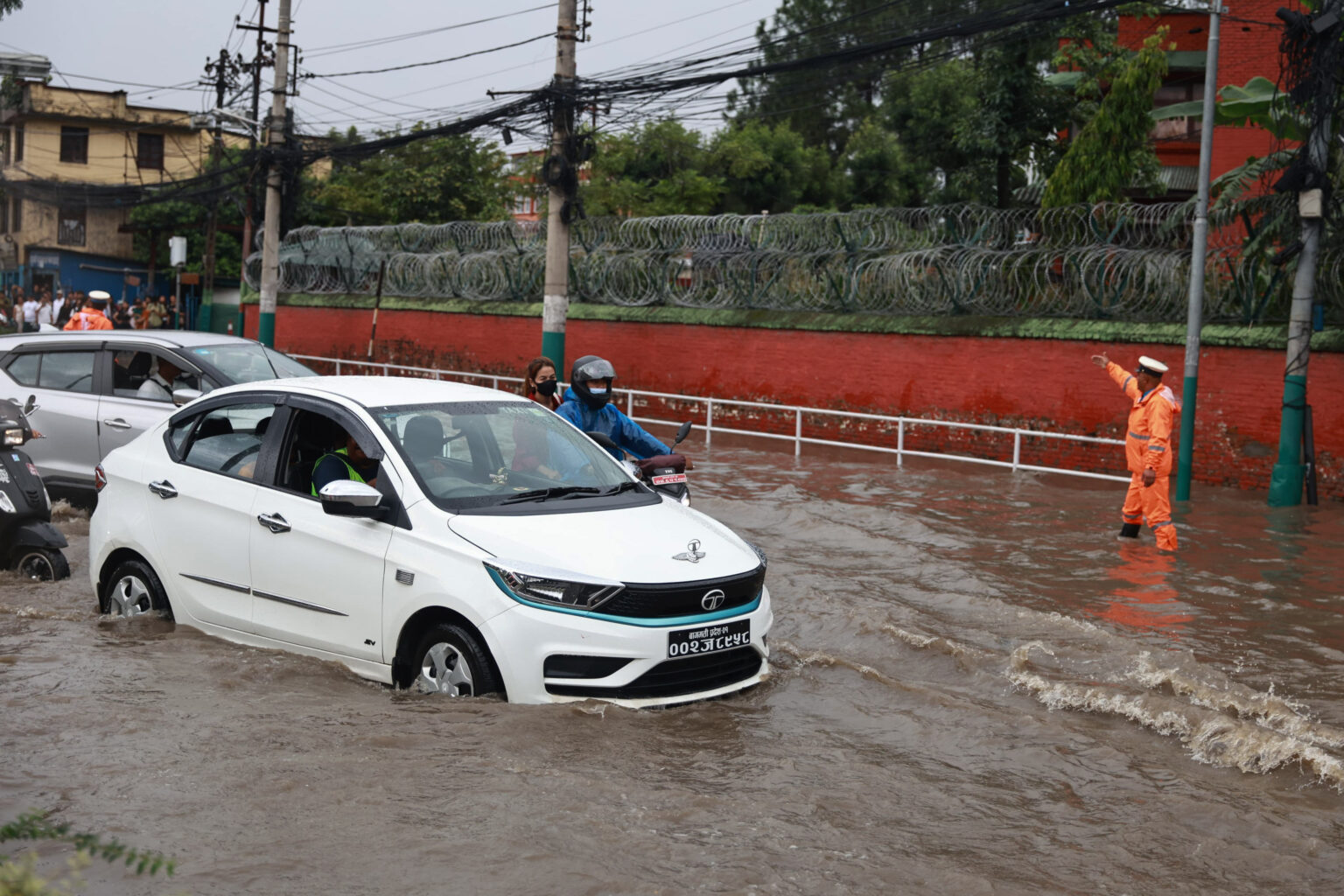
Additionally, the committee recommended dredging the bed of the Tukucha Stream and widening its banks to increase water flow capacity.
Effective coordination among the Electricity Authority, Nepal Telecom, Kathmandu Upatyaka Khanepani Limited, Project Implementation Directorate, Kathmandu Metropolitan City, Department of Roads, and Traffic Police is necessary during road and infrastructure construction.
The committee also noted that traffic management should be aligned with rainfall forecasts from the Department of Hydrology and Meteorology and potential inundation scenarios.
Four long-term solutions
The committee outlined four long-term solutions. It recommended that the Kathmandu Metropolitan City, Division Road Office, and Kathmandu Upatyaka Khanepani Limited map out the complete geographical layout and network of the drainage system.
Since the open lands that previously absorbed rainwater have disappeared, the committee proposed constructing an underground retention tank beneath the public land at Maitighar or the old Ministry of Health premises.
The report also emphasizes installing appropriate technology at the discharge point to prevent backflow from the Tukucha Stream when its water level rises. Furthermore, it suggested studying the watershed area of the Kathmandu Valley to redesign the sewer capacity according to changing rainfall patterns and urbanization.
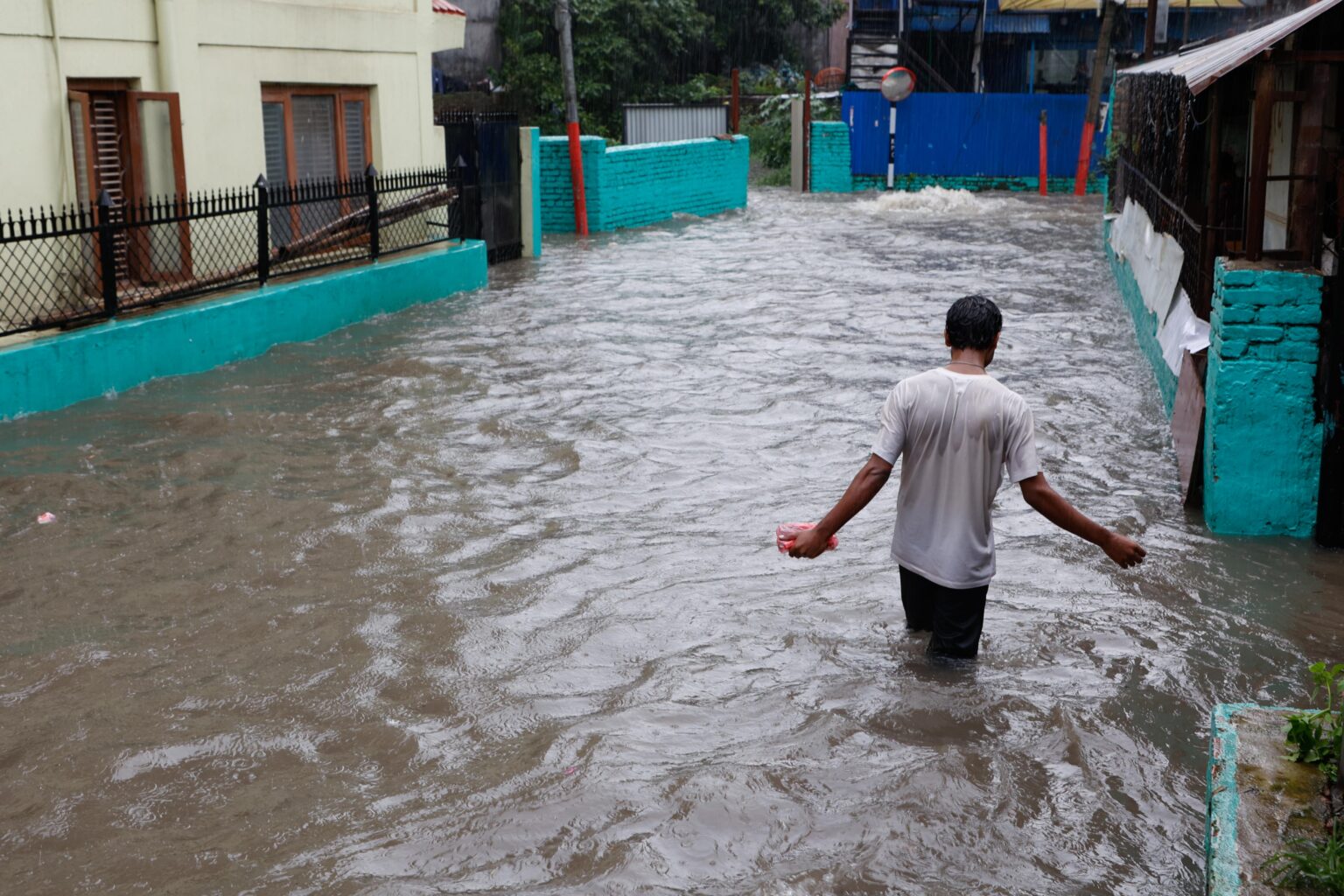
Sahabhagita Marg in Kathmandu Metropolitan City-10 submerged due to heavy rainfall. Photo: Nepal Photo Library
The committee, coordinated by KC, includes Senior Engineer Jeevan Regmi from Kathmandu Metropolitan City, Engineer Purushottam Bhandari from the Division Road Office, and Manager Ujjwal Shrestha from Kathmandu Upatyaka Khanepani Limited.
KC notes that the flooding at Maitighar reflects the broader drainage issues across the Kathmandu Valley. “We have submitted our recommendations to all relevant agencies,” he says. “If these recommendations are implemented, inundation in the valley can be significantly reduced.”
A meeting of the Disaster Authority on July 20 approved an action plan regarding drainage management in the Kathmandu Valley.
However, the study concludes that without immediate cleaning and manhole clearing, alongside removing encroachments, constructing retention structures, and redesigning the outdated drainage system, preventing the recurring annual floods at Maitighar will remain difficult.