Kathmandu
Saturday, June 20, 2026





Poor implementation of corruption and laundering rulings stalls progress on global compliance
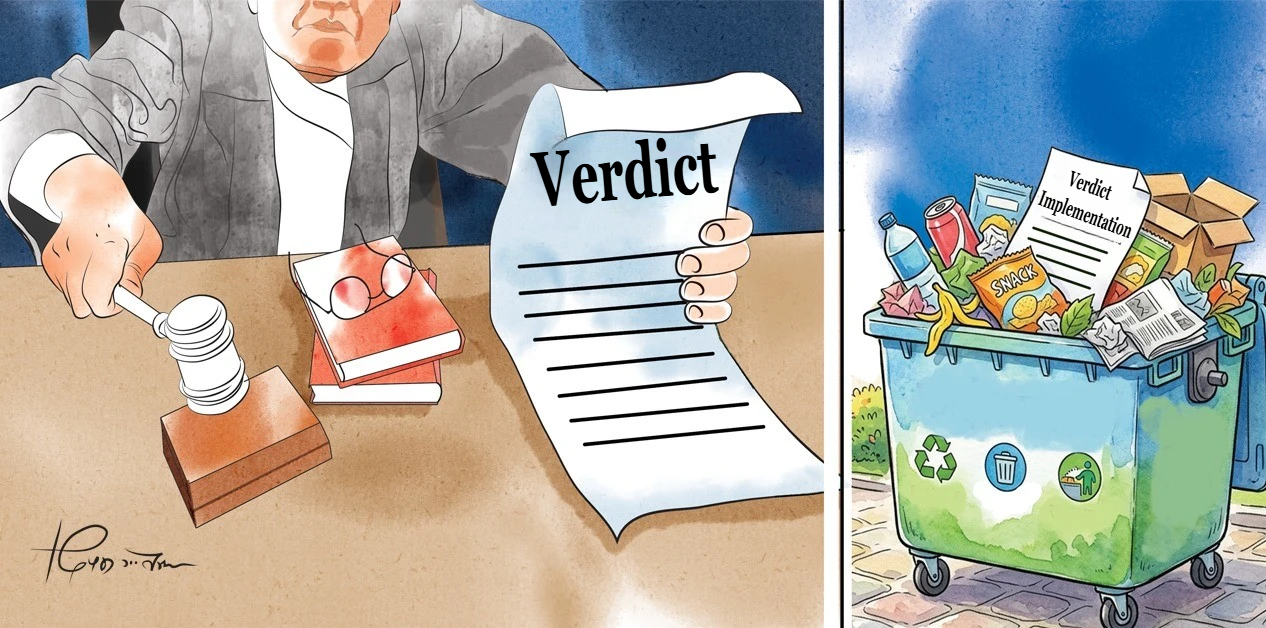
KATHMANDU: In a case concerning a Rs 50 million loan obtained from Nepal Bank Limited in the fiscal year 1998/99 and subsequently defaulted, the Special Court, on October 30, 2005, ordered the borrowers to pay Rs 56,762,618, including the principal amount and applicable fines.
Upon appeal, the Supreme Court of Nepal, on November 7, 2016, upheld the ruling in full, affirming both the principal recovery and the penalties imposed.
The four members of the Loan Subcommittee of the Board of Nepal Bank Limited were accused of extending loans to former bank employees and their associated groups under the names of various firms and industries. After such entities were registered and loans disbursed but not repaid, the Commission for the Investigation of Abuse of Authority filed a case before the Special Court, alleging a loss of Rs 208.9 million to the bank.
Although charges were also brought against Prafulla Kumar Kafle, Bishwambhar Pyakurel, Jharendra Shamsher Rana, and Mukunda Aryal of the committee, they were acquitted by the Special Court. However, the Court ordered recovery of Rs 29,214,547 from borrowers Laxmi Prasad Acharya, Krishna Prasad Luitel, and the Cotton Rich private company, and approximately Rs 23.9 million from Bagmati Uni Dhago Katai Udhyog, in which Laxmi Prasad Acharya, Achyut Prasad Rijal, and Bharat Raj Koirala were partners.
Despite the final judgment, more than nine years have elapsed without implementation. Counting from the original ruling of the Special Court, nearly 20 years have passed.
Only now has this verdict reached the implementation stage at the Department for Management of Proceeds of Crime (DMPC), under the Ministry of Home Affairs. This department was established specifically to forfeit and manage criminal assets.
When the Nepal News correspondent reached the department on March 17, Director General Suman Ghimire was analyzing the verdicts to be implemented. Showing a 174-page volume of the fiscal year 2016/17 Supreme Court verdict regarding the Nepal Bank loan, he said, “We are in the process of implementing this verdict. We have received 2,000 such verdicts so far. ”.
Why such a delay in verdict implementation? To our question, Ghimire cited the fact that the department had not even been formed when this verdict was delivered. Indeed, the Asset (Freezing, Seizing, and Confiscation) of Criminal Proceeds Act was formed in 2014, and based on this, the DMPC was formed only in 2021.
However, even in the absence of the department, there were other government agencies to implement verdicts. Currently, there are 668 units across 20 agencies nationwide for the implementation of court verdicts involving such economic and financial crimes. The status of verdict implementation, however, appears disappointing.
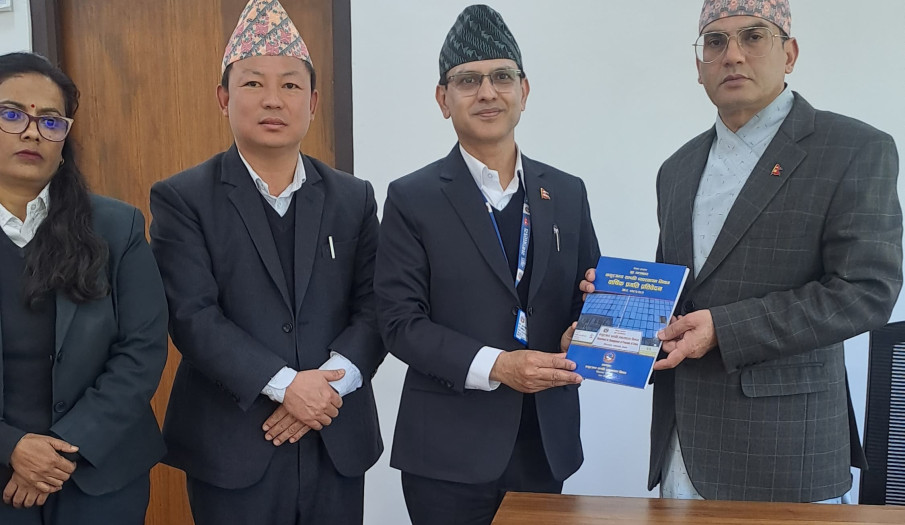
Suman Ghimire, Director General of the DMPC, presenting the annual progress report for fiscal year 2024/25 to then Home Secretary Rameshwar Dangal. Photo courtesy: DMPC
Let’s look at another high-profile case example. On August 14, 2012, the Supreme Court found former minister and Nepali Congress leader Khum Bahadur Khadka, who passed away in 2018, guilty of corruption, sentencing him to one and a half years in prison and ordering the forfeiture of land earned through corruption. It was also ruled to forfeit some 699.51 square meters of land in Sanepa, Lalitpur, which was then worth some Rs 2 million, registered in the name of Khadka’s wife, Shila Sharma Khadka, along with vehicles and money in bank accounts. However, even 13 years after the verdict, the work of forfeiting the land and bringing it under state ownership has not been completed.
Khadka’s family submitted an application to the DMPC on March 31, 2025, to release the land by depositing the amount according to the Supreme Court verdict. The department has sent that application to the Special Court.
According to Krishna Sharan Lamsal, spokesperson for the Special Court, the application is under consideration because there is a vast difference between the past and current land prices, and the property needs to be re-evaluated.
At first glance, the non-implementation of these few verdicts seems like only a national issue. However, the failure to implement verdicts is causing international-level impacts on Nepal. This impact is linked to the ‘Grey List.’ One reason for Nepal falling into the ‘Grey List’ is the inability to implement court verdicts in cases like corruption and money laundering. The struggle to implement verdicts is also a factor in the inability to exit this list.
Failure to enforce court rulings fuels ‘Grey List’ vulnerability
Having already exhausted half of the reform period without establishing a basic foundation, Nepal now faces the risk of slipping into the ‘Dark Grey List.’
The Financial Action Task Force (FATF) placed Nepal on its ‘Grey List’ in February 2025, citing weak enforcement of laws on money laundering and terrorist financing, inadequate oversight of high-risk sectors such as cooperatives and real estate, and deficiencies in investigation and prosecution.
A key factor behind Nepal’s inclusion on the Grey List is the failure to enforce court verdicts in economic crime cases, including the recovery of principal amounts and fines. Addressing this gap is essential for removal from the list. FATF has placed Nepal under enhanced monitoring through a structured action plan aimed at correcting these systemic weaknesses.
According to Ved Prasad Upreti, Registrar of the Special Court, non-enforcement of judicial decisions has created both internal and external pressures. “Money that has left the state treasury must return to it. Until court verdicts are implemented, such recovery does not occur,” said Upreti. “As the consequences now extend to the Grey List, the issue of enforcement has moved from a national concern to an international one.”
He further noted that Nepal’s inability to exit the Grey List is closely linked to weak enforcement of verdicts in corruption and money laundering cases. FATF assessments rely on measurable indicators such as the volume and quality of investigations, cases filed in court, and convictions secured. The continued failure to confiscate criminal assets, enforce penalties, and execute final judgments has contributed to the current situation.
A key factor behind Nepal’s inclusion on the Grey List is the failure to enforce court verdicts in economic crime cases, including the recovery of principal amounts and fines. Addressing this gap is essential for removal from the list.
To demonstrate effective enforcement, authorities must show a substantial number of investigations leading to prosecution, conviction, and recovery of illicit assets in accordance with the law.
In this context, the Government of Nepal, through a Cabinet decision on September 22, 2021, established the DMPC of Crime to manage, seize, and forfeit criminal assets. However, the department has yet to fully operationalize the recovery of assets in line with court verdicts and has primarily focused on interim measures such as seizing vehicles and freezing immovable property under investigation.
According to data from the Supreme Court of Nepal for the fiscal year 2023/24, approximately Rs 32.119 billion remains unrecovered nationwide under court orders. In addition, sentences totaling 114,637 years, four months, and 10 days of imprisonment remain unexecuted in criminal cases.
System for integrated data
Entities responsible for enforcing court verdicts include courts and police units nationwide, the Commission for the Investigation of Abuse of Authority, and various government departments and stakeholder agencies. However, the Department of Asset Management of Proceeds of Crime currently lacks integrated nationwide data on the total volume of criminal assets forfeited. Director General Suman Ghimire said efforts are underway to consolidate such data by linking all relevant agencies into a unified system.
These agencies have been connected to the Crime Management Information System. “The system will facilitate the exchange of data on assets derived from criminal activities, management of crime-related instruments, and auction processes nationwide. This will support a comprehensive evaluation of verdict enforcement,” said Ghimire.
He added that the department has developed five standardized forms to record details of assets and instruments seized or confiscated pursuant to court orders, based on inputs from investigative and prosecuting agencies as well as District Administration Offices, to support integrated data collection.
According to Ghimire, a task force led by the Ministry of Law, Justice and Parliamentary Affairs is currently reviewing amendments to 50 thematic laws related to the freezing, seizure, and confiscation of criminal assets.
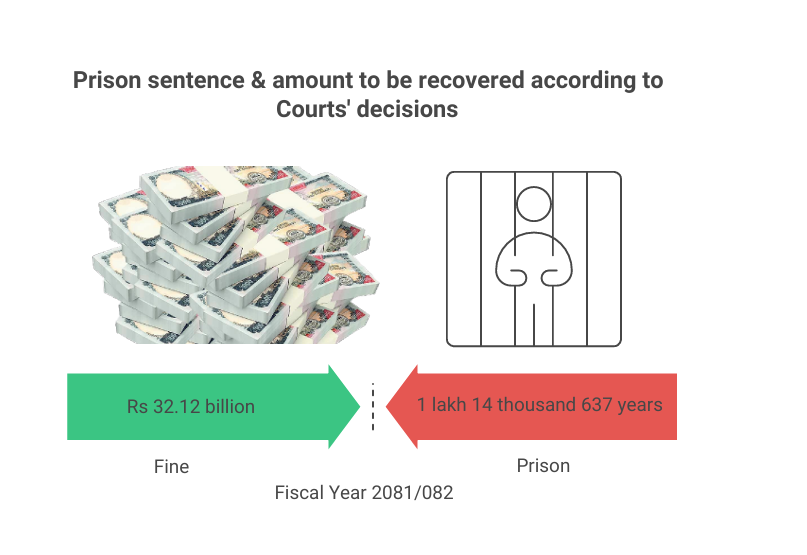
The department reports limited progress in enforcing verdicts related to economic crimes. It has brought 2,266.77 square meters of land within the Kathmandu Valley under government ownership. As of February 23, an additional 1,621.59 square meters of land has been confiscated in districts outside the Valley. Furthermore, approximately 247,292 square meters of land linked to ongoing investigations has been frozen.
Ghimire noted that delays in receiving the full text of court judgments also hinder enforcement. “Land Revenue Offices are often unable to make timely decisions to transfer ownership in accordance with final verdicts. Funds frozen or controlled in such cases must be transferred to the department’s consolidated fund,” said Ghimire. “There must be stronger coordination among investigative agencies, prosecutors, and the courts. A time tracking mechanism is now essential for implementing new verdicts.”
Settlement of 1,100 economic crime cases
A dedicated special court has jurisdiction over corruption and money laundering cases. Since last year, this jurisdiction has been expanded, allowing all District Courts to hear money laundering cases.
Since its establishment on August 22, 2002, the Special Court has registered 101 money laundering cases, of which 97 have been adjudicated. However, even cases that have reached finality after appeal remain largely unimplemented.
Registrar Ved Prasad Upreti emphasized that responsibility for enforcing verdicts extends beyond the courts. “In corruption and money laundering cases, the Department of Asset Management of Proceeds of Crime plays a key role in implementation. The Commission for the Investigation of Abuse of Authority, the Department of Money Laundering Investigation, District Courts, police administration, and local governments are also responsible,” said Upreti.
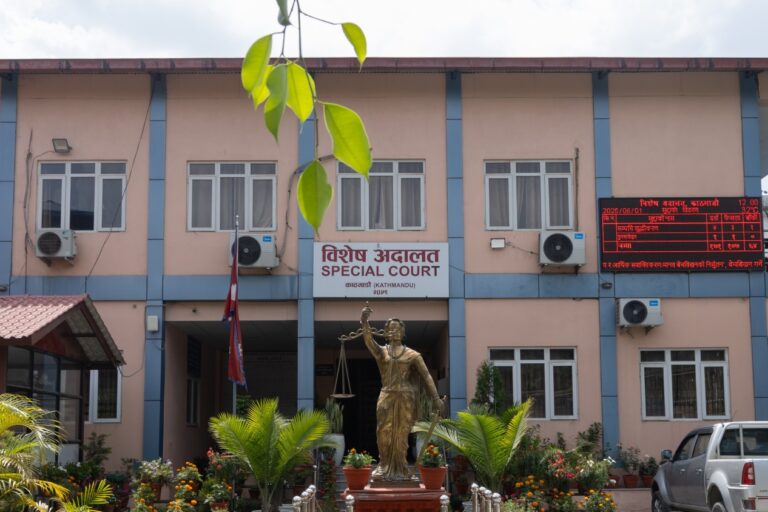
According to Upreti, verdicts have been delivered in 1,110 corruption and money laundering cases nationwide. Of these, 246 are from Madhesh Province, 230 from Bagmati, 168 from Koshi, 146 from Lumbini, 108 from Gandaki, 97 from Sudurpashchim, and 88 from Karnali. Additionally, 27 cases involving foreign companies have resulted in convictions.
Despite these outcomes, most verdicts remain unimplemented. Upreti said efforts are underway to compile precise data on enforcement. While District Courts have traditionally overseen implementation, the Special Court has, since October 12, 2023, begun enforcing its own regulations to strengthen the process.
Enforcement becomes more complex in cases involving foreign entities. All 27 convictions against foreign companies by the Special Court remain unenforced. “Implementation becomes difficult in the absence of mutual legal arrangements with other countries,” said Upreti. He noted that the lack of effective frameworks with countries such as China, India, and Myanmar has hindered enforcement, although agreements with India and China have been signed and await parliamentary approval. Nepal, a member of the Financial Action Task Force through the Asia Pacific Group since 2001, continues to face such structural challenges.
The enforcement gap is further compounded by legal limitations. While Nepal has the Mutual Legal Assistance Act, 2014, its provisions restrict cooperation to cases where bilateral treaties exist. Section 3 of the Act stipulates that mutual legal assistance can only proceed under such agreements, while Section 13 allows courts to request enforcement of Nepali verdicts abroad. Although deposits furnished as advance bail may be forfeited, authorities face significant challenges in recovering court-mandated principal amounts and fines from foreign entities.
What is money laundering?
Money laundering refers to the process of disguising assets acquired through illegal means as legitimate. It involves channeling wealth from undisclosed or unlawful sources into lawful activities, a practice commonly described as converting “black money” into “white.” Such acts are criminalized under the Asset (Money) Laundering Prevention Act, 2008.
According to the annual report of the Department of Asset Management of Proceeds of Crime for fiscal year 2024/25, existing legal provisions governing freezing, control, and forfeiture of assets remain inconsistent with the Asset Criminal Proceeds framework, necessitating legislative amendments. The report highlights systemic challenges, including delays in receiving details of assets and instruments ordered for confiscation by District Courts, irrespective of appeal status, as well as delays in obtaining corresponding records from the Supreme Court of Nepal and High Courts.
It further identifies practical constraints such as the inability to subdivide land in cases involving partial forfeiture and procedural delays in transferring ownership to the state or conducting auctions, often due to access and administrative limitations.
Nepal is a party to several key international conventions, including those of the United Nations on drug control, countering the financing of terrorism, anti-corruption, and combating organized crime. At the regional level, Nepal is also a signatory to SAARC conventions on drug and terrorism control. Its obligations have further expanded through accession to the Vienna Convention (narcotic drugs and psychotropic substances) 1988, the Palermo Convention, the Convention against Corruption 2003, and the International Convention for the Suppression of the Financing of Terrorism 1999.