Kathmandu
Wednesday, July 1, 2026





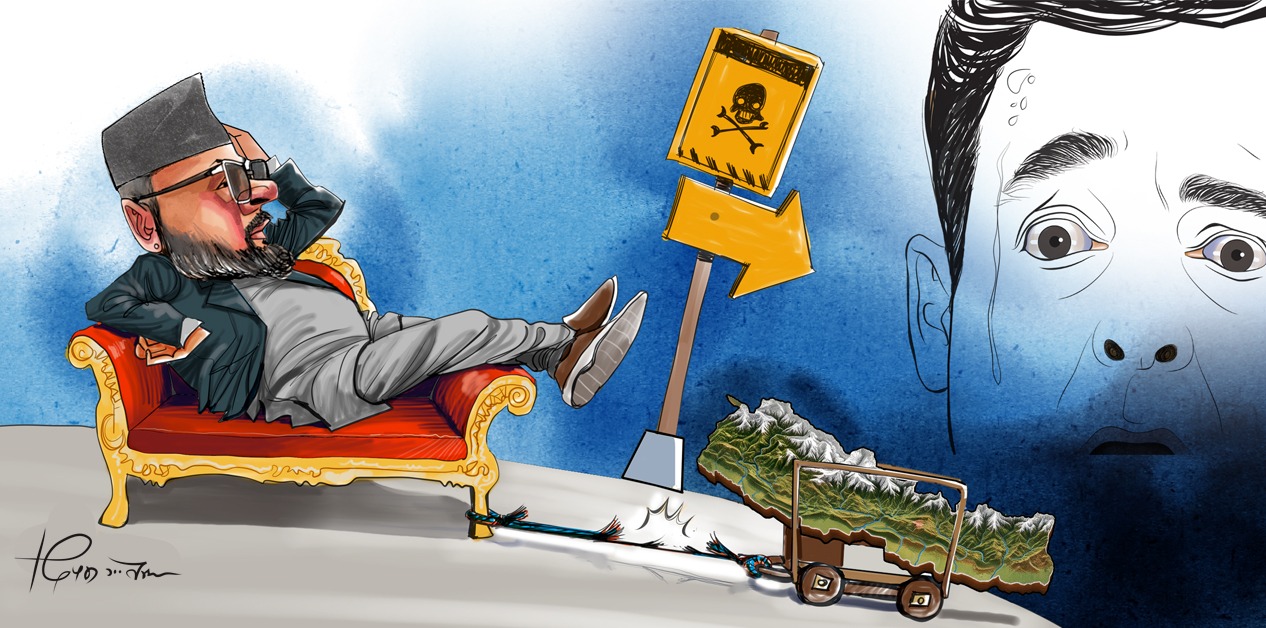
Recurring seasonal disasters are no longer just environmental issues; failing to adopt scientific mitigation strategies will leave Nepal’s economy and infrastructure vulnerable to decades of setbacks
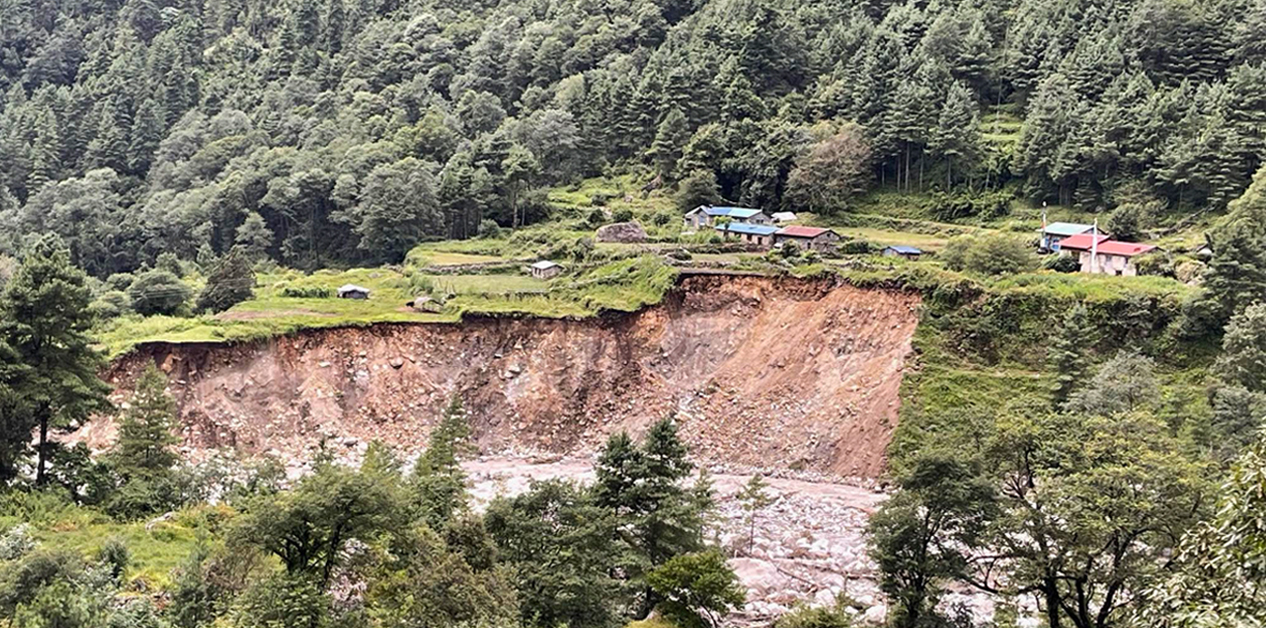
BIRATNAGAR: In Nepal, floods, landslides, droughts, glacial lake outbursts, unusual rainfall, inundation, wildfires, and heatwaves are no longer just ‘unusual’ events. These are gradually transforming into Nepal’s new climate reality. Extreme rainfall, flash floods, or prolonged droughts, which until a few decades ago were said to occur once in a hundred years, have recently started repeating within intervals of just a few years. Climate change is no longer a concern for the future; it has become a crisis of the present.
In any system, ‘extreme’ refers to a state significantly below or above established standards. In the context of weather systems or climate (rainfall, temperature, floods, and drought, among others), the established standard is the historical average. Accordingly, extreme weather events are extraordinary atmospheric conditions that differ greatly from normal seasonal patterns.
From a scientific perspective, extreme weather events refer to atmospheric conditions that are vastly different from historical averages in terms of intensity, duration, or geographical extent. The primary basis is considered to be when an event falls outside the fifth or 95th percentile (the top 5 percent and bottom 5 percent) of historical distribution or causes severe loss of life and property. In a country like Nepal with complex geography consisting of mountains, hills, and the Terai, the forms of these events are also diverse: cloudbursts in some places, landslides in others, inundation, glacial lake outbursts, or extreme droughts elsewhere.
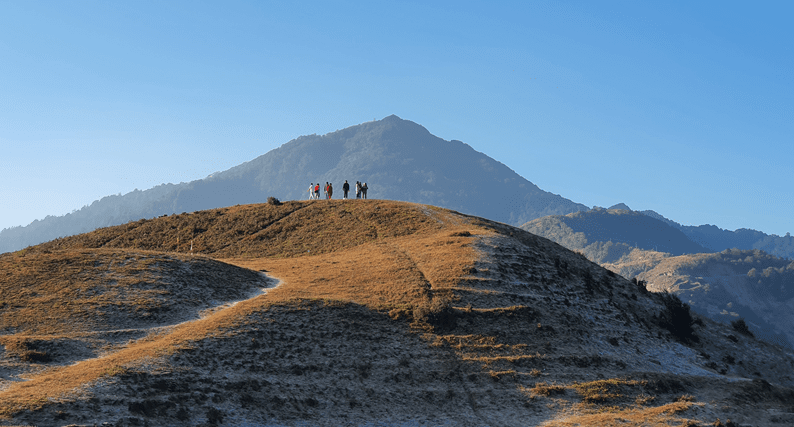
Nepal is among the countries most at risk from climate change globally. According to the ‘Global Climate Risk Index 2021’ by the German developmental and environmental organization, Germanwatch, Nepal ranks ninth in the world in terms of climate risk. The sixth assessment report (AR6, 2021) of the Intergovernmental Panel on Climate Change (IPCC) clarified that temperatures in the Hindu Kush Himalayan region are rising nearly two times faster than the global average. According to reports from the Department of Hydrology and Meteorology, Nepal’s average temperature is increasing at a rate of 0.056°C per decade, while the area of Himalayan glaciers has decreased by about 24 percent since 1975, leading to an increased risk of glacial lake outburst floods (GLOFs). This entire background clearly shows that Nepal is teetering on the edge of extreme weather events.
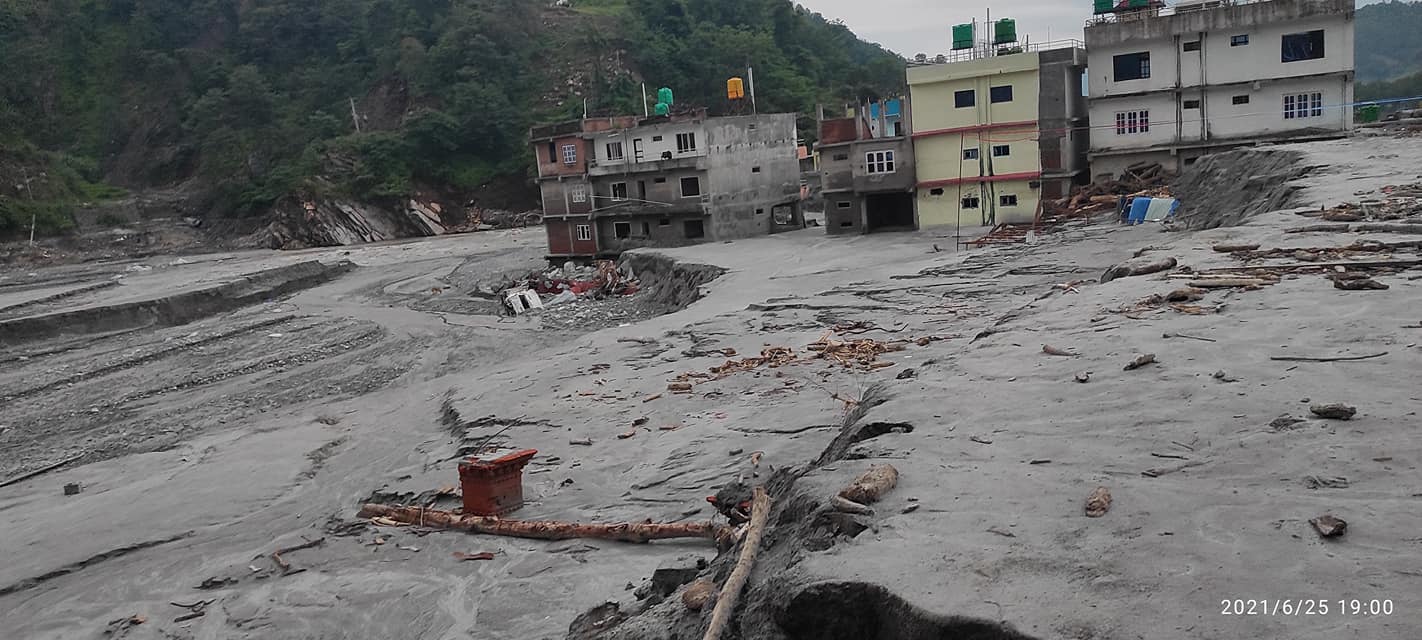
Damage caused by the Melamchi River changing course due to floods on June 15, 2021. Photo Credit: JB Karki
What do the disaster statistics say?
In the last three decades, there has been a terrifying increase in both the frequency and intensity of extreme weather events in Nepal. According to data from the National Disaster Risk Reduction and Management Authority (NDRRMA), in 2078/79 alone, 374 people lost their lives to floods, landslides, and rain-related disasters; nearly 50,000 families were affected, and billions of rupees in physical damage occurred. The unprecedented rainfall and floods of 2024 affected approximately 2.5 million people across the Kathmandu Valley and other areas, claiming over 250 lives.
The torrential rains in Kulekhani in 1993, the floods in Melamchi and Manang, and the extreme rainfall seen in recent years have given a clear signal: extreme weather events and the risks arising from them are no longer tomorrow’s problem; they have become today’s problem.
The danger of GLOFs in the Himalayan region is also increasing equally. This has created a state of fear for people and infrastructure in high-altitude settlements as well as downstream areas. According to a study by the International Centre for Integrated Mountain Development (ICIMOD), there are more than 4,000 glacial lakes in Nepal, out of which 47 have been shown to be at high risk. In 2023, a glacial lake outburst in Solukhumbu caused massive damage to physical structures, including the Thambu Hydropower Project.
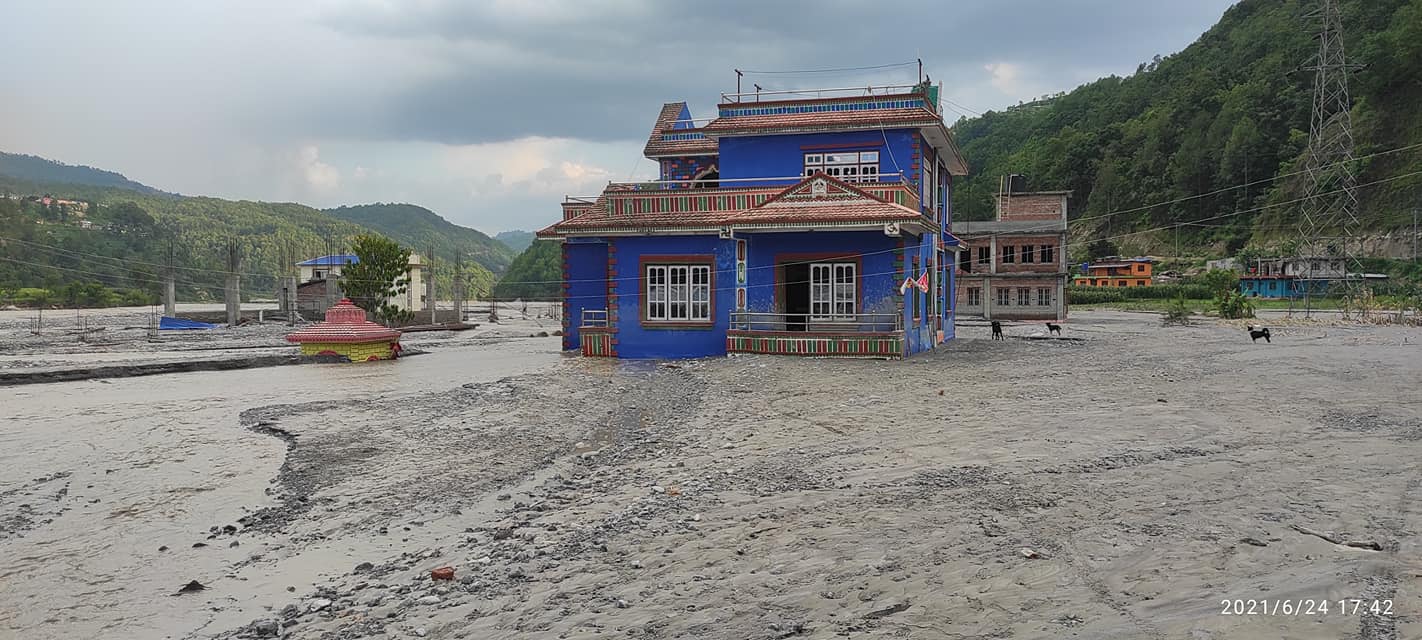
Damage caused by the Melamchi River changing course due to floods on June 15, 2021. Photo Credit: JB Karki
In October 2025, extraordinary rainfall in Ilam and other parts of Eastern Nepal caused immense loss of life along with incomparable damage to roads, settlements, and agricultural land. According to a World Bank report, it is estimated that Nepal loses approximately 1.5 to 2 percent of its Gross Domestic Product (GDP) every year due to disaster-related losses, which is an extremely heavy burden for a developing nation. From the 2024 Nepal floods and landslides alone, damage exceeded 1 percent of the GDP.
Multidimensional and multisectoral impacts
The impact of climate-induced disasters on Nepal’s economy is multidimensional. The blow of extreme weather events falls first and deepest upon impoverished and marginalized citizens and farmers. More than 60 percent of Nepal’s population depends on agriculture. However, due to unseasonal rain, drought, and floods, crops ranging from paddy to maize and vegetables to fruits are destroyed, leaving farmers empty-handed.
In the Terai districts in recent years, delayed monsoons, droughts, and sudden extreme rainfall after dry spells have damaged both crops and soil. This has created a serious challenge not only for local livelihoods but also for national food security. Ironically, the very irrigation systems essential for increasing agricultural production are frequently damaged by floods and landslides.
The damage to infrastructure is equally concerning. Every year, billions of rupees in damage occur to roads, bridges, hydropower, drinking water, irrigation, and electricity transmission structures. For a nation with limited resources like Nepal, spending a large budget repeatedly on ‘post-disaster reconstruction’ slows down the pace of development. An even greater problem is that we are still limited to the ‘reconstruction after damage’ model. Expected investment in risk reduction, preparedness, and adaptation has not materialized.
Another serious aspect of extreme weather events is human displacement. Due to landslide risks, drying water sources, floods, and wildfires, people are being forced to leave their ancestral homes. The problem of ‘climate refugees’ is gradually emerging in Nepal, but there hasn’t been enough debate about its long-term social impact.
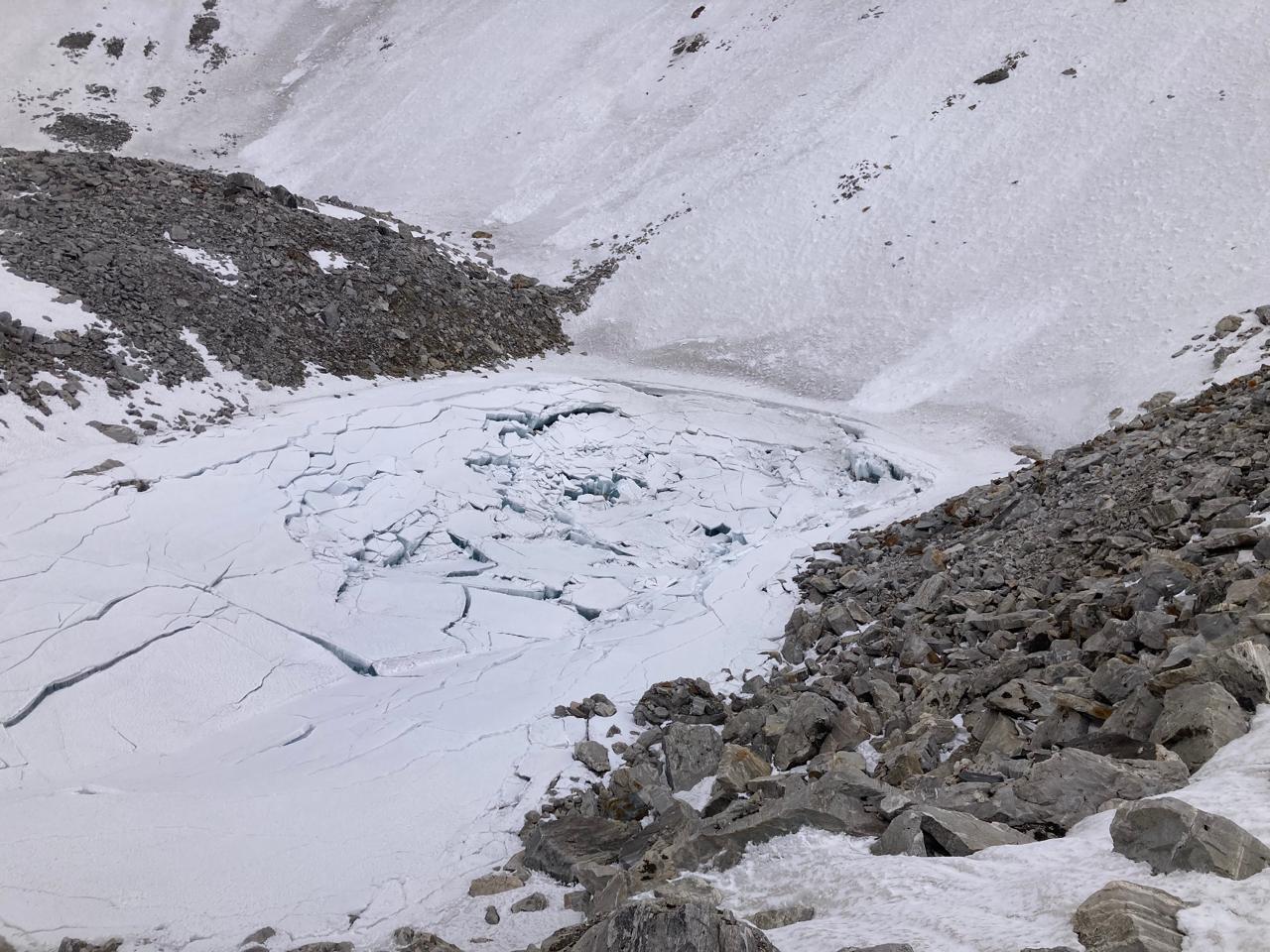
An avalanche/flood disaster at Til village (Tilgaun) in Limi Valley, Namkha Rural Municipality-6, Humla, occurred on the night of May 14, 2025. Photo courtesy: NDRRMA
The impact of disasters is even deeper on women, children, and persons with disabilities. Women are at higher risk during disasters, children’s education is interrupted, and persons with disabilities are unable to reach safe places. Statistics alone cannot clarify this humanitarian crisis.
It is wrong to dismiss these disasters as merely ‘natural disasters.’ Geologists and climatologists hold the clear view that while climate change has increased the intensity of extreme weather events, disorganized development, settlement expansion on riverbanks, and unscientific land use have increased the damage several times over.
In the Kathmandu Valley, the main cause of flooding is not just rain but also disorganized urbanization, lack of drainage, and river encroachment. This means that if the government wishes, these losses can be significantly reduced. The effects of climate change and extreme weather events are not limited to one sector. There are multisectoral interconnections, including agriculture, energy, infrastructure, economy, health, education, urban development, drinking water, and national security.
What should be done to mitigate the impact of extreme weather events?
Even now, the word ‘climate’ is mentioned in many plans, but in practice, its impact appears minimal in project design, budget allocation, and implementation. Climate risk assessment must be made mandatory for all large infrastructure projects. Nepal’s disaster management practice is more focused on relief distribution than preparedness. What we need is a visionary, scientific, and multi-layered national climate action plan. In this context, the following are the issues for demand and attention from the government:
1. Expansion and strengthening of early warning systems: Currently, Nepal’s flood early warning system is limited to only a few river systems. This must be expanded to all major rivers, hilly slopes, and GLOF-risk areas. It is essential to establish Doppler radar networks, automated weather stations, real-time data, remote sensing, expansion of local community-based information networks, and SMS-based public alert systems. One early warning can save thousands of lives, and an example of this can be taken from the 2025 floods, where correct early warning reduced human casualties.
2. Strictness in climate-resilient land use policy: Strictness must be immediately applied to the construction of new settlements, roads, and structures on riverbanks, high-landslide-risk areas, and floodplains. Local governments should be provided with the responsibility and resources for risk mapping.
3. Establishment of a national climate fund and adequate budget allocation: Nepal should allocate at least 5 percent of its national budget for climate adaptation and disaster mitigation. Diplomatic efforts must be intensified to increase access to international climate finance, including the Green Climate Fund (GCF).
4. Green Infrastructure and Nature-Based Solutions: Priority must be given to the conservation and management of forests, water areas, and wetlands. Disasters can be reduced through collaboration with nature rather than relying solely on concrete. Development construction must be made ‘climate resilient.’ While building roads, priority should be given to natural water flow, drainage, slope stability, and geo-risks. River control and embankment construction should also be viewed not just as concrete structures but as scientific management of river systems.
5. Coordination between all three levels of government: Disaster management is a shared responsibility between federal, provincial, and local governments. However, effective coordination among the three levels has not been seen so far. Institutional arrangements for integrated command systems, shared databases, and regular joint exercises must be made. Capacity building for local governments and communities is extremely necessary. Local levels are the first to face a disaster.
However, many municipalities lack or are deficient in technical manpower, risk mapping, preparedness plans, and equipment. Priority should be given to community-based disaster management, local knowledge, traditional water management practices, and nature-based solutions.
6. Climate justice and international pressure: Nepal’s share in global carbon emissions is only 0.025 percent. However, Himalayan countries like Nepal have had to face the most impact due to climate change. In COP conferences, Nepal must pressure leading countries to provide climate compensation and green finance. This diplomatic battle is equally important.
The bottom line
Nepal has signed the Paris Agreement on climate change and the Sendai Framework for Disaster Risk Reduction, 2015. The government has also prepared a national adaptation plan. However, the gap between paper plans and ground implementation is deep. There is no climate crisis-focused debate in Parliament. Its priority in the budget is low. There is insufficient coordination between ministries. Civil society, journalists, scientists, and local representatives all have a role in the fight against the climate crisis. But the ultimate responsibility lies with the state. Protecting the lives of the people is the supreme duty of the state.

Damage caused by floods in Thame, Khumbu Pasanglhamu Rural Municipality-5, Solukhumbu, in the monsoon of 2025. Photo source: Khumbu Pasanglhamu Rural Municipality/Facebook
Extreme weather events like excessive rain, floods, landslides, droughts, and glacial lake outbursts are no longer guests arriving every year; they have become permanent residents. Work must begin before the next Kathmandu flood, another Solukhumbu glacial lake outburst flood, or another Terai drought. Work must start immediately and from today.
We must not focus only on relief distribution after damage; what we need is scientific planning, long-term thinking, data-based decisions, risk-sensitive development, and strong political commitment to reduce the risk and damage of weather events. Otherwise, floods, landslides, inundation, and droughts repeating every year will push Nepal’s development back by decades.
Nepal must recognize the climate crisis as a national emergency and, accordingly, awaken political willpower to mobilize action plans and resources. Otherwise, we will count the statistics of the deceased every year, mourn, and wait for the next disaster. Breaking this vicious cycle is the national necessity of today.
(Karki is a researcher in Nepal’s water resources and irrigation sector.)