Kathmandu
Tuesday, July 21, 2026





If you were to look only at the balance sheet of the Nepal Rastra Bank this April, you might think the country was entering a golden age. We are currently sitting on a staggering $23 billion in foreign exchange reserves. To put that in perspective, if Nepal stopped earning a single dollar today, we could continue importing everything from fuel to microchips for the next eighteen months. In a world of volatile energy prices and global shocks, that should be a victory lap.
But if the engine is so full of fuel, why isn’t the car moving?
Naturally, the official narrative is one of triumph. We are told that this mountain of cash proves we are ready to graduate from Least Developed Country status in November 2026. But as any student of economic history will tell you, being ready on paper is very different from being ready for the world. The reality is that Nepal is caught in a “Liquidity Trap” with a uniquely Himalayan twist. Our reserves are at an all-time high not because our exports are booming, but because our domestic engine is idling. We have what I call a “Lazy Surplus.” Remittances are flowing in at record rates, but that money is staying stuck in the financial plumbing. Banks are overflowing with cash, interest rates have plummeted, and yet private sector investment is barely crawling.
The reason is simple: the private sector isn’t blind. They see the 2026 deadline approaching like a slow-moving storm. They know that graduation means losing the preferential “training wheels” that keep our garments and carpets competitive in global markets. When a businessman sees a tax hike on the horizon, he doesn’t take out a loan to build a new factory; he sits on his hands. He waits.
Think of this graduation like a high school diploma. Usually, it’s a sign that you’ve gained the skills to enter the workforce. But Nepal is graduating because of its “human assets”—we’ve done a good job with vaccines and schools—while our actual income is still lagging behind. We are the student who has perfect attendance and great citizenship marks but still can’t quite do the math required for the job market. Graduating in November 2026 without a plan could cost us over a hundred thousand jobs almost overnight. For a country already struggling with youth migration, that isn’t just an economic statistic; it’s a social crisis.
So, what is the “Statesman-like” move here? It isn’t to stand on a stage and pretend everything is fine. It is to engage in strategic statecraft. We need to follow the lead of our neighbors. Just recently, Bangladesh—facing similar shocks—asked the UN to defer their graduation until 2029. They aren’t doing this because they are failing; they are doing it because they are smart. They understand that a transition period is not a holiday; it is a performance contract.
Nepal should be leading a coalition of these graduating nations. Our diplomacy must move beyond the ceremonial. We need to activate our embassies in Brussels, Washington, and Ottawa to make a technical, hard-headed case for an extension. We should be telling the world that we have the stability, but we need three more years to synchronize our industrial policy with our new status.
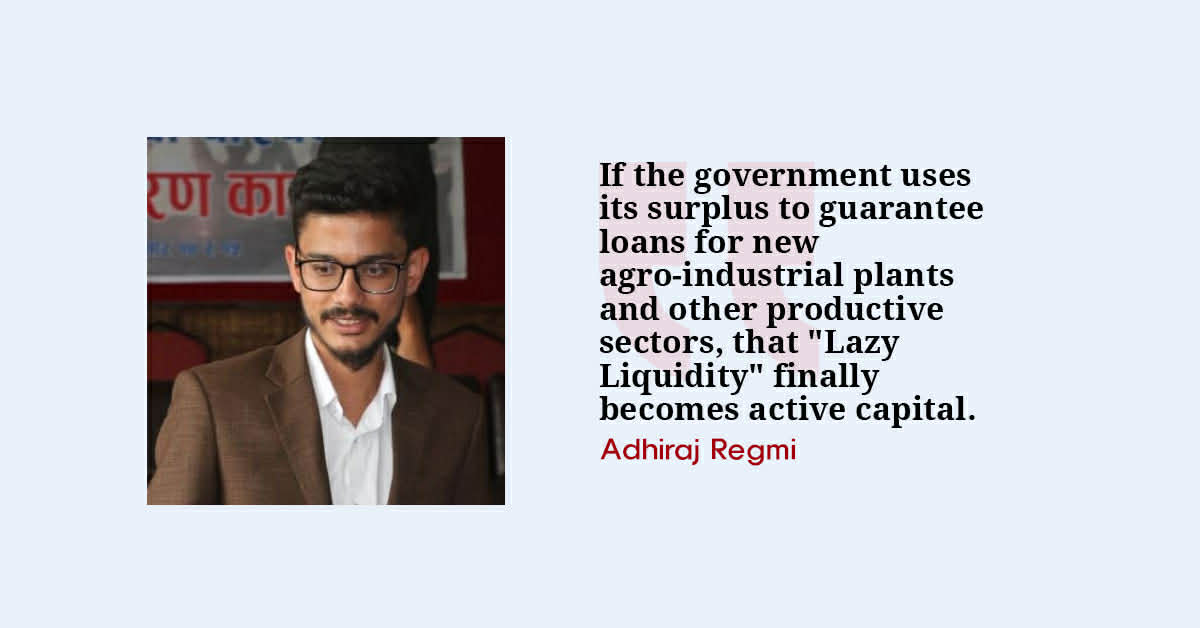
This is where our diaspora and our external agencies come in. We shouldn’t just be asking for more time; we should be presenting a roadmap. We need to lobby for specific trade extensions so our industries don’t collapse the moment the status changes. And we need to use that $23 billion buffer to finally jumpstart private investment. If the government uses its surplus to guarantee loans for new agro-industrial plants and other productive sectors, that “Lazy Liquidity” finally becomes active capital.
The conventional wisdom says that 2026 is a fixed date. But in global economics, dates are often just starting points for negotiation. Productivity isn’t everything, but in the long run, it is almost everything. Nepal has the money to be productive, but it doesn’t yet have the competitive industrial base to survive without protections. Graduating in 2026 without a deferral is like jumping out of a plane because you’ve reached the right altitude, but forgetting that your parachute is still being stitched together.
Let’s use our diplomacy to buy the time we need to finish the parachute. Let’s aim for 2029, and use the next three years to turn our “Lazy Surplus” into an engine that can actually compete. Anything less isn’t leadership, it’s just wishful thinking.
(Regmi is a young political leader and commentator known for advocating liberal economic ideas and youth-driven policy change in Nepal.)