Kathmandu
Monday, July 13, 2026





From reserve player to tournament hero, Sanju Samson’s fearless batting drove India to a remarkable World Cup victory
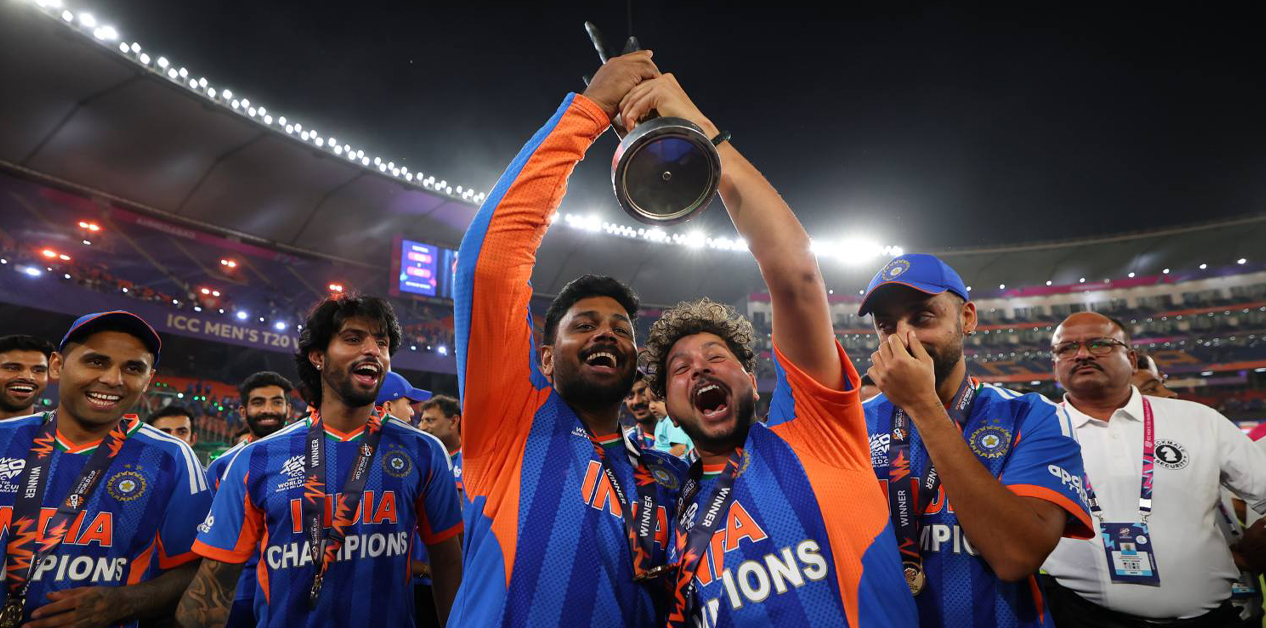
KATHMANDU: When India lost to South Africa by 76 runs in a Super Eight match of the T20 World Cup, a journalist at the post-match press conference asked captain Suryakumar Yadav, “Abhishek Sharma is repeatedly getting out for zero, and Tilak Varma is not scoring many runs either. In such a situation, why has Sanju Samson not been given a chance?”
The Indian captain replied with a smile, “Just how many people am I supposed to bench?”
Most journalists present took the remark as a joke. But in the very next match against Zimbabwe, Yadav surprised everyone by sending Sanju Samson to open the innings.
What followed was even more remarkable. Samson’s explosive batting in the semifinal and final powered India to their third T20 World Cup title, successfully defending the crown they had won in 2024.
When Sanju fell out of the coach’s favor
Sanju Samson’s international career began in 2015 when he made his debut for India against Zimbabwe in Harare on July 19, 2015, batting at number seven. It was a modest start. Samson scored 19 runs off 24 balls, including one boundary, and India lost the match by 10 runs. He was dropped for the very next game, and it took him nearly nine years to establish himself in the national team.
His real breakthrough came in October and November 2024. Within a span of five weeks, Samson struck three centuries: 111 against Bangladesh in Hyderabad, and 107 and an unbeaten 109 against South Africa in Durban and Johannesburg. Those performances quickly placed him among the leading contenders to succeed former captain Rohit Sharma.
Rohit, widely known by the nickname “Hitman,” had led India to the T20 World Cup title in 2024, ending a 17-year wait, before announcing his sudden retirement from international cricket. As debates intensified over who would fill the leadership and batting void, attention increasingly turned to Samson.
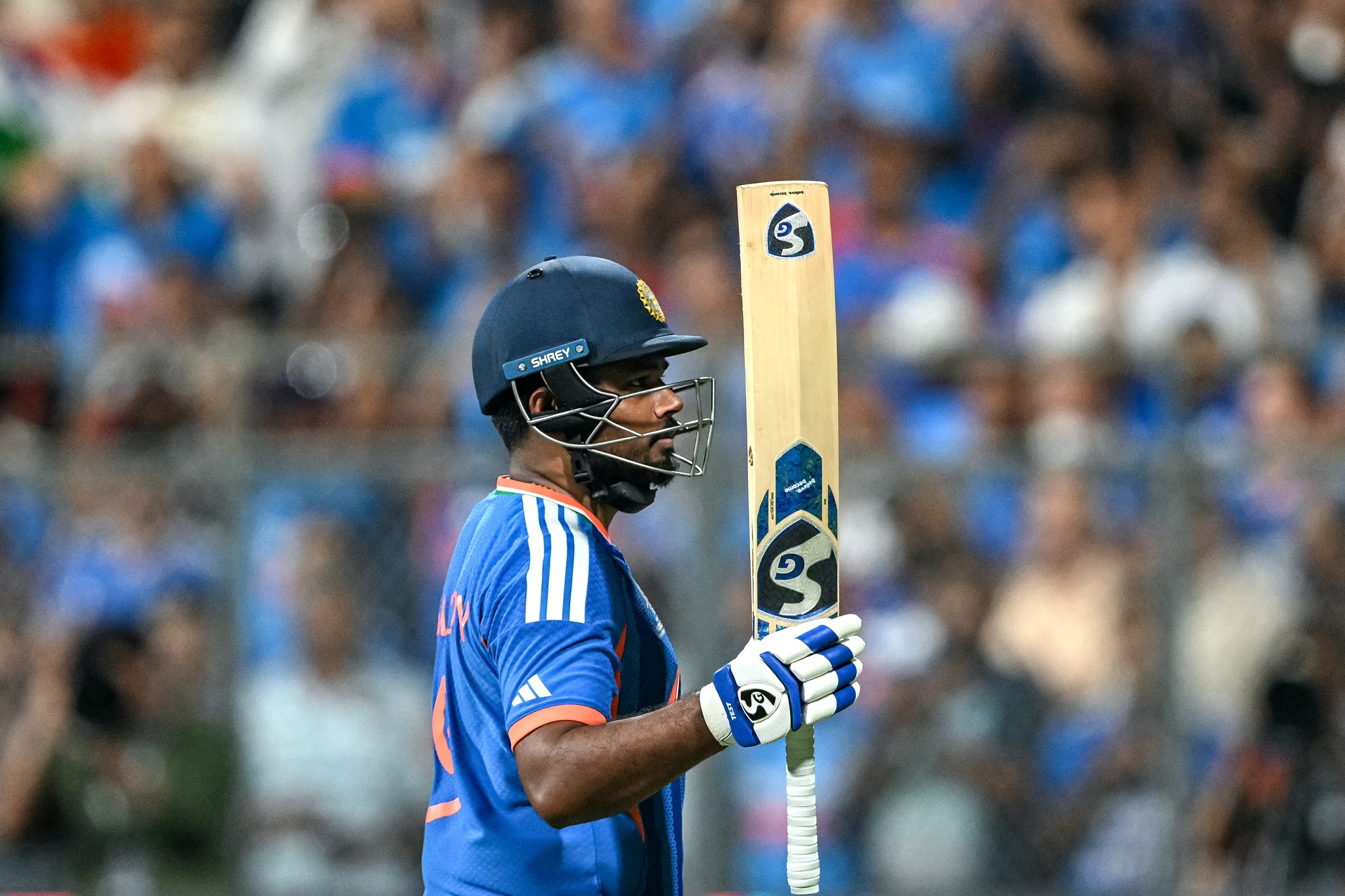
Sanju after hitting a half-century against England in the semi-final. Photo courtesy: ICC
However, the start of 2025 did not go as planned. In a five-match T20 series against England, Samson managed only 51 runs, triggering heavy criticism about his ability to adapt to his new role as an opening batter. Following this slump, India’s head coach Gautam Gambhir experimented with a different combination during the Asia Cup, pushing Samson down to number five and promoting Shubman Gill to the opening slot.
The experiment did not work. Gill scored just 50 runs in four innings, falling short of expectations. Disappointed, Gambhir turned back to Samson, but even with another opportunity, his performances remained inconsistent. As a result, when India announced its T20 World Cup squad two months later, Gambhir opted to field Ishan Kishan as the opening batter, while Samson was included only as a reserve player.
Samson later admitted that the decision was difficult to accept. Reflecting on that period after the final, he said, “But I didn’t lose patience. I had faith in myself.”
During the Super Eight stage of the T20 World Cup, South Africa handed India a heavy defeat. After that loss, the team management felt the batting lineup had become unbalanced because the top order contained too many left-handed batters. Coach Gambhir then decided to bring Samson back into the playing eleven, a move that ultimately changed the direction of India’s campaign.
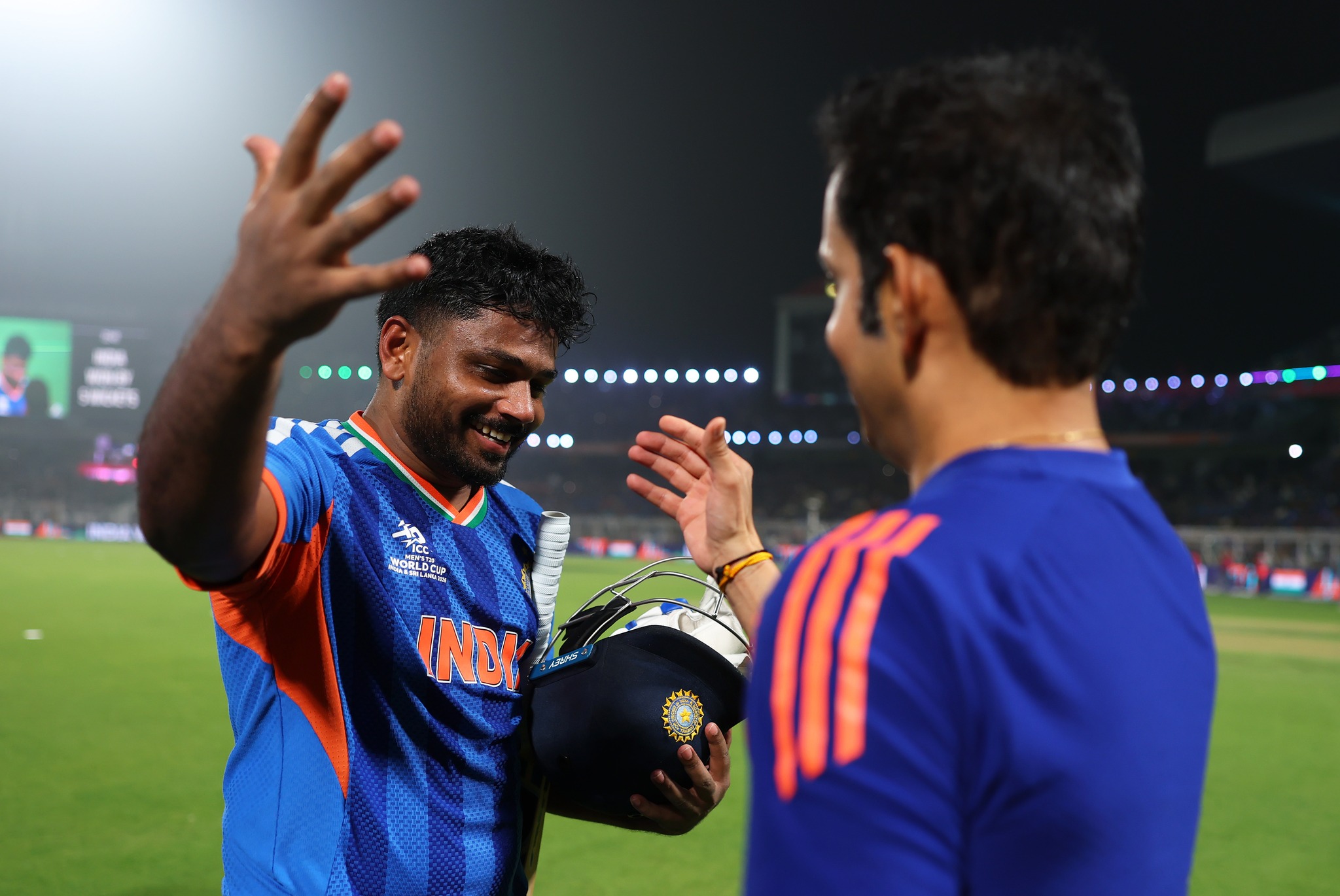
Sanju alongside head coach Gautam Gambhir after his outstanding performance against the West Indies. Photo courtesy: ICC
Following the defeat to South Africa in the first Super Eight match, India reshuffled its batting order. Samson was asked to open the innings alongside Abhishek Sharma, while Ishan Kishan was moved down to number three to restore balance. The adjustment worked immediately. India regained momentum and progressed to the semifinal, with Samson playing several crucial innings along the way.
His batting impressed former captain Rohit Sharma, who even walked onto the field during one match to encourage him, telling him, “This is a long tournament. An opportunity can come at any time.”
That opportunity soon arrived. In the final Super Eight match against the West Indies, the semifinal against England, and the final against New Zealand, Samson delivered three outstanding innings, scoring 97 off 50 balls, 89 off 42, and 89 off 46, respectively. His explosive batting in the semifinal and final helped India post totals of more than 250 runs in both matches.
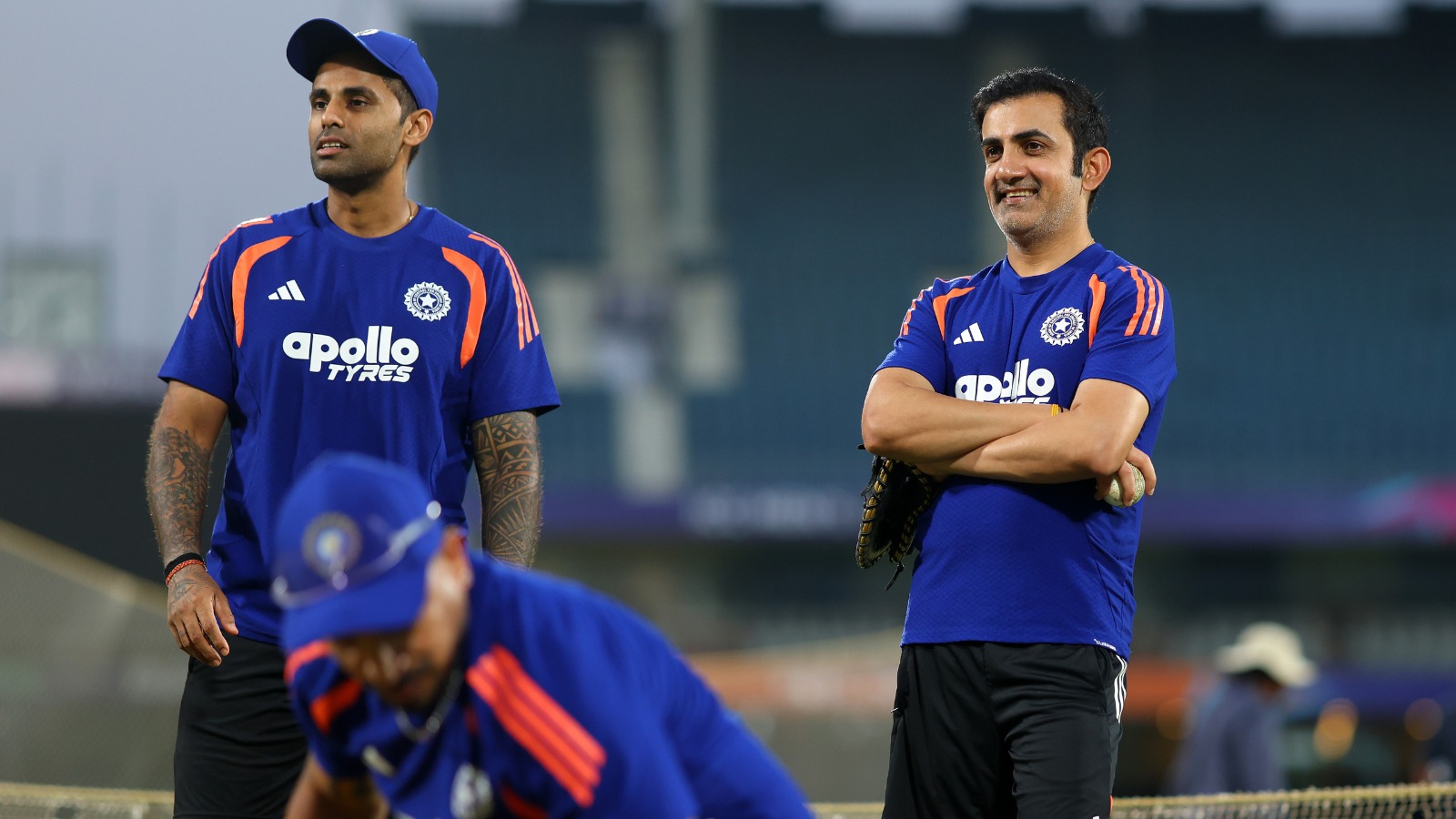
Indian Captain Suryakumar Yadav (left) and coach Gautam Gambhir. Photo courtesy: ICC
When India won the T20 World Cup in 2024, Samson had been part of the squad but returned home without playing a single game. Two years later, however, in a World Cup held in India, he emerged as one of the tournament’s heroes. Out of the nine matches India played, Samson appeared in five, scoring 321 runs and finishing third among the tournament’s highest run scorers.
For his performances, he was also named “Player of the Tournament.” Samson thus became the third Indian cricketer to receive that honor in a T20 World Cup, after Virat Kohli in 2014 and 2016 and Jasprit Bumrah in 2024.
Reflecting on his success, Samson revealed that he had been seeking guidance from one of India’s greatest cricketers. “I have been in constant contact with Sachin Tendulkar, sir, for the past few months. We had long conversations. I’ve always believed in miracles, and that’s exactly what happened this time,” he said.
Following the World Cup triumph, Samson is planning to travel to Chennai after taking a one-week break. The next season of the Indian Premier League (IPL) is scheduled to begin on March 28 in Chennai. Samson, who spent eight seasons with the Rajasthan Royals, is set to join the Chennai Super Kings through a high-value contract. Under the agreement, Ravindra Jadeja and Sam Curran are expected to move from Chennai Super Kings to Rajasthan Royals.
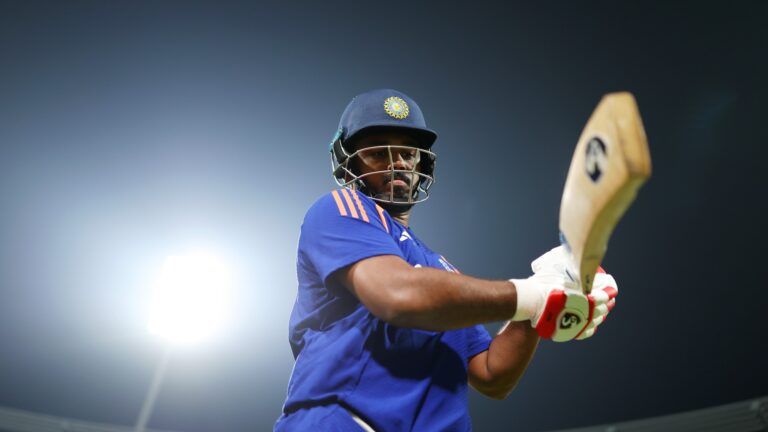
Sanju Samson during a net practice session ahead of the semi-final clash with England. Photo courtesy: ICC
Samson is widely being viewed as the potential successor to Mahendra Singh Dhoni, the legendary captain who led Chennai Super Kings to five IPL titles. Dhoni, who also guided India to two World Cup victories as captain and won the IPL five times, is widely expected to retire from the league after the upcoming season.
How successfully Samson carries forward that legacy in Chennai remains to be seen. For now, however, his remarkable contribution to India’s World Cup triumph has firmly placed him among the most celebrated players of the tournament.