Kathmandu
Monday, July 13, 2026





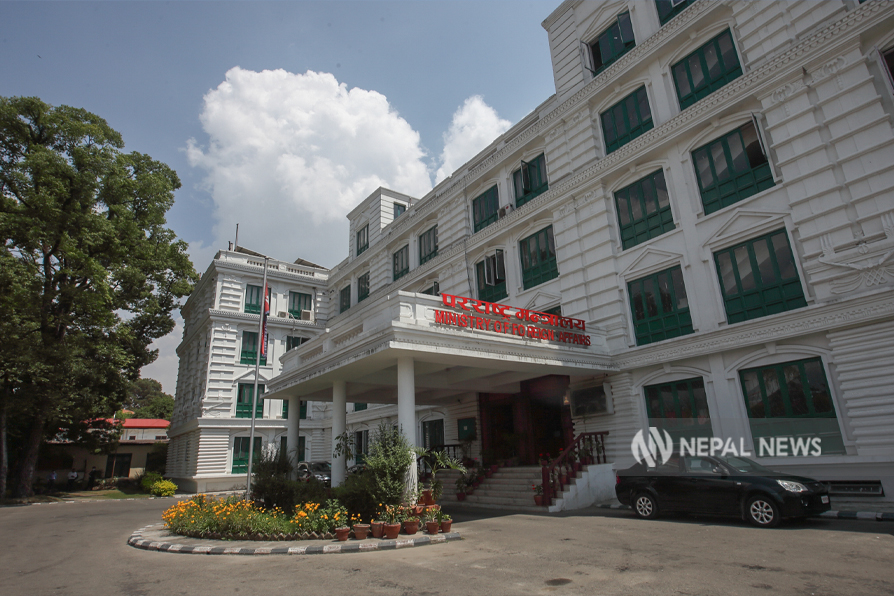
The Government of Nepal’s recent decision to initiate a wholesale clearing of political appointments in foreign missions has sent profound ripples through both the domestic political fabric and the international diplomatic community.
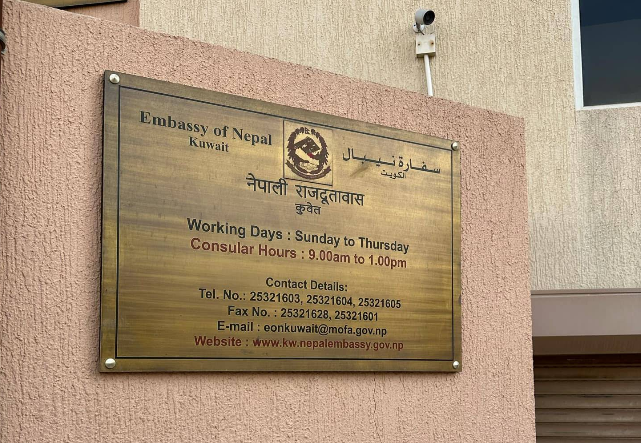
This move has created a staggering administrative vacuum, leaving 17 missions currently without a functional head—a high-stakes vulnerability that transcends mere bureaucratic reshuffling.
This diplomatic silence is the result of a two-phase political purge: initially, the previous administration under Sushila Karki recalled 11 politically appointed ambassadors, and subsequently, the Balen Shah cabinet recalled an additional six, effectively stripping nearly half of Nepal’s global representations of their leadership simultaneously.
While not entirely unprecedented in the turbulent history of Nepali politics, this shift comes at a moment of profound internal transformation. We are witnessing a “change of guard” that is moving away from the era of KP Sharma Oli and the brief but significant judicial-political interventions of Sushila Karki, toward a new, populist, and fiercely independent political consciousness exemplified by the rise of Balen Shah and other young leaders.
As the dust settles on these domestic power shifts, the resulting void in nearly twenty world capitals means that Nepal’s strategic and economic priorities are left without a champion during a time of immense geopolitical volatility.
With key vacancies in New Delhi, Beijing, Washington, and the labor-critical hubs of West Asia, the nation finds itself temporarily “voiceless” on the world stage.
This void in Nepal’s authoritative presence severely hinders its ability to engage in high-level negotiations, protect the interests of its migrant workforce, and balance the competing pressures of global superpowers.
Ultimately, this is far more than a simple diplomatic vacuum; it is a period of heightened risk where the nation’s sovereignty, its commitment to economic compacts like the BRI and MCC, and the safety of its citizens abroad hang in a delicate balance.
Understanding the ‘spoils system’ and the current vacuum
In the traditional landscape of Nepali governance, ambassadorial postings have long been treated as the “spoils of war”—rewards for political loyalty rather than appointments based on merit or diplomatic expertise.
Whenever a new coalition takes the reins in Kathmandu, one of the first orders of business is often to “clean house” by recalling the envoys appointed by the previous administration. While this allows the new government to align its foreign missions with its own ideology, the transition period is often fraught with delays.
The current vacuum is particularly stark because it involves missions of immense strategic and humanitarian importance.
In the current political climate, as the electorate increasingly demands both transparency and “Nepal-first” policies, the naturally time-intensive procedure required to appoint new envoys is being viewed through a lens of skepticism.
This period of transition is not necessarily a reflection of a deliberate motive to stall, but rather a result of the rigorous and mandatory steps inherent in the diplomatic selection process.
Nominating qualified candidates is only the first step; each individual must then undergo extensive parliamentary hearings to ensure they meet the new standards of public accountability. Following domestic approval, the government must wait for “agreed” status from the receiving countries, a formal diplomatic protocol that can take weeks or even months to conclude.
While these procedural layers are designed to ensure the integrity of Nepal’s representation abroad, the resulting weeks of empty seats in major capitals create a perceived gap that the public often mistakes for political hesitation rather than the slow-moving reality of official statecraft.
During this hiatus, missions are led by Chargé d’Affaires—career diplomats who, despite their competence, lack the political mandate to negotiate high-level deals or handle sensitive geopolitical crises.
The West Asia crisis: A shield without a hand
Perhaps the most immediate and visceral consequence of this diplomatic void is felt in West Asia. Nepal is currently without ambassadors in Saudi Arabia, Malaysia, and Israel—nations that collectively host millions of Nepali migrant workers. This isn’t just about trade; it is about the “humanitarian backbone” of Nepal’s economy.
The remittances sent home by these workers are what keep the country afloat, yet at this moment, the state’s formal protection for them is at its weakest.
In Israel, the ongoing conflict has placed Nepali students and workers in direct physical danger. In Saudi Arabia and Malaysia, complex labor laws and the rights of migrant workers require constant, high-level advocacy to prevent exploitation.
When an embassy is left without an ambassador, the “weight” of the mission drops significantly. A career diplomat at the deputy level simply cannot command the same audience with a foreign minister or a head of state that an official ambassador can.
By leaving these posts vacant during a time of global tension, the government is essentially leaving its most vulnerable citizens to navigate international crises without a formal state advocate.
The geopolitical tug-of-war: New Delhi, Beijing, and Washington
While the humanitarian concerns are pressing, the geopolitical ramifications are equally daunting. Nepal sits at the crossroads of a massive “Triangular Rivalry” between India, China, and the United States. Each of these powers has a vested interest in who fills the empty seats in Kathmandu’s foreign missions.
The vacancy in New Delhi is arguably the most sensitive. Our relationship with India is a 24/7 engagement involving trade, transit, water sharing, and border security. In the absence of an ambassador, small technical glitches at the border can quickly escalate into nationalistic fervor because there is no political conduit to “cool things down.”
India traditionally prefers a stable, predictable partner in Kathmandu. The current vacuum, combined with the rise of “new-age” politicians who are more vocal about border disputes, creates a period of “bureaucratic chill” where progress on major infrastructure projects often grinds to a halt.
In Beijing, the silence is equally loud. China has been growing increasingly frustrated with the slow implementation of the Belt and Road Initiative (BRI) in Nepal. Beijing values “face” and high-level consistency. When Nepal recalls its envoy without an immediate replacement, it is often interpreted as a sign of internal instability or a lack of commitment to the relationship.
The vacuum provides an opening for China to exert “back-door” pressure on the new government, pushing for the transition from “planning” to “execution” of BRI projects before the new diplomatic guard is even appointed.
Washington, meanwhile, views Nepal through the lens of its Indo-Pacific Strategy. The Millennium Challenge Corporation (MCC) compact was a hard-fought victory for American diplomacy in the region. The U.S. wants to ensure that the implementation of this project remains on track and that Nepal does not tilt too far back into the Chinese orbit.
The diplomatic vacuum in D.C. means that Nepal is missing out on critical opportunities to advocate for more diverse aid, trade benefits, and support for its democratic transition.
Sovereignty on the scale: BRI vs. MCC
One of the biggest questions facing the new government is whether Nepal’s sovereignty is being “traded” for these massive economic compacts. For decades, the narrative has been that Nepal is a “yam between two boulders,” but the new generation of politicians is trying to change that to a “bridge between two giants.”
The fear of a “debt trap” associated with the BRI and the fear of “strategic alignment” associated with the MCC are real and pervasive in the Nepali psyche.
The new government’s priority will likely be a return to “Equidistant Pragmatism.” This means trying to take the best from both worlds without signing away the country’s independence.
However, maintaining this balance requires an incredibly high level of diplomatic skill. You cannot maintain “equidistance” if you don’t have anyone in the room to represent your position.
The danger of the current vacuum is that in the absence of a clear, official voice, these global compacts might be negotiated or adjusted in ways that favor the donor more than the host. Sovereignty isn’t just about borders; it’s about the ability to say “no” to a bad deal, and that requires a strong, present diplomatic core.
The ‘new guard’ and a changing political context
The transition from the Oli era to the current political landscape represents more than just a change in leadership; it represents a change in the nature of Nepali nationalism. The older generation was often viewed as being “India-centric” or “China-friendly” depending on which way the wind blew.
The new guard, however, is much more unpredictable.They are using social media and appealing to populist sentiment to push for a foreign policy branded as “pro-Nepal,” though its real impact remains to be seen.
Foreign powers don’t know how to “read” these new players yet. The decision to recall ambassadors might be seen by the new guard as a way to “reset” the clock and move away from the old, compromised appointments. But if the replacement process is not handled with extreme care, it could end up being more of the same—just with different names attached to the same political favors.
Avoiding the geopolitical trap
As the new government moves toward appointing a fresh slate of envoys, its primary objective must be a fundamental shift from rewarding political loyalty to prioritizing strategic competence.
To ensure Nepal does not become a mere pawn in a larger geopolitical tug-of-war, the administration should transition toward a model where at least 50% of all ambassadorial posts are reserved for career diplomats.
These professionals possess the institutional memory and deep understanding of international law, protocol, and treaty history necessary to prevent the country from being outmaneuvered or pressured into disadvantageous agreements.
In this contemporary era, an ambassador’s role has evolved significantly; they must act as sophisticated “salespeople” for the nation, focusing as much on promoting indigenous exports like tea and cardamom as they do on formal diplomacy.
By aggressively attracting Foreign Direct Investment and opening new markets for Nepali products, these representatives can help mitigate the nation’s staggering trade deficit and foster economic resilience.
Furthermore, Nepal must strategically leverage its “soft power”—including its iconic Himalayan geography, rich cultural heritage, and unique path to peace—to cultivate a global brand that exists independently of its immediate neighbors.
Strengthening this international identity helps safeguard national sovereignty by building a diverse network of global allies, ensuring that Nepal’s interests are protected far beyond the immediate reach of regional rivalries.
The path forward: Resilience and sovereignty
The diplomatic vacuum Nepal is currently experiencing is a symptom of a democracy that is still finding its feet. While the “change of guard” offers a chance for a fresh start, the vacuum itself is a luxury the nation cannot afford for long.
The world is changing too fast—with wars in the Middle East, a shifting global economy, and the rising heat of the climate crisis—for Nepal to remain “muted” in the world’s capitals.
To avoid trading sovereignty for compacts like the BRI and MCC, Nepal must show that it is a serious, organized, and reliable partner. That starts with putting the right people in the right seats.
We need ambassadors who are not just “political appointees” but “national representatives”—people who can sit across from the world’s most powerful leaders and remind them that while Nepal may be small in land, it is a sovereign, proud, and independent nation that will not be a proxy for anyone else’s war or economic strategy.
The coming months will be a true test of the new government’s maturity. Will they repeat the mistakes of the past, or will they use this vacuum as an opportunity to build a professional, powerful, and permanent diplomatic shield for Nepal?
The answer to that question will determine the country’s trajectory for the next decade. Sovereignty, after all, is not just a status; it is a daily practice of standing your ground, and you cannot stand your ground if you are not even in the room.
As we look toward the future, the “diplomatic vacuum” serves as a reminder of how interconnected our local politics are with the global stage. A change in a prime minister’s cabinet isn’t just a local news story; it changes how Washington perceives our stability and how New Delhi calculates its trade routes.
Nepal’s challenge is to turn this moment of “quiet” into a moment of “clarity.” We need a foreign policy that is as bold and innovative as the new generation of leaders claiming to represent us. By filling these ambassadorial vacancies with the best minds the country has to offer—regardless of their political affiliations—Nepal can signal to the world that it is ready to move beyond being a “buffer” and into being a “partner.”
The road ahead is complex, but with a clear voice and a firm hand on the diplomatic tiller, Nepal can navigate these choppy waters without losing its soul or its sovereignty.