Kathmandu
Monday, July 13, 2026





For a landlocked nation like Nepal, food security transcends basic sustenance; it is an indispensable pillar of national security and sovereignty

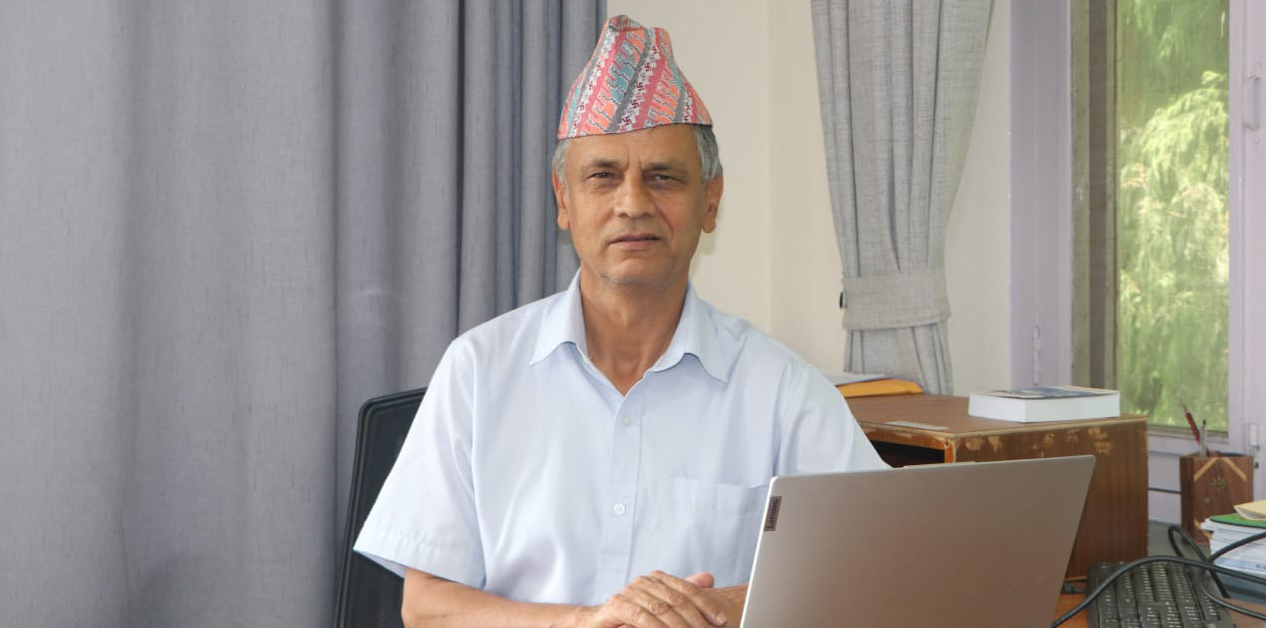
KATHMANDU: Krishna Pahari, who has dedicated 35 years to the fields of humanitarian assistance and international development, is a prominent food security expert. From 2005 to 2021, he was associated with the World Food Program, working extensively across Nepal, Pakistan, South Sudan, and the East Africa Bureau. His extensive background also includes conducting vital research and teaching at several leading universities in Nepal, as well as the University of Tokyo and the Asian Institute of Technology.
Currently affiliated with the Nepal Development Research Institute located in Lalitpur, Pahari has spearheaded major research projects, including ‘Nepal’s Journey Towards Zero Hunger’ and the ‘Migration Atlas for Nepal,’ and has published more than 100 authoritative research articles. Below is an edited excerpt of the conversation held with him by Mani Dahal for Nepal News:
What kind of risks can crises like the West Asia war pose to Nepal’s progress and future?
The tension and war seen in the Gulf region have caused a huge impact on Nepal. The first and direct impact fell on fuel prices, the cost of which has already increased by more than 50 percent. Expensiveness of fuel means transportation becomes expensive. As freight expenses rise, the prices of all consumable goods, including food items, are increasing.
If the war prolongs, the impact will also fall on production costs. Disruptions in the supply system of the Gulf region and external countries will cause the price of fertilizer to increase, and it will be difficult to obtain it on time. Failing to provide fertilizer on time due to a problematic supply management is an old weakness of ours. The recent situation has added an even bigger challenge. Not only will fertilizer become expensive, but its availability itself could become uncertain.
The rice crop season is underway, but what is the current availability of food and fertilizer?
It is time to plant the rice crop, but the stock is not in a position to sustain the requirement. The global situation has created a challenge to bring additional food and fertilizer. Even if we are able to bring them, it will be significantly expensive compared to before.
Twenty-five percent of Nepal’s Gross Domestic Product (GDP) comes from agriculture; within that, the share of rice is 30 percent. Rice crops account for almost 7 percent of the overall GDP. Therefore, a crisis arising in the rice crop directly casts a deep impact on food security and the economy.
Can the effects of climate change and ‘El Niño’ add complexities?
Due to the effect of ‘El Niño’ seen in the climate cycle, it is projected that Nepal will also receive less rain than average during the monsoon. Around half of the fields here are still dependent on rainwater. It is time to sow seeds, but signs of drought are visible right now. There is a risk of additional loss because rain does not fall when needed, and sometimes too much falls all at once. Last year’s rice production had decreased by 4 percent compared to the previous year. If proper initiatives are not taken on time, it seems it will decrease even further this year.
You argue that food security is an integral part of national security; could you please elaborate on this?
For a landlocked country like Nepal, food security is not just a matter related to food, but an integral part of national security itself. The structure of our trade is dependent on India to a large extent. Only two percent of the total exports go toward China. Diversification in trade has not been achieved. In such a situation, if production becomes low in the country and if we cannot import from outside for any reason, we will fall into a massive crisis.

Ironically, compared to 10 or 15 years ago, Nepal is becoming even more dependent on food imports now. Being dependent even on daily consumable goods like rice, wheat, and maize is not a good sign. The real security and sovereignty of any state become strong only when it can provide basic food items required for the survival of the people by producing them itself. Policy priority is necessary for this.
How do the market of India and its policies impact Nepal’s food supply?
Nepal’s market is completely connected with India. Therefore, a food crisis there affects us directly. For example, when India bans the export of sugar or Basmati rice keeping its internal requirements in mind, it immediately creates a hue and cry in our market. When food prices increase worldwide, taking a policy to maintain reserves for its people might be right from its perspective, but it becomes a challenge for import-dependent countries like Nepal. Since imports stop and dearness increases after production becomes low there, we face a double blow. Sometimes, even if permission for some imports is obtained by talking at the government level, that is not a sustainable solution. Standing on our own feet regarding basic food items is the best and mandatory alternative for us.
Which socioeconomic class is hit the hardest when there is a food crisis and a decline in production?
The impact of this crisis is not equal. The farmers whose own production is enough to feed them throughout the year do not face much of a difference even if imports decrease. Small farmers whose own production is enough to feed them for only six months are affected first. Similarly, citizens of urban areas who do not engage in farming also face problems.
In the city, the rich might buy even at high prices, but the urban poor, squatters, and those making a living on daily wages become the biggest victims. Especially families who do not have access to social security and do not have a member earning well at home are at the highest risk. Even during the COVID-19 pandemic, people in the villages survived at least slightly on their own production, but the urban poor were hit the hardest.
Given the current supply chain disruptions, is there a risk of facing a crisis similar to the COVID-19 pandemic again?
The current geopolitics is so unstable that it is difficult to predict what will happen tomorrow. Especially, the fluctuations coming in the policy of the United States are affecting the global market. One thing is clear that if this war prolongs, it will cause a huge impact on the food distribution chain. Even if peace is established now, it will take a long time to return to the previous state.
Thousands of ships are stranded in various places; it can take months to years to get them to their destinations and resume new supplies. It becomes even more difficult for a country like Nepal, which has less international access, to benefit from such a supply system. At such times, one has to ask for help from neighbors, but that is not sustainable.
On the other hand, there is a tendency for the government’s eyes to open only when a crisis occurs, like during the 2015 blockade. At that time, the matter of opening the road toward China was raised, but it was forgotten once the crisis passed. Building the road up to Rasuwa was not a big task, but even after a decade has passed, it did not fall into the government’s priority. Therefore, it is necessary to change the tendency of waking up only during a crisis.
What kind of impact could this crisis have on foreign employment and the flow of remittances?
Around 800,000 citizens go abroad annually from Nepal after taking labor permits, out of which 75 percent go to the Gulf countries. Now, the impact is starting to be seen in the tourism and hotel businesses of the Gulf. If the crisis prolongs, a situation may arise where many Nepalis lose their jobs and have to return.
A 35 to 40 percent share of our total remittance comes from the Gulf region itself. A reduction in remittance means a decrease in people’s purchasing power, which directly casts a negative impact on their food security.
What kind of relationship do you see between food prices and politics?
Food has a very deep relationship with politics. As it is said that a hungry man gets angry quickly. The main reason for the ‘Arab Spring’ movement that started from Tunisia in 2010/2011 was price hikes, which toppled powerful governments in many countries. When citizens cannot fill their stomachs, they take to the streets against the government, and that brings political turmoil. Therefore, controlling food prices and ensuring availability is mandatory for the government’s political stability as well.
What should the government do immediately to avert this crisis?
The government must work by being ‘proactive.’ First, the work of checking the condition of food stores across the country and increasing stocks must be done immediately. Second, instead of relying only on the old, cumbersome tender process for chemical fertilizer, initiatives should be taken to bring it through a ‘fast track.’ Third, agricultural technicians and extension workers should be mobilized in villages to help farmers increase production during the rice crop season. And fourth, high-level diplomatic dialogue should be started from now itself with neighboring countries for imports. Being aware before the crisis arrives is wisdom, and such seriousness has not been seen in the current government yet.