Kathmandu
Monday, June 8, 2026





A lack of awareness regarding destination country, airline, and customs regulations puts passengers at risk of travel disruptions, heavy fines, and confiscation.
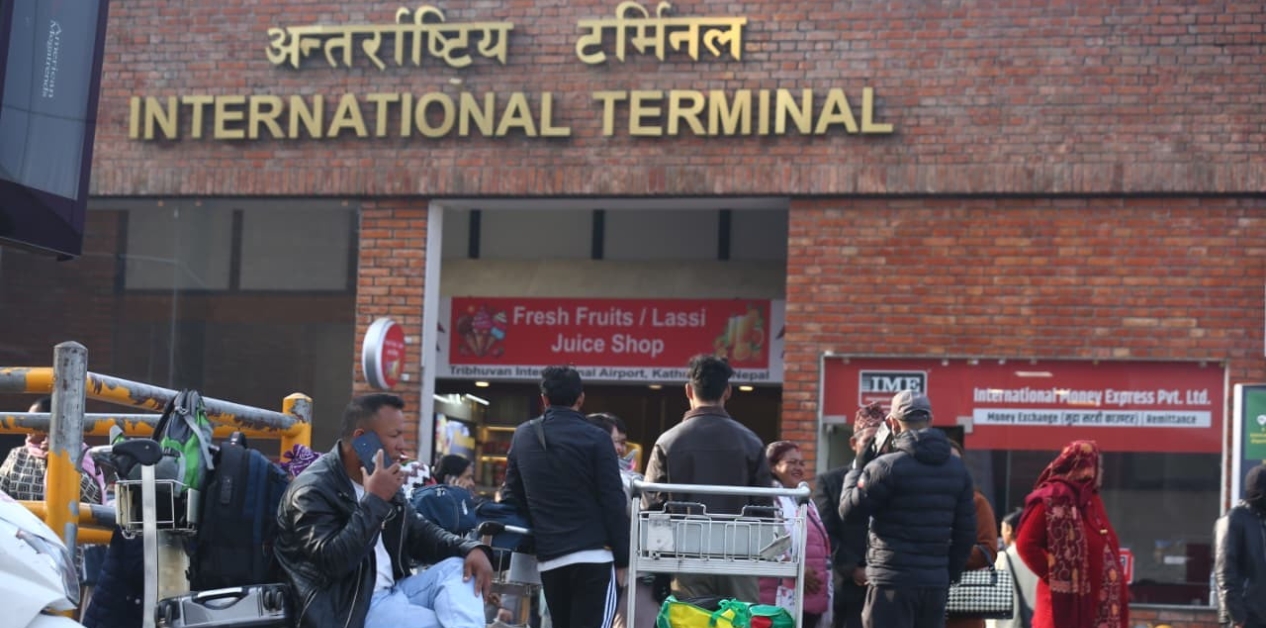
KATHMANDU: Anisha Pokharel from Chutrabesi, Sandhikharka Municipality-1, Arghakhanchi, arrived at Tribhuvan International Airport on October 21, 2025 to board her flight to Japan. When her luggage was weighed, it was 6 kilograms over the allowed limit. On top of that, she was barred from taking dried meat and unlabelled black-eyed pea lentils. She was only issued her boarding pass after paying an extra baggage fee for the remaining items. Pokharel, who currently resides in Fukuoka, Japan, says, “Due to a lack of adequate information about the rules, I faced unnecessary hassles right at the airport.”
Jeevan Baral from Upallachaur, Baglung Municipality-4, also faced unexpected trouble during his international journey because of the items he carried. On September 6, 2025, while flying to the United States, he had packed roasted corn in his checked luggage. No issues were flagged during the initial security screening in Nepal. However, during a transit security check in Qatar, a trained sniffer dog raised a suspicion, leading to a detailed search of his luggage.
Consequently, he was placed under police surveillance. He missed his flight and had to stay in Qatar for two days. He was only allowed to resume his journey after paying a fine of approximately Rs 200,000. Baral, who now lives in Baltimore, USA, shares, “Relying solely on Nepal’s preliminary checkpoint screening caused me a massive problem.”
According to him, many outbound Nepali travelers share similar experiences. Due to a lack of adequate awareness regarding rules, many passengers are forced to deal with unwanted hassles, financial losses, heavy fines, and travel disruptions.
Rashmi Kaucha from Shivalaya Chowk, Kushma Municipality-7, Parbat, got held up at the airport due to her handbag while traveling to Japan. She had packed her makeup items and perfume inside her hand-carry bag. Since these were liquids, she was not permitted to carry them through. Kaucha, who is currently in Nagoya, Japan, notes, “I faced problems simply because I didn’t fully understand the guidelines and was unaware of the restrictions.”
Three passengers, three different destinations, yet the exact same problem: a complete lack of awareness regarding what to pack in a bag, how to pack it, and what regulations apply in different countries.
Items that seem completely ordinary in Nepal—such as dried meat, lentils, roasted corn, perfume, mobile phones, gold, medicine, power banks, seeds, or everyday household goods—can turn into a major issue at airports, transit hubs, or destination countries.
According to Customs Department officials, bringing in restricted, illegal, or untested items, evading customs, making false declarations, or understating the value of expensive goods are punishable offenses. In such cases, authorities can hold or confiscate the items, impose additional duties, levy fines, or initiate legal proceedings.
If luggage exceeds the weight limit, it can usually be carried by paying an extra fee. However, weight is not the only issue. Knowing which items are permitted, how they must be packed, whether they are properly labeled, and whether the destination country permits them is vital. According to Gyanendra Bhul, the Information Officer for the Civil Aviation Authority of Nepal (CAAN), rules regarding extra baggage fees and allowed items vary by airline, ticket class, and destination country. Items that fall outside specified standards can be returned, held, or confiscated.
Homemade delicacies, airport interrogations
It has long been a tradition for Nepali travelers heading abroad to carry a taste of home in their bags. Packing sukuti (dried meat), gundruk (fermented leafy greens), lentils, rice, spices, ghee, pickles, legumes, or tea and coffee is considered standard practice. However, quarantine, security, or customs regulations frequently restrict such items during international travel.
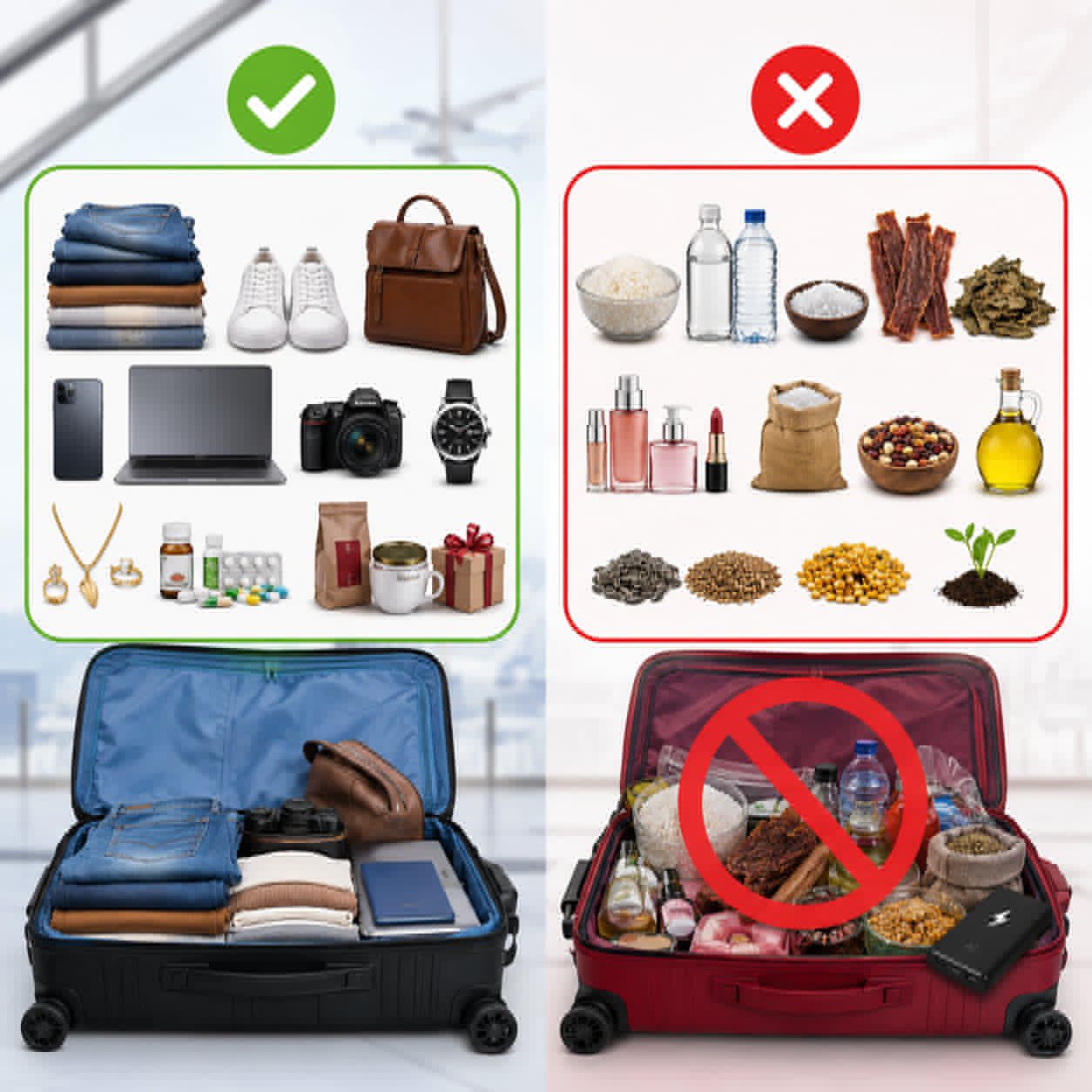
According to Bhul, it is not just food items like rice, liquids, salt, dried meat, and gundruk that cause issues; many products can face restrictions if their packaging, quantity, and labeling are not perfectly clear.
Agricultural and food products such as liquid cosmetics, grains, legumes, seeds, and cooking oil can be seized if they lack quality certification and clear descriptive labels. Electronic items, including power banks and spare batteries, are also placed under strict scrutiny due to safety and security risks.
Bhul explains, “Passengers are only allowed to carry items that strictly comply with the regulations. The criteria can vary significantly depending on the country and the specific airline.”
What do international regulations dictate?
The standards governing what can and cannot be carried on an aircraft are explicitly defined in the International Civil Aviation Organization’s (ICAO) Technical Instructions for the Safe Transport of Dangerous Goods by Air and the International Air Transport Association’s (IATA) Dangerous Goods Regulations.
According to these global standards, mobile phones, laptops, cameras, spare batteries, power banks, perfumes, and standard cosmetics can be carried within specific conditions and quantity limits.
However, explosives, highly flammable chemicals, toxic substances, radioactive materials, hazardous chemicals, biological materials, and other dangerous goods are strictly prohibited on aircraft.
Tikaram Dhakal, Director and Spokesperson for the Department of Immigration, emphasizes that these rules are enforced globally to guarantee passenger and flight safety. However, precisely what is permitted or prohibited ultimately depends on the destination country, the operating airline, and the nature of the travel. He advises, “Whether traveling abroad or returning home, passengers must research beforehand to know which items are allowed, which are restricted, and which require special permits.”
He adds that security protocols at Tribhuvan International Airport, border checkpoints, cargo systems, and international airports worldwide have become increasingly stringent in recent years. The Government of Nepal has also been making customs and airport security regulations clearer and stricter. The objective is to control illegal trade, prevent revenue leakage, and separate the management of passengers’ personal luggage from commercial goods.
Items permitted in baggage when traveling abroad
When traveling abroad, passengers are generally allowed to carry items for personal use. Clothing, shoes, bags, mobile phones, laptops, cameras, watches, and ordinary jewelry are permitted.
Personal medications accompanied by a doctor’s prescription or consultation letter, as well as tea, coffee, spices, and small gift items with clear expiration dates, can also be carried. However, if the quantity of goods is large, the customs office may consider them as being carried for commercial purposes rather than personal use.
As complaints regarding lost luggage among Nepali passengers traveling abroad have risen, CAAN Information Officer Bhul suggests not putting valuable items such as cash, gold and silver jewelry, cameras, watches, mobiles, and laptops into checked baggage. “It is best to keep such important items in your hand-carry bag as much as possible,” he says.
The Ministry of Finance implemented new regulations effective from May 28, 2026 (15 Jestha 2083), regarding the personal items that migrant workers, returning Nepali citizens, non-resident Nepalis (NRNs), foreign passengers, and outbound Nepali passengers are permitted to bring or take with them.
Receipts for gifts
Nepali passengers traveling abroad are provisionally allowed to carry gift or souvenir items worth up to Rs 50,000 free of duty. For goods subject to Value Added Tax (VAT), the relevant invoice is required. For tax-exempt items, an invoice showing a Permanent Account Number (PAN) must be presented. Provisions exist to allow items exceeding this value limit provided the necessary documentation is supplied.
Items purchased from the Nepali market that fall within the weight limit prescribed by the respective airline can be taken abroad upon presenting the required certificates or after paying the designated duties and fees.
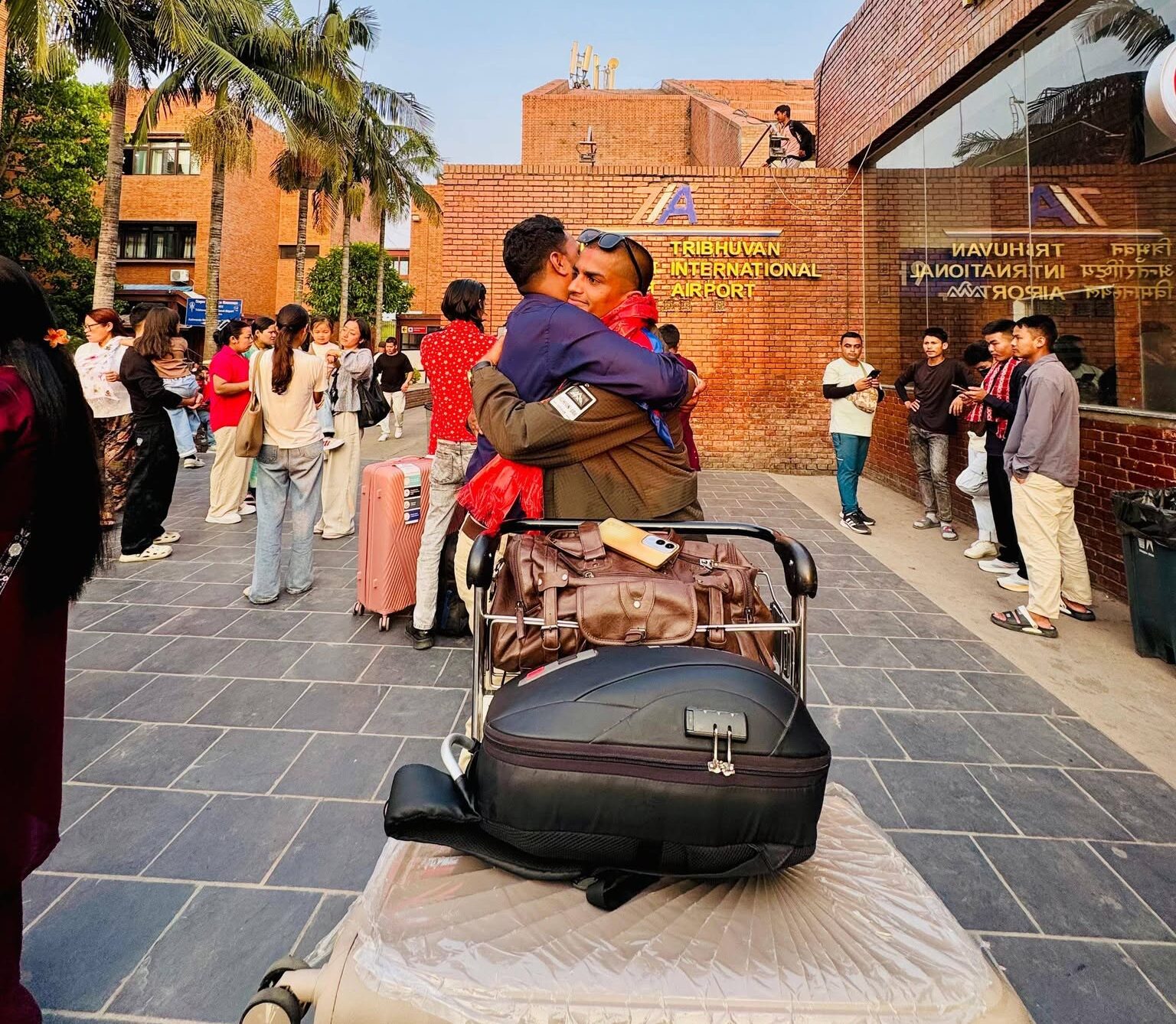
Sunil Kumar Yadav Sarlahiwala’s Facebook page
Except for the special privileges extended to individuals going for foreign employment, Non-Resident Nepalis (NRNs) receive all other facilities on par with ordinary Nepali citizens. Crew members are not permitted to bring in any items other than those meant for personal use.
Items that should not be placed in baggage
When traveling abroad, cultural heritage artifacts, archaeological materials, security-sensitive items, and legally restricted materials are strictly prohibited.
Carrying antique statues, historical and archaeological items, banned herbs, wildlife products, wildlife organs or skins, narcotics, weapons, explosives, undeclared foreign currency, and large quantities of gold without proper authorization is highly risky.
Dried coconut and lighters are items that may be prohibited in both hand-carry and checked luggage. Certain medicines can only be carried in limited quantities and with the required documentation.
According to Bhul, even if a sick passenger requires oxygen, large-capacity oxygen cylinders are not permitted to be carried into the cabin by the passenger themselves. Such items are managed solely in accordance with airline policies.
Mistakes made with hand-carry luggage
Hand-carry luggage is the most sensitive component of air travel. Because passengers carry it into the aircraft cabin themselves, security rules are exceptionally tight. Consequently, sharp objects capable of causing injury or serving as weapons—such as knives, khukuris, scissors, syringes, various tools, cricket bats, and hockey sticks—are forbidden in hand-carry bags. Items like pistols, ammunition, bombs, replica firearms, or toy weapons are also prohibited.
Liquids or oil-based items, including ghee, cooking oil, and honey, are not permitted in hand-carry bags. Chewing tobacco, snuff, and meat products—such as raw meat, dried meat, and meat pickles—may also fall under items excluded from hand-carry luggage.
Fruits, vegetables, seeds, chilies, and other agricultural products are also prohibited in hand-carry bags. Bhul notes that hazardous items like compressed gas, acids, mercury, poisons, pesticides, chemical and biological substances, and radioactive materials are entirely prohibited.
Checked luggage is not an alternative
Many passengers mistakenly believe that items barred from hand-carry bags can simply be placed in checked luggage. However, due to security protocols, certain materials are banned from checked luggage as well.
Weapons and explosives—such as pistols, guns, ammunition, bullet shells, ammunition boxes, bombs, and similar hazardous items—are completely prohibited.
Items like ghee, cooking oil, and honey can only be carried in accordance with the regulations of the destination country. Due to health and quarantine regulations, meat and meat products—including sukuti and meat pickles—are restricted or require special permits in many countries. Tobacco products are similarly subject to the legal provisions of the destination country.
Radioactive materials, poisons, pesticides, chemical and biological substances, compressed gas, acids, and mercury—which affect health and safety—cannot be placed in checked luggage. Bhul explains that because these materials pose risks to passengers, the aircraft, and the environment, they are prohibited under international aviation rules.
Allowances and exemptions for returning passengers
Nepali passengers returning from abroad are granted full customs duty exemptions on certain specific items. Through the new Financial Bill, the government has increased the value limit for goods that passengers arriving in Nepal from India can bring duty-free. Passengers can now bring goods worth up to Rs 500 without paying customs duty. Previously, this exemption limit was only Rs 100.
Under the old rules, customs duties had to be paid on goods brought from India worth more than Rs 100, which had caused dissatisfaction among citizens living in border areas. Following protests in various locations, the government revised the limit to Rs 500 via the budget.
Nepali students studying in India are exempt from customs duty when bringing one laptop, tablet, or computer into Nepal for their studies. This facility applies both when students take the device with them or when they return after completing their studies.
Individuals returning to Nepal after retiring with a pension from the Indian Army or Police services will receive a full customs exemption on personal items worth up to Rs 50,000 upon presenting the necessary documentation.
If the death of a Nepali citizen while residing abroad is confirmed, no duty is charged on the old personal effects used by the deceased and their family when brought back to Nepal. However, vehicles, firearms, and ammunition are excluded from this facility.
For Nepali citizens permanently residing in Nepal who return from abroad, no duty is levied on personal clothing, bedding, old household items, medicines brought after medical treatment, and assistive devices used by physically challenged individuals.
Exemptions are also in place for gold, silver, and jewelry up to quantities specified by law. Passengers can also bring one used tablet, laptop or desktop computer, watch, camera, video camera, and one cellular mobile phone duty-free.
Nepali citizens who have gone for foreign employment with a labor permit and return after working continuously for at least 6 months are granted a full duty exemption on one additional, brand-new mobile phone brought with them.
Up to 200 sticks of cigarettes or 50 sticks of cigars can be cleared through customs upon paying the duties applicable under prevailing laws.
Nepali citizens who went for foreign employment with a labor permit and return after working continuously for at least 12 months are provisionally allowed to bring one television of up to 65 inches duty-free. This facility is available only once and is recorded officially.
One baby perambulator (stroller) and one tricycle can also be brought in under duty exemptions.
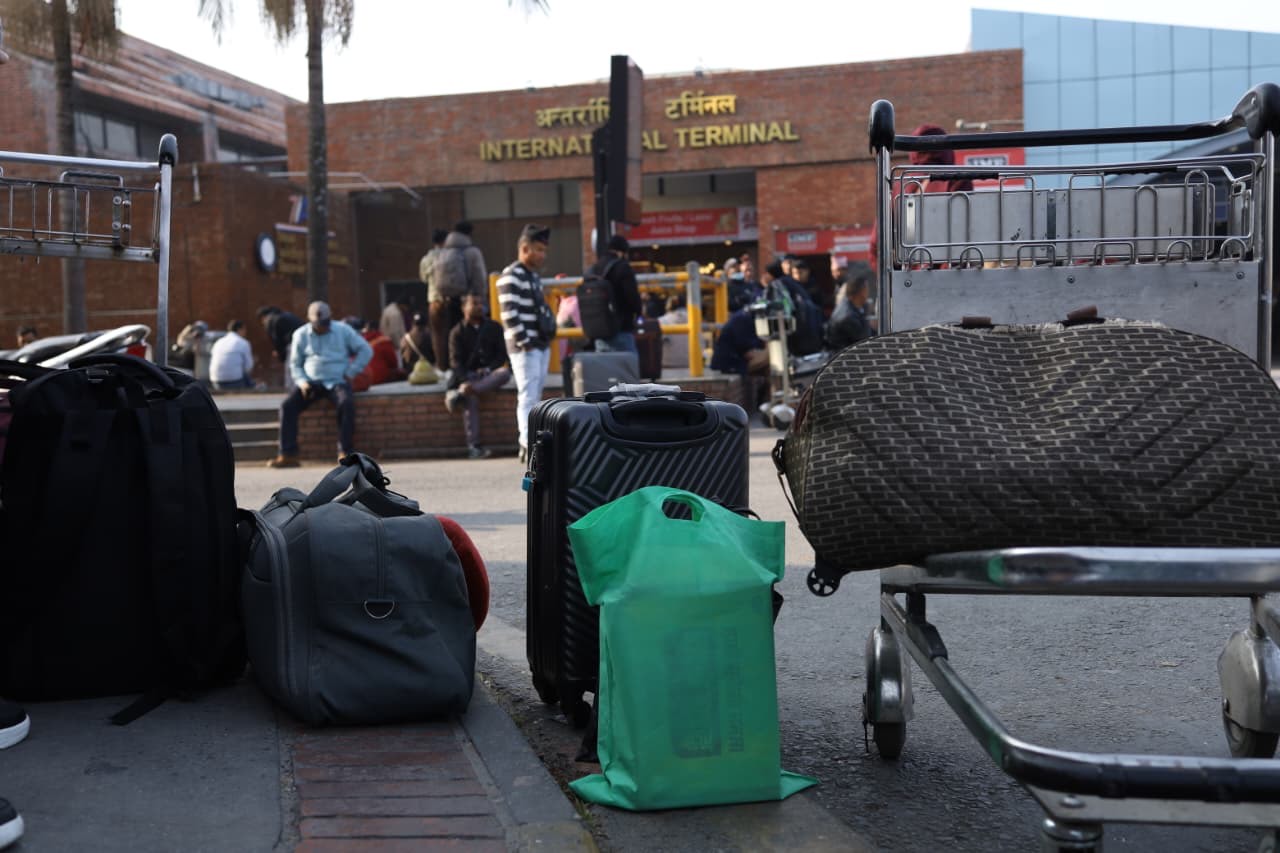
Nepal Photo Library
Passengers are also allowed to bring one piece of equipment related to their profession. No duty is charged when doctors bring a blood pressure monitor and stethoscope; athletes bring a football, volleyball, badminton, or cricket set; or singers and musicians bring an instrument like a guitar, harmonium, or tabla.
Up to 7 kilograms of food items and one bottle of liquor up to 1 liter can also be brought duty-free.
Nepali citizens who went for foreign employment with a labor permit and return after working continuously for at least 6 months can send household items for their personal use via post, courier, or other means before or after their arrival. If those items are cleared through customs, they may receive a full duty exemption in accordance with the law.
Items permitted upon payment of duty
Not all items enjoy a full exemption. The government has also fixed a list of goods that returning Nepali citizens can bring by paying customs duties. Items such as a television, refrigerator, music system, washing machine, fan, radio, watch, and mobile phone are permitted at a limit of one piece each.
Clothing, shoes, and cosmetics can be brought in quantities of up to five pieces each. Electrical appliances like mixers, juicers, sewing machines, irons, and rice cookers can be brought up to a maximum of two pieces each. Food items can be brought up to 10 kilograms. Doctors, engineers, and athletes can bring up to two pieces of items necessary for their respective professions.
Special concessions are also available for Nepalis returning after staying abroad for an extended period. Individuals who stayed abroad for more than 6 months but less than a year receive a customs exemption on goods worth up to Rs 15,000. Nepalis returning after staying abroad for more than a year receive a full customs exemption on goods worth up to Rs 25,000.
Passengers under the age of 16 are eligible to receive only half (50 percent) of these benefits.
Nepalis residing abroad can send goods worth up to 500 USD to their families or relatives in Nepal. These items can be claimed after clearing them through customs and paying the required duties.
What happens if you exceed the exemption limits?
According to Kamal Pariyar, the Information Officer for the Customs Department, quantities of gold, gold jewelry, and alcohol that exceed specified limits can be confiscated. For other items, permissions can be granted to clear them upon paying the regulation duties depending on the justification presented.
Bringing restricted or illegal items, evading customs, or making false declarations can result in fines or legal prosecution.
Exemptions for foreign tourists
Foreign passengers arriving or departing via international flights can receive full or partial customs duty exemptions on old or specific items brought for personal use.
This includes one pair of binoculars, one tablet or laptop, one video camera, one camera, one set of a portable music system, clothing, bedding, old household items, one perambulator, one tricycle, one bicycle, one watch, and one cellular mobile phone.
Customs exemptions apply to gold and silver jewelry up to specified limits. Customs duties are also waived on common tools and equipment brought by professionals for their career-related use.
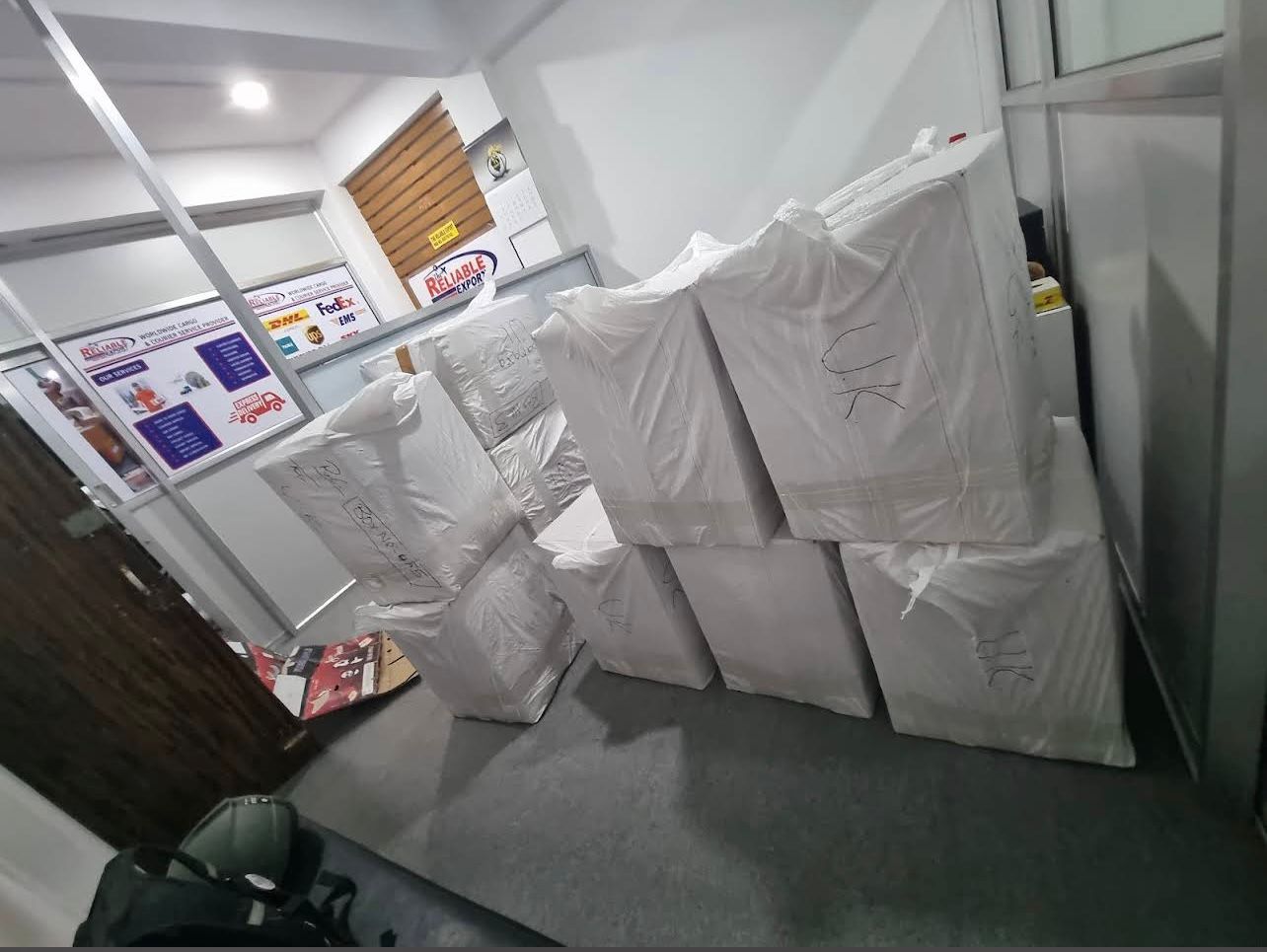
Materials ready to be sent abroad
Professionals can bring one set of tools for their work, doctors or specialists can bring necessary instruments, equipment, and medicines, singers or musicians can bring their instruments, athletes can bring sports gear, and a fishing rod is also permitted. One power bank can also be brought duty-free.
For items beyond these, the customs chief has the authority to apply exemptions or duties based on an assessment. Provisions also exist where certain personal items of foreign passengers arriving with a passport are exempt from customs duties.
Foreign passengers can bring 1 liter of liquor or 12 cans of beer, 200 sticks of cigarettes, 50 sticks of cigars, or 250 grams of tobacco; medicines not prohibited by law up to a maximum value of Rs 10,000; food items up to Rs 5,000; and fresh fruit up to Rs 2,000.
When foreign passengers take gifts out of the country, proof of currency exchange from a bank or an authorized money changer is required. Unrestricted goods can be taken or sent without a license.
Foreign passengers can take or send unrestricted goods purchased in Nepal up to a maximum value of Rs 500,000. A tax invoice is mandatory for VAT-applicable items, and a PAN bill is required for tax-exempt items.
Limits on gold, silver, and jewelry
Nepalis arriving in Nepal from abroad can bring up to 100 grams of raw gold upon paying the applicable duties. For gold jewelry, men can bring up to 25 grams and women up to 50 grams without paying duty. Beyond that, an additional 100 grams of gold jewelry can be brought by paying the specified duty.
For silver and silver jewelry, up to 500 grams can be brought upon paying the duty. Gold or silver jewelry studded with precious stones can be brought in up to a value of 100,000 Rupees upon paying the duty.
Why is there extra focus on mobile phones?
Even though a mobile phone seems like an ordinary item for a passenger, it is a sensitive item for customs. The reason is the high value of mobiles and the potential for illegal trade.
Mobile phones are subject to special surveillance at customs. Since a mobile registration system (MDMS) is implemented in Nepal, using illegally imported phones can also lead to network-related issues.
Bringing more mobile phones than required for personal use can be interpreted as a commercial motive. Therefore, bringing them in large numbers is risky. If a purchase receipt is unavailable, the customs value is determined based on the type, model, and market price of the mobile phone. Customs Officer and Information Officer Kamal Pariyar notes that additional customs duties can be levied by evaluating prices and specifications available online.
Items currently under strict scrutiny
The Customs Department has recently increased specific surveillance on several items. Many new mobile phones, gold biscuits or raw gold, unauthorized drones, electronic cigarettes (vapes), excessive amounts of clothing and shoes, multiple electronic appliances, raw meat and animal products, live plants and seeds, and restricted medicines can be detained or confiscated.
Tight restrictions are also being enforced on raw meat, sukuti, gundruk, rice, oil, dairy products, legumes, lentils, liquids, weapons, and food items that lack labels or quality certification. Raw meat, unpasteurized dairy raw materials, or food items brought in large quantities are considered high-risk. In many countries, such materials are banned due to health and biosecurity risks.
According to Kishore Bartaula, Director and Information Officer of the Customs Department, Nepal has recently tightened restrictions on illegal items and those falling outside set standards that harm the environment. He states that if items brought from abroad lack bills, have unclear pricing, or are found in excessive quantities, the customs office can hold those goods. If items appear suspicious, customs holds the authority to demand receipts, assess taxes, detain the goods, or confiscate them if necessary.
Because such items can violate health, safety, and customs regulations, they can lead to additional taxes, fines, legal action, or travel disruptions.
How is customs inspection conducted?
Surveillance has been strengthened using modern scanning systems at airports and border checkpoints. The process of scanning passengers’ bags, opening them if necessary, counting items, and checking purchase receipts is routine.
According to Customs Director Bartaula, if any item appears suspicious, excessive, or contrary to regulations, additional taxes may be levied, fines imposed, goods confiscated, and legal action initiated if required.
Under ICAO standards, attempting to carry certain dangerous goods during air travel can lead to a passenger’s arrest. All types of firearms, rifles, pistols, and realistic-looking replica weapons, all types of bullets, ammunition, explosives, and harmful chemical substances are completely prohibited.
Similar precautions in cargo shipping
Regulations apply not only when passengers carry items themselves but also when sending goods via cargo or courier services.
According to Vishnu Panta of Reliable Cargo Office, although a limited quantity of goods can be sent from Nepal for personal use, unlabelled food items, vegetable products, weapons, and liquids are restricted. He states that the United States and Australia have recently tightened restrictions on meat products, dairy products, and food items. Australia also prohibits wooden items, green vegetables, and weapons. Most countries maintain strict rules regarding food items.
He mentions that Nepal’s chhurpi (hard yak cheese) has also fallen into the restricted list in some countries. He notes that Japan has rules prohibiting meat, rice, and lentils, and there have been incidents where individuals were deported for attempting to bring in sukuti. While sukuti and ghee can be sent to the UK, items like legumes, rice, lentils, and oil cannot be sent to many countries. To maintain an adequate supply of rice and oil within its own borders, Nepal has also banned the export of certain food commodities. He adds that a provision exists where approval from relevant authorities must be obtained to send certain materials manufactured in Nepal abroad.
Roshan Basnet, operator of Sajilo Cargo Kathmandu, states that many food items sent abroad from Nepal can be detained in the destination country’s quarantine. Mobile phones, clothing, household items, and gift items can be sent via cargo or courier. However, if there is no bill, the value is unclear, or the goods are in large quantities, customs can hold them.
Information is available, but awareness remains weak
Officials state that awareness notices regarding restricted items are issued from time to time. During security checks at the airport, personnel also verbally inform passengers about the rules.
Arrangements are in place to inform passengers through information boards, digital displays, public notices, and informational materials in security screening areas at Tribhuvan International Airport and other airports, as well as through respective airlines. However, Bhul notes that because many passengers do not fully comprehend the rules and travel carrying items based simply on social media posts or the experiences of others, they face issues at checkpoints, transit airports, and destination countries.
Before traveling abroad, it is necessary to gather information regarding airline policies, the embassy or official bodies of the destination country, the Customs Department, and airport security rules. Even if an item is for personal use, a passenger can be detained at the airport if the quantity, packaging, labeling, billing, or destination country regulations do not align. Therefore, when traveling abroad, packing items based on justifications like “it’s a household item,” “others have carried it before,” or “it cleared the screening in Nepal” can be highly risky.
To ensure a safe journey, every passenger must verify three things before packing their luggage: whether the item is permitted, whether the quantity falls within personal-use limits, and whether it has a bill, label, or required certification.