Kathmandu
Sunday, July 19, 2026





A conflict thousands of kilometers away has pushed up fuel prices, transport fares, food costs and household expenses in Nepal, exposing the country's dependence on imported energy and its vulnerability to global shocks.
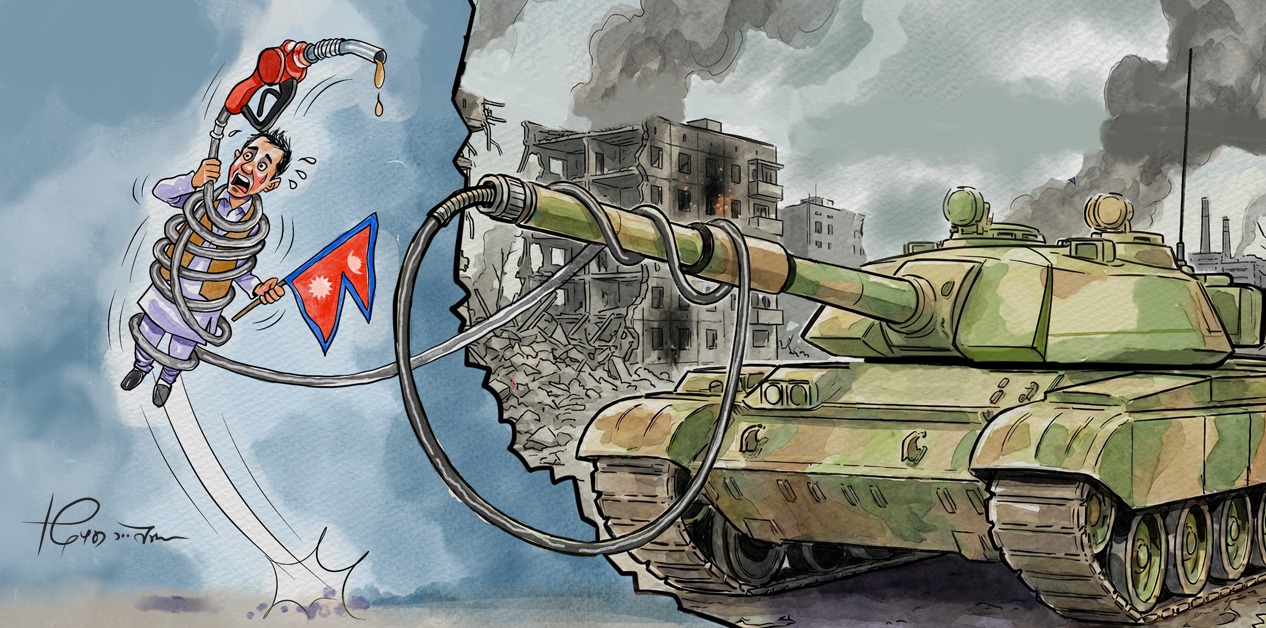
KATHMANDU: Utsav Pokharel, who is preparing for MBBS, commutes daily from Anamnagar to Putalisadak to attend preparation classes. For this distance, the public transport fare is usually Rs 20, but upon showing his student identity card, paying Rs 15 used to be enough. However, he says he now has to pay Rs 25. He says, “Claiming that fuel prices have increased, vehicle operators have also stopped giving student discounts. Sometimes, I just walk to commute. The fare hike has made me frustrated.”
The war that started between the US-Israel and Iran on February 28, 2026 has not yet calmed down.
Utsav, a student in Nepal—which is located at an aerial distance of more than 3,300 kilometers away from Iran—has no direct connection to this war. However, he is experiencing the impacts of the war in his daily life. Following the war, the price of petroleum products has skyrocketed, making everything from public transportation fares to consumer goods expensive, causing his expenses to surge sharply.
Calculating just the vehicle fare, an additional burden of Rs 20 daily has been added to Utsav’s commute to Putalisadak. While he previously used to spend Rs 780 monthly to go to class 26 days a month, he now has to spend Rs 1,300 monthly. That means he is spending Rs 520 more monthly compared to the past just on vehicle fares. This is a 75 percent increase compared to before. He says, “At this rate, the expense will increase by Rs 6 to 7 thousand a year compared to before just on vehicle fares.”
This is merely the minimum transportation expense calculation for an ordinary student. The travel expenses of every individual who boards public transport daily for studies, employment, or other work have increased. Where one previously had to pay a minimum of Rs 20 Rupees to board public transport in Kathmandu, it has increased by Rs 25 percent, and now the minimum itself is Rs 25. The maximum fare rate has also increased in the same proportion.
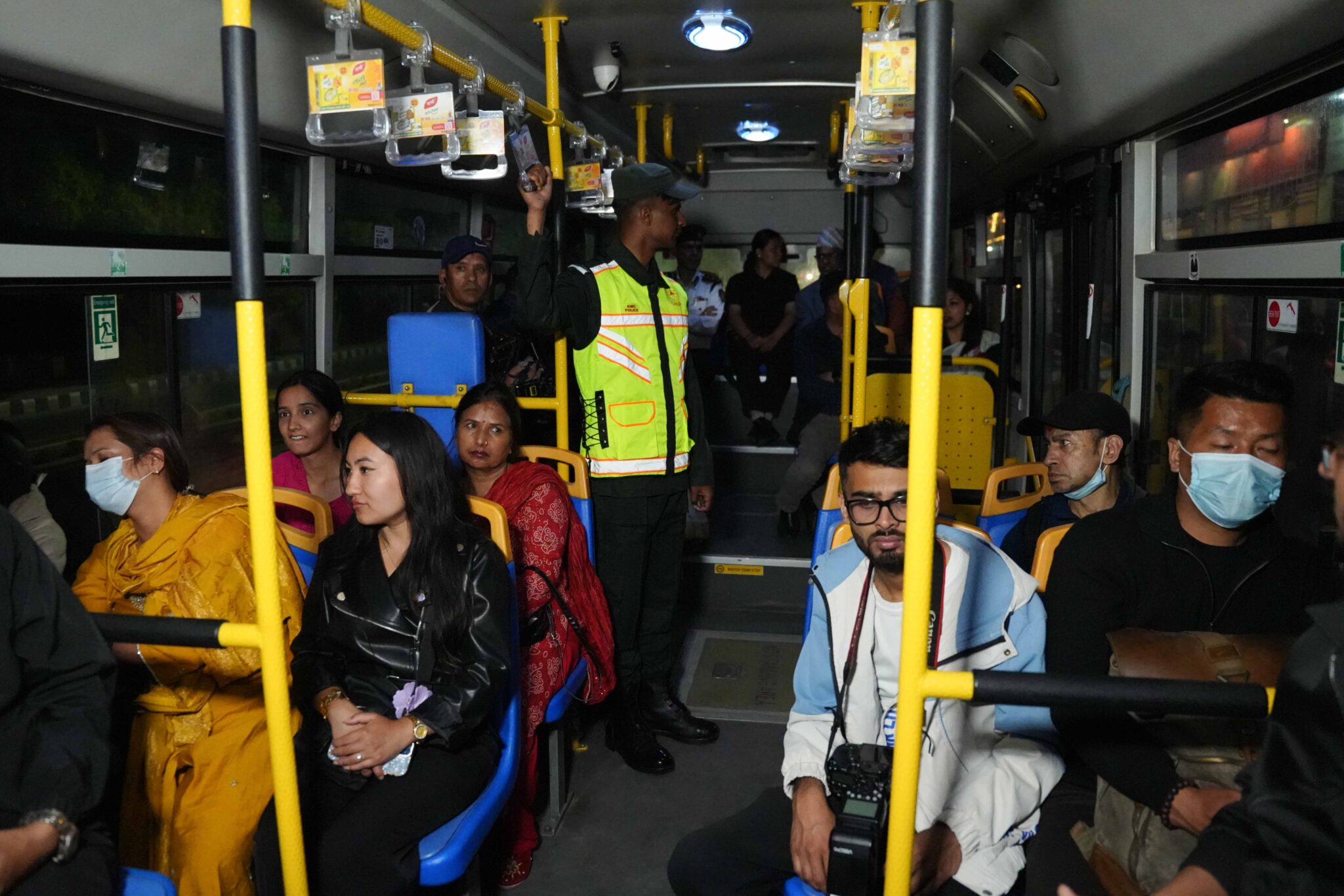
Passengers riding a night bus of Sajha Yatayat. Photo: Nepal Photo Library
After the price of petroleum products increased, the government on April 8, 2026 increased the fare of passenger vehicles traveling from one province to another destination by 16.71 percent. Similarly, the fares of cargo vehicles operating on hilly roads and Terai were increased by 21.86 and 15.75 percent, respectively.
Following this, the government increased fares again from April 29, 2026 while adjusting fares in accordance with fuel prices. In this adjustment, the fares of public transport and cargo vehicles were increased by an additional five percent.
When the federal government increased transport fares for the first time after the Iran war, the Bagmati Province government also increased transportation fares on April 10, 2026. According to the notice published in the provincial gazette, the fare for public transport vehicles operating in the Kathmandu Valley has been fixed from Rs 24 to 50. Similarly, the fare rates for taxis and cargo vehicles have also been increased.
As the supply chain of petroleum products has been disrupted over the past two months resulting in continuous price hikes, expenses have increased for those traveling by public transport and airplanes, as well as those driving private vehicles. On top of that, as the fares of transport vehicles and the cost of industries increase, the overall market has become extremely expensive, putting pressure on the consumers’ pockets.
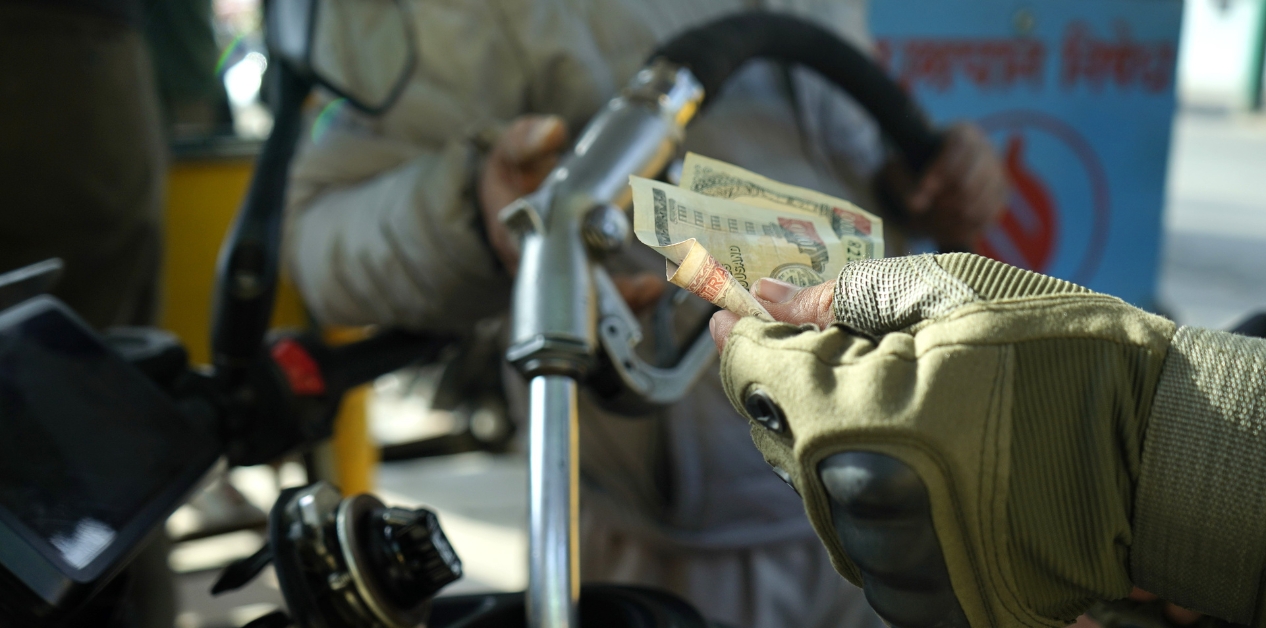
Consumers refueling at a petrol pump in Tripureshwar. Photo: Bikram Rai
From food items to vegetables, most goods in Nepal are imported. When the fares of cargo vehicles carrying those goods increase, that increased price also arrives added onto consumer goods. This makes the consumers’ kitchen expensive.
As an effect of transportation becoming expensive, the prices of everything from food grains, vegetables to fruits, milk, cooking oil to medicines, and construction materials increase. In this way, the impact of a war thousands of kilometers away shrinks our purchasing power.
As the market becomes expensive, the burden of daily expenses has increased in every household, while those running small businesses are taking a hit. Ananta Kandel, the operator of Capital Boys’ Hostel located in Anamnagar, says that running the business has become difficult due to the unusual increase in the prices of food items, oil, and vegetables over the past few months.
He shares that cooking oil, which he previously used to buy at a wholesale price of Rs 2,300 per carton, has reached up to Rs 2,825, and rice, which cost Rs 1,650 per bag, has reached Rs 1,900. Similarly, during this period, his shopping experience shows that the price of ginger went from Rs 100 to 190, tomatoes from Rs 40/50 to 70 and leafy vegetables available at Rs 50-60 per kilogram have reached Rs 90.
Kandel says that although prices have increased for everything since the New Year began, unlike vehicle fares, hostel prices cannot be adjusted easily, which has put pressure on the business. “As the prices of consumer goods increased, expenses have gone up by Rs 6-7 thousand in a month alone. In the budget, saying that inflation has risen, the salaries of government employees were increased, but who cares about small business operators like us?” he says.
The price hike of petroleum products is impacting fields from agriculture and industry to the construction sector. In Nepal’s agricultural sector, tractors are used to transport fertilizer and bring agricultural produce to the market. Pump sets are run for irrigation, for which diesel is required.
The industrial sector is also dependent on petroleum products. Diesel and LP gas are required to run various industries, hotels, and restaurants. In such a situation, whether it is agriculture or industries, all increase the price of production by adding up the total expenses or costs. The blow of that falls directly on the general consumers.
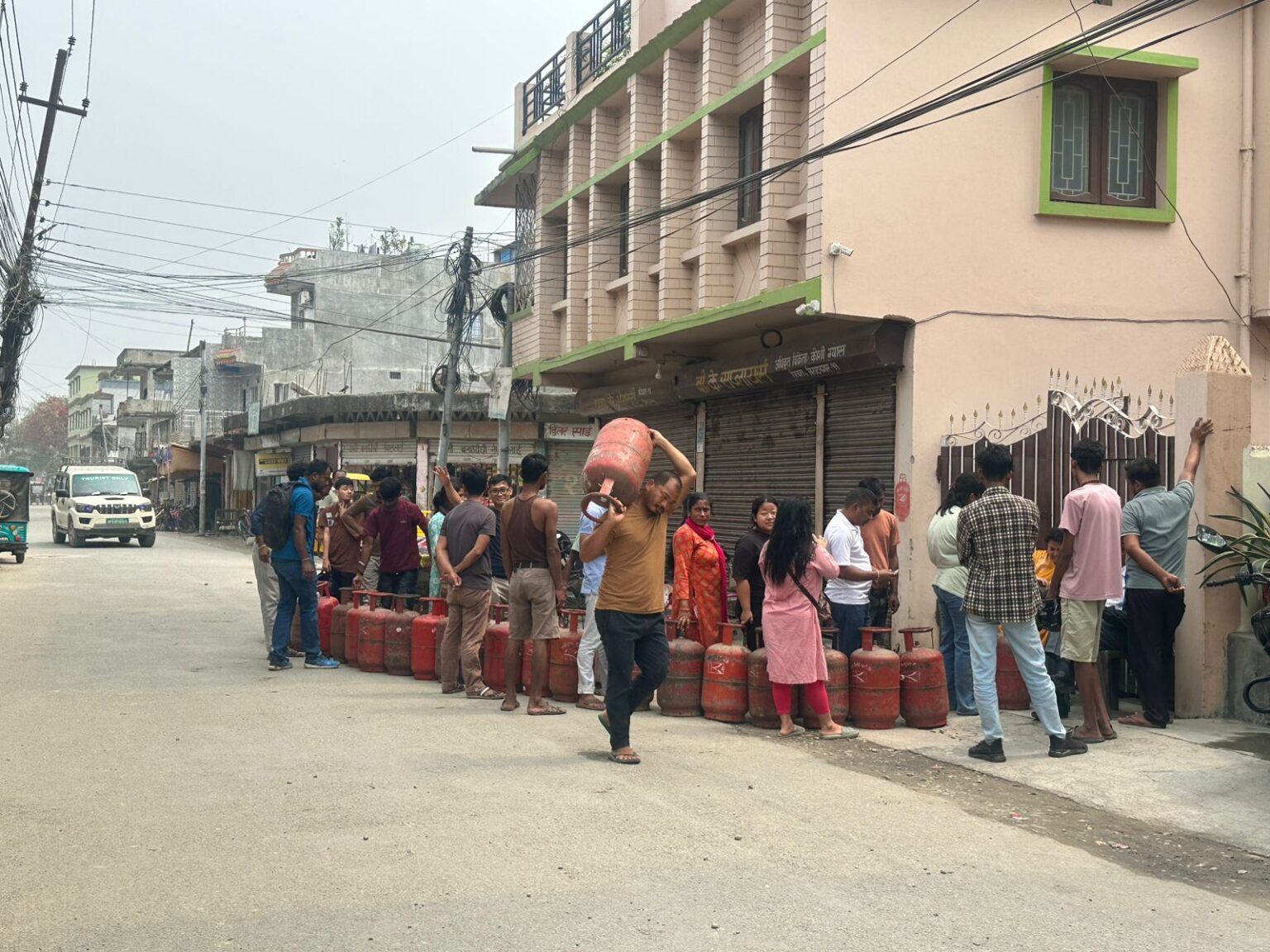
Bishnu Prasad Timilsina, the General Secretary of the Forum for Protection of Consumers’ Rights, says that the current price hike has put consumers in distress. In his brief study, the prices of everything in the market have increased now. He says that there has been a price hike of up to 40 percent in construction materials and up to 30 percent in other items in the market. He says, “While the inflation of consumer goods has squeezed consumers, the price hike of petroleum products is in a state to halt development and construction.”
When fuel prices increase, production costs and service charges rise. Because of that, the prices of overall goods increase in the market, causing inflation, meaning dearness, to rise. The purchasing power of cash held by consumers decreases. According to the International Monetary Fund (IMF), when the price of oil increases by 10 Dollars per barrel in the international market, inflation increases by 0.4 percent in Nepal.
Nar Bahadur Thapa, economist and former Executive Director of Nepal Rastra Bank, says that the fuel crisis will make inflation even deeper. He says, “For the past two or three years, the inflation rate in Nepal was low; now, due to the pressure of fuel prices, the risk of this increasing has risen.”
Recently, Nepal has written to the United Nations requesting to postpone the timeline for graduation from a Least Developed Country (LDC) to a developing country by three years. Economist Thapa says that one of the factors for postponing the graduation timeline in the current situation is also the fuel crisis in West Asia.
Although the globally increased oil prices have had a direct impact from Nepalis’ kitchens to the country’s economy, the new budget recently brought by the government has failed to address this. Finance Minister Swarnim Wagle, who brought a budget of Rs 2.124 trillion, could not bring programs that would provide relief to citizens and businessmen suffering from the continuous price hikes of fuel.
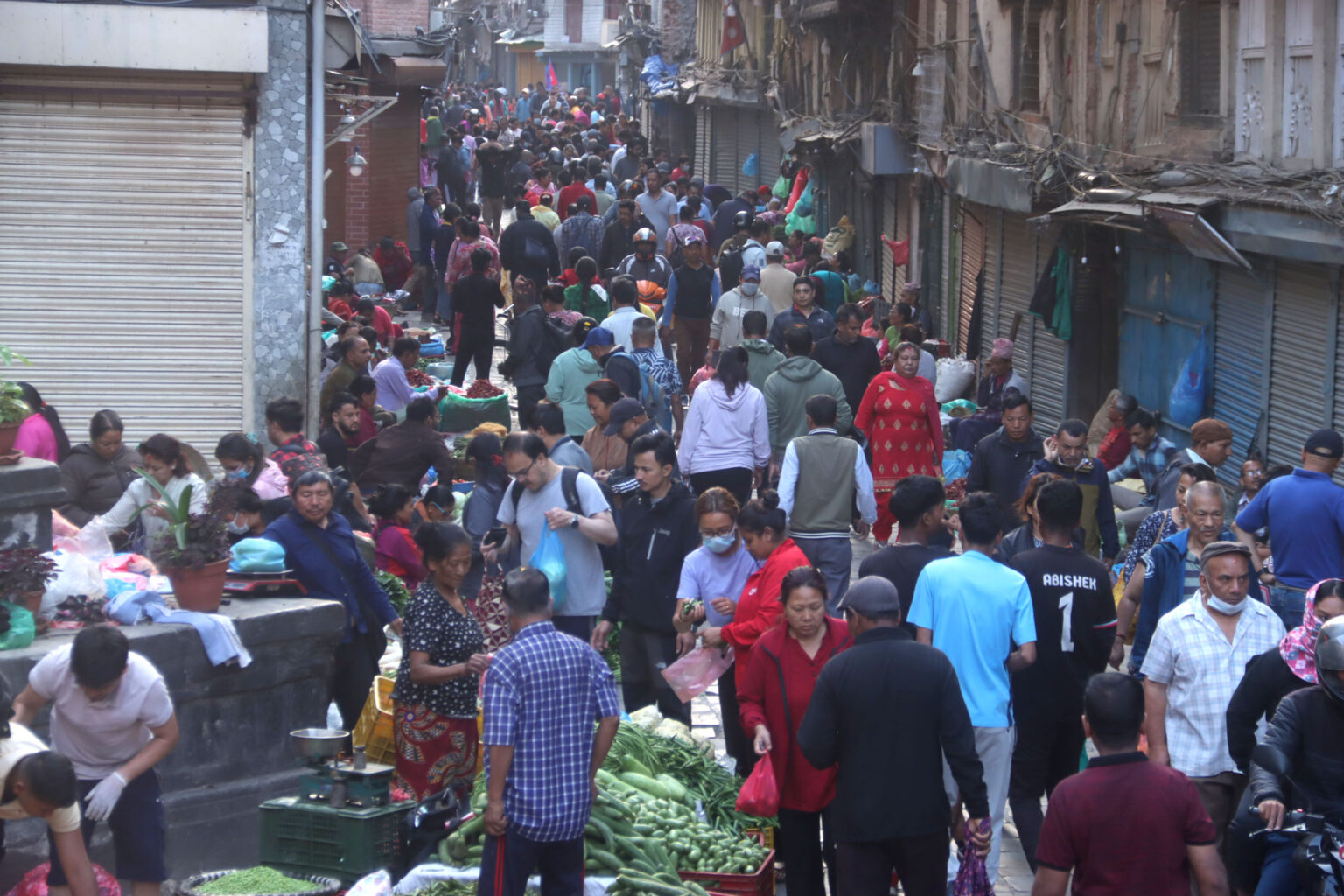
General public shopping for vegetables and various items at Indrachowk, Kathmandu. Photo: Hari Ram Bhetuwal/RSS
Prakash Kumar Shrestha, economist and former Vice-Chairman of the National Planning Commission, says that the budget has ignored the impacts caused by current geopolitics. He states that even though a populist and large-sized budget has arrived, it has not directly addressed the mitigation of problems like the fuel crisis. He says, “This time, the government should have brought a budget that would give relief to the general citizens from the fuel problem, but attention does not seem to have reached there.”
The crisis may deepen
After Iran, one of the world’s major petroleum-producing countries, fell into the grip of war, its impact has spread across the world. On February 28, 2026, the US and Israel jointly attacked Iran’s capital, Tehran. After their supreme leader Ayatollah Ali Khamenei was killed in the US attack, Iran closed the ‘Strait of Hormuz’, a waterway crucial for the world’s oil producers. When the 33-kilometer-wide waterway located between Iran and Oman was closed, fuel supply worldwide was impacted. The US also imposed a maritime blockade on Iran starting from April 17, 2026. Since then, the petroleum products crisis has deepened worldwide.
The Strait of Hormuz is the export route for large fuel-producing countries like Iraq, Saudi Arabia, Kuwait, and the UAE. According to a report published in The Guardian, 20 percent of the world’s fuel and 20 percent of liquefied natural gas are transported through the Strait of Hormuz, which lies near Iran.
Of the petroleum products entering India, 50 percent comes through the Strait of Hormuz. Nepal, on the other hand, imports 100 percent of its fuel from India. Due to this, when the fuel supply was disrupted after the war, the impact also reached Nepal. Claiming that the price of petroleum products has continuously increased in the international market due to the war, the Nepal Oil Corporation increased the price of petrol, diesel, and kerosene by Rs 15 Rupees each on March 26, 2026. With this, petrol reached Rs 184.50 to 187 per liter, and the price of diesel and kerosene reached Rs 164.50 to 176.
Just a week after that, on April 2, 2026, the Corporation increased fuel prices again. It brought the price of petrol to Rs 199.50 up to 202, diesel and kerosene to 179.50 up to 182, and domestic aviation fuel to 251. At that same time, the price of cooking LP gas was also increased to Rs 1,910 per cylinder.
A week after that, adjusting the prices, it increased the price of petrol by Rs 17 from April 10, 2026 making it Rs 216.50 Rupees to Rs 219 per liter, while it fixed diesel and kerosene by increasing Rs 25 to stand at Rs 204.50 to 207.
Similarly, it increased LP gas by Rs 100 making it Rs 2010 per cylinder (14.2 kg) and aviation fuel towards the domestic side by Rs 6 making it Rs 257 per liter.
Following this, to be implemented from April 16, 2026, the Corporation increased prices on diesel and kerosene fixing them at Rs 234.50 to 237 per liter, while it brought aviation fuel to Rs 262 per liter.
On May 2, 2026, the Corporation adjusted the prices of petroleum products again. In this, while the price of petrol was reduced making it Rs 214.5 per liter, it was increased for diesel and kerosene, reaching Rs 222.5. Similarly, the price of LP gas increased, reaching Rs 2160 per cylinder.
The obstruction of the Strait of Hormuz has still not been completely removed. If this situation prolongs, fuel prices could increase even further. The war between the US-Israel and Iran has not ended yet. Although efforts for talks and agreements have been made continuously, incidents of attacks are happening from time to time. Therefore, there is no certainty as to when the war will stop.
Even if the war stops somehow, analysts are saying that the impact of the fuel crisis will keep lingering for about 6 months. Economist Thapa says that Nepal will also experience impacts in overall sectors from this. He says, “Whatever good works the government is saying it will do, the fuel crisis can impact that too. If it prolongs further, the impact could become indefinite, and Nepal will suffer a deeper impact.”
Opportunity in crisis
Crises sometimes also come disguised as opportunities. The price hike happening after the fuel crisis presents an opportunity for the government to take steps toward becoming self-reliant in energy. That is, increasing electricity production and consumption.
Although Nepal theoretically has the capacity to produce 83,000 megawatts of hydropower, various studies have shown that economically it has the potential to produce 42 to 43,000 megawatts. However, Nepal has so far been able to produce only around four thousand megawatts.
Since less than 10 percent of Nepal’s capacity to generate hydropower is being produced so far, there is plenty of potential to increase production.
Although the electricity produced in Nepal is abundant during the four months of the rainy season, the domestic production does not suffice for the remaining eight months, creating a situation where electricity must be bought from India. Nepal on one hand is importing petroleum products, and on the other hand, it is also buying renewable energy—meaning electricity—for which it has plenty of potential itself.
In the opinion of former Executive Director of Nepal Rastra Bank, Thapa, if Nepal wants to head towards the path of becoming self-reliant in energy, it is first necessary to expand transmission lines, produce hydropower, and develop solar energy. He says, “Until Nepal is made self-reliant in energy, problems like the current fuel crisis will keep troubling us. Taking this crisis as an opportunity, it is necessary for Nepal to prioritize the development of electricity, solar energy, etc., as alternatives to oil.”
The government has allocated a budget of Rs 85.54 billion for energy production, transmission, and distribution in the budget of the upcoming fiscal year 2026/2027. The budget, which includes plans to move large projects forward, has discouraged consumers instead of encouraging them in electricity consumption. Announcements such as levying 5 percent VAT on those who consume more than 50 units of electricity monthly and increasing tax rates on electric vehicles worth more than Rs 2 million has discouraged electricity consumption.
Nepal depends on India for importing petroleum products. It has no access to other countries for fuel. The compulsion to look towards foreign countries for fuel is adding challenges to the Nepali economy and energy security. General Secretary of the Forum for Protection of Consumers’ Rights, Timilsina, states that the government has not been able to move forward in a way to counter the pressure caused by supply disruptions, price hikes, etc., while depending on imported fuel
He says, “The government that came after the Gen Z movement had an opportunity to increase electricity production, provide electricity to citizens at a subsidized rate, and encourage increased consumption, but instead they discouraged it by levying taxes.”
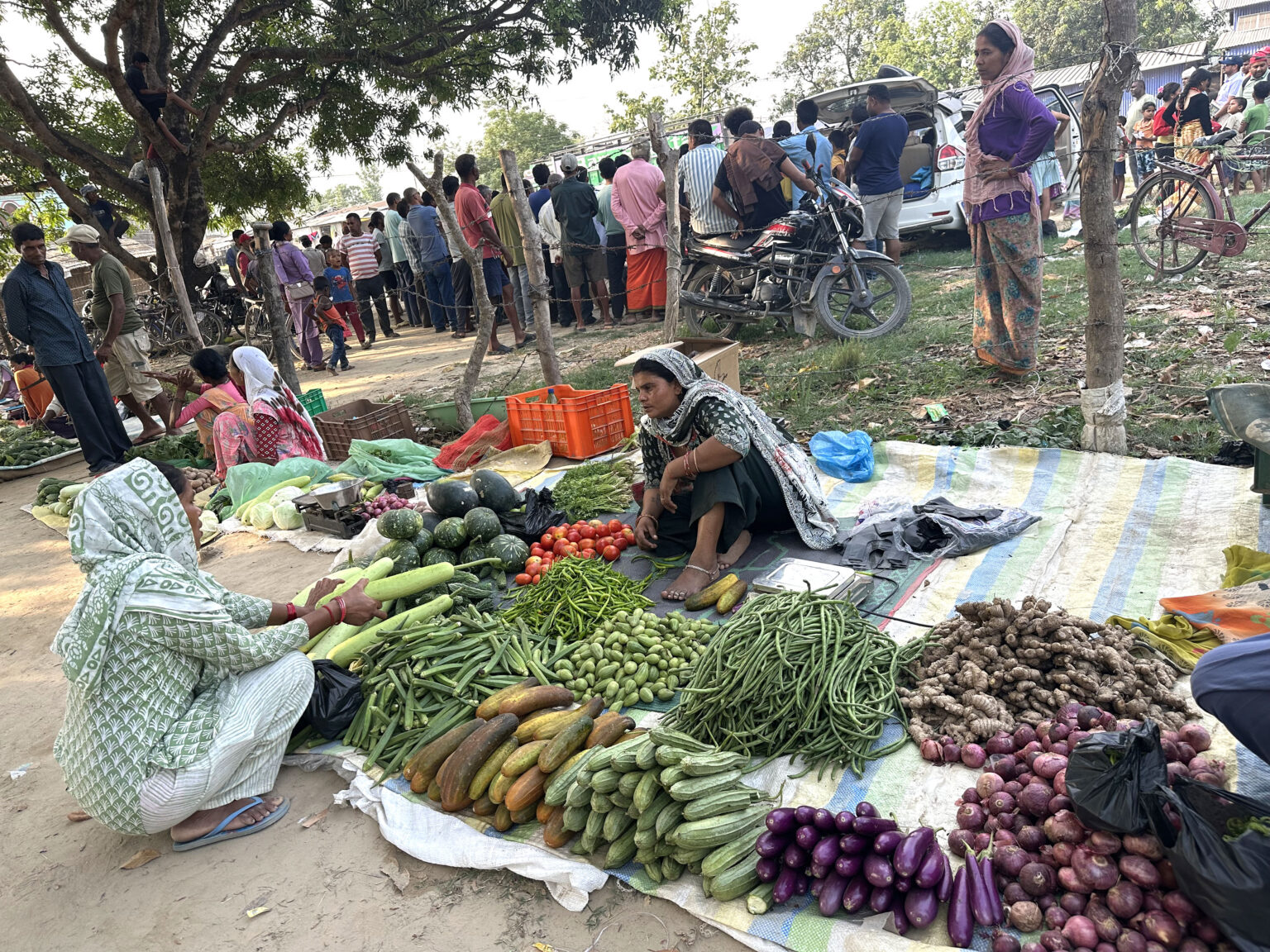
Farmers selling vegetables at Charra local agricultural market of Bhajani Municipality-7, Kailali. Photo: Bishnu Nepal/RSS
Kulman Ghising, former Energy Minister and Chairman of the Ujyaloo Nepal Party, has also demanded that the government remove the five percent VAT levied on electricity. Writing on social media that the government has discouraged the domestic use of electricity when it should have encouraged it, he stated, ‘Increasing internal consumption of electricity is today’s necessity. For that, tariffs must be made more equitable, progressive, and consumer-friendly. New tax burdens should not be added.’
Former Vice-Chairman of the Planning Commission, Shrestha, says that the government’s policy on electricity appears contradictory. He says, “The budget on one hand talks about increasing electricity consumption, and on the other hand, VAT has been levied on those using more than 50 units monthly.”
That being said, currently produced electricity is not sufficient to be used in domestic, agricultural, and industrial sectors. Even if everyone were to use it at the same time just for cooking, the current production and infrastructure cannot sustain it.
Regarding the issue of levying tax on electricity, lawmakers had also questioned Prime Minister Balendra Shah in the House of Representatives meeting on May 31, 2026. Answering that, Prime Minister Shah said that a state to transition into an electric era right now does not exist. “If cooking is done using electricity in every kitchen of the country right now, all the transformers and sub-stations in the country will blow up. The capacity just isn’t there right now,” Shah said, “To develop that capacity, money is needed. It is for that money that the Finance Minister spoke about levying a 5 percent VAT above 50 units.”
Economist Thapa says that to enter the electric era, Nepal must increase its electricity production five times more than now. “For that, 10,000 megawatts of electricity is required in two to four years. Learning a lesson from the current energy crisis, Nepal must start working right from now for energy self-reliance,” he says.