Kathmandu
Thursday, June 25, 2026





Lack of proper management deprives Pokhara and Kawasoti of potential revenue from riverbed materials, putting settlements at risk
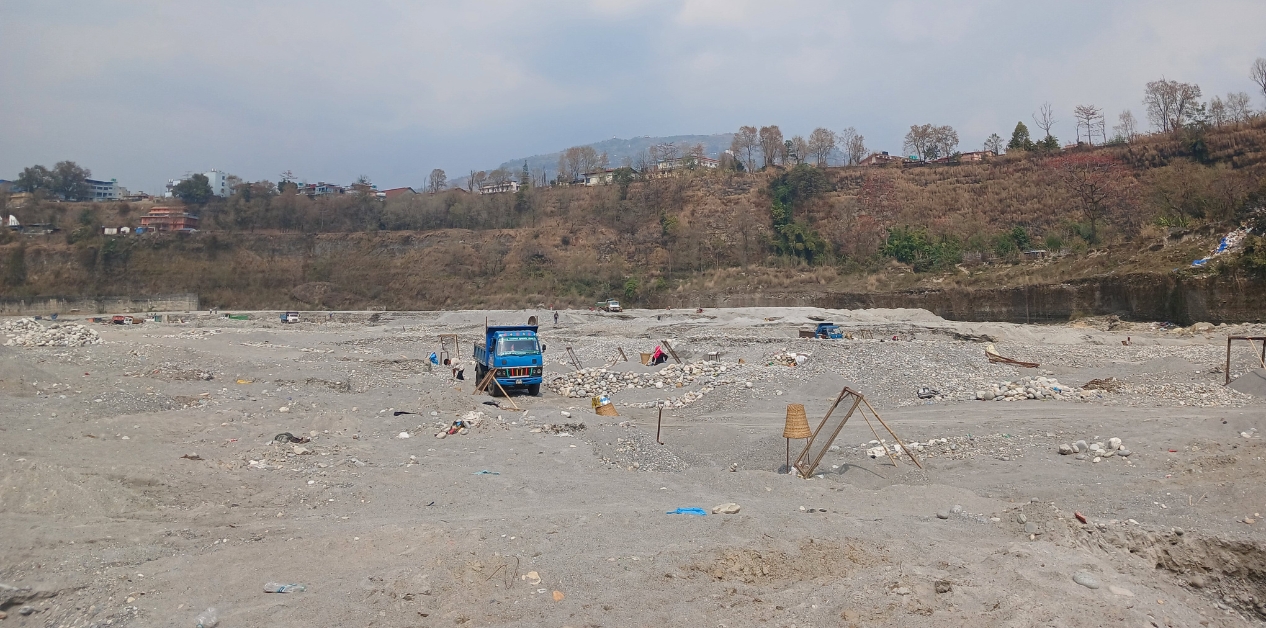
POKHARA: The Auditor General’s report indicated that Pokhara Metropolitan City could generate over Rs 76.7 million annually, including taxes, from Ramghat in Pokhara. However, in the Fiscal Year 2022/23, the metropolitan city collected only Rs 8.2 million from this area through direct collection (Amanat). In the Fiscal Year 2023/24, it failed to generate any revenue at all.
Due to disputes, local protests, lack of bids, and delays in the contract process, not only Pokhara Metropolitan City but other local units in Gandaki Province are also struggling to collect expected revenue from riverbed materials. In some places, the failure to manage these materials has put settlements, arable land, and bridges at risk.
Ramghat is among the most disputed riverbed material extraction and collection sites in Pokhara. The area is frequently dragged into controversy due to illegal extraction, local protests, and lack of cooperation from public representatives. Consequently, the metropolitan city has been unable to collect the expected revenue from the area’s riverbed materials for years.
This time, however, the metropolitan city has successfully leased out some extraction sites, including Ramghat. For the Fiscal Year 2025/26, the metropolitan city called for tenders in 18 out of 32 sites. According to the Revenue Section of the metropolitan city, although 32 sites were included in the Environmental Assessment Report, tenders were invited for only 18 sites. Among them, contracts were successfully awarded for 11 sites.
Ramghat has also been leased out this time. The metropolitan city signed the agreement for Ramghat on January 1, 2026, after failing to lease it out in recent fiscal years.
Section 7 of the Pokhara Metropolitan City Financial Act, 2023, states that taxes can be levied on natural resources such as stone, ballast, sand, and other riverbed materials.
The Auditor General’s report highlighted Ramghat, located in Wards 9 and 11, as the highest revenue-generating extraction site among all sites within the metropolitan city.
The Office of the Auditor General had pointed out that the metropolitan city must take proper initiatives to prevent the loss of millions in revenue and utilize wasting resources through contract management, while keeping environmental impact assessments in mind.
The contract snag at Ramghat
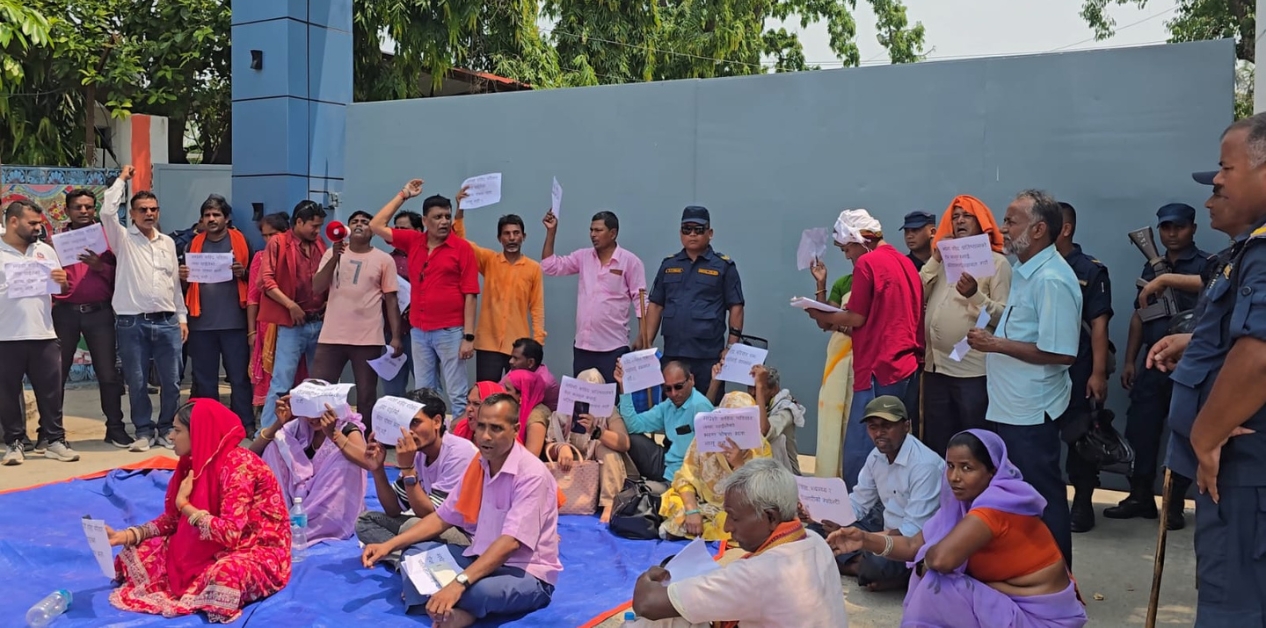
The failure to lease out Ramghat stems from local protests as well as a lack of cooperation from public representatives. Although the metropolitan city invited tenders multiple times in the past, no proposals were submitted. Local protests occurred in some areas, while ward chairpersons in others wrote official letters stating that contracts should not be issued.
The Auditor General’s report also notes that protests intensified because of local opposition, correspondence from ward chairpersons, failure to secure contracts despite repeated notices, and the presence of tractors and equipment belonging to locals inside their own yards in some areas. The report highlighted that this situation resulted in a massive loss of revenue for the metropolitan city.
The Auditor General had suggested resolving the disputes and leasing out the riverbed materials.
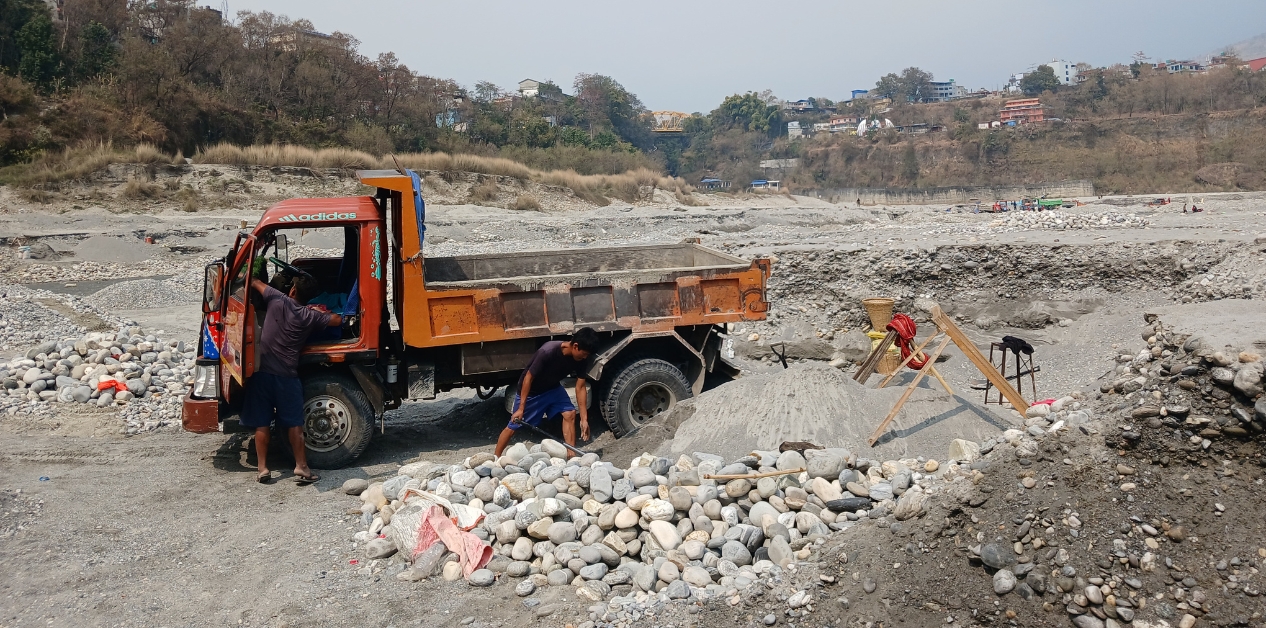
Extraction of riverbed materials
The metropolitan city has leased out some areas in the Fiscal Year 2025/26. However, since contracts were awarded for only 11 out of the 18 sites where tenders were invited, potential revenue from the remaining seven sites has been lost.
Procurement Process Causes Delay
Manju Devi Gurung, Deputy Mayor of Pokhara Metropolitan City, states that this situation has arisen because the contracting process is tedious due to the Public Procurement Act.
Before issuing a contract, the local government conducts an environmental study in accordance with the law. The study report sets the limits on how much volume can be extracted from which area. The bidding process begins after that. However, Gurung states that they face problems where no proposals are submitted even when tenders are invited. She says, “We move the tender process forward. Sometimes bids are placed in the first round, sometimes they aren’t. Time is wasted when we have to publish notices up to three times.”
According to her, if no bids are received the first time, a technical team conducts a re-examination, a meeting is held, and the notice is republished. This process takes months.
The Public Procurement Act mandates that a minimum of 30 days must be given in the first notice for national-level bidding. If a re-tender has to be invited, a minimum of 15 days can be given. Following that, if no bids are received, a seven-day notice can be issued by clarifying the justification if immediate suspension of work would cause a loss to the public entity.
According to Deputy Mayor Gurung, by the time all these procedures are completed, the status of the riverbed materials changes entirely. “The process under the Procurement Act has made it difficult,” she says. “Due to delays, the materials are stolen and cleared out in some places, or the remaining timeframe becomes too short. Therefore, entrepreneurs are not interested in bidding.”
She believes that shortening the duration of the contracting process would make it easier for local governments. She takes it positively that more contracts have been awarded this time compared to previous years.
Similar problems in Kawasoti
The situation in Kawasoti Municipality, also within Gandaki Province, is similar. The 2026 report published by the Auditor General pointed out that Kawasoti Municipality failed to collect the expected revenue from riverbed materials.
The municipality had invited tenders for the extraction of riverbed materials from the Kerunge Stream. However, no bids were received despite publishing notices on various dates. Following that, the municipality reduced the rate per cubic meter and invited tenders for the third time. Although bids were received on the third notice, the municipality could not collect the expected revenue.
In this year’s report as well, the Auditor General has suggested the municipality increase its internal income by creating an action plan to sell riverbed materials.
Phool Kumari Thanet, Deputy Mayor of Kawasoti Municipality, states that they face a problem where no proposals are submitted despite inviting tenders. According to her, some areas have been leased out this time compared to the previous year, but the contracting process is still not smooth.
“Tenders are opened, but no bids are placed,” Thanet says. “Along with the quality of the material, there might be other reasons as well; it is difficult to secure contracts in all locations.”
Settlements at risk
In Kawasoti, the issue is not just about income; it is also linked to the management of riverbed materials. A study by the municipality shows that settlements have been put at risk due to the failure to extract and manage these materials.
According to the 2025 report of the Auditor General, studies were conducted for the extraction, collection, and sale of riverbed materials at 18 locations, including 16 locations along the Kerunge Stream and one location each along the Laukaha and Patthar Streams. According to the report by representatives including Babu Ram Bishwakarma, Coordinator of the Monitoring Committee, and the Deputy Mayor of Kawasoti Municipality, alongside the Initial Environmental Examination report, the proposed volume was 335,397 cubic meters.
However, the municipality failed to lease out contracts for the said volume in the Fiscal Year 2023/24.
By failing to secure contracts, the municipality has not only lost revenue but the risk to settlements has also increased. The report mentions that when stakeholders, ward chairpersons, and the technical team conducted monitoring, the bed of the Kerunge Stream was found to have risen higher than the Kawasoti market area.
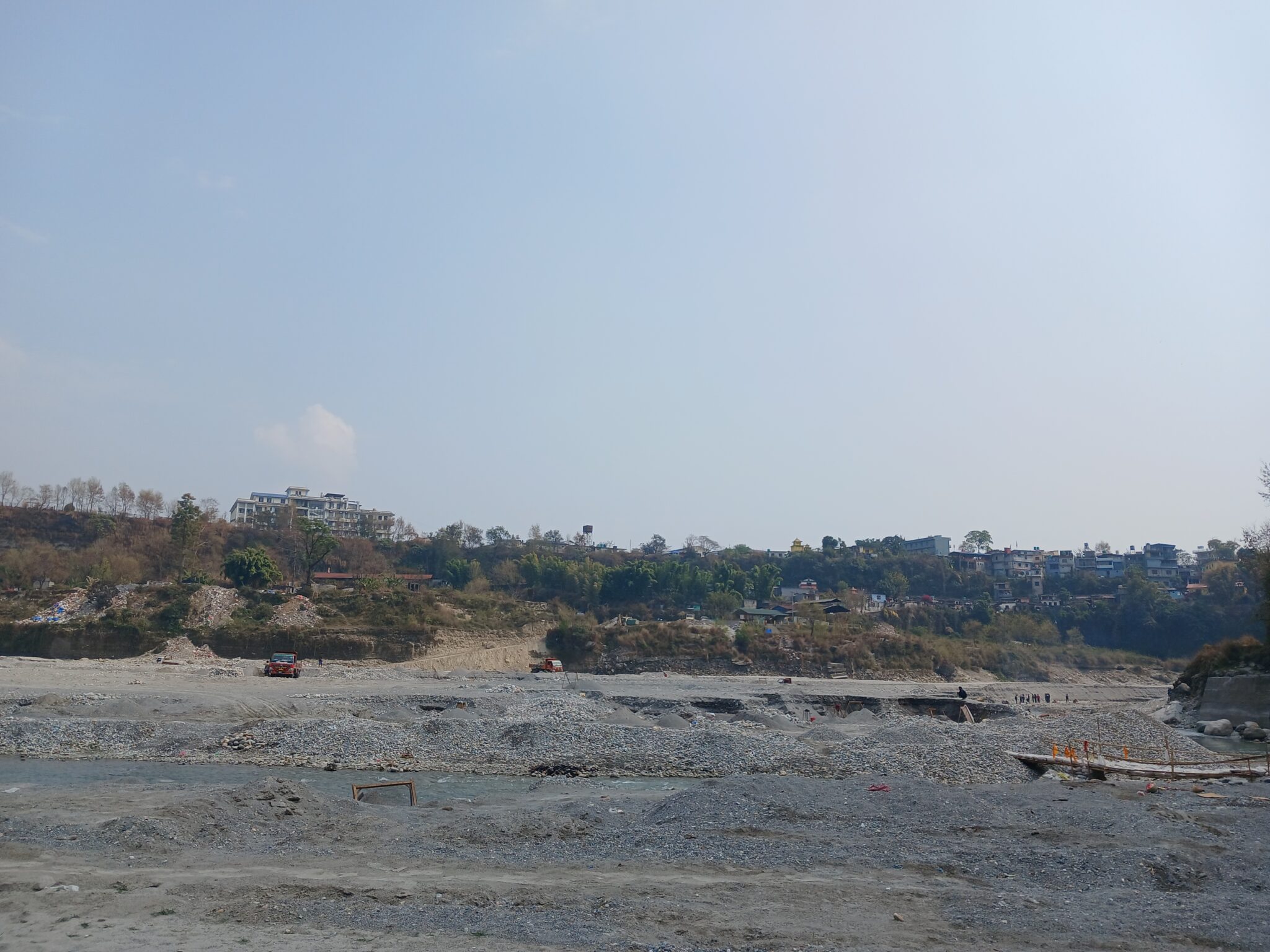
Extracting of riverbed materials
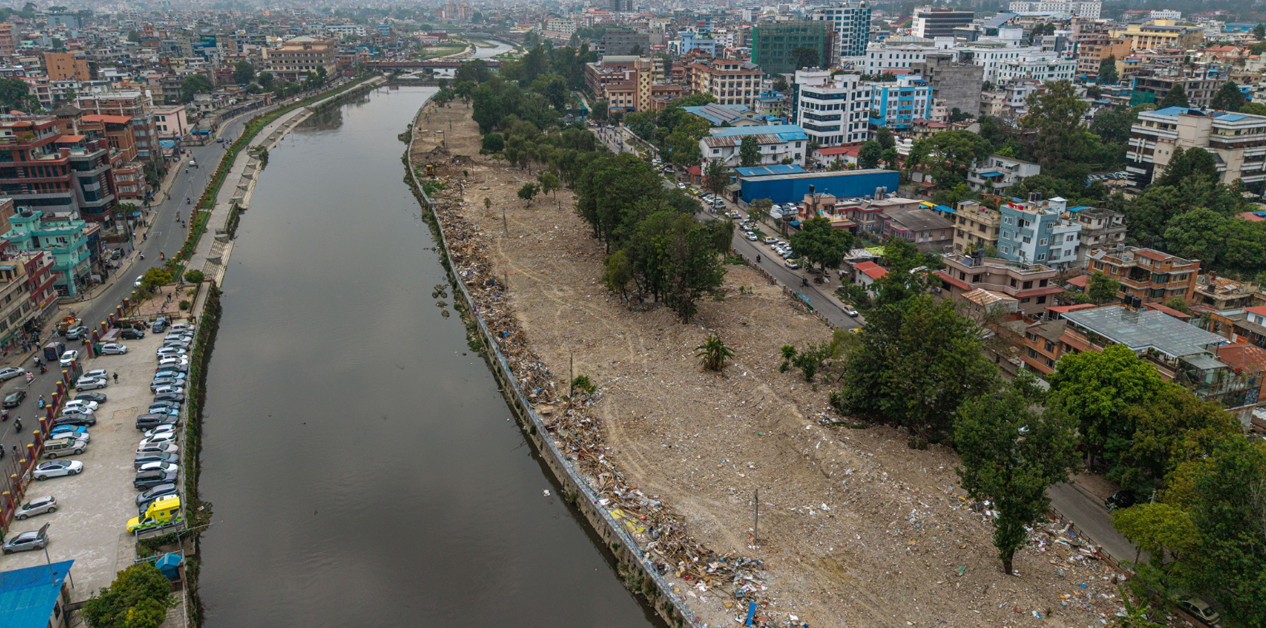
According to the report, the width of the stream has expanded from 20 meters to 400 meters. The stream is currently flowing through arable land. Five bridges over the Kerunge Stream are at risk. The study report of the municipality mentions that even the model district headquarters, whose foundation stone has already been laid, is at risk.
The report highlights that the stream causes annual loss of life and property during the monsoon season, 100 bighas of arable land have turned into riverbanks, and the future of Kawasoti market, human settlements, and the model district headquarters will be at risk if proper extraction and management of riverbed materials are not carried out.
The Auditor General also noted that during the field audit conducted with the Ward Chairperson of Ward 1 and the technical team, the level of the riverbank was found to be higher than the arable land.
The Auditor General had suggested that to mitigate potential risks to arable land, human settlements, the current market, and the model district headquarters, the watershed of the Kerunge Stream must be protected alongside proper management of the riverbed materials piled up by floods.
However, the problem still persists. Yam Bahadur Thapa, Ward Chairperson of Kawasoti-6, states that sustainable management of riverbed materials has not taken place. “Looking at the situation, sustainable management hasn’t really happened,” he says. “Only temporary management is being done by installing basic gabions (wire mesh boxes filled with stones) and removing materials from areas permitted by the environmental report.”
He mentions that even though the environmental study report showed that the riverbed materials could be contracted out, the river could not be leased. According to him, one reason for this is the poor quality of the materials.
“This material is not as high-quality as that from other rivers,” Thapa says. “Since the quality is low, it sells in small amounts only when it isn’t available elsewhere. It is sought after when there is a major project, otherwise, it is difficult to sell.”