Kathmandu
Sunday, July 19, 2026





Hand pumps are failing, rice harvests are shrinking, and 16 seasons out of 19 over the past five years have brought below-average rain to Madhesh. The Groundwater Resources Development Committee, the one government body tasked with monitoring groundwater, was abolished to save money. Now no one knows how much water is left.
KATHMANDU: Krishna Chandra Lamichhane of Naya Basti Pipara in Birgunj Metropolitan City-14 found his hand pump dry this year. The pump, which had been yielding less water for several years, dried up completely during this season’s drought. He says it is not only his own pump but other pumps in the neighborhood have dried up too. Having moved to the area 12 years ago, he is experiencing a dry pump for the first time.
After the water crisis set in, 14 boreholes have been sunk in his ward to distribute water, with up to 40 taps connected to a single borehole. “The boreholes have provided an immediate fix for the water shortage, but since these too carry the risk of drying up, it doesn’t look like a lasting solution,” Lamichhane says with concern.
The water crisis is not limited to Birgunj in Parsa; it has been emerging across Madhesh Province over the past five years, and it is deepening.
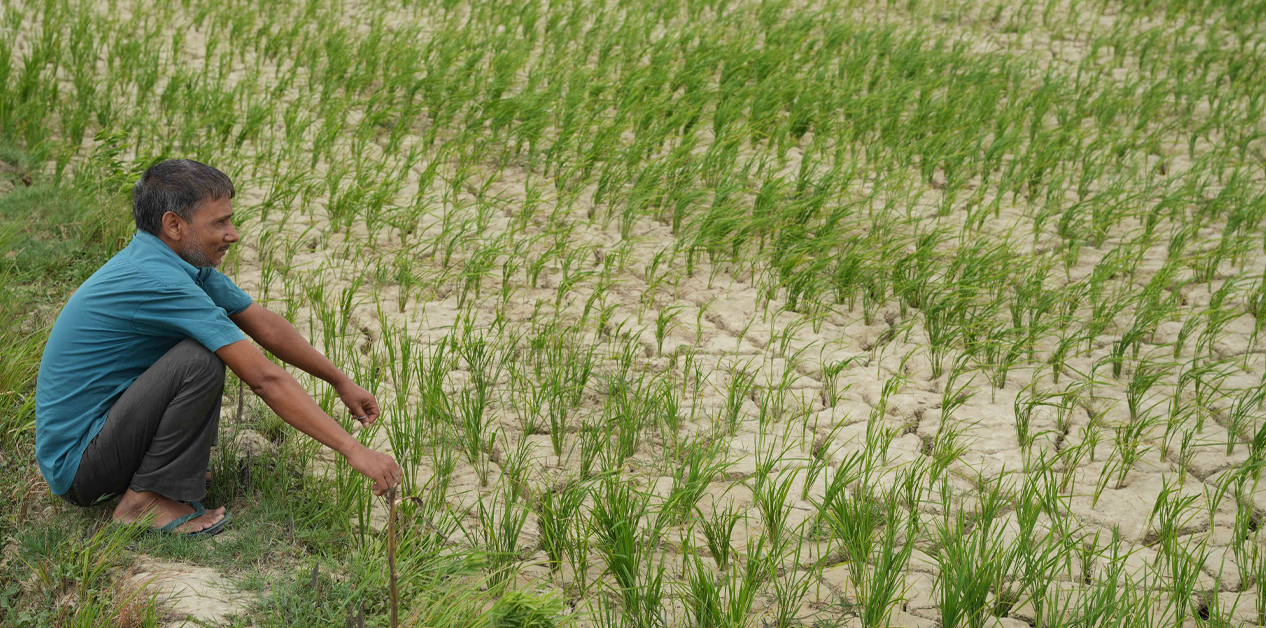
Laxmi Sada Musahar of Bhangaha Municipality-9 in Mahottari could not transplant paddy saplings on time this time because the monsoon brought insufficient rain. Dependent entirely on rainwater for farming, he could only begin planting in the last week of August last year. The harvest from the sharecropped land he farms is the main source of sustenance for his family of 10. “But because we planted late, the yield was poor this year. I’m worried about how to feed the family,” he says.
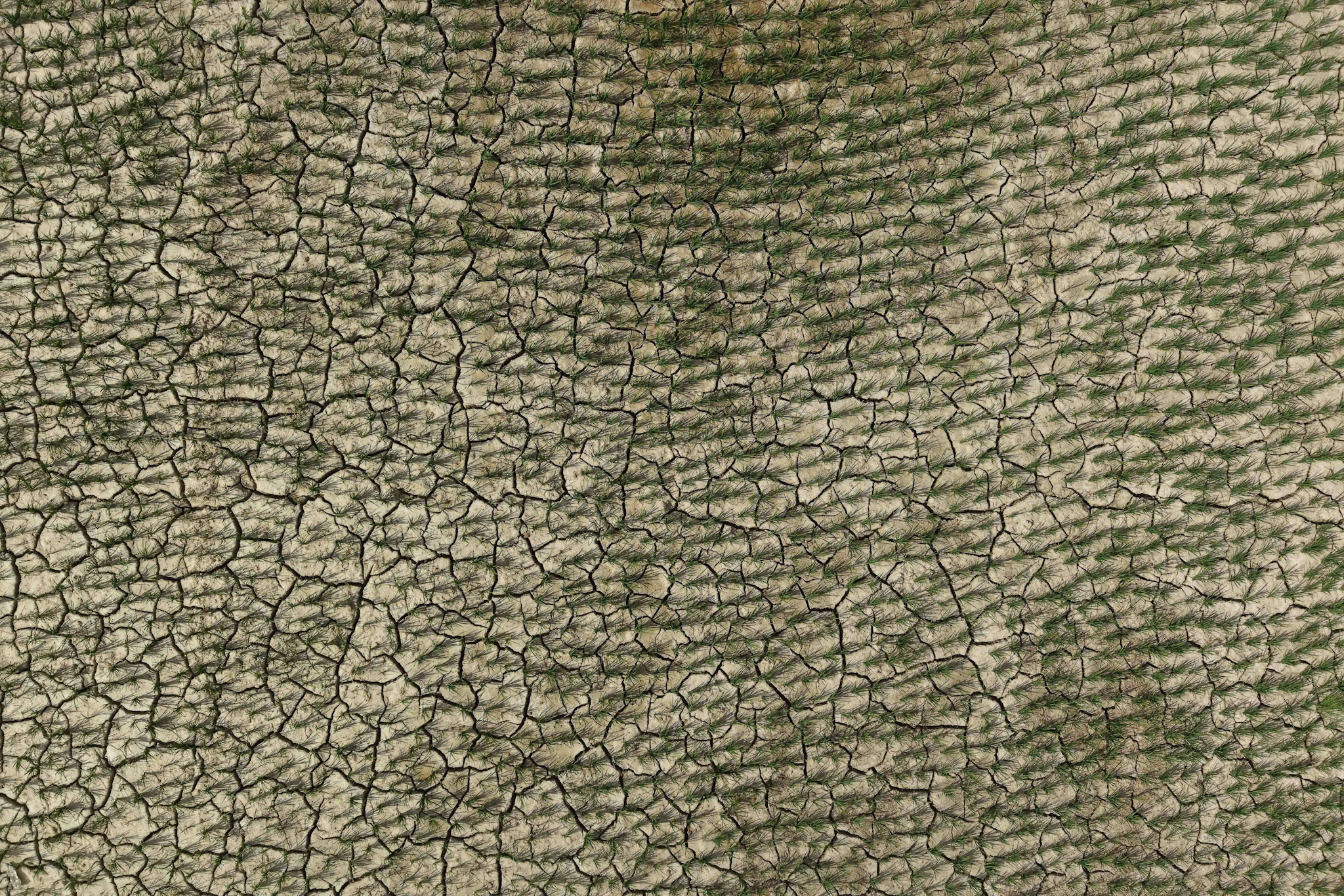
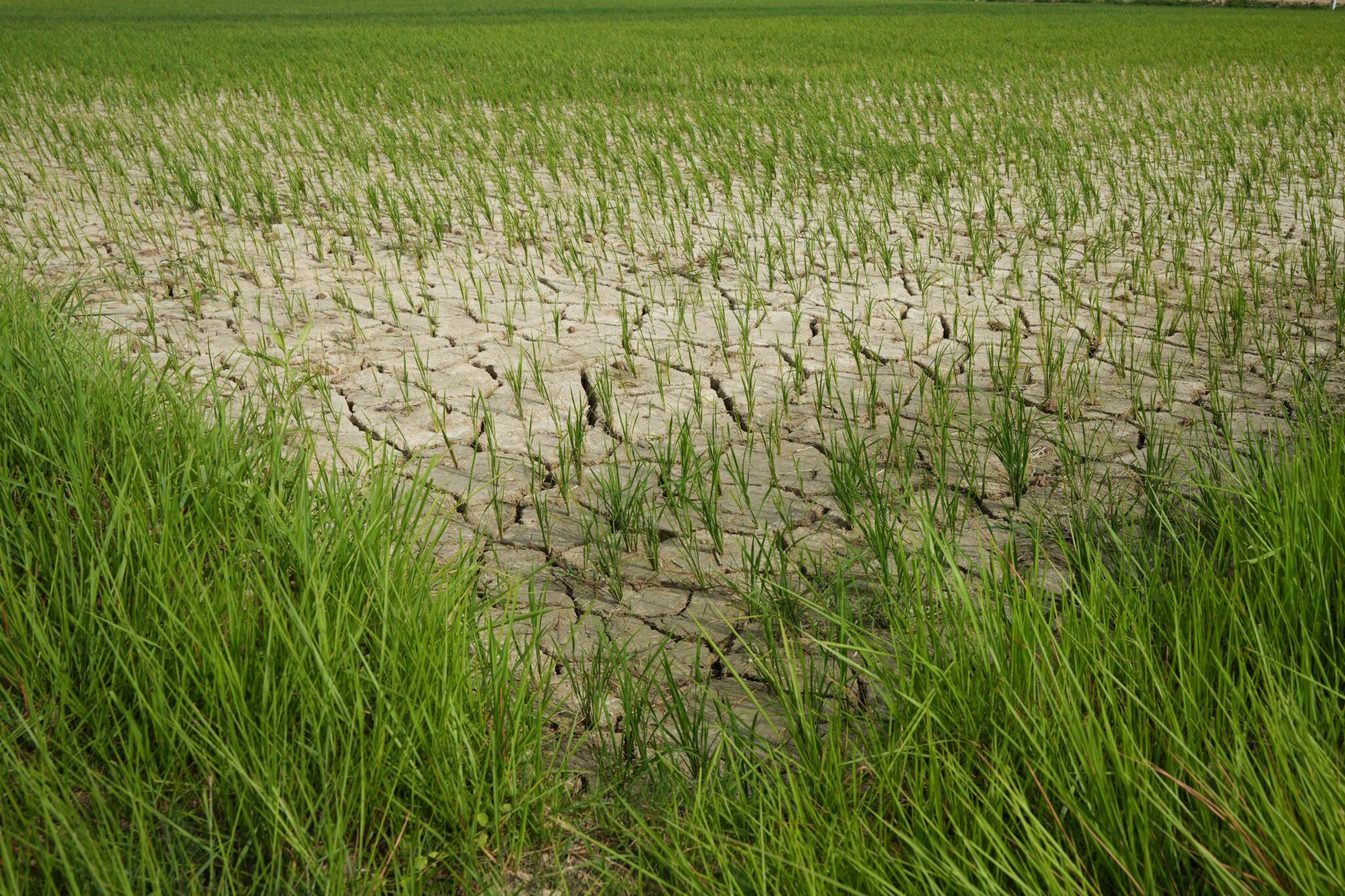
Condition of paddy crops in Matihani village of Mahottari after a long period without rainfall. Photo: Nepal Photo Library
These two cases illustrate the growing water crisis in Madhesh. The crisis has manifested in everything from drinking water shortages to impacts on agricultural production. As climate change disrupts the traditional rainfall cycle, the crisis is being compounded by an erratic monsoon and the failure of groundwater reserves to recharge naturally.
In the past, the monsoon brought prolonged, steady rainfall that soaked into the ground and recharged underground water reserves. In recent years, however, weather patterns have shifted. As a result, extended droughts, sudden intense downpours, delayed or early onset of heavy rain, and near-absent winter rainfall have all become more common. The result is a shortage of water precisely when crops need it, and groundwater reserves that no longer refill naturally.
When the water crisis struck in the middle of last year’s monsoon, the Madhesh Province government and local governments distributed drinking water at various locations. The provincial government alone distributed 100,000 liters of water daily in Birgunj.
Former secretary of the Madhesh Province Ministry of Energy, Irrigation, and Drinking Water Jakki Ahmad Ansari says the water crisis in Madhesh has been worsening over the past five years. The problem is particularly severe from mid-March to mid-June, he says. “Excessive extraction of groundwater has caused water tables to fall, while natural recharge has not been keeping pace. That is why hand pumps and wells are drying up,” he says. The water problem existed in Madhesh before, he adds, but has now become far more severe.
When the water crisis struck in the middle of last year’s monsoon, the Madhesh Province government and local governments distributed drinking water at various locations. The provincial government alone distributed 100,000 litres of water daily in Birgunj.
For the past five years, Madhesh has been receiving below-average rainfall. According to data from the Department of Hydrology and Meteorology, of 19 seasons over five years, only three saw above-average rainfall in Madhesh districts. Most recently, last monsoon – from the second week of June to September 2025 – brought below-average rain to Madhesh, while last winter – from December 2025 to February 2026 – saw drought conditions. Such prolonged dry spells have affected everything from drinking water supply to farming systems starved of irrigation. Agricultural production in Madhesh, the country’s granary and food basket, has been taking a sustained hit from drought.
According to the Ministry of Agriculture and Livestock, the area under paddy cultivation in the current fiscal year fell 3.8 percent from the previous year. Due to lower rainfall, paddy was transplanted across only 1,376,872 hectares this year, compared to 1,420,636 hectares in fiscal year 2024/25.
This had a direct impact on rice production, which fell 4.2 percent from the previous year. The ministry reports that while 5.9 million metric tons of rice was produced last fiscal year, only 5.6 million metric tons of the crop was harvested this year, citing drought as the cause. A ministry press release issued on 19 January 2026 states: “Drought in Madhesh Province during the critical paddy planting period reduced the area under cultivation, which in turn reduced overall rice production.”
Permanently parched
Before last year’s monsoon began, the Department of Hydrology and Meteorology and weather experts had projected both rainfall and heat to be above average. As they predicted, heat increased significantly, but the rain did not come. Relief arrived when rainfall picked up in the middle of the monsoon season, but by then the drought had already done its damage. The monsoon entered Nepal earlier than average but departed late, making it the longest monsoon season on record since data collection began in Nepal.
The Terai has been experiencing dry conditions for the past five years. Of 19 seasons over five years, only three saw normal rainfall in Madhesh; in 16 seasons, rainfall was below average. Weather averages for any given location are calculated on the basis of measurements taken over 30 years. Even in the 2022 monsoon, normal rainfall had been forecast, but the rain fell short.
Hemu Kafle, director of the Kathmandu Institute of Applied Sciences and a researcher on drought, says that people had assumed groundwater would always be available in the Terai and Madhesh, but water sources are drying up and a crisis is emerging. “We have seen entire villages relocate in the hills because of water shortages. If long-term solutions are not found, the Terai could face a similar crisis,” she says. She stresses that a comprehensive study of groundwater conditions in the Terai and Madhesh is now urgently needed.
How much groundwater is there in Madhesh?
Every time drought strikes Madhesh, debate begins about how much groundwater the region holds and how it is being used. But opinion on the actual quantity varies widely. According to Bishnu Belbase, former director of the then-Groundwater Resources Development Committee, various study reports have estimated Madhesh’s groundwater reserves at between nine billion and 13 billion cubic meters.
Groundwater exists in two layers. The upper layer, down to about 100 meters, is called the shallow aquifer – the source of water for hand pumps and wells. This is not spring water but a layer formed by rainfall and river water that has percolated into the ground.
The deeper layer, lying 200 to 300 meters underground, is called the deep aquifer. It holds abundant water from which large quantities can be extracted, similar to a mountain spring; it neither rises nor falls with rainfall.
Madhesh, called the nation’s granary, has more irrigation infrastructure than any other part of the country. Yet for 51 percent of its cultivable land, rainwater remains the primary source of irrigation.
In 1999, the United Nations Development Program (UNDP) collaborated with the then-Groundwater Resources Development Committee to conduct a study of groundwater reserves across 22 districts of the Terai-Madhesh. “Drilling was carried out at various locations at the time. The study focused on the condition of the deeper aquifer rather than the upper layer,” says former committee director Belbase.
He says seasonal drought has now dried up the shallow aquifer in some locations, while the deeper aquifer has not been drawn upon to the extent that it could be. “There is sufficient water in the deep groundwater layer; what needs thinking about is how to use it in an organized way,” he says.
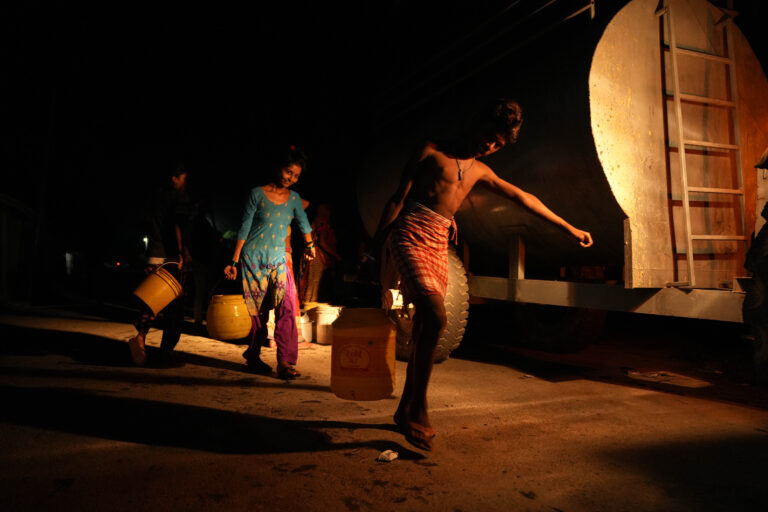
Locals carrying water in Manara Shisawa Municipality of Mahottari. Photo: Nepal Photo Library
Madhesh, called the nation’s granary, has more irrigation infrastructure than any other part of the country. Yet for 51 percent of its cultivable land, rainwater remains the primary source of irrigation.
Former vice-chairman of the Madhesh Province Planning Commission, Sohan Sah, says that conflicting conclusions exist not only about the quantity of groundwater in the Terai but also about its availability, and that this makes policymaking difficult. “One study of an area says there is plenty of water underground – just turn a switch and it flows out. Another study of the same area says there is no groundwater at all,” he says. “Such contradictory conclusions make it hard to formulate policy.” He stresses that a comprehensive study of the groundwater layers in the Terai is essential.
Basanta Adhikari, head of the Center for Disaster Studies under the Institute of Engineering and a geologist who studied the area after last monsoon’s drought in Madhesh, says the water crisis stems from a failure of water management.
Madhesh Province covers only 6.5 percent of the country’s total land area but contributes significantly to food production. Increasing extraction in the Chure hills, physical infrastructure construction, rapid urbanization, declining agricultural activity, population growth, and deforestation are all beginning to disturb the ecological balance of the Terai.
Basanta Adhikari, head of the Center for Disaster Studies under the Institute of Engineering and a geologist who studied the area after last monsoon’s drought, says the water crisis stems from a failure of water management. “The problem has arisen because groundwater reserves are not being recharged,” he says. “Previously, check dams were built in rivers as soon as the Chure hills ended. Now those dams are all silted up, making recharge difficult.”
Experts say that the destruction of the Chure range has weakened its capacity to absorb and retain water, leading to a decline in the shallow aquifer. The water-absorbent soil, they say, has been washed away.
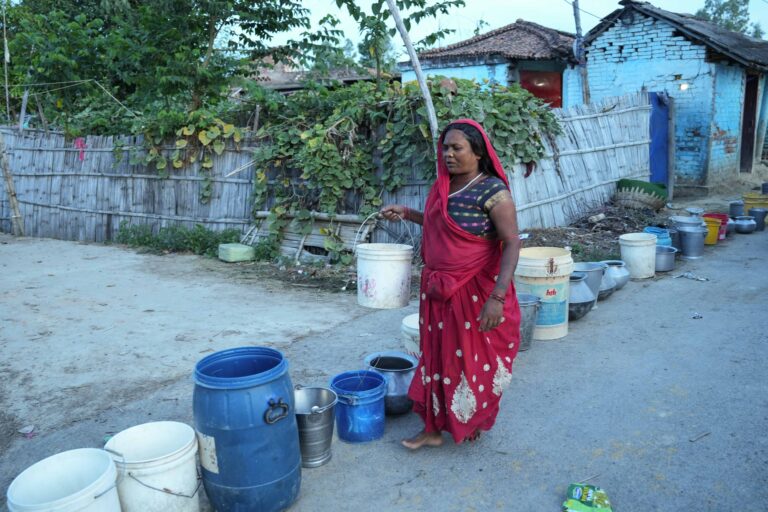
A woman standing in line for water in Mahottari. Photo: Nepal Photo Library
Adhikari says a comprehensive study must be conducted to establish how much water exists where and what is causing the crisis, producing unified data and information. “No comprehensive study has been done on where the groundwater is and how it is flowing. What we have are only the conclusions of piecemeal studies; those do not open the path to long-term solutions,” he says.
He also says it is important to examine how groundwater is being used in the neighboring Indian states. “Bihar and Uttar Pradesh in India have drawn water from depths even greater than in Nepal. That experience and practice could be useful to us,” he says.
A study report published last August by the International Centre for Integrated Mountain Development (ICIMOD) on the 2025 drought in Madhesh Province recommends both short-term and long-term measures to address the water crisis. Short-term measures include seed substitution, alternative irrigation including mobile pumps, crop diversification, and support for water and food access. Long-term measures include direct seeding methods, sustainable aquifer recharge through nature-based solutions, canal restoration, and the Sunkoshi-Marin Diversion Project, as well as crop diversification and strict enforcement of Chure conservation.
Research halted in the name of saving budget
Nepal began studying and researching groundwater around 1969/70, but research has been at a standstill for the past two years. When the government abolished 20 institutions and committees in the fiscal year 2023/24 budget, the Groundwater Resources Development Committee was among them. Its last director, Belbase, says the abolition was the result of a tendency to treat knowledge production as a burden. “We made many attempts to explain why a committee to study groundwater resources was necessary, but neither the political nor the administrative leadership was willing to understand,” he says.
The Public Expenditure Review Commission formed by the government under economist Dilli Raj Khanal had recommended abolishing the committee as part of measures to cut unproductive expenditure. Once the government acted on the recommendation, groundwater level monitoring came to a halt.
Before its abolition, the committee monitored groundwater levels through 652 boreholes across 25 districts – 22 in the Terai and three in the Kathmandu Valley. “The committee measured water levels in 652 boreholes every month,” Belbase says.
Khila Nath Dahal, head of the Groundwater and Geological Division under the Department of Irrigation, says that no study of groundwater has been possible since the Groundwater Resources Development Committee was dissolved. “We have no new data. The last study was done by the Groundwater Resources Development Committee, which has now been abolished,” he says.