Kathmandu
Sunday, July 19, 2026





Some exemplary work in education, health, and heritage conservation during his tenure as mayor boosted Balen’s popularity
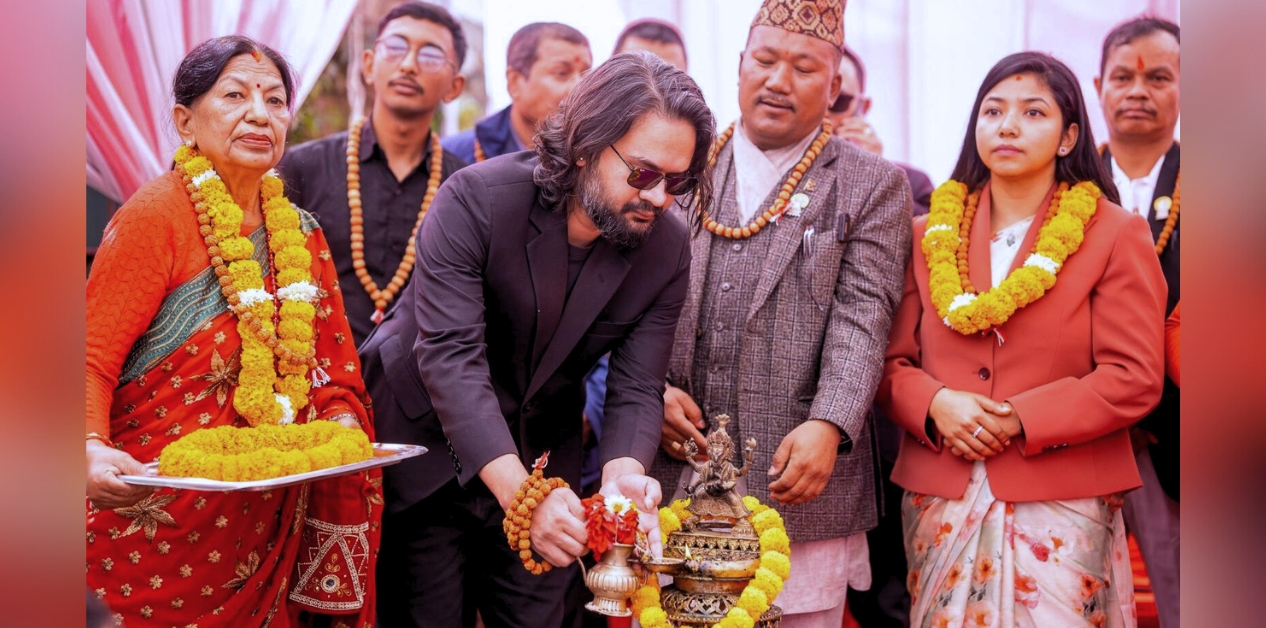
KATHMANDU: Before being elected mayor of Kathmandu Metropolitan City, Balendra Shah (Balen) was known among the younger generation as a rapper. Professionally, he was a structural engineer.
After running as an independent candidate in the 2022 local elections, he gained nationwide attention. Defeating all competitors by a large margin, he was elected mayor, and his recognition soon became international. After working for nearly three years as mayor, Balen resigned and was elected as a member of the House of Representatives. Within a few days, he gained yet another new identity – the 43rd Prime Minister of Nepal.
There are many reasons why he rose from mayor to the country’s chief executive in such a short span. Primarily, the Gen-Z movement and subsequent developments played a major role. However, one of the key factors behind his popularity in elections was the development model he initiated in Kathmandu.
During his tenure, Balen prioritized education, health, heritage, and cultural preservation over physical infrastructure. For example, the scholarship program in institutional (private) schools was one of his successful initiatives. This helped extend his influence beyond Kathmandu. In fact, this was not a new program; it was simply the enforcement of existing law.
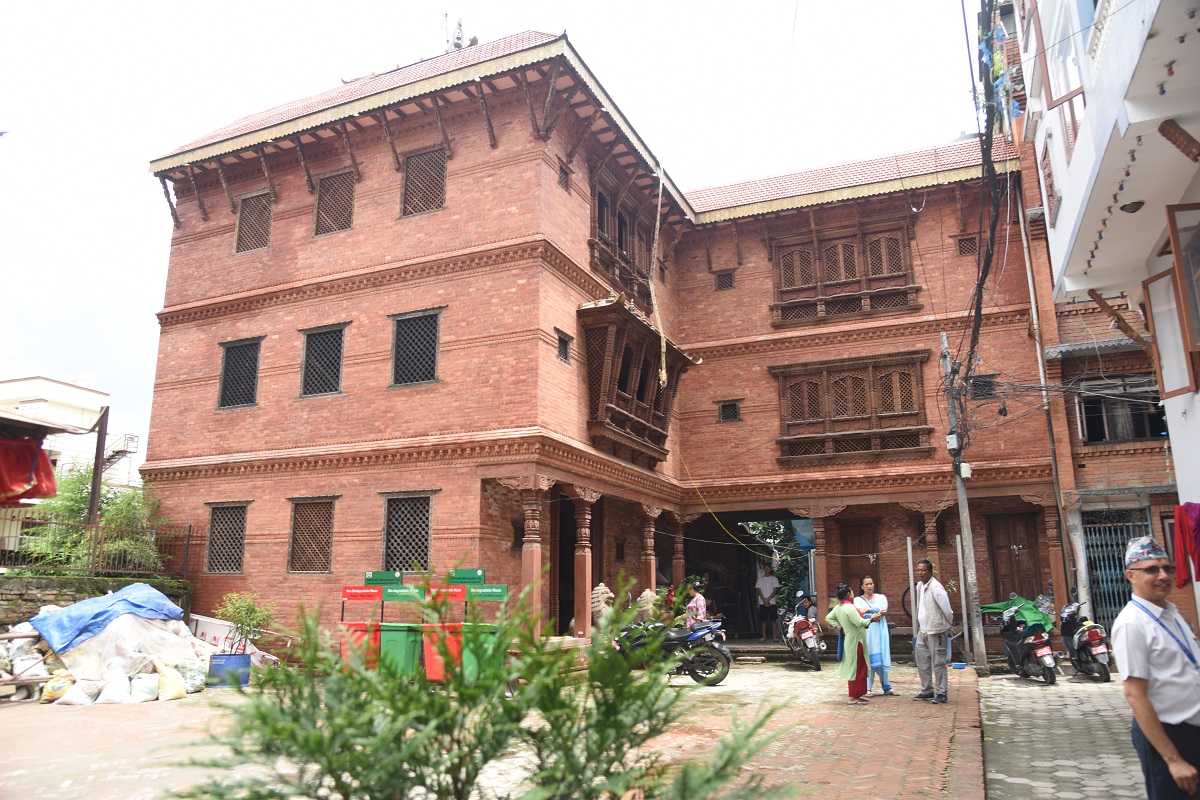
Reconstruction in traditional style carried out by the Metropolitan City in Handigaun. Photo: Metropolitan City website.
Four years before Balen became mayor, the Act Relating to Compulsory and Free Education, 2018 and the Kathmandu Metropolitan Education Act, 2018 had already mandated that institutional schools must provide at least 10 percent scholarships to deserving, underprivileged, disabled, female, Dalit, and indigenous students. However, previous leadership had not effectively implemented this provision.
According to the law, the school management committee is responsible for selecting scholarship recipients. But most private schools had failed to provide scholarships even to eligible students. After becoming mayor, Balen took a firm stance to enforce this provision at any cost.
For Grade 11, the metropolitan office itself began conducting entrance exams to select scholarship recipients. Students could fill out forms online and take the exam, and even those living outside Kathmandu but residing in the city could benefit. This made the program highly attractive among youth. “For Grade 11, the metropolitan office collects online applications, publishes results quickly, and provides scholarships to 10 percent of students. This program gained nationwide recognition,” says Namaraj Dhakal, head of the education department of the metropolis.
Dhakal adds that after strict enforcement of the scholarship provision, underprivileged and deserving students across the country have been able to study for free. “Now all institutional schools provide scholarships based on their student numbers,” he says.
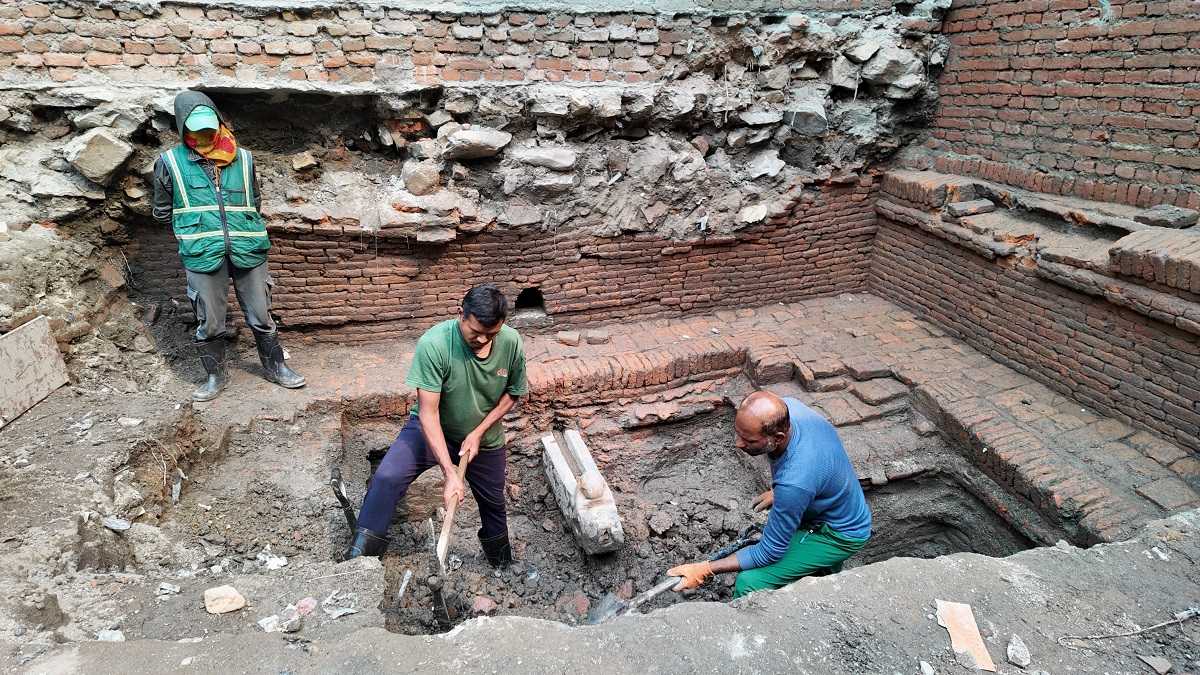
Excavation of the archaeologically significant Bhairav Hiti. Photo: Metropolitan City website.
Balen also implemented the “Book Free Friday” program in community schools, where students engage in music, sports, painting, and other creative activities every Friday. While the government provides midday meals up to Grade 5, the metropolitan office extended this program up to Grade 10 by adding extra funding.
Salaries of school staff also increased under his leadership. Office assistants’ pay rose from Rs 6,000 to Rs 21,000. Early Childhood Development (ECD) teachers saw salaries increase from Rs 11,000 to R 15,000, while other staff received Rs 25,000. The metropolitan office has installed smart boards in about 80 percent of schools. According to the education department, 24 engineers have been deployed to prepare master plans for 83 community schools. Out of the metropolitan city’s roughly Rs 26 billion budget, about Rs 2 billion has been allocated to education, according to Dhakal.
Educationist Bidyanath Koirala believes that the metropolitan office made positive progress in education during Balen’s tenure. Policies such as scholarships in private schools, teacher training, and institutional support had a beneficial impact. “Balen has demonstrated that if local governments take initiative, significant improvements can be made in basic sectors like education and health. This model can be implemented across the country,” he says.
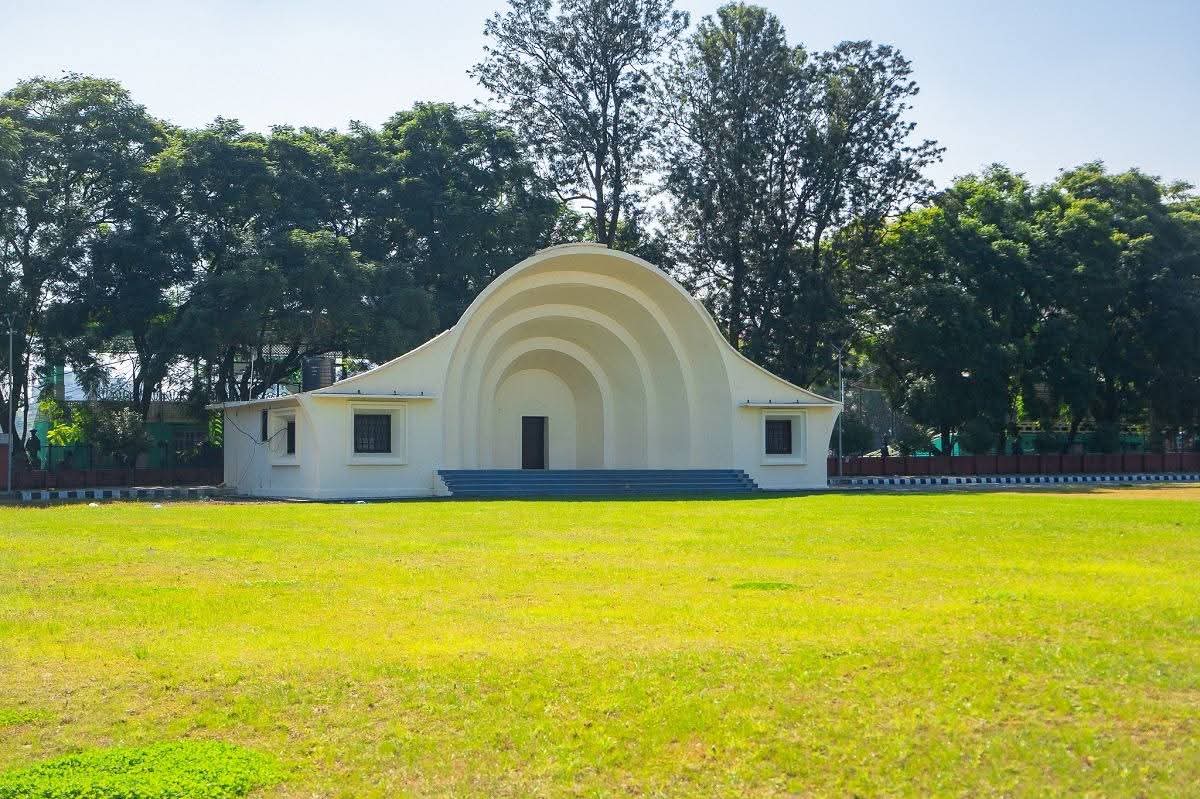
Tundikhel Open Air Theater Stage (Khula Manch) reconstructed by the Metropolitan City. Photo: Metropolitan City website.
Significant progress was also made in healthcare. Previously, ward-level health centers relied mainly on health assistants. Balen established health promotion centers in all 32 wards, equipped with MBBS doctors, lab testing, and therapy services. Provisions were also made for treatment support for the underprivileged in major hospitals. On 23 September 2025, the metropolitan office distributed ambulances to 35 rural municipalities across the country. For this, Rs 81 million was allocated in the fiscal year 2025/26. This initiative further enhanced his reputation beyond Kathmandu. The metropolitan office also adopted a policy to operate affordable pharmacies. However, this plan has not yet been implemented.
The metropolitan office has also been doing notable work in the employment sector. After becoming mayor, Balen introduced a three-year action plan and launched the “Labor Bank” program under the slogan “Employment and Income Growth: Prosperity for the Metropolitan City.” The city has been organizing skill fairs, providing training to the unemployed, and connecting job seekers with employers. Through such programs, more than 1,500 people have been employed annually.
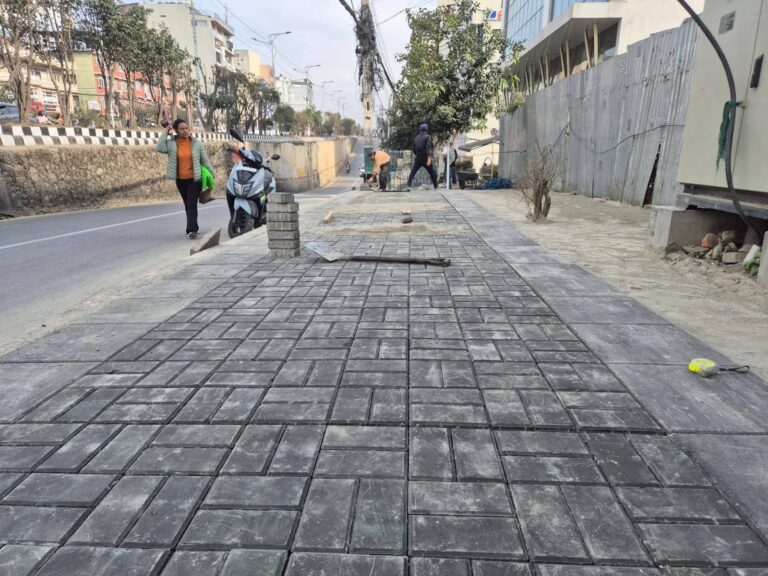
Kathmandu’s sidewalks being widened. Photo: Metropolitan City website.
After assuming office, Balen included the conservation of traditional stone water spouts (dhunge dhara) as a pride project of the metropolitan city and implemented it. Currently, conservation work is ongoing in all wards. Iru Shrestha, chief of the Heritage and Tourism Department of the metropolitan office, says, “We have been continuously working on heritage conservation. Recently, significant efforts have been made in preserving stone spouts and old ponds.”
The metropolitan office has also been encouraging residents to preserve old houses in Kathmandu’s “core area,” repair them, and construct new buildings in traditional styles to make the area heritage-friendly. According to heritage conservationist Rabindra Puri, grants ranging from Rs 1 million to Rs 4–5 million are provided for this purpose. A budget of Rs 100 million each has been allocated to make Jay Bageshwari and Handigaun heritage-friendly areas. Puri, who has also advised Balen on heritage conservation, says, “Compared to previous mayors, Balen has done more for Kathmandu’s heritage conservation. If continuity is maintained, there is hope that Kathmandu’s originality can be restored.”
Balen also oversaw the construction of culturally styled bus shelters on major roads in Kathmandu, enhancing the city’s aesthetic appeal. According to Kumari Rai, head of the Heritage and Tourism Department, the metropolitan office is also working to rediscover the original names of various places in Kathmandu. Work has already been completed in 10 wards and is ongoing in eight more. Since Balen became mayor, improvements in controlling dust and pollution, as well as waste management, have become noticeable to residents.
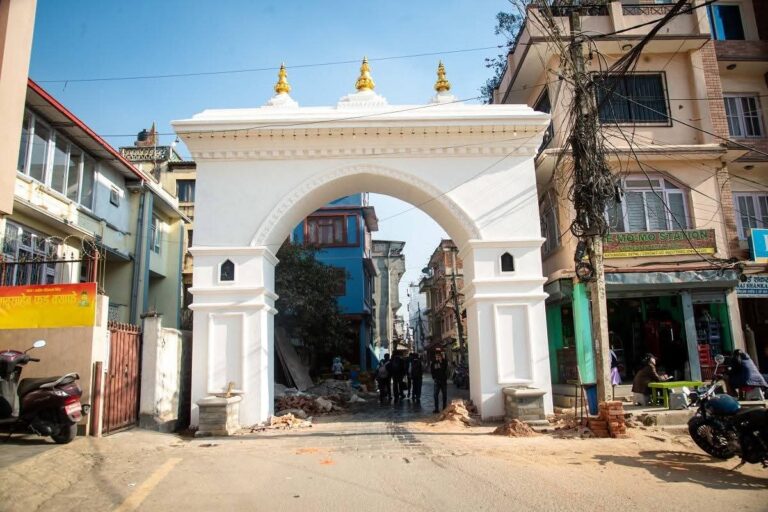
The Seto Dhoka at Jay Bageshwari reconstructed in its original style. Photo: Metropolitan City website.
Balen was also active in reclaiming encroached public land. The Local Government Operation Act, 2017 grants local governments full authority to protect, manage, and recover public land and property. Exercising this authority, he took initiatives to remove encroachments within the metropolitan area.
Soon after taking office, Balen initiated road expansion projects and reclaimed encroached riverbanks and public spaces. Last October, he wrote on social media that more than 208 ropani of public land worth around Rs 23 billion had been recovered.
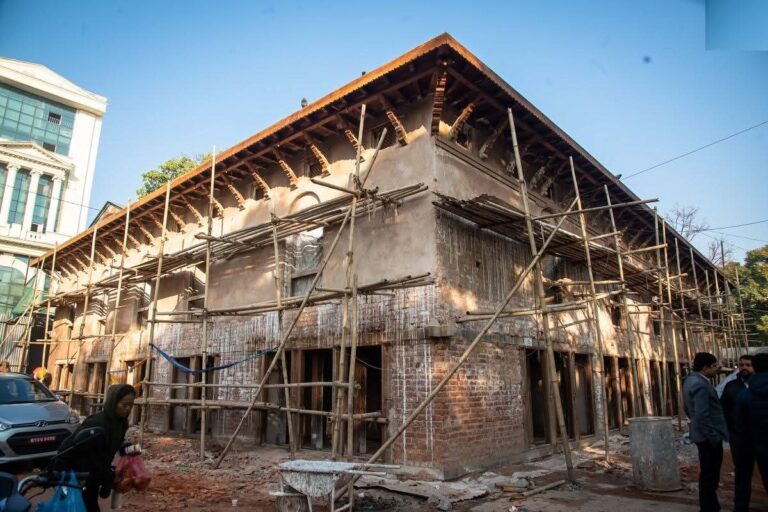
The Sattal (resting place) reconstructed by the Metropolitan City. Photo: Metropolitan City website.
Based on a report prepared by a high-level commission on the investigation and protection of government and public land, chaired by former secretary Ram Bahadur Rawal, the metropolitan office has been conducting a campaign to reclaim about 1,859 ropani 14 aana of encroached land worth nearly Rs 200 billion. He had stated that these lands would be used for open parks, sports grounds, rest houses (sattal), green spaces, and similar purposes to prevent re-encroachment. Even after Balen’s resignation, the metropolitan office continues reclaiming public land. Roshan Shrestha, deputy director of the Urban Management Department, says, “We have recovered encroached land and brought it under the respective ward offices. This work is ongoing.”
However, some of Balen’s actions as mayor were also controversial. His campaign to remove encroachment from sidewalks led to criticism for displacing poor street vendors. Critics argued that instead of eliminating poverty, he was removing the poor. Although he expanded roads, he did not show much interest in improving public transportation. Despite these criticisms, the reforms he initiated in the metropolitan city helped build his nationwide image.
Associate Professor Amrit Kumar Shrestha of Tribhuvan University says, “Balen carried out important work in areas like education, health, and employment that others had neglected. This touched the hearts of ordinary citizens. Such efforts also played a role in bringing him to where he is today in a short time.”